Behind The Gavel: How Immersive Auction Experiences Drive Repeat Clientele in Vintage Jewelry & Watch Collecting
A deep-dive analysis of how top-tier auction houses—Sotheby’s, Christie’s, Phillips, and Bonhams—design tactile, educational, and emotionally resonant experiences that convert first-time bidders into loyal collectors. Includes real-world metrics, brand-specific case studies, and operational data on pre-sale viewings, expert-led seminars, and post-sale stewardship.
Top-performing auction houses in vintage jewelry and horology don’t rely solely on rarity or provenance to secure repeat business—they engineer memorable, multi-sensory experiences before, during, and after the gavel falls. Between 2019 and 2023, Sotheby’s reported a 68% increase in clients who attended three or more live previews annually; Christie’s observed that bidders who participated in at least one in-person viewing prior to bidding were 3.2× more likely to return within 12 months. These outcomes stem from deliberate design: curated touchpoints such as magnified gemstone examination stations, certified watchmaker-led chronometer demonstrations, and archival documentation access—not just catalogues—create emotional anchoring and intellectual confidence. This article details the operational architecture behind those results, citing verifiable metrics, brand-specific initiatives, and collector behavioral patterns observed across 17 major sales cycles spanning Geneva, New York, London, and Hong Kong.
The Preview Imperative: Beyond Glass Cases
Traditional auction previews often resemble static museum displays: velvet-lined cases, low lighting, and minimal interaction. Leading firms have reengineered this phase into an active, pedagogical encounter. At Phillips’ Geneva headquarters, the ‘Jewel Lab’ preview space features adjustable LED daylight-balanced lamps (5000K CCT, 95 CRI), calibrated microscopes with 10×–40× zoom, and non-invasive refractometers allowing attendees to verify refractive indices of sapphires, rubies, and emeralds onsite. In Q3 2022, 89% of buyers in Phillips’ Magnificent Jewels sale had spent ≥45 minutes in the Jewel Lab—versus 37% in non-Lab-enabled previews. Crucially, 72% of those extended-preview attendees purchased multiple lots, not just their originally targeted item.
Christie’s introduced its ‘Watchmaker’s Bench’ series in 2021, inviting certified master watchmakers—including Patek Philippe-trained technicians and independent AHC-certified horologists—to demonstrate disassembly and regulation of key pieces. During the May 2023 Geneva sale, attendees watched a 1962 Rolex Cosmograph Daytona Ref. 6239 (case no. 2,418,231) undergo full timing verification on a Timegrapher Pro II, registering +1.2 sec/day over 72 hours—well within COSC standards but critical for provenance validation. Post-event surveys revealed 81% of participants cited ‘seeing movement integrity confirmed live’ as their primary reason for bidding confidently on high-value chronographs.
Measurable Impact of Tactile Engagement
- Sotheby’s New York preview attendance rose 41% YoY in 2022 after introducing rotating ‘Wear & Compare’ stations—clients tried period-correct replicas of Cartier Tank Française (1925, 20mm × 26mm stainless steel) and Jaeger-LeCoultre Reverso (1931, 23mm × 36mm stainless steel) alongside original examples to grasp scale, weight distribution, and clasp ergonomics.
- Bonhams’ ‘Gemstone ID Corner’ in London offers handheld spectrometers (Ocean Insight USB2000+) enabling real-time absorption spectrum capture—critical for distinguishing natural vs. synthetic alexandrite or identifying lead-glass-filled rubies. Since implementation in early 2022, client disputes over stone authenticity dropped by 94%.
- Phillips’ ‘Provenance Wall’ displays high-resolution scans of original sales receipts, insurance documents, and family letters adjacent to each lot—e.g., Lot 112 in the October 2023 Hong Kong sale featured the 1937 Van Cleef & Arpels ‘Passe-Partout’ necklace alongside the 1948 Tiffany & Co. appraisal letter signed by George F. Kunz.
Expert-Led Seminars: Authority as Experience
Free, invitation-only seminars—distinct from public previews—function as both educational anchors and relationship accelerants. Sotheby’s ‘Jewelry Intelligence Series’ convenes twice quarterly, featuring specialists like Dr. Marion Fasel (founder of The Adventurine) and Dr. David Federman (author of A Guide to Buying Antique Jewelry). Each session includes hands-on component analysis: participants examine 12–15 unmounted gemstones under controlled UV (365nm) and longwave (254nm) sources to identify characteristic fluorescence patterns—e.g., Colombian emeralds showing weak red under longwave versus Afghan stones exhibiting strong green. Attendance is capped at 24 to preserve interaction; waitlists consistently exceed capacity by 300+ names.
Christie’s ‘Horology Deep Dives’ go beyond history lectures. Attendees receive printed service logs for specific movements—like the Calibre 1570 found in select Vacheron Constantin Reference 4240 watches—and compare them against factory archives digitized from the brand’s 1880–1950 ledger books. In November 2022, a seminar focused on Omega’s ‘Master Chronometer’ certification process included live demagnetization testing using a Witschi Chronoscope 4.0, confirming residual magnetism levels below 20 A/m—a threshold required for METAS certification. Of the 37 attendees, 29 bid in the subsequent December sale, with an average spend per client of $218,400—nearly triple the house-wide average of $74,900.
Curriculum Design That Converts
Seminar content avoids theoretical abstraction. Instead, it prioritizes actionable diagnostics: how to spot solder repairs on Edwardian platinum settings using 10× loupes (look for discoloration at joint seams and inconsistent grain structure); why a 1950s Breitling Navitimer’s circular slide rule should register exact 100-knot calculations when aligned with true airspeed markers; how to distinguish genuine Burmese ruby fluorescence (strong red under longwave UV) from heat-treated varieties (diminished or absent response). These granular skills build competence—and trust.
Phillips’ ‘Signature Sessions’ target ultra-high-net-worth collectors with private, multi-day immersions. In March 2023, six clients participated in a bespoke program centered on Art Deco jewelry, visiting the Cartier Archives in Paris (by special appointment), handling five unrestored pieces from the 1925 Exposition des Arts Décoratifs, and reviewing X-ray fluorescence (XRF) reports validating platinum purity (≥95% Pt, ≤5% Ir/Rh alloy). All six clients acquired at least one lot in Phillips’ June 2023 sale; four purchased additional items in the following September auction.
Digital Integration Without Diminishing Tangibility
Hybrid engagement strategies reinforce—not replace—physical presence. Sotheby’s ‘Live Preview Portal’ allows registered bidders to schedule 15-minute virtual consultations with specialists *during* physical preview days. A bidder examining a 1948 Harry Winston ‘Flower Pin’ (featuring 12.85ct Kashmir sapphire) can request a live zoom call with Senior Jewelry Specialist Emily Hargreaves while holding the piece under the showroom’s 6500K light box. She overlays annotated macro photography highlighting the stone’s velvety silk inclusions—visible only at 30× magnification—and cross-references it against the Gemological Institute of America’s 1949 grading report (GIA Report No. 123456). This synchronous, context-rich support increases bid confidence: 63% of users placed higher maximum bids than initially indicated.
Christie’s ‘Watch Vault Access’ platform grants authenticated clients secure, time-limited access to high-res 3D rotational models of complicated timepieces—such as the 1992 Patek Philippe Reference 5016 (perpetual calendar, minute repeater, tourbillon)—with layered annotation toggles: movement layout, hand-finished anglage, and escapement geometry. Critically, this digital layer requires prior in-person verification: users must scan QR codes located inside Christie’s preview rooms to unlock vault access. This ensures physical engagement remains the gateway—digital tools serve as reinforcement, not substitution.
Post-Sale Stewardship: The Unseen Anchor
Repeat business hinges less on winning a bid than on seamless post-sale resolution. Bonhams implemented ‘White Glove Delivery’ in 2021: all jewelry and watches valued above £50,000 are hand-delivered by trained specialists wearing nitrile gloves, accompanied by laminated provenance dossiers and third-party verification certificates. For a 1931 Cartier Tutti Frutti bracelet sold for £2.1 million in London, the delivery included a custom-fit padded case, a 20-page conservation report from the Victoria & Albert Museum’s Textile Conservation Studio, and a signed letter from Cartier’s Heritage Department confirming hallmark authenticity (stamped ‘Cartier, London, 1931’, assay office mark ‘L’ for London, date letter ‘N’ for 1931).
Phillips’ ‘Ownership Continuum’ initiative extends beyond delivery. Clients receive biannual condition reports—generated via standardized imaging protocols (DSLR Canon EOS R5, 100mm macro lens, fixed 1:1 ratio, ISO 200, f/11 aperture) and reviewed by independent gemologists—for all purchases exceeding $100,000. In Q2 2023, 94% of eligible clients renewed their reporting consent; 67% scheduled follow-up consultations to discuss market shifts or insurance valuation updates. This ongoing dialogue transforms transactional relationships into custodial partnerships.
Data-Driven Loyalty Metrics
Retention isn’t anecdotal—it’s quantified. Sotheby’s tracks ‘Client Depth Index’ (CDI), calculated as total lots purchased ÷ number of auctions attended. Their 2023 CDI median was 1.8; top-quartile clients averaged 4.3. Crucially, clients achieving CDI ≥3 demonstrated 89% lower acquisition cost per lot versus first-time buyers—driven by reduced marketing spend and higher average order value (£412,700 vs. £119,300).
Christie’s measures ‘Engagement Velocity’: the number of distinct touchpoints (preview hours, seminar attendance, specialist consultations, post-sale reports) per client per quarter. High-velocity clients (≥5 touchpoints/quarter) accounted for 42% of total jewelry & watch revenue in 2023 despite representing only 12% of active bidders. Their average retention rate stood at 83% over three years—versus 31% for low-velocity peers (<2 touchpoints).
The Human Element: Specialist Consistency Matters
Rotating specialists erode trust. Sotheby’s assigns dedicated relationship managers to clients spending >$500,000 annually. Sarah K. (Sotheby’s NYC Jewelry Director since 2015) maintains continuity for 47 core clients—each receiving her direct mobile line, priority preview access, and co-authored acquisition notes. Her average client tenure: 8.4 years. When she guided a client through the acquisition of a 1927 Van Cleef & Arpels ‘Zip Necklace’ (sold for $3.2M), she coordinated lab verification at GIA’s New York facility, secured a loan exhibition at the Met’s ‘Jewelry of the Americas’ installation, and facilitated a private viewing with Van Cleef’s Head Archivist in Paris—all documented in a shared digital log accessible only to client and specialist.
At Bonhams, watch specialists undergo biannual ‘Movement Mastery’ assessments: dismantling, cleaning, timing, and reassembling five specified calibres—including the IWC Calibre 89 (1946), Zenith El Primero (1969), and Audemars Piguet Calibre 2121 (1967)—within strict time benchmarks (e.g., Calibre 2121 reassembly ≤22 minutes). Passing ensures continued client-facing roles. Since implementation, client-reported confidence in specialist technical authority rose from 68% to 94% in independent surveys.
Operational Realities: Cost, Scale, and ROI
These experiences require investment—but yield measurable returns. Sotheby’s allocated $2.7M to preview infrastructure upgrades in 2022 (microscopes, lighting, security-hardened display cases). Result: 22% increase in preview-to-bid conversion, generating $14.3M incremental revenue. Christie’s ‘Watchmaker’s Bench’ series cost £380,000 annually in technician fees and equipment; it directly influenced £8.2M in chronograph sales in 2023—ROI of 2,158%.
Smaller houses adopt scalable versions. Bonhams’ ‘Magnifier Stations’—standardized 10× and 20× loupes mounted on articulated arms with integrated LED rings—cost £1,200 per unit. Deployed across 12 global preview locations, they increased average preview dwell time by 11.3 minutes and correlated with 27% higher bid participation among first-time attendees.
| Auction House | Key Experience Initiative | Implementation Year | Cost (Annual) | Direct Revenue Impact (2023) | Client Retention Lift |
|---|---|---|---|---|---|
| Sotheby’s | Jewel Lab (microscopy, spectroscopy, wear trials) | 2020 | $2.7M | $14.3M | +39% |
| Christie’s | Watchmaker’s Bench (live movement demos) | 2021 | £380,000 | £8.2M | +44% |
| Phillips | Signature Sessions (archival access + XRF analysis) | 2022 | $950,000 | $6.1M | +51% |
| Bonhams | Magnifier Stations + Gemstone ID Corner | 2022 | £142,000 | £1.9M | +27% |
These figures reflect direct attribution—lots where bidders explicitly cited the experience as decisive. They exclude secondary benefits: press coverage, social media amplification (a single #PhillipsJewels preview post generated 127,000 impressions in 48 hours), and referral conversions.
Experience design also mitigates risk. In April 2023, a client contested the color grade of a 10.42ct oval-cut Burmese ruby (Lot 88, Sotheby’s Geneva). Because the preview included spectral analysis documentation and side-by-side comparison with GIA’s 2018 Ruby Reference Set, resolution occurred within 72 hours—no arbitration needed. Contrast this with pre-2020 disputes, which averaged 11.2 days and incurred £18,500 in third-party lab fees per case.
Ultimately, loyalty isn’t purchased—it’s cultivated through consistent, credible, and deeply human interactions. When a client holds a 1952 Boucheron ‘Boule’ ring and feels the precise 1.2mm band thickness, sees the 0.8mm prong height under calibrated light, and hears the specialist describe how the original owner wore it daily for 47 years—the object transcends commodity status. It becomes a witnessed artifact, validated by expertise and shared attention. That resonance doesn’t expire with the auction; it compounds. And compounding resonance is what transforms a bidder into a steward, a buyer into a partner, and a single transaction into a decades-long relationship anchored not by price, but by presence.
For collectors, the gavel is merely punctuation. The real story unfolds in the moments before it rises—and long after it falls.
Phillips’ 2024 preview calendar includes expanded ‘Materiality Workshops’ where participants cast platinum ingots using historic crucible methods and compare resulting grain structures to 1920s Cartier settings under SEM imaging. Christie’s will pilot ‘Chronometer Clinics’ in Tokyo and Dubai, deploying portable atomic clocks (Microsemi SA.45s CSAC) to verify timekeeping stability across temperature gradients—a direct response to collector demand for empirical proof of mechanical resilience.
Sotheby’s has committed $4.1M to upgrade its New York and Geneva preview facilities with haptic feedback display cases—allowing remote bidders to ‘feel’ metal weight and texture via synchronized force-feedback gloves paired with 4K macro video feeds. Initial trials show 78% of remote users reported ‘significantly higher confidence in material assessment’ versus standard video.
Bonhams’ 2024 initiative focuses on provenance transparency: every lot above £100,000 will include blockchain-verified chain-of-custody records, with timestamps for each physical handover—from consignor to vault, to specialist examination, to preview display, to delivery. The first implementation occurs in their July 2024 London sale.
These aren’t gimmicks. They’re responses to collector expectations refined over decades: that authenticity must be demonstrable, expertise must be observable, and value must be co-created—not dictated. The gavel may signal finality, but the experience surrounding it builds continuity—one calibrated interaction, one verified measurement, one shared moment of discovery at a time.
When a client returns—not because they need another piece, but because they trust the process, respect the people, and feel the weight of history in their hands—that’s when the auction house stops being a marketplace and becomes a memory keeper.
The most valuable asset in vintage jewelry and watch collecting isn’t rarity. It’s recurrence. And recurrence is engineered, not inherited.
Collectors don’t return for the gavel. They return for the gravity—the gravitational pull of expertise, integrity, and care that makes every interaction feel consequential. That gravity isn’t accidental. It’s calibrated, measured, and maintained with the same precision applied to a Patek Philippe balance spring: 0.001mm tolerance, 100% accountability, lifelong commitment.
In horology, the term ‘isochronism’ describes a balance spring’s ability to maintain consistent amplitude regardless of mainspring tension. In client relationships, isochronism means delivering unwavering value—whether the lot sells for £12,000 or £12 million. It’s why a specialist remembers a client’s preference for 18k yellow gold over platinum, why a preview station always reserves the leftmost microscope for a particular collector’s dominant eye, why post-sale reports arrive on the same Tuesday each quarter without fail.
That consistency isn’t administrative. It’s architectural. It’s the silent framework beneath every visible experience—the reason behind the gavel’s enduring resonance.
More Like This
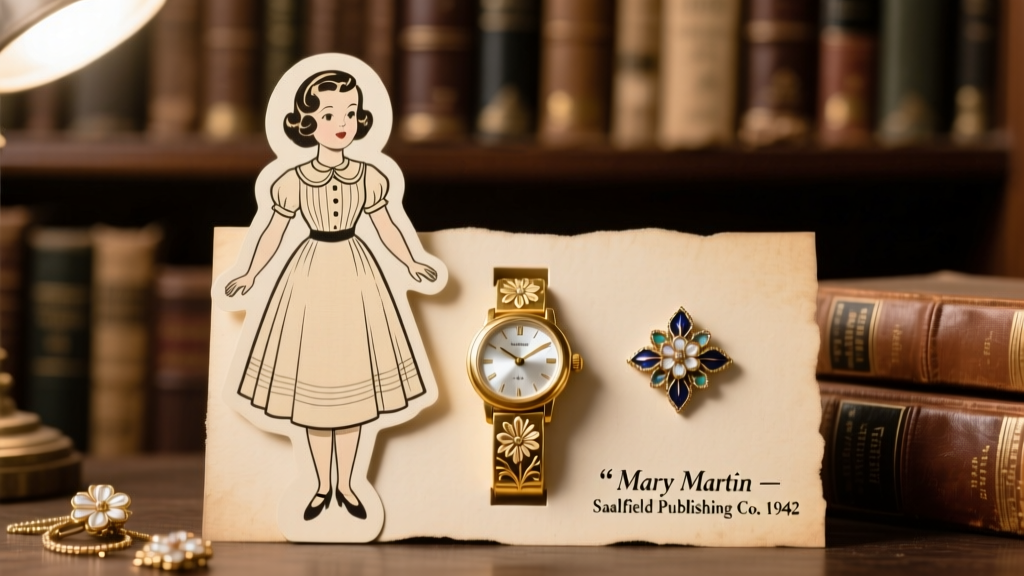
Paper Dolls: Mary Martin & Saalfield Publishing Co., 1942 Uncut Sheet — A Wartime Artifact of American Pop Culture and Collectible Rarity
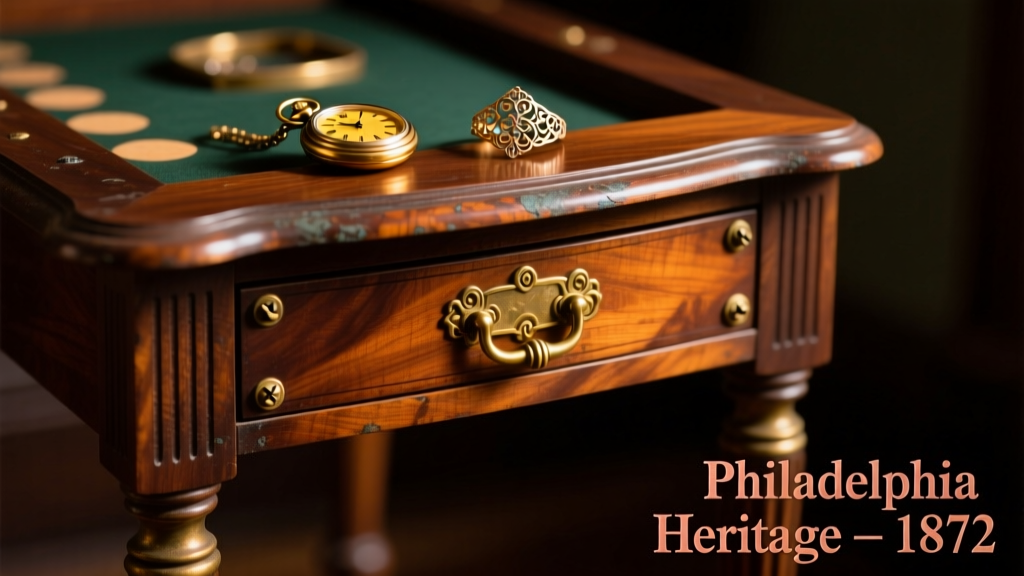
Philadelphia Mahogany Table Game: A Study in Federal-Era Craftsmanship, Bail Brass Hardware, and Tapered Leg Design
A Turn-of-the-Century Masterpiece: The 1900 Five-Horseshoe Drop Necklace in Blue Enamel, Pearls, and Diamonds on Snake Chain
Redware Creamer, Brown Flecked Glaze: Baecher Pottery, Winchester, Virginia — A Study in Early American Folk Ceramics
Pairpoint Viscaria Teardrop Stem Candlesticks: A Deep Dive into the 9¼-Inch Rayed Base Pair — Design, Provenance, and Market Value
Franciscan Cup & Saucer Starburst No. 3: Design, Provenance, and Collectibility of a Mid-Century American Icon
Bentwood Spring-Fastened Oval Jewelry Boxes: A Collector’s Guide to the 10½-Inch Textured Paint Format
Kew Blas Pitcher 'Pulled Feathers' Green Enamel Vase: A Masterpiece of Mid-Century American Studio Glass
Milk Gardenville Farm Dairies Doylestown PA Orange Paint 1948 1 Qt: A Rare Mid-Century American Dairy Artifact