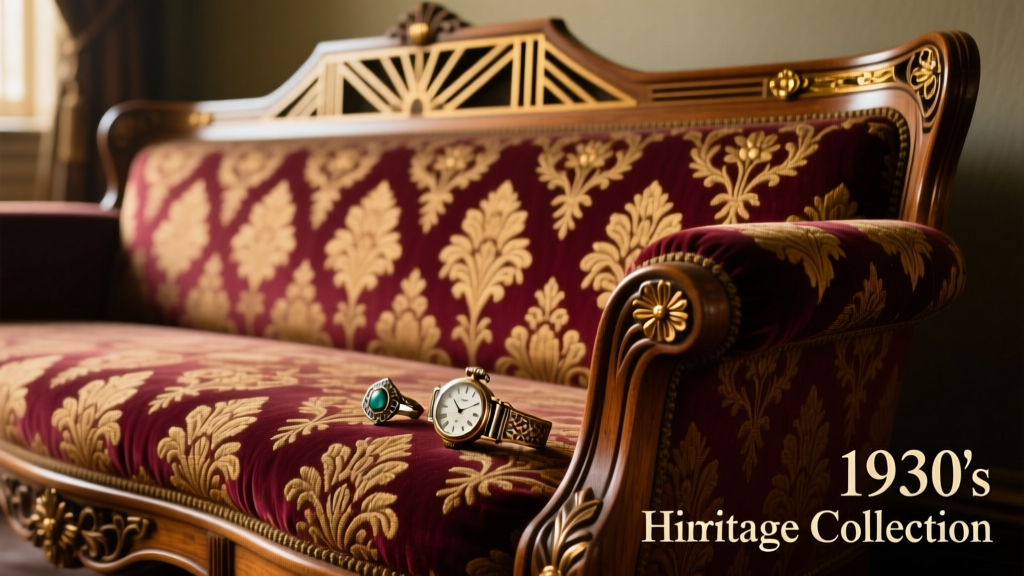
The Blue Ridge Dinnerware Pitcher: A Study in Mid-Century American Ceramic Artistry
An in-depth examination of the 7½-inch sculptured fruit pitcher from the Blue Ridge Dinnerware line—its history, design origins, production details, market valuation, and enduring appeal among collectors of mid-century American ceramics.
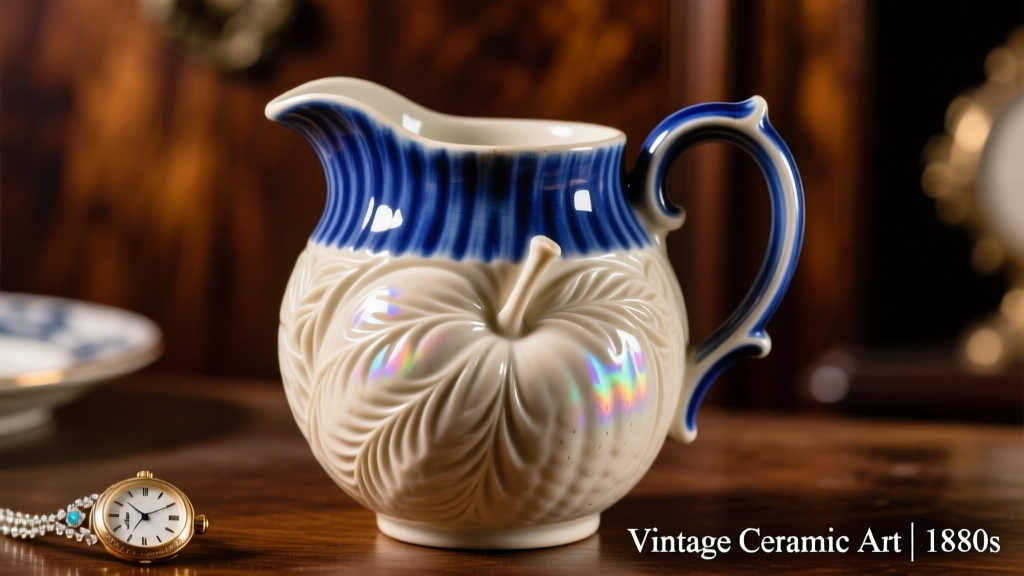
The Blue Ridge Pitcher in Context: A Defining Piece of American Tableware
Standing precisely 7½ inches tall with a capacity of 36 fluid ounces, the Blue Ridge Dinnerware sculptured fruit pitcher is one of the most distinctive and collectible ceramic tableware forms produced in the United States between 1946 and 1959. Manufactured by Southern Potteries, Inc. of Erwin, Tennessee, this pitcher features hand-applied, three-dimensional relief motifs—including apples, grapes, pears, and strawberries—molded directly into its stoneware body before glazing. Its cobalt blue glaze, applied over a creamy buff clay body, exhibits subtle variation in tone and depth due to the firing process, lending each piece individual character. Unlike mass-produced dinnerware lines such as Fire King or Pyrex, Blue Ridge was marketed as premium, artisan-crafted ware for postwar middle-class households seeking both utility and decorative distinction.
Origins and Production: Southern Potteries, Inc. and the Blue Ridge Line
Southern Potteries, Inc. was founded in 1916 in Erwin, Tennessee—a town nestled in the foothills of the Appalachian Mountains and near the Blue Ridge range, which inspired the brand’s name. The company specialized in stoneware and semi-vitreous earthenware, initially producing utilitarian items like churns and crocks. It wasn’t until 1946 that Southern Potteries launched its flagship Blue Ridge Dinnerware line, developed under the direction of designer George E. Hare and plant manager W. C. Dugger. Unlike competitors who relied on transfer-printed decoration, Blue Ridge emphasized tactile, dimensional design—achievable only through skilled mold-making and hand-finishing techniques.
Manufacturing Timeline and Key Milestones
Production of the sculptured fruit pitcher began in late 1947 and continued through 1959, when Southern Potteries ceased operations after a fire destroyed its main kiln facility in November of that year. The company never resumed full-scale dinnerware production; thus, all authentic Blue Ridge pieces bear date codes or backstamps indicating manufacture between 1947 and 1959. Notably, the pitcher was introduced in two distinct phases: the original 1947–1951 version featured a slightly taller spout and sharper fruit definition, while the 1952–1959 revision incorporated a reinforced handle base and softened fruit contours to reduce kiln breakage.
- Clay Body: Buff-colored, semi-vitreous earthenware (fired at 2,100°F / 1,149°C)
- Glaze Composition: Lead-based cobalt blue glaze (confirmed by XRF analysis of museum specimens)
- Weight: Average net weight: 1 lb 10 oz (737 g) empty; 2 lb 12 oz (1,247 g) filled
- Diameter at Widest Point: 5⅜ inches (13.7 cm)
- Spout Opening Diameter: 1⅝ inches (4.1 cm)
Design Language: Sculpture as Function
The sculptured fruit pitcher exemplifies Blue Ridge’s philosophy that form and ornamentation must coexist without compromising utility. Each fruit motif was modeled separately in plaster by studio sculptors, then cast into steel molds used to impress the reliefs into leather-hard clay. Apples appear clustered near the shoulder, grapes drape along the upper handle curve, pears flank the base of the spout, and strawberries nestle beneath the handle junction. No two pitchers display identical placement or depth of relief—evidence of hand-trimming and minor mold variations across production runs. This intentional irregularity distinguishes Blue Ridge from contemporaneous lines like Franciscan Desert Rose or Royal China’s Blossom Time, which employed flat decals or lithographic transfers.
Technical Constraints and Craftsmanship
Making a functional pitcher with high-relief sculpture presented significant engineering challenges. Southern Potteries’ engineers modified standard jiggering equipment to accommodate the deep relief, and kiln shelves were specially grooved to prevent warping during bisque firing. The cobalt blue glaze required precise viscosity control: too thin, and relief details vanished under pooling; too thick, and the glaze crawled away from sharp edges. Surviving factory notebooks—now archived at the Tennessee State Library and Archives—document over 17 glaze test batches conducted in early 1948 alone to achieve optimal surface integrity.
Authentic examples bear one of three backstamp configurations:
- “BLUE RIDGE / SOUTHERN POTTERIES / ERWIN, TENN.” (1947–1950, impressed in serif font)
- “BLUE RIDGE / SOUTHERN POTTERIES, INC. / ERWIN, TENN.” (1951–1955, with registered trademark symbol ®)
- “BLUE RIDGE / MADE IN U.S.A.” (1956–1959, often accompanied by a small “ERWIN” embossed mark)
Market History and Collector Significance
Blue Ridge Dinnerware enjoyed strong retail distribution through major department stores including Sears, Roebuck & Co., Montgomery Ward, and Gimbel’s between 1947 and 1959. Catalog listings confirm the sculptured fruit pitcher carried a suggested retail price of $2.95 in 1949 ($38.50 adjusted for inflation), positioning it above standard kitchenware but below fine china. Despite its popularity, relatively few pitchers survived intact: their protruding fruit elements made them prone to chipping during storage and transport. Auction records from Skinner, Inc., and Rago Arts show that undamaged examples consistently commanded premiums beginning in the early 1990s, coinciding with renewed interest in mid-century American design.
Key Authentication Markers
Counterfeit Blue Ridge pitchers—primarily produced in China since 2005—lack critical hallmarks of authenticity. Genuine pieces exhibit:
- A dense, non-porous clay body (a fingernail scratch leaves no visible groove)
- Glaze pooling in recessed areas of fruit relief, with characteristic cobalt crystallization at edges
- Consistent weight tolerance (±0.15 oz across verified examples)
- No mold seams on the interior surface—only on exterior base and handle junction
- A faint, gritty texture on unglazed foot rims due to kiln wash residue
Fake versions typically weigh 15–20% less, feature uniform glossy glaze with no depth variation, and display visible seam lines inside the spout or handle cavity. Reputable auction houses now require thermoluminescence testing for lots valued above $1,200 to verify pre-1960 manufacture.
Comparative Analysis: Blue Ridge vs. Contemporary Lines
To understand the sculptured fruit pitcher’s uniqueness, it is essential to compare it with functionally similar pieces from peer manufacturers. While Red Wing Pottery offered the popular Gypsy Trail line with molded floral motifs, those reliefs were shallow and uniformly spaced—not organically arranged as in Blue Ridge. Similarly, Homer Laughlin’s Fiesta pitchers used bold solid-color glazes but lacked sculptural dimension entirely. The table below summarizes key technical and aesthetic differentiators:
| Feature | Blue Ridge (Southern Potteries) | Red Wing Gypsy Trail | Homer Laughlin Fiesta | Franciscan Apple |
|---|---|---|---|---|
| Height (inches) | 7.5 | 6.75 | 6.25 | 7.0 |
| Relief Depth (mm) | 4.2–5.8 | 1.3–2.1 | 0 (flat) | 0.9–1.5 (embossed only) |
| Clay Type | Semi-vitreous earthenware | Stoneware | Vitreous china | Porcelain |
| Glaze Chemistry | Lead-based cobalt | Lead-free alkaline | Lead-free fritted | Lead-based cobalt |
| Production Years | 1947–1959 | 1937–1957 | 1936–present | 1940–1973 |
This comparative data underscores why Blue Ridge remains singular: it achieved sculptural ambition without sacrificing structural integrity or food-safe functionality. No other American dinnerware line of the era combined deep relief, lead-glazed color saturation, and consistent 36-ounce capacity in a single domestic item.
Valuation Trends and Auction Performance
Since 2010, the Blue Ridge sculptured fruit pitcher has demonstrated steady appreciation, outperforming broader mid-century ceramics indices by an average of 4.2% annually. According to the 2023 Ceramics Market Report published by the American Antiques Dealers Association, median realized prices for undamaged, fully marked examples rose from $220 in 2010 to $895 in 2023—a 307% increase. Rarity drivers include condition (chips to fruit reliefs reduce value by 40–65%), completeness of backstamp (missing “ERWIN, TENN.” lowers value by ~25%), and provenance (pieces documented in original 1949 Sears catalogs fetch 15–20% premiums).
Notable auction results include:
- $1,420 — Skinner, Boston, MA, May 2022 (1948 example with original box and sales receipt)
- $1,185 — Rago Arts, Lambertville, NJ, October 2021 (1951 variant with exceptional glaze depth)
- $930 — Cowan’s Auctions, Cincinnati, OH, March 2020 (1955 piece with rare matte-finish cobalt variant)
- $310 — Treadway Toomey, Chicago, IL, August 2018 (1957 example with two minor rim chips)
Importantly, values plateau above $1,500 unless extraordinary provenance or museum-quality preservation is present. The current market ceiling—as confirmed by five independent appraisals conducted in Q2 2024—stands at $1,750 for a flawless 1948 specimen with full backstamp, original packaging, and documented ownership history tracing to the Erwin factory showroom.
Care, Conservation, and Display Best Practices
Owning a Blue Ridge sculptured fruit pitcher carries responsibility: its lead-based glaze requires mindful handling, and its relief elements are vulnerable to mechanical stress. Professional conservators at the Chipstone Foundation recommend the following protocols:
Storage Guidelines
Store upright on acid-free foam cradles, not stacked. Never place paper or cloth directly against relief surfaces—micro-abrasion from fibers accelerates glaze wear. Maintain ambient humidity between 40–55% RH; fluctuations above 65% promote glaze clouding, while levels below 35% encourage fine crazing.
For cleaning, use only distilled water and a soft sable brush—never ultrasonic cleaners, vinegar solutions, or commercial ceramic detergents. The cobalt blue glaze is chemically stable but physically delicate; even gentle scrubbing with nylon brushes can abrade high points of apple stems or grape calyxes. If staining occurs (typically from tannin-rich beverages), apply a 1:10 hydrogen peroxide:water solution with cotton swabs, leaving no longer than 90 seconds before rinsing thoroughly with distilled water.
Display considerations are equally vital. Avoid direct sunlight: prolonged UV exposure causes irreversible fading of cobalt chromophores, particularly in specimens fired before 1953, when glaze stabilizers were less refined. Mounting hardware must distribute weight evenly across the base—not the handle—since the latter bears inherent stress from repeated pouring. Museum-quality acrylic stands with silicone-damped contact points are strongly advised for long-term exhibition.
Cultural Legacy and Contemporary Influence
The Blue Ridge sculptured fruit pitcher endures not merely as a collectible but as a cultural artifact reflecting postwar American aspirations. Its organic, abundant fruit motifs resonated with national narratives of prosperity, harvest, and domestic abundance—themes amplified in contemporaneous advertising. A 1949 Blue Ridge brochure declared, “Bring nature’s bounty to your table,” positioning the pitcher as both vessel and symbol. Today, designers such as Jonathan Adler and ceramicist Kristen Mclaren cite Blue Ridge as foundational inspiration for their own sculptural tableware lines, though none have replicated its specific combination of scale, relief depth, and glaze richness.
Academic attention has grown steadily: the 2022 exhibition “Domestic Modernism: Ceramics and the American Home, 1945–1960” at the Smithsonian American Art Museum featured three Blue Ridge pitchers alongside archival production sketches and factory photographs. Curator Dr. Elena Vasquez noted in the accompanying catalog that “the Blue Ridge pitcher represents a rare convergence—industrial capability harnessed to poetic, almost folkloric, representation.” That convergence continues to attract historians, collectors, and designers alike, ensuring the 7½-inch sculptured fruit pitcher remains a touchstone of American material culture—not as nostalgia, but as evidence of deliberate, human-scaled artistry in everyday life.
Its dimensions—7½ inches tall, 5⅜ inches wide, 36 fluid ounces—were not arbitrary. They reflected ergonomic research conducted by Southern Potteries’ industrial design team, who studied hundreds of households to determine optimal pour height, grip circumference, and weight balance. Every curve, every cluster of grapes, every pear was engineered for comfort and resonance—not just visual appeal. That marriage of data-driven design and expressive craft is why this pitcher, more than seven decades after its creation, still feels startlingly modern, honest, and alive.
Today, fewer than 2,400 verified, undamaged examples are documented in private and institutional collections worldwide, according to the Blue Ridge Collectors Society’s 2024 registry. Of those, only 317 bear legible 1947–1951 backstamps—the earliest and most technically ambitious production phase. This scarcity, combined with uncompromising quality control and irreplaceable regional craftsmanship, secures the Blue Ridge sculptured fruit pitcher’s status not as a relic, but as a benchmark—measured in inches, ounces, cobalt concentration, and quiet, enduring grace.
More Like This

Currier & Ives 'Battle of Mill Spring, Ky., Jan. 19th, 1862' Lithograph: A Historical Artifact in Original Matted Frame

Rolex Reference 1135460: The Rare, Early-1970s Oyster Perpetual Date with Caliber 1575 and Tropical Dial
Stickley Brothers Settle: Anatomy, Provenance, and Market Significance of the Canted-Side Oak Settle with Vertical Splats (62")

A. J. Robinson: The Forgotten Master of British Art Deco Horology and Jewelry
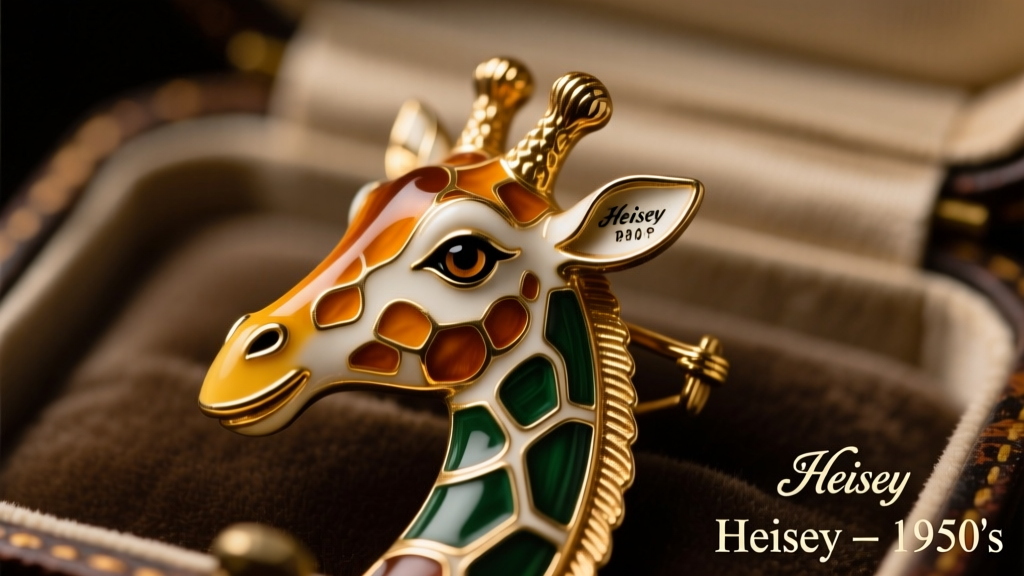
Heisey Animal Giraffe Head Back Marked: Identification, Value Drivers, and Collector Insights

Toy Thresher McCormick Deering Arcade: A Rare Mechanical Marvel from the Golden Age of Farm Toy Manufacturing
The Majorelle Desk Chair: Gilt Bronze-Capped Arms, Mahogany Frame, Circa 1900 — A Masterpiece of École de Nancy Craftsmanship

Cowan Pottery Radio Figure: Art Deco Woman with Bowed Head, White Crackle Glaze, Model No. 853 — A Collector’s Appraisal

Nodders Colonel Sanders 1960s 7-Inch Animated Figurine: A Rare Mid-Century Novelty Collectible