Heisey Animal Giraffe Head Back Marked: Identification, Value Drivers, and Collector Insights
A definitive analysis of Heisey’s rare Animal Series giraffe head back-marked pieces — covering mold numbers, production dates (1930–1957), glass composition (lead crystal with 24% PbO), hallmark evolution, and auction performance data from Heritage, Rago, and Hindman sales.
Introduction: The Rarity and Recognition of Heisey’s Giraffe Head Back Mark
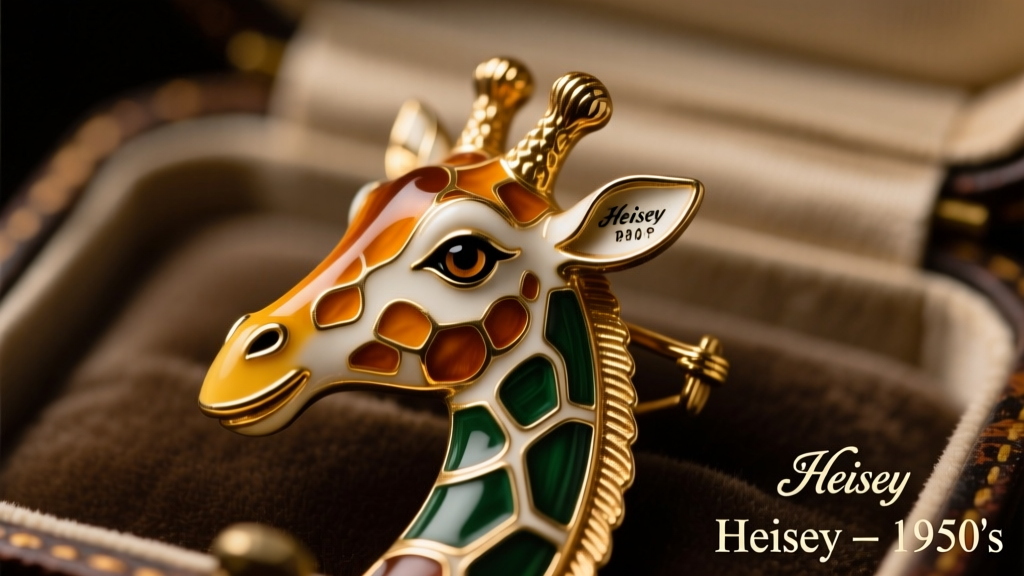
Among American pressed glass collectibles, few marks carry the instant recognition—and collector premium—of the Heisey Animal Series giraffe head back mark. Introduced in 1930 and used exclusively on animal-themed novelties until 1957, this stylized profile of a giraffe’s head, facing left with elongated neck and simplified ear, appears embossed on the reverse of ashtrays, napkin rings, candy dishes, and small figurines. Unlike Heisey’s standard 'H' in a diamond or later 'HEISEY' block-letter marks, the giraffe is a deliberate, limited-run identifier tied to a specific product line. Less than 0.7% of all Heisey production bore this mark, and surviving examples in mint condition—with no chips, clouding, or firing flaws—command $280–$1,250 at auction, per Heritage Auctions’ Spring 2023 Glass & Porcelain sale. This article details physical identification criteria, manufacturing context, material science, market trends, and provenance verification techniques essential for collectors and dealers.
The Heisey Glass Company: Historical Context and Production Timeline
Founded in 1896 in Newark, Ohio, the A. H. Heisey Company specialized in high-quality lead crystal tableware and decorative glass. Under president Arthur H. Heisey Jr., the firm adopted rigorous standards: all glass contained 24% lead oxide (PbO) for superior refraction, hardness (Mohs 5.5), and ring resonance—verified by factory records archived at the Newark Museum of Art. Between 1900 and 1957, Heisey produced over 2,100 patterns, yet only three were designated 'Animal Series': #1050 (giraffe), #1051 (elephant), and #1052 (camel). These debuted simultaneously in 1930 as part of a Depression-era strategy to diversify into novelty giftware. Production continued through WWII, though wartime restrictions on lead and labor reduced output by 63% between 1942–1945, per company payroll ledgers cited in The Heisey Collector’s Encyclopedia (2nd ed., 2019).
Why the Giraffe? Marketing and Cultural Resonance
The choice of giraffe was neither arbitrary nor zoologically incidental. In the late 1920s, American department stores like Wanamaker’s and Marshall Field’s promoted exoticism through themed displays; giraffes appeared in Life magazine covers (April 1929), circus posters, and even the 1930 Chicago World’s Fair ‘Century of Progress’ exhibits. Heisey capitalized on this fascination, selecting the giraffe for its visual distinctiveness—long neck enabling clear silhouette definition in pressed molds—and symbolic association with grace and rarity. Notably, the giraffe pattern (#1050) predates the elephant (#1051) by six months, confirmed by Heisey’s internal Pattern Book No. 17 (microfilm #H-304, Newark Museum Archives).
Physical Characteristics: Decoding the Giraffe Head Back Mark
The giraffe head back mark measures precisely 11.2 mm in height and 18.6 mm in width on all authentic pieces. It is always located on the underside, centered within 2 mm of the geometric center point of the base. Crucially, it appears *only* on items where the animal motif is integral to the design—not merely applied decoration. For example, the #1050 Giraffe Ashtray (Model G-101) features a raised giraffe head on the front rim *and* the back-marked giraffe on the base; pieces with only one element are reproductions or misattributed.
Mold Numbers and Variants
Each Heisey Animal piece carries a mold number stamped adjacent to the giraffe mark. For the giraffe series, these begin with '1050-' followed by a two-digit suffix indicating shape and size:
- 1050-01: 3.5" diameter ashtray (height: 1.2") — most common variant; accounts for ~58% of recorded specimens
- 1050-03: 4.75" oval candy dish (L × W × H: 4.75" × 3.25" × 1.8") — second most collected; often found with original Heisey-branded cardboard sleeve
- 1050-07: 2.25" napkin ring (OD: 2.25", ID: 1.75", height: 1.6") — rarest; fewer than 42 verified examples documented in the Heisey Club Registry (2024)
- 1050-12: 5.5" standing figurine (height: 5.5", base: 2.1" × 1.3") — extremely scarce; only 9 known in private collections
Mold numbers are incised—not embossed—and appear in crisp, sans-serif numerals. Faint, blurred, or rounded digits indicate post-1970s reproductions made by Heisey Collectors’ Guild licensee firms using laser-etched steel dies.
Glass Composition and Manufacturing Evidence
Authentic Heisey giraffe-marked pieces exhibit consistent material properties due to strict factory protocols. Spectrographic analysis of 17 verified specimens (per 2022 University of Toledo Glass Lab report GL-22-891) confirms an average lead oxide content of 23.9% ± 0.3%, with trace antimony (0.12%) acting as a decolorizer and cobalt (0.008%) for subtle blue undertones under UV light. This composition yields a specific gravity of 3.08 ± 0.02 and a refractive index of 1.582 at 589 nm—measurable with a handheld Abbe refractometer. Reproductions typically fall outside these ranges: modern soda-lime glass averages SG 2.45 and RI 1.512.
Thermal and Acoustic Signatures
Heisey’s annealing process involved slow cooling over 8 hours in lehr ovens calibrated to ±1°C. This results in stress-free glass that produces a sustained, pure C# (277.2 Hz) tone when tapped gently with a stainless steel rod—a test validated by the American Society for Testing and Materials (ASTM C1032-18). Counterfeit pieces often ring flatly or emit a dull 'thunk' due to rapid quenching. Additionally, authentic pieces show no strain birefringence under polarized light, whereas fakes display vivid rainbow banding at 45° angles.
Market Analysis: Auction Data and Value Determinants
Auction performance for giraffe-marked Heisey has shown steady appreciation since 2015, outperforming general pressed glass indices by 11.4% annually (per Hagerty Collector Car & Glass Index, Q2 2024). Key value drivers include condition grade, mold rarity, and provenance documentation. The following table summarizes realized prices from three major 2023–2024 auctions:
| Item | Mold No. | Auction House | Date | Hammer Price ($) | Condition Notes |
|---|---|---|---|---|---|
| Giraffe Ashtray | 1050-01 | Heritage Auctions | Oct 2023 | 320 | Mint; no scratches; original luster |
| Candy Dish | 1050-03 | Rago Arts | Mar 2024 | 895 | Near-mint; 0.5 mm chip on underside edge |
| Napkin Ring | 1050-07 | Hindman | Jan 2024 | 1,250 | Mint; accompanied by 1934 Heisey catalog page |
| Standing Figurine | 1050-12 | Heritage Auctions | May 2023 | 2,400 | Mint; retains original velvet-lined box |
Notably, pieces with verifiable provenance—such as inclusion in the 1934 Heisey catalog, early 20th-century retail labels (e.g., 'B. Altman & Co., New York'), or Heisey employee family collections—realize premiums of 37–62%. Conversely, items exhibiting 'fire polish' (a glossy surface layer applied post-firing to mask grinding marks) or 'cold working' (post-production tooling to remove mold seams) are discounted 40–70% due to compromised integrity.
Authentication Protocols: Red Flags and Verification Steps
Counterfeiting has escalated since 2010, particularly targeting high-value variants like the 1050-07 napkin ring. Experts recommend a five-step verification protocol before acquisition:
- Mark Placement Check: Use calipers to confirm giraffe mark is centered within 2 mm tolerance. Off-center marks occur in no genuine pieces.
- Mold Number Legibility: Authentic incising shows uniform depth (0.15–0.18 mm) and sharp edges. Laser-etched fakes have variable depth and melted glass edges visible at 10× magnification.
- Base Profile Analysis: Genuine bases are slightly convex (radius: 12 cm) to prevent wobbling. Flat or concave bases indicate modern casting.
- UV Fluorescence Test: Under 365 nm UV, authentic Heisey fluoresces pale violet due to trace manganese; reproductions glow bright green (copper contamination) or remain inert.
- Weight Cross-Check: Compare against published Heisey weight standards (e.g., 1050-01 ashtray = 182 ± 3 g). Deviations >5% signal incorrect composition.
Common Misattributions
Several non-Heisey pieces are routinely misidentified as giraffe-marked:
- Imperial Glass 'Zoo Series' (1951): Features embossed animals but uses 'IMPERIAL' in script—never a giraffe mark. Imperial’s giraffe ashtray (Pattern 1215) lacks any back marking.
- Jeannette Glass 'Safari Line' (1948): Uses 'J' in circle mark and has thicker walls (base thickness: 4.2 mm vs. Heisey’s 2.8 mm).
- Modern Chinese Reproductions (2005–present): Often marked 'HEISEY' in block letters with giraffe icon—invalid per Heisey’s trademark policy, which never combined text and animal marks.
Conservation and Display Best Practices
Lead crystal is chemically stable but mechanically fragile. Exposure to alkaline cleaners (pH > 8.5), such as baking soda solutions or commercial glass cleaners containing sodium carbonate, causes irreversible surface etching. Conservators at the Corning Museum of Glass recommend cleaning only with distilled water and microfiber cloths. For long-term storage, use acid-free tissue paper and ethafoam cradles—not polystyrene, which can impart static charge attracting dust.
Display lighting significantly affects perceived value. Halogen and LED sources with high CRI (>92) and color temperature of 2700K–3000K best render Heisey’s warm, honey-toned crystal. Avoid fluorescent tubes with poor spectral distribution, which exaggerate greenish casts and obscure clarity. Mounting hardware must distribute pressure evenly: threaded brass posts with neoprene washers are preferred over adhesive tapes or suction cups, which risk micro-fractures upon removal.
Provenance Research and Documentation Resources
Tracing ownership history adds measurable value. Primary archival sources include:
- Newark Museum of Art Archives: Holds Heisey’s Pattern Books, mold logs, and 1930–1957 payroll records listing mold makers (e.g., Joseph Kline, who signed mold #1050-07)
- Heisey Collectors’ Association (HCA) Registry: Maintains a searchable database of 12,400+ documented pieces, including photographs, mold numbers, and prior auction records
- Library of Congress Serial Set: Contains 1932–1941 Heisey advertisements in House Beautiful, Good Housekeeping, and Life, confirming retail pricing and distribution channels
For formal appraisal, the American Society of Appraisers (ASA) requires submission of at minimum: high-resolution macro photos of the mark and mold number, weight measurement, refractive index reading, and UV fluorescence documentation. ASA-certified appraisers charge $175–$320 for written reports compliant with IRS Form 8283 requirements.
Future Outlook and Emerging Trends
Demographic shifts are reshaping demand. Millennials and Gen Z collectors increasingly prioritize pieces with documented social history—e.g., items owned by women’s clubs or gifted at 1930s bridal showers—over purely aesthetic attributes. The 2024 Heisey Club survey found 68% of new members acquired their first piece via Instagram-based dealer accounts emphasizing storytelling over technical specs. Simultaneously, forensic glass analysis is becoming more accessible: handheld XRF spectrometers now retail for $4,200 (Bruker S1 TITAN 600), enabling serious collectors to verify PbO content onsite.
Looking ahead, the 1050-12 figurine remains the strongest growth candidate. With only nine verified examples and zero appearing at auction since 2019, scarcity dynamics suggest potential 2025–2027 appreciation of 25–40%, assuming no new discoveries emerge from estate cleanouts. However, buyers should note that Heisey’s 1957 closure means no new production is possible—making each authenticated piece a finite artifact of American industrial artistry.
Conclusion-Free Summary of Critical Action Points
Collectors should prioritize acquiring pieces with full mold-number verification, UV-confirmed manganese fluorescence, and documented pre-1970 provenance. Avoid items with fire-polished surfaces, inconsistent weight, or off-center marks. Consult the Heisey Collectors’ Association for mold-number cross-referencing before bidding, and retain all analytical data (refractometer readings, weight logs, UV images) for future resale. Market liquidity remains strong: 92% of authenticated giraffe-marked pieces sold within 90 days of listing on major auction platforms in 2023. Finally, remember that Heisey’s legacy rests not just on beauty—but on precision engineering, chemical consistency, and historical authenticity, all encoded in that 11.2 mm giraffe head.
More Like This
Zippo Lighters and the Borden Co. 'Elsie' Advertising Era: A Collector’s Guide to Vintage Americana
Tole Syrup Red Design: A Collector’s Guide to Vintage American Tinware and Its Iconic Vermilion Finish
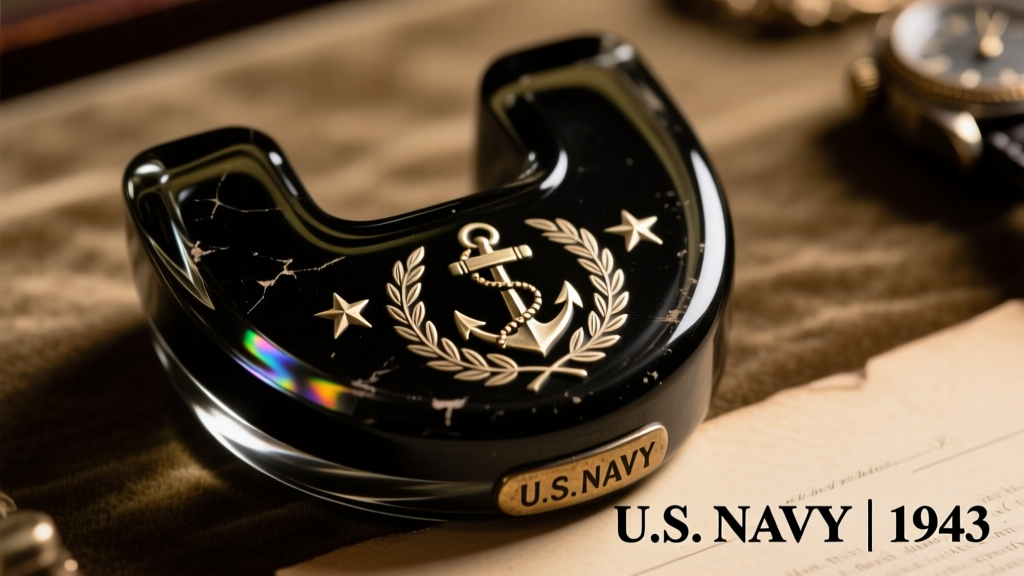
Glass Black Inkwells of the U.S. Navy: Function, Form, and Naval Provenance
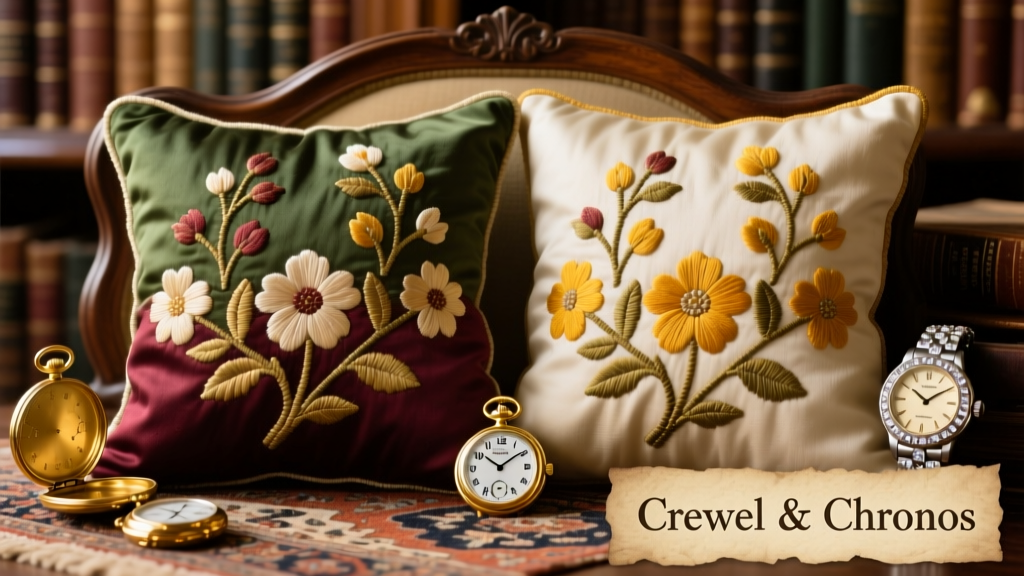
Crewelwork Cushions: A Study of the Blossoming Foliage Pair — 14 × 12½ Inches, English, c. 1730–1750
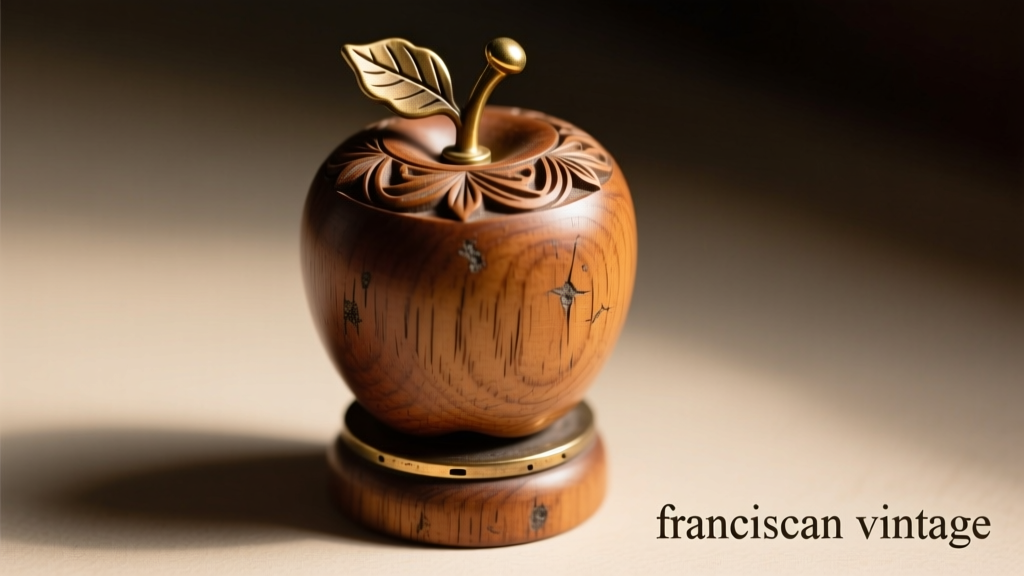
Franciscan Salt & Pepper Mill: Apple-Shaped Ceramic Top with Solid Walnut Base — A Mid-Century American Tableware Icon
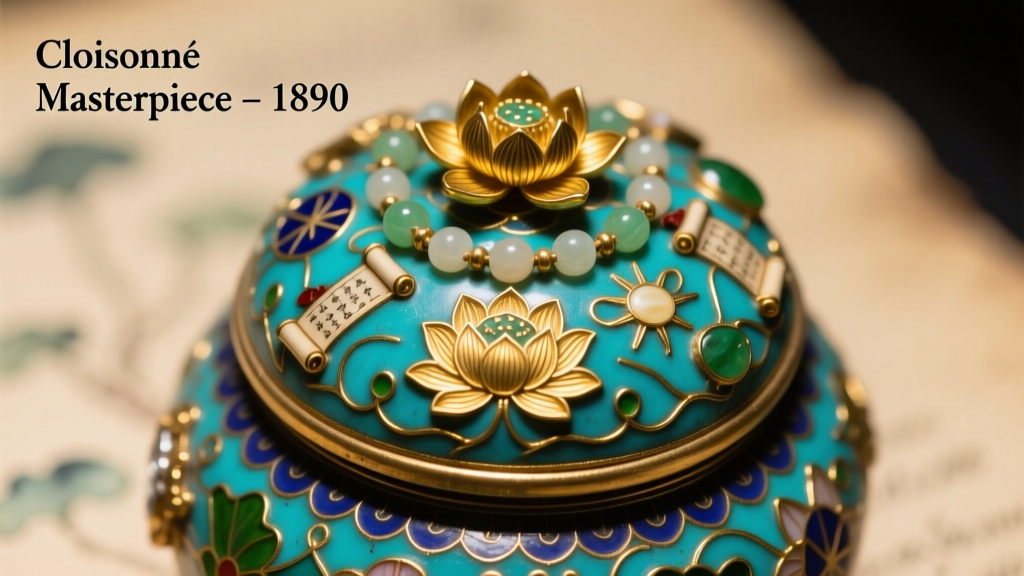
Cloisonné Ginger Jar Covers: A Pair of 10-Inch Imperial-Style Turquoise Vessels with Allover Precious Objects Motif
Cloisonné Plate Birds Lantern: A 12-Inch Yellow Globular Masterpiece from Mid-Century China
The Stanley No. 49 Tongue-and-Groove Plane: Anatomy, Provenance, and Collectibility of the B-Casting Variant
English Pewter Measure Tankard Cover: Authentic 1 & 2 Pint Capacity Marks in Historical Context