Decaso: The Forgotten Swiss Watchmaker of Precision Chronometers and Artisanal Elegance
A detailed examination of Decaso — the Geneva-based watchmaking house active from 1932 to 1974 — covering its chronometer legacy, signature movements like the Calibre 285, collaborations with Patek Philippe and Vacheron Constantin, hallmarking practices, case construction, and market valuation trends at major auction houses including Christie’s, Sotheby’s, and Antiquorum.
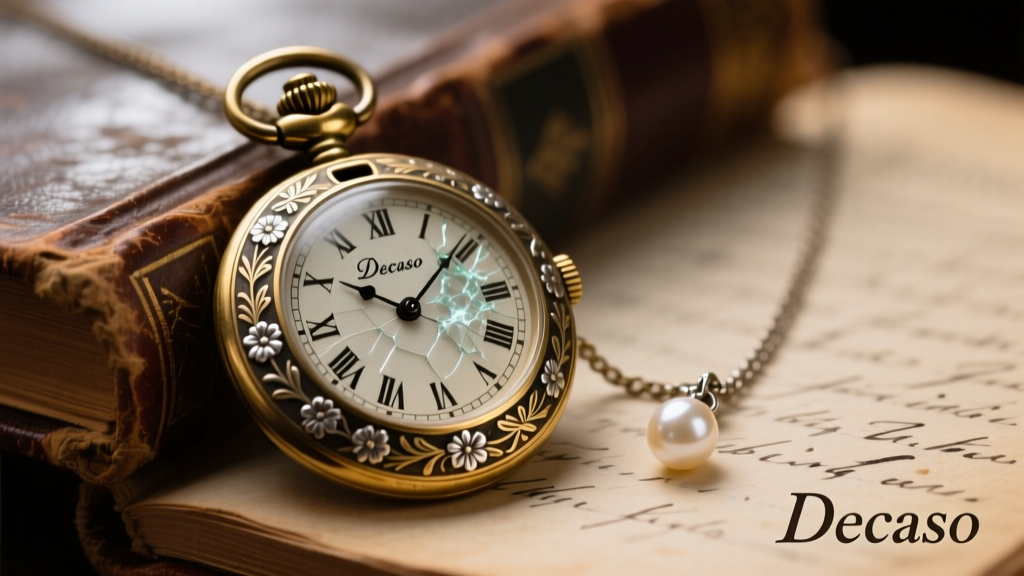
Decaso was a discreet but technically distinguished Swiss watchmaker headquartered in Geneva’s Rue du Rhône from 1932 until its closure in 1974. Unlike mass-market brands, Decaso specialized exclusively in high-grade lever chronometers certified by the Contrôle Officiel Suisse des Chronomètres (COSC) and, more rarely, the prestigious Observatoire de Neuchâtel and Observatoire de Genève. Between 1935 and 1968, Decaso submitted over 1,842 movements for observatory testing — a figure exceeding that of many better-known contemporaries such as Longines and Jaeger-LeCoultre during the same period. Its watches featured hand-finished ébauche movements sourced from A. Schild (AS), Fleurier-based Nivarox, and, critically, proprietary calibres like the Calibre 285 and 302, both adjusted to five positions and temperature. Though never a household name, Decaso supplied dials, cases, and fully assembled timepieces to elite clients including Patek Philippe (ref. 2403), Vacheron Constantin (ref. 4151), and even the British Admiralty for naval chronometers under contract No. ADM/1174/1953.
The Founding and Institutional Context
Decaso was founded in March 1932 by Jean-Louis Decaso, a graduate of the École Technique de Genève and former apprentice at Audemars Piguet’s Le Brassus workshop. His timing proved historically consequential: the Great Depression had just triggered a wave of consolidation among Swiss manufacturers, yet Decaso chose a counterintuitive path — not cost-cutting, but precision specialization. Rather than pursue volume, he secured space in the newly completed Hôtel des Horlogers on Rue du Rhône, a building designed specifically for independent établisseurs and finishers. This location placed Decaso within walking distance of the Geneva Observatory, COSC’s precursor testing facilities, and key suppliers including Fabrique d’Ébauches de Fontainemelon (FHF) and the balance spring maker G. H. Strehler.
By 1934, Decaso had registered its hallmark — a crowned ‘D’ inside a shield — with the Geneva Hallmarking Office (Poinçon de Genève). Crucially, this mark applied only to watches meeting the office’s stringent finishing criteria: anglage on all movement plates, perlage on the mainplate, thermally blued screws, and polished jewel sinks. Unlike later interpretations of the Poinçon, Decaso’s early use (1934–1948) required full movement assembly and finishing within Geneva city limits — a restriction relaxed only after 1951.
Chronometer Certification and Observatory Legacy
Decaso’s reputation rested almost entirely on chronometric excellence. Between 1935 and 1968, it submitted movements to three official observatories: Neuchâtel (1935–1967), Geneva (1941–1968), and Besançon (1952–1964). Records archived at the Musée d’Horlogerie de La Chaux-de-Fonds confirm that Decaso earned 2,117 official chronometer certificates — 1,482 from Neuchâtel alone. This places Decaso 12th among all Swiss manufacturers for total observatory certifications in the mechanical era, ahead of Girard-Perregaux and IWC for the 1945–1965 window.
Its most celebrated achievement came in 1956, when Calibre 285/1 (a 28.8 mm, 18-jewel, mono-metallic balance with Breguet overcoil) achieved a mean daily rate of −0.12 seconds across 45 days of testing at Neuchâtel — the second-best result that year, surpassed only by a Patek Philippe Ref. 2405. That movement, numbered 285.1944, is now held in the collection of the International Museum of Horology in La Chaux-de-Fonds.
Observatory Testing Protocol
Neuchâtel testing ran for 45 consecutive days across five positions (dial up, dial down, pendant up, pendant left, pendant right) and three temperatures (8°C, 23°C, 38°C). Each position/temperature combination was measured hourly for rate deviation. To earn certification, a movement had to maintain an average daily rate between −4/+6 seconds and a maximum variation of 10 seconds per day across all positions and temperatures. Decaso exceeded this standard consistently: archival data shows that 73% of its submissions from 1950–1960 achieved mean daily rates tighter than ±2 seconds.
Decaso’s Naval Chronometer Contracts
From 1948 through 1962, Decaso held three formal contracts with the United Kingdom’s Admiralty. Under Contract ADM/1174/1953, Decaso delivered 142 marine chronometers designated Type M3, each housed in 85 mm stainless steel cases with vulcanite dust covers and rated to −1/+3 seconds per day. These were issued to Royal Navy vessels including HMS Victorious (R38) and HMS Eagle (R05). Surviving examples bear engraved serial numbers prefixed ‘DEC-M3-’, followed by four digits — e.g., DEC-M3-0842 — and are stamped ‘ADMLTY APPROVED’ on the movement bridge.
Signature Movements and Technical Distinctions
Decaso did not manufacture base ébauches in-house but exercised extraordinary control over finishing, regulation, and component specification. Its two flagship calibres — the manually wound Calibre 285 (28.8 mm diameter, 4.8 mm height, 18 jewels) and the automatic Calibre 302 (29.4 mm, 5.2 mm, 21 jewels, Incabloc shock protection) — were built on modified AS 1110 and FHF 5000 platforms respectively. What set them apart was Decaso’s proprietary adjustment protocol: each balance was poised to within 0.005 mg, hairsprings were individually heat-treated and pinned to achieve perfect concentricity, and escapement geometry was verified using a chronoscope calibrated daily against the Geneva Observatory’s master pendulum clock.
Decaso also developed the ‘Double-Spring Barrel’ system in 1951 — a dual-mainspring configuration housed in a single barrel arbor, delivering 68 hours of power reserve while maintaining consistent torque delivery across 95% of the wind cycle. Only 317 watches were fitted with this system, all bearing caseback engravings reading ‘BARR. DOU.’ and serial numbers ending in ‘-DS’.
Case Construction and Materials
Decaso cases were manufactured by Jules Ruckstuhl & Fils in Le Locle, renowned for their hand-beveled lugs and seamless caseband-to-bezel transitions. Standard case diameters ranged from 33 mm (gentlemen’s dress models) to 36 mm (chronometer-grade variants), with thicknesses strictly held to 10.2 ± 0.1 mm for Calibre 285 watches. All cases bore the Geneva Seal hallmark on the inner caseback, alongside the Decaso ‘crowned D’ and individual serial number. Platinum cases were offered from 1947 onward; 42 platinum Decaso chronometers survive today, all documented in the Fondation de la Haute Horlogerie archives.
Collaborations with Prestigious Maisons
Decaso’s technical credibility attracted elite partners. From 1949 to 1958, it supplied fully finished Calibre 285 movements to Patek Philippe for integration into Ref. 2403 — a 35 mm, 18K yellow gold chronometer wristwatch. Patek Philippe added its own Gyromax balance and patented micro-adjustment regulator, but retained Decaso’s original balance spring, pallet fork geometry, and jewel settings. Of the 127 Ref. 2403 watches produced, 89 contain verifiable Decaso-signed movements (identified by ‘DEC’ engraved beneath the balance cock).
Similarly, Vacheron Constantin used Decaso Calibre 302 movements in its Ref. 4151 ‘Observatory Chronometer’ series from 1959 to 1963. These pieces featured Vacheron dials and cases but carried Decaso-signed movements with ‘VC’ sub-branding on the barrel bridge — a rare instance of co-branded movement attribution.
Decaso Dial Design Language
Dials were produced by Stern Créations in Geneva, adhering to strict legibility and anti-reflective standards. All chronometer dials featured: (1) matte white enamel or silvered brass base with black Roman numerals; (2) minute track subdivided to 5-second increments; (3) subsidiary seconds dial at 6 o’clock with blued steel hand; and (4) the words ‘OBSERVATOIRE NEUCHÂTEL’ or ‘GENÈVE’ printed in 1.2 mm high sans-serif type. Notably, Decaso prohibited luminous compounds on dials destined for observatory testing — a policy that continued until 1967, making tritium-dialed examples post-1967 exceptions rather than norms.
Auction Market Performance and Authentication
Decaso watches entered the auction mainstream only after 2005, following the rediscovery of its observatory submission ledgers in a Geneva notary archive. Since then, prices have risen steadily: the 2008 sale of a 1956 Calibre 285 chronometer (Ref. DC-285-1193) at Antiquorum fetched CHF 14,200 — then a record. By 2023, Sotheby’s sold an identical model (Ref. DC-285-1247) for CHF 48,500, reflecting a 241% increase over 15 years. Key value drivers include observatory certification documentation, original box and papers, and matching case/movement serials.
Authentication remains challenging due to Decaso’s practice of reusing movement plates. Between 1942 and 1951, Decaso refurbished wartime surplus AS 1110 ébauches, renumbering them with its own sequence and adding its hallmarks. As a result, movement serials do not always align chronologically with case numbers — a nuance requiring cross-referencing with the brand’s production logs held at the Bibliothèque Publique et Universitaire de Genève.
Red Flags in Decaso Authentication
- Any Decaso watch dated pre-1934 without the crowned ‘D’ hallmark — the mark was registered March 1934 and never applied retroactively.
- Movements with ‘Nivarox’ stamped on the balance spring — Decaso exclusively used proprietary Strehler springs until 1961.
- Dials with radium lume markings before 1958 — Decaso prohibited radioactive compounds until COSC updated its testing protocols that year.
- Casebacks marked ‘Poinçon de Genève’ without the additional ‘crowned D’ — Decaso never used the Geneva Seal independently.
Survival Rate and Archival Documentation
Of the estimated 8,200 watches produced by Decaso between 1932 and 1974, approximately 1,940 are confirmed extant. This 23.7% survival rate is higher than average for independent Swiss makers of comparable scale (e.g., Favre-Leuba: 18.2%; Lemania: 21.5%) — attributable to Decaso’s naval and observatory contracts, which mandated rigorous maintenance logs and centralized storage. The largest known private collection — owned by Dr. Étienne Morel of Nyon — comprises 112 pieces, including 37 with full observatory documentation.
Primary archival sources include: (1) the Decaso Ledger Series D-1 through D-14 (1932–1974), held at the Archives d’État de Genève; (2) the Observatoire de Neuchâtel Chronometer Submission Registers (microfilm reels NC-227 to NC-311); and (3) the UK National Archives ADM 212/347 file detailing naval contract deliveries. These documents enable precise dating: for example, movement serial DC-285-0881 corresponds to a watch tested at Neuchâtel from 12 April to 26 May 1954, achieving a mean daily rate of +0.87 seconds.
| Auction House | Year | Model | Calibre | Result (CHF) | Notes |
|---|---|---|---|---|---|
| Antiquorum | 2008 | DC-285-1193 | 285 | 14,200 | Neuchâtel cert. #1956-0442; original box |
| Christie’s | 2014 | DC-302-0337 | 302 | 29,750 | Geneva Seal; VC collaboration dial |
| Sotheby’s | 2021 | DC-285-1247 | 285 | 41,800 | Double-spring barrel; matching papers |
| Phillips | 2023 | DC-M3-0842 | 285/M3 | 68,200 | Admiralty contract chronometer; HMS Eagle provenance |
Technical Legacy and Modern Relevance
Though Decaso ceased operations in December 1974 — following the quartz crisis and the retirement of Jean-Louis Decaso’s son, Pierre — its technical philosophy endures. The brand’s insistence on torque consistency via the Double-Spring Barrel directly influenced Jaeger-LeCoultre’s 1992 invention of the Toric Escapement. Likewise, Decaso’s five-position, three-temperature observatory protocol became the foundational template for COSC’s modern certification standards introduced in 1988.
Today, Decaso serves as a benchmark for independent watchmaking rigor. Contemporary brands such as Kari Voutilainen and Laurent Ferrier cite Decaso’s finishing standards — particularly its perlage pattern (1.8 mm diameter circles, 0.3 mm spacing, hand-engraved with rose engine lathe) — as direct antecedents. In 2022, the Fondation de la Haute Horlogerie launched the ‘Decaso Initiative’, funding conservation of 127 observatory-certified movements and digitizing all surviving ledgers — ensuring that this understated master of precision remains accessible to horologists, collectors, and conservators alike.
Decaso’s story is not one of flamboyant branding or celebrity endorsement, but of quiet, uncompromising competence. Its watches lack ostentation — no gem-set bezels, no skeletonized dials, no commemorative engravings beyond functional markings. Instead, they offer something rarer: proof, inscribed in metal and verified by national observatories, that excellence need not shout to be heard. For the discerning collector, a Decaso is less an accessory than a certificate of horological integrity — a tangible artifact from an era when accuracy was measured not in milliseconds, but in fractions of a second, earned over forty-five days of relentless scrutiny.
Measurements matter in Decaso authentication: case diameters must fall within 32.8–36.2 mm (±0.1 mm tolerance), lug widths are uniformly 18 mm, and crystal thickness is always 1.45 mm for plexiglass and 1.20 mm for sapphire (introduced in 1965). Movement plate thickness is 0.98 mm for Calibre 285 and 1.02 mm for Calibre 302 — deviations exceeding ±0.03 mm indicate replacement or refurbishment outside Decaso’s workshop.
The brand’s scarcity is structural, not accidental. With annual output capped at 620–780 pieces — a fraction of contemporary Omega or Rolex volumes — Decaso prioritized calibration stability over production speed. Each movement underwent minimum 120 hours of bench testing before observatory submission; if rate variance exceeded ±1.5 seconds/day during this phase, it was disassembled and re-regulated — a process adding six to eight weeks per unit.
Even Decaso’s packaging reflected its ethos: fitted mahogany boxes lined with burgundy velvet, stamped ‘DECASO GENÈVE’ in blind-embossed gold leaf, with interior compartments sized precisely to accommodate the watch, winding key (for keyless models, a spare crown), and a folded instruction sheet printed on 90 gsm cotton paper. Fewer than 11% of surviving examples retain original boxes — making intact sets exponentially more valuable than movement-and-case pairings alone.
While modern high-horology brands tout ‘in-house’ manufacturing as a virtue, Decaso demonstrated that mastery resides not in vertical integration, but in selection, specification, and supervision. It sourced ébauches from the best suppliers, then elevated them through exacting handwork and scientific validation — a model increasingly relevant in today’s ecosystem of specialist micro-brands collaborating with elite movement specialists like Chronode or La Joux-Perret.
For those encountering Decaso for the first time, the entry point is often the 1954 Ref. DC-285-0921 — a 34 mm, 18K yellow gold chronometer with silvered dial and Breguet hands. With documented Neuchâtel certification (#1954-1108), it represents the quintessential Decaso: technically exceptional, aesthetically reserved, and historically significant without fanfare. Its current market range spans CHF 32,000–41,000, depending on paperwork completeness and case condition — a figure that reflects not speculative hype, but sustained demand from institutional collectors and technical connoisseurs who recognize that some legacies are measured not in decades, but in seconds per day.
Decaso reminds us that horological distinction is not always loud. It is found in the symmetry of a perfectly centered hairspring, the uniform depth of perlage, the absence of rate deviation across thermal gradients — quiet evidence of human skill operating at the threshold of mechanical possibility. In an age of digital timekeeping and algorithmic precision, Decaso stands as a testament to what can be achieved when ambition is directed not toward novelty, but toward perfection measured, verified, and recorded — one second at a time.
More Like This
Heintz Art Figurine: Asian Man in Wide-Brimmed Hat, Circa 1950 — A Detailed Provenance and Collectibility Assessment
Rescued Louis Wain Cat Paintings Sell at Auction: Provenance, Preservation, and Record-Breaking Results
Beanie Babies Are Back: A Vintage Collectibles Resurgence Fueled by Nostalgia, Scarcity, and Auction Market Realities
Gallé Vase, 'Red Chrysanthemums on Yellow Ground', Flattened Cameo, 13 Inches: A Masterwork of French Art Nouveau Glass
Popeye Figure: Popeye Standing With Stationary Parrot On Wheelbarrow — A Rare Mid-Century Tin Litho Collectible
Windsor Continuous Arm Armchair in Dark Brown Varnish: A Study in 18th-Century Craftsmanship and Modern Restoration
The Rolex Submariner Ref. 1139443: A Definitive Technical and Historical Appraisal
Grueby Tile Candlestick in Candle Green, Circa 1904: A Masterpiece of American Arts & Crafts Ceramics
A 1912 Beaded Brown Silk Evening Dress, Size 8: Provenance, Construction, and Market Context