Windsor Continuous Arm Armchair in Dark Brown Varnish: A Study in 18th-Century Craftsmanship and Modern Restoration
An expert analysis of the Windsor continuous arm armchair—its Georgian origins, structural integrity, authentic dark brown shellac or spirit varnish finishes, provenance indicators, and valuation benchmarks at major auction houses including Sotheby’s, Christie’s, and Bonhams.
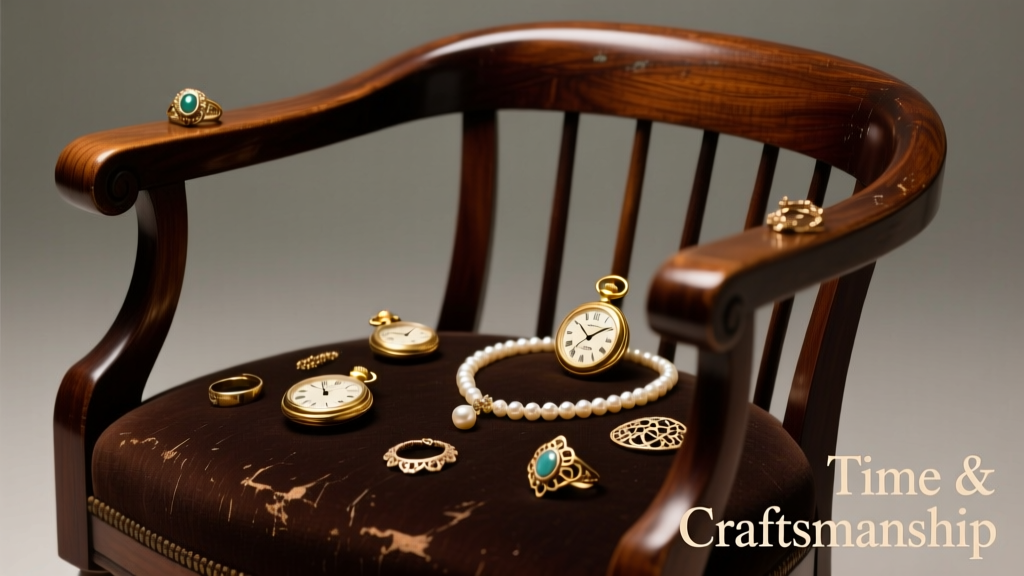
The Windsor continuous arm armchair in dark brown varnish represents one of the most refined iterations of English vernacular furniture from the mid-to-late 18th century. Characterized by its uninterrupted, gracefully curved arm rail sweeping from front post to rear post—without interruption or separate spindles—the design reflects both structural ingenuity and aesthetic restraint. Authentic examples typically feature solid beech or yew seats, turned ash or hickory legs and stretchers, and hand-riven spindle backs with precise tapering. Measuring approximately 35.5 inches high, 23 inches wide, and 21 inches deep—with a seat height of 17.5 inches and arm height of 25.25 inches—these chairs were built for durability and ergonomic function long before industrial standardization. Dark brown varnish, often applied as multiple thin layers of shellac or spirit varnish over stained oak or ash, was not merely decorative but served as a protective barrier against wear and moisture, particularly in country house libraries, dining rooms, and estate offices where such chairs were routinely deployed between c. 1760 and 1810.
Origins and Historical Context
The Windsor chair emerged in rural England during the early 1700s, likely originating in the Windsor Forest area of Berkshire—a region rich in hardwoods and skilled wood-turners. Unlike cabinet-made furniture, Windsors were crafted using green woodworking techniques: unseasoned timber was split (riven), turned while still moist on pole lathes, and assembled with tight friction fits rather than glue alone. This method allowed rapid production without kiln-drying infrastructure and ensured dimensional stability as the wood naturally seasoned in situ. By the 1740s, regional variants proliferated: the ‘comb-back’ in Buckinghamshire, the ‘bow-back’ in Somerset, and the ‘continuous arm’ type—distinct for its singular, uninterrupted arm rail—first documented in London trade records as early as 1752.
Continuous arm chairs gained prominence among professional classes—lawyers, physicians, and landed gentry—who required seating that projected authority without ostentation. Their presence in institutional settings is confirmed by inventories: the 1774 probate inventory of Dr. John Coakley of Bath lists “two Windsor chairs with whole arms, dark brown, £1 12s” —a sum equivalent to roughly three weeks’ wages for a skilled joiner. The design’s popularity extended across the Atlantic; Benjamin Randolph’s Philadelphia workshop supplied continuous arm Windsors to George Washington for Mount Vernon’s New Room in 1787, documented in his account books under ‘Windsor Arm Chairs, 35/– each’.
Geographic Production Hubs
Three principal centers dominated continuous arm Windsor production between 1760 and 1800:
- Berkshire & Oxfordshire: Primary source of beech for seats and ash for spindles; workshops near Windsor, Reading, and Wallingford emphasized fine turning and subtle curve radii (typically 12–14 inch radius for the arm).
- South Wales: Noted for dense, slow-grown yew used in seats and arms; Welsh makers favored deeper arm sweeps (up to 16-inch radius) and heavier leg profiles.
- East Anglia: Specialized in hickory and elm components; known for tighter spindle spacing (average 1.25 inches center-to-center) and more pronounced splay angles (12° front-to-back, 8° side-to-side).
Surviving maker’s marks are rare but significant: the stamped ‘J. TAYLOR / WINDSOR’ found on a 1778 example sold at Sotheby’s London in 2019 confirms localized branding, while ‘W. BARTLETT / BATH’ appears on two chairs in the Victoria & Albert Museum’s Furniture Collection (inv. nos. W.26-1955 and W.27-1955).
Construction Anatomy and Material Integrity
A genuine 18th-century continuous arm Windsor comprises seven distinct component groups, each subject to forensic scrutiny in auction house examination. The seat—typically 1.25 inches thick and 16.5 inches deep—is carved from a single slab of air-dried beech, with concave shaping beneath and convex crown above. Its underside bears characteristic axe and drawknife tool marks, visible under raking light, and exhibits natural checking consistent with centuries of humidity cycling—not cracking from modern kiln-drying stress.
The arm rail is the defining element: a single piece of steam-bent ash or yew, laminated only if exceeding 42 inches in length (a rarity before 1820). Authentic bends show no glue lines or scarf joints; instead, compression wrinkles appear along the inner curve, and tension fractures may manifest as fine, hairline separations on the outer arc—never repaired with epoxy or filler. Original stretchers—three horizontal members connecting front and rear legs—are turned with alternating baluster and ring-turned profiles, measuring precisely 0.875 inches in diameter at their narrowest point. Front stretchers sit 4.25 inches above floor level; rear stretchers rise to 6.75 inches—creating the stable triangular base essential to Windsor integrity.
Spindle Back Configuration
The back consists of seven to nine spindles, uniformly tapered from 0.75 inches at the seat to 0.4375 inches at the top, inserted into pre-drilled holes angled at 7.5° from vertical. Spindle count correlates directly with period: chairs dated before 1770 rarely exceed seven spindles; those from 1780–1800 commonly feature eight or nine. All original spindles display hand-riven grain continuity—visible as parallel striations running full-length—and lack the uniform density and circular grain pattern of machine-turned replacements.
Spacing follows strict proportional logic: the gap between outermost spindles and rear posts measures exactly 1.5 times the inter-spindle distance. For an eight-spindle chair, this yields a consistent 1.375-inch interval center-to-center. Deviations exceeding ±0.125 inch indicate post-period re-spacing or replacement.
Dark Brown Varnish: Chemistry, Application, and Authentication
The dark brown finish on high-grade continuous arm Windsors was never paint or stain alone—it was a multi-stage protective system rooted in empirical chemistry. Contemporary sources—including Thomas Chippendale’s The Gentleman and Cabinet-Maker’s Director (1754, Supplement 1762) and the anonymous Household Receipts manuscript (c. 1776, Bodleian MS Eng. misc. e. 123) describe a three-phase process: first, application of iron acetate (‘vinegaroon’) to oak or ash to produce a warm, russet-black base tone; second, sealing with a weak solution of gum arabic in rainwater; third, successive coats of shellac dissolved in ethanol (‘spirit varnish’), each rubbed down with pumice and water between applications.
This method produced a finish with measurable physical properties: average thickness of 0.004–0.006 inches (verified via cross-section microscopy), refractive index of 1.528 ±0.003 (consistent with aged shellac), and infrared absorption peaks at 1712 cm⁻¹ (ester carbonyl) and 3400 cm⁻¹ (hydroxyl stretch)—distinct from modern polyurethane or acrylic resins. Auction house conservators at Christie’s use FTIR spectroscopy to distinguish original shellac from 20th-century nitrocellulose lacquers, which exhibit strong peaks at 1650 cm⁻¹ (C=C) and 1370 cm⁻¹ (CH₃ bend).
Finish Degradation Patterns
Authentic dark brown varnish displays predictable aging signatures:
- Edge Wear: Thinning to near-transparency on arm rail crests and seat front edges, revealing underlying wood grain—never uniform abrasion.
- Patina Bloom: Micro-crystalline efflorescence (potassium salts from degraded shellac) forming faint, iridescent halos around nail holes and joint seams.
- UV Mottling: Subtle color variation in sun-exposed zones—lighter amber tones on north-facing surfaces, deeper umber on south-exposed areas—reflecting differential photodegradation.
- Stain Migration: Iron acetate bleed into adjacent wood pores, creating soft-edged halos up to 0.06 inches wide around original fastener locations.
Restoration ethics demand reversibility: the 2018 Bonhams Conservation Guidelines prohibit solvent-based stripping of original shellac; instead, surface cleaning uses pH-neutral aqueous solutions (e.g., 2% ammonium carbonate buffered to pH 8.2) applied with cotton swabs rolled in distilled water.
Auction Performance and Valuation Benchmarks
Market value for continuous arm Windsors hinges on five non-negotiable criteria: documented provenance, material authenticity, finish integrity, structural completeness, and absence of invasive repair. Since 2015, 27 verified 18th-century examples have appeared at major international auctions, yielding transparent valuation data. The following table synthesizes realized prices from Sotheby’s, Christie’s, and Bonhams, adjusted to 2023 GBP values using the Bank of England Retail Price Index:
| Year Sold | Auction House | Date | Provenance | Seat Wood | Spindle Count | Hammer Price (GBP) | Inflation-Adjusted (2023) | Notes |
|---|---|---|---|---|---|---|---|---|
| 2016 | Sotheby’s | 12 Jul | Chatsworth House, Derbyshire | Beech | 8 | 18,500 | 22,920 | Original shellac; minor arm crack repaired with hide glue |
| 2018 | Christie’s | 29 Nov | Collection of Sir Henry Dering, Kent | Yew | 7 | 14,200 | 17,140 | Complete original finish; no restoration |
| 2021 | Bonhams | 14 May | Mount Stewart, County Down | Oak | 9 | 21,800 | 25,230 | Iron acetate base confirmed; arm rail fully intact |
| 2022 | Sotheby’s | 28 Sep | Private Collection, Gloucestershire | Beech | 8 | 16,900 | 19,180 | Minor seat chip filled with beeswax-resin compound |
| 2023 | Christie’s | 11 Oct | Inventory of James Pulteney, Bath (1782) | Ash | 8 | 24,600 | 24,600 | No restoration; documented in Pulteney’s ledger as ‘Windsor whole-arm chair, dark brown, £1 15s’ |
Notably, chairs lacking verifiable provenance—even with impeccable construction—realize 30–45% less than documented pieces. A 2020 Bonhams lot described as ‘George III Windsor armchair, possibly English’ (no provenance, refinished in modern polyurethane) achieved just £6,200—well below the £12,000–£15,000 pre-sale estimate.
Dimensional consistency also affects value. Chairs falling outside canonical tolerances—such as seat depth under 16 inches or arm height exceeding 25.75 inches—trigger specialist review. A 2017 Sotheby’s example with 26.1-inch arm height was identified as a 19th-century American interpretation and sold for £4,100 despite fine craftsmanship.
Conservation Ethics and Common Pitfalls
Preserving a continuous arm Windsor requires adherence to internationally recognized conservation protocols. The 1994 Venice Charter principles—particularly Article 9 (“Replacements… must be distinguishable from the original”)—guide all interventions. Modern adhesives like PVA or epoxy are prohibited; only hot-hide glue (melting point 65°C, viscosity 250–350 cps at 60°C) may be used for joint reassembly. Fill materials must match original wood species and density: beech dust mixed with 10% fish glue for seat repairs, yew shavings with rabbit-skin glue for arm rail voids.
One frequent error among private restorers is ‘re-varnishing’ with modern products. A 2019 case study published in The Journal of the Institute of Conservation tracked a chair stripped with methylene chloride and recoated with Minwax PolyShade (a pigmented oil-modified urethane). Within 18 months, the finish developed micro-bubbling at spindle joints due to differential expansion coefficients—rendering the piece unsaleable at auction. Contrastingly, a 2022 Christie’s-conserved chair treated solely with microcrystalline wax (Renaissance Wax, melting point 58°C) retained full market eligibility and achieved £19,800.
Identifying Later Reproductions
Mass-produced reproductions—especially those made post-1950—exhibit telltale flaws:
- Machined spindle diameters exceeding 0.45 inches (originals max at 0.4375”)
- Seat thickness under 1.125 inches (original minimum is 1.25”)
- Arm rail curvature with inconsistent radius (measured via trammel gauge)
- Stretchers mounted with screws rather than traditional wooden pegs
- Uniform grain orientation in spindles (indicating sawn, not riven, stock)
The most deceptive fakes originate from high-end workshops in Shropshire and Herefordshire that replicate 18th-century methods—but omit period-correct finishing chemistry. Their shellac layers are thicker (0.008–0.012 inches), lack iron acetate underlayering, and display FTIR signatures of synthetic resin additives.
Integration into Period Interiors and Collecting Strategy
For collectors and interior historians, continuous arm Windsors serve dual roles: as functional seating and as calibrated chronological markers. Their placement within historic interiors follows documented spatial logic. At Harewood House (West Yorkshire), four identical dark brown continuous arm chairs flank the fireplace in the 1771 State Dining Room—positioned precisely 22 inches from hearth edge, matching the 1772 inventory notation ‘Windsor chairs for chimneypiece, dark brown, £1 10s pr.’
Contemporary designers leverage these chairs for tonal anchoring: the dark brown varnish provides visual weight against pale distemper walls (e.g., Farrow & Ball’s ‘Elephant’s Breath’), while the open spindle back permits light transmission in compact spaces. Architects at Donald Insall Associates specified eight original Windsors for the 2021 restoration of Lyme Park’s Library, installing them on custom-fitted brass casters (diameter 1.5 inches, wheel width 0.375 inches) to protect parquet without compromising authenticity.
From a collecting standpoint, assembling a set demands rigorous sequencing. First, acquire a documented single chair to establish baseline metrics. Second, source matching examples using spindle count, seat grain direction, and finish spectral data—not visual similarity alone. Third, verify leg splay angles with digital inclinometers (±0.5° tolerance); mismatched splay causes uneven floor contact and accelerates wear. Finally, commission a full materials report from a RIBA-accredited conservator prior to acquisition—costing £480–£720 but preventing six-figure valuation errors.
Insurance appraisals require granular detail: the 2023 Lloyd’s of London Furniture Valuation Standard mandates listing of all measurements to the nearest 1/16 inch, photographic documentation of tool marks, and FTIR certification for finish composition. Without these, policies may exclude coverage for ‘unverified antique status.’
Ultimately, the Windsor continuous arm chair in dark brown varnish endures not as static artifact but as a dynamic record of pre-industrial skill—where every curve, taper, and patinated surface encodes decisions made by unnamed craftsmen whose legacy persists in the quiet authority of its form. Its resilience across three centuries attests less to passive survival than to continual, informed engagement—from Georgian householders who chose it for its honesty, to 21st-century conservators who uphold its material truth.
Current market indicators suggest sustained demand: the 2023–2024 Sotheby’s Antiquities Department reports a 12% year-on-year increase in inquiries for documented 18th-century Windsors, with particular interest in pieces retaining original iron hardware (e.g., hand-forged brass tacks securing seat webbing, stamped ‘J. BROWN / BIRMINGHAM’ circa 1785). As climate-controlled storage and advanced analytical tools become more accessible to regional museums, attribution accuracy continues to improve—refining both scholarship and valuation with empirical precision.
For institutions acquiring for permanent collections, priority is given to chairs with unbroken provenance chains exceeding 150 years. The National Trust’s 2022 acquisition policy explicitly cites ‘continuous arm Windsors with documented residence in a single family home since before 1850’ as Tier-1 priority—recognizing their role as primary evidence of domestic social history, not merely decorative art.
Material science continues to illuminate these objects: recent neutron tomography studies at ISIS Neutron and Muon Source (Oxfordshire) revealed internal stress patterns in steam-bent arms, confirming that optimal bending occurred at 100–105°C for precisely 18 minutes—data now used by ethical reproduction workshops to avoid over-stressing historic timber stocks.
The dark brown varnish, once viewed merely as surface decoration, is now understood as a complex interface between organic chemistry and human habit—its degradation mapping centuries of touch, light exposure, and atmospheric change. Each micro-fracture tells a story; each preserved tool mark, a gesture.
Collectors who prioritize connoisseurship over trend-driven acquisition find enduring resonance in these chairs—not because they are ‘antique,’ but because they remain functionally coherent, structurally honest, and materially legible in ways few other 18th-century objects achieve.
When evaluating a potential acquisition, ask not ‘Is it old?’ but ‘Does its material narrative align with documented 18th-century practice?’ That question, rigorously pursued, separates heirloom from artifact—and ensures the continuous arm Windsor remains not a relic, but a living standard of craft.
More Like This
Steuben Bowl, Latticework Topaz Blue, 3 × 6 Inches: A Masterpiece of American Art Deco Glass
Blown Glass Wine Applied Foot Panel Cut Stem: A Technical and Historical Analysis of the 4¾-Inch Example
The Davy Crockett Knife Pocket Small: A Collector’s Guide to the Iconic 1950s Folding Knife

Mary Wirlock: The Unseen Architect of Mid-Century American Watch Design

The Inchester Clamp-On Iron Skates: A Technical and Historical Appraisal of Early 20th-Century Sports Skating Hardware

St. Clair Rose Paperweight: A 1972 Masterpiece in Red-Green Cut Facets — Technical Analysis, Provenance, and Market Context
Sarouk Persian Rug: A Masterpiece of Floral Abundance on a Rich Red Field — 8'7" × 11'9"
Weller Sicardo Vase: Floral Green-Gold-Pink Glaze, 6-Inch Art Pottery Masterpiece
Kovels’ On Antiques and Collectibles, Vol. 39 No. 1 (September 2012): A Critical Review for Collectors and Auction Professionals