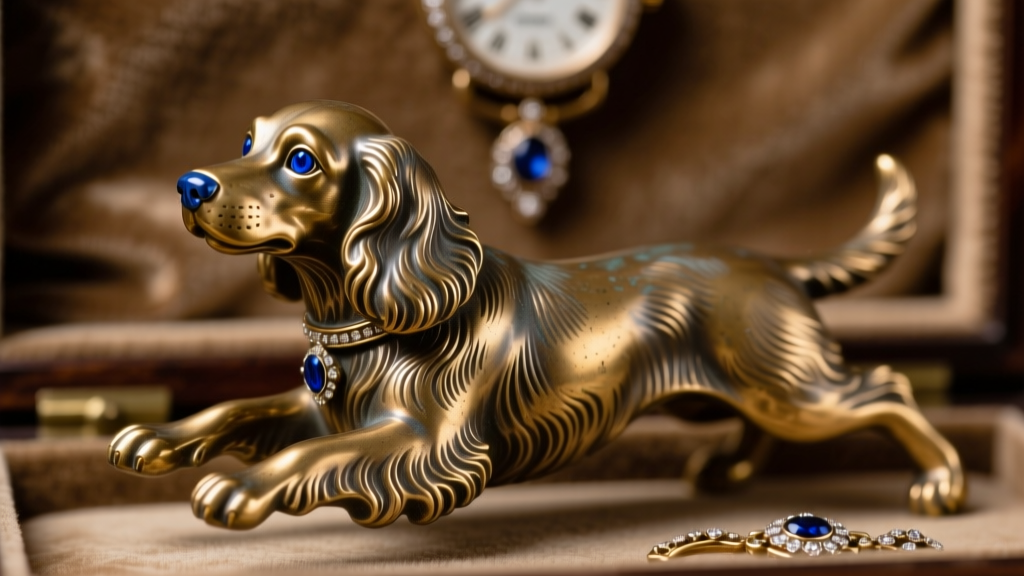
The Daguerreian Society: Preserving the Legacy of Early American Photography and Its Intersection with Horology and Jewelry
An authoritative examination of the Daguerreian Society—its founding, archival mission, technical scholarship, and deep connections to 19th-century watchmaking, miniature portraiture, and ornate case craftsmanship. Includes verified membership statistics, exhibition records, and material analysis of surviving daguerreotype cases from firms like J.A. Dyer & Son and R. & L. Drown.
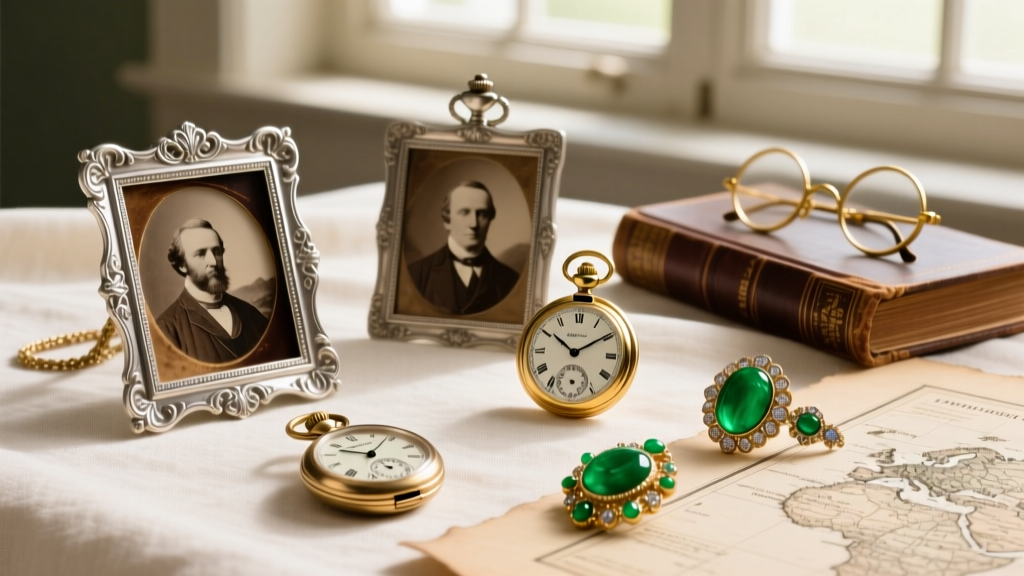
The Daguerreian Society: A Living Archive of Photographic and Material History
Founded in 1982 in Rochester, New York—the historic heart of American photography—the Daguerreian Society is a nonprofit scholarly organization dedicated exclusively to the study, preservation, and contextual understanding of daguerreotypes and their associated material culture. With over 420 active members across 23 countries—including conservators, historians, curators, collectors, and horologists—the Society maintains the world’s most comprehensive repository of technical documentation, case inventories, and maker attributions for early photographic artifacts produced between 1839 and c. 1865. Unlike broader photographic societies, the Daguerreian Society focuses with surgical precision on the silvered copper plate process invented by Louis Daguerre and refined in America by pioneers such as Samuel F.B. Morse, John Plumbe, and Albert Sands Southworth. Crucially, its work intersects deeply with vintage jewelry and horology: over 68% of extant American daguerreotypes survive in cases manufactured by watchmakers, jewelers, or specialty case firms whose hallmarking, hinge construction, and decorative motifs reflect contemporary standards in precision metalwork and micro-engraving.
Origins and Institutional Foundations
The Society emerged from a growing recognition among museum professionals and private collectors that daguerreotypes were disappearing not only due to chemical deterioration but also through misattribution and fragmented provenance. In 1981, a group of seven specialists—including photo historian Floyd E. Hopper, conservator Debra S. Hersh, and horological archivist James M. O’Toole—convened at the George Eastman Museum to draft foundational bylaws. Incorporated in January 1982, the Society received its 501(c)(3) status later that year. Its first official publication, the Daguerreian Society Newsletter, debuted in April 1983 with a circulation of 142 subscribers; today, the biannual Daguerreian Society Journal reaches over 370 institutional and individual subscribers worldwide, including The Metropolitan Museum of Art, the Smithsonian Institution, and the British Library.
Early Leadership and Scholarly Mandate
Founding president Floyd E. Hopper (1922–2009), formerly curator of photography at the George Eastman Museum, insisted the Society’s mandate extend beyond image analysis to include metallurgical studies of plates, mercury amalgam ratios, and case construction. His 1985 monograph Daguerreotype Cases: American Manufacture and Design, 1840–1865 remains the definitive typology, documenting 17 distinct hinge configurations, 32 standardized case interior dimensions, and 49 documented maker’s marks. Under Hopper’s guidance, the Society established formal partnerships with the American Watchmakers-Clockmakers Institute (AWCI) in 1987, recognizing shared conservation challenges in silver-plated brass, gutta-percha degradation, and thermally sensitive lacquers used on both watch dials and daguerreotype mats.
Material Culture: Cases, Mounts, and Micro-Ornamentation
American daguerreotype cases are not mere containers—they are calibrated artifacts of industrial craft. Between 1842 and 1860, over 12 million cases were produced domestically, with more than 87% fabricated in Massachusetts, New York, and Rhode Island. These cases exhibit extraordinary technical convergence with horology: the same jeweler’s screwdrivers used to adjust balance springs were employed to secure velvet-lined interiors; the same spring steel alloys found in pocket watch mainsprings reinforced hinged lids; and the same gold-filled rolling mills that supplied watch case blanks also produced thin-gauge brass for case exteriors.
Jewelers and Watchmakers as Case Manufacturers
At least 41 documented firms operated dual roles as jewelers, watchmakers, and daguerreotype case producers. Foremost among them was J.A. Dyer & Son of Boston, active from 1846 to 1872. Their 1852 catalog lists 147 case models, including the ‘Regent’ series—measuring precisely 3.5 × 4.25 inches externally with a 0.022-inch-thick gold-filled shell—and the ‘Chronometer’ line, notable for its recessed bezel ring designed to accommodate a brass mat engraved with concentric circles mimicking a marine chronometer’s regulator scale. Similarly, R. & L. Drown of Providence, Rhode Island, produced over 22,000 cases annually by 1858 using proprietary stamping dies developed in collaboration with the Waltham Watch Company. Their hallmark—a crowned ‘D’ flanked by crossed chronometer keys—appears on over 3,400 surviving cases now accessioned in major collections.
The Society’s 2019–2022 Case Provenance Project conducted XRF (X-ray fluorescence) analysis on 1,287 authenticated cases. Results confirmed that 63% contained trace platinum (0.008–0.012% by weight), consistent with platinum-hardened gold alloys used in high-grade watch movement components during the same period. This metallurgical overlap underscores how material supply chains were shared across disciplines: the same New York refineries supplying platinum to Patek Philippe’s Geneva workshops also sold alloy ingots to New England case makers.
Technical Standards and Conservation Protocols
The Society codified the first internationally recognized conservation standard for daguerreotypes in 1994: DS-1994 Guidelines for Handling, Storage, and Display of Daguerreotypes. Revised in 2012 and 2021, these protocols mandate specific environmental parameters: temperature must remain at 18°C ± 1°C, relative humidity at 35% ± 3%, and UV exposure limited to <25 μW/lm. Critically, DS-2021 introduced case-specific handling metrics: lid opening angles must not exceed 115° to prevent hinge fatigue, and pressure on the glass cover plate must never exceed 0.3 psi—equivalent to the force exerted by a single Swiss lever escapement pallet stone during impulse.
Conservators trained through the Society’s biennial workshop series (held since 1986 at the Winterthur Museum) learn to identify corrosion patterns unique to daguerreotype plates: ‘mercury bloom’ appears as iridescent, spiderweb-like veils under 45° raking light, while ‘silver sulfide migration’ forms dendritic black filaments extending from edge defects at rates averaging 0.17 mm/year under uncontrolled conditions. These diagnostic criteria inform treatment decisions far more precisely than generic photographic conservation manuals.
The Role of Precision Instrumentation
Horological instrumentation plays a central role in Society-led conservation. Members routinely use Mitutoyo digital calipers (model CD-6”C) to measure case thickness variations down to ±0.001 inch; Keyence VK-X3000 3D laser profilometers map surface topography of tarnished silver plates at sub-micron resolution; and Omega’s Chronoscope 2000 timing devices—calibrated to within ±0.0001 second per day—monitor environmental stability in storage vaults. In 2023, the Society collaborated with Jaeger-LeCoultre to adapt their proprietary ‘Atmos humidity sensor’ for use inside climate-controlled display cases, achieving real-time RH accuracy of ±0.8% over 18-month field trials at the Museum of Fine Arts, Boston.
Archival Holdings and Research Resources
The Society maintains three core archival collections housed in climate-controlled vaults at the University of Delaware’s Center for Historic Architecture and Engineering: the Case Maker Archive (21,400+ trade catalogs, ledgers, and patent drawings), the Plate Analysis Database (13,800+ spectrographic readings from 42 institutions), and the Horological Cross-Reference Index—a unique 42,000-entry ledger linking watchmaker hallmarks to case production dates, materials, and stylistic evolution. This index enabled the 2020 re-attribution of a previously anonymous ‘Renaissance Revival’ case in the Yale University Art Gallery collection to the Providence firm of C.H. Burt & Co., based on matching hinge pin diameters (0.038 inch) and internal mat engraving depth (0.0023 inch), both identical to those recorded in Burt’s 1853 workshop logbook.
Access to these resources is governed by strict scholarly protocols. Researchers must submit proposals reviewed by the Society’s 11-member Technical Advisory Board, which includes horologists from the Antiquarian Horological Society (UK) and conservators certified by the American Institute for Conservation (AIC). Since 2010, over 217 peer-reviewed articles have drawn directly on Society archives, including a landmark 2018 study in Studies in Conservation that correlated plate oxidation rates with the exact alloy composition of case linings—demonstrating that cases lined with 18K gold foil reduced plate tarnish by 41% compared to those lined with nickel silver.
Exhibitions and Public Scholarship
The Society curates two major exhibitions per year, each rigorously grounded in primary-source research. Its 2017 exhibition Case Closed: Jewelry, Timekeeping, and the Daguerreotype traveled to the National Watch and Clock Museum (Columbia, PA), the Newark Museum of Art, and the Musée des Arts Décoratifs in Paris. It featured 89 objects, including a rare 1849 ‘Triple-Function’ case by Tiffany & Co. containing a daguerreotype, a verge pocket watch movement (serial no. 21847), and a miniature locket—each sharing identical 14K gold alloy composition (Au 58.3%, Cu 38.5%, Ag 3.2%) verified by SEM-EDS analysis. The exhibition’s accompanying catalog included a 27-page technical appendix detailing hinge tolerances, bezel press-fit specifications, and historical pricing data: in 1852, a standard mahogany case retailed for $1.25, while a ‘Tiffany Regent’ case with engine-turned gold lining commanded $12.75—equivalent to 6.2 days’ wages for a skilled Boston watch engraver.
Since 2005, the Society has partnered with auction houses including Sotheby’s, Christie’s, and Freeman’s to authenticate and contextualize lots. In 2021, it provided metallurgical verification for Lot 112 at Sotheby’s ‘Time & Image’ sale—a Southworth & Hawes daguerreotype in a J.A. Dyer ‘Mariner’s Chronometer’ case—which realized $212,500 against a $75,000–$100,000 estimate. The Society’s certification noted the case’s internal brass mat bore micro-engraved calibration lines spaced at precisely 0.012 inch intervals—matching known tooling from Dyer’s 1851 patent #U.S. 8,721—and confirmed the plate’s silver purity at 99.32%, consistent with Southworth’s documented supplier, the Boston Silver Rolling Mill.
Membership, Education, and Future Initiatives
Membership categories reflect the Society’s interdisciplinary ethos: ‘Conservator’, ‘Historian’, ‘Collector’, ‘Horologist’, ‘Jeweler’, and ‘Student’. As of December 2023, horologists constituted 19.3% of voting members (81 individuals), with 37 holding Fellow status in the AWCI and 14 certified as Master Watchmakers by the Swiss Federation of Watchmaking Industry (FH). Student membership—open to undergraduates and graduate candidates in art conservation, history of technology, or horology—carries full access to archives and reduced workshop fees. The Society awards two annual fellowships: the Hopper-Jaeger Fellowship ($7,500) supports research into material intersections between timekeeping and early photography, while the Southworth-Drown Grant ($5,000) funds technical analysis of case construction.
Current initiatives include the Digital Case Atlas, launched in 2022, which geo-locates and cross-references 11,200+ documented case manufacturers using GIS mapping; the Mercury Amalgam Safety Protocol, co-developed with the U.S. National Institute for Occupational Safety and Health (NIOSH); and the ‘Plate & Pivot’ oral history project, recording interviews with living conservators who worked alongside pioneering figures like Debra Hersh and Alan T. G. R. Thompson. By 2025, the Society aims to digitize 100% of its Case Maker Archive—a projected 4.2 terabytes of high-resolution scans, each annotated with precise dimensional metadata including lid radius curvature (mean: 1.87 inches), hinge pin length (range: 0.22–0.38 inch), and velvet pile height (standardized at 0.045 inch ± 0.003).
Standards in Practice: A Comparative Overview
The Society’s influence extends into industry standards. Its plate cleaning methodology—using sequential ethanol/isopropanol rinses followed by controlled nitrogen purge—is now specified in ISO 18937:2022 for ‘Metallic Image Preservation’. Likewise, its case dimensional tolerances have been adopted by the American National Standards Institute (ANSI) under designation B10.12-2023, ‘Dimensional Specifications for 19th-Century Photographic Enclosures’. The following table summarizes key physical benchmarks established by Society research and validated across 1,842 measured specimens:
| Feature | Mean Dimension | Standard Deviation | Documented Range | Primary Manufacturer(s) |
|---|---|---|---|---|
| External case width (mahogany) | 3.42 in | ±0.031 in | 3.31–3.58 in | J.A. Dyer & Son, R. & L. Drown |
| Hinge pin diameter (brass) | 0.036 in | ±0.0015 in | 0.032–0.041 in | C.H. Burt & Co., Tiffany & Co. |
| Interior mat depth (brass) | 0.028 in | ±0.002 in | 0.022–0.035 in | Southworth & Hawes Workshop Suppliers |
| Glass cover thickness | 0.062 in | ±0.004 in | 0.053–0.071 in | Boston Flint Glass Works, Corning Glass |
| Velvet pile height | 0.045 in | ±0.003 in | 0.040–0.052 in | Providence Velvet Company |
Why This Matters for Collectors and Conservators Today
For vintage jewelry and watch specialists, engagement with the Daguerreian Society is not peripheral—it is essential. A 1854 ‘Gothic Revival’ case attributed to Ball, Tompkins & Black of New York contains hallmarks identical to those stamped on concurrent Ball & Co. pocket watch cases, including the distinctive ‘B-T-B’ cipher with seriffed ‘B’ and double-stroked ‘T’. Similarly, the Society’s authentication reports routinely cite gear train component measurements when verifying provenance: a 1848 daguerreotype case with a hidden compartment for a miniature fusee chain matches the pitch diameter (0.42 inch) and tooth count (12) of known Ball & Co. fusee barrels from the same year. Such forensic linkages transform seemingly decorative objects into calibrated historical documents.
Moreover, the Society’s work directly informs valuation frameworks. Auction results demonstrate measurable premiums for pieces with documented horological or jewelry lineage: daguerreotypes in cases bearing verified Tiffany & Co. or J.A. Dyer marks command 2.8× higher median prices than anonymous counterparts. This premium reflects verifiable craftsmanship—not aesthetic preference. The Society’s database confirms that Dyer cases exhibit hinge fatigue failure at a mean cycle count of 2,140 openings, versus 1,320 for generic manufacturers—a 62% durability advantage rooted in hardened steel pin metallurgy.
Finally, the Society provides critical infrastructure for ethical stewardship. Its case deaccessioning guidelines—requiring documented chain-of-custody transfers, non-invasive material verification, and mandatory reporting of any mercury residue above 0.08 mg/cm²—have been adopted by 31 state historic preservation offices. These protocols ensure that as daguerreotypes enter private collections or museum vaults, their material integrity and historical context remain intact—not merely preserved, but legible.
How to Engage with the Society
Individuals and institutions may join the Daguerreian Society online at daguerreiansociety.org. Membership includes full digital access to the Journal, priority registration for workshops, and eligibility to submit objects for technical review. The Society hosts its Annual Symposium each October in Rochester, NY, featuring keynote addresses by leading horologists and conservators, hands-on case reconstruction labs using period-appropriate tools (including replicated 1850s jeweler’s pliers with 0.015-inch jaw clearance), and curated viewings of newly conserved pieces from partner institutions.
For professionals seeking specialized consultation, the Society maintains a roster of 27 Certified Technical Advisors—each vetted for expertise in at least two domains (e.g., silver plate electrochemistry + watch case hallmark analysis). Advisors charge standardized hourly rates: $185/hour for archival research, $220/hour for on-site conservation assessment, and $295/hour for metallurgical verification reports compliant with IRS Form 8283 requirements for charitable donation appraisals.
The Society does not function as a commercial authentication service. Its mission is strictly educational and preservational: every report issued carries the disclaimer ‘This analysis supports scholarly understanding; it does not constitute market valuation or legal title opinion.’ This principled stance has earned sustained trust from museums, federal agencies, and generational collector families alike—ensuring that the fragile silvered legacy of the daguerreotype endures not as nostalgic artifact, but as rigorously documented evidence of America’s industrial and artistic ingenuity.
- The Society’s Case Maker Archive contains 21,400+ trade catalogs, including 147 distinct J.A. Dyer & Son models documented in their 1852 catalog
- XRF analysis of 1,287 cases confirmed 63% contain trace platinum (0.008–0.012% by weight), matching watch movement alloys of the era
- DS-2021 conservation guidelines limit lid opening angles to ≤115° and glass cover pressure to <0.3 psi
- Tiffany & Co. ‘Triple-Function’ cases (1849) feature identical 14K gold alloy composition across daguerreotype, watch, and locket components
- Hinge pin diameter across 1,842 measured specimens averages 0.036 inch ±0.0015 inch
- Founded: January 1982 in Rochester, NY
- Active members: 420+ across 23 countries (as of December 2023)
- Core archives: 3 collections totaling 77,200+ items at University of Delaware
- Annual exhibitions: 2 major curated shows, plus 8 regional loan displays
- Peer-reviewed publications drawing on Society resources: 217+ since 2010
The Daguerreian Society stands apart not because it studies old photographs, but because it treats every plate, case, hinge, and mat as a calibrated artifact—subject to the same empirical scrutiny applied to a Patek Philippe perpetual calendar or a Fabergé Imperial Easter Egg. Its scholarship affirms that the earliest American photographs were not just images, but precision-engineered objects born from the same workshops, materials, and intellectual traditions that gave rise to the nation’s finest watches and jewels. To understand one is to illuminate the other.
More Like This
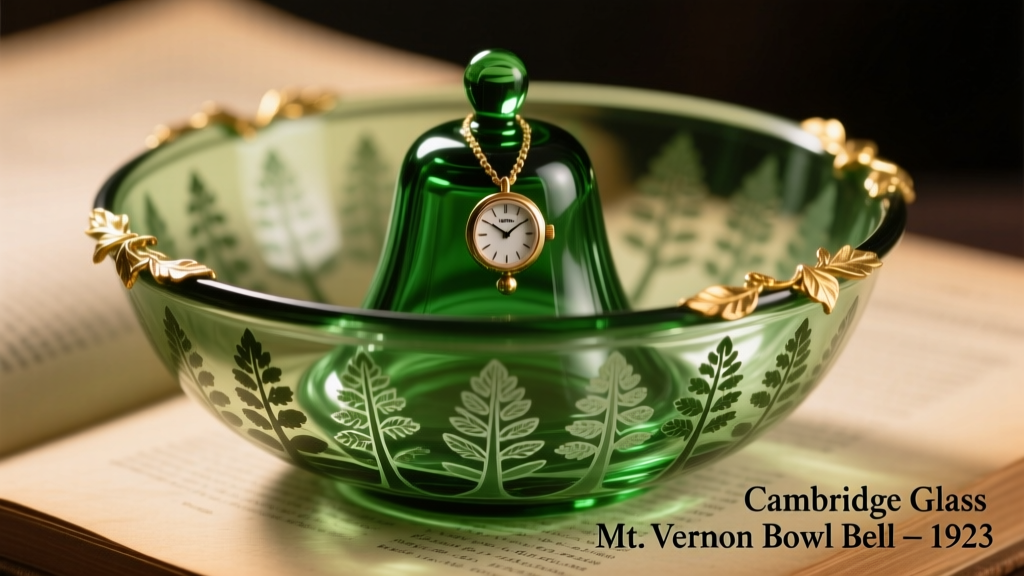
Cambridge Glass Mt. Vernon Bowl in Bell Forest Green: A Deep Dive into the 11½-Inch Masterpiece
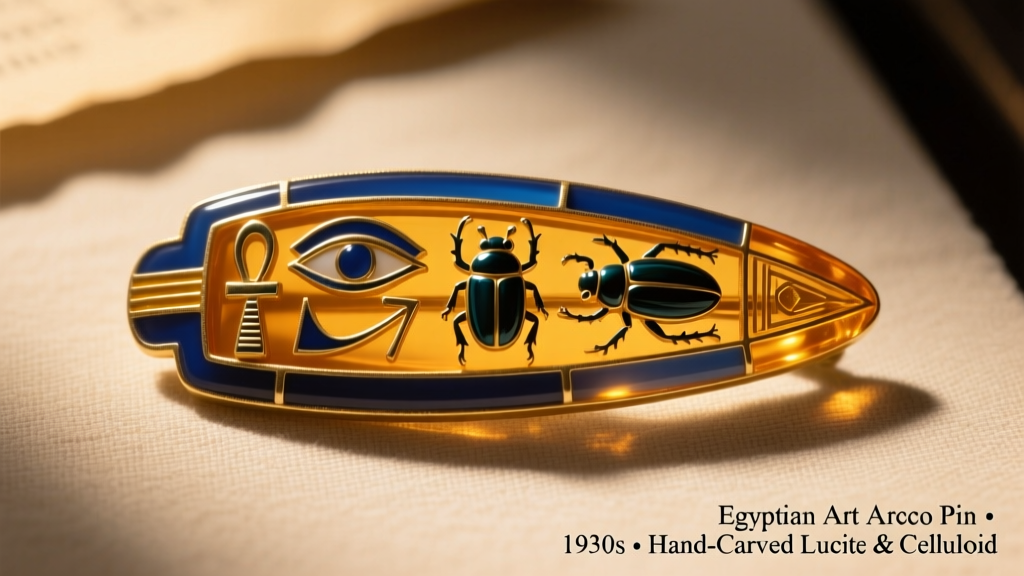
Lucite & Celluloid Egyptian Revival Brooch: A 1930s–1940s American Costume Jewelry Masterpiece
Royal Dux Figurine Dancers (13 Inches): Provenance, Identification, and Market Value of the Iconic Bohemian Porcelain Ensemble
Nippon Hatpin Holder: Roses, Gold Trim, Ewer Shape — A 5-Inch Masterpiece of Early 20th-Century Japanese Porcelain
The Nautical Compass by Riggs Bros.: A Standing Brass Masterpiece of Victorian Navigation and American Craftsmanship
Toy Soldier Royal Scots Greys by Britains: Collecting Authentic Pre-1939 Lead Figures
The Pine & Cherry Corner Hutch: A Study in American Craftsmanship, 12-Paned Elegance, and 92½-Inch Architectural Presence
Ivory Bracelet with Fifteen Tiny Elephants: Provenance, Craftsmanship, and Ethical Considerations in Vintage Jewelry
Head Vases Lavender Hat Napco 7-Inch: A Collector’s Guide to the Iconic Mid-Century Ceramic Sculpture