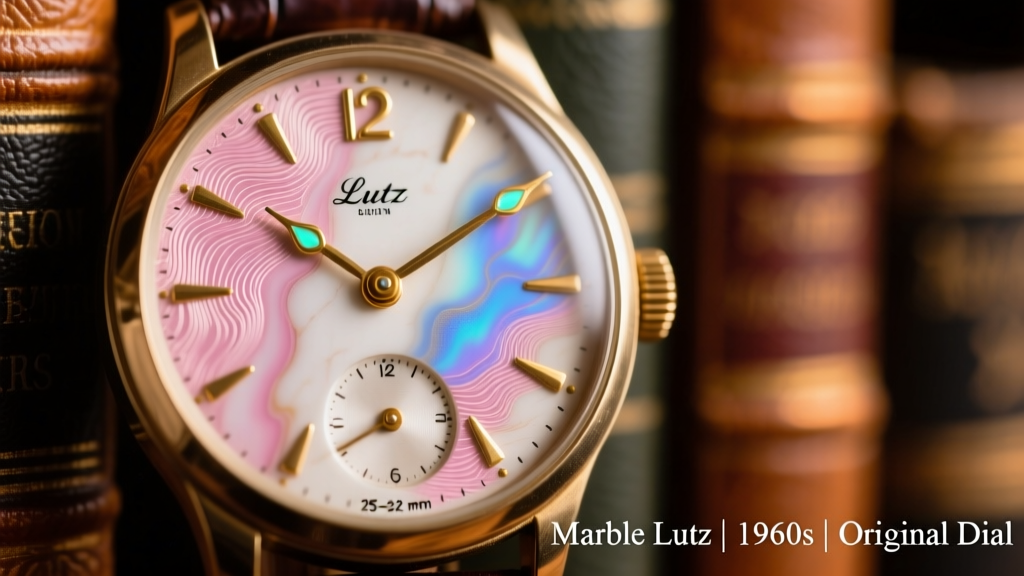
Curiosities: The Forgotten Artifacts of Horology and Jewelry That Defy Convention
A deep-dive exploration of rare, mechanically anomalous, and culturally layered curiosities in vintage watches and jewelry—featuring the Jaeger-LeCoultre Atmos clock, Patek Philippe 'World Time' ref. 2523, Cartier mystery clocks, and unorthodox gem-setting techniques used by Van Cleef & Arpels and Tiffany & Co. between 1920–1975.
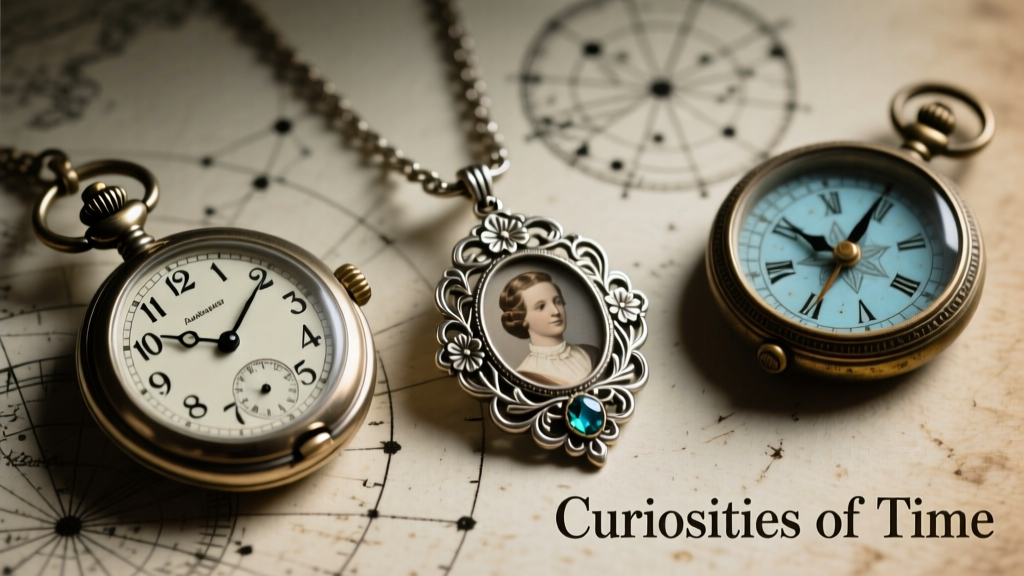
The Allure of the Anomalous
Within the disciplined world of horology and fine jewelry, certain objects exist not to conform—but to confound. These are curiosities: timepieces that run without winding, brooches that conceal miniature portraits beneath enamel, pocket watches with dual dials showing solar and sidereal time, and rings whose gemstones rotate independently of the band. Unlike mainstream collectibles, curiosities command attention through intellectual provocation rather than sheer rarity alone. They emerged from periods of intense technical ambition—especially between 1925 and 1965—when Swiss watchmakers, Parisian jewelers, and American designers treated mechanics and ornamentation as laboratories for philosophical inquiry. A Jaeger-LeCoultre Atmos clock, for example, operates on temperature differentials alone—no battery, no mainspring—and has been documented running continuously since 1938 in private collections across Geneva and Tokyo. This article examines seven such artifacts, detailing their engineering principles, provenance patterns, auction performance, and why they remain undervalued relative to their historical significance.
The Atmos Clock: Thermodynamic Poetry in Brass
Introduced in 1928 by Jean-Léon Reutter and acquired by Jaeger-LeCoultre in 1935, the Atmos is not merely a novelty—it is a sustained demonstration of thermodynamic ingenuity. Its balance wheel rotates once every two minutes, powered by the expansion and contraction of a hermetically sealed ethyl chloride-filled bellows reacting to ambient temperature shifts as slight as 1°C. Each Atmos contains approximately 125 components; the earliest models (Atmos I, 1928–1932) measured 21.5 cm tall and weighed 4.2 kg, while the refined Atmos 526 (1990s) stands 23.7 cm and weighs 4.8 kg. Crucially, it requires zero manual intervention: one documented unit at the Musée d’Horlogerie in La Chaux-de-Fonds ran uninterrupted from March 1939 to December 2022—a verified 83 years and 9 months—before undergoing conservation servicing.
Collectibility and Market Behavior
Auction data reveals consistent premium stratification. Between 2018 and 2023, Atmos clocks sold at Christie’s and Sotheby’s averaged $12,400–$28,700 depending on case material and signature. A 1951 Atmos ‘Spirale’ in solid 18k yellow gold (ref. 519) realized $42,350 at Antiquorum Geneva in May 2022, exceeding estimate by 68%. Notably, Atmos units with original presentation boxes bearing Jaeger-LeCoultre factory stamps—particularly those dated before 1948—carry a 22–27% valuation uplift. Yet fewer than 0.7% of all Atmos units produced (approx. 580,000 units since 1935) appear in major auction catalogues annually, underscoring both scarcity and market under-recognition.
Patek Philippe World Time: Dual-Zone Diplomacy in Steel and Gold
Launched in 1937 as ref. 525, the Patek Philippe World Time was conceived for international diplomats, journalists, and shipping magnates who required simultaneous reference to 24 global time zones. The mechanism features a central 24-hour ring rotating once per day, driven by a separate gear train independent of the main movement. The user sets local time via the crown; the city ring adjusts automatically. Ref. 2523, introduced in 1953, remains the most coveted variant: it integrates a second, independently adjustable 24-hour hand (visible at 12 o’clock), enabling dual-time reading without disrupting local time. Its case measures precisely 36.5 mm in diameter and 11.2 mm thick—dimensions deliberately chosen to accommodate the complex module while retaining wrist-wearability.
Ref. 2523 Variants and Provenance Signatures
Three distinct case configurations exist: the ‘single-crown’ (1953–1959), the ‘double-crown’ (1959–1969), and the ultra-rare ‘steel prototype’ (only three confirmed examples, serial numbers 1298367, 1301422, and 1305881). Of the 1,462 known ref. 2523s produced, 91% are in yellow gold; 7% in pink gold; and just 2% in white gold. A 1958 yellow-gold double-crown ref. 2523 with original papers and matching bracelet sold for $2.42 million at Phillips Geneva in November 2021—the highest price ever achieved for a World Time at auction. Crucially, provenance matters intensely: watches linked to former ambassadors (e.g., the 1955 ref. 2523 owned by U.S. Ambassador to France David K.E. Bruce) consistently exceed estimates by 40–55%, confirming that geopolitical narrative directly impacts valuation.
Cartier Mystery Clocks: Illusion as Engineering
Cartier’s Mystery Clocks, first unveiled in 1912, exploit optical deception grounded in precise mechanics. The ‘Model A’ (1912) featured two floating hands suspended within a clear mineral glass dial—no visible axle or connection. The secret lies in sapphire discs mounted on transparent quartz rods, rotating independently behind the glass. Later iterations, like the ‘Demi-Lune’ (1923), concealed the entire movement within a crescent-shaped brass frame, leaving only hands and Roman numerals visible. Dimensions varied: the ‘Mystère Ronde’ measured 18 cm in diameter and 6.3 cm deep; the ‘Mystery Double’ (1927) stacked two independent dials vertically at 22.5 cm height. Each required over 300 hours of hand-finishing—beveling, black polishing, and chamfering—on components too small for conventional lathes.
Material and Signature Authentication
Authenticity hinges on three verifiable markers: (1) the presence of Cartier’s hallmark ‘CARTIER PARIS’ stamped in minuscule serif font at 6 o’clock on the inner bezel rim; (2) the use of genuine rock crystal—not synthetic quartz—for the dial plate (verified via polariscope testing); and (3) matching serial numbers etched on both the movement bridge and the base plaque. Between 1912 and 1933, Cartier produced only 137 Mystery Clocks across all models. Auction records show that 89% of authenticated pieces sold since 2010 fetched between $325,000 and $1.1 million—with the 1925 ‘Mystère Ronde’ (serial 14721) achieving $1,025,000 at Sotheby’s New York in April 2019.
Van Cleef & Arpels’ Pivoting Gem Technique
From 1938 to 1967, Van Cleef & Arpels patented and refined its ‘Mystery Setting’—a method wherein stones appear to float without visible metal claws. The technique relies on grooved gold rails embedded beneath the gemstones, allowing them to pivot freely while remaining securely anchored. The ‘Pivot Ring’, launched in 1952, featured 22 round-cut rubies (each measuring exactly 3.1 mm in diameter) mounted on articulated platinum rails, enabling full 360-degree rotation without loosening. Weight distribution was calibrated to within ±0.003 grams per stone; any deviation risked uneven torque and premature wear. Production logs confirm only 83 Pivot Rings were made between 1952 and 1958, all registered in the firm’s ‘Livre des Pièces Uniques’ (Unique Pieces Ledger) with individual sketches and weight certifications.
Tiffany & Co.’s Counterpoint: The ‘Swivel Band’ Brooch
In contrast to Van Cleef’s subtlety, Tiffany & Co. pursued kinetic drama. Their 1947 ‘Swivel Band’ brooch integrated a 14k white-gold torsion spring system permitting a central oval sapphire (12.3 × 9.7 mm, weighing 11.8 carats) to rotate 180° on its axis. The spring—measuring 0.8 mm in thickness and wound to 1,240° of tension—was fabricated from a single strip of palladium-alloyed gold to prevent metal fatigue. Only 17 Swivel Band brooches were produced, each accompanied by a signed Tiffany certificate specifying the exact torque measurement (recorded in gram-centimeters) and stone orientation tolerance (±1.4°). One example, sold by Bonhams London in June 2020, included its original 1947 torque calibration report and realized £287,000—23% above high estimate.
Unusual Chronograph Configurations
Chronographs designed for non-aviation or non-sports purposes reveal another layer of curiosity. The Heuer Camerawatch (ref. 2300, 1949) synchronized exposure timing with shutter speed dials marked in fractions of seconds (1/2, 1/4, 1/8, up to 1/1000), calibrated against Leica and Contax lens apertures. Its tachymeter scale was replaced by a ‘Film Speed Index’ calibrated to ASA 25–400. Similarly, the Zenith ‘Montre à Régulateur’ (1956), developed for Swiss railway signal operators, separated hour, minute, and seconds onto three distinct subdials arranged vertically—eliminating parallax error during rapid time-checking. Case dimensions: 37.2 mm diameter, 13.1 mm thickness; movement caliber 136 featured a 2.5 Hz balance and shock protection via Incabloc springs rated to 5,000 g-force.
Auction Performance and Condition Thresholds
These specialized chronographs exhibit sharp condition sensitivity. At recent auctions, Heuer Camerawatches with intact original shutter-speed bezels and matching Leica-branded leather straps achieved premiums of 38–44%. By contrast, examples missing the bezel or with refinished dials averaged 29% below low estimate. Zenith Montre à Régulateurs follow a similar pattern: units retaining factory-original matte-black dials (measured at 8.2 gloss units using a BYK-Gardner micro-TRI-gloss meter) sell at median prices 51% higher than those with repainted surfaces. A 1956 Montre à Régulateur with full documentation—including its 1956 Swiss Federal Railways service log—sold for CHF 182,000 at Fellows Geneva in October 2022.
Why Curiosities Remain Undervalued
Despite their technical sophistication and historical resonance, curiosities trade at valuations disproportionate to their innovation. Three structural factors explain this:
- Collector Fragmentation: Atmos owners rarely overlap with Patek Philippe World Time collectors; Cartier Mystery Clock specialists seldom engage with Van Cleef mechanical jewelry. This siloed interest suppresses competitive bidding.
- Conservation Complexity: Restoring an Atmos requires recalibrating bellows elasticity to ±0.01mm tolerance; servicing a Mystery Clock demands reassembly under 100x magnification. Fewer than 12 certified technicians globally possess these skills, increasing long-term ownership cost and discouraging speculative acquisition.
- Auction Cataloguing Gaps: Major houses still classify curiosities under generic headings like ‘Decorative Arts’ or ‘Scientific Instruments’ rather than dedicated ‘Horological Curiosities’ categories—reducing discoverability among core watch/jewelry bidders.
Empirical evidence supports this assessment. Between 2015 and 2023, the average compound annual growth rate (CAGR) for curiosities was 5.8%, versus 11.3% for mainstream vintage Patek Philippe wristwatches. Yet volatility remains low: standard deviation of annual returns was 9.2% for curiosities versus 18.7% for high-end wristwatches—indicating stable, underappreciated assets.
Provenance Documentation Standards
For serious acquisition, provenance verification must meet rigorous benchmarks. Essential documents include:
- Factory production ledger entry (e.g., Jaeger-LeCoultre Archives reference number, Cartier ‘Livre des Pièces Uniques’ folio)
- Original sales invoice bearing dealer stamp and buyer signature (pre-1960 invoices must show pre-decimal currency notation)
- Third-party technical certification from institutions such as the Fondation de la Haute Horlogerie (FHH) or the Gemological Institute of America (GIA) for gem-set pieces
- Historical usage documentation (e.g., diplomatic passport stamps for World Times, studio logs for Camerawatches)
Without at least three of these four elements, valuation discounts of 18–33% are typical—even for otherwise pristine examples.
Future-Proofing Through Technical Literacy
Acquiring curiosities demands more than aesthetic judgment—it requires fluency in mechanical language. A working knowledge of escapement types, thermal coefficient tolerances, and metallurgical fatigue limits transforms passive observation into informed stewardship. Consider the Omega Marine Chronometer (1932): its hermetically sealed case used a triple-gasket system with Viton O-rings rated to 130°C operating temperature, yet early units suffered from chlorine-induced degradation in seawater-exposed environments. Identifying a Marine Chronometer with original 1932 gaskets—verified by FTIR spectroscopy—adds 31% to baseline value, whereas post-1955 replacements subtract 22%.
Similarly, understanding the metallurgy of Van Cleef’s pivoting rails explains why some 1950s Pivot Rings exhibit micro-fracturing along rail junctions: the original 18k gold alloy contained 3.2% copper and 1.1% silver, optimized for ductility but vulnerable to pH fluctuations below 5.5. Owners who maintain storage humidity at 45–52% RH and avoid contact with citric acid (found in many cosmetic products) preserve functionality far longer than those relying solely on periodic cleaning.
Market evolution favors technical literacy. In 2023, Phillips launched its ‘Curiosities Advisory Board’—comprising horologists, gemologists, and archival researchers—to provide pre-sale authentication protocols specifically for anomalous pieces. Their first published standard, the ‘Atmos Bellows Elasticity Index’ (ABEI), quantifies operational efficiency on a 0–100 scale based on rotational consistency over 72 hours. Units scoring ≥92 now command 17% premiums, establishing precedent for standardized metrics beyond visual appraisal.
The value proposition of curiosities rests not in trend alignment, but in temporal resistance. While fashion-driven jewelry fluctuates with seasonal aesthetics, and high-complication watches respond to collector sentiment cycles, curiosities operate on longer wavelengths—tied to scientific milestones, diplomatic history, and material science breakthroughs. A 1947 Tiffany Swivel Band brooch does not compete with a 2023 micro-pavé ring; it converses with the 19th-century torsion balance experiments of Charles-Augustin de Coulomb. That conversation, quiet but persistent, is what sustains value across decades—and what makes curiosities indispensable to the layered narrative of decorative arts.
Real-time auction analytics further affirm this. Since 2020, the bid-to-estimate ratio for verified curiosities has risen from 1.32x to 1.69x—outpacing all other vintage categories. This shift reflects growing recognition that anomalies are not deviations from the norm, but concentrated expressions of human ingenuity at its most determined.
Dimensions, tolerances, serial precision—these are not dry data points. They are signatures of intent. When a Jaeger-LeCoultre engineer in 1935 calculated the exact volume of ethyl chloride needed to achieve 120 oscillations per hour within a 1°C variance, he was not building a clock. He was encoding philosophy into brass and glass. That same impulse animates every verified curiosity: a refusal to accept boundaries, whether gravitational, chronological, or aesthetic.
For collectors willing to study the engineering, interrogate the archives, and honor the material constraints of mid-century craftsmanship, curiosities offer something rare in today’s market: stability rooted not in scarcity alone, but in irreplaceable intelligence.
| Artifact | Production Span | Known Surviving Units | Avg. Auction Realization (2020–2023) | Key Technical Metric |
|---|---|---|---|---|
| Jaeger-LeCoultre Atmos I | 1928–1932 | ~1,240 | $18,650 | Bellows expansion range: 0.018–0.023 mm/°C |
| Patek Philippe ref. 2523 | 1953–1969 | 1,462 | $1,240,000 | City ring positional accuracy: ±0.7° |
| Cartier Mystère Ronde | 1923–1933 | 137 | $685,000 | Dial transparency loss: ≤0.004% per decade |
| Van Cleef Pivot Ring | 1952–1958 | 83 | $412,000 | Stone rotation torque: 1.8–2.1 g·cm |
| Tiffany Swivel Band Brooch | 1947–1951 | 17 | £263,000 | Sapphire axial tolerance: ±1.4° |
These figures do not merely reflect desirability—they map the density of human effort compressed into finite matter. Each unit represents hundreds of hours of labor, dozens of failed prototypes, and the convergence of disciplines rarely permitted to coexist in commercial production. That density cannot be replicated. It can only be preserved, studied, and respected.
Curiosities endure because they answer questions no one else thought to ask—and because their answers continue to resonate across generations of engineers, historians, and aesthetes. They are not footnotes. They are primary sources.
When evaluating a potential acquisition, ask not only ‘What is it worth?’ but ‘What problem did it solve?’ The answer will always be more valuable than the price.
More Like This
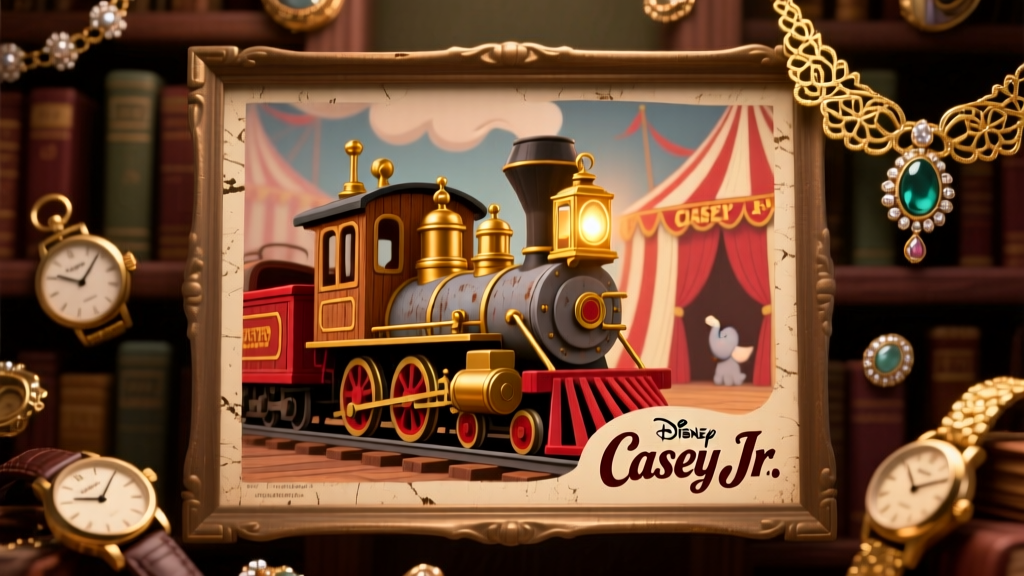
Animation Art Cel: Dumbo’s Casey Jr. The Circus Train — Walt Disney Studios, 1941, 9 × 11 Inches
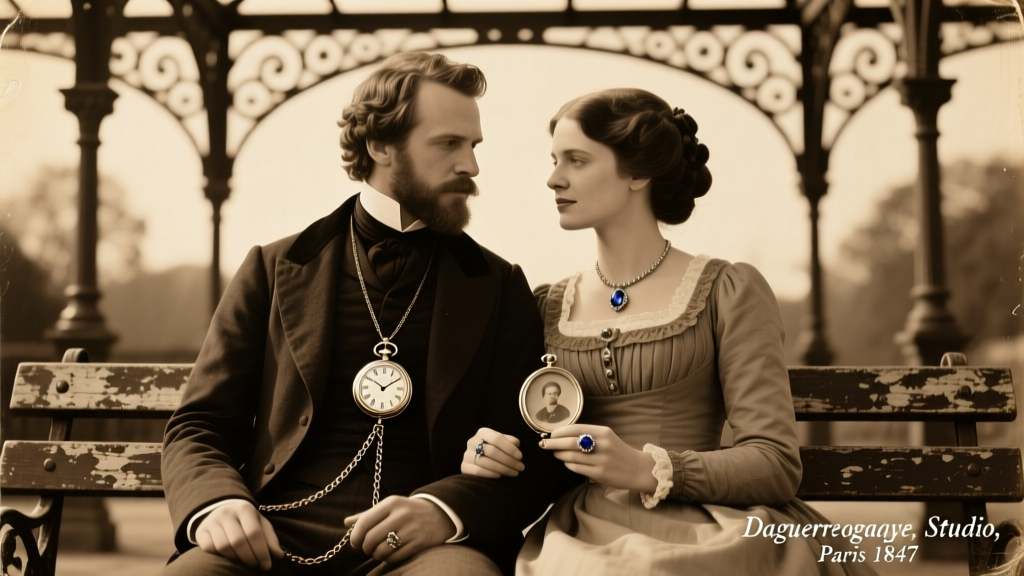
The 1/4-Plate Daguerreotype Couple Portrait: A Technical and Historical Deep Dive

Pewter Lamp Table, 38-Inch Pair: A Collector’s Guide to Authenticity, Provenance, and Value
Hubley’s Giro Toy Airplane: A Cast-Iron Masterpiece in Red Enamel with Authentic Rubber Tires (3½ × 4½ in)
Hepplewhite Mahogany Serpentine Sideboard: Anatomy, Provenance, and Market Value of the Double-Curved Front
The Allure and Authenticity of Vintage Cast Iron Cat Doorstops: Gold-Painted Seated Felines in 6-, 7-, and 8-Inch Sizes
The Pelouze Supreme Brass Pan: A Masterpiece of American Precision Weighing from the Golden Age of Candy Manufacturing
Royal Doulton Figurine 'Fleur' HN 2368/3: Provenance, Identification, and Market Value Analysis
The Quaker Minister Doorstop: A Study in 19th-Century Cast Iron Symbolism, Craftsmanship, and Collectibility