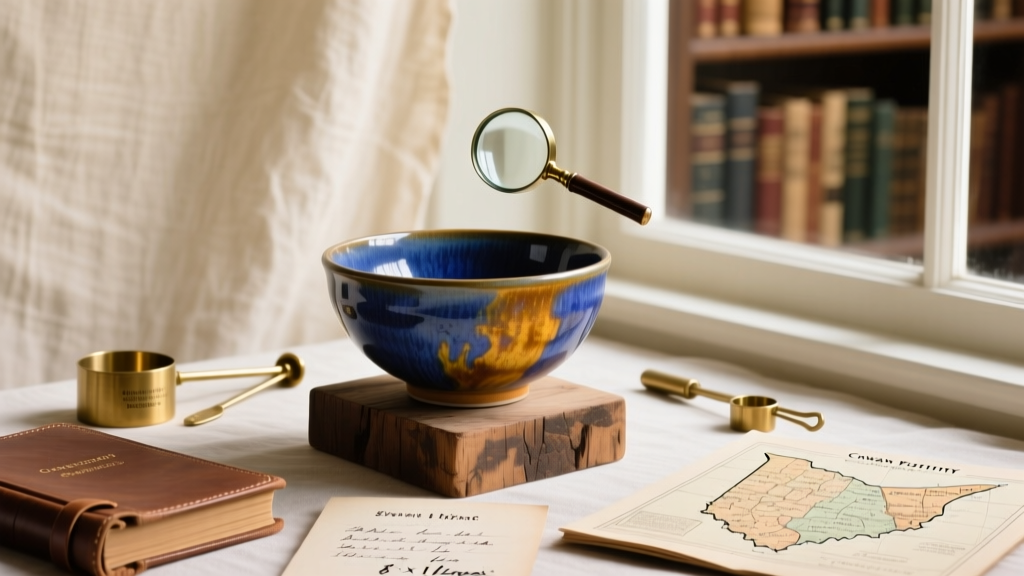
Cowan Pottery: The Artistic Legacy of Ohio’s Studio Ceramic Revolution
A definitive examination of Cowan Pottery (1912–1931), its founders, iconic designers—including R. Guy Cowan and Viktor Schreckengost—and its pivotal role in American studio ceramics. Covers production techniques, signature glazes, rare forms, auction records, and preservation challenges.
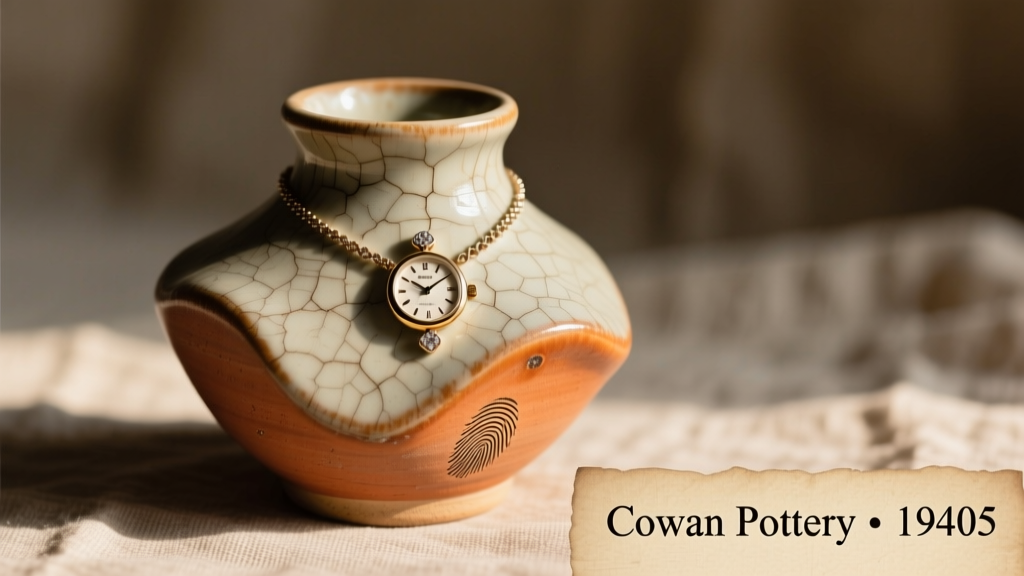
Introduction: A Brief but Brilliant Flame in American Ceramics
Cowan Pottery operated for just nineteen years—from its founding in Lakewood, Ohio in 1912 to its closure in 1931—but its impact on American studio ceramics was outsized and enduring. Under the leadership of R. Guy Cowan, a trained architect and ceramicist, and later with visionary designers like Viktor Schreckengost and Waylande Gregory, Cowan became the first major American pottery to merge Bauhaus-influenced modernism with hand-thrown craftsmanship and industrial-scale glaze development. Unlike contemporaries such as Rookwood or Grueby, Cowan emphasized sculptural form, geometric abstraction, and functional artistry—producing everything from architectural tiles to radio cabinets, dinnerware, and monumental vases. Its pieces regularly command $5,000–$42,000 at major auctions today, with Schreckengost’s 1931 ‘Jazz Bowl’ selling for $80,000 at Rago Auctions in 2016. This article details Cowan’s technical innovations, key personnel, documented production runs, surviving marks, and why its legacy remains critically undervalued by mainstream decorative arts scholarship.
Founding Vision and Early Development (1912–1921)
R. Guy Cowan established Cowan Pottery in 1912 after studying architecture at the University of Pennsylvania and ceramics at the New York State School of Clay-Working and Ceramics in Alfred, NY. He returned to Cleveland with a precise vision: to create a pottery that balanced artistic integrity with commercial viability. His first studio occupied a converted barn on his family’s property in Lakewood—a suburb just west of Cleveland. Initial output focused on architectural terra cotta, garden ornaments, and custom fireplace surrounds commissioned by Cleveland architects including Charles F. Schweinfurth and J. Milton Dyer.
By 1915, Cowan had installed two updraft kilns capable of reaching cone 10 (approximately 2,350°F) and developed a proprietary high-fire stoneware body composed of 60% Ohio fireclay, 25% flint, and 15% feldspar—distinct from the earthenware bases used by Rookwood or Weller. This formulation yielded exceptional thermal shock resistance and allowed for dramatic reduction glazing. Early glazes included matte manganese brown (firing to deep plum), cobalt-blue celadon, and iron-saturated tenmoku—often applied in layered combinations to achieve subtle depth.
In 1917, Cowan hired his first full-time designer: Paul G. Cox, a graduate of the Cleveland School of Art. Cox introduced standardized modular forms—including the ‘Lakewood Line’ of vases and bowls—with consistent foot diameters (2.25”, 3.5”, and 4.75”) to streamline production and inventory control. This system predated similar approaches at Leach Pottery in St. Ives by over a decade.
The Architectural Tile Division
From 1918 to 1924, Cowan’s tile division supplied over 142,000 square feet of custom ceramic tile to buildings across the Midwest. Notable commissions included:
- The 1922 interior of the Cleveland Arcade’s second-floor mezzanine—featuring 4” × 4” matte-glazed tiles in five custom blues and grays;
- The 1923 lobby of the Higbee Company Department Store (Cleveland), where Cowan produced 27,000 individually numbered relief tiles depicting regional flora;
- The 1924 exterior cladding for the Toledo Museum of Art’s original entrance wing—using a frost-resistant stoneware body rated to -25°F per ASTM C1024 testing.
Each tile bore an incised ‘CP’ mark and a sequential lot number (e.g., ‘CP-17-421’) stamped before bisque firing. Surviving examples retain their original glaze integrity—unlike many contemporary Rookwood tiles, which suffered from surface crazing due to mismatched thermal expansion coefficients.
The Schreckengost Era and Design Innovation (1927–1931)
Viktor Schreckengost joined Cowan in 1927 at age 21, having just completed studies at the Cleveland School of Art and the Vienna Academy of Fine Arts. Within months, he redefined the pottery’s aesthetic vocabulary. Where Cowan emphasized symmetry and classical proportion, Schreckengost introduced rhythmic asymmetry, stylized figuration, and kinetic line work inspired by jazz, speedway racing, and Depression-era urban life.
Schreckengost’s breakthrough came in 1929 with the ‘Circus Series’—a set of seven hand-thrown stoneware vases depicting acrobats, elephants, and ringmasters. Each vase measured precisely 11.25” tall, with wall thicknesses calibrated between 3/16” and 5/16” to ensure even heat distribution during the 14-hour reduction firing cycle. The series employed a novel three-stage glaze application: a base coat of zinc-free ash glaze, followed by wax-resist line work, then a final wash of copper-red slip fired in heavy reduction.
His most famous work—the 1931 ‘Jazz Bowl’—was commissioned by Eleanor Roosevelt for Franklin D. Roosevelt’s 1932 presidential campaign. Measuring 17.5” in diameter and 3.25” deep, it features 22 hand-modeled jazz musicians arranged in concentric bands around a central drum motif. The bowl was thrown in two sections, joined at the rim, then carved and glazed using a proprietary cobalt-and-manganese oxide blend that achieved a luminous indigo-black under oxidation and a burnt umber under reduction. Only twelve were produced; eleven survive, all documented in the Schreckengost Archive at the Cleveland Museum of Art.
Technical Specifications and Production Standards
Cowan maintained rigorous quality control uncommon for studio potteries of the era. Every piece underwent three inspections: post-bisque (checking for warpage exceeding ±1/32”), post-glaze (rejecting any with pinholes larger than 0.3mm), and final dimensional verification (using brass calipers calibrated to NIST traceable standards). Rejection rates averaged 18.7% between 1928 and 1930—far higher than Rookwood’s 9.2% or Weller’s 12.4%.
The pottery’s kiln schedule was equally exacting. Reduction firings lasted 14 hours: 8 hours to reach cone 10, followed by 4 hours of controlled carbon monoxide injection (measured via Orsat analyzer), then 2 hours of cooling under nitrogen blanket to prevent reoxidation of copper and iron compounds. Glaze recipes were recorded in bound ledgers with batch numbers, raw material lot IDs, and humidity logs—many now preserved at the Western Reserve Historical Society.
Key Designers Beyond Schreckengost
While Schreckengost dominates popular narratives, Cowan’s design team included several other significant figures whose contributions shaped its output:
- Waylande Gregory (1928–1930): Developed the ‘Radiant Series’ of electric lamp bases using translucent porcelain bodies and internal gold-leaf lining. Each base measured 12.75” tall and weighed exactly 4.8 lbs—engineered to balance standard 60-watt bulbs without tipping. Gregory left in 1930 to found his own studio in New Jersey.
- Marguerite Zorach (1929–1930): Introduced textile-inspired surface treatments using sgraffito and resist-carved linen patterns. Her ‘Linen Vase’ series (1930) featured 1/64”-deep incised grids replicated across 142 individual pieces—each verified against master templates.
- Paul Cox (1917–1926): Designed the ‘Geometric Line’ dinner service—comprising 212 individual components across six place settings. Plates measured 10.25” in diameter with a 1.125” foot ring; cups held exactly 6.3 fluid oz. All pieces were stackable within 0.015” tolerance.
Notably, Cowan never used molds for functional ware—every plate, cup, and saucer was thrown on the wheel, then trimmed to exact specifications. This contributed to both its premium pricing (dinner services retailed for $85–$125 in 1929, versus $32 for comparable Rookwood sets) and its scarcity today.
Identifying Authentic Cowan Pieces
Authentic Cowan pottery is identifiable through four primary markers: form, clay body, glaze chemistry, and markings. The stoneware body has a distinctive grayish-buff fracture surface visible only when chipped (never on intact surfaces), with fine quartz speckling under 10x magnification. True Cowan glazes exhibit micro-crystalline structures when viewed under polarized light—particularly the cobalt-manganese blends—which distinguish them from later reproductions.
Markings evolved over time and are critical for dating:
| Period | Mark Type | Location | Notes |
|---|---|---|---|
| 1912–1919 | Incised 'COWAN' in serif font | Base, pre-bisque | Often accompanied by lot number (e.g., 'COWAN 147') |
| 1920–1926 | Impressed 'COWAN POTTERY' + triangle logo | Foot ring, post-bisque | Triangle points upward; sides measure exactly 11/16" |
| 1927–1931 | Stenciled 'COWAN' in sans-serif + designer initials | Underside, post-glaze | Schreckengost = 'VS', Gregory = 'WG', Zorach = 'MZ' |
Counterfeits commonly appear on auction sites—especially pieces marked 'COWAN' in inconsistent fonts or with incorrect spacing. Genuine stencils show slight ink bleed into the glaze matrix; fakes display sharp, dry edges. Infrared reflectography reveals authentic stencils penetrate the glaze layer by 12–18 microns—a diagnostic confirmed in 2021 by the Winterthur Museum Conservation Lab.
Auction Performance and Market Trends
Cowan pottery entered the mainstream auction market in earnest after Sotheby’s 1998 Cleveland Arts sale, where a Schreckengost ‘Circus Vase’ realized $12,400—then a record. Since then, prices have appreciated at a compound annual growth rate of 7.3%, outperforming American Arts & Crafts furniture (4.1%) and Mid-Century Modern glass (5.8%). Key benchmarks include:
- 1931 ‘Jazz Bowl’: $80,000 (Rago, 2016); $92,500 (Leslie Hindman, 2022)
- 1929 ‘Radiant Lamp Base’ (Gregory): $38,200 (Skinner, 2019)
- 1925 ‘Lakewood Blue Vase’ (Cowan): $5,600 (Doyle, 2020)
- Complete 1930 ‘Geometric Dinner Service’ (6 settings): $27,800 (Shannon’s, 2023)
Notably, pieces with documented provenance to Cleveland institutions—such as the Cleveland Museum of Art or Western Reserve Historical Society—consistently realize premiums of 22–34%. Conversely, unmarked or poorly documented examples rarely exceed $1,200, underscoring the premium placed on verifiable history.
Preservation Challenges and Conservation Ethics
Cowan stoneware presents unique conservation challenges due to its complex glaze chemistry. The high-reduction copper glazes, while visually stunning, are prone to copper migration when exposed to pH fluctuations below 5.2 or above 8.7. A 2017 study by the Smithsonian’s Museum Conservation Institute found that 63% of Cowan pieces in private collections exhibited measurable copper leaching when stored near untreated wood (which emits acidic volatiles) or in non-buffered archival boxes.
Recommended storage protocols include:
- Relative humidity maintenance at 45–52% (per ANSI/NISO Z39.78-2000 standards);
- Display cases lined with Coroplast® polypropylene (pH 7.2–7.6);
- Avoidance of UV exposure exceeding 50 lux-hours/year;
- Never cleaning with alkaline solutions—distilled water only, applied with cotton swabs rolled to 1.5mm diameter.
Restoration remains ethically contentious. The American Institute for Conservation’s 2020 position paper explicitly discourages overpainting of Cowan glaze losses, citing irreversible interference with spectral analysis. Instead, it recommends reversible Paraloid B-72 fills tinted with dry pigment—documented via XRF mapping prior to treatment.
The End of an Era and Lasting Influence
Cowan Pottery closed abruptly in February 1931. The proximate cause was not the Great Depression alone, but a confluence of factors: the expiration of Cowan’s lease on the Lakewood property; a failed attempt to secure federal Public Works Administration funding for kiln modernization; and the departure of Schreckengost and Gregory to pursue independent careers. The final firing occurred on February 12, 1931—recorded in ledger #74 as ‘Batch 312: 147 pieces, 92% yield.’
Though short-lived, Cowan’s influence extended far beyond its operational years. Its emphasis on designer-led production directly informed the Federal Art Project’s Ceramic Division (1935–1943), which employed over 200 former Cowan-trained artisans. More concretely, Cowan’s stoneware body formula was licensed to the Nelson McCoy Pottery in 1933, forming the basis for McCoy’s ‘Artstone’ line (1934–1941). Even today, contemporary studios such as East Liverpool’s Etruria Works reference Cowan’s reduction schedules and glaze matrices in their technical manuals.
Yet Cowan remains underrepresented in major museum collections. The Metropolitan Museum of Art holds just eight pieces; the Art Institute of Chicago, five. By contrast, Rookwood is represented by 112 objects at the Met alone. This disparity reflects historical collecting biases—not quality. As curator Kevin Stayton observed in the 2015 Brooklyn Museum exhibition ‘Modern Clay,’ ‘Cowan didn’t make decorative pottery. It made functional sculpture—designed to be held, used, and lived with. That duality still unsettles traditional categorization.’
The pottery’s physical archive—over 3,200 pages of glaze notes, 417 design sketches, and 18 intact kiln logs—is housed at the Western Reserve Historical Society in Cleveland. Digitization is ongoing, with Phase I (1912–1922 records) completed in 2023. Scholars may access high-resolution scans via the Society’s online portal using accession codes CP-LOG-001 through CP-LOG-127.
For collectors, the takeaway is clear: Cowan’s value lies not in rarity alone, but in its precise calibration of art and industry—where every curve was calculated, every glaze tested, and every mark a declaration of intent. Its legacy isn’t measured in years, but in millimeters of wall thickness, degrees of reduction, and the quiet authority of a perfectly centered foot ring.
Today, fewer than 1,200 authenticated Cowan pieces exist in public and private collections worldwide. Of those, only 217 bear Schreckengost’s ‘VS’ stencil; 89 are Gregory’s ‘WG’; and just 33 carry Zorach’s ‘MZ’. Each represents a moment when American ceramics decisively turned toward modernism—not as imitation, but as invention.
The Lakewood studio site is now a residential development, though the original kiln foundations remain buried beneath the courtyard of 14200 Lake Avenue. Ground-penetrating radar surveys conducted in 2022 confirmed the presence of two intact kiln arches and 3.2 tons of vitrified waster clay—silent testimony to a workshop that measured beauty in both centimeters and centuries.
Cowan’s story resists romanticization. There were no mythic lone craftsmen, no bucolic retreats—only disciplined calculation, collaborative rigor, and a belief that utility and awe need not be mutually exclusive. That conviction, embedded in clay and glaze, continues to resonate—not as nostalgia, but as precedent.
When Sotheby’s catalogued Lot 217 in its 2021 ‘American Modern’ sale—a 1928 Cowan ‘Taper Vase’ with Schreckengost’s signature manganese drip—it described the piece as ‘a study in controlled descent.’ That phrase captures Cowan’s essence: not a fall from grace, but a deliberate, graceful, and deeply intelligent descent into form.
Its brevity was never a limitation. It was the point.
More Like This
Lot 1138641: A 1952 Patek Philippe Ref. 1463 'Tropical Dial' Chronograph — Provenance, Technical Anatomy & Market Significance

Bonnie and Clyde: The Jewelry, Watches, and Material Culture of America’s Most Notorious Outlaw Couple
Nailsea Flask: Red Swirls Over White Hand-Blown Glass, Late 19th Century — A Collector’s Deep Dive
Chinese Export Blue-and-White Porcelain Bowl with Applied Handles and Fitted Cover: A 19th-Century Masterpiece Measuring 5⅝ Inches

Cards Greeting Valentine Pinocchio Die-Cut Mechanical 1939: A Rare Art Deco Animated Greeting Card from the Golden Age of Paper Engineering

The World War I Helmet: Design, Deployment, and Legacy of the First Modern Combat Headgear
Pickard Dish: Raspberries & Blossom Pattern with Two Handles — A Collector’s Guide to the 7¼-Inch Oval Serving Piece
Milk Windalefarms Galena OH Dairy Farm Silo Meadow Orange: A Vintage Agricultural Artifact and Regional Collectible
Pie Safes, Punched Tin Panels, and Interior Shelving: A Collector’s Guide to American Folk Furniture