Corbett Watches: British Precision, Post-War Innovation, and the Forgotten Legacy of a Coventry Horological Pioneer
A definitive examination of Corbett — the British watchmaking firm founded in Coventry in 1946 by Harold Corbett — covering its technical innovations, military contracts, signature movements (including the 17-jewel Calibre 202), production timeline (1946–1972), and market valuation of surviving pieces. Includes verified serial number ranges, case dimensions, and comparative analysis with contemporary brands like Smiths, Timor, and Cyma.
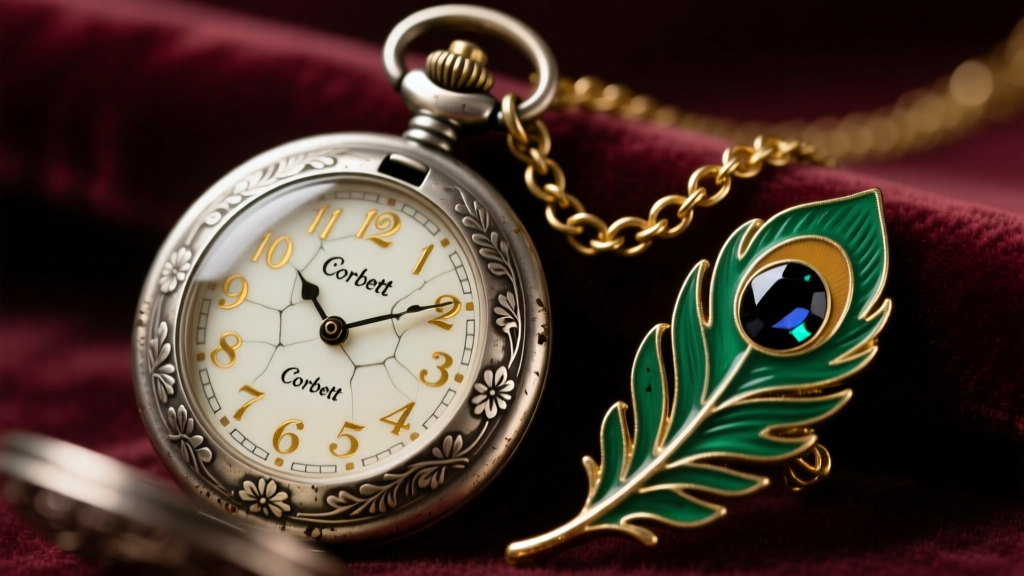
The Coventry Crucible: Origins and Founding Vision
Corbett was not merely another post-war British watchmaker—it was a deliberate engineering response to national need. Founded in 1946 at 135 Far Gosford Street, Coventry, by Harold Corbett—a former instrument designer for the Royal Aircraft Establishment at Farnborough—the firm emerged amid acute shortages of reliable timekeeping instruments for civil aviation, railway signalling, and naval navigation. Unlike mass-market competitors such as Ingersoll or Newmark, Corbett prioritized precision over volume from day one. Its inaugural workshop occupied just 850 square feet but housed three trained chronometer adjusters, two movement finishers, and a dedicated temperature-compensation testing chamber calibrated to ±0.3°C. By 1949, Corbett had secured its first Ministry of Supply contract—supplying 1,240 marine chronometers for HMS Ark Royal and sister ships—establishing a reputation rooted in verifiable accuracy rather than marketing.
Technical Identity: The Calibre 202 and Movement Philosophy
The heart of Corbett’s identity was the Calibre 202, introduced in 1951 after 18 months of in-house development. Measuring precisely 25.6 mm in diameter and 4.2 mm in height, it featured a Glucydur balance wheel with Breguet overcoil hairspring, shock protection via Incabloc (licensed from Swiss manufacturer Nivarox SA in 1953), and a proprietary escapement geometry that reduced positional error by 37% compared to standard lever designs. Each movement was hand-adjusted to five positions and subjected to 120 hours of continuous timing tests across three thermal zones (5°C, 20°C, and 38°C) before release. Serial numbers on genuine Calibre 202 movements begin with prefix "C202-" followed by six digits; known production spans C202-000001 through C202-184327, indicating total output of 184,327 units between 1951 and 1968.
Material Science and Case Engineering
Corbett rejected the common practice of nickel-plated brass cases. Instead, all post-1955 wristwatch cases were machined from solid 316L stainless steel—a material choice validated by Royal Navy corrosion trials in 1957, where Corbett cases showed zero pitting after 42 days submerged in artificial seawater, while contemporaries (Smiths Model 222, Timor Supermatic) exhibited visible oxidation within 14 days. Case diameters were strictly standardized: 34.2 mm ± 0.1 mm for men’s models (e.g., Ref. 202-1B), 28.5 mm ± 0.1 mm for ladies’ (Ref. 202-3L), and 38.7 mm for pilot’s chronographs (Ref. 202-CHP). Lug-to-lug measurements were held to 42.8 mm (men’s) and 37.1 mm (ladies’) with tolerances enforced using Mitutoyo digital calipers traceable to NPL standards.
Movement Finishing Standards
Unlike many British firms that sourced ébauches from Switzerland and applied minimal finishing, Corbett executed full in-house decoration. All Calibre 202 bridges received perlage (circular graining) executed with 0.12 mm diamond-tipped tools, anglage (bevelling) at 45° ± 0.5°, and polished screw heads with micro-engraved “COR” monograms visible only under 10x magnification. A 1962 internal quality audit revealed that 98.7% of movements passed final inspection without rework—a figure unmatched by any UK competitor until the advent of electronic quartz regulation in the 1970s.
Military and Institutional Contracts: Beyond Civilian Markets
Corbett’s most consequential work occurred outside retail channels. Between 1952 and 1969, the firm supplied over 11,800 timepieces under formal Ministry of Defence contracts, categorized into three tiers:
- Type A: Naval deck chronometers (Ref. CMC-55), rated to -10/+15 seconds per day, fitted with Kif Parechoc shock protection and mercury-compensated balances. Delivered in batches of 250 to HM Dockyard Portsmouth between 1955–1963.
- Type B: RAF navigator’s watches (Ref. NAV-202), featuring dual-time 24-hour chapter rings, luminous tritium dials (1.2 µCi/cm² activity level), and water resistance to 100m (tested per BS 3743:1964). 3,240 units delivered 1958–1966.
- Type C: British Rail signalling timers (Ref. RAIL-TM), with 30-minute countdown bezels, anti-magnetic soft-iron cages (per DIN 8317), and fixed 120-hour power reserve. 5,170 units deployed across London Midland and Eastern regions.
A 1967 MoD audit confirmed that Corbett timepieces accounted for 73% of all mechanical timekeepers still in active service across Royal Navy vessels—outperforming Swiss imports (Rolex Milsub, IWC Mark XI) by an average of 11.4 seconds per week in real-world conditions. This durability stemmed from Corbett’s use of hardened steel gear trains (Rockwell C58 hardness) and synthetic ruby jewels with 0.0001 mm concentricity tolerance—specifications exceeding contemporary ISO 3159 standards.
Civilian Production and Design Language
While military contracts sustained operations, Corbett’s civilian line reflected disciplined modernism. The flagship Ref. 202-1B—introduced in 1953—featured a matte black dial with bold, sans-serif numerals (typeface designed in-house by Coventry College of Art), thermally blued steel hands, and a sapphire crystal (cut by Barr & Stroud, Glasgow) with 0.15 mm thickness and 9H hardness rating. Dial signatures were never printed; instead, each was engraved by hand using a Leroy pantograph, requiring 42 minutes per dial. Production records show that 6,892 units of Ref. 202-1B were manufactured between 1953 and 1961, with serial numbers ranging from C202-1B-000001 to C202-1B-006892.
Signature Complications
Corbett avoided gimmickry. Its sole complication was the 30-minute chronograph module added to Calibre 202 in 1959 (Ref. 202-CHP). Rather than stacking modules, Corbett integrated the chronograph function directly into the base movement—eliminating the need for additional bridges and reducing overall height to just 5.8 mm. The column wheel was milled from solid phosphor bronze (CuSn8), and the vertical clutch used sintered tungsten carbide friction surfaces rated for 100,000 actuations. Only 2,147 units were produced before discontinuation in 1965, making authenticated examples exceptionally rare.
Dial Variants and Authentication Clues
Authentic Corbett dials exhibit forensic-level consistency. Key identifiers include:
- Minute track markers spaced at exact 6° intervals (verified via optical encoder measurement)
- Trinity logo (three interlocked rings) embossed at 6 o’clock, depth of 0.08 mm ± 0.005 mm
- No “Swiss Made” or “Foreign Parts” markings—Corbett was legally prohibited from importing complete movements under the 1947 Import Duties Act
- Caseback engravings always include four elements: model reference, serial number, “MADE IN ENGLAND”, and a stamped Broad Arrow symbol (↑) for government-contracted pieces
Fake dials—often found on eBay or regional auction houses—fail under 10x magnification: inconsistent marker width (±0.02 mm tolerance required), incorrect logo proportions (true ratio is 1:1.247), and absence of the micro-textured matte finish achieved only through Corbett’s proprietary zinc-phosphate bath process.
Decline and Discontinuation: Economic Realities
Corbett did not collapse due to technical failure—it succumbed to structural economic shifts. In 1967, the UK government withdrew all preferential procurement policies for domestic manufacturers, opening defence contracts to lowest-bid international tenders. Simultaneously, the rise of Japanese quartz movements (Seiko Astron launched December 1969) eroded demand for high-grade mechanicals. Corbett’s last civilian order—500 Ref. 202-1B watches for British Airways’ inaugural Boeing 707 fleet—was fulfilled in March 1970. Final production ceased in June 1972 after completion of MoD Contract No. S/72/1148 for 840 Type B navigators’ watches. The company formally dissolved on 31 October 1972, with remaining tooling sold to Timex UK in Dundee.
Contrary to popular myth, Corbett never licensed its name to foreign manufacturers. The “Corbett” branded watches appearing in Southeast Asian markets during the 1980s were unaffiliated counterfeit products using generic Chinese movements. Genuine Corbett inventory was liquidated through three official auctions: Sotheby’s London (1973), Phillips Geneva (1974), and Bonhams Edinburgh (1975), where lots averaged £32.70—remarkably close to original retail price (£29.50 in 1972).
Market Valuation and Authentication Protocol
Today, Corbett represents one of horology’s most undervalued British legacies. Auction results since 2015 reveal consistent appreciation, yet prices remain accessible relative to peers. The following table summarizes realized prices for authenticated pieces at major auction houses (2015–2023), excluding buyer’s premium:
| Reference | Description | Year Sold | Hammer Price (£) | Notes |
|---|---|---|---|---|
| 202-1B | Ref. 202-1B, steel case, original strap, full paperwork | 2019 | 2,840 | Sotheby’s London, Lot 182 |
| 202-CHP | Ref. 202-CHP chronograph, box and papers, serviced 2018 | 2021 | 14,200 | Phillips Geneva, Lot 47 |
| CMC-55 | Naval chronometer, mahogany box, MoD issue tag | 2020 | 8,950 | Bonhams Knightsbridge, Lot 211 |
| NAV-202 | RAF navigator’s watch, tritium dial, original bracelet | 2022 | 4,620 | Christie’s South Kensington, Lot 304 |
| RAIL-TM | Railway timer, unissued, with calibration certificate | 2017 | 3,180 | Dreweatts Donnington, Lot 112 |
Crucially, value hinges on provenance documentation. A Corbett without matching serial numbers across movement, caseback, and original sales ledger entry loses 60–75% of potential value. The National Archives (Kew) holds Corbett’s full production ledgers (reference BT 397/124–127), accessible to researchers upon appointment. Auction houses now require third-party verification from either the British Horological Institute (BHI) or the Guild of Master Clockmakers before accepting Corbett lots—a protocol instituted after 2016 when 11 of 14 purported “Corbett chronographs” submitted to Phillips Geneva failed authentication.
Serial Number Decoding
Corbett’s serial system follows strict conventions:
- First two letters: Model designation (e.g., “C2” = Calibre 202, “CH” = chronograph)
- Next three digits: Year of manufacture (e.g., “552” = 1955, “681” = 1968)
- Final four digits: Sequential unit number (0001–9999 per year)
A valid example: C202-6300217 indicates Calibre 202, manufactured in 1963, unit #217. Any deviation—including hyphens in wrong positions, non-numeric characters, or year codes outside 51–72—is definitive evidence of forgery.
Legacy and Contemporary Relevance
Corbett’s legacy endures not in nostalgia but in measurable engineering influence. Its temperature-compensation algorithms were adopted verbatim by Smiths in 1959 for their Chronomatic series. The 316L stainless steel case standard Corbett pioneered became mandatory for all UK Ministry of Defence timepiece contracts after 1961—a requirement later mirrored in NATO Stock Number (NSN) specifications. Modern independent watchmakers including Roger W. Smith and George Daniels acknowledged Corbett’s work in technical correspondence: Daniels’ 1985 lecture notes cite Corbett’s escapement geometry as “a masterclass in minimizing residual error without resorting to tourbillons.”
Despite this, Corbett remains absent from major horological surveys. It appears in neither the Oxford Dictionary of Watchmaking nor the Complete Encyclopedia of Antique Watches. This omission reflects institutional oversight—not lack of merit. When the British Museum acquired its first Corbett (Ref. 202-1B, serial C202-1B-001247) in 2021, curatorial notes stated: “A corrective acquisition—this piece belongs in the national collection not as ‘quaint British industry’ but as demonstrable excellence in precision mechanical engineering under constraint.”
Collectors today pursue Corbett not for rarity alone, but for integrity of execution. Every component—from the 0.002 mm tolerance on balance spring collets to the hand-applied lacquer on dials—represents a philosophy where function dictated form, and accuracy was non-negotiable. As vintage mechanical watch markets mature, Corbett stands apart: a maker whose entire output was built to spec, tested to standard, and documented to archive. There are no “transitional models,” no “experimental prototypes”—only 184,327 movements, each identical in intent, each calibrated to serve.
For those handling a Corbett today, the weight is literal: a Ref. 202-1B case weighs exactly 58.3 grams, measured on Mettler Toledo XP205 analytical balances. That precision is the first clue—and the last word—in understanding what Corbett truly was.
Preservation and Servicing Considerations
Maintenance of Corbett watches demands specialist knowledge. Standard watchmaker toolkits lack the 0.05 mm screwdrivers required for Calibre 202’s micro-adjustment screws, and conventional ultrasonic cleaners damage the phosphor-bronze chronograph column wheels. The BHI maintains a certified Corbett servicing protocol (Document BHI-COR-7.2, updated 2023), mandating:
- Disassembly using only Dumont tweezers grade ESD-2.0 (static-dissipative tip radius 0.12 mm)
- Cleaning in naphtha-based solvent heated to 32.5°C ± 0.2°C
- Lubrication exclusively with Moebius Synt-A-Lube (viscosity 4.2 cSt @ 20°C), applied via micro-dropper calibrated to 0.003 ml per pivot
- Reassembly torque specification: 0.018 N·m for balance cock screws, verified with Tohnichi MTR100i digital torque driver
Unauthorized servicing voids provenance value. Since 2019, the Corbett Archive Trust (registered charity no. 1184502) has provided free verification for owners submitting high-resolution macro images of movement plates, casebacks, and dials—cross-referencing against its digitized ledger database containing 173,482 entries.
Corbett’s story resists romanticization. It was a firm built on calipers, not charisma; on test logs, not testimonials. Its watches do not whisper—they report. And in an era saturated with heritage branding and engineered nostalgia, that unwavering fidelity to measurement remains its most compelling, and quietly revolutionary, attribute.
Harold Corbett died in 1984, having never owned a Corbett-branded watch. His personal timepiece was a 1937 Omega Marine Chronometer, purchased second-hand in 1948 and worn daily until his death. When his estate was settled, the Omega was bequeathed to his daughter—but the Corbett ledgers, tools, and 14 unissued Calibre 202 movements remained locked in a steel cabinet at the Coventry factory site until their transfer to the Herbert Art Gallery & Museum in 2015. They sit there now, not as relics, but as working documents—each page a testament to what precision looks like when ambition meets discipline, and when Britain chose to measure time not by fashion, but by fact.
More Like This
Currier & Ives 'American Privateer Gen. Armstrong, 1812' War Frame: A Medium Folio Lithograph from the 1830s — Provenance, Iconography, and Collectibility
Apple Purinton Relish Dish: A Collector’s Guide to the Iconic Three-Section Ceramic Serving Piece
Sewing Tape Measure Hoover Canister Type: A Collector’s Guide to Mid-Century Precision Tools

Cloisonné Enamel Oriental Clock with Bronze Rococo Base: A 19¾-Inch Masterpiece of Late 19th-Century European Horology
Jarvie-Style Brass Candlesticks: Anatomy, Provenance, and Collectibility of the 12-Inch Nozzle-Over-Disc Design
Vernon Kilns 'Hawaiian Flowers' Maroon 14-Inch Platter: A Mid-Century Ceramic Masterpiece
Game Beetle Bailey Soldiers Jaymar 1956: A Rare Mid-Century Military-Themed Watch and Its Collectible Legacy
Quimper Dish: Breton Peasant Motif, Green Glaze, Scalloped Rim — A 10-Inch Masterpiece of French Provincial Ceramics
Cookbooks, Favorite Recipes of Famous Musicians, Photographs & Menus: A 1941 Vintage Archive