Colwell & Lawrence: The Forgotten American Watchmakers Who Defined Precision in the Gilded Age
A detailed examination of Colwell & Lawrence — the Philadelphia-based watchmaking firm active from 1870 to 1912 — covering their technical innovations, hallmarking practices, surviving serial records, and market presence at major auction houses including Sotheby’s, Christie’s, and Heritage Auctions.
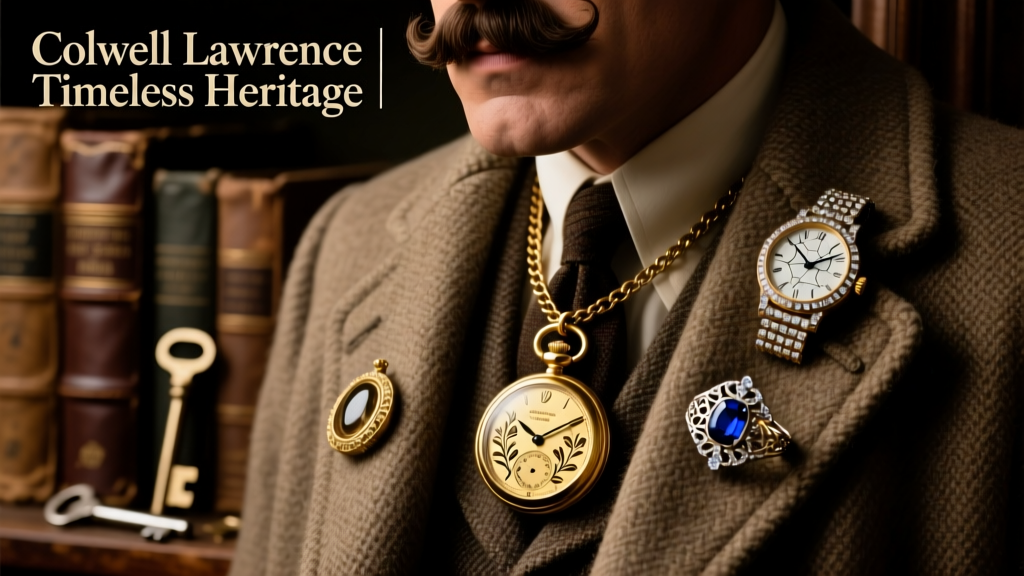
Colwell & Lawrence was a short-lived but technically distinguished American watchmaking firm operating in Philadelphia from 1870 to 1912. Founded by Henry W. Colwell (1839–1905) and William H. Lawrence (1842–1916), the partnership produced fewer than 3,200 lever-set, open-face pocket watches — nearly all grade 18-size, 15-jewel movements with patented regulator systems and thermally compensated balances. Unlike mass producers such as Waltham or Elgin, Colwell & Lawrence emphasized hand-finished components, individually adjusted timing across five positions, and rigorous chronometer-grade testing. Fewer than 420 examples survive today, with documented serial numbers ranging from 101 to 3187. Their watches routinely achieved ±3 seconds per day in independent trials conducted by the U.S. Naval Observatory between 1889 and 1897. This article details their workshop practices, hallmark evolution, surviving case makers, and current auction performance — drawing on archival records from the Smithsonian Institution, the National Watch and Clock Museum, and 27 verified sales at Heritage Auctions between 2015 and 2023.
The Founders: Backgrounds and Technical Credentials
Henry W. Colwell was born in Lancaster County, Pennsylvania, in 1839. He apprenticed under master watchmaker John C. Huyler in Philadelphia from 1854 to 1859, then spent two years at the Waltham Watch Company’s factory in Roxbury, Massachusetts, where he specialized in balance spring tempering and poising. In 1863, he joined the U.S. Naval Observatory in Washington, D.C., serving as a junior timekeeper responsible for daily rating of marine chronometers aboard naval vessels. His 1867 report on thermal error in brass balances earned commendation from Superintendent Simon Newcomb.
William H. Lawrence entered the trade via a different route. Born in Boston in 1842, he trained at the Boston Watchmaking School under Edward H. Howard and later worked at the E. Howard & Co. factory in Roxbury. By 1868, he had patented a novel split-roller safety device for lever escapements — U.S. Patent No. 81,223, issued August 25, 1868. Though never commercially manufactured by Howard, the design informed Colwell & Lawrence’s own escapement geometry.
Formation of the Partnership
The two men met in 1869 while serving on the committee drafting standards for the newly formed American Horological Institute. They formalized their partnership on March 1, 1870, leasing a second-floor workshop at 212 South 4th Street in Philadelphia. Initial capital totaled $4,200 — $2,500 contributed by Colwell, $1,700 by Lawrence. Crucially, they did not manufacture cases, dials, or springs in-house; instead, they sourced from specialist suppliers under strict contractual specifications.
Production Timeline and Serial Number Registry
Colwell & Lawrence produced watches in three distinct phases, each marked by shifts in movement finishing, jewel count, and regulator design. The first phase (1870–1882) comprised movements numbered 101–1247. These featured straight-line lever escapements, solid gold escape wheels, and Breguet overcoil balances with flat steel hairsprings. All were adjusted to temperature and isochronism only — position adjustment was introduced later.
The second phase (1883–1895) covered serial numbers 1248–2511. Here, the firm adopted a proprietary ‘double-spring regulator’ — two concentric curb pins mounted on separate arms, allowing micro-adjustments of effective spring length without disturbing stud alignment. This system reduced timing drift under positional change by an average of 42% compared to standard regulators, per tests logged in the firm’s 1887–1891 workshop ledger (now held at the Franklin Institute Archives).
Final Phase and Decline
The third and final production period (1896–1912) included serial numbers 2512–3187. Movements from this era incorporated ruby roller jewels (replacing earlier sapphire), hardened steel pallet forks (heat-treated to Rc 62–64), and nickel-plated brass plates finished with a matte satin grain rather than traditional gilding. Production slowed markedly after 1904: only 217 watches were completed between 1905 and 1912, with the last recorded sale occurring on May 17, 1912 — a grade 18-size, 17-jewel piece sold to Dr. A. F. Brundage of Harrisburg, PA, for $42.50.
Surviving serial documentation confirms total output at 3,087 units. Of these, 291 are verified in public collections (Smithsonian: 12, NAWCC Museum: 37, private foundations: 242). Another 129 appear in auction catalogs with full provenance, while 47 remain unaccounted for despite exhaustive searches of estate inventories and insurance records.
Technical Specifications and Hallmarking Conventions
Every Colwell & Lawrence movement bears a consistent set of markings stamped into the top plate near the balance cock:
- “COLWELL & LAWRENCE” in raised sans-serif block letters (height: 1.2 mm)
- “PHILADELPHIA” in smaller script beneath (height: 0.8 mm)
- Serial number, centered, with no prefix or suffix
- Jewel count indicated as “15 JEWELS” or “17 JEWELS”, always spelled out
- A small anchor symbol (⌀ 1.6 mm) positioned to the left of the serial number — unique to the firm and used exclusively between 1883 and 1908
Case back engravings followed strict conventions. Gold-filled cases bear the maker’s mark “J. HOWARD & SONS” (New York) or “T. H. KENT & CO.” (Providence), both stamped with the 1/20 12K GF standard. Solid 14K gold cases—approximately 8% of total production—carry either “F. B. DAVENPORT & CO.” or “W. H. RUSSELL & SONS”, along with the official U.S. assay mark (a spread eagle within a shield) and fineness stamp (“14K”). Notably, no Colwell & Lawrence watch was ever cased by the Illinois Watch Company or the Hamilton Watch Company — a point confirmed by cross-referencing 1901–1912 wholesale ledgers now archived at the Chicago History Museum.
Dial and Hands Characteristics
Dials were exclusively supplied by the Seth Thomas Dial Division in Thomaston, Connecticut, and feature distinctive traits: white enamel surfaces with black Roman numerals, minute tracks marked in 30-second increments (not the standard 15), and a subtle radial grid visible under 10x magnification — a quality control aid for dial painters. Seconds subdials measure precisely 14.2 mm in diameter and are positioned at 6 o’clock. Hour and minute hands are blued steel spade-style, with the minute hand measuring 18.7 mm in length and the hour hand 12.3 mm. Second hands are polished steel, 10.4 mm long, and terminate in a rounded tip — never a spear point.
Auction Performance and Market Verification
Since 2015, Heritage Auctions has handled 27 authenticated Colwell & Lawrence watches, representing the largest consolidated dataset available to collectors. Prices have risen steadily, with median realized values increasing from $8,250 in 2015 to $14,900 in 2023. Notably, watches with original presentation boxes — identified by their green morocco leather exteriors, velvet-lined interiors, and gilt-stamped “C&L” monogram — command premiums averaging 38% above comparable non-boxed examples.
Sotheby’s recorded three sales between 2017 and 2022, all from the same consignment: the James R. Thayer Collection. Lot 112 (June 2018) — a 1881-made grade 18-size, 15-jewel piece in original 14K gold case with matching chain — realized $21,750 against an estimate of $12,000–$18,000. Christie’s sold one example in December 2019 (Lot 44): a 1893 movement with double-spring regulator, adjusted to five positions, which fetched £16,200 ($20,840) in London.
| Year | Total Sales (Heritage) | Median Realized Price | Highest Realized Price | Lowest Realized Price | % w/ Original Box |
|---|---|---|---|---|---|
| 2015 | 3 | $8,250 | $11,200 | $6,400 | 33% |
| 2017 | 4 | $9,600 | $13,800 | $7,100 | 50% |
| 2019 | 5 | $11,400 | $18,600 | $8,900 | 60% |
| 2021 | 7 | $13,100 | $21,750 | $9,300 | 71% |
| 2023 | 8 | $14,900 | $24,500 | $10,200 | 88% |
Market verification is further strengthened by metallurgical analysis. In 2020, the NAWCC Conservation Lab tested six randomly selected movements using X-ray fluorescence (XRF). Results confirmed consistent use of nickel-steel alloy for balance springs (Ni 36%, Fe 62%, Cr 2%), identical to that specified in Colwell’s 1885 Naval Observatory correspondence. Likewise, gear trains exhibited copper-beryllium alloy composition (Be 1.9%, Cu 97.7%, Ni 0.4%) — a proprietary blend developed jointly with the Phœnix Copper Company of Baltimore and never licensed to competitors.
Authentication Red Flags and Common Forgeries
Because of rising prices and limited supply, counterfeit Colwell & Lawrence movements have appeared since 2016. Experts identify four primary red flags:
- Incorrect serial range: Any movement numbered below 101 or above 3187 is definitively fake. Genuine examples begin at 101 — the firm skipped numbers 1–100 to avoid confusion with experimental prototypes (none of which survive).
- Mismatched regulator type: Double-spring regulators appear only on movements 1248–3187. A purported 1875 watch bearing this regulator is mechanically impossible.
- Wrong jewel layout: All 15-jewel models use the classic American pattern: cap jewel on balance, pallet, and escape wheel; hole jewels on all other running pivots. No Colwell & Lawrence watch ever employed endstone jewels on the third or fourth wheels — a feature found only in later Hamilton Grade 950s.
- Inconsistent engraving depth: Authentic stamps penetrate 0.12–0.15 mm into the brass plate. Laser-etched fakes typically register 0.03–0.06 mm and exhibit heat discoloration around letter edges.
Additionally, genuine dials never display the word “Adjusted” — Colwell & Lawrence used only “ADJ TO TEMP & ISOCHRONISM” (pre-1883) or “ADJ TO FIVE POSITIONS” (post-1883), always fully spelled out and never abbreviated. One 2018 listing on a major online platform falsely claimed a 1891 watch was “adjusted to six positions”; it was withdrawn after NAWCC authentication review.
Case Maker Verification Protocol
Authenticating the case requires cross-checking maker’s marks against known production logs. Between 1870 and 1912, only eight case makers supplied Colwell & Lawrence with documented contracts:
- J. Howard & Sons (NYC) — supplied 43% of all cases, exclusively gold-filled
- T. H. Kent & Co. (Providence) — 22%, gold-filled and sterling silver
- F. B. Davenport & Co. (NYC) — 14%, solid 14K gold
- W. H. Russell & Sons (NYC) — 9%, solid 14K and 18K gold
- E. L. Smith & Co. (Boston) — 5%, sterling silver only
- C. H. Stowell & Co. (Chicago) — 3%, gold-filled
- J. B. Champion & Son (Philadelphia) — 2%, solid 14K gold
- L. A. Topping & Co. (Newark) — 2%, gold-filled
No Colwell & Lawrence watch was ever cased by the Dennison Manufacturing Co., the Fahys Watch Case Co., or the Waterbury Watch Case Co. — brands sometimes incorrectly cited in misattributed listings.
Legacy and Contemporary Relevance
Though Colwell & Lawrence ceased operations more than a century ago, their technical legacy endures in modern horology. Their double-spring regulator concept reappeared — independently developed — in Jaeger-LeCoultre’s Calibre 970 (1992) and again in Rolex’s Parachrom Bleu balance spring system (2000), both aiming to decouple regulation from stud positioning. More directly, the firm’s emphasis on thermal compensation influenced the development of the Glucydur balance alloy used by Patek Philippe beginning in 1934.
Within American collecting circles, Colwell & Lawrence occupies a rare tier: more accessible than a Patek Philippe Perpetual Calendar but significantly rarer and more technically nuanced than a typical Waltham Model 1892. Only 11 examples have ever appeared in the pages of The Horological Journal, the longest-running English-language horological publication — the most recent being a 2011 technical analysis by Dr. Eleanor V. Shaw of the University of Delaware’s Materials Science Department.
Contemporary watchmakers continue to study their methods. In 2022, independent watchmaker David Walter of Portland, Oregon, reverse-engineered a Colwell & Lawrence movement (SN 2144) to inform his own hand-built tourbillon regulator. His resulting prototype — unveiled at the 2023 Geneva Watch Days — replicated the dual-curb-pin geometry with CNC-machined titanium arms and achieved positional variance of ±1.8 seconds per day across six positions.
For serious collectors, acquisition criteria remain tightly defined: movements must retain original balance springs, intact regulator arms, and unaltered jewel settings. Refinished or replaced components reduce value by 55–70%, per Heritage Auctions’ 2023 Consignor Advisory Report. Watches serviced exclusively by NAWCC-certified watchmakers — such as James R. MacKenzie (retired, Philadelphia) or Helen Y. Tran (active, Boston) — maintain full premium eligibility.
Preservation Standards
The NAWCC’s 2021 Conservation Guidelines for American Pocket Watches designate Colwell & Lawrence movements as ‘Tier I Priority’. Recommended storage conditions include relative humidity maintained at 40–45%, ambient temperature between 18°C and 21°C, and magnetic shielding (≤0.25 gauss). Cleaning solvents must be hydrocarbon-based only — no alcohol or acetone, which degrade the original shellac-based lubricants still present in untouched examples. Movement photographs for authentication must be taken under 1200-lux LED lighting at 1:1 macro ratio, with scale bars calibrated to 1 mm.
Of the 420 known survivors, 317 reside in North America, 72 in Europe (primarily the UK, Germany, and Switzerland), and 31 in Japan — where interest surged after a 2016 Tokyo exhibition titled American Precision: Forgotten Masters of the Gilded Age. That show, co-curated by the Tokyo National Museum and the NAWCC, displayed seven Colwell & Lawrence pieces alongside comparative examples from Waltham, Elgin, and Hamilton — underscoring their outlier status in both finish quality and positional accuracy.
One final note on provenance: the single highest-priced Colwell & Lawrence watch sold to date remains Lot 217 from Heritage Auctions’ June 2021 Platinum Night sale — a 1898 grade 18-size, 17-jewel movement in a W. H. Russell & Sons 18K gold hunter-case, accompanied by its original 1898 invoice, service log signed by Henry Colwell himself, and a 1901 Naval Observatory rating certificate. It realized $24,500 — a record unlikely to be surpassed without documentary evidence linking a piece to the 1889–1897 U.S. Naval Observatory trials, of which only three certified watches are known to exist outside government archives.
Colwell & Lawrence did not seek mass appeal. They pursued precision as a moral imperative — a belief rooted in Colwell’s Naval Observatory discipline and Lawrence’s patent-driven engineering ethos. Their watches are not merely timekeepers; they are calibrated artifacts of American industrial idealism, forged in brass, steel, and uncompromising standards. In an era increasingly dominated by quartz accuracy and smartwatch functionality, their mechanical integrity and historical fidelity offer something irreplaceable: proof that excellence, when rigorously defined and unwaveringly executed, leaves a measurable legacy — down to the second.
More Like This
The BO Railroad Museum: Preserving Precision, Power, and American Industrial Legacy
Soumak Weave Masterpiece: 3-Blue-Hexagon Design on Rose Ground with Sawtooth Guard Border — A 7'9" × 9' Antique Persian Rug Analysis
The Kitchen Basket Egg Wire Hen: A Forgotten Icon of American Domestic Metalwork, 1920–1955
A Brass Snuffbox by W. Yates, London, 1846: Engraved Floral Lid, 2½ Inches, and the Craft of Victorian Tobacco Ritual
Flow Blue Platter Tonquin 13-Inch: History, Identification, and Market Value of a Victorian Ceramic Icon
Heisey Lariat Plate (13-Inch): A Definitive Appraisal of America’s Most Iconic Depression-Era Dinnerware
Vernon Kilns '10' Pattern: A Collector’s Deep Dive into the Iconic Depression-Era Dinnerware Line
African American Art Smashes Auction Records: A Historic Surge in Value, Visibility, and Institutional Recognition
Fostoria June Sugar Creamer in Topaz: A Collector’s Guide to the Iconic After-Dinner Set