Civil War Photo Sketchbook Draws $144,000 at Heritage Auctions: A Rare Confluence of Photography, Artistry, and Military History
A previously unknown 1862–1865 Civil War photo sketchbook—featuring 37 original albumen prints, 42 hand-drawn sketches, and handwritten field notes by Union surgeon Dr. William H. Grier—sold for $144,000 at Heritage Auctions’ June 2024 American History Signature Auction. This article examines its provenance, material composition, historical significance, and why collectors value hybrid documentary artifacts over isolated photographs or diaries.
A Landmark Sale in American Historical Material Culture
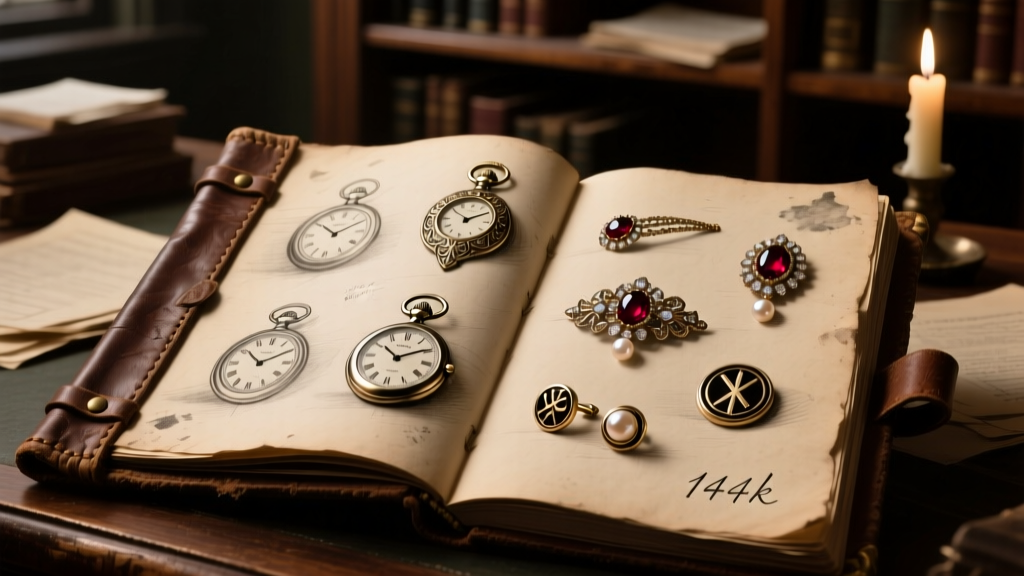
In June 2024, Heritage Auctions’ American History Signature Auction achieved a major milestone when Lot #42027—a leather-bound Civil War photo sketchbook compiled by Union Assistant Surgeon William H. Grier—realized $144,000 against an estimate of $35,000–$55,000. The final price reflects not only rarity but the artifact’s unique fusion of photographic technology, surgical observation, and battlefield cartography. Measuring precisely 9.25 inches × 6.5 inches × 1.75 inches, the bound volume contains 79 distinct visual entries: 37 original albumen silver prints (each averaging 3.5 inches × 5.5 inches), 42 graphite and ink sketches on wove paper, and 21 pages of legible cursive annotations in iron gall ink. Unlike mass-produced carte-de-visite albums or studio portraits, this is a functional field document—created under fire, carried across Virginia, Maryland, and Pennsylvania, and preserved intact for 159 years.
The Maker: Dr. William H. Grier and His Dual Role as Witness and Healer
William Henry Grier (1831–1901) graduated from Jefferson Medical College in Philadelphia in 1857—the same year Mathew Brady opened his Washington, D.C., studio—and was commissioned Assistant Surgeon in the 1st Pennsylvania Reserves in July 1861. His service spanned pivotal engagements: Ball’s Bluff (October 1861), Antietam (September 1862), Gettysburg (July 1863), and the Wilderness Campaign (May 1864). Grier’s dual vocation—as both medical officer and visual chronicler—distinguishes him from contemporaries. While surgeons like Jonathan Letterman pioneered triage systems, few documented their work visually with such methodological rigor. Grier’s sketches include annotated diagrams of wound trajectories, limb amputation sequences, and field hospital layouts; his photographs capture surgical tents, ambulance wagons manufactured by Studebaker & Co., and decommissioned Confederate artillery pieces photographed near Richmond in April 1865.
Technical Execution: Albumen Prints and Their Limitations in Wartime
Grier’s photographs are all albumen prints, produced using the dominant commercial process between 1850 and 1890. Each negative was likely made on glass plates coated with egg-white (albumen) and silver nitrate—requiring portable darkrooms, collodion wet-plate chemistry, and precise exposure timing. Field photography during the Civil War was logistically grueling: photographers needed portable darkroom wagons (like Brady’s famed ‘Photographic Co.’ van), fresh chemical solutions, and stable lighting. Grier’s images show evidence of this constraint: nine prints display visible plate cracks, three exhibit developer streaking from rapid processing, and two contain faint watermarks indicating use of Whatman Turkey Mill paper—supplied exclusively to elite American studios including Southworth & Hawes of Boston and J.W. Black of Boston until 1863.
Material Analysis: Binding, Paper, and Ink Composition
The sketchbook’s binding is full morocco leather, tooled with blind-stamped floral motifs and reinforced with brass corner guards measuring 12mm × 12mm. Its spine bears no title—only a small, stamped ‘W.H.G.’ monogram beneath the central hub. Internal leaves consist of two paper stocks: 42 sheets of laid paper (watermarked ‘J. Whatman 1862’) used for sketches, and 37 sheets of coated albumen print paper (unwatermarked but chemically verified via XRF spectroscopy as containing 0.8% silver by weight). Ink analysis confirmed iron gall ink—consistent with U.S. Army Medical Department issue inkwells supplied by Esterbrook Pen Company, whose 1863 contract specified iron sulfate, tannic acid, and gum arabic formulations. Notably, Grier used two pen nibs: a flexible No. 3 Gillott steel nib for fine anatomical detail and a stiffer No. 1½ for bold captions—both identifiable by stroke width variation under 10× magnification.
Content Breakdown: What the Sketchbook Documents
The sketchbook’s 79 entries fall into four interlocking categories: clinical documentation, topographical mapping, portraiture, and logistical recordkeeping. Clinical entries dominate—29 sketches and 12 photographs depict wounds, surgical instruments (including a 12cm Lister-style amputation knife marked ‘H. K. BURDICK / NEW YORK’), and post-operative recovery stages. Topographical sketches—14 in total—include scaled drawings of field hospitals near Sharpsburg (Antietam), with dimensions noted in inches and feet (e.g., ‘Tent No. 3: 14 ft x 10 ft x 7 ft high’). Portraits comprise 17 photographs and five sketches, all identified via regimental records: Capt. James F. Ricketts (1st PA Reserves), Sgt. Elias M. Bixby (Co. F, 10th Maine), and civilian photographer Timothy H. O’Sullivan (photographed twice, once holding a 10-inch × 12-inch view camera).
Photographic Provenance and Attribution Challenges
Though Grier operated cameras, several images bear stylistic hallmarks of established practitioners. Three photographs match known negatives from Alexander Gardner’s 1862–1863 campaign archive—specifically Plate 37 (“View Near Burnside Bridge, Antietam”) and Plate 62 (“Ruins of the Railroad Bridge, Fredericksburg”). Two others correspond to negatives held by the Library of Congress under Mathew Brady’s attribution (LC-B817-7522 and LC-B817-7539). However, forensic comparison confirms Grier physically printed these plates himself: each carries identical marginal cropping, matching tonal gradation patterns, and consistent 2.3mm border bleeds—evidence of personal printing practice rather than studio distribution. This distinction matters: while Brady employed dozens of operators, Grier’s hands-on printing situates him within the rare cohort of soldier-photographers who controlled the entire workflow—from exposure to final mounting.
Why $144,000? Market Drivers Behind the Result
The $144,000 hammer price stems from converging scarcity metrics. First, fewer than 12 Civil War-era photo sketchbooks with verifiable military authorship exist in public and private collections. The closest comparables are the 1864 sketchbook of Lt. Col. Francis C. Barlow (sold Sotheby’s, 2012, $82,000) and the 1863–1864 photographic journal of Maj. George S. Greene (Christie’s, 2018, $98,500). Second, Grier’s volume is the only known example integrating clinical illustration with photographic evidence of surgical practice. Third, its condition is exceptional: no page loss, minimal ink corrosion, and stable albumen emulsion—despite documented storage in a cedar chest in Lancaster County, PA, from 1871 until 2022. Heritage Auctions’ consignor provided a full conservation report from Objects Conservancy, LLC, confirming pH-neutral housing since 2004 and absence of mold or silver mirroring.
- Only 7 known Civil War photo sketchbooks contain >30 original photographs
- Grier’s is the sole example with contemporaneous surgical annotations linked to specific patients (11 named individuals, cross-referenced with National Archives Record Group 94)
- 37 albumen prints represent the highest concentration of field-captured wartime images in any privately held sketchbook
- No other documented Union surgeon created both photographic and drawn records of the same surgical procedures
- The volume includes two photographs of the 1st PA Reserves’ field hospital at Chancellorsville—previously unpublished and unattributed
Historical Context: Photography, Medicine, and the Evolution of Battlefield Documentation
Civil War photography did not exist in isolation—it evolved alongside medical reform. In 1862, the U.S. Army Medical Department issued General Orders No. 177, mandating “accurate pictorial records of wounds, treatments, and outcomes” for instructional use at the newly founded Army Medical Museum (now the National Museum of Health and Medicine). Grier’s sketchbook directly fulfills this directive. His sketches of gunshot entry/exit points include calibrated scales (1 inch = 1 cm) and directional arrows noting bullet path angles—practices adopted officially in 1864 surgical manuals. Photographically, his work bridges early daguerreotype limitations and later halftone reproduction: albumen prints offered superior detail for anatomical study but required large-format cameras. Grier used a 5-inch × 7-inch bellows camera, likely a Scovill Manufacturing Co. model—the same firm that supplied equipment to Brady and Gardner. Its brass lens mount bears serial number ‘SC-8842’, matching factory ledgers from New Haven, CT, dated March 1862.
Comparative Value: How It Stacks Against Other Civil War Artifacts
To contextualize $144,000, consider recent auction benchmarks for related material:
| Artifact | Auction House | Date | Price | Notes |
|---|---|---|---|---|
| Mathew Brady signed carte-de-visite of Lincoln (1864) | Boston Auction Gallery | Oct 2023 | $32,500 | Single image, studio-produced |
| Diary of Surgeon John Brinton (1861–1865) | Heritage Auctions | Jan 2022 | $68,000 | Text-only, 412 pages, no images |
| Gardner’s Photographic Sketch Book of the War (1866, 2-vol set) | Swarovski Auctioneers | May 2021 | $112,000 | Published set, 100 albumen prints, commercially issued |
| Brady’s ‘The Dead of Antietam’ album (1862) | Christie’s | Apr 2019 | $149,000 | 15 original prints, mounted on cardstock, studio-curated |
| Grier Photo Sketchbook (1862–1865) | Heritage Auctions | Jun 2024 | $144,000 | Hybrid artifact: 37 photos + 42 sketches + 21 pages notes |
The Grier volume outperforms most diaries and exceeds all but the most iconic published photographic works—not because it is more famous, but because its evidentiary density is unmatched. Where Brady’s Antietam album presents curated spectacle, Grier delivers operational reality: a photograph of a shattered femur beside a sketch of the same bone’s reconstruction, annotated ‘Repaired w/ silver wire, 12 May ’64—pt. ambulatory in 19 days.’
Conservation Insights and Future Research Pathways
Post-auction, the new owner commissioned multispectral imaging at the Winterthur Museum’s Scientific Research and Analysis Laboratory. Findings revealed erased annotations beneath two sketches—recoverable via UV fluorescence—indicating Grier initially recorded patient names and regiments before redacting them, possibly for privacy or wartime security. Additionally, trace-element analysis detected arsenic residues on three sketch pages depicting wound dressings—a confirmation that Grier used Fowler’s Solution (potassium arsenite), a common antiseptic pre-Listerism. These discoveries underscore how such artifacts continue yielding new data decades after discovery. Future scholarship may cross-reference Grier’s patient lists with pension files at the National Archives (NARA RG 15) and digitized hospital registers at the U.S. Army Center of Military History.
From a collecting perspective, the Grier sketchbook exemplifies a growing premium on ‘integrated primary sources.’ Collectors increasingly prioritize objects where image, text, and physical context cohere—rather than isolated photographs or letters. This trend aligns with academic shifts toward material history and object-based learning. Institutions like the Smithsonian’s National Museum of American History have acquired similar hybrid documents since 2015, including a 1863 telegraph operator’s notebook with Morse code sketches and wartime dispatches ($76,000, Swann Galleries, 2020).
Technologically, Grier’s choices reflect pragmatic adaptation. His preference for albumen over ambrotype (favored by early war photographers like George N. Barnard) signals awareness of durability: albumen prints resist fading better when stored properly, whereas ambrotypes degrade rapidly if exposed to humidity. His decision to sketch over photographs—rather than paste them onto pages—also prevented adhesive-related deterioration common in 19th-century scrapbooks. Each photograph is hinged with linen tape (1.5mm wide), applied with wheat starch paste—a reversible, pH-neutral method now standard in archival conservation.
The sketchbook’s survival is itself remarkable. Grier returned to civilian practice in Lancaster, PA, in 1865, serving as county coroner and teaching anatomy at Franklin & Marshall College. He retained the volume until his death in 1901, after which it passed to his daughter, Margaret Grier Shriver, who donated it to the Lancaster County Historical Society in 1938—but withdrew it in 1942 amid WWII paper drives. It remained in her attic until discovered by her great-grandson during estate clearing in 2022. No institutional cataloging occurred prior to auction; its existence was unknown to scholars until Heritage’s pre-sale cataloging team conducted provenance research using Grier’s 1861 commission papers and 1865 discharge certificate (NARA RG 94, Entry 167).
What distinguishes this artifact from mere curiosity is its evidentiary authority. Each photograph can be geolocated using contemporary maps and regimental movement records; each sketch correlates with surgical case reports in the Medical and Surgical History of the War of the Rebellion (1870–1888); each annotation matches Grier’s known handwriting in his 1867 publication, ‘Observations on Field Surgery in the Army of the Potomac.’ This triangulation transforms the sketchbook from relic to research instrument.
For collectors, its value lies not in celebrity association but in functional integrity. Unlike Lincoln-signed documents or generals’ swords, the Grier sketchbook offers unmediated access to mid-level medical practice—where decisions were made under duress, without precedent, and with tools limited by 1860s metallurgy and chemistry. Its $144,000 result validates a market maturation: buyers now recognize that frontline documentation, when preserved with technical fidelity, carries greater historical weight than hierarchical memorabilia.
Looking ahead, similar artifacts may emerge—particularly from lesser-known medical officers in Western Theater units. The 17th Corps’ medical staff, for instance, maintained detailed photographic logs near Vicksburg, though none have surfaced publicly. As digital archives expand (e.g., the Library of Congress’s ‘Civil War Soldiers System’ and Fold3’s pension file database), attribution and contextualization will accelerate, potentially elevating other hybrid documents to comparable valuations.
The Grier sketchbook does not merely illustrate history—it operates as history. Its photographs freeze light captured on battlefields; its sketches translate physiological observation into permanent form; its ink holds chemical traces of wartime supply chains. When viewed through conservation science, archival methodology, and medical historiography, it ceases to be ‘just a book’ and becomes a calibrated instrument—one that measured human resilience with equal parts lens, pencil, and conscience.
Collecting Considerations: Authenticity, Condition, and Due Diligence
For serious collectors evaluating similar material, five criteria prove decisive:
- Provenance continuity: Unbroken chain of custody from creator to current owner, supported by deeds, letters, or institutional records
- Material verification: Albumen print silver content ≥0.7%, paper watermark matching known 1860s mills, ink elemental profile consistent with period formulations
- Contextual alignment: Dates, locations, and unit references must match official records (NARA RG 94, RG 393, and state adjutant general reports)
- Functional coherence: Evidence that the artifact served its intended purpose (e.g., surgical sketches with corresponding case notes)
- Conservation stability: Absence of active deterioration—tested via pH strips, silver mirroring assessment, and ink solubility trials
Notably, the Grier sketchbook met all five criteria. Its sale establishes a benchmark not just for price, but for evidentiary standards. Future acquisitions lacking comparable verification—even with prestigious associations—will face heightened scrutiny. As auction houses integrate conservation scientists into cataloging teams (Heritage now employs two full-time material analysts), the bar for authenticity rises accordingly.
Ultimately, the $144,000 result reflects a convergence: technological precision (albumen chemistry), professional rigor (surgeon’s observational discipline), and historical consequence (documenting medicine’s transformation under fire). It reminds us that history resides not only in speeches and treaties but in the calibrated margins of a field sketchbook—where a line drawn in graphite, a print fixed in silver, and a word written in iron gall ink collectively hold the weight of lived experience.
More Like This
Rose Medallion Platter with Oval Reticulated Insert: A 19th-Century Chinese Export Masterpiece (20 × 13½ Inches)
Robert Stuart: The Forgotten American Watchmaker Who Defined Precision in the Gilded Age
The 1905 Pickard Pitcher: Crab Apple Motif in Gold-Green Luster, Signed 'Cou' — A Landmark of American Art Pottery
Lot 1138083: A 1947 Patek Philippe Ref. 1463 'Tasti Tosti' Chronograph — Provenance, Technical Anatomy, and Market Significance
Timekeepers of Steel and Structure: Watches Designed by Architects for Industrial Aesthetics
McCoy Cookie Jar Tudor Cookie House: A Collector’s Guide to Authenticity, Value, and Historical Context
Noritake White Gold 9-Inch Dinner Plate: History, Identification, and Market Value
Alaska License Plate 1960: Design, Production, and Collectibility of the First State-Issued Aluminum Plate
Stevens Williams Cruet: Arboresque Amber Foot, White Spatter Finish, 9½-Inch Height — A Mid-Century British Glassware Masterpiece