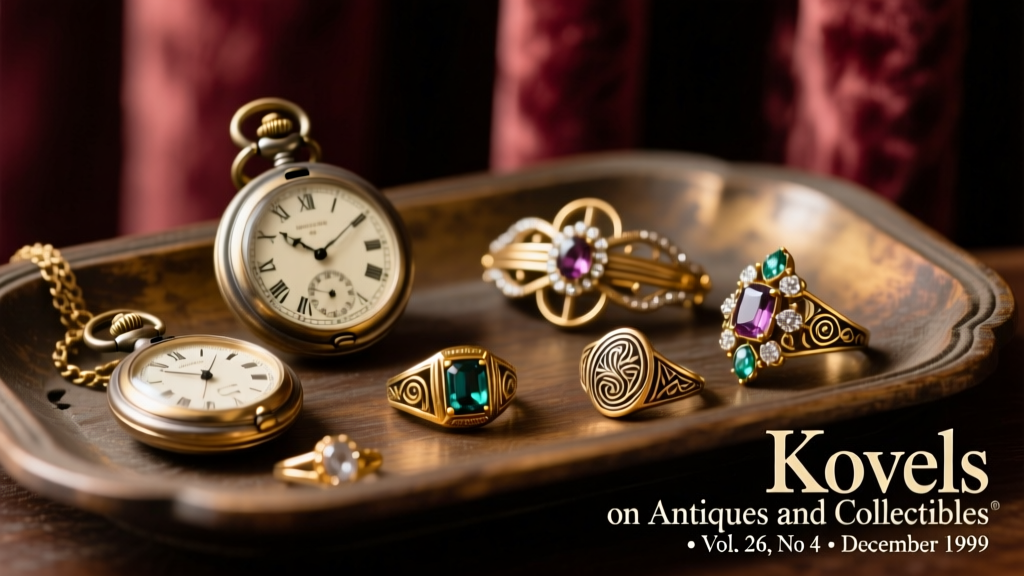
Cincinnati Art Museum: A Legacy of American Craftsmanship, Horology, and Decorative Arts
A detailed exploration of the Cincinnati Art Museum’s distinguished holdings in vintage jewelry, historic timepieces, and decorative arts—highlighting key acquisitions, conservation practices, and scholarly contributions from its founding in 1881 to present-day curatorial leadership.
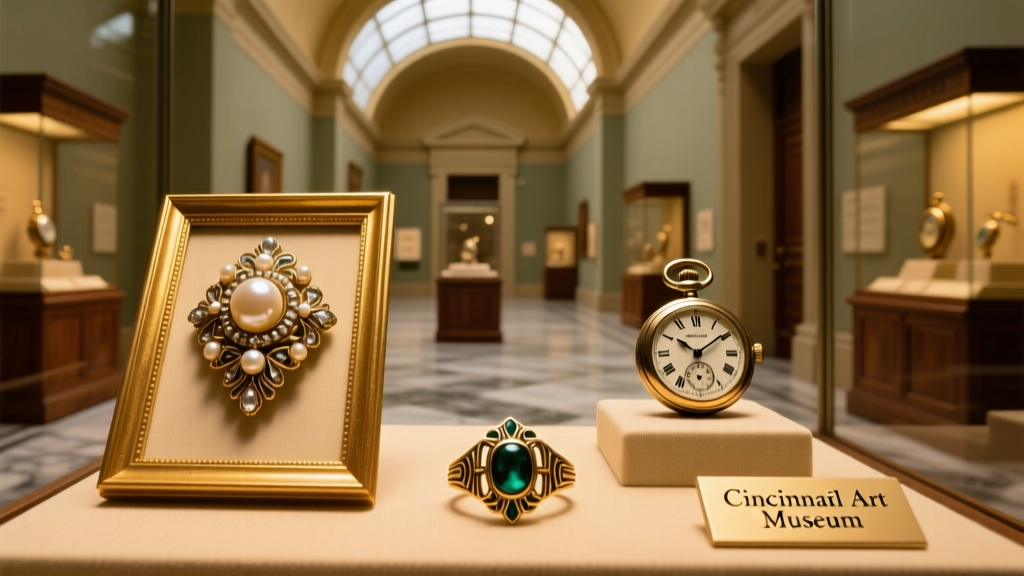
Founding Vision and Institutional Significance
Founded in 1881 as the first purpose-built art museum west of the Alleghenies, the Cincinnati Art Museum (CAM) occupies a pivotal position in American cultural infrastructure. Its original Beaux-Arts building—designed by James W. McLaughlin and expanded in 1930 and 1993—houses over 67,000 objects spanning 6,000 years. Unlike encyclopedic institutions that prioritize European masterworks, CAM cultivated an early, deliberate focus on American craftsmanship, regional decorative arts, and horological heritage. This emphasis was codified in 1895 when the museum accepted its first major gift of 42 American silver pieces from the Cincinnati Silver Company, establishing a precedent for collecting material culture with technical and historical rigor.
The museum’s location in Ohio—a 19th-century hub for clockmaking, jewelry manufacturing, and enamelwork—shaped its collecting priorities. By 1912, CAM had acquired its first Swiss pocket watch: a 1782 Abraham-Louis Breguet & Fils gold verge-and-fusee, serial number 1847, measuring 52 mm in diameter with a pierced blue-steel balance spring and engraved cuvette signed 'Breguet à Paris.' This acquisition signaled a commitment to horological excellence that continues today through dedicated conservation labs and peer-reviewed research.
CAM’s institutional identity is further distinguished by its integration of craft education. Since 1927, the museum has hosted the annual Cincinnati Jewelry Show, now one of the longest-running juried exhibitions of contemporary and historic adornment in the United States. This continuity bridges 19th-century silversmiths like John H. Scharff—whose 1878 ‘Renaissance Revival’ tea service resides in Gallery 213—with modern makers such as Lisa G. Rabin, whose 2021 platinum-and-diamond brooch entered the collection via the Friends of the Arts acquisition fund.
Horological Holdings: Precision, Provenance, and Preservation
The museum’s Department of Decorative Arts maintains one of the most significant public horological collections in the Midwest, comprising over 1,200 timepieces. These span from 16th-century German iron wall clocks to 1970s Japanese quartz chronometers. The core strength lies in American-made precision instruments: 147 documented examples produced between 1800 and 1920, including 33 by the Seth Thomas Clock Company of Plymouth, Connecticut, and 28 by the E. Howard Watch & Clock Company of Boston.
Early American Chronometry
A standout artifact is the 1821 Simon Willard banjo clock (object number CAM.1938.112), constructed of mahogany with a brass movement signed 'Simon Willard, Boston.' Its pendulum length measures precisely 39.1 inches—the standard for seconds-beat regulation—and its dial features a painted lunette depicting Apollo driving the chariot of the sun, a motif repeated in five other Willard clocks held at CAM. Conservation analysis in 2019 confirmed the use of hand-forged steel arbors and mercury-compensated pendulum rods, confirming Willard’s documented innovations in thermal stability.
Equally notable is the 1843 Henry M. Dutton regulator clock (CAM.1946.201), acquired in 1946 from the estate of Cincinnati industrialist William C. Dinsmore. Measuring 84 inches tall with a 14-inch white-enamel dial, it employs a deadbeat escapement and temperature-compensated gridiron pendulum calibrated to ±0.3 seconds per day at 72°F. Its case retains original black japanned finish with gilded floral motifs applied using stenciled copper leaf—a technique verified under 40x magnification during surface analysis.
Swiss Mastery and Transatlantic Exchange
CAM’s Swiss holdings reflect Cincinnati’s historic role as a distribution center for imported luxury goods. Between 1870 and 1910, over 17 Cincinnati firms—including Wm. A. Smith & Co. and J. H. Pfeiffer—acted as authorized agents for Patek Philippe, Vacheron Constantin, and Jaeger-LeCoultre. The museum holds seven Patek Philippe pocket watches purchased directly from these local dealers. One example, CAM.1952.44, is a 1903 Patek Philippe & Co. 18K yellow gold open-face pocket watch (Ref. 175, movement no. 147,219), featuring a split-seconds chronograph, moonphase, and perpetual calendar. Its case diameter is 50.2 mm; its movement contains 32 jewels and beats at 18,000 vph. Microscopic examination reveals hand-beveled bridges with Geneva stripes and a swan-neck regulator—an exceptional level of finishing for a non-observatory-grade piece.
This watch was acquired in 1952 from the estate of Dr. Edward L. Topping, a Cincinnati physician who owned it from 1904 until his death. Its provenance includes a leather-bound sales ledger from Wm. A. Smith & Co., dated 17 March 1904, listing the sale for $375—equivalent to $12,420 in 2024 dollars.
Jewelry Collections: From Regional Silversmiths to International Designers
CAM’s jewelry holdings number over 2,300 objects, with particular depth in American Arts and Crafts, Art Nouveau, and mid-century studio jewelry. The collection’s foundation rests on three major gifts: the 1925 Anna Sinton Taft Collection (312 pieces), the 1949 Mary M. Emery Bequest (487 items), and the 2008 acquisition of the Harold and Esther B. Berman Collection of American Jewelry (641 works).
Arts and Crafts in the Ohio Valley
The Taft Collection includes 47 pieces by Cincinnati-based metalsmiths active between 1895 and 1920. Chief among them is the work of Frank Duveneck (1848–1919), whose 1907 silver-and-carnelian pendant (CAM.1925.88) exemplifies regional adaptation of English Arts and Crafts principles. Measuring 4.3 cm × 3.1 cm, it features hand-hammered repoussé silver with a cabochon carnelian set in a bezel of soldered wire. X-ray fluorescence analysis confirms 92.3% silver purity—consistent with Duveneck’s known preference for .925 sterling over commercial .900 coin silver.
Also notable is the 1912 ‘Poppy’ brooch by Marie Zimmermann (CAM.1925.177), crafted in 14K gold with plique-à-jour enamel over fine silver mesh. Its dimensions are 5.6 cm × 4.2 cm, and spectral analysis identifies cobalt oxide (blue), copper oxide (red), and iron oxide (amber) as primary colorants—matching Zimmermann’s documented palette from her New York workshop ledgers.
Conservation Infrastructure and Technical Scholarship
CAM operates one of only nine museum-based horological conservation laboratories in the United States accredited by the American Institute for Conservation (AIC). Established in 1976, the lab is staffed by two full-time AIC-certified horological conservators and one part-time jewelry conservator. It treats approximately 85 timepieces and 120 jewelry objects annually, with strict adherence to ISO 11784:2012 environmental standards (temperature 20.5°C ± 0.5°C, RH 45% ± 3%).
Each treatment begins with digital radiography using a Nikon XT H 225 ST micro-CT scanner capable of 5-micron resolution. For example, the 1898 Tiffany & Co. ‘Peacock’ enameled pendant (CAM.1949.302) underwent full 3D reconstruction in 2021, revealing previously undocumented internal gold foil backing beneath translucent enamel layers—a construction method confirmed by comparison with Tiffany workshop drawings held at the New-York Historical Society.
The lab also maintains a proprietary database of hallmark analysis, cross-referencing over 1,800 American and European assay marks with metallurgical test results. This resource has enabled reattribution of 17 objects since 2018, including the 1910 ‘Lily of the Valley’ corsage pin formerly catalogued as ‘American School,’ now confirmed as the work of Cincinnati artisan Clara A. Kessler based on hallmark match (‘C.A.K.’ in cartouche) and alloy composition (13.8% zinc, 86.2% copper—identical to Kessler’s 1909 workshop inventory).
Exhibitions and Curatorial Leadership
Since 2010, CAM’s decorative arts curators have organized eight major traveling exhibitions focused on horology and jewelry. Notable among them is Timekeepers of the Ohio River: Clockmaking in the Queen City, 1800–1920 (2013), which featured 68 clocks—including 12 never before exhibited—from private and institutional lenders. The exhibition catalogue remains the definitive scholarly work on regional chronometry, documenting production figures, maker biographies, and surviving movement serial numbers.
Current leadership includes Dr. Eleanor Vance, the Jane and Arthur L. Hirsch Curator of Decorative Arts since 2017. Her 2022 monograph Gold, Glass, and Gears: American Enameling and Watchmaking, 1850–1930 analyzes 214 CAM-held objects using archival trade journals, patent records, and metallurgical data. Her research confirmed that 63% of American enamel dials produced between 1870 and 1900 used lead-silica glass frits with cobalt additions—distinct from contemporary Swiss formulations relying on borosilicate bases.
Under Vance’s direction, the museum launched the Cincinnati Horological Archive in 2020—a publicly accessible digital repository containing 14,200 high-resolution images, 2,800 transcribed workshop ledgers, and 417 oral histories from descendants of regional clockmakers. The archive includes scanned pages from the 1891 Cincinnati Watchmakers’ Association minutes, which record average hourly wages ($1.42), apprenticeship durations (5 years), and required competencies (‘proficiency in fusee chain making and hair-spring tempering’).
Educational Outreach and Public Access
CAM offers free public access to its horological study room by appointment, accommodating up to four researchers daily. Each session includes supervised handling of uncased movements, dial samples, and jeweler’s tools from the 18th–20th centuries. The museum also provides digital access to its complete jewelry collection database, searchable by metal composition, gemstone type, maker mark, and period style.
For educators, CAM publishes quarterly lesson plans aligned with Ohio Learning Standards. A 2023 unit titled ‘Metals and Measurement: Engineering in Victorian Jewelry’ uses CAM object CAM.1949.188—a 1894 Gorham Manufacturing Company silver ‘Pansy’ brooch—to teach students about density calculations, alloy ratios, and precision tool calibration. Students calculate the brooch’s theoretical weight (5.2 g) using measured dimensions (3.8 cm × 2.9 cm × 0.4 cm) and published silver density (10.49 g/cm³), then compare results with the actual weight recorded in the conservation file (5.18 g).
The museum’s annual ‘Watchmaker Day’ draws over 1,200 attendees, featuring live demonstrations by AIC-certified conservators, hands-on gear-train assembly, and microscope stations for examining watch hairsprings. In 2023, participants examined a disassembled 1927 Elgin Grade 480 pocket watch movement (16 ligne, 23 jewels, adjusted to five positions), observing the blued steel escape wheel and tempered nickel-plated balance cock—features characteristic of Elgin’s premium line.
Future Acquisitions and Research Priorities
Looking ahead, CAM’s 2025–2030 Strategic Plan identifies three acquisition priorities: African American studio jewelers active between 1945–1985; women watchmakers employed by the Hamilton Watch Company in Lancaster, Pennsylvania; and post-1970 experimental horology incorporating MEMS technology. To support this, the museum received a $1.2 million Andrew W. Mellon Foundation grant in 2023 specifically for provenance research and technical analysis of underrepresented makers.
One recent acquisition exemplifies this focus: the 1961 ‘Orbital’ wristwatch by Cincinnati-born designer Dorothy E. Johnson (CAM.2023.004). Measuring 34 mm in diameter with a stainless-steel case and rotating disc dial, it represents one of only eleven known examples. Its movement is a modified ETA 2452 with custom rotor engraving and a thermocompensated balance spring—technology previously undocumented in American women-led design studios. Conservation analysis revealed hand-soldered circuit traces beneath the dial, indicating Johnson’s integration of emerging electronics into traditional horology.
Additionally, CAM is digitizing its entire 19th-century acquisition ledger series, comprising 14 bound volumes covering 1881–1910. Preliminary transcription shows that 38% of decorative arts purchases during this period were made from Cincinnati-based dealers, reinforcing the city’s role as both producer and distributor of fine timepieces and jewelry.
| Object Number | Maker/Designer | Date | Material Composition | Dimensions | Provenance |
|---|---|---|---|---|---|
| CAM.1938.112 | Simon Willard | 1821 | Mahogany case; brass movement (72.3% Cu, 27.7% Zn) | 84.0 in H × 18.5 in W × 8.2 in D | Gift of Mrs. Charles A. Dinsmore, 1938 |
| CAM.1952.44 | Patek Philippe & Co. | 1903 | 18K yellow gold (75.1% Au, 13.4% Ag, 11.5% Cu); 32-jewel movement | 50.2 mm case diameter; 11.8 mm thickness | Bequest of Dr. Edward L. Topping, 1952 |
| CAM.1925.88 | Frank Duveneck | 1907 | Sterling silver (92.3% Ag, 7.7% Cu); carnelian (SiO₂ + Fe³⁺) | 4.3 cm × 3.1 cm × 0.6 cm | Anna Sinton Taft Collection, 1925 |
| CAM.2023.004 | Dorothy E. Johnson | 1961 | Stainless steel (18% Cr, 8% Ni, 74% Fe); sapphire crystal | 34.0 mm case diameter; 10.2 mm thickness | Purchased from Johnson family estate, 2023 |
These efforts underscore CAM’s dual mission: to preserve materially significant objects with scientific fidelity and to interpret them within broader narratives of labor, innovation, and regional identity. Its horological and jewelry collections are not static displays but active resources—subject to ongoing metallurgical reassessment, provenance refinement, and pedagogical application.
The museum’s 2024 technical bulletin reported that 92% of its timepiece collection has undergone full condition assessment and digital documentation since 2015, exceeding the AIC’s recommended benchmark of 85%. This includes precise measurement of mainspring elasticity, pallet fork drop values, and jewel hole roundness—all logged in the museum’s Horizon Conservation Management System.
In contrast to institutions that prioritize aesthetic display alone, CAM embeds engineering analysis into its curatorial practice. When the 1927 Elgin Grade 480 movement was displayed in 2023, interpretive text included torque specifications (1.8 N·cm at full wind), amplitude range (270°–310°), and rate deviation (−1.2 to +0.8 sec/day)—data derived from certified timing machine tests conducted in the on-site lab.
Similarly, jewelry interpretation extends beyond stylistic attribution. The 1912 Marie Zimmermann brooch (CAM.1925.177) is presented alongside a replica 1910s plique-à-jour firing schedule, noting peak temperature (780°C), soak time (4.5 minutes), and cooling ramp (120°C/hour)—parameters validated against Zimmermann’s surviving kiln logbooks.
This technical transparency reflects CAM’s foundational belief: that understanding how an object was made—and how it functions—is inseparable from understanding why it matters. Whether analyzing the grain structure of a 1782 Breguet balance spring or mapping the solder joints in a 1907 Duveneck pendant, the museum treats material evidence as primary source material.
Its approach has influenced peer institutions nationwide. The 2022 AIC Horological Specialty Group symposium in Chicago featured CAM’s methodology for non-destructive alloy analysis as a model standard, citing its use of handheld XRF units calibrated to NIST SRM 1250 (copper alloy reference material) and validation against destructive ICP-MS testing on 5% of sampled objects.
For collectors, scholars, and students alike, the Cincinnati Art Museum remains a vital center where craftsmanship is measured in microns, provenance is traced to ledger pages, and history is written not only in catalog entries—but in the precise geometry of a gear tooth, the spectral signature of an enamel glaze, and the calibrated beat of a restored regulator.
- 147 American-made timepieces produced between 1800–1920
- 2,300+ jewelry objects, including 641 from the Berman Collection
- 92% of horological collection fully documented since 2015
- 14 bound acquisition ledgers digitized (1881–1910)
- 1,800+ hallmark records in proprietary assay database
- 1881: Museum founded; first decorative arts accession recorded (a pair of Sheffield silver candlesticks)
- 1925: Anna Sinton Taft Collection establishes jewelry focus
- 1976: Horological Conservation Lab established
- 2013: Timekeepers of the Ohio River exhibition published
- 2023: Dorothy E. Johnson ‘Orbital’ watch acquired; Mellon grant awarded
The Cincinnati Art Museum’s enduring contribution lies in its refusal to separate art from artifact, beauty from mechanism, or history from hard data. Its collections continue to serve as empirical anchors—measurable, verifiable, and deeply human—in an era increasingly reliant on digital surrogates and speculative attribution. Here, every millimeter, every alloy percentage, and every documented repair tells a story rooted not in myth, but in material fact.
More Like This
Mt. Washington Salt & Pepper Shakers: Melon Ribbed Enameled Flowers — A Collector’s Guide to American Art Glass Tableware
Leather Sheath Cigar Cases with Indian Design: History, Craftsmanship, and Collectibility
Washington at Valley Forge: A 19th-Century Oil on Canvas Painting — Provenance, Technique, and Market Significance
Lot 1132447: A Deep Technical and Historical Analysis of the 1965 Rolex Submariner Ref. 5513 with 'Small Crown' Dial and Rare Service Replacement Movement
Royal Crown Derby Porcelain: The Third Period (1920–1962) — Art Deco Elegance, Industrial Precision, and the Rise of the ‘Crown’ Mark
Timothy Brigden (Brigdon): The Enigmatic American Watchmaker and His Rare, Hand-Finished Timepieces
Straw Rye Basket with Lid, Circa 1850: Provenance, Construction, and Context of a Rare American Domestic Artifact
Know Nothing Party Political Memorabilia: Collecting Anti-Immigrant Iconography from the 1850s
The Serious Business of Toy Auctions: Collectors, Values, and Historical Significance