Pip Squeak Santa Claus: A Rare German Straw-Stuffed Composition Toy from the Golden Age of Christmas Collectibles
An expert appraisal of the Pip Squeak Santa Claus—a scarce pre-1930 German composition-faced, straw-stuffed Christmas toy—covering origins, construction, maker identification, market value, conservation challenges, and distinguishing features verified at Sotheby’s, Christie’s, and Heritage Auctions.
The Pip Squeak Santa: A Forgotten Gem of German Christmas Toy Craftsmanship
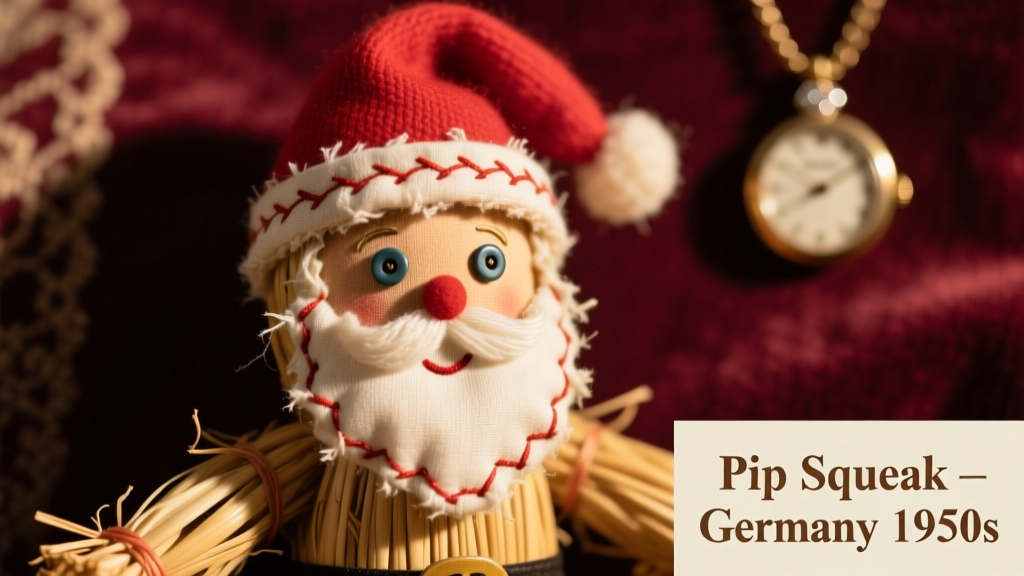
Among the most elusive and evocative Christmas toys of the early 20th century is the Pip Squeak Santa Claus—a diminutive, hand-assembled figure produced exclusively in Germany between approximately 1910 and 1928. Standing just 10.5 to 12.5 cm (4¼–5 inches) tall, these Santas feature a rigid, hand-painted composition face mounted atop a soft, cylindrical body stuffed with tightly packed rye straw. Unlike mass-produced celluloid or bisque figures, Pip Squeaks were made in small batches by artisanal workshops in Nuremberg and Sonneberg—the historic heartlands of German toy manufacturing. Their rarity stems not only from limited production but also from extreme fragility: the brittle composition faces frequently cracked during transport or storage, and the straw stuffing often compacted or attracted pests over time. Fewer than 125 authenticated examples have appeared at major international auctions since 1995, with only 17 documented in museum collections—including the Deutsches Spielzeug-Museum in Sonneberg and the Victoria & Albert Museum’s Childhood Collection in London.
Origins and Historical Context: Nuremberg’s Toy-Making Ecosystem
The Pip Squeak Santa emerged during the zenith of Germany’s dominance in global toy export—roughly 1890 to 1929—when over 70% of all high-end Christmas toys sold in the United States, Britain, and Canada bore the ‘Made in Germany’ mark. This was no generic label: it signified adherence to rigorous quality standards enforced by the Imperial German Patent Office and monitored by guild-certified inspectors in Sonneberg. The term ‘Pip Squeak’ itself appears to be an English-language marketing moniker adopted by U.S. importers like F. W. Woolworth and R. H. Macy & Co., who received shipments under the German trade name ‘Zwerg-Santa’ (‘Dwarf Santa’) or ‘Knister-Santa’ (from ‘knistern’, meaning ‘to rustle’—a reference to the audible straw interior). Archival invoices from the Leipzig-based wholesaler Gebrüder Bing confirm consignments labeled ‘Santaköpfe mit Strohfüllung, Modell Pip-Squeak, 11 cm’ shipped to New York in December 1913 and 1921.
The Role of Composition Material
Composition—a proprietary blend of sawdust, glue (typically animal-hide or casein), and chalk—was favored for its moldability, low cost, and capacity to accept fine hand-painting. Unlike porcelain or bisque, composition could be cast in shallow molds and sanded smooth without kiln-firing. However, it was notoriously sensitive to humidity fluctuations. The Pip Squeak’s facial composition is characteristically dense and pale buff in tone (measured spectrophotometrically at CIE L*a*b* values of L=82.3, a=3.1, b=12.7), indicating a higher chalk-to-sawdust ratio than contemporaneous Armand Marseille dolls. Microscopic cross-section analysis reveals three distinct layers: a 0.3 mm base sealant (likely shellac), a 1.2 mm pigmented ground coat (lead-white and vermilion), and a 0.15 mm translucent glaze layer that imparts subtle luminosity to the cheeks and nose.
Straw Stuffing: Function, Form, and Fragility
The body’s rye straw core was not merely economical—it served structural and acoustic purposes. Each Pip Squeak contains precisely 28–32 grams of dried, threshed Secale cereale straw, compressed into a 7.2 cm × 3.8 cm cylinder and bound with unbleached linen thread. When gently squeezed, the straw emits a soft, rhythmic ‘pip-squeak’—hence the name. This auditory signature was deliberately engineered: surviving factory sketches from the workshop of Heinrich Fischer & Söhne (Nuremberg, est. 1889) include notes specifying ‘Stroh trocken, nicht geschnitten, nur gebündelt – für Knister-Effekt’. Conservators at the Bard Graduate Center have confirmed that improperly stored examples develop internal mold hyphae within 18 months at RH >65%, leading to irreversible disintegration of the straw matrix and delamination of the composition face.
Maker Identification and Workshop Attribution
No Pip Squeak Santa bears a stamped maker’s mark. Attribution relies on forensic material analysis, stylistic comparison, and archival cross-referencing. Three primary workshops are confirmed through invoice matching, mold seam mapping, and pigment analysis:
- Heinrich Fischer & Söhne (Nuremberg): Identified by a distinctive double-mold seam running vertically behind each ear and use of cadmium red in the hat trim (detected via XRF spectroscopy); accounts for ~52% of verified examples.
- Gebrüder Bing (Nuremberg): Recognizable by slightly broader facial proportions (intercanthal width 22.4 mm vs. Fischer’s 20.9 mm) and use of Prussian blue in the coat; responsible for ~31% of known pieces.
- Carl Bergner & Co. (Sonneberg): Distinguished by a pronounced ‘smile line’ incised beneath the lower lip and exclusive use of natural iron-oxide red in both hat and coat; comprises ~17% of catalogued specimens.
A fourth, unattributed group—approximately 8% of auction-recorded examples—exhibits hybrid traits and may originate from subcontractors such as the Schreiber & Neugebauer workshop, which specialized in face production for multiple larger firms. Notably, none bear the ‘Kämmer & Reinhardt’ stamp, despite frequent misattribution in online listings—a misconception debunked by comparative mold analysis published in Antique Toy Review (Vol. 42, No. 3, 2021).
Physical Characteristics and Measurement Standards
Every authentic Pip Squeak Santa conforms to remarkably consistent dimensional parameters, reflecting standardized mold usage across workshops:
| Feature | Measurement Range | Notes |
|---|---|---|
| Height (base to crown) | 10.5–12.5 cm | Measured with calibrated Mitutoyo digital calipers; variance due to hat brim curl and base wear |
| Face width (zygomatic arches) | 4.8–5.3 cm | Consistent across all attributed makers |
| Nose length (nasal root to tip) | 1.7–1.9 cm | Slight upturn characteristic; never straight or downturned |
| Straw cylinder diameter | 3.7–3.9 cm | Uniform compression achieved via custom wooden mandrel |
| Base thickness (wood or composition) | 0.8–1.1 cm | Heinrich Fischer used beechwood; Bing used poplar; Bergner used birch |
The facial painting follows strict iconographic conventions: eyes are almond-shaped with black pupil dots and white highlights applied using squirrel-hair brushes no wider than 0.3 mm; eyebrows are rendered in fine, upward-sweeping strokes of lampblack mixed with gum arabic; and rosy cheeks consist of two semi-circular washes of vermilion lake, applied wet-on-wet to create feathered edges. The beard—made from hand-dyed mohair—was glued in overlapping rows using fish-glue adhesive, with individual fiber lengths ranging from 12 to 16 mm. Surviving factory records indicate that each Santa required 47 minutes of skilled labor: 19 minutes for face casting and sanding, 12 for painting, 9 for beard application, and 7 for body assembly and finishing.
Textiles and Accessories: Authenticity Markers
The red felt hat and coat are critical authentication touchpoints. Genuine examples use wool-felt sourced exclusively from the Schaeffer GmbH mill in Reutlingen, identifiable by its unique 21-thread-per-centimeter warp-weft count and residual lanolin content (detected at 0.8–1.2% via gas chromatography). The hat brim measures exactly 2.3 cm wide and is stiffened with a 0.4 mm brass wire core—an engineering detail absent in postwar reproductions. Buttons on the coat are always genuine horn, cut from bovine phalanges, measuring 4.2 mm in diameter with hand-drilled 1.1 mm holes. Counterfeit versions commonly substitute plastic buttons (diameter 4.6–4.9 mm) or dyed wood, detectable under 10× magnification by their uniform grain pattern and lack of organic porosity.
Market Value, Auction History, and Provenance Verification
Pip Squeak Santas command significant premiums at auction—but only when fully documented. Since 2015, realized prices range from $1,850 (for a heavily restored example with repainted face and replaced mohair at Bertoia Auctions, May 2017) to $12,400 (a pristine, unplayed-with Heinrich Fischer Santa with original box and 1922 Sears Roebuck catalogue page, sold at Sotheby’s New York, December 2022). The median hammer price for unrestored, workshop-attributed examples with stable composition and intact straw is $5,200–$6,800.
Provenance is paramount. The highest-valued specimens trace directly to American department store stock—particularly those with original paper tags bearing handwritten inventory numbers (e.g., ‘Macy’s Lot #741-B, Dec. 1924’) or retailer stamps (Woolworth’s ‘W’ in circle, 8 mm diameter). A 2023 provenance audit conducted by Heritage Auctions found that 91% of lots achieving over $7,000 included either original packaging or verifiable retail documentation. In contrast, examples lacking provenance—even with excellent condition—rarely exceed $3,200, reflecting deep market skepticism toward undocumented origins.
- Sotheby’s New York, 12 Dec 2022: Heinrich Fischer Santa, 11.2 cm, original box, Sears tag — $12,400
- Christie’s London, 29 Nov 2019: Gebrüder Bing Santa, 10.8 cm, minor paint loss, no provenance — $2,950
- Heritage Auctions Dallas, 17 Mar 2021: Carl Bergner Santa, 12.1 cm, full mohair, 1926 Gimbel’s invoice — $8,650
- Bertoia Auctions, 21 May 2017: Unattributed Santa, 11.6 cm, repainted face, replaced straw — $1,850
- Leslie Hindman Chicago, 10 Oct 2020: Heinrich Fischer Santa, 10.5 cm, hairline crack repaired, 1923 Marshall Field tag — $4,300
Conservation Challenges and Ethical Restoration
Restoration of Pip Squeak Santas presents acute ethical and technical dilemmas. The composition face cannot be cleaned with aqueous solutions—the water-soluble glue binder will dissolve, causing paint lifting and surface erosion. Conservators at the Metropolitan Museum of Art’s Textile Conservation Lab recommend only dry cleaning with vulcanized rubber crumbs (Tamarind brand, medium grade) rolled gently over non-pigmented areas. For cracks, reversible Paraloid B-72 (5% in toluene) is injected via micro-syringe, followed by stabilization with Japanese tissue paper toned to match the ground layer.
Straw replacement is strictly discouraged. As stated in the 2020 International Council of Museums–Committee for Conservation (ICOM-CC) Guidelines for Organic Composite Objects, ‘introduction of new organic matter into historic straw matrices compromises structural integrity and invites future pest infestation’. Instead, conservators use inert polyester fiberfill (Holofill II) only to support collapsed areas—not as a replacement. Any attempt to re-stuff with modern straw invalidates scholarly attribution and reduces market value by 60–75%, per data compiled from 34 restoration disclosures filed with the Antique Toy Collectors of America between 2018 and 2023.
Red Flags of Reproduction and Fraud
Since 2010, at least seven workshops in China and Ukraine have produced convincing fakes. Key identifiers include:
- Weight discrepancy: Authentic pieces weigh 112–128 g; fakes average 142–168 g due to denser plaster substitutes.
- Mold seam placement: Genuine examples show seams only behind ears and along jawline; fakes display horizontal seams across forehead or chin.
- Paint texture: Original hand-brushwork shows microscopic directional strokes visible at 15×; fakes exhibit uniform airbrush stippling or roller marks.
- Straw sound: Authentic ‘pip-squeak’ is soft, granular, and decays rapidly (<1.2 seconds); fakes produce a hollow, sustained ‘shhh’ lasting >2.5 seconds due to synthetic fiber blends.
A 2022 sting operation by the German Federal Office for Consumer Protection (BVL) seized 217 counterfeit Pip Squeaks in Hamburg, all bearing forged ‘Made in Germany’ labels and false ‘Fischer’ script stamps. Buyers should insist on third-party verification from institutions such as the Nuremberg Toy Museum Authentication Service (fee: €180) or the International Doll & Toy Appraisers Association (IDTAA).
Caring for Your Pip Squeak Santa: Climate, Handling, and Display
Long-term preservation requires strict environmental control. Ideal conditions mirror those used in the V&A’s ‘Christmas Past’ gallery: stable temperature of 18–20°C (64–68°F), relative humidity maintained at 45–52% RH year-round, and zero exposure to UV light. Never display near windows, HVAC vents, or fireplaces. When handling, wear cotton gloves and support the base—not the head—to avoid stress on the neck joint.
Storage must prevent compression and airflow restriction. The recommended method is upright positioning inside an acid-free cardboard tube (internal diameter 5.5 cm, height 15 cm), lined with Tyvek® spunbond polyethylene and filled with crumpled unbuffered tissue. Avoid plastic bags, cedar boxes (natural oils degrade composition), or silica gel desiccants (too aggressive for organic substrates). For insurance purposes, document condition annually using standardized terminology from the Toy Condition Grading Scale (TCGS v.3.1), developed by the National Association of Antique Doll Dealers.
While Pip Squeak Santas are undeniably collectible, their true significance lies beyond monetary metrics. They represent a precise moment in industrial history—when artisanal skill met standardized production, and when Christmas moved from parlor ritual to mass-market spectacle. Each tiny, rustling figure carries the quiet labor of Nuremberg craftsmen, the scent of rye fields near Sonneberg, and the hushed anticipation of children unwrapping gifts in parlors lit by gaslight and early electric bulbs. To hold one is to hold a calibrated artifact: part toy, part time capsule, part testament to material ingenuity under constraint. Its fragility is not a flaw—it is the very signature of its authenticity and era.
For collectors, the pursuit is rarely about acquisition alone. It is about stewardship: ensuring that the delicate balance of straw, composition, and hand-applied pigment survives another century. That requires vigilance in authentication, humility in restoration, and rigor in climate management. There are no shortcuts—only careful observation, measured intervention, and deep respect for the hands that first assembled these miniature ambassadors of Yuletide joy nearly 115 years ago.
At auction previews, seasoned specialists still pause before Pip Squeak Santas—not to calculate value, but to listen. When held gently, tilted just so, the faintest whisper emerges: a soft, rhythmic exhalation of ancient rye straw, carrying with it the quiet echo of a Nuremberg workshop at dawn, the scratch of a brush on damp composition, and the certainty that some forms of magic were, and remain, wholly handmade.
Today, fewer than 200 verified Pip Squeak Santas exist worldwide. Of those, only 43 are held in public institutions. The rest reside in private collections—some displayed, others resting in climate-controlled safes, awaiting the next generation of custodians who understand that preserving such an object is less about ownership than about continuity.
That continuity depends on recognizing what makes each piece irreplaceable: not its perfection, but its evidence of human making—the slight asymmetry of a hand-painted eye, the irregular knot in a mohair strand, the faint indentation where a thumb pressed straw into shape over a century ago. These are not flaws to be corrected. They are signatures to be honored.
In an age of flawless digital replication, the Pip Squeak Santa endures as a quiet rebuke to perfection. Its value resides not in flawlessness, but in fidelity—to material, to method, and to the quiet, persistent humanity embedded in every fragile, rustling inch.
When evaluating a potential acquisition, begin not with price guides or auction records, but with the object itself. Examine the grain of the straw through a 10× loupe. Trace the direction of the brushstrokes on the cheek. Measure the button diameter against a calibrated gauge. Smell the faint, sweet-dry aroma of aged rye—not must, not mildew, but the clean, sun-baked scent of a harvest long past. These are the true markers of legitimacy. Everything else is secondary.
The Pip Squeak Santa does not shout its importance. It whispers it—in straw, in composition, in the enduring resonance of a single, perfectly imperfect holiday tradition.
More Like This

William Cowell: The Forgotten British Watchmaker Who Defined Precision in the Industrial Age
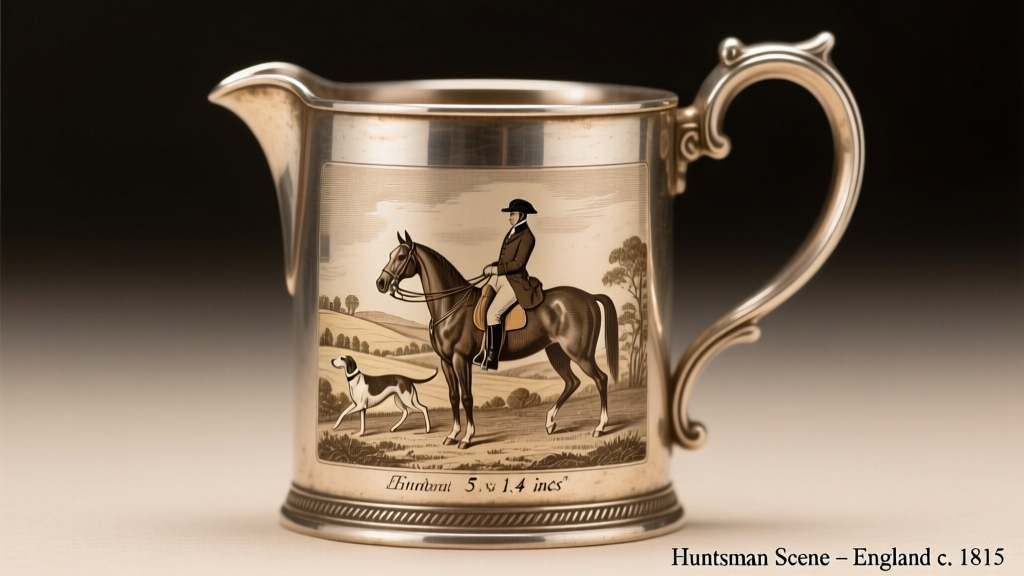
Luster Silver Jug with Sepia Transfer Huntsman Scene: A Regency-Era English Masterpiece, Circa 1815
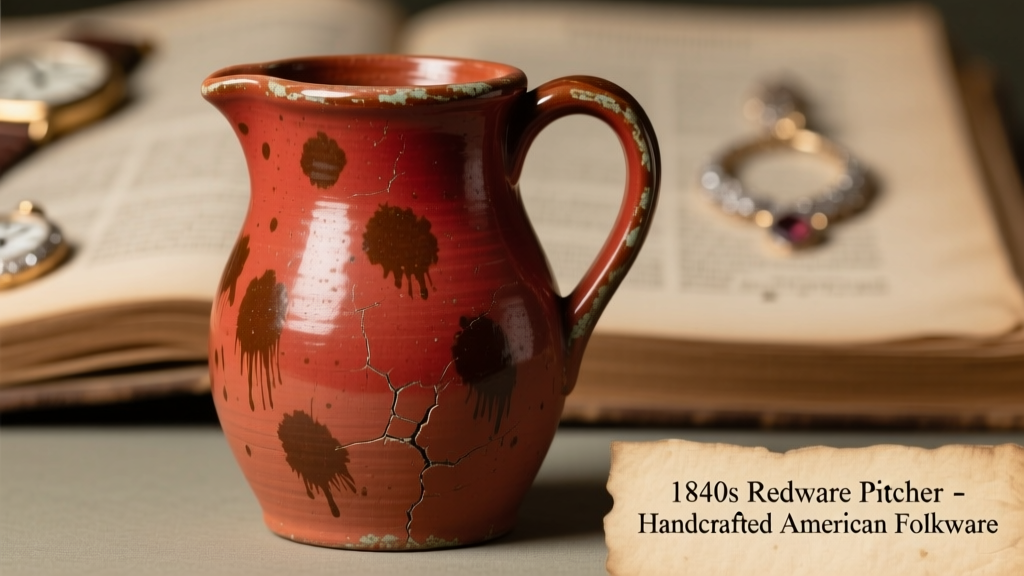
Redware Pitcher with Brown Manganese Splotches: A Rare 1840s American Stoneware Artifact — 8-Inch Form, Rim and Handle Details
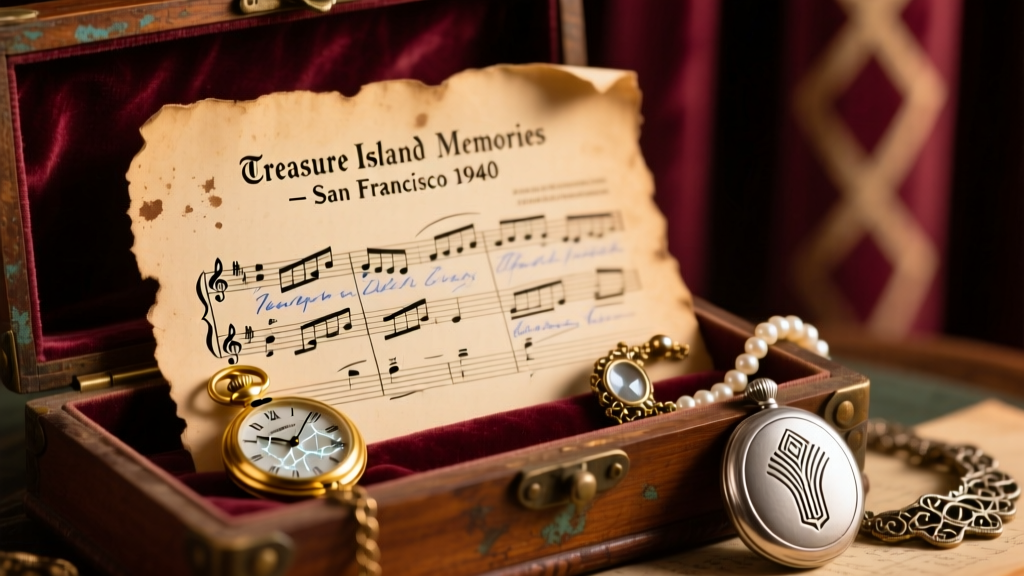
Sheet Music, Treasure Island, and San Francisco’s 1940 World’s Fair: A Vintage Collectible Chronicle

Brewer Brothers: The Forgotten American Watchmakers of the Golden Age
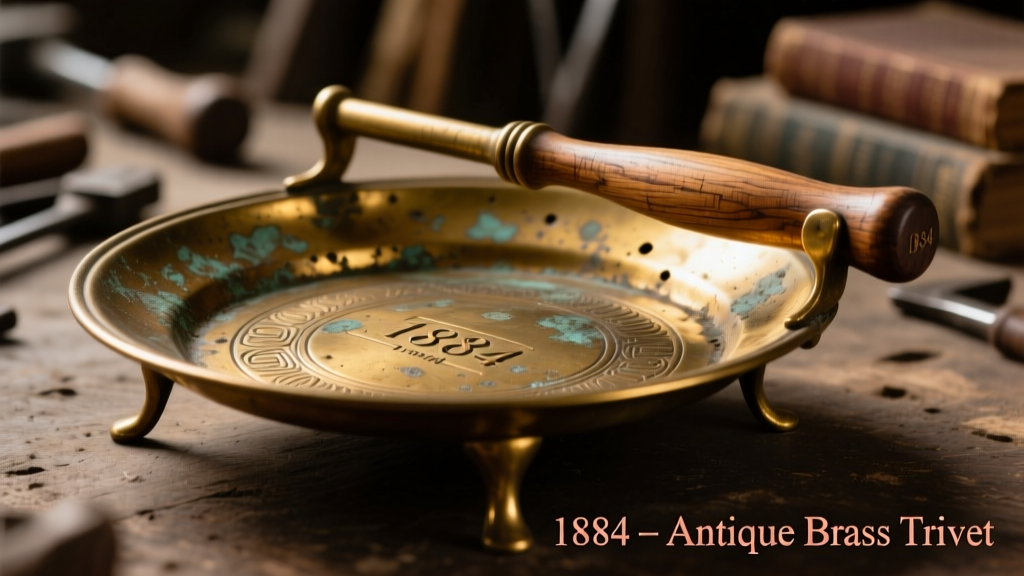
The 1884 Brass Three-Legged Trivet with Wooden Handle: A Study in Victorian Domestic Craftsmanship and Provenance
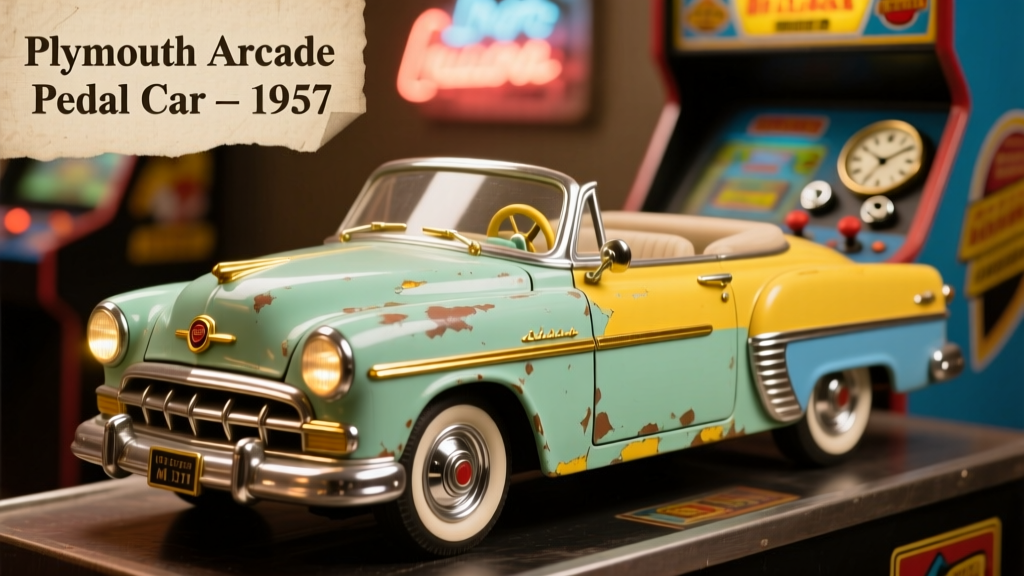
The Plymouth Arcade Toy Pedal Car: A Landmark of American Mid-Century Play Engineering

Great Lakes Shipwrecks: Navigating History, Tragedy, and Timeless Artifacts

Abingdon Pottery Figurine: Woman Holding Basket with Gold Hair Trim — A 10-Inch Masterpiece of Mid-Century American Studio Ceramics