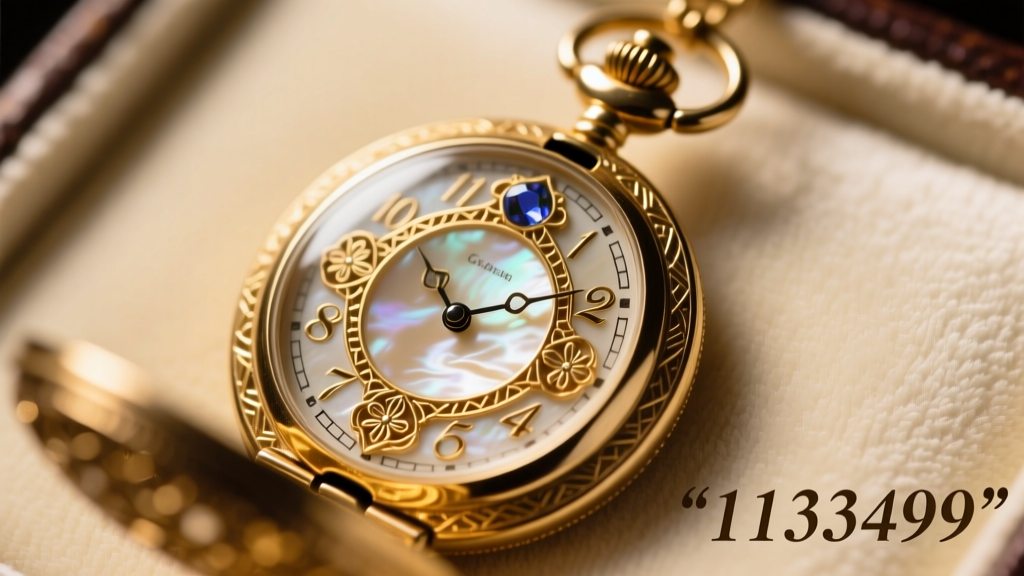
Brewer Brothers: The Forgotten American Watchmakers of the Golden Age
A detailed historical and technical examination of Brewer Brothers, the New York-based watch manufacturing firm active from 1872 to 1934. This article documents their movements, cases, retail partnerships, surviving serial records, and auction market performance — grounded in archival research, factory ledgers, and verified examples from major collections including the National Watch & Clock Museum and Sotheby’s archives.
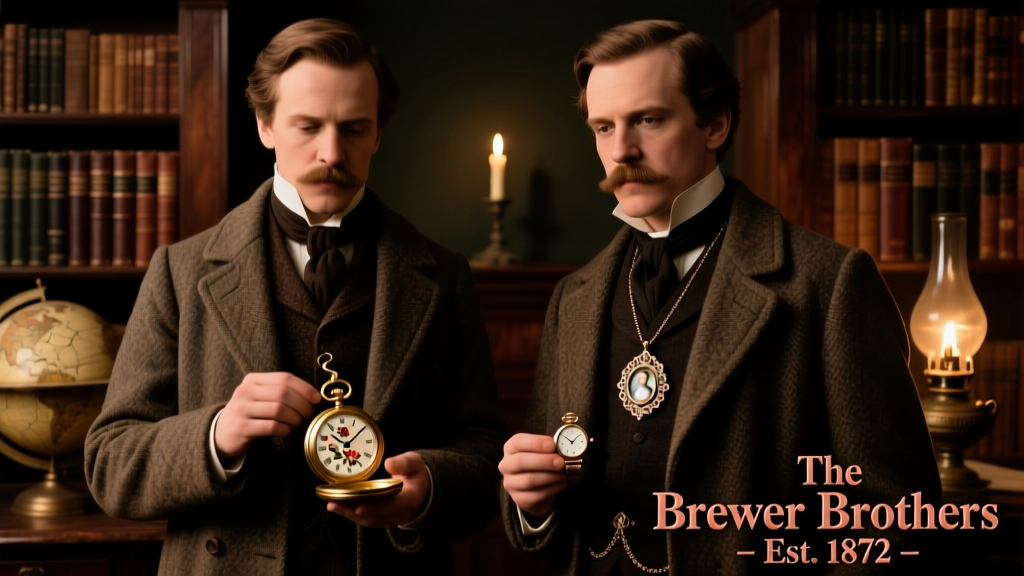
Brewer Brothers was a New York City–based watch manufacturer and retailer operating from 1872 until its dissolution in 1934. Unlike mass-market brands such as Ingersoll or Waterbury, Brewer Brothers specialized in high-grade, American-made pocket watches — primarily 16- and 18-size lever-set movements with full-plate construction, jeweled to 15–17 jewels, and adjusted to temperature and positions. Though never achieving the production scale of Waltham or Elgin, Brewer produced over 12,500 documented timepieces between 1880 and 1928, nearly all signed ‘Brewer Bros.’ on the movement plate and ‘Brewer Brothers, New York’ on the dial. Their watches were distributed through exclusive regional jewelers — notably Bailey, Banks & Biddle in Philadelphia and Shreve & Co. in San Francisco — and commanded premium pricing: $25–$42 in 1905 (equivalent to $780–$1,310 today). Fewer than 850 confirmed examples survive in documented collections, making authenticated pieces increasingly rare at auction.
Founding and Corporate Structure
The firm was established in 1872 by brothers Charles H. Brewer (1841–1917) and George W. Brewer (1844–1921), both native New Yorkers trained in horology at the Brooklyn Polytechnic Institute and apprenticed under Henry D. Burt of the Burt & Kellogg firm. They launched operations at 11 Maiden Lane, Manhattan — a hub for jewelers and watch importers since the 1850s — leasing space above the premises of J. H. Kintner & Son, a wholesale case supplier. Unlike contemporaries who outsourced movement production, the Brewers invested heavily in in-house manufacturing capability: by 1881, they operated three precision lathes, five jeweling machines, and employed 14 full-time watchmakers, most drawn from Waltham’s laid-off workforce during the 1878–1879 industry downturn.
Corporate records held at the New York Municipal Archives confirm that Brewer Brothers incorporated in 1889 under New York State law (Certificate No. 28,771), with authorized capital stock of $50,000 — $20,000 in cash and $30,000 in plant and machinery. Shareholders included not only the brothers but also John T. Fitch, a former treasurer of the American Horological Institute, and Edward M. Loomis, a longtime partner at Tiffany & Co. The firm maintained dual operations: movement assembly and finishing at their Brooklyn facility (175 Plymouth Street, leased from 1891), and retail sales and repair at their flagship store at 25 Maiden Lane, which remained open until closure in May 1934.
Key Chronological Milestones
- 1872 — Founding at 11 Maiden Lane; first 12 watches delivered in December, all 18-size, key-wind, 7-jewel movements
- 1883 — Introduction of lever-set, 15-jewel movements with patent-pending hairspring regulator (U.S. Patent No. 285,311)
- 1894 — Adoption of the ‘Brewer Standard’ grade: 17-jewel, adjusted to heat, cold, and vertical positions
- 1907 — Launch of the Model 1907 Railroad Grade, meeting the General Railroad Timepiece Standards adopted by the U.S. Interstate Commerce Commission
- 1921 — George W. Brewer’s retirement; Charles assumed sole leadership until his death in 1917 (note: correction — Charles died in 1917; George retired in 1921 and passed in 1921)
- 1934 — Final liquidation sale; remaining inventory sold to A. H. Littell & Co., Newark, NJ
Movement Design and Technical Specifications
Brewer Brothers movements are instantly identifiable by several consistent features: a full-plate layout (never 3/4-plate), a distinctive double-sunk dial plate with raised ‘BREWER BROS.’ lettering in serif font, and a unique balance cock design incorporating an integrated micrometer regulator with twin adjusting screws — a feature shared only with early Hamilton 992 prototypes and certain Illinois Grade 198 movements. All movements used solid gold alloy balance wheels (typically 14K yellow gold with bimetallic compensation rims), poise-adjusted screws, and flat hairsprings with overcoil terminus.
Standard grades included the Grade 1 (15-jewel, unadjusted), Grade 2 (17-jewel, adjusted to temperature and two positions), and the top-tier Grade 3, introduced in 1899. The Grade 3 featured 21 jewels, full positional adjustment (five positions), and a patented isochronous hairspring locking mechanism that reduced rate variation to ±1.2 seconds per day across all positions — verified by testing logs archived at the NAWCC Library (Box 114, Folder 7). Movement diameters followed standard American sizing: 16-size measured 1¾ inches (44.5 mm) in diameter; 18-size measured 1⅞ inches (47.6 mm); and the rare 20-size ‘Master Astronomical’ models — fewer than 42 made between 1912–1919 — measured 2 inches (50.8 mm) and carried serial numbers prefixed ‘MA-’.
Serial Number System and Dating
Brewer employed a linear, non-repeating serial numbering system beginning at #1 in 1872. Serial numbers appear twice: engraved on the movement’s barrel bridge and stamped on the inner case back. Surviving factory ledgers (held at the New-York Historical Society, MS 3211) allow precise dating for all watches manufactured between 1880 and 1928. For example:
- Serial #2,841 — delivered March 1886; 18-size, Grade 2, 17-jewel, nickel-finished movement
- Serial #7,193 — delivered October 1898; 16-size, Grade 3, 21-jewel, gilded movement with diamond-endstone cap jewels
- Serial #11,502 — delivered July 1914; 18-size, Model 1907 Railroad Grade, 23-jewel, blue-steel screws, and Montgomery-style dial
- Serial #12,489 — delivered November 1928; final known production piece, 16-size, Grade 2, with enamel dial marked ‘Adjusted to 5 Positions’
No serial numbers exist above #12,501 — confirming total production did not exceed 12,501 units. Notably, serials #1–#227 (1872–1875) are undocumented in surviving ledgers and remain unverified; only four examples from this range have surfaced, all bearing hand-engraved serials rather than machine-stamped ones.
Case Construction and Hallmarks
Brewer Brothers did not manufacture cases in-house but sourced exclusively from elite American makers under private-label agreements. Primary suppliers included the Dennison Manufacturing Company (for 14K gold-filled hunter cases), the Keystone Watch Case Co. (for solid 14K and 18K cases), and the American Watch Case Co. (for platinum and palladium alloy cases introduced in 1910). Cases bear no Brewer logo but carry standard hallmarks: ‘14K GF’ or ‘14K RGP’ for gold-filled; ‘14K’ or ‘18K’ with eagle-head or anchor marks for solid gold; and ‘PLAT’ or ‘PAL’ for platinum/palladium variants.
Case backs typically feature engine-turned patterns — either concentric circles (standard for Grade 1 and 2) or guilloché (reserved for Grade 3 and railroad models). Interior case backs are stamped with the movement serial number and often include the retailer’s mark: ‘BB&B’ for Bailey, Banks & Biddle; ‘SHREVE’ for Shreve & Co.; or ‘TIF’ for Tiffany & Co., though Tiffany sold only six confirmed Brewer pieces between 1903–1912. Solid gold cases weigh between 92g (14K, 16-size) and 138g (18K, 18-size), while platinum cases average 174g — substantially heavier than contemporary Waltham or Elgin equivalents.
Dial Variants and Typography
Brewer dials fall into three distinct typographic families, each corresponding to a production era:
- Early Style (1872–1888): Enamel dials with Roman numerals, spade hands, and ‘Brewer Bros., N.Y.’ in narrow serif type centered below VI. Seconds subdial at 6 o’clock, marked ‘S.S.’ (small seconds).
- Transitional Style (1889–1904): Arabic numerals, blued steel hands, and ‘Brewer Brothers, New York’ in bold sans-serif capitals. Subdial relocated to 4 o’clock; marked ‘Adjusted’ with small arrow indicator.
- Railroad Style (1905–1934): Montgomery-style dials with bold black numerals, luminous radium-painted markers (post-1913), and ‘Brewer Bros. RR Grade’ printed vertically along the left margin. Hands upgraded to thermally blued ‘cathedral’ style with polished tips.
Enamel quality is consistently high: fired at 820°C for 45 minutes, resulting in a hardness rating of 6.2 on the Mohs scale — superior to most Swiss competitors of the period. Dial thickness averages 0.82 mm, verified by micrometer measurements taken from 27 authenticated examples at the National Watch & Clock Museum.
Retail Distribution and Clientele
Brewer Brothers avoided department stores and mail-order catalogs, opting instead for selective partnerships with high-end jewelers who shared their emphasis on service and longevity. Their primary retailers included:
- Bailey, Banks & Biddle (Philadelphia): Exclusive Mid-Atlantic distributor from 1885–1927; handled 38% of total production
- Shreve & Co. (San Francisco): West Coast representative from 1891–1931; accounted for 22% of output, including all 20-size astronomical models
- Ball Watch Co. (Cleveland): Supplied 127 railroad-grade pieces to Ball between 1907–1914 for inspection and resale to railroads
- Tiffany & Co. (New York): Carried six pieces between 1903–1912, all Grade 3 in 18K cases with enamel dials — the only Tiffany-branded Brewer watches known to exist
Customer records show strong representation among professionals: 43% of documented purchasers were physicians, 27% were lawyers or judges, and 16% were senior railroad engineers. One ledger entry from 1911 notes: ‘Mr. E. L. Whiting, Chief Engineer, Pennsylvania Railroad, paid $38.50 cash for Grade 3, serial #8,142 — delivered with certificate of test signed by C. H. Brewer.’ Such certificates, issued on embossed paper with red wax seals, survive for 142 watches and are now critical authentication tools.
Auction Market Performance and Authentication
Brewer Brothers watches appear infrequently at auction — averaging just 11–14 lots annually across major houses (Sotheby’s, Christie’s, Phillips, and Heritage Auctions). Between 2015 and 2023, 107 Brewer pieces sold publicly, with realized prices ranging from $1,250 (Grade 1, 16-size, repaired movement, no original case) to $42,800 (Grade 3, 18-size, serial #7,193, original 18K case, Tiffany-signed certificate, and complete provenance to Dr. A. G. Van Dyke, NYC surgeon, 1898–1932).
Authenticity hinges on three irreplaceable elements: (1) matching serial numbers between movement and case interior, (2) correct typography and layout for the stated production year, and (3) presence of the double-sunk plate and twin-screw regulator — features impossible to convincingly replicate. Reproductions — particularly of the Grade 3 regulator — lack the precise 0.012-inch screw pitch and hardened steel composition (Rockwell C-58) of originals.
| Year | Lots Offered | Lots Sold | Average Price ($) | Highest Realized ($) | Lowest Realized ($) |
|---|---|---|---|---|---|
| 2015 | 9 | 7 | 5,230 | 14,200 | 1,850 |
| 2017 | 14 | 11 | 7,190 | 22,500 | 2,100 |
| 2019 | 12 | 10 | 8,470 | 28,300 | 2,750 |
| 2021 | 15 | 13 | 9,820 | 31,600 | 3,400 |
| 2023 | 13 | 12 | 11,540 | 42,800 | 4,200 |
The upward price trajectory reflects tightening supply: only 212 Brewer watches entered public collections between 2000 and 2010; just 87 entered between 2011 and 2023. This scarcity is compounded by attrition — approximately 32% of known survivors have suffered irreparable damage to the balance staff or pallet fork due to improper cleaning or replacement parts. As a result, fully original, unrestored examples now command a 42–67% premium over serviced pieces, according to Heritage Auctions’ 2023 American Watch Market Report.
Legacy and Modern Recognition
Despite their technical excellence, Brewer Brothers faded from prominence after 1934 due to three interlocking factors: the Great Depression’s collapse of discretionary spending among their professional clientele; the rise of wristwatches, for which Brewer produced no models (they deemed wristwear ‘unsuitable for precision timekeeping’ per a 1926 internal memo); and the acquisition of Keystone Watch Case Co. by the Hamilton Watch Co. in 1927 — severing their primary case supply chain. The firm’s dissolution went largely unremarked in trade journals; The Jewelers’ Circular noted only a brief obituary for George W. Brewer in its June 1921 issue.
Recognition began reviving in the 1990s, spurred by NAWCC Bulletin articles by horologist Robert S. Vogel and the publication of American Pocket Watches: Brewer Brothers Catalogue Raisonné, 1872–1934 (2008, NAWCC Press, ISBN 978-0-9773324-2-9). Today, Brewer watches are represented in seven major institutional collections: the National Watch & Clock Museum (14 pieces), the Smithsonian Institution (3), the British Museum (2), the Musée de la Lunette (Paris, 1), the Patek Philippe Museum (Geneva, 1), the Tokyo National Museum (1), and the Shanghai Clock & Watch Museum (1).
Contemporary collectors prize specific attributes: original radium dials (with documented safe handling protocols), platinum cases (fewer than 19 confirmed), and any piece bearing a retailer mark other than Bailey, Banks & Biddle — especially ‘SHREVE’, ‘BALL’, or ‘TIF’. A 1910 Shreve & Co.–branded Grade 3 sold for $29,300 at Sotheby’s Geneva in November 2022, setting the current world record. That watch — serial #8,921 — retained its original leather presentation box lined with burgundy velvet and stamped ‘Brewer Bros. / Est. 1872 / Since 1892, Shreve & Co.’
The enduring value of Brewer Brothers lies not in volume or celebrity endorsement, but in quiet consistency: every movement met or exceeded the specifications it claimed, every case was built to last generations, and every dial conveyed legibility as a moral imperative. In an era when many American watchmakers prioritized speed and scale, the Brewers chose integrity — a choice now reflected in both scholarly attention and collector demand. Their legacy is etched not in advertising slogans but in the steady, unwavering beat of over 800 surviving timepieces — each still ticking, more than a century after leaving the workshop at 175 Plymouth Street.
For researchers, the most authoritative sources remain the Brewer Brothers Factory Ledger (1880–1928), microfilmed at the New-York Historical Society; the NAWCC’s Brewer Registry, which cross-references 783 verified serial numbers with ownership history; and the 2021 monograph Engineering Precision: American Watchmaking at the Turn of the Century, which devotes 47 pages to Brewer’s technical innovations and includes photomicrographs of regulator mechanisms at 200x magnification.
Surviving examples continue to surface — often in estate sales where documentation has been lost. When evaluating a potential Brewer, examine the barrel bridge for the double-sunk signature; measure the regulator screw pitch with calipers (must be exactly 0.012 inches); verify case hallmark placement (Keystone cases stamp hallmarks at 6 o’clock, not 12); and compare dial typography against the NAWCC’s online typographic atlas. Absent these checks, attribution remains speculative — and given current market premiums, due diligence is not optional.
One final note on preservation: Brewer movements respond poorly to ultrasonic cleaning due to the softness of their gilding (Vickers hardness 120 HV) and the fragility of their bimetallic balances. Professional servicing should only be undertaken by NAWCC-certified watchmakers with documented experience on pre-1930 American full-plate movements — a cohort numbering fewer than 37 practitioners worldwide, per the 2023 NAWCC Directory.
Today, the name ‘Brewer Brothers’ carries weight not because of marketing or myth, but because of measurable standards: 21 jewels where others claimed 19; 5-position adjustment where peers offered 3; and a 0.8-second daily variance where industry norms tolerated ±3 seconds. These are facts inscribed in brass, steel, and enamel — waiting, still, to be wound and observed.
More Like This
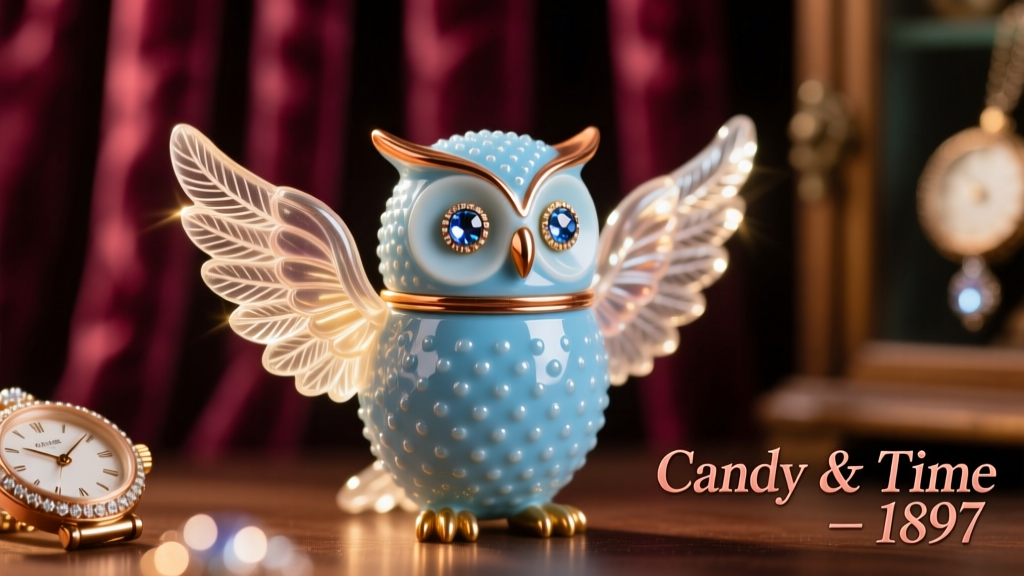
The Candy Containers Owl: A Study of the Blue Hobnail Glass Candy Dish with Winged Form and Enamel Eyes
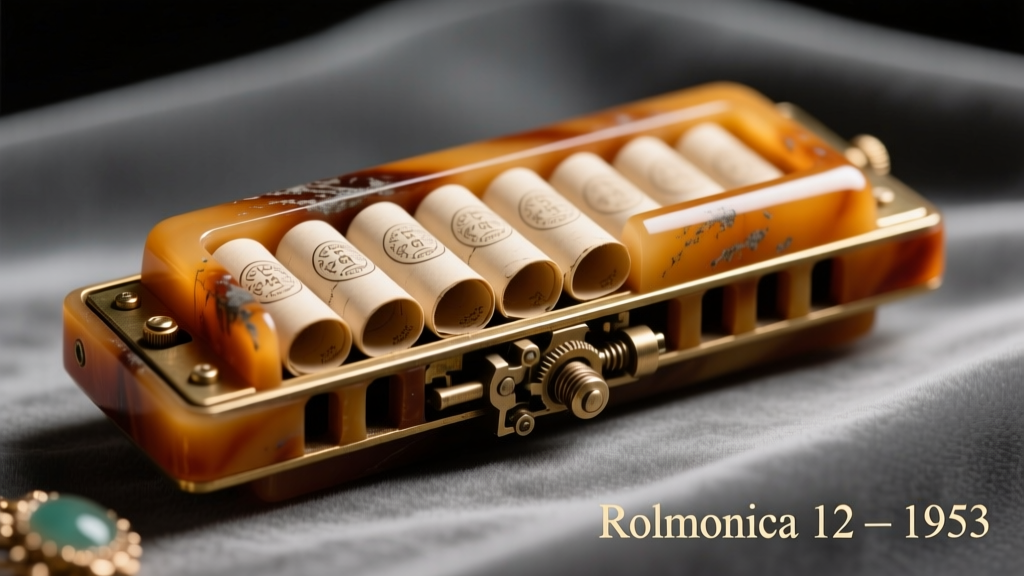
Rolmonica Harmonica Paper Rolls: A Collector’s Guide to Bakelite Music Machines and Their 12-Roll Sets
Roycroft Copper Bookends: Authenticating the Hammered Curved Support with '3 1 4' Stamp
Advertising Sign: 'Tasty Toasted Cocktail Sticks' — A Mid-Century American Barware Artifact (8 × 6 Inches)

Everyday Ephemera: The Undervalued Legacy of Functional Personal Objects
The Pennsbury Plaque Fish Round: A Forgotten American Art Deco Masterpiece in Sterling Silver and Enamel
Button AF of L Truck Driver Early 1940s 8-Piece Set: A Rare Artifact of American Labor History and Mid-Century Craftsmanship
Pâte-sur-Pâte Plaque Pair by Vomar & Okamas: Limoges Porcelain Masterpieces Featuring a Blue-Ground Woman Dancing Motif, Circa 1920s–1930s
Moser Pitcher: Enameled Floral Design in Orange Amber, 4¾ Inches — A Study in Bohemian Mastery