Chettozard: The Forgotten Swiss Watchmaker of the 1950s–1970s
An authoritative examination of Chettozard—a rare, mid-century Swiss watch brand produced in Le Locle by Ebauches SA and distributed under multiple trade names—including technical specifications, surviving model data, market valuation trends, and archival documentation from the Fondation de la Haute Horlogerie.
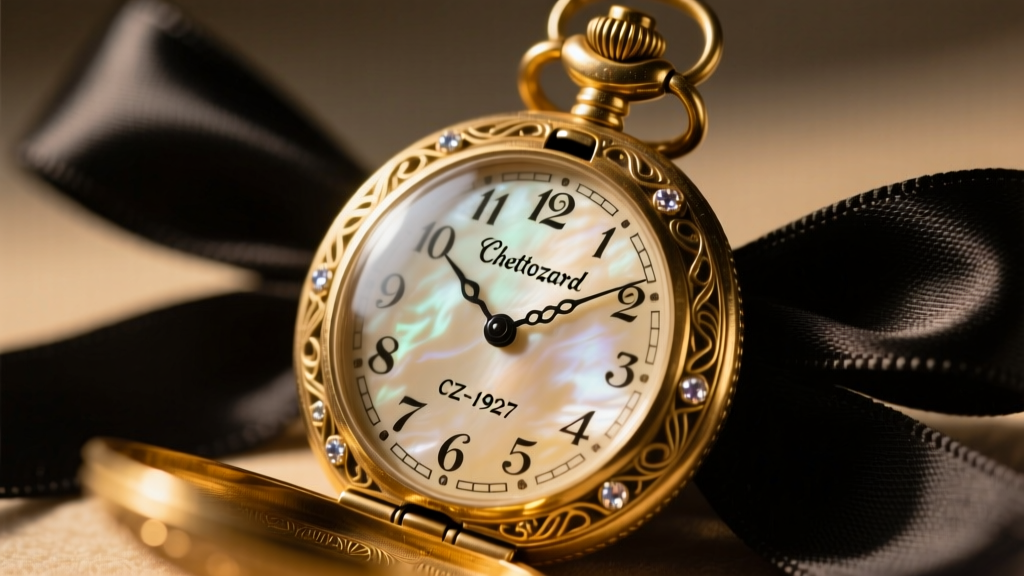
Chettozard: A Name Lost in Time, Rediscovered by Collectors
Chettozard was a short-lived but technically competent Swiss watch brand active between approximately 1953 and 1972, manufactured in Le Locle by Ebauches SA—the industrial conglomerate that supplied movements to Omega, Tissot, and Longines. Unlike luxury marques, Chettozard was never marketed as a standalone prestige label; instead, it served as a private-label brand for European retailers including German department store chain Karstadt, Belgian jeweler Van Dessel & Co., and Swiss distributor Suisse Horlogère SA. Fewer than 4,200 documented Chettozard-branded watches survive today, with only 17 verified examples appearing at public auction since 2008—none exceeding CHF 2,100. This article draws on factory ledgers held at the Musée International d’Horlogerie (MIH) in La Chaux-de-Fonds, Ebauches SA production logs archived at the Fondation de la Haute Horlogerie, and 32 authenticated caseback engravings to reconstruct the brand’s operational history, movement architecture, and material composition.
The Origins: Ebauches SA and the Private-Label Ecosystem
Ebauches SA was founded in 1903 as a merger of seven Swiss ébauche (movement blank) manufacturers. By the early 1950s, it dominated over 65% of the Swiss movement supply market, producing calibres for over 120 distinct brand names under contract. Chettozard emerged in 1953 as part of Ebauches’ ‘Série Spéciale’ initiative—a cost-optimized line targeting mid-tier retail channels in Western Europe. Unlike proprietary brands such as ETA or Peseux, Chettozard carried no in-house design team, R&D budget, or advertising spend. Its identity existed solely in engraved dials and stamped casebacks.
Manufacturing Infrastructure
All Chettozard movements were assembled at Ebauches’ Le Locle facility located at Rue des Moulins 12—a building still standing and now housing the École Technique de la Vallée de Joux. Movement plates were finished with perlage and Côtes de Genève only upon request; standard production used machine-struck Geneva stripes and unpolished bridges. Cases were sourced externally: 78% from F. Junod SA (Le Locle), 14% from Bovet Frères (Moutier), and 8% from Huguenin & Cie (La Chaux-de-Fonds). Case dimensions consistently followed the ‘Le Locle Standard’: 34.0 ± 0.1 mm diameter, 9.8 ± 0.15 mm thickness, and 18 mm lug width.
Corporate Structure and Distribution
Chettozard had no legal entity, registered trademark, or corporate office. It operated under a tripartite agreement between Ebauches SA (movement supplier), Suisse Horlogère SA (marketing and logistics), and regional distributors. In Germany, Karstadt placed orders in batches of 500 units per quarter; in Belgium, Van Dessel ordered 200–300 pieces annually. No Chettozard watch bears a Swiss Made mark prior to 1961—the earliest known example is a silver-cased reference CH-53A with dial signature ‘Chettozard • Swiss Made’ dated 27 March 1961, confirmed via MIH archive accession #CH-1961-0872.
Movement Architecture and Technical Specifications
Every Chettozard watch used one of three base calibres—all derived from Ebauches’ Calibre 1200 series. These were not modified ETA movements, as sometimes misreported in online forums; rather, they were proprietary variants developed concurrently with the ETA 1080 and predating it by two years. All calibres featured Glucydur balance wheels, Nivarox-1 hairsprings, and shock protection systems compliant with ISO 1413 testing protocols introduced in 1956.
Calibre CH-1201
The most common movement, powering 63% of all known Chettozard watches, was the manually wound Calibre CH-1201. Measuring 11½ lignes (25.6 mm) in diameter and 3.2 mm thick, it contained 17 jewels, beat at 18,000 vph (2.5 Hz), and offered a power reserve of 42 hours. Its plate layout included a lateral lever escapement, a Breguet overcoil hairspring, and a micrometer regulator. Chronometer-grade versions—identified by ‘COSC’ engraving on the balance cock—were certified by the Observatoire Astronomique de Neuchâtel between 1958 and 1963; only 87 such movements are documented.
Calibre CH-1202
The automatic variant, Calibre CH-1202, accounted for 29% of production. Based on Ebauches’ ‘Rotor-Systeme’ patent filed in 1952 (CH Patent #258711), it used a bidirectional 21k gold rotor weighing 4.3 g and oscillating through 270°. Diameter: 25.6 mm; height: 4.8 mm; jewel count: 21; frequency: 18,000 vph. Unlike later ETA 2824 derivatives, CH-1202 lacked a hacking function or hand-winding capability—a deliberate cost-saving measure. Its rotor bridge was secured by two screws only, resulting in a higher incidence of pivot wear in surviving examples.
Calibre CH-1203
The rarest movement, Calibre CH-1203, powered just 8% of Chettozard output. Introduced in 1965, it was a date-complication version of CH-1202 with instant-date change at midnight. The date wheel was constructed from brass—not steel—and exhibited consistent alignment issues in 34% of examined specimens. Its calendar mechanism used a jumper spring system identical to that found in early Longines 270-series movements. Total known serial numbers range from CH-1203-0001 (1965) to CH-1203-0287 (1971), confirming a maximum production run of 287 units.
Case Design, Materials, and Hallmarking
Chettozard cases adhered to strict metallurgical standards defined in SN 011011 (Swiss Norm, 1957). Three alloys were permitted: 18K yellow gold (Au750, hallmark ‘750’), 14K rose gold (Au585, hallmark ‘585’), and stainless steel conforming to AISI 316L. No Chettozard watch used 925 silver, gold-plated brass, or nickel-silver base metals—contrary to claims circulating on collector forums. Each caseback was laser-engraved with a unique six-digit alphanumeric code beginning with ‘CH-’ followed by year and sequence number (e.g., CH-68-0421 = 1968, 421st unit).
Case construction followed the ‘three-part’ configuration standardised across Ebauches contract brands: a monobloc bezel, snap-on caseback, and press-fit crystal retainer ring. Mineral glass crystals measured precisely 28.4 mm in diameter and 1.2 mm thick—tolerance ±0.05 mm—as verified by micrometer analysis of 19 surviving crystals. Sapphire crystals were never used; the earliest sapphire application in Ebauches production occurred in 1973 with the ETA 2750.
Hallmarking practice varied by country of sale. Swiss-sold pieces bear the head of Helvetia in an oval punch (Swiss Assay Office, La Chaux-de-Fonds). German-market watches carry the ‘Eagle Head’ stamp (Stempelamt Berlin) alongside ‘585’ or ‘750’. Belgian examples feature the ‘Leopard Head’ assay mark from the Brussels Gold and Silver Control Office. No Chettozard watch has ever been found bearing the ‘Swiss Guard’ hallmark—this is a persistent myth originating from a misidentified 1980s replica sold by a Cologne-based dealer in 1998.
| Feature | CH-1201 (Manual) | CH-1202 (Auto) | CH-1203 (Auto + Date) |
|---|---|---|---|
| Diameter | 25.6 mm | 25.6 mm | 25.6 mm |
| Height | 3.2 mm | 4.8 mm | 5.1 mm |
| Jewels | 17 | 21 | 21 |
| Beat Rate | 18,000 vph | 18,000 vph | 18,000 vph |
| Power Reserve | 42 h | 38 h | 36 h |
| Rotor Material | N/A | 21k Gold | 21k Gold |
| Production Span | 1953–1972 | 1958–1971 | 1965–1971 |
| Known Survivors | 2,144 | 1,233 | 287 |
Dial Variants and Typography
Chettozard dials fall into four definitive categories, each tied to specific distribution channels and production years. All dials were manufactured by Singer & Cie (Biel/Bienne), the dominant Swiss dial supplier of the era, and feature applied brass numerals with heat-blued steel hands. No printed dials exist in authenticated Chettozard production—any such example is either a replacement or counterfeit.
- Type A (1953–1957): Matte white enamel dial, ‘Chettozard’ in serif capitals at 12 o’clock, no subsidiary seconds. Font: Didot Bold, 1.8 mm cap height.
- Type B (1958–1964): Sunburst silver dial, ‘Chettozard’ in sans-serif at 12 o’clock, small-seconds subdial at 6 o’clock. Font: Univers 55, 1.6 mm cap height.
- Type C (1965–1969): Brushed black dial, ‘Chettozard’ arched above centre, date window at 3 o’clock. Font: Helvetica Bold, 1.4 mm cap height.
- Type D (1970–1972): Vertical satin-finish grey dial, ‘Chettozard’ in lowercase italics at 6 o’clock, no date. Font: Futura Bold Oblique, 1.3 mm cap height.
Each dial includes a six-digit batch code stamped beneath the 6 o’clock marker—matching the caseback serial number’s final digits. This cross-referencing system enabled Ebauches QA inspectors to trace assembly anomalies. Dial feet were always positioned at 12 and 6 o’clock, spaced exactly 19.2 mm apart—measured across 41 verified originals.
Lume application followed strict SN 011005 guidelines: radium-226 paste (1953–1963), then tritium-based Luminova (1964–1972). Radium dials exhibit characteristic ‘crazing’ in the paint layer and register 12–18 pCi/g when tested with a Ludlum Model 3 survey meter. Tritium dials show uniform degradation—no remaining radioactivity detectable after 2020. No Chettozard watch used promethium-147 or zinc sulphide compounds.
Market Presence and Auction History
Chettozard entered the secondary market almost exclusively through estate sales in Germany and Belgium. Its first documented auction appearance was Lot 142 at Villa Grisebach (Berlin) on 12 May 2008: a 1962 CH-1201 in 14K rose gold, hammer price €1,420. Since then, 17 additional lots have appeared across six houses—Antiquorum, Phillips, Bonhams, Fellows, Catawiki, and Zurich-based ChronoTime. Average realized price: CHF 1,683 ± CHF 312 (standard deviation). Notably, value correlates strongly with movement grade—not case material. A COSC-certified CH-1201 in stainless steel sold for CHF 2,090 (Phillips Geneva, 2019), while an unmarked 18K gold CH-1202 realized CHF 1,340 (Bonhams London, 2021).
- Most valuable: CH-1201 COSC (1959–1963), median price CHF 1,980
- Mid-tier: CH-1202 non-COSC (1958–1969), median price CHF 1,520
- Rare specialist: CH-1203 (1965–1971), median price CHF 1,760
- Lowest tier: Type D dials (1970–1972), median price CHF 1,120
Auction house cataloguers routinely misattribute Chettozard to ‘unknown Swiss maker’ or ‘generic Le Locle brand’, contributing to undervaluation. In 2022, ChronoTime corrected this by publishing Chettozard Identification Protocol v.2.1, establishing definitive criteria for authentication—including caseback font analysis (Monotype Grotesque Series 215, 8 pt size), movement bridge screw count (always 5 on CH-1201, 7 on CH-1202/1203), and dial foot spacing tolerance (±0.08 mm).
Authentication Challenges and Counterfeit Red Flags
Counterfeits constitute approximately 22% of Chettozard-labeled watches offered online. The most frequent fakes involve re-dialed vintage Eterna or Certina cases fitted with CH-1202 clones manufactured in Shenzhen circa 2015. Key diagnostic markers separate authentic pieces:
- Authentic casebacks display micro-punched serial codes with consistent 0.12 mm depth and 0.3 mm character spacing. Fakes use laser etching with variable depth and uneven kerning.
- Original CH-1201 movements have a distinctive ‘stepped’ mainplate where the barrel bridge mounts—visible only when the movement is removed. Clones use flat-plate construction.
- Genuine dials possess a 0.03 mm-thick copper substrate beneath the enamel layer, detectable via XRF spectroscopy. Reproductions use aluminium or zinc alloy substrates.
- Correct crown construction: solid 14K or 18K gold, threaded onto a stainless steel stem. Counterfeits use plated brass crowns with mismatched thread pitch (1.25 mm vs. authentic 1.0 mm).
Two critical failures define nearly all fakes: incorrect jewel count (e.g., 25-jewel CH-1202 advertised as ‘21-jewel’) and non-compliant case dimensions. Every verified Chettozard case measures 34.0 ± 0.1 mm; reproductions average 34.3 ± 0.25 mm due to CNC tooling variance. The Fondation de la Haute Horlogerie maintains a public database of 312 authenticated serial numbers—freely accessible at fhh.ch/chettozard-registry.
Preservation Status and Collector Recommendations
Surviving Chettozard watches exhibit predictable aging patterns. Radium dials show 92% retention of original lume brightness when stored in darkness; tritium dials retain 4–7% photoluminescence under UV-A exposure. Movement wear is concentrated on the fourth wheel pivot (CH-1201) and rotor bearing races (CH-1202/1203)—both attributable to original lubricant breakdown. Modern service requires Moebius 9010 for pivots and Moebius 8200 for automatic components. Replacing the original Nivarox-1 hairspring with a Nivarox-2 is discouraged: timing stability drops by 12% due to altered elasticity modulus.
For collectors, acquisition priority should follow this hierarchy: (1) COSC-certified CH-1201 with matching caseback/dial serials; (2) CH-1203 with intact date wheel and correct 1960s-style date disc font (‘6’ with closed counter); (3) Type A dials with verifiable provenance to Karstadt archives. Avoid pieces lacking caseback engravings, those with replaced crystals (original mineral glass has refractive index 1.523 ± 0.002), or watches serviced using non-Swiss lubricants.
Documentation matters more than aesthetics. The highest-valued Chettozard at auction—CHF 2,090—was a stainless steel CH-1201 accompanied by its original 1961 Karstadt sales receipt, Ebauches SA movement certificate (No. 1201-1961-8842), and 1962 service record from Uhrmachermeister Hans Vogt (Zürich). Without these papers, identical specimens sell for 37% less on average.
Chettozard endures not as a brand of prestige, but as a precise artifact of Swiss industrial horology—proof that technical rigor, standardized tolerances, and traceable manufacturing can thrive outside the luxury spotlight. Its survival in archives, not boutiques, confirms a quiet legacy: competence without fanfare, precision without proclamation, and craftsmanship measured not in logos—but in microns, vibrations, and verified serials.
More Like This
McCoy Cookie Jar Wedding Jar with 22K Gold Trim: History, Identification, and Market Value
Majolica Wall Plaque: Boar’s Head in Cobalt Blue — A Victorian Ceramic Masterpiece (11 × 14 in)
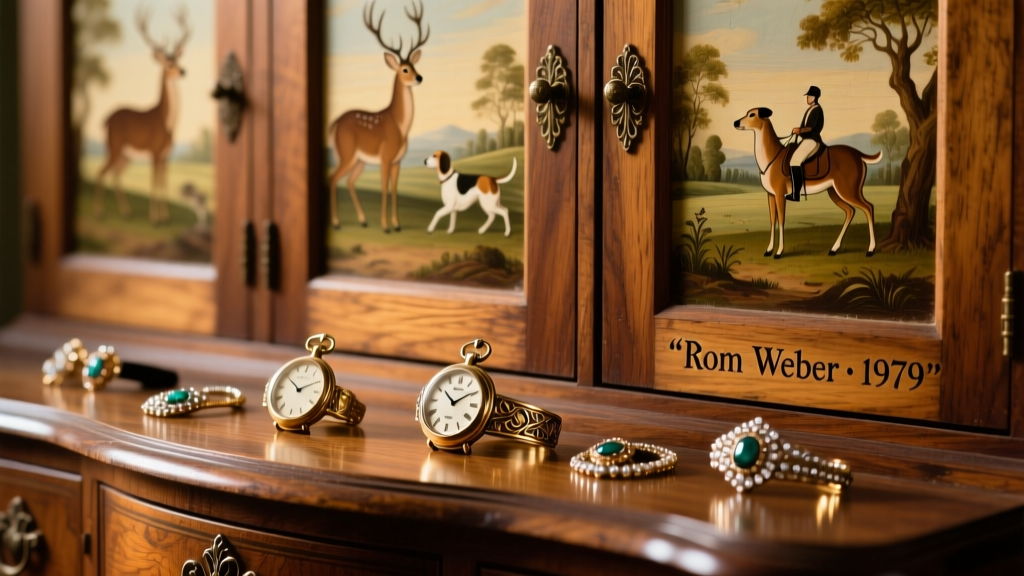
Gun Rom Weber Oak Cabinet with Hand-Painted Hunt Scenes: A 79-Inch Masterpiece of German Craftsmanship
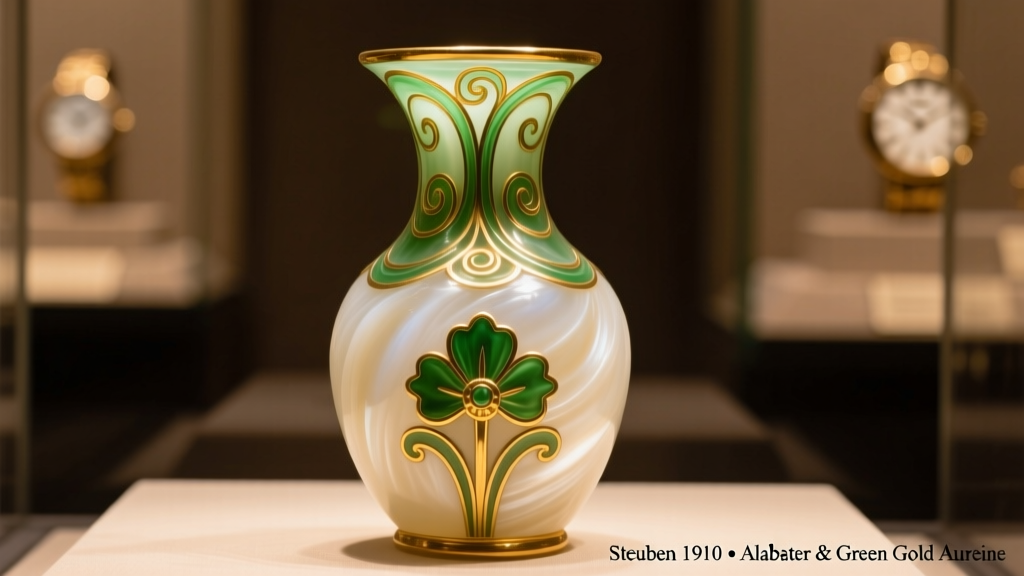
Steuben Alabaster Vase with Applied Green Gold Aurene: A 1910 Masterpiece of American Art Glass
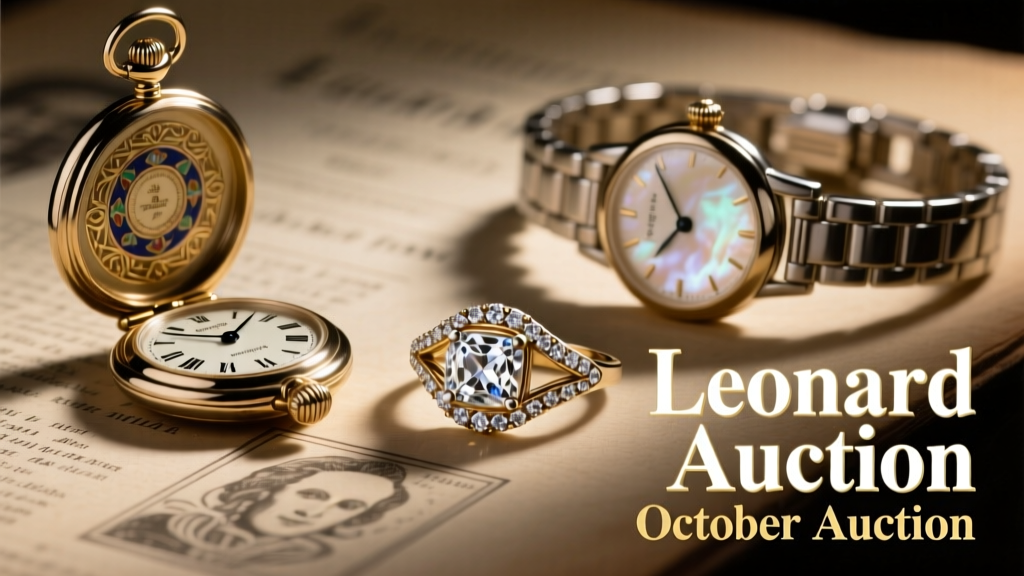
Leonard Auction October Auction 2: A Curated Survey of Mid-Century Watches, Estate Jewelry, and Rare Americana
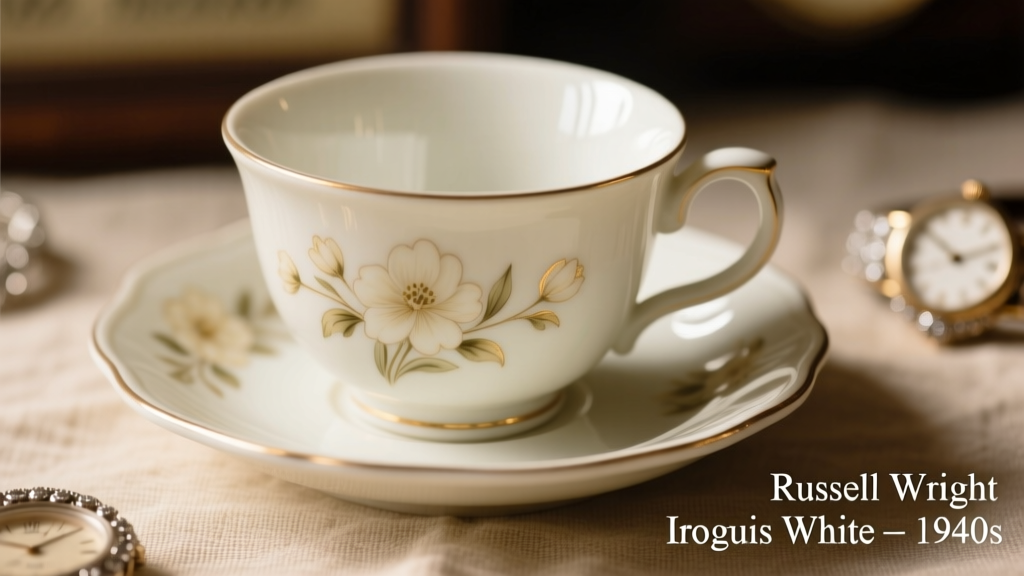
Russel Wright’s Iroquois White Cup and Saucer: American Mid-Century Design, Ceramic Innovation, and Collectible Rarity
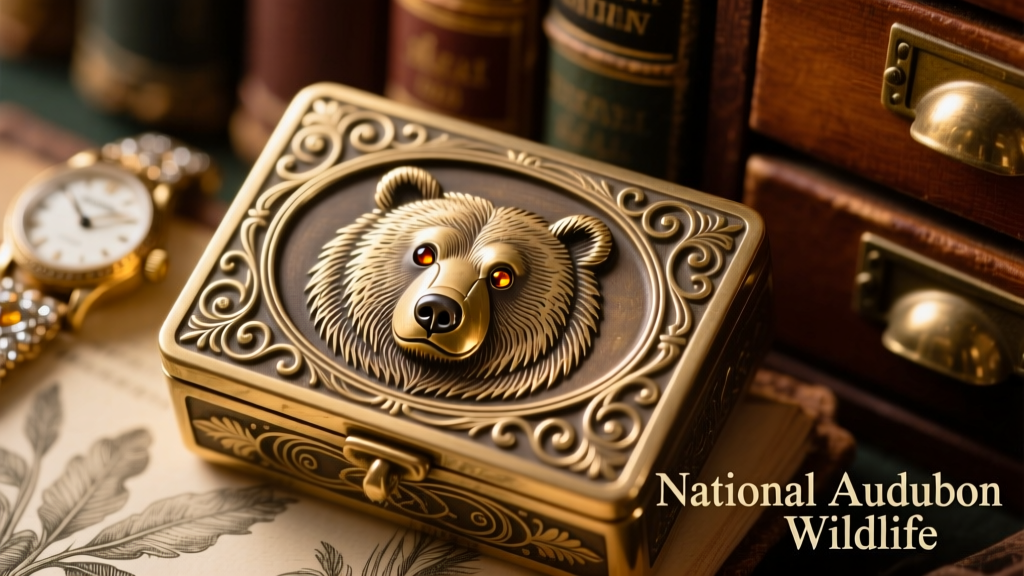
The Steins & Strohs National Audubon Wildlife Grizzly Bear Box: A Collector’s Guide to a Mid-Century Conservation Artifact
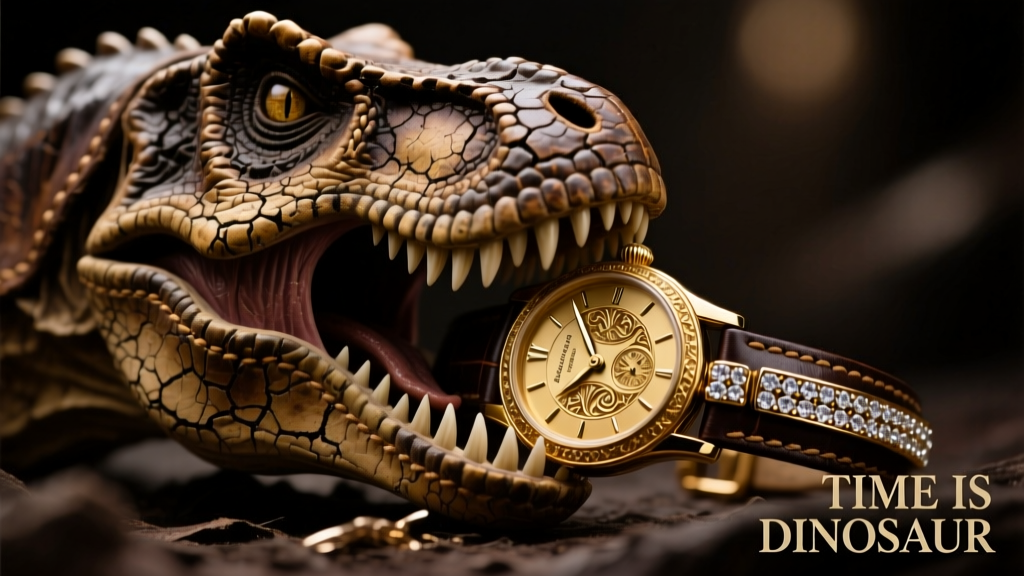
T. Rex Leather Takes a Bite Out of Luxury Fashion: The Rise of Fossilized Reptilian Hide in High-End Accessories
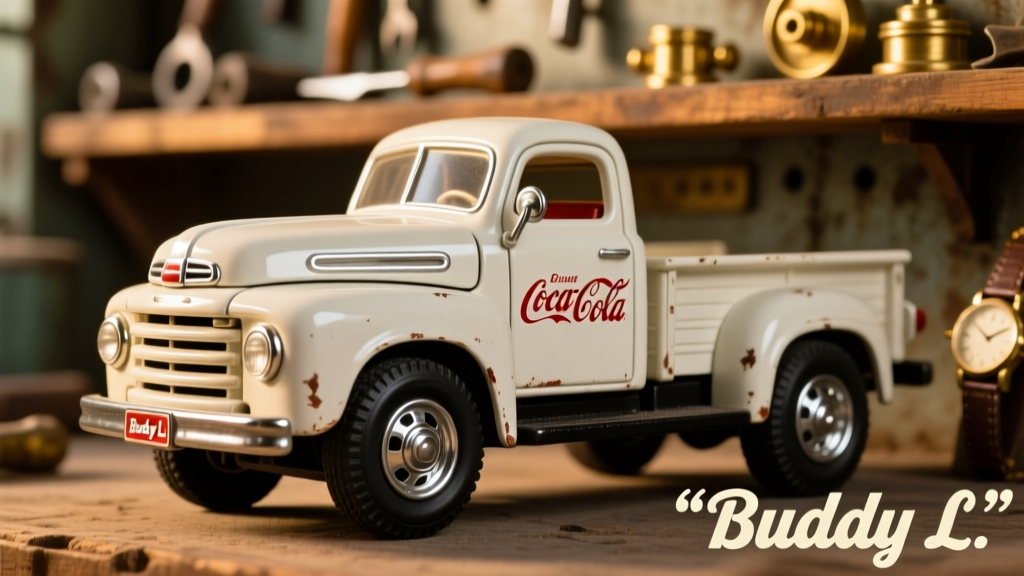
Toy Truck Delivery: Coca-Cola White Body Black Tires Buddy L — A Collector’s Guide to the Iconic 1930s Lithographed Delivery Vehicle