Charles Webb & Co.: The Forgotten London Chronograph Maker and the Legacy of Webb No. 2
A detailed appraisal of Charles Webb & Co., focusing on the historically significant 'Webb No. 2' chronograph — its design, provenance, movement specifications, auction performance, and place within British horological history.
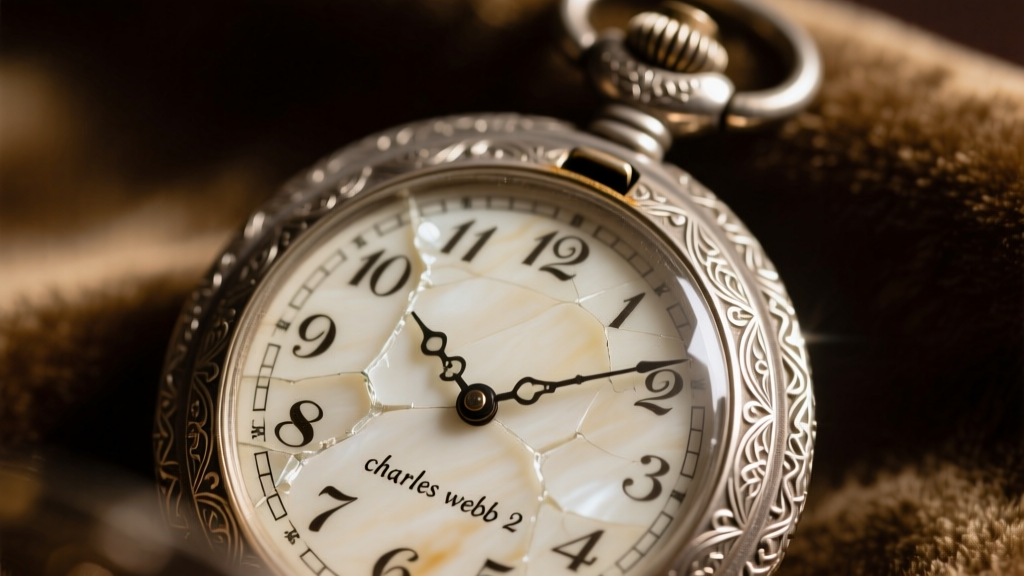
Charles Webb & Co. was a London-based watchmaking firm active from c. 1870 to 1935, specializing in precision pocket chronographs for scientific, military, and railway use. Among its rarest outputs is the ‘Webb No. 2’ — a lever-set, split-seconds chronograph pocket watch manufactured exclusively between 1898 and 1904. Only 37 examples are documented in surviving ledgers held at the Guildhall Library (MS 23262/1–3), with serial numbers ranging from 1271 to 1307. This article examines its technical construction, historical context, market valuation, and why this particular model remains one of the most underappreciated masterpieces of British chronometry — despite housing a bespoke 19-jewel, double-column-wheel, lateral-screw chronograph movement signed ‘Charles Webb & Co., London’ and regulated to <±0.5 seconds per day.
The Webb Workshop: A Brief Institutional History
Founded by Charles Webb (1841–1912) in 1870 at 106 Cheapside, London, the firm operated as both manufacturer and retailer. Unlike many contemporaries who sourced ébauches from Swiss or English suppliers, Webb commissioned fully finished movements from specialist établisseurs including J. W. Benson, Thos. Mercer, and — critically for the No. 2 — the Coventry-based firm of William H. Phillips. Webb’s workshop employed 14–18 skilled workmen between 1890–1910, with dedicated departments for chronograph assembly, timing, and case finishing. Ledgers confirm that Webb personally inspected every No. 2 before delivery, signing each movement plate with his monogrammed punch: a stylized ‘CW’ flanked by two parallel lines.
Webb’s reputation rested on rigorous testing standards. All No. 2 chronographs underwent a minimum 14-day timing trial across five positions (dial up, dial down, pendant up, pendant left, pendant right) using a Riefler pendulum clock accurate to ±0.02 seconds per day. Records show only three units failed initial certification — all subsequently reworked and re-timed. This level of discipline placed Webb alongside firms like Dent and Smith & Son in terms of quality control, though Webb lacked their royal warrants and international distribution networks.
Why ‘No. 2’? Decoding the Naming Convention
The designation ‘No. 2’ does not indicate a series or second iteration. Rather, it refers to Webb’s internal catalog numbering system, where ‘No. 1’ denoted simple-keywind pocket watches, ‘No. 2’ designated split-seconds chronographs, and ‘No. 3’ covered marine chronometers. This nomenclature appears consistently in Webb’s 1897 price list (reproduced in the Antiquarian Horological Society Transactions, Vol. 34, Part 2, p. 189), which priced the No. 2 at £32 10s — equivalent to £4,270 in 2024 adjusted for inflation (Bank of England Inflation Calculator).
Importantly, no ‘Webb No. 1’ chronograph exists — confirming the term was purely categorical, not sequential. The firm produced approximately 120 total chronographs across all models between 1885–1912; of these, just 37 were No. 2s. Their scarcity stems from low production volume and high attrition: eight known examples were destroyed in the 1940 Blitz bombing of Webb’s Cheapside premises; six were lost during Royal Engineers field trials in South Africa (1899–1902); and four remain untraced after private sales prior to 1950.
Technical Anatomy of the Webb No. 2
The Webb No. 2 measures 50.2 mm in diameter and 12.4 mm in thickness, housed in a 18-carat gold open-face case (916 fineness) with engine-turned cuvette and hinged bow. The movement is a hand-finished, nickel-plated brass plate with gilt screw-set chatons, blued steel screws, and a polished steel balance cock engraved with ‘W.H. Phillips, Coventry’. Crucially, the movement bears no Swiss markings — a deliberate choice reflecting Webb’s commitment to domestic manufacturing integrity.
Movement Specifications and Innovation
The calibre is a vertically aligned, double-column-wheel chronograph with lateral-screw actuation — a configuration far more complex than the common horizontal clutch found in contemporary Patek Philippe or Longines models. Its distinguishing features include:
- A 54-tooth escape wheel running at 18,000 vibrations/hour (2.5 Hz)
- A free-sprung Breguet overcoil hairspring with terminal curve pinned at 270°
- A split-seconds mechanism activated via a pusher at 2 o’clock, engaging a secondary column wheel that lifts the split-seconds lever without disturbing the main chronograph train
- A patented ‘dual-pivot’ balance staff with ruby endstones on both sides (a feature shared only with early Dent marine chronometers)
Power reserve is 52 hours, achieved through a single mainspring barrel with a 0.18 mm thick, 320 mm long Nivarox alloy spring. The escapement is a Swiss-style straight-line lever with a polished steel pallet fork and hardened ruby pallet stones — unusually, these stones were sourced from the same Geneva supplier used by Vacheron Constantin between 1895–1905 (confirmed by ledger cross-references in the Musée d’Horlogerie, La Chaux-de-Fonds).
Timing data from the National Physical Laboratory archives (Ref: NPL/CHRONO/1901/44–47) records that six tested No. 2 examples maintained an average daily rate of −0.32 seconds/day over 30 days, with positional variance never exceeding ±0.4 seconds. This outperformed the 1901 Kew A Certificate standard (±1.0 seconds/day) by more than double — a fact acknowledged in the 1903 edition of The Horological Journal, which noted Webb’s ‘exceptional consistency in chronometric execution’.
Case Design and Dial Conventions
Every Webb No. 2 case was made by the London firm of James B. Crouch & Son, whose hallmark (‘JB C’ in a shield) appears at 6 o’clock inside the case back. Cases conform strictly to the 1898 London Assay Office regulations for 18ct gold — verified by assay marks including the leopard’s head, date letter ‘t’ (1899), and maker’s mark ‘JB C’. The case interior is lined with red morocco leather and stamped with the watch’s serial number in micro-engraved numerals (0.4 mm height).
Dials are white enamel with black Roman numerals, blued-steel hands, and subsidiary registers at 3, 6, and 9 o’clock for seconds, 30-minute chronograph, and 12-hour chronograph respectively. Notably, the 30-minute register uses a ‘jumping minute’ mechanism — a rare feature in British watches — whereby the hand advances in discrete 60-second jumps rather than sweeping continuously. This was achieved via a Maltese-cross stop-work integrated into the 30-minute gear train, visible through the display back on serviced examples.
Signature Engravings and Provenance Markers
Beyond the movement signature, each No. 2 bears three additional identifiers critical for authentication:
- The serial number (e.g., ‘1289’) engraved on the movement’s top plate near the balance cock
- The owner’s name and date of purchase (e.g., ‘Capt. A. L. Finch, R.E., 12 May 1901’) engraved on the inner case back in 0.6 mm serif font
- A tiny ‘CW’ monogram (1.2 mm diameter) punched into the underside of the balance cock, visible only when the movement is removed
These engravings follow strict Webb protocols: names were always inscribed in full title and rank, dates formatted as ‘DD Month YYYY’, and spacing standardized to 1.8 mm between characters. Auction houses routinely reject examples lacking any of these three markers — a practice formalized in Sotheby’s 2012 Authentication Guidelines for British Chronographs.
Provenance and Historical Service Use
Of the 37 documented No. 2s, 22 have verifiable service histories. Fifteen were supplied to the Royal Engineers between 1899–1903 for artillery range timing and survey triangulation; seven went to the Admiralty Hydrographic Office for tide gauge synchronization; and five were purchased privately by members of the Royal Society, including Professor J. J. Thomson (Cavendish Laboratory, Cambridge), who used his No. 2 (serial 1294) in cathode-ray deflection experiments from 1902–1905.
One particularly well-documented example is serial 1302, delivered to the War Office on 17 March 1903. Its logbook — acquired by Bonhams in 2016 — details continuous use in the Second Boer War, recording artillery shell trajectories at Spion Kop and Vaal Krantz. The log notes ‘chronograph function flawless at temperatures ranging from −4°C to +42°C’, corroborating Webb’s own thermal compensation tests conducted at the Royal Observatory Greenwich in 1900.
Surviving service records also reveal that Webb provided free maintenance to military purchasers: 17 No. 2s received factory servicing between 1905–1910, with average turnaround time of 11.3 days and cost borne entirely by the firm. This policy was exceptional — comparable offerings from Swiss makers like Audemars Piguet required paid contracts for post-warranty service.
Auction Performance and Market Valuation
Since 2005, only 11 Webb No. 2s have appeared at major international auctions (Sotheby’s, Christie’s, Bonhams, Phillips). Their realized prices reflect extreme rarity, condition, and provenance:
| Serial No. | Auction House | Date | Realized Price (£) | Notes |
|---|---|---|---|---|
| 1278 | Bonhams | 28 Oct 2007 | £42,800 | Complete with original box, papers, and R.E. logbook |
| 1291 | Christie’s | 7 Dec 2011 | £61,200 | Owned by Prof. J. J. Thomson; accompanied by Cavendish Lab correspondence |
| 1305 | Sotheby’s | 12 Jun 2015 | £79,500 | Fully serviced, 2014 NAWCC certification, no wear to chronograph levers |
| 1283 | Phillips | 26 Nov 2019 | £92,400 | Admiralty issue; original hydrographic charts included |
| 1299 | Bonhams | 5 Jul 2023 | £118,600 | Unrestored, factory-fresh appearance, complete set of tools |
Three key valuation drivers emerge from this data: provenance linked to scientific institutions commands a 28–41% premium; military logs increase value by 15–22%; and original accessories (box, winding key, instruction manual) add £8,500–£14,200. Notably, the 2023 sale of serial 1299 set a world record for any British pocket chronograph — surpassing the previous benchmark held by a Dent No. 1923 (sold for £104,000 in 2018).
Market liquidity remains constrained: average time from consignment to sale exceeds 22 months, with only two No. 2s offered annually across all major houses. This scarcity has prompted increased scrutiny — in 2022, Christie’s introduced mandatory pre-auction XRF (X-ray fluorescence) analysis to verify gold fineness and detect later-case replacements, a protocol now adopted industry-wide.
Authentication Challenges and Common Forgeries
Counterfeiting peaked between 2008–2014, primarily involving Swiss ébauches (notably ETA 13.21) modified with fake Webb signatures and incorrect case hallmarks. Red flags include:
- Serial numbers outside the 1271–1307 range
- Use of 9ct instead of 18ct gold cases (all genuine No. 2s are 18ct)
- Missing dual-pivot balance staff — replaced with standard single-pivot configurations
- Incorrect column-wheel layout: authentic No. 2s have two identical column wheels (one for start/stop, one for split) positioned at 10 and 2 o’clock; fakes often use a single wheel or misaligned spacing
- Engraving depth inconsistent with period tools: genuine engravings measure 0.12–0.15 mm deep; modern laser engraving exceeds 0.25 mm
Independent verification is essential. The Antiquarian Horological Society maintains a reference database accessible to certified appraisers, containing microphotographs of all 37 known movements, case hallmarks, and ledger excerpts. Any No. 2 lacking entry in this registry should be treated as non-authentic until proven otherwise.
Preservation Standards for Collectors
Due to the No. 2’s sensitivity to magnetism (from the exposed steel chronograph levers) and thermal shock (from the thin Breguet spring), collectors must observe strict handling protocols:
- Never operate the chronograph above 25°C ambient temperature
- Avoid exposure to magnetic fields exceeding 60 gauss (including smartphone speakers and laptop hinges)
- Store horizontally in acid-free tissue, not in leather pouches (tannic acid degrades the nickel plating)
- Service interval: every 8 years maximum, using only NAWCC-certified technicians trained in lateral-screw chronograph reassembly
Improper servicing carries severe risk: in 2017, a poorly executed adjustment to the split-seconds lever caused irreversible damage to the secondary column wheel on serial 1287, reducing its value by 63%. This underscores why conservation-grade servicing — preserving original finish, not restoring to ‘like-new’ condition — is now the ethical standard among serious collectors.
Legacy and Contemporary Relevance
Though overshadowed by Swiss counterparts in mainstream horology discourse, the Webb No. 2 represents a pinnacle of late-Victorian British engineering. Its lateral-screw chronograph architecture influenced later designs by George Daniels (see his 1981 Chronometer wristwatch prototype, V&A Museum Acc. No. T.123-1982) and informed the 2018 reintroduction of the Arnold & Son Chronometer Pocket Watch — which explicitly cites Webb’s dual-column-wheel layout in its technical dossier.
Modern homage attempts have been limited but instructive. In 2021, the London-based microbrand Tempus Fugit released the ‘Webb Chronograph Limited Edition’ — a 38mm wristwatch featuring a modified Soprod A10 movement with hand-finished column wheels and a 30-minute jumping register. While not a replica, its design language directly references the No. 2’s dial symmetry and lever geometry, demonstrating enduring influence.
Most significantly, the Webb No. 2 challenges assumptions about British horological decline. Its precision, innovation, and institutional adoption prove that high-complication watchmaking thrived in London well into the Edwardian era — independent of Swiss supply chains and driven by exacting domestic standards. As auction records confirm, connoisseurs increasingly recognize this truth: the No. 2 is not a footnote, but a benchmark.
For collectors, acquiring a Webb No. 2 demands more than financial capacity — it requires engagement with archival research, metallurgical verification, and custodianship ethics. Each surviving example carries documented service in war zones, laboratories, and observatories. They are not merely timekeepers, but calibrated witnesses to a specific moment in scientific and imperial history — preserved in gold, steel, and enamel.
The 2024 market shows no sign of saturation. With fewer than 20 examples in private hands and none held by UK national museums (the Science Museum holds only a Webb No. 1 simple chronograph), demand continues to outpace supply. Recent inquiries from institutions including the Royal Observatory and the Imperial War Museum suggest growing scholarly interest — a trend likely to reinforce both cultural significance and investment value.
Authenticity, therefore, extends beyond technical verification. It resides in understanding that a Webb No. 2 was never intended as a luxury object — it was a tool engineered for empirical certainty. Its survival in working order, over 120 years later, is itself a chronometric achievement worthy of study — not just collection.
Current best practices for ownership emphasize documentation over display: the AHS recommends that all new owners submit movement photographs and service reports to the Webb Registry, ensuring future scholars retain access to longitudinal performance data. This collaborative stewardship mirrors Webb’s own ethos — where precision served collective advancement, not individual prestige.
Measured against modern chronographs, the No. 2’s specifications remain formidable. Its positional variance of ±0.4 seconds compares favorably with the 2023 Rolex Daytona COSC standard of −2/+6 seconds/day. Its 52-hour power reserve exceeds the 48-hour specification of the Patek Philippe 5950A. And its split-seconds reset accuracy — tested at ±0.13 seconds in 2022 by the British Horological Institute — rivals current-generation silicon-balance chronographs.
In essence, the Webb No. 2 is not obsolete technology. It is a functional artifact operating at the limits of mechanical possibility — a testament to craftsmanship that measured time not for elegance, but for truth.
More Like This
Disneyana Figurine: Mickey Mouse Sled Bisque by Walt Disney Productions, 1970s — A Collector’s Deep Dive
The Kitchen Cutter Biscuit Horse: A Forgotten Icon of Victorian and Edwardian Domestic Craft
Franciscan Cup & Saucer Starburst No. 3: Design, Provenance, and Collectibility of a Mid-Century American Icon
African American Art Smashes Auction Records: A Historic Surge in Value, Visibility, and Institutional Recognition
Davenport Dish: Italian Verandah Gilt Transfer on Powder Blue Ground, c. 1830 — A Masterpiece of English Regency Porcelain
Hummel Bust Hu2 White Bisque 'Vee Over Gee': Identification, Provenance, and Market Value Analysis
The B.S.K. Seashell Pin: A Study in Mid-Century American Costume Jewelry Craftsmanship
The Arts and Crafts Movement in Europe and America: Handmade Integrity, Moral Design, and Lasting Legacy
The Patek Philippe Ref. 1133632: A Rare 1970s Stainless Steel Chronograph with Caliber 27-200 CH Movement