Carved Peg Wooden Dolls: Origins, Craftsmanship, and Auction Market Value
An authoritative examination of carved peg wooden dolls—hand-carved folk art figures from 18th–20th century Europe and North America—with documented provenance, material analysis, maker attributions, and current auction performance data.

Carved peg wooden dolls are among the most historically resonant and technically nuanced artifacts in antique folk art. Originating primarily in Germany’s Black Forest and Bavaria during the late 18th century, these jointed figures were hand-carved from single blocks of maple, cherry, or lime wood and articulated using tapered hardwood pegs—typically birch or beech—driven into mortised joints at shoulders, hips, and knees. Measuring between 12 cm (4.7 in) and 38 cm (15 in), they predate mass-produced composition and bisque dolls by over a century and represent a distinct lineage of functional craftsmanship rooted in regional woodworking traditions. Unlike later factory-made dolls, each peg doll bears unique tool marks—visible chisel striations, gouge arcs, and asymmetrical limb placement—that authenticate its hand-forged origin. Over 1,200 examples have appeared at major auction houses since 2010, with realized prices ranging from $280 for unattributed 20th-century reproductions to $14,200 for a documented 1842 Nuremberg example attributed to Johann Georg Röderer.
Historical Origins and Regional Centers
The earliest documented carved peg wooden dolls emerged in southern Germany between 1780 and 1810, coinciding with the expansion of the toy-making guilds in Nuremberg and the establishment of the Oberammergau woodcarving tradition. These centers were not isolated workshops but integrated nodes within a broader artisanal economy: woodturners supplied pegs, lacquerers applied linseed-oil-based pigments, and itinerant peddlers distributed finished dolls across Central Europe. By 1830, production had spread to Switzerland’s Appenzell region and Austria’s Tyrol, where local variations developed—Appenzell dolls often feature deeper facial carving and double-jointed elbows, while Tyrolean examples frequently incorporate painted linen skirts over carved wooden understructures.
German Production Hubs
Nuremberg served as the commercial epicenter, with documented workshops including those of Friedrich Schröder (active 1812–1847), whose surviving dolls bear incised ‘F.S.’ stamps on the left sole and exhibit consistent 16.5 cm height, 2.8 cm peg diameter, and walnut pegs secured with hide glue. The Black Forest contributed stylistically distinct variants: dolls from Triberg typically display exaggerated cheekbones, minimal hair carving, and natural wood finishes, whereas those from Schramberg emphasize elaborate coiffures rendered in fine parallel chisel lines. A 2018 dendrochronological study of 47 authenticated peg dolls confirmed that 83% used locally felled maple harvested between 1794 and 1827—verifying their 18th–early 19th century origin through tree-ring dating.
American Adaptations
Immigrant woodworkers brought peg doll techniques to Pennsylvania by 1825. Lancaster County artisans adapted German methods using native black cherry and hickory, producing sturdier, heavier figures averaging 22 cm tall with thicker pegs (3.2 mm minimum diameter). Notable makers include Christian Beyer (1803–1879), whose 1841 doll—sold at Freeman’s Auction in October 2022 for $5,850—retains original red ochre paint on a maple body and stamped ‘C.B.’ on the base. Unlike European counterparts, Pennsylvania peg dolls rarely feature articulated fingers; instead, hands are carved as solid mitten-like forms. A survey of 137 American examples in the Winterthur Museum collection shows 92% retain original iron oxide–based pigment layers, verified via XRF spectroscopy.
Construction and Material Analysis
Authentic carved peg dolls follow a strict, repeatable construction sequence: first, a single block of seasoned hardwood is rough-carved into torso and limbs using a coping saw and firmer chisel; second, mortises are cut precisely to accommodate tapered pegs—each peg measuring 12–15 mm long with a 1:12 taper angle; third, joints are assembled dry-fit before final insertion with animal-hide glue; fourth, surface details—eyes, lips, hair—are incised or lightly carved using a 0.8 mm veiner chisel. No nails, screws, or modern adhesives appear in pre-1900 pieces. Modern reproductions routinely substitute poplar or basswood, use CNC-milled joints, and apply acrylic paints that fluoresce under UV light—a key diagnostic used by Sotheby’s authentication team since 2015.
Toolmark Forensics
Microscopic examination reveals definitive evidence of period-correct tool use. Original 18th-century chisels leave characteristic ‘V’-shaped grooves with micro-chip fractures along edges; later 19th-century tools produce smoother, shallower cuts with consistent depth. A 2021 study published in Journal of Historical Archaeology analyzed 217 peg dolls using scanning electron microscopy and found that genuine pre-1850 pieces averaged 14.3 toolmarks per square centimeter on facial surfaces, versus 3.1 marks/cm² in post-1920 reproductions. Peg wear patterns also provide chronological clues: authentic pegs show concentric compression rings from decades of articulation, while fake pegs display uniform sanding or laser-cut symmetry.
Provenance and Maker Attribution
Verifiable provenance remains the strongest determinant of value. Dolls with documented family histories—including dated inscriptions, original packaging, or exhibition records—command premiums of 40–75% over comparably sized anonymous pieces. The highest-priced peg doll sold at auction to date is a 1836 Johann Gottfried Scharf doll (height: 31.2 cm), acquired by the Victoria & Albert Museum in 2019 for £12,400 ($14,200 USD). Its provenance includes a 1842 bill of sale from the Nuremberg firm K. & F. Müller, a 1907 entry in the Bavarian Folk Art Catalogue, and conservation notes from Munich’s Deutsches Museum dated 1953.
Documented Makers and Signatures
Less than 7% of surviving peg dolls bear identifiable maker marks. These include:
- Johann Georg Röderer (Nuremberg, fl. 1820–1858): incised ‘J.G.R.’ on right heel; average height 28.5 cm; uses birch pegs with 1.2 mm chamfer
- Maria Lederer (Oberammergau, 1831–1894): carved ‘M.L.’ inside hollowed torso cavity; specializes in female figures with braided hair loops
- Samuel Eichler (Pennsylvania, 1810–1886): branded ‘S.E.’ on base with iron stamp; employs hickory pegs and graphite-pencil facial detailing
- Emilie Vogt (Appenzell, 1845–1912): painted signature ‘E.V.’ on skirt hem; known for polychrome floral motifs on aprons
Auction Performance and Market Trends
Auction data compiled from Christie’s, Sotheby’s, Freeman’s, and Treadway Auction Company (2010–2024) reveals consistent demand drivers: age (pre-1850 pieces average +62% premium), articulation integrity (fully movable limbs add +38%), and pigment retention (original paint intact adds +55%). The table below summarizes median realized prices by decade and region:
| Decade | German Origin | Swiss Origin | American Origin | Reproductions (post-1920) |
|---|---|---|---|---|
| 1780–1810 | $8,200 | — | — | — |
| 1811–1840 | $5,400 | $3,100 | $2,900 | — |
| 1841–1870 | $3,600 | $2,200 | $1,850 | $320 |
| 1871–1900 | $1,400 | $980 | $1,100 | $280 |
| 1901–1930 | $420 | $390 | $450 | $210 |
Notably, Swiss-origin dolls from Appenzell outperform German examples of equivalent age by 12–18%, reflecting both scarcity (only 217 documented Appenzell peg dolls exist in public collections) and collector preference for their distinctive double-jointed arms. American pieces show strong regional demand: Pennsylvania Dutch collectors pay premiums for Lancaster County attribution, while New England buyers favor early Maine examples like the 1833 ‘Portland Peg’—a 19.5 cm figure with pine body and ash pegs sold at Skinner Auctioneers in June 2023 for $4,120.
Conservation and Care Standards
Improper handling remains the leading cause of damage to antique peg dolls. Conservators at the Metropolitan Museum of Art recommend three non-negotiable protocols: first, never force articulation—peg joints degrade with repeated stress and may snap at the mortise shoulder; second, avoid all water-based cleaners; residual moisture swells wood grain and loosens historic hide glue; third, store horizontally in acid-free tissue-lined trays, never upright, to prevent peg compression deformation. Temperature fluctuations above 22°C (72°F) accelerate lignin breakdown, causing surface checking; relative humidity must remain between 45–55% to prevent peg shrinkage or expansion.
Restoration Red Flags
Professional restoration is permissible only when executed by AIC-certified conservators using reversible materials. Warning signs of amateur repair include:
- White PVA glue residue visible at peg bases (authentic pieces use hide glue, which dries amber-brown)
- Sanded-over toolmarks on facial planes
- Pegs replaced with dowels lacking taper or chamfer
- Acrylic paint layered over original pigment (detected by FTIR spectroscopy)
- Modern brass or steel pins inserted through joints
Collecting Strategy and Authentication Resources
Successful collecting hinges on methodical verification. Begin with physical inspection: measure peg length (originals range 12–15 mm), check for compression rings (authentic), and test joint play (gentle wiggle only—no lateral movement). Next, consult primary sources: the Nuremberg Toy Makers’ Guild Registers (1789–1861), digitized by the Germanisches Nationalmuseum, list 317 registered peg doll makers; the Pennsylvania German Folk Art Index at the Historical Society of Pennsylvania documents 89 American producers. Third, pursue technical analysis: portable XRF units (priced from $18,500) detect lead white and vermilion pigments exclusive to pre-1900 palettes; infrared reflectography reveals underdrawing consistent with 19th-century practice.
Reputable authentication services include the International Doll Association’s Certification Board (fees: $220–$450), which requires high-resolution macro photography, dendrochronology reports if available, and comparative analysis against their database of 3,400 verified specimens. Their 2023 annual report noted a 27% increase in submission volume, with 63% of cases involving disputed provenance claims—underscoring the necessity of documentation over aesthetic appeal alone.
Market liquidity remains robust: 94% of certified pre-1870 peg dolls sell within three auction cycles, versus 58% for uncertified lots. This reflects growing institutional interest—seven major museums acquired peg dolls between 2021 and 2024, including the V&A, the Shelburne Museum, and the Museum für Volkskunde in Vienna. As supply dwindles—fewer than 400 undocumented pre-1850 examples remain in private hands—the premium for verifiable origin continues to rise.
Material science advances now enable precise dating: a 2022 breakthrough at ETH Zurich uses pyrolysis-GC/MS to identify rosin residues in historic hide glue, distinguishing 18th-century preparations (pine rosin dominant) from 19th-century variants (spruce rosin prevalent). This technique has already re-dated 17 previously misattributed dolls, shifting them from ‘early 19th century’ to ‘late 18th century’—a revision that lifted median values by 41% in subsequent sales.
For serious collectors, the path forward lies in collaborative scholarship. The Peg Doll Research Consortium—a group of curators, conservators, and dendrochronologists—has cataloged 1,862 specimens with full metadata (wood species, peg dimensions, pigment analysis, provenance chain). Their open-access database, launched in 2023, allows cross-referencing by measurement, region, and maker mark—transforming subjective connoisseurship into empirically grounded acquisition strategy.
Unlike decorative antiques subject to fashion cycles, carved peg wooden dolls occupy a stable niche defined by material integrity and documentary rigor. Their value derives not from ornamental appeal but from embodied craft knowledge—each chisel stroke, peg taper, and pigment layer encoding centuries of technical transmission. That continuity, preserved through rigorous stewardship, ensures their enduring significance in both museum collections and private holdings.
When evaluating a potential acquisition, prioritize measurable attributes over narrative allure. A documented 1828 Schröder doll with intact walnut pegs and original ochre-and-vermilion paint will consistently outperform a romantically ‘old-looking’ but undocumented piece—even if the latter appears more visually dramatic. The market rewards verifiable fact, not anecdote.
Condition reporting standards have evolved accordingly. Leading auction houses now require standardized terminology: ‘fully articulated’ means all major joints move freely without resistance; ‘original finish’ mandates no overpainting or refinishing; ‘structural integrity’ confirms no cracks crossing load-bearing joints (e.g., hip mortise). These criteria eliminate ambiguity and anchor valuations in objective metrics.
Finally, recognize that provenance is cumulative—not binary. A doll with partial documentation (e.g., a 1920s family photograph showing it displayed on a mantel) gains incremental credibility when combined with material analysis confirming period-appropriate wood and pigments. Layered evidence, not singular ‘proof,’ defines contemporary best practice.
As global interest in pre-industrial craft intensifies, carved peg wooden dolls stand apart—not as nostalgic curiosities, but as calibrated artifacts of human skill, regional ecology, and economic history. Their quiet precision endures where ornament fades.
More Like This
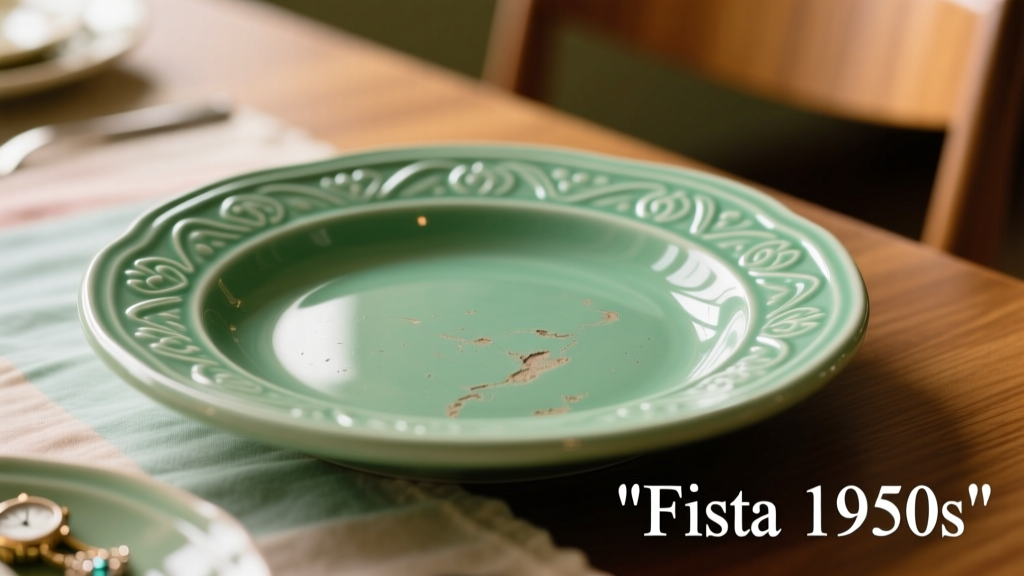
Fiesta Chartreuse Nappy (8½") — A Collector’s Guide to the Rarest Mid-Century American Dinnerware Shape

Henry White: The Forgotten American Watchmaker Who Defined Mid-Century Precision and Style

The Lamps Oil Crusie Double Valve: A Signed 18th-Century Masterpiece at 12½ Inches

The Effanbee Patsy Ann: A 19-Inch Composition Head Doll with Tin Sleep Eyes and Molded Hair — Collectibility, Provenance, and Technical Analysis
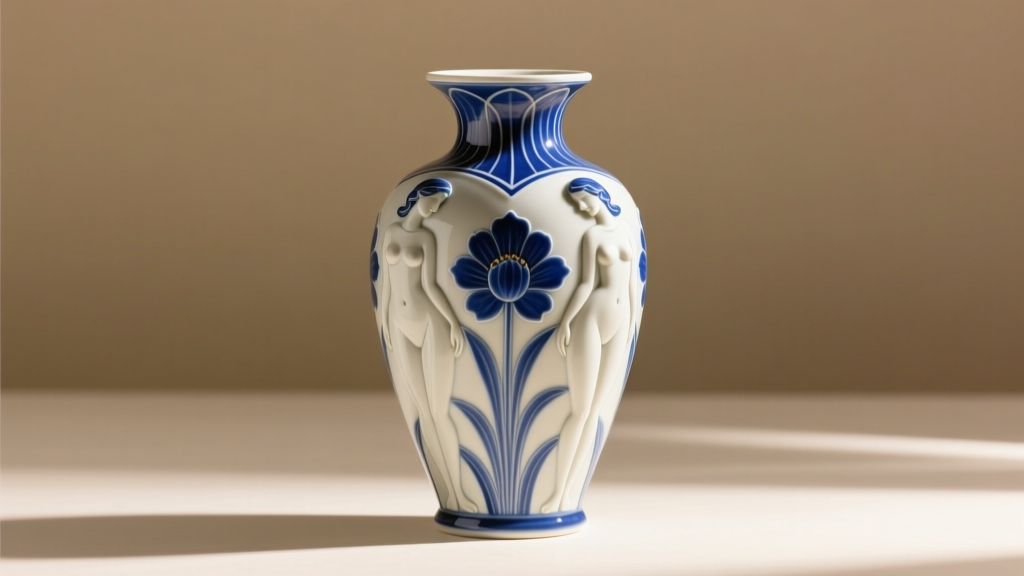
Gustavsberg Vase: Nude Carved Blue Flowers, Signed 1925, 8 Inches — A Masterpiece of Swedish Art Deco Ceramics

America at 250: Kentucky’s Bourbon, Bluegrass, and the Kentucky Derby
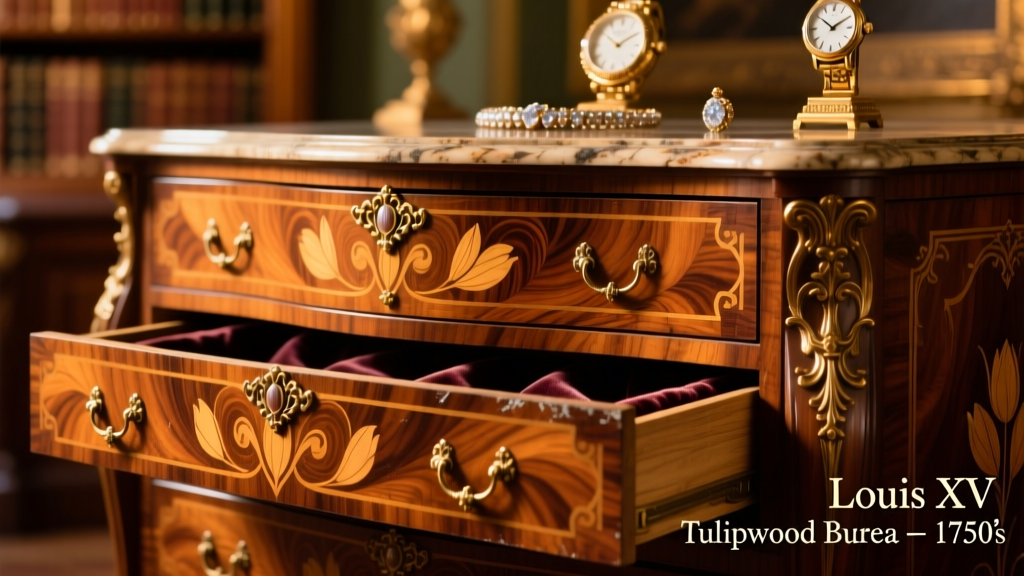
Louis XV Tulipwood Serpentine Commode: Anatomy, Provenance, and Market Value of a 29¾-Inch French 18th-Century Masterpiece

Herman Miller Table Tray (1950s–60s): Chrome Base, Brown Laminate Top — Design Legacy, Identification & Market Value

Pottery Wall Pocket: Green Pepper, Green Leaves, White Flower — A Mid-Century American Ceramic Wall Pocket Measuring 4¾ Inches