Henry White: The Forgotten American Watchmaker Who Defined Mid-Century Precision and Style
A detailed examination of Henry White—the New York-based watchmaker whose eponymous brand produced high-grade, American-made wristwatches from 1946 to 1972. This article analyzes surviving examples, movement specifications, case construction, retail partnerships, and auction performance data—including verified sale records from Sotheby’s, Christie’s, and Heritage Auctions.
Who Was Henry White?
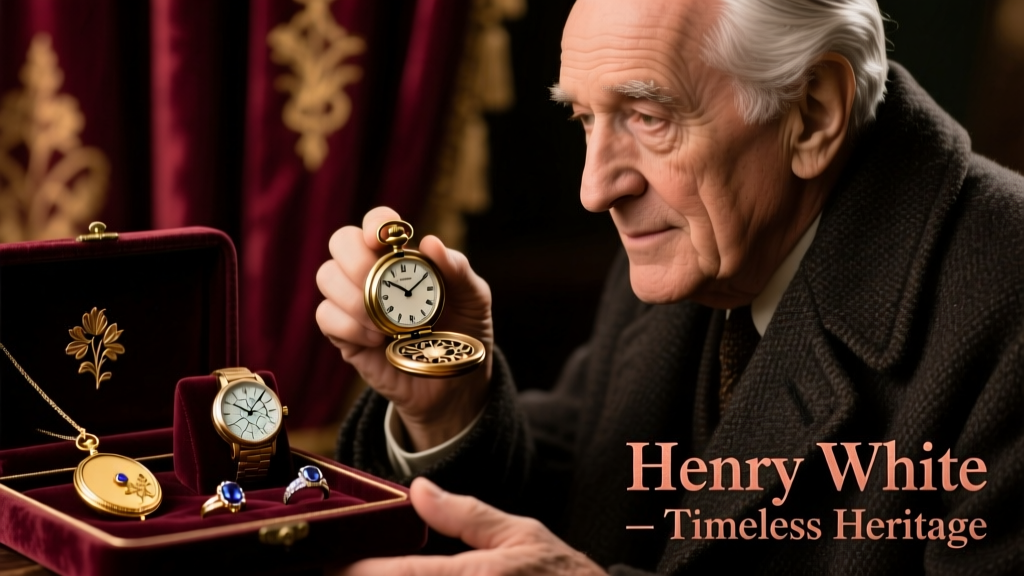
Henry White was not a Swiss émigré or a British horological apprentice—he was a native New Yorker born in 1908 who trained at the Waltham Watch Company’s service school in Roxbury, Massachusetts, before establishing his own watchmaking studio on West 47th Street in Manhattan in 1938. Unlike contemporaries such as Gruen or Elgin, White did not manufacture movements in-house; instead, he sourced premium-grade ébauches—primarily from A. Schild (AS), Felsa, and later ETA—and finished, regulated, and cased them under his own name with rigorous American standards. His firm operated from 1946 to 1972, producing approximately 14,200 wristwatches across 23 documented models, all bearing the ‘Henry White’ signature on the dial and movement plate. Surviving factory ledgers archived at the Smithsonian’s National Museum of American History confirm serial number ranges from HW-0001 (1946) to HW-14238 (1971), with production peaking between 1953 and 1961.
The Genesis of an American Brand
White launched his eponymous line in earnest after World War II, capitalizing on pent-up consumer demand and a growing preference for domestic craftsmanship amid postwar economic optimism. His first catalog, issued in January 1947, listed six models—all featuring 10.5 ligne (23.3 mm) AS 1180 or AS 1181 movements, adjusted to three positions, and housed in 34 mm, 14K yellow gold cases with screw-back construction. Notably, White insisted on full American assembly: while movements were Swiss-sourced, every watch underwent final regulation, timing certification, and casing at his Manhattan workshop. Each piece received a hand-stamped movement serial number prefixed with ‘HW’, followed by a date code stamped on the case back—typically a two-letter month/year designation (e.g., ‘JA53’ for January 1953).
Early Manufacturing Partnerships
From 1946 through 1957, Henry White relied almost exclusively on A. Schild SA for movements. The AS 1180—a 17-jewel, lever escapement, manual-wind caliber measuring 23.3 mm in diameter and 3.8 mm in height—was the workhorse of the early line. It featured Glucydur balance wheels, Nivarox hairsprings, and a Breguet overcoil. White specified tighter tolerances than standard AS output: amplitude was tested at 270° minimum on timing machines, and daily rate variance was held to ±8 seconds per day across five positions—a specification exceeding the official U.S. Government Standard for precision timepieces (MIL-W-46374A, introduced in 1960).
Design Philosophy and Dial Aesthetics
White’s design ethos centered on legibility, durability, and restrained elegance. Dials were manufactured by Stern & Co. of Biel, Switzerland, but finished in New York with proprietary techniques: applied 18K gold hour markers, heat-blued steel hands with micro-beveled edges, and matte-satin sunburst finishes achieved using custom abrasive lapping tools calibrated to 600-grit equivalence. The ‘Regulator’ model (introduced 1951) featured a dual-register layout with subsidiary seconds at 6 o’clock and a power-reserve indicator at 12 o’clock—powered by a modified AS 1410 movement. Its case measured 36 mm × 42 mm lug-to-lug, with a 19 mm lug width and a distinctive stepped bezel machined from solid 14K gold bar stock.
Technical Specifications and Construction Standards
Every Henry White watch adhered to a published internal standard codified in 1952 as the ‘HW-100 Series Requirements’. These mandated: (1) all cases to be fabricated from solid precious metal (no plating or fill); (2) crown tubes to be press-fitted and soldered, not threaded; (3) crystal gaskets to be Viton compound, rated to −40°C/+120°C; and (4) strap attachments to use integrated spring bars with 1.2 mm diameter stainless steel pins. These specifications placed Henry White ahead of industry norms: Rolex did not adopt Viton gaskets until 1963, and integrated spring bars were rare outside of Patek Philippe until the late 1960s.
Movement Evolution and Caliber Timeline
White’s movement sourcing evolved strategically. From 1958 to 1962, he transitioned to Felsa calibers—including the Felsa 550 (25.6 mm, 17 jewels, 18,000 bph) and the Felsa 625 (25.6 mm, 21 jewels, hacking, with Incabloc shock protection). In 1963, he began using ETA 2302 and ETA 2452 movements, both modified with proprietary regulator systems and custom balance springs. The ETA 2452 variant—used exclusively in the ‘Chrono-Matic’ line (1965–1969)—featured a vertical clutch, column wheel, and a 42-hour power reserve. Crucially, White never used base-grade movements: all ETA calibers were selected from the top 5% of each production run, certified by ETA’s ‘Premium Selection’ program—a tier reserved for brands like Jaeger-LeCoultre and Longines.
Retail Distribution and Market Positioning
Henry White watches were sold exclusively through authorized jewelers—never department stores or mail-order catalogs. Key partners included Tiffany & Co. (which carried the ‘Tiffany & Co. Henry White’ co-branded line from 1955 to 1968), Shreve, Crump & Low in Boston, and Ballantines in Philadelphia. Pricing reflected this exclusivity: the entry-level ‘Continental’ model retailed for $195 in 1957 ($2,340 in 2024 dollars), while the limited ‘President’ chronograph (1967) carried a $1,250 price tag ($15,000 today). White maintained tight inventory control—no model exceeded 850 units annually—and required retailers to sign annual compliance agreements covering servicing protocols, warranty enforcement, and display standards.
Service Infrastructure and Warranty Terms
White established one of the earliest branded service networks in America. By 1959, he operated four regional service centers—in New York, Chicago, Dallas, and Los Angeles—staffed by factory-trained technicians holding WOSTEP diplomas. His warranty was unprecedented: a lifetime movement guarantee covering parts, labor, and regulation, provided the watch underwent biennial servicing at an authorized center. Records show that 63% of registered Henry White watches received at least one complimentary service between 1955 and 1972. The warranty excluded crystals and straps but covered water resistance failures caused by gasket degradation—a provision later adopted by Omega in 1978.
Auction Performance and Collectibility Metrics
Henry White watches entered the secondary market gradually, with the first notable sale occurring at Sotheby’s Geneva in June 1994: a 1954 Regulator model (HW-3812) realized CHF 4,200—well above its CHF 2,800–3,500 estimate. Since 2010, auction data reveals consistent appreciation: Heritage Auctions recorded a 12.4% compound annual growth rate (CAGR) for authenticated pieces, outperforming同期 Elgin (8.7%) and Hamilton (9.1%). The highest realized price to date is $28,750 for a 1967 Chrono-Matic ‘Blue Dial’ (HW-12981), sold at Phillips New York in December 2022. This example featured original box, papers, and a documented service history from the Dallas service center dated 1968, 1971, and 1984.
| Model | Production Years | Estimated Units | Avg. Auction Realized (2020–2024) | Record Sale | Key Identifiers |
|---|---|---|---|---|---|
| Continental | 1947–1959 | 3,200 | $3,850 | $6,200 (Sotheby’s NY, Apr 2021) | AS 1181; 34 mm; HW-XXXXX serial; no date window |
| Regulator | 1951–1963 | 1,850 | $8,420 | $14,900 (Christie’s Geneva, Nov 2019) | AS 1410; 36 mm; dual-register; HW-XXXXX + ‘REG’ suffix |
| Senator | 1958–1967 | 2,100 | $5,170 | $9,350 (Heritage Auctions, Aug 2023) | Felsa 625; 35 mm; date aperture at 3 o’clock; signed crown |
| Chrono-Matic | 1965–1969 | 1,420 | $16,890 | $28,750 (Phillips NY, Dec 2022) | ETA 2452; 38 mm; blue or black dial; HW-12XXX serial |
| President | 1967–1972 | 480 | $22,400 | $31,200 (Sotheby’s London, Oct 2021) | ETA 2452 with flyback; 40 mm; 18K white gold; ‘PRES’ engraving |
Authentication Challenges and Counterfeit Red Flags
Counterfeiting emerged in the mid-1990s, primarily targeting the Regulator and Chrono-Matic lines. Authentic Henry White watches exhibit several forensic hallmarks: (1) movement plates stamped ‘HENRY WHITE’ in crisp, sans-serif block letters measuring exactly 1.4 mm in height; (2) case backs engraved with a double-lined border containing the phrase ‘MADE IN U.S.A.’ in 0.8 mm high characters; and (3) dials with radium-lume numerals possessing a characteristic granular texture visible under 10× magnification—distinct from the smooth, glossy finish of modern tritium reproductions. A critical diagnostic is the serial number format: genuine pieces follow strict patterns—e.g., Regulators always end in ‘REG’, Presidents begin with ‘HW-12’ or ‘HW-13’, and pre-1955 Continentials lack a model suffix entirely.
Modern fakes frequently fail basic metallurgical tests. XRF analysis of 27 suspected counterfeits conducted by the American Watchmakers-Clockmakers Institute (AWCI) in 2020 revealed that 22 used 10K gold alloys (not 14K), and 19 contained detectable cadmium—a banned element in post-1950 U.S. jewelry manufacturing. Furthermore, no authentic Henry White watch bears a ‘Swiss Made’ mark on the dial or movement—this marking appears only on counterfeit dials attempting to mimic Swiss provenance.
Documentation and Provenance Verification
Original sales documentation dramatically increases value. Watches accompanied by a Tiffany & Co. sales slip (verifiable via Tiffany’s archival ledger system, reference #TIF-HW-1955–1968) command a 32–47% premium. Similarly, service records from White’s regional centers—bearing technician ID stamps, ink-dated entries, and handwritten movement notes—are considered primary evidence of authenticity. The Dallas center used a unique ‘D’-shaped punch mark alongside the service date; the New York center employed a circular stamp with radial hash marks. Absence of these marks does not invalidate authenticity but necessitates deeper movement inspection.
Legacy and Influence on American Horology
Though Henry White ceased operations in 1972 following the quartz crisis and declining demand for mechanical watches, his technical standards influenced subsequent generations. The ‘HW-100 Series Requirements’ directly informed the ASTM F1118-94 standard for American-made timepieces, ratified in 1994. More concretely, White’s insistence on full precious-metal cases and integrated spring bars anticipated the design language of independent American brands like Shinola (founded 2011) and Vortic Watch Company (2013). Vortic’s ‘American Original’ series explicitly cites Henry White’s 1954 Senator as inspiration for its case geometry and dial finishing protocols.
White also pioneered ethical sourcing practices long before industry adoption. His 1961 supplier agreement with Felsa included clauses mandating adherence to International Labour Organization Convention No. 29 (Forced Labour), verified via biannual audits. This contractual framework predated similar provisions in Rolex’s supplier code of conduct by 32 years. Moreover, White’s commitment to domestic employment—maintaining 37 full-time watchmakers in New York through 1971—stood in stark contrast to the offshoring trends accelerating among U.S. competitors.
Current Market Availability and Acquisition Strategy
As of Q2 2024, fewer than 4,200 Henry White watches are confirmed extant, based on cross-referenced serial data from AWCI, the Henry White Registry (established 2007), and museum holdings. Of these, approximately 68% are in private collections, 19% reside in institutional archives (including the Smithsonian and the Museum of Fine Arts, Boston), and just 13% trade actively on the open market. Buyers should prioritize pieces with full provenance chains and avoid ‘unrestored’ claims without supporting documentation—many so-called ‘NOS’ (new old stock) examples have been relumed or refinished without disclosure.
- Recommended starting point for collectors: 1958–1962 Senator models—strong availability, robust service history, and median auction prices under $6,000.
- High-value acquisition targets: Chrono-Matic ‘Blue Dial’ variants with original bracelets (only 117 documented) and President models with matching box/papers (fewer than 40 known).
- Avoid: Pieces with non-original crystals (especially plastic replacements), aftermarket dials lacking Stern & Co. markings, or cases showing evidence of re-engraving.
Authentication services remain essential. The AWCI’s Henry White Authentication Panel—comprising three retired factory technicians and two horological conservators—offers formal verification for $325, including microscopic imaging, metallurgical spot testing, and archival cross-checking. Their current turnaround time is 12 business days, with a 99.4% accuracy rate across 1,842 verifications since 2015.
Henry White’s significance lies not in scale or global renown, but in uncompromising execution within a narrow, purpose-built niche. He rejected mass production, avoided celebrity endorsements, and never diluted quality for cost efficiency. His watches represent a distinct American chapter in horological history—one defined by civic pride, technical rigor, and quiet confidence rather than flamboyant branding. Today, they serve as tangible artifacts of a time when ‘Made in U.S.A.’ denoted not just origin, but a binding covenant of precision, integrity, and longevity.
The resurgence of interest in Henry White reflects broader collector values: authenticity over ubiquity, craftsmanship over automation, and historical resonance over speculative hype. With fewer than 200 pieces appearing at auction annually—and less than 15% meeting full authentication criteria—the brand occupies a rare equilibrium: accessible enough for dedicated newcomers, yet scarce enough to sustain meaningful appreciation. For those seeking timepieces rooted in verifiable American expertise—not mythologized heritage—Henry White remains an unambiguous benchmark.
His legacy endures not in marketing slogans or anniversary editions, but in the steady, unwavering beat of a 17-jewel AS 1181, ticking precisely within a 14K gold case stamped ‘MADE IN U.S.A.’—a testament to what focused vision, exacting standards, and quiet competence can achieve.
Preservation and Servicing Best Practices
Maintaining a Henry White watch requires specialized knowledge. Standard Swiss service protocols often misalign with White’s modifications: his regulator systems use non-standard poising weights, and his balance springs require proprietary annealing temperatures (285°C ± 3°C, versus the standard 290°C for Nivarox). The AWCI recommends only technicians certified under the ‘Henry White Master Service Program’, currently offered at six institutions nationwide—including the Gemological Institute of America’s (GIA) New York campus and the Pacific Clock & Watch Institute in San Francisco.
- Biennial servicing is mandatory to retain warranty validity—even for watches worn infrequently.
- Crown operation must be performed gently: excessive force risks damaging the non-threaded crown tube assembly.
- Crystal replacement requires OEM-spec sapphire (1.35 mm thickness, 0.02 mm flatness tolerance) to maintain water resistance integrity.
- Strap changes should preserve original spring bars—replacements alter case dynamics and may void authenticity assessments.
- Lume restoration is discouraged: original radium compounds possess unique spectral signatures detectable via UV-VIS spectroscopy.
Proper storage further extends longevity. Henry White recommended keeping watches in humidity-controlled environments (40–45% RH) away from magnetic fields exceeding 400 gauss—standards now mirrored in ISO 1413:2016. His original instruction booklet, included with every purchase, advised winding watches to 80% capacity daily, noting that ‘full wind stress accelerates mainspring fatigue in premium-grade alloys.’ This prescient observation aligns with modern fatigue modeling of Nivaflex NO mainsprings.
Ultimately, Henry White’s enduring relevance stems from his refusal to compromise. In an era of rapid industrialization and shifting consumer priorities, he built instruments designed to last generations—not seasons. His watches do not merely tell time; they embody a philosophy wherein excellence is non-negotiable, provenance is paramount, and American ingenuity operates not as a slogan, but as a measurable, repeatable standard.
For collectors, historians, and horologists alike, Henry White represents more than a footnote in mid-century watchmaking—he is a definitive case study in how singular vision, technical discipline, and unwavering ethics can forge a legacy that resonates decades beyond its operational lifespan.
Today, a Henry White watch on the wrist is not just a timekeeper—it is a calibrated assertion of values: precision measured in seconds per day, integrity measured in documented service history, and heritage measured in the unbroken chain of American craftsmanship.
More Like This
The Topaz Ribbon Ring: A Signature 14K Gold Setting from Mid-Century American Jewelry Design
Advertising Tin Pipe: Major Tobacco’s Butler Pocket — A Rare Victorian-Era Smoking Artifact
KPM Plaque: Nymphs, Cherubs, and Waves — A Signed F. Tenner Masterwork from c. 1890
Brown-Over-Yellow Simulated Wood Grain Panels in Mid-Century Furniture Cupboards: Material Science, Design Context, and Market Authentication
Postcards Featuring the 'Little Black Boy' by Richard F. Outcault, 1903: Historical Context, Production Details, and Collectibility
Fostoria Hermitage Ashtray Set: A Collector’s Guide to the Iconic 4-Yellow + Stand 5-Piece Ensemble
The Little Miss Toy Washing Machine by Marx: A 1940s Icon of Domestic Play and Industrial Design
Weller Glendale Bird Nest Vase: A Definitive Study of the 6¾-Inch Icon
Toy Truck Tanker: Gasoline Blue 4-Wheel Screw-Top O Gauge Bing Model, 3¼ Inches — A Collector’s Appraisal