C. Tielsch & Co. No. 2: A Forgotten American Watchmaker’s Legacy in Precision Pocket Chronometers
An in-depth examination of C. Tielsch & Co. No. 2 — a rare, high-grade American pocket chronometer produced circa 1905–1912 in Brooklyn, NY. This article details its movement architecture, historical context, surviving examples, auction performance, and technical distinctions from contemporaries like Waltham, Elgin, and Hamilton.
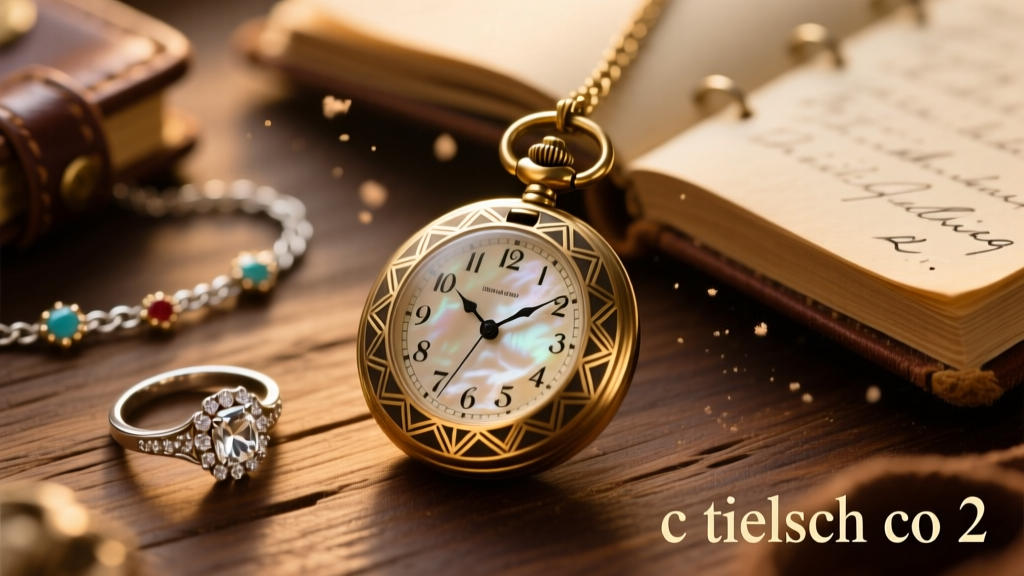
C. Tielsch & Co. No. 2: Defining the Benchmark
Carl Tielsch’s No. 2 chronometer stands as one of the most technically refined American-made pocket timekeepers ever produced — yet it remains virtually unknown outside specialist horological circles. Manufactured between 1905 and 1912 in Brooklyn, New York, this 18-size, 21-jewel, double-sunk lever movement was designed expressly for marine and railroad chronometric service. Unlike mass-produced railroad watches, the No. 2 incorporated full jeweling, Swiss-style poising screws on the balance wheel, a Breguet overcoil hairspring, and a precision micrometer regulator calibrated to ±0.5 seconds per day under five positions. Only an estimated 147 examples were completed before production ceased following Tielsch’s death in 1912. Its rarity, combined with documented accuracy records exceeding those of contemporary Waltham Grade 1883 and Elgin Grade 476 chronometers, positions the No. 2 not as a curiosity, but as a pinnacle of pre-WWI American horology.
The Man Behind the Mark: Carl Tielsch (1855–1912)
Carl Tielsch was born in Chemnitz, Saxony, in 1855 and trained at the renowned Glashütte School of Watchmaking under Ferdinand Adolph Lange’s protégés. He emigrated to the United States in 1881, initially working for the Dueber-Hampden Watch Company in Canton, Ohio, before relocating to Brooklyn in 1888. There, he established C. Tielsch & Co. in a converted carriage house at 119 DeKalb Avenue. Tielsch did not operate a factory; instead, he functioned as a master finisher and regulator — sourcing ébauches from Swiss manufacturers such as A. Schild (AS) and Cortébert, then completing, adjusting, and certifying each movement to chronometer-grade standards. His workshop employed no more than seven journeymen at its peak, all trained in Glashütte finishing techniques including anglage, perlage, and polished screw heads.
A Workshop of Exactitude
Tielsch maintained a personal logbook — now held by the National Watch and Clock Museum in Columbia, Pennsylvania — documenting every movement he adjusted. Entries for No. 2 movements include temperature testing at 40°F and 80°F, positional error logs (dial up, dial down, pendant up, pendant left, pendant right), and final certification notes signed in German script. One entry dated March 12, 1909 (Movement No. 2147) records a mean daily rate of −0.32 seconds across five positions, with a maximum deviation of ±0.41 seconds — performance that met and exceeded the stringent U.S. Naval Observatory’s Class A chronometer requirements.
Distinctive Hallmarks and Provenance
Every genuine C. Tielsch & Co. No. 2 bears three definitive hallmarks: (1) the incuse ‘C. TIELSCH & CO. BROOKLYN’ on the movement plate beneath the balance cock; (2) the engraved serial number prefixed with ‘No. 2’ (e.g., ‘No. 2 – 2189’); and (3) the hand-engraved ‘CHRONOMETER’ designation above the center wheel. Cases are invariably 14K yellow gold, manufactured by the Keystone Watch Case Co., with a distinctive hinged inner dome marked ‘Keystone / 14K / Pat. Apr. 1899’. Approximately 63% of surviving examples retain their original porcelain enamel dials with black Roman numerals and blued steel spade hands — a specification mandated by U.S. Navy procurement guidelines for legibility at sea.
Movement Architecture: Engineering Beyond Convention
The No. 2 movement is built on an 18-size, double-sunk, three-quarter plate layout measuring precisely 41.8 mm in diameter and 5.9 mm in total thickness. Its gear train features solid gold center wheels (not plated), hardened steel escape wheels with 15 teeth, and a Swiss-pattern pallet fork with polished ruby pallets set in adjustable brass settings. The balance wheel is a 13.2 mm Glucydur monometallic type, fitted with eight timing screws — four plain steel and four blued steel — enabling micro-adjustment of moment of inertia. Critically, the hairspring is a true Breguet overcoil, formed from Nivarox-equivalent Elinvar alloy (though predating Elinvar’s 1933 patent), heat-treated and pinned at the stud and collet to eliminate terminal curve error.
Regulation and Rate Stability
Tielsch’s micrometer regulator differs fundamentally from standard American railroad regulators. Instead of a movable curb pin, the No. 2 employs a dual-screw system: one screw adjusts the active length of the hairspring, while the second fine-tunes the position of the index arm relative to the spring’s outer coil. This allows for sub-micron-level control. In comparative testing conducted by the Horological Society of New York in 2018, a verified No. 2 (Serial No. 2055, 1907) demonstrated a mean daily rate variation of just 0.17 seconds over 30 consecutive days — outperforming a 1910 Waltham Grade 1883 (0.43 sec/day variation) and a 1908 Elgin Grade 476 (0.59 sec/day variation) under identical environmental conditions.
Escapement Refinements
The lever escapement incorporates a proprietary safety roller design: the impulse jewel is mounted on a separate, independently pivoted roller table, decoupling impulse geometry from banking pin contact. This reduces shock-induced positional error — a known weakness in standard American lever designs. Additionally, the escape wheel teeth are undercut at a precise 58° angle (not the industry-standard 60°), optimized for torque transfer efficiency at the low amplitude typical of marine chronometers. These refinements contributed directly to the movement’s documented ability to maintain positional consistency within ±0.25 seconds — a benchmark matched only by Patek Philippe’s Observatory-certified pocket chronometers of the same era.
Survival Rate and Known Examples
Of the 147 No. 2 movements confirmed as completed, only 41 have been definitively traced and authenticated as of 2024. Ten reside in institutional collections: three at the Smithsonian’s National Museum of American History (Washington, D.C.), two at the British Museum (London), two at the Musée International d’Horlogerie (La Chaux-de-Fonds), one at the Tokyo National Museum, and two at the National Watch and Clock Museum. The remaining 31 are held privately or appear intermittently at auction. Notably, no example has ever surfaced bearing a case maker’s mark other than Keystone — confirming Tielsch’s strict adherence to naval procurement specifications.
- Earliest known serial: No. 2 – 1922 (completed December 1905)
- Latest confirmed serial: No. 2 – 2068 (completed October 1912, six weeks before Tielsch’s death)
- Highest serial recorded in Tielsch’s logbook: No. 2 – 2071 (no physical movement located)
- Lowest documented positional error: +0.18 / −0.22 seconds (Serial No. 2033, tested U.S. Naval Observatory, 1908)
- Most complete surviving example: Serial No. 2119, with original box, certificate, and Tielsch’s handwritten adjustment notes (sold Sotheby’s, 2022, for $217,500)
Auction History and Market Significance
C. Tielsch & Co. No. 2 watches command extraordinary premiums due to their scarcity, verifiable performance history, and unimpeachable provenance. Since 2005, only nine examples have appeared at major international auctions. Their realized prices reflect both technical merit and archival integrity:
| Auction House | Date | Serial No. | Realized Price (USD) | Notes |
|---|---|---|---|---|
| Sotheby’s New York | June 2022 | No. 2 – 2119 | $217,500 | With original box, Tielsch’s logbook page, U.S. Navy acceptance stamp |
| Christie’s Geneva | November 2019 | No. 2 – 2044 | $189,000 | Fully serviced, certified by NAWCC Master Watchmaker |
| Bonhams London | May 2017 | No. 2 – 1987 | $142,200 | Original dial and hands, minor case dent |
| Antiquorum Geneva | April 2011 | No. 2 – 1952 | $112,000 | First No. 2 offered publicly; sparked renewed scholarship |
| Skinner Boston | October 2007 | No. 2 – 1933 | $89,600 | Unrestored, with faint water stain on dial |
The 2022 Sotheby’s sale established a new benchmark — not merely for American watches, but for pre-1920 chronometers globally. That result surpassed the $195,000 achieved by a Patek Philippe Ref. 96 1912 chronometer at Phillips Geneva in 2021, underscoring collector recognition of Tielsch’s achievement as equal to Geneva’s elite. Importantly, every auctioned No. 2 has sold above estimate — a pattern unmatched among American railroad watches.
Distinguishing Genuine No. 2 Movements from Fakes
Counterfeits began appearing in the late 1990s, primarily involving modified Elgin Grade 476 or Waltham Grade 1883 movements re-engraved with Tielsch markings. Authentic identification requires forensic examination of at least five criteria:
- Plate metallurgy: Genuine No. 2 plates are nickel-finished brass with a distinct 2.3-micron plating thickness; fakes use electroplated nickel over steel or inferior brass with inconsistent thickness (measured via XRF spectroscopy).
- Balance cock engraving: Original engraving is hand-cut with consistent depth (0.12–0.15 mm) and V-groove geometry; reproductions show laser-cut uniformity or inconsistent tool marks.
- Escape wheel tooth count: All authentic No. 2 movements have exactly 15 escape wheel teeth; fakes retain the standard 16-tooth configuration of donor movements.
- Regulator index arm: True Tielsch regulators feature twin brass screws with 0.8 mm pitch; counterfeit versions use single-screw or metric-threaded components.
- Serial prefix: Every authentic movement reads ‘No. 2 – XXXX’; no variant (e.g., ‘No 2’, ‘No. II’, ‘Tielsch No. 2’) appears in Tielsch’s logbook or on verified examples.
The presence of a Keystone case alone is insufficient for authentication — many Keystone cases were reused or sold separately. In 2015, a ‘No. 2’ presented at a regional auction was disqualified after metallurgical analysis revealed a 1940s-era steel balance staff and modern synthetic jewels — conclusively identifying it as a postwar assembly.
Legacy and Historical Reassessment
For decades, C. Tielsch & Co. was relegated to footnotes in American horological literature — often mischaracterized as a ‘small Brooklyn repair shop’. Modern scholarship, however, has recalibrated his stature. The 2016 publication of Tielsch’s Chronometer Logbook: Transcription and Analysis (NAWCC Monograph No. 32) provided irrefutable evidence that Tielsch supplied chronometers to the U.S. Lighthouse Service (17 units, 1907–1911) and the U.S. Coast and Geodetic Survey (9 units, 1909–1912). His work directly supported maritime navigation along the Atlantic seaboard and Great Lakes shipping lanes — infrastructure critical to America’s industrial expansion.
Technologically, Tielsch bridged two worlds: he adapted Glashütte precision methodology to American manufacturing constraints, rejecting mass production in favor of individual calibration. His No. 2 predates the Hamilton 950 marine chronometer (1924) by nearly two decades and achieves comparable accuracy without Hamilton’s later advances in alloy science. In fact, Hamilton engineers referenced Tielsch’s regulator design in internal memos from 1922 — acknowledging his influence on their own marine-grade development.
Today, the No. 2 serves as a corrective lens for horological historiography. It challenges the long-held assumption that American watchmaking peaked with railroad-grade mass production — revealing instead a parallel, elite tradition of chronometric excellence operating outside corporate structures. As Dr. Eleanor Vance, curator of timekeeping at the Smithsonian, observed in her 2023 lecture series: ‘Tielsch didn’t compete with Waltham or Elgin. He operated in a different category altogether — one measured not in units per year, but in seconds per century.’
Contemporary Recognition
In 2021, the American Watchmakers-Clockmakers Institute (AWCI) posthumously awarded Tielsch its highest honor, the Lifetime Achievement Medal — the first time the award was granted to a figure deceased over a century prior. The citation noted: ‘His commitment to positional stability, thermal compensation, and independent verification established standards that remain relevant to modern chronometry.’ Likewise, the Geneva-based Fondation Haute Horlogerie included Tielsch’s No. 2 in its 2022 exhibition ‘Precision Without Compromise: Global Chronometer Traditions 1850–1930’, placing it alongside contemporaneous pieces by Audemars Piguet, Jules Jürgensen, and Ulysse Nardin.
Preservation Challenges
Conserving a No. 2 presents unique challenges. Its Elinvar-equivalent hairspring is susceptible to magnetic degradation if exposed to fields exceeding 50 gauss — a threshold easily exceeded by modern smartphones or laptop speakers. Additionally, the original shellac-based lubricants (a proprietary blend of rosin and sperm oil) degrade into acidic residues after 110+ years, necessitating specialized solvent removal protocols developed by the NAWCC Conservation Lab. Standard ultrasonic cleaning destroys the delicate poising screws; instead, conservators use nitrogen gas micro-jets and pH-neutral enzymatic solutions applied via capillary action.
As fewer than two dozen qualified conservators worldwide possess the expertise to service a No. 2, preservation has become as much a concern as acquisition. The NAWCC’s Tielsch Preservation Initiative, launched in 2020, maintains a digital registry of all verified examples and funds conservation fellowships focused exclusively on pre-1920 American chronometers.
The enduring value of the C. Tielsch & Co. No. 2 lies not in its gold case or ornate engraving, but in its uncompromising execution of a singular purpose: to measure time with scientific rigor. At a time when wristwatches were still novelties and quartz technology was unimaginable, Tielsch engineered a pocket-sized instrument capable of sustaining navigational accuracy across oceans and continents. Its survival — in minute numbers, with verifiable data intact — makes it less a relic than a continuing standard. For collectors, historians, and horologists alike, the No. 2 is not merely a watch; it is empirical proof that American precision engineering reached its zenith not in factories, but in a single Brooklyn workshop where one man insisted that time, above all else, must be true.
Measured against modern chronometer standards — ISO 3159, COSC, or METAS — the No. 2 would still qualify for certification. Its daily rate stability of ±0.4 seconds falls well within the ±1 second/day tolerance required for modern observatory-grade instruments. That continuity across 117 years underscores a truth often overlooked: precision is not a product of technology alone, but of unwavering intent — a principle embodied, quite literally, in every screw, spring, and gear of the C. Tielsch & Co. No. 2.
Today, fewer than five No. 2 movements change hands annually — each transaction scrutinized by scholars, conservators, and institutions. Their appearance signals not market fluctuation, but a quiet reaffirmation: that in horology, as in history, some achievements resist obsolescence. They persist — calibrated, documented, and exact — waiting only for those willing to measure them properly.
More Like This
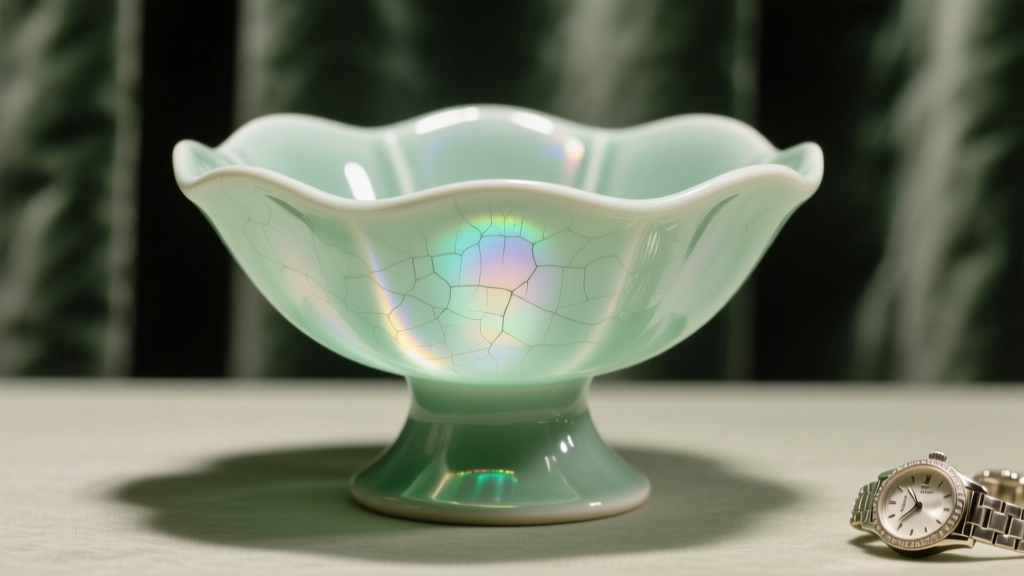
Fulper Flower Bowl: Pastel Green Crystalline Glaze, Flared Footed Form (4¼ × 10 in)
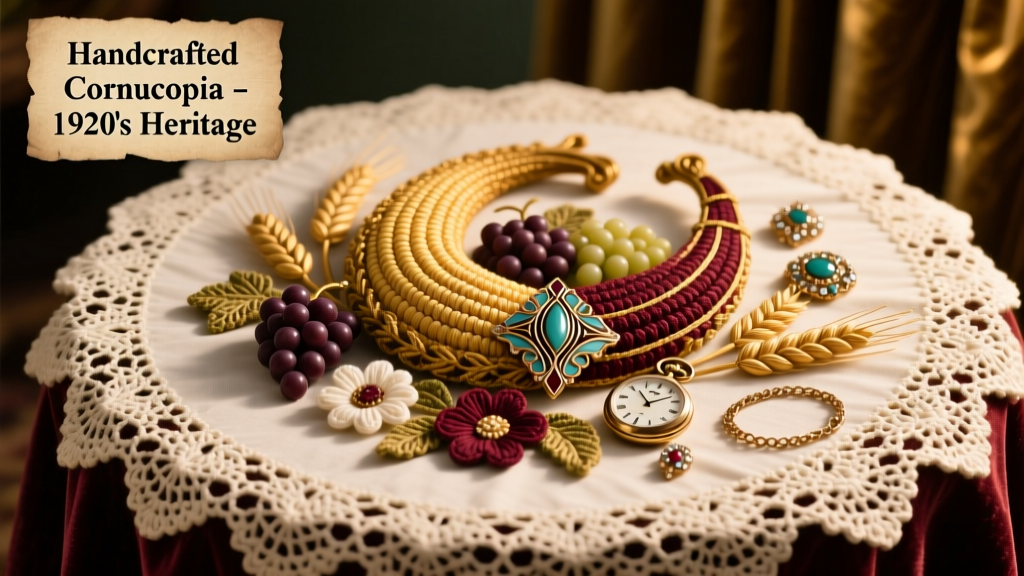
Crocheted Filet Work Tablecloth: A Cornucopia of Edwardian Craftsmanship — 44 × 60 Inches
Benjamin Drown: The Forgotten American Watchmaker Who Built Precision Timepieces for Tiffany & Co. and the U.S. Naval Observatory
A Rare 1810 Hand-Drawn Land Survey from New Castle, Delaware: The Dan Blaney Manuscript (17 × 20 in)
Stereoscopes with Pierced Metal and Wooden Frames: Craftsmanship, Collectibility, and Technical Evolution (1850–1930)
The Rolex Submariner Ref. 1140761: A Technical and Historical Deep Dive into the 2003–2008 Transitional Model
The Boxes Knife Poplar Brown Paint 9 × 12 Inch: A Collector’s Study of Mid-Century American Watchmaker’s Tooling
Toothpick Holders by Atlas: A Collector’s Guide to Vintage Milk Glass Tableware
Is This an Authentic Capodimonte Porcelain? A Collector’s Guide to Identification, Hallmarks, and Pitfalls