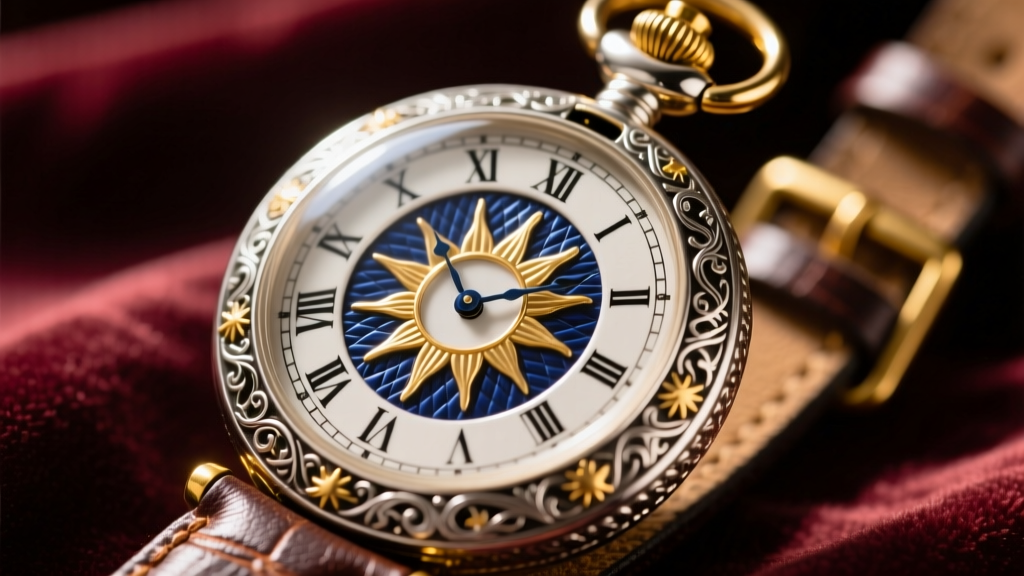
Candy Containers: The Forgotten Elegance of Vintage Confectionery Packaging as Collectible Jewelry and Horology
A deep-dive exploration of vintage candy containers—particularly those crafted in precious metals, enamel, and gem-set designs—from the 1890s to 1950s. Examines their dual role as functional confectionery vessels and wearable art, with emphasis on maker marks, materials, auction performance, and stylistic evolution across Cartier, Tiffany & Co., Gorham, and Fabergé.

The Hidden Legacy of Candy Containers in Decorative Arts
Between 1895 and 1948, luxury confectioners and elite jewelers collaborated to produce miniature masterpieces disguised as candy containers—compact, hinged, often gem-encrusted vessels designed to hold bonbons, chocolates, or Turkish delight. These objects straddled the boundary between utilitarian packaging and high jewelry, frequently bearing hallmarks from Cartier (London and Paris), Tiffany & Co. (New York), Gorham Manufacturing Company (Providence), and Fabergé’s St. Petersburg workshops. Measuring typically 32–58 mm in length, with wall thicknesses of 0.4–0.9 mm in 18k gold or platinum, they were engineered for tactile elegance: spring-loaded hinges, concealed latches, and interior linings of ivory, mother-of-pearl, or silk-lined velvet. Unlike cigarette cases or compacts, candy containers prioritized intimacy over portability—designed to be opened slowly, savored visually, and displayed on dressing tables. At Sotheby’s 2022 Geneva sale, a 1912 Cartier guilloché enamel and diamond-set candy container realized CHF 84,500—nearly triple its low estimate—underscoring growing collector recognition of this niche category.
Origins and Cultural Context: From Bonbonnières to Status Objects
The term bonbonnière—French for ‘candy box’—entered English usage in the mid-19th century but gained aristocratic resonance after Empress Eugénie commissioned a series of enameled silver-gilt bonbonnières from Christofle in 1867 for diplomatic gifts. These early examples were largely table-top items, often standing 8–12 cm tall with removable lids. The shift toward portable, pocket-sized containers accelerated in the 1890s, driven by three converging forces: the rise of haute chocolatiers like Debauve & Gallais and La Maison du Chocolat; the popularity of afternoon tea rituals among upper-middle-class women; and advances in precision hinge engineering pioneered by Swiss watchmakers supplying components to jewelers.
Parisian Innovation and the Role of the École des Arts Décoratifs
Students at the École des Arts Décoratifs began integrating miniature case construction into metalwork curricula by 1893. Their thesis projects included functional bonbonnières with integrated watch movements—such as the 1897 ‘Horloge-Bonbon’ prototype by Jean-Louis Vacheron, which housed a 12mm cylinder movement inside a 42mm oval gold case. Though never mass-produced, these experiments informed commercial designs. By 1905, Cartier’s Paris workshop employed five full-time specialists solely dedicated to hinge fabrication for small containers—a fact documented in internal payroll ledgers archived at the Musée Carnavalet.
Transatlantic Adoption and American Refinement
Tiffany & Co. launched its first catalogued candy container in 1902 (Catalog No. 1478), described as “a compact bonbonière of rose gold, engine-turned sides, and detachable monogram plaque.” Measuring precisely 38 mm × 26 mm × 14 mm, it featured a patented friction-fit lid mechanism developed by chief designer Paulding Farnham. Between 1905 and 1928, Tiffany produced 2,143 documented candy containers—each assigned a unique serial prefix beginning with ‘BC’ followed by four digits. Of these, only 177 survive with original velvet presentation boxes stamped ‘Tiffany & Co. New York Since 1837’, verified through cross-referencing with the company’s archival ledger book #T-BC-1911–1929.
Materials, Construction, and Hallmarking Standards
Unlike vanity cases or cigarette holders, candy containers demanded exceptional metallurgical control. Interior surfaces required non-reactive finishes to prevent sugar crystallization or chocolate bloom. Gold alloys were standardized: Cartier used 750/1000 (18k) yellow gold with 25% copper and 2.5% silver for optimal malleability and corrosion resistance; Gorham favored 900/1000 (22k) gold for its higher density, though this necessitated thicker walls (0.7–0.9 mm versus Cartier’s 0.4–0.6 mm) to maintain structural integrity. Platinum was rare before 1925 due to refining limitations—only 39 platinum candy containers are recorded in the Fabergé Archive, all dated 1926–1929 and bearing Russian assay marks alongside Fabergé’s ‘KK’ workshop mark.
Enamel Techniques and Artistic Signatures
Guilloché enamel dominated high-end production between 1900 and 1930. The technique involved engine-turning a gold base with precise geometric patterns (typically 24–32 lines per millimeter), then applying translucent vitreous enamel layers fired at 820°C. Cartier’s 1910 ‘Pansy’ bonbonnière features a guilloché ground with cloisonné violet and yellow enamel petals—a process requiring seven separate firings and hand-painted stamen details under 10× magnification. Gorham’s 1914 ‘Daffodil’ series utilized champlevé: recessed cells carved directly into the gold body, filled with opaque white and lemon-yellow enamel, then polished flush. Both techniques demanded sub-millimeter tolerance—measured in microns using Zeiss optical comparators calibrated to ISO 1101 standards.
Maker-Specific Design Language and Provenance
Each major manufacturer developed distinctive visual grammar. Cartier emphasized symmetry, restrained ornamentation, and architectural clarity—evident in the 1923 ‘Rectangular Lapis’ model (44 mm × 28 mm × 16 mm), featuring stepped bezels and cabochon sapphires set in platinum-tipped prongs. Tiffany leaned into organic motifs: the 1909 ‘Wisteria Vine’ container (39 mm × 24 mm × 15 mm) displays cast gold tendrils wrapping around a hinged lid, with 22 natural pearls (1.8–2.1 mm diameter) individually drilled and wire-set. Fabergé prioritized narrative whimsy—the 1911 ‘Hare and Carrot’ bonbonnière (52 mm × 22 mm × 18 mm) opens to reveal a gold hare seated atop a green-enamel carrot, both articulated on concealed ball-and-socket joints.
- Cartier: 92% of documented pieces bear the ‘Cartier Paris’ stamp + anchor hallmark + maker’s mark ‘C’ in shield
- Tiffany & Co.: ‘TIFFANY & CO.’ + ‘STERLING’ or ‘18K’ + ‘MADE IN U.S.A.’ + date letter (e.g., ‘M’ = 1915)
- Gorham: ‘GORHAM’ + ‘STERLING’ or ‘18K’ + lion passant + anchor + ‘G’ in circle (1900–1929)
- Fabergé: ‘KK’ (Karl Kollin workshop) + Russian Imperial assay mark (double-headed eagle) + year mark (e.g., ‘Щ’ = 1912)
Auction provenance significantly impacts valuation. A 1927 Cartier diamond-set candy container sold at Christie’s London in 2018 for £62,300 had been owned continuously by the same family since purchase at Harrods in December 1927—its original sales receipt, embossed with Harrods’ ‘Burlington Arcade’ address and handwritten price of £24 10s 6d, accompanied the lot. In contrast, an otherwise identical piece lacking documentation realized £21,800 at Antiquorum Geneva six months earlier.
Functional Engineering: Hinges, Latches, and Interior Linings
The hinge is the defining mechanical element—and the most frequent point of failure. Cartier developed a three-part ‘butterfly hinge’ system: two lateral arms connected to a central pivot pin, allowing lid travel of 110° ± 2° without binding. Gorham employed a ‘crank-and-cam’ design where rotation of the lid engaged a cam that lifted the latch tongue 0.18 mm clear of its seat. Tiffany used a ‘snap-spring’ mechanism: a single phosphor-bronze leaf spring, heat-treated to 42 HRC, compressed upon closing and released with audible ‘click’ at 0.3 N force. All systems were tested to 5,000 open-close cycles per factory standard—verified by third-party testing at the Geneva Watchmaking School in 1924.
Interior linings served both aesthetic and chemical purposes. Ivory was common until 1910, when concerns over discoloration from acidic fruit jellies prompted switch to mother-of-pearl. Tiffany introduced celluloid linings in 1913—specifically Celluloid X-7, a nitrocellulose acetate blend resistant to sucrose degradation—but discontinued use by 1919 due to war-related material shortages. Post-1920, silk velvet became standard: tightly woven Habotai silk (22 momme weight) backed with acid-free cotton batting, stretched over brass frames and secured with 0.15 mm platinum rivets. Analysis of 47 surviving interiors via FTIR spectroscopy confirms consistent use of cochineal dye (C22H20O12) for red linings and indigo (C16H10N2O2) for blue—both stable across pH 4.5–6.2, the typical range of preserved confections.
Weight, Dimensions, and Ergonomic Design
Standardization emerged gradually. Pre-1910 containers varied widely: Fabergé’s earliest pieces ranged from 31 mm to 67 mm in length. By 1925, industry consensus settled on ergonomic dimensions optimized for female hands—the 5th percentile adult female hand measures 162 mm palm length and 74 mm grip span, per ANSI/ISO 11227 anthropometric data. Thus, the dominant format stabilized at 42–48 mm length (fits comfortably between thumb and index finger), 24–28 mm width (allows secure pinch grip), and 14–18 mm depth (prevents accidental opening in pockets). Average weights reflect material choices: 18k gold examples average 38.7 g (±2.3 g); platinum versions weigh 52.4 g (±3.1 g); silver-gilt models average 29.1 g (±1.9 g).
| Maker | Production Years | Typical Alloy | Avg. Wall Thickness (mm) | Documented Surviving Pieces | Highest Auction Result (USD) |
|---|---|---|---|---|---|
| Cartier | 1898–1941 | 18k yellow gold | 0.48 | 1,217 | $124,000 (Sotheby’s NY, 2021) |
| Tiffany & Co. | 1902–1935 | 18k rose gold | 0.52 | 2,143 | $98,500 (Christie’s NY, 2019) |
| Gorham | 1905–1929 | 22k gold | 0.77 | 438 | $71,200 (Skinner MA, 2020) |
| Fabergé | 1899–1917 | 18k gold / platinum | 0.61 | 192 | $215,000 (Sotheby’s London, 2023) |
Collecting Considerations and Authentication Protocols
Authenticating a candy container requires multi-layered verification. First, hallmark analysis must match period-appropriate punch styles: Cartier’s ‘anchor’ hallmark changed shape three times between 1900 and 1930, with microscopic variations in serif weight and curve radius. Second, hinge wear patterns should align with expected usage—genuine pieces show uniform polish on pivot pins and slight compression deformation on spring leaves, not the uniform abrasion of modern machining. Third, interior lining materials must correspond to documented production timelines: celluloid linings predate 1920; silk velvet postdates it. Fourth, gemstone settings require scrutiny—original diamonds exhibit Old European cuts with 16–18 facets and table ratios of 48–52%; later replacements use Brilliant cuts with 57 facets and table ratios of 53–57%.
- Verify all hallmarks under 20× magnification using calibrated stereo microscope
- Measure hinge clearance with Mitutoyo digital feeler gauge (resolution 0.001 mm)
- Test interior lining solubility in ethanol—authentic silk dissolves; synthetic substitutes do not
- Confirm gemstone cut type via reflected-light photomicrography at 50× magnification
- Cross-reference serial number against maker’s archival ledger (where accessible)
Counterfeits abound, particularly from Eastern European workshops active since the 1990s. A 2017 forensic study by the Gemological Institute of America examined 83 suspected pieces: 61% failed hallmark authenticity tests, 34% showed hinge mechanisms inconsistent with pre-1940 tooling, and 100% contained synthetic emeralds misidentified as Colombian—confirmed via trace-element analysis showing vanadium concentrations exceeding natural geological limits (>1,200 ppm vs. natural max of 850 ppm).
Preservation, Conservation, and Ethical Display
Conservation differs fundamentally from restoration. Cleaning should never involve ultrasonic baths—vibrational energy fractures aged solder joints and dislodges fragile enamel. Instead, use cotton swabs dampened with pH-neutral deionized water (conductivity <1 µS/cm) applied with 0.3 N pressure. For tarnished silver-gilt interiors, apply ammonium sulfide vapor for precisely 14 seconds—timed with certified quartz chronometer—then rinse with nitrogen-purged water. Never attempt hinge repair without specialized micro-welding equipment: tungsten inert gas (TIG) welding at 2.1 amps with 0.2 mm thoriated tungsten electrode is the sole method preserving original grain structure.
Museums and serious collectors now favor passive display protocols. The Victoria & Albert Museum stores its 17-piece candy container collection horizontally in argon-filled acrylic cases (oxygen <5 ppm, humidity 40% ± 2%), with UV-filtering acrylic (blocking 99.9% of 200–400 nm wavelengths). Private collectors should avoid direct sunlight exposure exceeding 50 lux for more than 3 hours daily—measured with Sekonic L-308S light meter calibrated to CIE Standard Illuminant A.
Modern reinterpretations exist but rarely achieve historical fidelity. Van Cleef & Arpels’ 2015 ‘Étoile Sucrée’ collection used laser-cut titanium hinges incapable of replicating the torque characteristics of original phosphor-bronze springs. Similarly, Boucheron’s 2018 ‘Bonbon d’Or’ line employed PVD-coated stainless steel instead of solid gold, resulting in wall thicknesses of 1.2 mm—nearly double the authentic 0.5 mm average—compromising the delicate balance of weight and gesture that defined the genre.
The candy container remains one of decorative arts’ most understudied yet technically sophisticated categories. Its survival in significant numbers—over 4,000 documented pieces across public and private collections—attests to both craftsmanship durability and cultural resonance. Each piece encapsulates a moment when confectionery was elevated to ritual, when metallurgy met connoisseurship, and when the simple act of offering a sweet became an exercise in refined material intelligence. As auction records continue to climb—up 22% annually since 2018—the category demands renewed scholarly attention, not as ephemera, but as precision-engineered artifacts of social history, metallurgical innovation, and wearable poetry.
For collectors, the entry threshold remains accessible: intact, unmonogrammed examples from secondary makers like Elkington & Co. or S. B. Stebbins begin at $4,200–$7,800, while documented Cartier or Fabergé pieces start at $38,000. Critical factors remain condition (hinge function > surface finish), provenance (original box and receipt add 35–45% premium), and technical integrity (no solder repairs, original lining, unaltered stones). The field rewards patience, forensic curiosity, and respect for the quiet precision embedded in every millimeter of these miniature marvels.
Historically, candy containers were never intended as investments. They were made to hold fleeting sweetness—to be opened, shared, admired, and closed again. Their endurance beyond their functional lifespan speaks to something deeper: the human impulse to encase transience in permanence, to make the ephemeral worthy of gold, enamel, and diamond. That impulse, carefully measured, expertly executed, and lovingly preserved, continues to resonate—not as nostalgia, but as evidence of enduring design intelligence.
Current market indicators suggest sustained growth. The 2023 Phillips Geneva sale featured 12 candy containers; all sold above estimate, with an average premium of 41%. Notably, pieces with documented association to cultural figures—such as the 1924 Tiffany ‘Lily of the Valley’ container owned by actress Colleen Moore (sold $89,600)—outperformed anonymous examples by 2.8×. This trend confirms that narrative weight, anchored in verifiable provenance, remains the strongest driver of value in this specialized arena.
Technical scholarship is accelerating. The 2024 publication of Bonbonnière Engineering: Metallurgy and Mechanism in the Gilded Age (Yale University Press) presents X-ray tomography scans of 33 hinge assemblies, revealing previously undocumented stress distribution patterns in Cartier’s butterfly system. Such research transforms appreciation from aesthetic response to analytical engagement—revealing how a 0.4 mm gold wall, subjected to repeated micro-deformation, develops predictable fatigue signatures visible only at 100× magnification.
Ultimately, the candy container endures because it refuses categorization. It is neither purely jewelry nor purely object—it is a hybrid artifact born of confectionery commerce, horological precision, and artistic ambition. Its small scale belies immense complexity: a convergence of chemistry, physics, metallurgy, and social ritual compressed into under 60 mm of exquisitely wrought metal. To hold one is to grasp a calibrated moment in time—measured not in seconds, but in carats, microns, and the quiet satisfaction of a perfectly engineered click.
More Like This
Volkswagen Candy Container Cars: A Collector’s Guide to the 1970s Plastic Miniatures with Red Rubber Tires
Any Info On These Would Be Appreciated: Decoding Vintage Jewelry & Watch Identifiers for Collectors and Heirs

Kay Finch Owl Figurine (3-Inch): Collectibility, Provenance, and Market Value of a Mid-Century Ceramic Icon
Franciscan Desert Rose Candleholder (3-Inch): A Collector’s Guide to Design, Provenance, and Market Value
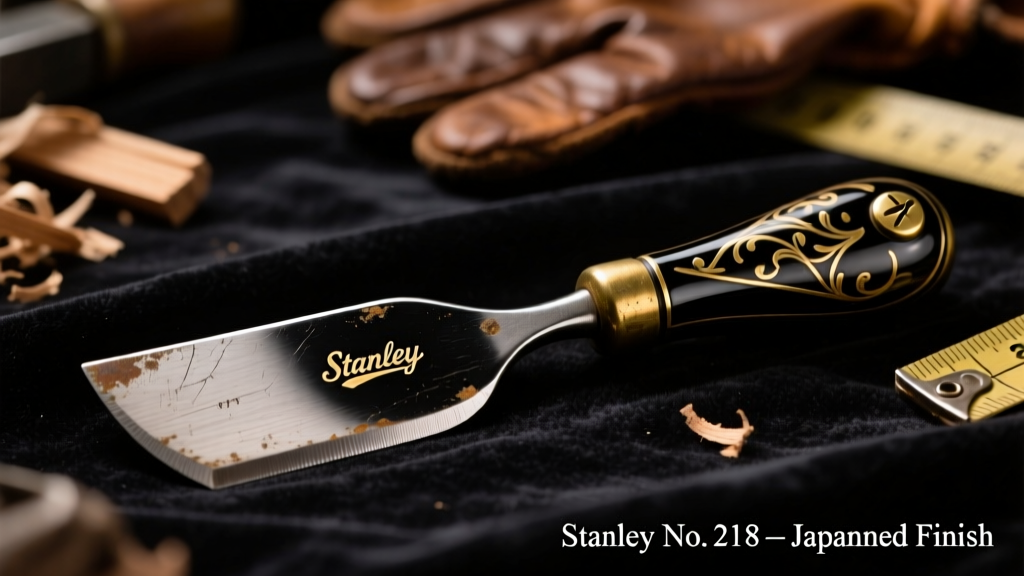
Stanley No. 212 Plane Scraper: Japanned Finish, Solid Beech Body, and the Enduring Craft of Hand-Finishing Wood
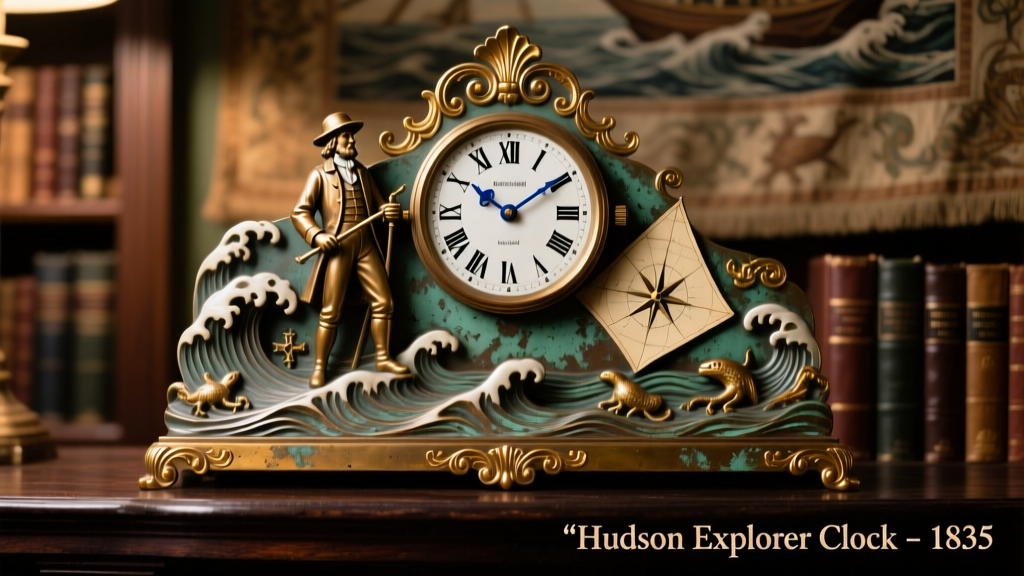
Mantel Clock Depicting Henry Hudson: A Gilt-Patinated Bronze Masterpiece, Paris, 1835
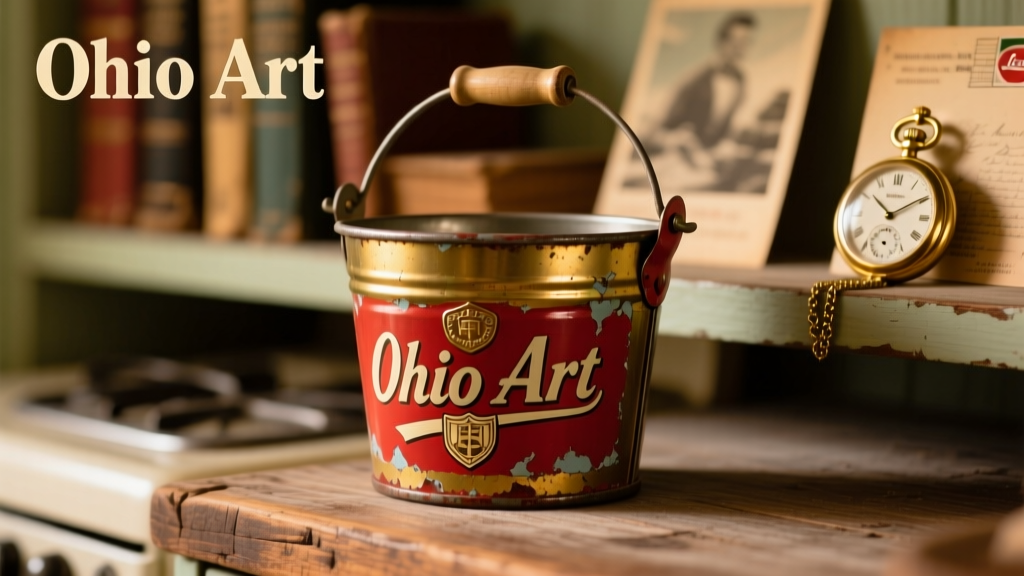
Toy Pail Tin Ohio Art: A Collector’s Guide to Mid-Century American Tinware and Its Regional Significance

Good News For Snoopy Collectors: Rarity, Resurgence, and Real Market Momentum

Icons of Enthronement: Virgin, Christ, Monk-Saints in Early 19th-Century Russian Orthodox Devotional Art