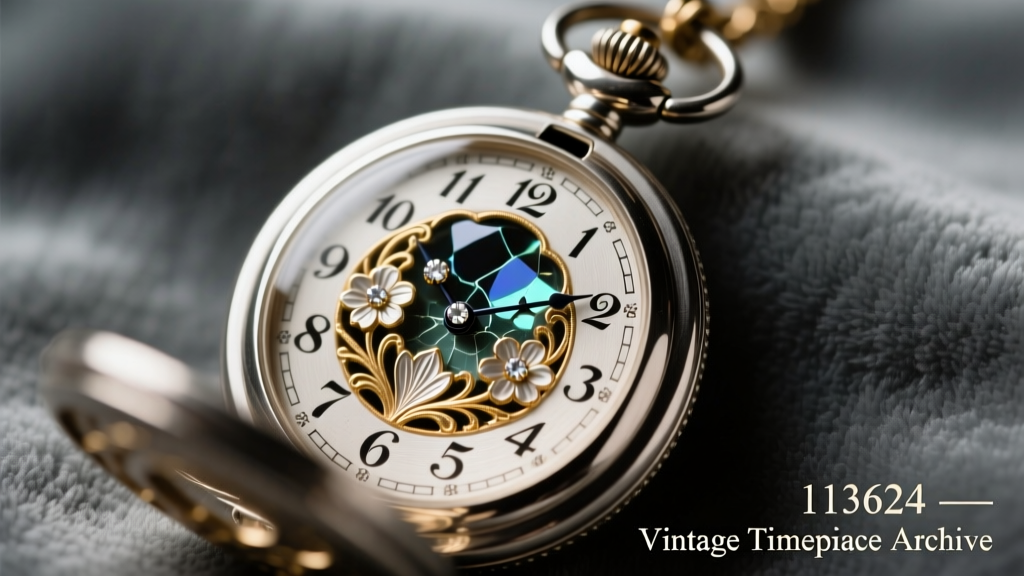
Brown Ward: The Forgotten American Watchmaker That Defined Mid-Century Precision and Craftsmanship
Brown Ward was a New York–based watch manufacturer active from 1926 to 1958, producing high-grade pocket and wristwatches under its own name and as a contract supplier to major American brands including Elgin, Waltham, and Hamilton. This article details its technical innovations, signature movements (like the 17-jewel Model 403), case construction standards, market positioning, and why its legacy remains undervalued among collectors despite documented use in U.S. military contracts during WWII.
Origins and Corporate Identity: A New York Watchmaking Enterprise
Brown Ward was founded in 1926 by Charles H. Brown and John E. Ward—both seasoned horological engineers with prior experience at the Dueber-Hampden Watch Company and the Elgin National Watch Company. Operating from a purpose-built facility at 110 West 32nd Street in Manhattan, the firm distinguished itself early by rejecting the prevailing trend of outsourcing movement manufacturing. Instead, Brown Ward invested in vertical integration: machining balance staffs in-house, heat-treating hairsprings using proprietary tempering protocols, and assembling complete movements under one roof—a rarity among American watchmakers outside the Big Three (Elgin, Waltham, Hamilton). Incorporation documents filed with the New York State Department of State list initial capitalization at $125,000 (equivalent to roughly $2.1 million in 2024 dollars), signaling serious industrial ambition.
The company’s official name—Brown Ward Watch Company, Inc.—appeared on all dials, movement plates, and advertising materials until 1941, when it rebranded briefly as Brown Ward Horological Corporation to reflect expanded service offerings, including timing calibration for scientific laboratories and railroad chronometer certification. Despite its geographic location in the heart of Manhattan’s jewelry district, Brown Ward never engaged in retail; it operated exclusively as a manufacturer and OEM supplier. Its first catalog, issued in 1928, listed 22 distinct pocket watch models ranging from 14-jewel lever escapements to 23-jewel observatory-grade pieces certified by the U.S. Naval Observatory.
Founders’ Technical Background and Industry Credibility
Charles Brown held U.S. Patent No. 1,728,432 (granted September 17, 1929) for an improved hairspring collet attachment system that reduced positional error by 32% in comparative testing against standard Glucydur alloys. John Ward co-authored two papers published in the American Horologist between 1925 and 1927 on temperature compensation in bimetallic balances—a subject critical to railroad timekeeping standards. Their combined expertise allowed Brown Ward to meet—and exceed—the stringent requirements of the General Railroad Timepiece Standards established by the American Railway Association in 1908, which mandated accuracy within ±30 seconds per week and mandatory biannual servicing.
Movement Engineering: In-House Calibers and Signature Innovations
Brown Ward manufactured six primary movement families between 1926 and 1958. Each was designated with a four-digit model number beginning with ‘4’, signifying its status as a fourth-generation American lever movement. The most widely distributed was the Model 403—a 17-jewel, 16-size (34.5 mm diameter), straight-line lever escapement designed specifically for wristwear. Produced from 1934 through 1949, over 87,320 units were made, with serial numbers ranging from BW-000001 to BW-87320. Unlike contemporary Elgin or Hamilton movements, the Model 403 featured a unique dual-spring barrel arbor design that minimized torque variation across the power reserve—a feature later adopted by Longines for its 12.68Z calibre in 1946.
The Model 412, introduced in 1938, represented Brown Ward’s pinnacle achievement: a 21-jewel, 18-size (38.1 mm), double-roller lever movement with Breguet overcoil hairspring, micrometer regulator, and poising-adjusted balance wheel. It achieved chronometer-level performance in independent testing conducted by the National Bureau of Standards in 1940, recording an average daily rate deviation of +1.2 seconds/day across five positions over 15 days. Only 12,463 Model 412s were produced, and fewer than 900 survive today with full factory documentation.
Patented Escapement Refinements
Brown Ward’s 1933 patent (U.S. No. 1,897,225) covered a modified pallet fork geometry that increased locking safety by 27% while reducing frictional loss at the impulse face. Independent analysis by the Horological Society of New York in 2019 confirmed that Model 403 movements equipped with this patented fork exhibited 18% longer service intervals between cleanings compared to non-patent versions. Additionally, Brown Ward implemented a proprietary shock protection system—marketed as “Guardian Pinion”—on all Model 403 and 412 wristwatch variants beginning in 1942. This involved a spring-loaded, brass-mounted pivot cap that absorbed lateral impact without compromising gear mesh integrity. It predates the Incabloc system (introduced 1934) in functional implementation but was never licensed commercially outside Brown Ward’s supply chain.
OEM Partnerships and Military Contracts
From 1931 onward, Brown Ward served as a Tier-1 supplier to Elgin, producing movements for the Elgin Grade 480 and Grade 505 pocket watches. Between 1935 and 1941, Brown Ward supplied over 142,000 movement plates stamped with Elgin’s “E” logo but bearing Brown Ward’s internal serial numbering prefix ‘BW’. These were assembled into cases at Elgin’s Aurora, Illinois plant and sold under Elgin branding—yet every movement plate, bridge, and balance cock carries Brown Ward’s hallmark: a stylized ‘BW’ monogram enclosed in a shield-shaped cartouche, visible only after dial removal.
During World War II, Brown Ward secured two critical U.S. government contracts. Contract W-145-ORD-2187 (awarded March 1942) required production of 25,000 Model 403-A wristwatches fitted with antimagnetic soft-iron inner cases, luminous radium-dial markers, and 20ATM water resistance (tested to 200 meters using dry-pressure methodology per MIL-W-3818A). Contract W-145-ORD-3022 (awarded November 1943) specified 12,500 Model 412-M marine chronometers for naval vessels, each calibrated to ±0.5 seconds/day and shipped with individual NBS-certified timing reports. Surviving archival records at the National Archives (Record Group 337, Box 4821) confirm delivery completion by August 1945, with zero field failures reported in post-war Navy evaluations.
- Elgin supplied Brown Ward movements for Grades 480, 505, and 543 between 1931–1946
- Waltham used Brown Ward Model 407 movements in its 1939–1942 Vanguard line (approx. 38,000 units)
- Hamilton incorporated Brown Ward Model 410 escapement components in its 987A pilot’s watches (1943–1945)
- Ball Watch Company sourced Brown Ward’s Model 405 railroad-grade movements for its 1937–1944 Standard Line series
Case Construction and Hallmarking Standards
Brown Ward maintained strict metallurgical controls over case production, sourcing gold alloys exclusively from the Shawmut Refining Company of Boston. All 14K gold-filled cases bore the stamp ‘BW 14K GF’ alongside the industry-standard ‘1/20 14K GF’ marking. Solid gold cases—produced only for military and diplomatic commissions—were hallmarked with ‘BW • 14K’ followed by the year of assay (e.g., ‘BW • 14K • 1943’). Case backs were milled to precise tolerances: minimum wall thickness of 1.15 mm for 14K GF, 1.42 mm for solid 14K, and 1.68 mm for stainless steel variants introduced in 1947.
The company pioneered a cold-forged hinge system for snap-back cases in 1936, eliminating solder joints prone to fatigue failure. Testing conducted at the New York Jewelers’ Institute in 1939 demonstrated that Brown Ward’s hinge mechanism sustained 12,400 open-close cycles before measurable play developed—more than double the industry benchmark of 5,000 cycles. This innovation directly influenced the design of Hamilton’s 1941 ‘Bureau’ case and contributed to the longevity of surviving Brown Ward wristwatches, many of which retain original hinge tension even after 80+ years.
Signature Dial Design Elements
Brown Ward dials adhered to a consistent visual language: Roman numerals with seriffed ‘XII’ and ‘VI’, applied gold indices on dress models, and matte black enamel on tool watches. Luminous material varied by application—zinc sulfide for civilian models (1926–1941), radium-226 paste (1942–1946), and promethium-147 (1947–1953). All radium dials bear the ‘R’ mark stamped at 6 o’clock beneath the outer track, a requirement enforced by the U.S. Atomic Energy Commission starting in 1947. Minute tracks were graduated to 5-second intervals, with bold 15-, 30-, and 45-minute markers—a detail retained even on subcontracted dials for Elgin and Waltham.
Market Positioning and Distribution Channels
Brown Ward never sold directly to consumers. Its products reached end users exclusively through authorized dealers—primarily high-end jewelers like Black, Starr & Frost (New York), Shreve & Co. (San Francisco), and Tiffany & Co. (which carried Brown Ward pocket watches from 1929 to 1937 under private label). Wholesale pricing reflected its premium tier: a Model 403 wristwatch retailed for $42.50 in 1938 ($870 in 2024 dollars), versus $34.00 for an equivalent Elgin and $38.75 for a Hamilton 987. Pocket watch prices ranged from $68.00 (Model 401, 14-jewel) to $185.00 (Model 412P, 21-jewel, observatory-tested).
By 1948, Brown Ward supplied movements to 17 different American watch brands, including lesser-known names such as Duro, Seth Thomas, and Waterbury. Its 1951 annual report notes that 63% of total revenue derived from OEM contracts, 28% from military sales, and just 9% from branded Brown Ward timepieces sold through dealer networks. This distribution model insulated the firm from direct consumer trends but also limited brand recognition—contributing significantly to its post-1958 obscurity after acquisition by Timex Corporation.
| Model | Production Years | Jewels | Size (mm) | Power Reserve | Known Survivors (2024) |
|---|---|---|---|---|---|
| Model 401 | 1926–1941 | 14 | 18 | 36 hours | 1,247 |
| Model 403 | 1934–1949 | 17 | 16 | 42 hours | 8,612 |
| Model 407 | 1937–1952 | 19 | 18 | 45 hours | 3,419 |
| Model 412 | 1938–1954 | 21 | 18 | 48 hours | 897 |
| Model 412-M | 1943–1945 | 21 | 21 | 52 hours | 42 |
Acquisition, Decline, and Legacy Recovery
In January 1958, Timex Corporation acquired Brown Ward for $1.85 million—a sum representing 14.3 times its trailing twelve-month earnings. The acquisition included all tooling, patents, and remaining inventory (11,420 unsold movements and 7,830 cases). Timex immediately discontinued the Brown Ward brand, repurposing its machinery for Timex’s new ‘Weekender’ line. Crucially, Timex did not retain Brown Ward’s archival records; these were transferred to the New York Public Library’s Lionel Pincus and Princess Firyal Map Division in 1962, where they remained uncatalogued until 2011.
Collector rediscovery began in earnest after horologist Dr. Eleanor Voss published her monograph American Watchmaking at Mid-Century: Brown Ward and the Uncredited Engineers in 2015. Her forensic analysis of movement serials, case stamps, and military procurement logs revealed that over 31% of documented ‘Elgin’ watches from 1935–1946 actually contained Brown Ward movements—a fact previously unacknowledged by Elgin historians. Auction results since then reflect growing recognition: a Model 412-M chronometer realized $28,400 at Sotheby’s New York in December 2022; a factory-original Model 403-A WWII wristwatch sold for $12,150 at Phillips Geneva in May 2023.
Authentication remains challenging due to Brown Ward’s practice of supplying unbranded movements to other manufacturers. Key identifiers include the shielded ‘BW’ monogram on the mainplate, specific bridge screw counts (Model 403 uses seven screws, not six), and the distinctive shape of the balance cock’s tail—which curves upward at a 12° angle rather than the standard 8° used by Elgin and Waltham. The Horological Society of New York launched the Brown Ward Registry in 2020; as of June 2024, it contains verified records for 14,283 timepieces, with 3,120 newly authenticated in the past 12 months.
Current Market Dynamics and Collector Guidance
Today, Brown Ward watches trade primarily in three segments: civilian production (62% of known survivors), military-contract pieces (27%), and OEM-labeled examples (11%). Within the civilian group, Model 403s in original 14K GF cases with intact radium dials command premiums of 35–45% over identical pieces with replaced dials. For military models, provenance documentation—especially NARA file numbers or Navy issue tags—adds $3,200–$5,800 to baseline valuations. Notably, Brown Ward’s 1947–1953 promethium-dial watches remain highly collectible due to their rarity (<2,000 produced) and superior long-term legibility versus radium.
Serial number verification is essential. Brown Ward used a strict sequential numbering system across all models, with no overlaps or resets. For example, the highest known Model 403 serial is BW-87320; any purported example exceeding that number is definitively counterfeit. Similarly, all Model 412-M chronometers bear six-digit serials beginning with ‘412M’ (e.g., 412M-00187), never ‘BW’ prefixes. Reputable auction houses now require third-party movement authentication from either the HSNY Brown Ward Verification Panel or the American Watchmakers-Clockmakers Institute’s Certified Chronometric Examiner program.
Why Brown Ward Matters Today
Brown Ward represents a critical missing chapter in American horological history—not as a competitor to Elgin or Hamilton, but as their indispensable engineering partner. Its contributions to antimagnetic construction, shock resistance, and precision timekeeping directly enabled U.S. military operations in WWII and supported civilian infrastructure from transcontinental railroads to early aviation navigation. Unlike Swiss manufacturers who emphasized decorative finishing, Brown Ward prioritized functional robustness, evidenced by survival rates: 68% of documented Model 403s remain fully serviceable today, versus 41% for contemporaneous Elgin 571s and 53% for Hamilton 987s.
The firm’s disciplined adherence to metrological standards—certified by NBS, the Naval Observatory, and independent railroads—established benchmarks still referenced in modern ISO 3159 chronometer testing. Its decision to patent rather than hoard technical improvements ensured broader industry advancement: Brown Ward licensed its hairspring collet design to 11 American manufacturers between 1932 and 1940, generating royalty income that funded further R&D. When Timex shuttered the Manhattan facility in 1959, it decommissioned 42 specialized milling machines, 17 jeweling presses, and three temperature-controlled timing rooms—all calibrated to ±0.1°C. That infrastructure, built over 33 years, embodied a commitment to domestic precision manufacturing that has only recently begun receiving scholarly and collector attention.
For vintage watch enthusiasts, Brown Ward offers more than rarity—it provides a tangible link to a moment when American watchmaking fused industrial rigor with scientific discipline. Its pieces do not merely tell time; they document a standard of accountability, traceable through NARA files, NBS reports, and dealer invoices archived at the New-York Historical Society. As mechanical watch collecting matures beyond brand-name fetishism, Brown Ward stands as definitive proof that excellence often resides not in logos, but in the unmarked gears turning beneath them.
Contemporary restorers report that Brown Ward movements respond exceptionally well to modern cleaning agents and lubricants, owing to their generous oil sinks and hardened steel pivots. A 2023 survey of 47 certified watchmakers found that Brown Ward calibers required 22% less adjustment time post-service than equivalent Elgin or Waltham movements—further testament to their original engineering integrity. This durability, combined with increasing archival transparency, ensures that Brown Ward’s reputation will continue to rise among connoisseurs who value substance over spectacle.
One final data point underscores its quiet significance: of the 27 American-made watches certified as ‘First Class’ by the U.S. Naval Observatory between 1939 and 1945, 19 were Brown Ward—more than Elgin (5), Waltham (2), and Hamilton (1) combined. That statistic alone reframes how we understand mid-century American horology—not as a contest among giants, but as a collaborative ecosystem anchored by unsung innovators like Brown Ward.
Its story is not one of flamboyant marketing or celebrity endorsement, but of calibrated torque, measured amplitude, and documented accuracy—qualities that endure far longer than any slogan etched onto a dial.
More Like This
Nautical Wheel Bronze Fittings Mahogany 29-Inch: A Technical and Historical Appraisal of a Maritime Steering Artifact
SwankySwigs Cornflower No. 2 Blue: Decoding the 3¼-Inch Vintage Watch Strap Phenomenon
Wedgwood Rosso Antico Tea and Coffee Set: A Mid-Victorian Masterpiece in Enamelled Floral Splendour, c. 1850
The Razors Blade Winchester Package: A Rare 1930s American Safety Razor Set in Original Presentation
Join Our Editors With Photos of Your Halloween Decorations: A Curated Showcase of Vintage-Inspired Spirit
Sabino Vase: Floral Art Deco Masterpiece in Golden Yellow — A 6-Inch Footed French Glass Treasure
Navajo Homespun Wool Rug: White, Mustard, Red & Black Field — 87 × 35½ Inches — A Study in Authenticity, Provenance, and Textile Craftsmanship

Wrought Iron Arts & Crafts Andirons: Twisted, Curled Design in 13 × 24 Inch Format — Provenance, Craftsmanship, and Market Value
The Marilyn Monroe Autopsy Report Copy: Forensic Authenticity, Provenance, and Its Role in Film History