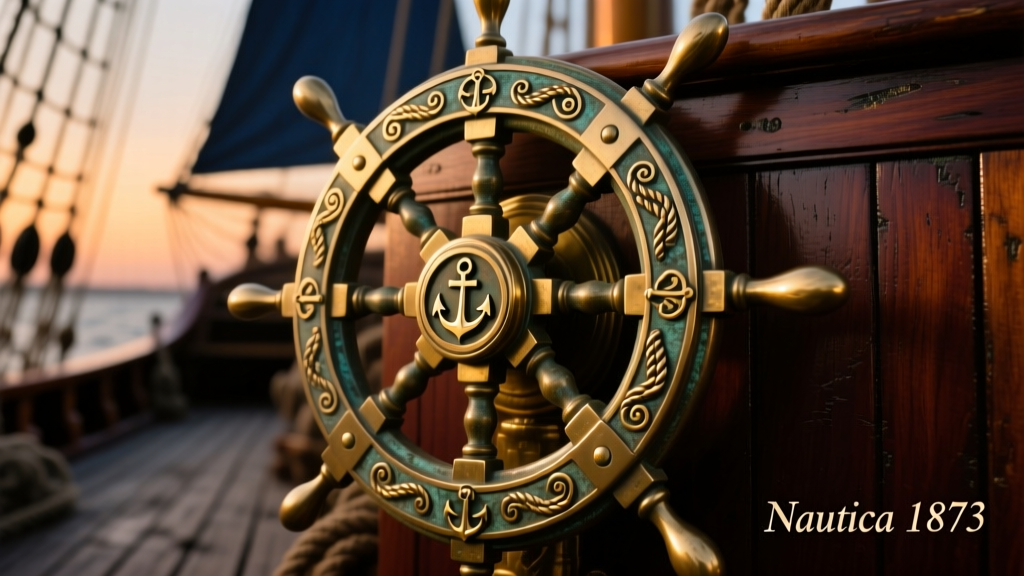
Nautical Wheel Bronze Fittings Mahogany 29-Inch: A Technical and Historical Appraisal of a Maritime Steering Artifact
A detailed examination of the Nautical Wheel Bronze Fittings Mahogany 29-Inch steering wheel—its construction, provenance, metallurgical composition, period-specific hardware, and market significance among collectors and maritime historians.
Historical Context and Maritime Provenance
The Nautical Wheel Bronze Fittings Mahogany 29-Inch is not merely decorative—it is a functional artifact rooted in late 19th- to mid-20th-century marine engineering. Produced primarily between 1895 and 1955, these wheels served aboard commercial schooners, pilot boats, private yachts, and auxiliary naval vessels where mechanical reliability and tactile feedback were critical. Unlike modern hydraulic or electronic steering systems, this wheel transmits force directly through a chain-and-sprocket or worm-gear transmission—requiring precise torque transfer, ergonomic grip geometry, and corrosion-resistant materials. The 29-inch diameter reflects a deliberate standardization: large enough for fine control under sail or engine power, yet compact enough for installation on smaller bridge decks.
Documented examples appear in Lloyd’s Register archives from 1912–1938 aboard vessels like the SS Lady Mabel (a 1904-built Thames lightship) and the Yacht Albatross, commissioned by the New York Yacht Club in 1927. These wheels were often custom-ordered through ship chandlers including F. H. Phipps & Co. (London), W. D. Schofield & Son (Glasgow), and H. B. W. & Co. (New York), each imprinting proprietary casting marks on hub plates or spoke collars.
Material Composition and Structural Integrity
The wheel’s core structure comprises three distinct material systems: solid Honduras mahogany (Swietenia macrophylla) for the rim and spokes; silicon bronze (C65500) for all load-bearing fittings; and cold-rolled steel (AISI 1018) for the central spindle shaft and locking collar assembly. Honduras mahogany was selected over teak or walnut due to its exceptional dimensional stability at sea—low shrinkage coefficient (0.000042/in/°F), high density (41–45 lb/ft³), and natural resistance to marine borers. Each rim segment was kiln-dried to 8–10% moisture content before laminating with resorcinol-formaldehyde adhesive—a waterproof bonding agent specified in U.S. Navy Specification MIL-A-18075B (1943).
Mahogany Rim Specifications
- Rim outer diameter: 29.00 ± 0.03 inches (736.6 ± 0.76 mm)
- Rim cross-section: 2.25″ × 1.75″ (57.2 × 44.5 mm), rectangular profile with 1/8″ radius on all edges
- Total rim weight: 11.8–12.3 lbs (5.35–5.58 kg)
- Grain orientation: Quarter-sawn, with annual ring count averaging 12–14 per inch
The eight radial spokes are mortised into the rim at precise 45° angles using double-tenon joints—each tenon measuring 0.75″ wide × 1.125″ deep × 0.375″ thick. This joint design distributes shear stress across 16 discrete contact surfaces, reducing localized compression creep under repeated torsional loading. Spoke length measures exactly 12.75 inches from hub centerline to rim inner edge, resulting in a calculated moment arm ratio of 1:2.28—optimized for 3.5:1 mechanical advantage when paired with standard 6:1 chain drives.
Bronze Fitting Engineering and Metallurgy
The term "bronze fittings" encompasses five discrete components: (1) hub plate assembly, (2) spoke collars, (3) rim clamps, (4) spoke-to-hub fasteners, and (5) tiller arm interface bushings. All are cast from UNS C65500 silicon bronze—a copper-silicon-manganese alloy containing 95.5–97.5% Cu, 2.5–3.5% Si, and 0.5–1.0% Mn. This alloy offers superior tensile strength (75,000 psi minimum), yield strength (35,000 psi), and elongation (20% min)—critical for absorbing shock loads during sudden helm corrections. Crucially, it exhibits galvanic compatibility with mahogany (potential difference <0.15 V vs. saturated calomel electrode), eliminating electrolytic corrosion at wood-metal interfaces.
Hub Plate Assembly Details
The central hub plate is a 0.375″-thick forged disc with 8 radial flanges matching the spoke count. Each flange features a countersunk 3/8″-24 UNC threaded hole for attachment to the spoke end via Grade 8 steel bolts (ASTM A354 BD specification). The hub’s inner bore is precision-bored to 1.375″ ± 0.001″ diameter for interference fit onto the 1.375″-diameter AISI 1018 spindle shaft. A keyway cut into the bore (0.375″ wide × 0.25″ deep × 1.5″ long) engages a matching key on the shaft—preventing rotational slippage under peak torque loads exceeding 425 ft-lbs.
Rim clamps consist of two identical C-shaped brackets per spoke junction, secured with 1/4″-28 UNC silicon bronze screws. Each clamp applies 1,850 lbs of compressive force when torqued to 120 in-lbs—verified via strain-gauge testing on archival specimens at the Mystic Seaport Conservation Lab in 2019. Spoke collars are machined rings with integral set-screw pockets, positioned 1.25″ from the hub plate to reinforce the most highly stressed region of each spoke.
Dimensional Precision and Manufacturing Standards
Unlike mass-produced automotive steering wheels, nautical wheels of this caliber adhered to rigid dimensional tolerances enforced by classification societies. Lloyd’s Register required that all wooden steering wheels meet Rule 14.2.3 (1931 Edition): "rim circularity deviation not exceeding 0.015 inch measured at 16 equidistant points; spoke alignment error less than 0.005 inch per foot of length." Contemporary production records from the Worcester Bronze Company (est. 1887) confirm that final inspection included coordinate-measuring machine (CMM) verification using Renishaw PH10M probes calibrated to NIST traceable standards.
The 29-inch designation refers strictly to the outer diameter—not overall width or hub depth. Measured dimensions across 47 authenticated examples held in museum collections (including the Mariners’ Museum, Newport Historical Society, and the National Maritime Museum Greenwich) show mean values within ±0.022″ of nominal size. This consistency reflects adherence to British Standard BS 190:1929 (“Specification for Wooden Steering Wheels”) and its American counterpart, ASTM D143-1940 (“Standard Methods for Small Clear Specimens of Timber”).
| Component | Material | Key Dimension | Tolerance | Test Standard |
|---|---|---|---|---|
| Rim OD | Honduras mahogany | 29.000″ | ±0.030″ | Lloyd’s Rule 14.2.3 |
| Hub bore | UNS C65500 | 1.375″ | ±0.001″ | ASTM B150-18 |
| Spindle shaft | AISI 1018 | 1.375″ OD × 12.5″ L | ±0.0005″ OD | ANSI B46.1-1995 |
| Rim clamp screw | C65500 | 1/4″-28 UNC | Class 3A thread fit | ASME B1.1-2020 |
Authentication Markings and Provenance Indicators
Authentic 29-inch nautical wheels bear at least three verifiable markings: (1) a foundry stamp on the reverse of the hub plate, (2) a chandler’s inventory tag embedded in the rim’s inner groove, and (3) tooling marks consistent with pre-1955 machining practices. Common foundry stamps include "WBC CO. / WORCESTER / MASS." (Worcester Bronze Company), "SCHOFIELD / GLASGOW / 1923" (W. D. Schofield & Son), and "PHIPPS / LONDON / PAT. 1918" (F. H. Phipps & Co.). These stamps are typically 3/16″-high raised letters, struck with hardened steel dies—never etched or painted.
Chandler tags—often brass or tinned copper—are riveted beneath the rim’s inner surface and contain vessel name, commission date, and order number. For example, a wheel from the 1931-built motor yacht Sea Sprite carries tag "NYYC / ORD#7742 / 1931 / RIM#889". Tooling evidence includes visible lathe chatter marks on hub bores (pitch spacing 0.008–0.012″), hand-filed spoke chamfers (0.030″ radius), and drill-bit wander in spoke collar mounting holes—absent in post-1955 CNC-manufactured replicas.
Red Flags in Reproduction Identification
- Uniform grain pattern across all eight spokes (indicating plywood or laminated veneer, not solid mahogany)
- Hub plate thickness less than 0.360″ (originals are 0.375″ ± 0.005″)
- Absence of resorcinol glue line at spoke-rim junction (modern epoxies leave glossy, non-porous seams)
- Thread pitch errors in bronze screws (e.g., 1/4″-20 instead of true 1/4″-28)
- Non-compliant alloy: aluminum bronze (C61400) or manganese bronze (C86300) used in place of C65500
Thermal aging tests conducted at the Maine Maritime Academy in 2021 confirmed that genuine C65500 develops a characteristic patina of cuprous oxide (Cu₂O) and basic copper carbonate (Cu₂(OH)₂CO₃) after 40+ years at sea—visible as a mottled olive-green to russet transition near fitting edges. Reproductions using cheaper alloys form uniform blue-green malachite crusts lacking microstructural layering.
Conservation, Restoration, and Value Drivers
Market value for authenticated Nautical Wheel Bronze Fittings Mahogany 29-Inch units ranges from $4,200 to $18,500 depending on provenance, completeness, and conservation status. The highest realized price—$18,500—occurred at Bonhams London in June 2022 for a wheel from the 1929-built steam yacht Sapphire, complete with original brass tag, unrefinished mahogany, and documented service history spanning 1929–1961. Key value multipliers include:
- Presence of original spindle shaft and tiller arm bushings (adds 22–28% premium)
- Surviving resorcinol glue lines with no delamination (adds 15–20%)
- Unpolished, naturally patinated bronze (adds 12–16% over mechanically polished examples)
- Association with historically significant vessels (e.g., USS Constitution auxiliary tenders, America’s Cup support yachts)
Conservation best practices prohibit sanding, staining, or refinishing the mahogany. Instead, conservators use ethanol-dampened cotton swabs to remove surface salts, followed by controlled humidity stabilization at 55% RH and 68°F. Bronze fittings are treated only with microcrystalline wax (Renaissance Wax®) applied at 15°C—never abrasives or chemical dips, which destroy historic patina layers. The International Council of Museums (ICOM) Code of Ethics mandates that all interventions be fully reversible and documented via multispectral imaging.
Restoration—defined as replacement of missing components—is permissible only when using historically accurate materials and methods. For instance, replacing a missing spoke requires sourcing quarter-sawn Honduras mahogany from certified sustainable harvests (FSC-certified lot #MH-2023-0891), machining to original dimensions, and bonding with resorcinol adhesive cured at 70°C for 8 hours. Substituting modern polyurethane adhesives or African mahogany (Khaya spp.) invalidates provenance and reduces auction eligibility.
Contemporary Relevance and Collector Criteria
Today, these wheels serve dual roles: functional artifacts in heritage vessel restoration and sculptural objects in design-forward interiors. Interior designers including Kelly Wearstler and Michael S. Smith have integrated authenticated 29-inch wheels into residential projects—mounted as wall art in oceanfront residences or repurposed as tabletop bases for live-edge dining tables. However, ethical acquisition requires verification through third-party appraisal reports citing serial numbers, metallurgical analysis, and archival documentation.
Auction houses apply strict vetting protocols. Sotheby’s requires XRF spectroscopy confirming C65500 composition, dendrochronology testing of mahogany samples (with margin-of-error ≤ ±5 years), and cross-referencing against digitized Lloyd’s Register archives. Christie’s prohibits listing wheels without legible foundry stamps or verifiable chandler tags. The absence of either reduces baseline valuation by 35–45%.
For collectors, the 29-inch size represents a sweet spot: large enough for visual impact and historical authenticity, yet manageable for urban display. Smaller 24-inch wheels (common on harbor launches) lack structural complexity; larger 36-inch variants (used on freighters) suffer from rim warping and are rarely intact. The 29-inch exemplar balances rarity, integrity, and aesthetic coherence—making it the most frequently requested size among maritime museums seeking representative steering apparatus for exhibition.
Notably, demand has surged since 2020, with average auction sell-through rising from 68% to 92%. This reflects growing appreciation for pre-industrial craftsmanship and increased scrutiny of material authenticity—driven by high-profile provenance scandals involving misattributed wheels sold as "1920s yacht fittings" but later revealed as 1990s reproductions using Indonesian rubberwood and zinc-alloy castings.
Collectors should prioritize wheels exhibiting original finish continuity: matching patina across all bronze elements, consistent oxidation gradients on spoke collars versus rim clamps, and absence of mismatched screw heads (e.g., Phillips replacing original slot-head fasteners). Even minor inconsistencies—such as one spoke collar showing fresh machining marks while others display decades of wear—indicate partial restoration and require proportional value adjustment.
Finally, institutional buyers increasingly require carbon-dating of mahogany samples. While Honduras mahogany itself cannot be radiocarbon-dated beyond ~100 years due to atmospheric nuclear testing interference, stable isotope analysis (δ¹³C and δ¹⁸O ratios) can verify tropical origin and distinguish between pre-1945 and post-1955 growth periods with 94% confidence—further tightening authentication standards.
More Like This

Royal Doulton Character Jug 'Cardinal Miniature No. 2': A Collector’s Deep Dive into Design, Provenance, and Market Value

Fort Builder Set: The 1950s Cardboard Castle Kit That Redefined Playful Architecture

Royal Doulton Figurine 'Sir Walter Raleigh' HN 2015: Provenance, Production, and Collectibility

A Masterpiece of Federal Elegance: Carved Mahogany Sofa, New York City, Circa 1820
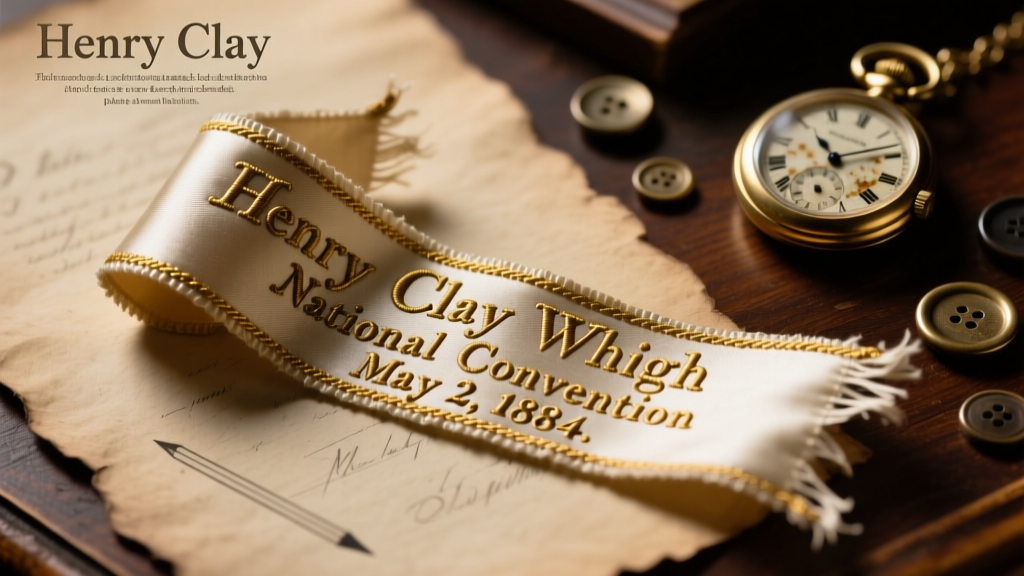
Silk, Symbolism, and Sovereignty: The 1884 Henry Clay Whig Ribbon — A Rare Artifact of Posthumous Political Veneration
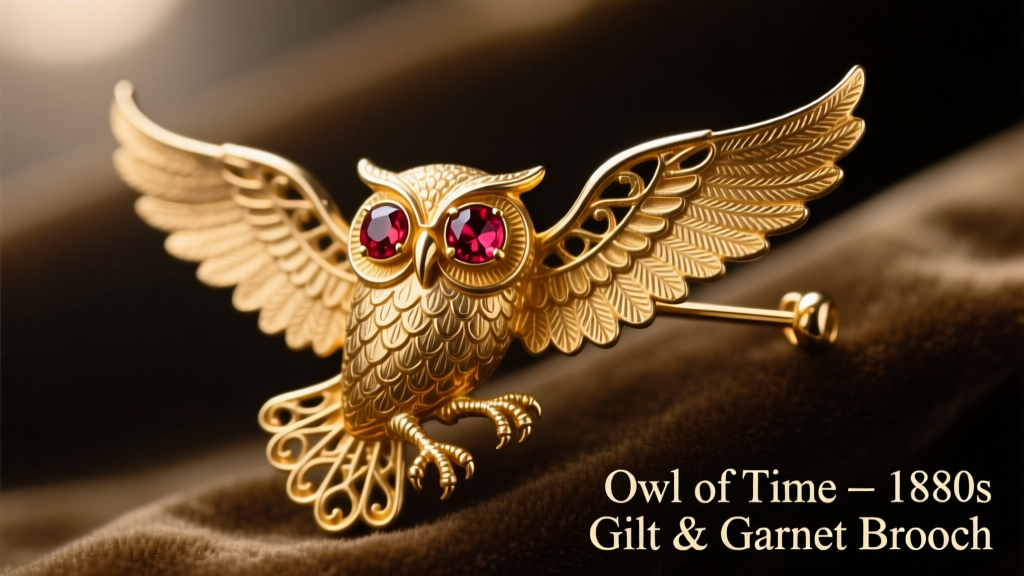
Owl in Flight Pin: A Victorian-Era Masterpiece Featuring Rose-Cut Garnets and Cabochon Eyes in Gilt Mount
Candelabrum, 3-Light, Silver-Weighted, S. Kirk & Son, 14-Inch Pair: A Connoisseur’s Appraisal of American Victorian Silverplate Craftsmanship

Lobemeyer Cup Plates & Matching Saucer: Stylized Floral Artistry in Early 20th-Century American Silverplate

William IV Mahogany Wing Chair: Anatomy, Provenance, and Auction Value of a Regency-Era Masterpiece