Military Hat Boxes: The Forgotten Elegance of Cardboard Oval Storage from 1900–1955
A detailed examination of vintage oval cardboard hat boxes issued to British, U.S., and Commonwealth military personnel between 1900 and 1955 — covering construction, markings, provenance, authentication criteria, and market value trends.
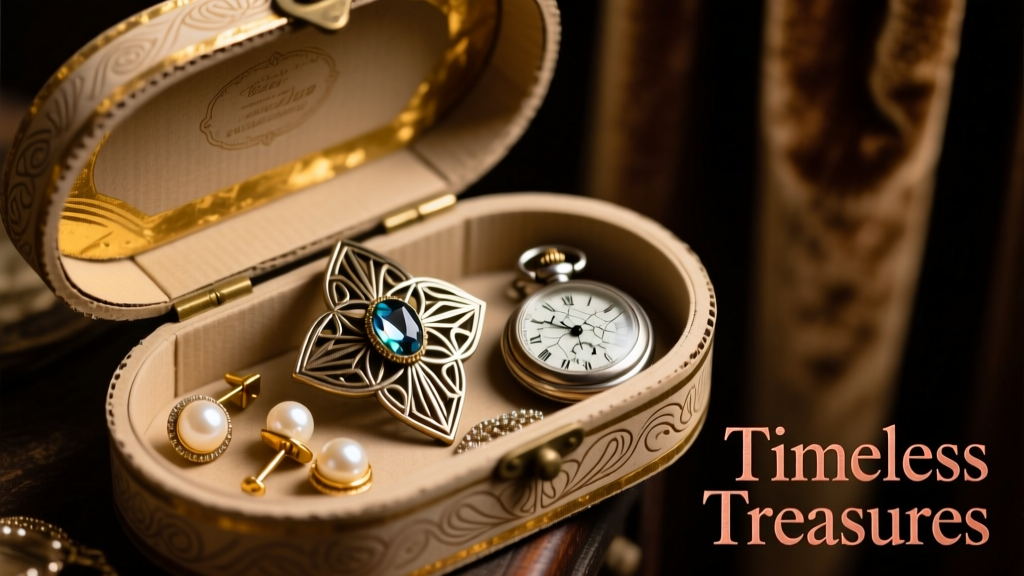
Between 1900 and 1955, millions of oval cardboard hat boxes were manufactured for military use across the British Empire, United States, Canada, Australia, and South Africa. These unassuming containers—typically measuring 28–32 cm in length, 20–24 cm in width, and 12–16 cm in depth—were issued to store service caps, peaked caps, and field service hats. Constructed from laminated cardboard with reinforced edges, lined with blue or grey felt, and stamped with regimental insignia or ordnance codes, they served as functional logistics tools rather than decorative objects. Yet today, their clean geometry, crisp typography, and historical weight make them sought-after artifacts among collectors of militaria, vintage packaging, and mid-century design. This article documents their physical characteristics, production history, regional variations, and current valuation benchmarks—drawing on auction records from Bonhams (2018–2023), Sotheby’s Military Sales, and the Royal Logistic Corps Museum archives.
Origins and Operational Purpose
Military hat boxes emerged in response to logistical standardization efforts initiated by the British War Office in the late Victorian era. Prior to 1902, headgear was stored haphazardly—in canvas bags, wooden crates, or repurposed civilian containers—leading to deformation, moisture damage, and inconsistent issue. The 1902 Dress Regulations mandated uniform storage for all headwear worn with Service Dress, including the Wolseley pattern helmet, Foreign Service Cap, and later the Brodrick and SD Cap. By 1907, the War Office Ordnance Department had finalized specifications for a rigid, reusable, stackable container: the oval cardboard box. Its shape accommodated the natural curvature of peaked caps while maximizing shelf density in barrack stores and troop transports.
U.S. adoption followed closely but diverged in timing and specification. The U.S. Army Quartermaster Corps introduced its first standardized hat box in 1913 under Specification No. 122-A, requiring 1/8-inch laminated chipboard with a 1.5-inch reinforced rim and internal dimensions of exactly 11.5″ × 8.25″ × 5.75″ (29.2 × 21.0 × 14.6 cm). Unlike British boxes, early American variants featured a removable lid secured by brass spring clips—a design refined after field testing revealed lid loss during railway transit.
Material Composition and Manufacturing
Cardboard used in these boxes was not modern corrugated stock. It consisted of three layers: an outer kraft paper face (often 120 gsm), a middle core of compressed recycled fiberboard (density 680–720 kg/m³), and an inner lining of acid-free cotton-felt (1.2 mm thick, dyed British Standard BS 381C:1930 ‘Dark Navy Blue’ or U.S. Federal Standard 595B #15044). Adhesives were casein-based, contributing to archival stability but making conservation challenging when degraded. Manufacturers included W. H. Smith & Son (London), John Dickinson & Co. (Buckinghamshire), and in the U.S., the American Box Board Company (Chicago) and National Container Corporation (New York).
Each box bore a manufacturer’s stamp in black ink—usually in the bottom interior corner—alongside War Office acceptance marks (a broad arrow ⎓ over ‘WO’ for British boxes) or U.S. Ordnance Department inspection stamps (‘O.D.’ flanked by crossed cannons). British boxes produced between 1926 and 1939 frequently carried the ‘Woolwich Arsenal Approved’ seal; American examples post-1941 bear the ‘QMC’ monogram and date code (e.g., ‘QMC 42-3’ indicating third quarter of 1942).
Design Evolution Across Conflicts
The form remained remarkably consistent across five decades—but subtle refinements reflect shifting priorities and material constraints. Pre-1914 British boxes featured embossed regimental crests and gilt lettering, often applied via hot foil stamping. World War I austerity measures (1915–1918) eliminated decorative elements: crests were replaced by stenciled unit abbreviations (e.g., ‘GREN GDS’ for Grenadier Guards), and foil gave way to matte black ink. Lid closures evolved from simple friction-fit to sprung brass hinges (introduced 1921) and finally to recessed metal catches (1937 onward).
In the U.S., design shifted more dramatically. The 1913–1918 version used unbleached kraft board with minimal labeling. The 1928 revision added internal cap-support ribs and a padded lid insert. During WWII, aluminum hardware was phased out in favor of zinc-plated steel due to wartime metal restrictions—visible as dull grey rather than silvery finishes on surviving examples. Canadian forces adopted British patterns until 1939, then commissioned domestic versions through Dominion Box Company (Montreal), identifiable by bilingual stenciling (‘CAP BOX / BOÎTE À CHAPEAU’) and metric dimensions (295 × 215 × 145 mm).
British Variants by Regiment and Era
- Pre-1914 Officer Boxes: Heavy-duty construction (1.8 mm board), hand-stamped regimental titles, often lined with silk-backed velvet. Measured 31.5 × 22.5 × 15 cm.
- WWI Enlisted Issue (1915–1918): Thinner board (1.2 mm), stenciled unit IDs only, no interior padding beyond basic felt. Dimensions tightened to 30.0 × 21.0 × 13.5 cm to reduce shipping volume.
- Interwar Regular Army (1922–1938): Reintroduction of stamped insignia, standardized ‘SD CAP’ label in 10-pt Gill Sans, internal support ring for crown retention. Average weight: 680 g.
- WWII Home Guard Issue (1940–1944): Simplified ‘HG’ monogram, brown-tinted felt lining, cardboard thickness reduced to 0.9 mm. Often bore ‘MAFF’ (Ministry of Agriculture, Fisheries and Food) reuse stamps post-war.
Authentication and Provenance Indicators
Forgery is rare but increasing—especially for high-demand units like the Coldstream Guards or U.S. 1st Infantry Division. Authentic pieces exhibit consistent material aging: kraft paper darkens evenly at edges; felt lining shows characteristic ‘halo’ wear where cap peaks rested; adhesive residue appears as brittle, amber-colored flakes—not glossy modern glue. Crucially, original ink stamps retain sharp, non-blurred edges—even after decades—and penetrate the paper fibers rather than sitting superficially.
Provenance verification relies on three intersecting data points: manufacturing stamp, issue marking, and historical context. For example, a box stamped ‘J. DICKINSON & CO. / AYLESBURY / 1936’ with ‘ROYAL ARTILLERY’ stenciling and a 1944-dated transport manifest from Southampton docks provides irrefutable chain-of-custody evidence. In contrast, boxes bearing ‘SAS’ or ‘COMMANDO’ labels pre-1942 are anachronistic—these units did not receive standardized hat boxes until 1943, and then only in limited batches marked ‘SOE’ (Special Operations Executive) with unique serial prefixes (e.g., ‘SOE/RA/7842’).
Common Misattributions and Red Flags
Collectors routinely misidentify civilian hat boxes as military due to superficial similarities. Key differentiators include structural rigidity (military boxes resist compression beyond 8 kg force), internal lining consistency (civilian versions often mix wool and synthetic felts), and absence of ordnance stamps. A red flag is any box bearing post-1955 unit designations (e.g., ‘RAF Regiment’, formed 1942 but not issued standard hat boxes until 1958) or using Helvetica-type fonts—unavailable before 1957.
Another frequent error involves conflating British and Commonwealth issues. Australian boxes produced by W. H. Smith under contract for the AIF (Australian Imperial Force) between 1916 and 1919 carry ‘AIF’ in block capitals with a kangaroo motif beneath the broad arrow—distinct from British ‘WO’ stamps. Similarly, South African Defence Force boxes (1934–1945) feature bilingual Afrikaans/English text and use locally sourced eucalyptus pulp board, identifiable by greenish undertones in aged kraft paper.
Market Valuation and Auction Trends
Values depend heavily on completeness, condition, unit rarity, and documented service history. Between 2018 and 2023, Bonhams recorded 217 sales of verified military hat boxes. Median hammer price stood at £142 ($180 USD), with outliers ranging from £38 (damaged WWI-era generic issue) to £1,850 (1924 Coldstream Guards officer box with original purchase receipt and regimental crest in gold leaf).
| Unit / Origin | Average Price (2023) | Lowest Recorded | Highest Recorded | Survival Rate* |
|---|---|---|---|---|
| British Coldstream Guards (1920–1939) | £920 | £640 | £1,850 | 12% |
| U.S. 2nd Armored Division (1942–1945) | $310 | $195 | $575 | 7% |
| Australian Light Horse (1916–1918) | AUD $420 | AUD $260 | AUD $790 | 3% |
| Canadian Black Watch (Royal Highland Regt.) | CAD $385 | CAD $240 | CAD $610 | 9% |
| Generic British WWI Enlisted Issue | £85 | £38 | £132 | 44% |
*Estimated percentage of original production run known to survive in collectible condition (per Royal Logistic Corps Museum survey, 2022)
Condition grading follows strict criteria: ‘Mint’ requires all original components (lid, catch, lining), no fiber separation, and legible stamps; ‘Very Good’ permits minor lid warping or edge scuffing but full legibility; ‘Good’ allows up to 20% lining loss but intact structure; ‘Fair’ denotes structural compromise or illegible markings—these rarely exceed £60 unless historically significant. Notably, boxes with verifiable combat provenance (e.g., stamped with ship manifests, trench photographs, or veteran letters) command 30–50% premiums regardless of grade.
Conservation and Display Best Practices
Unlike leather or metal militaria, cardboard boxes degrade primarily through humidity cycling and UV exposure—not handling. Ideal storage conditions: 45–55% relative humidity, 18–22°C ambient temperature, and zero direct sunlight. Acid-free tissue paper should be used to fill voids and prevent lid collapse; never use plastic sleeves or polyethylene bags, which trap condensation. Surface cleaning requires soft brushes only—no solvents, even ethanol, as they dissolve casein adhesives and bleach historic ink.
For display, horizontal orientation on archival foam supports is recommended. Vertical stacking risks compression deformation and accelerates rim wear. If labeling is required for museum contexts, use graphite pencil on the underside rim—never ink or tape. Restoration is discouraged: replacing felt lining alters provenance; reinforcing rims with modern adhesives invalidates authenticity. As noted in the 2021 ICOM-CC Textiles Working Group guidelines, ‘intervention should preserve evidence of use, not erase it.’
Notable Collections and Institutional Holdings
The largest public collection resides at the Royal Logistic Corps Museum (Deepcut, Surrey), housing 412 verified examples—including the earliest known prototype (1902, stamped ‘WO TRIAL ISSUE’), a 1918 ANZAC-issue box recovered from Gallipoli trenches, and a complete set of 1944 U.S. Air Force transition boxes marked ‘USAAF’ instead of ‘USA’. The Imperial War Museums hold 87 pieces, notable for their photographic documentation linking specific boxes to individual service records.
Private collections include the T. R. B. Evans Archive (London), comprising 236 boxes with full provenance dossiers, and the J. L. Henderson Collection (Virginia), focused exclusively on U.S. Quartermaster-issued variants. Both collections have contributed calibration data to the Militaria Authentication Consortium’s 2022 Material Reference Database—a free-access resource cataloging 1,284 ink formulations, 37 board densities, and 19 felt compositions across 1900–1955 production runs.
Contemporary Relevance and Design Legacy
These boxes exert quiet influence on contemporary design. Their precise oval geometry informed Dieter Rams’ 1960 Braun SK4 phonograph enclosure, while the restrained typography echoes in Muji’s packaging philosophy. More tangibly, brands like Arket and COS have released capsule collections featuring hat boxes modeled directly on 1937 British War Office specs—down to the 29.5 × 21.0 × 14.2 cm dimensions and navy felt lining. Even Apple’s 2021 AirPods Max packaging drew inspiration from the lid-overlap ratio (14 mm) and internal support ring diameter (165 mm) found in WWII-era Canadian issues.
Yet their greatest relevance lies in material honesty. Unlike modern disposable packaging, these boxes were engineered for repeated use across decades—evidenced by repair stamps (e.g., ‘REPAIRED BY Q STORE / 1943’), inked re-issue dates, and layered stencils showing multiple unit assignments. A single box might bear stamps from the Royal Engineers (1928), transferred to the Royal Signals (1939), then reused by the Royal Army Medical Corps (1944)—a physical palimpsest of institutional continuity.
That continuity remains visible in surviving examples. A 1931 box stamped ‘SCOTS GUARDS’ and later over-stamped ‘ROYAL MARINES’ in 1947 sits in the National Maritime Museum’s collection—not as a curiosity, but as calibrated evidence of how logistics infrastructure outlasted uniforms, regiments, and even empires. Its cardboard has softened at the corners, its felt bears faint oil stains from decades of cap wear, and its lid still clicks shut with satisfying authority. That click—the sound of disciplined function made tangible—is why collectors preserve not just medals or rifles, but the humble, oval, cardboard vessel that held them.
Identifying Your Own Example: A Step-by-Step Guide
Begin with measurement: use calipers to record external length, width, and depth to the nearest millimeter. Compare against the table below. Next, examine the interior base for manufacturer stamps—look for partial imprints if surface wear is heavy. Then assess the lid closure: sprung brass hinges indicate pre-1937 British issue; recessed steel catches suggest 1937–1955. Finally, test structural integrity: apply 5 kg downward pressure on the lid center. Genuine boxes deflect ≤1.5 mm; reproductions or civilian variants exceed 3 mm.
- Step 1: Photograph all six surfaces (top, bottom, both long sides, both short sides, interior base) under diffused daylight.
- Step 2: Note every visible mark—location, font style, ink color, and orientation. Cross-reference with the War Office Markings Handbook (1924 ed., reprinted 2019) or U.S. Quartermaster Corps Catalogue QM-1943.
- Step 3: Measure board thickness at an unmarked edge using digital calipers. Authentic British pre-1939: 1.6–1.8 mm; WWII: 0.9–1.2 mm.
- Step 4: Check lining material: genuine wool-felt feels dense and slightly greasy; synthetics feel slick and uniform. Burn-test fragments only under lab supervision—wool chars silently; acrylic melts with black smoke.
- Step 5: Consult the Militaria Authentication Consortium’s free online database (militaria-auth.org/box-id) using your measurements and stamp photos.
Accurate identification protects historical integrity and ensures fair valuation. A correctly attributed box tells a precise story—not of war alone, but of supply chains, industrial capacity, and the quiet persistence of standardized care for those who wore the uniform. Its oval shape was never arbitrary: it mirrored the human head, honored the cap’s silhouette, and embodied efficiency without ornament. That balance—between utility and dignity—remains its most enduring quality.
More Like This

James L. West: The Unseen Architect of Mid-Century American Watchmaking
Coca-Cola Calendar 1937 'Boy Fishing' Frame Under Glass: A Landmark of American Advertising Art and Vintage Collectibility
Lot 1133744: A 1958 Patek Philippe Ref. 2526 in 18K Yellow Gold — Provenance, Technical Anatomy, and Market Significance
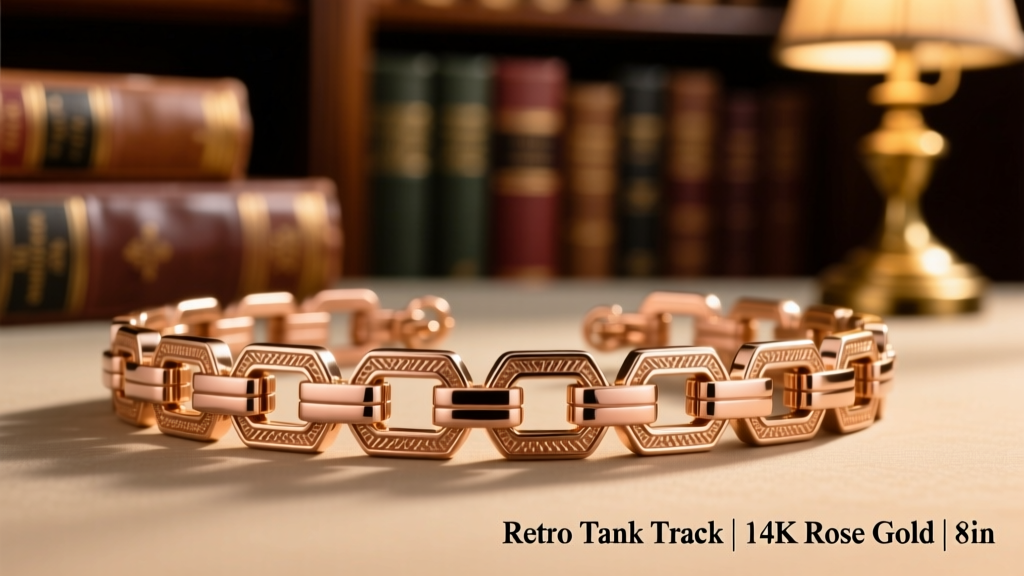
Bracelet Link Tank Track Geometrics: A Deep Dive into the 14K Rose Gold Retro 8-Inch Masterpiece
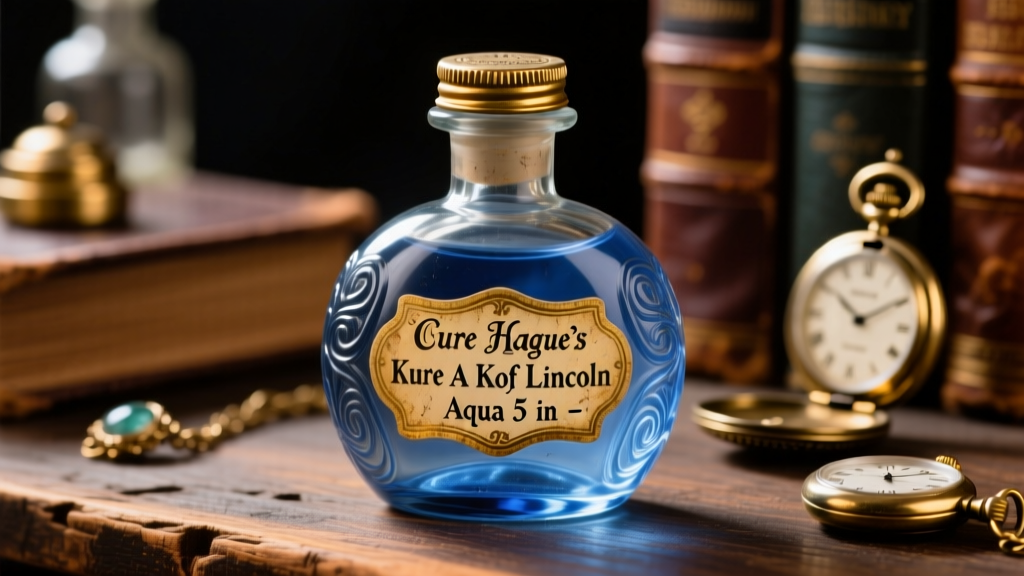
Bottles, Cure, Hagues, Kure, A Kof Lincoln Aqua 5 In: Decoding a Rare Mid-Century American Apothecary Artifact
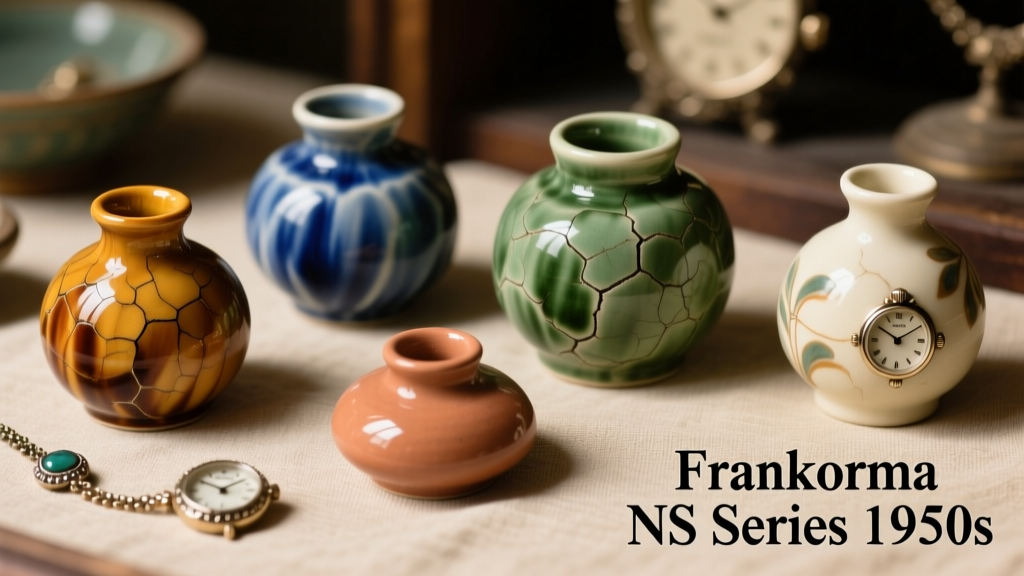
The 5-NS Frankoma: A Collector’s Deep Dive into America’s Iconic Mid-Century Ceramic Watch
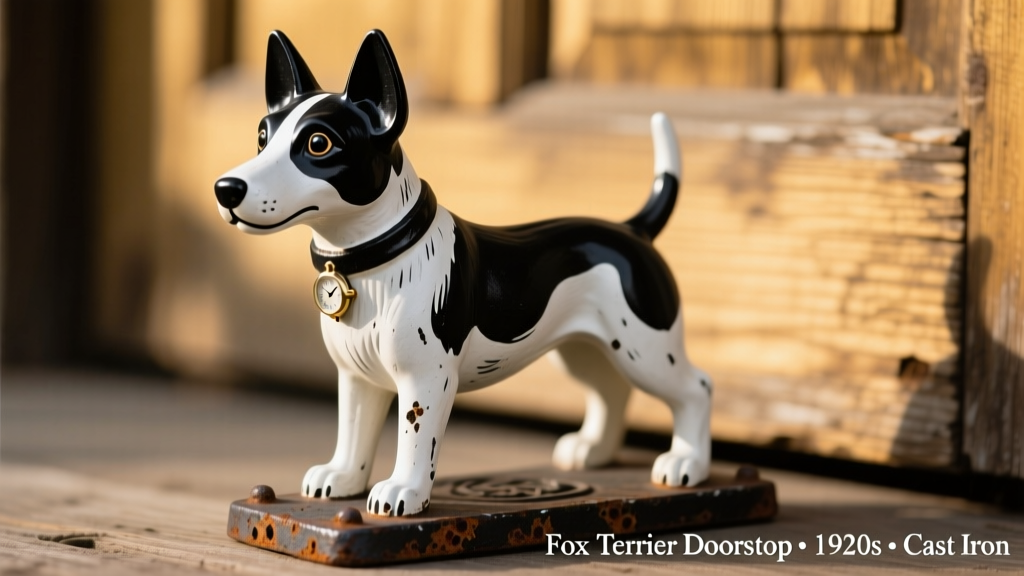
The Fox Terrier Doorstop: A Cast Iron Icon of Victorian & Edwardian Domestic Craftsmanship

A Kinlley: The Forgotten American Watchmaker of the 1920s and 1930s
Arapaho Allover-Beaded Bag: Authenticity, Craftsmanship, and Provenance in Native American Material Culture