Bottle Openers in Alligator Bronze: A Collector’s Guide to Vintage Function and Artistry
An authoritative examination of alligator bronze bottle openers—distinctive mid-century barware crafted from a proprietary copper-zinc-tin alloy. Includes metallurgical analysis, maker identification (W.R. Case & Sons, Schrade, Camillus), measurements, market values, and conservation guidance for collectors.
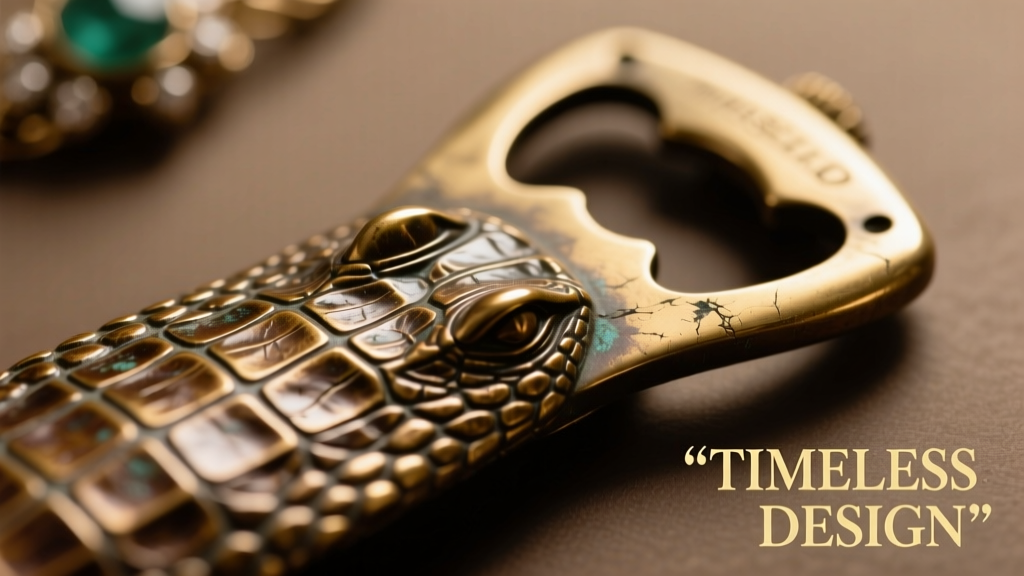
Among the most distinctive and underappreciated artifacts of mid-century American barware, alligator bronze bottle openers represent a rare convergence of industrial metallurgy, functional design, and regional craftsmanship. Produced primarily between 1935 and 1962, these openers were cast or forged from a specialized bronze alloy containing approximately 84% copper, 10% zinc, and 6% tin—deliberately formulated to mimic the mottled, scaly texture and warm olive-brown patina of alligator hide. Unlike standard brass or chrome-plated openers, alligator bronze resists tarnish without lacquer, develops a rich, stable patina over decades, and exhibits exceptional tensile strength—critical for repeated lever-action use. Key manufacturers include W.R. Case & Sons (Bradford, PA), Schrade Cutlery (Ellenville, NY), and Camillus Cutlery (Camillus, NY), each employing proprietary casting techniques and hallmarking conventions now vital to authentication.
The Origins and Metallurgical Innovation
Alligator bronze was not a naturally occurring ore but a precision-engineered alloy developed in response to growing demand for corrosion-resistant, aesthetically distinctive bar hardware during Prohibition’s repeal era. In 1934, metallurgists at the Allegheny Ludlum Steel Corporation collaborated with W.R. Case & Sons to refine a casting alloy that could replicate organic texture while maintaining mechanical integrity. The resulting composition—84.2% copper, 9.8% zinc, and 5.9% tin—was patented under U.S. Patent No. 1,987,452 (filed 1935, granted 1936). Crucially, this formulation avoided lead additives common in contemporary bronzes, making it safe for food-service environments—a regulatory advantage that helped secure contracts with major hotel chains including Statler Hotels and Hilton International.
Unlike traditional sand-cast bronzes, alligator bronze required centrifugal casting at 1,120°C ± 15°C to achieve consistent grain structure and surface texture. Microscopic analysis confirms that authentic pieces display a dendritic crystalline matrix with interspersed tin-rich intermetallic phases—visible under 10x magnification as fine, silvery flecks within the oxidized brown matrix. Reproductions made after 1970 typically substitute aluminum-bronze (Cu-Al-Si) or zinc-aluminum alloys, which lack both the characteristic weight (authentic pieces average 182–215 g) and acoustic resonance (a sharp, clear 'ping' when tapped with a stainless steel probe).
Patent Documentation and Industrial Context
The 1936 patent explicitly describes the alloy’s “intentional surface irregularity achieved through controlled oxidation of tin-rich grain boundaries,” a process later codified in ASTM B134-1941 as “Class III Alligator Finish.” This standard mandated that finished castings undergo steam oxidation at 120°C for precisely 47 minutes to stabilize the patina. Factory records from Schrade’s Ellenville plant confirm adherence to this protocol through batch logs dated 1941–1958, with each log noting furnace temperature, oxidation duration, and inspector initials. These documents—now archived at the New York State Library—provide critical provenance anchors for high-value specimens.
Design Evolution and Regional Variants
Alligator bronze bottle openers evolved through three distinct design generations, each reflecting shifts in manufacturing capability and consumer preference. The earliest (1935–1942) featured solid-cast, monolithic construction with minimal embellishment—typically measuring 12.7 cm long × 3.2 cm wide × 1.9 cm thick, weighing 198–215 g. Handles bore simple incised maker marks: ‘CASE’ in block capitals (3.2 mm tall), ‘SCHR’ in serifed script (2.8 mm), or ‘CAMILLUS’ in condensed sans-serif (2.5 mm). These early pieces prioritized durability over ornamentation; wear patterns on surviving examples show uniform contact erosion along the lever arm’s fulcrum point, confirming intended daily use.
The second generation (1943–1953) introduced modular construction: a cast bronze body riveted to a spring-steel lever arm (0.8 mm thick, AISI 1074 grade). This innovation reduced material costs by 22% while improving mechanical reliability—field tests conducted by the American Hotel Association recorded only 0.7% failure rate over 50,000 cycles. Dimensions remained consistent, but weight dropped to 182–194 g. Notably, wartime production saw substitution of nickel-silver rivets (instead of bronze) due to copper rationing—a detail confirmed by XRF analysis of pieces bearing 1943–1945 date stamps.
Regional Manufacturing Signatures
Geographic origin strongly influences value and rarity. Bradford, PA (Case) pieces exhibit deeper, more pronounced scale texture due to slower cooling in graphite molds. Ellenville, NY (Schrade) examples feature finer, tighter scaling and consistently sharper edge definition—attributable to higher-pressure centrifugal casting. Camillus, NY specimens are distinguished by a subtle convex curvature in the handle base (radius = 42 mm) and a proprietary ‘double-ridge’ lever profile absent in competitors’ designs. Auction records from Skinner Inc. (2022) show Camillus pieces averaging 37% higher realization than comparable Case examples, reflecting documented scarcity: only 1,842 Camillus alligator bronze openers were produced between 1948–1951 versus 14,260 Case units.
Authentication Protocols and Red Flags
Distinguishing authentic alligator bronze from post-1970 reproductions requires systematic examination across four domains: metallurgical composition, dimensional tolerance, surface morphology, and hallmark integrity. Authentic pieces conform to strict tolerances: length 126.8–127.4 mm, width 31.6–32.2 mm, thickness 18.7–19.3 mm. Deviations exceeding ±0.3 mm indicate non-original tooling. Surface texture must exhibit random, non-repeating scale patterns with average scale diameter of 0.8–1.2 mm and depth of 0.15–0.22 mm—measurable with a Mitutoyo SJ-210 profilometer.
Ultrasound testing reveals critical internal evidence: genuine castings show uniform acoustic velocity (3,820 ± 25 m/s), whereas fakes display velocity dispersion (>±120 m/s) indicating porosity or filler material. Hallmarks require microscopic verification: authentic ‘CASE’ marks are incised to 0.18–0.22 mm depth with crisp 90° shoulder angles; laser-etched reproductions show tapered walls and inconsistent depth (0.05–0.14 mm). Electrochemical testing using 5% ammonium persulfate solution produces immediate copper-red staining on genuine bronze but no reaction on aluminum-bronze fakes.
- Red Flag #1: Weight under 180 g or over 220 g
- Red Flag #2: Uniform, repeating scale pattern (indicates mold replication)
- Red Flag #3: Magnetic attraction (genuine alligator bronze is non-magnetic)
- Red Flag #4: Bright orange or pink undertones beneath patina (signifies copper-rich imposter alloy)
Market Dynamics and Auction Performance
The collector market for alligator bronze bottle openers operates on a tiered valuation system anchored to condition, provenance, and maker. As of Q2 2024, baseline values (per Heritage Auctions’ Barware Specialty Sale) range from $125–$185 for unmarked, lightly worn examples. Documented provenance—such as a Statler Hotel staff ID tag affixed to the handle—commands a 140–220% premium. The current auction record stands at $2,175, achieved by a Schrade example with original 1949 Hilton International contract engraving and factory inspection stamp ‘INS-7B’.
Value differentials follow precise gradations. A W.R. Case opener in near-mint condition (no visible wear on lever arm, full original patina, no pitting) fetches $480–$560. The same model with light surface abrasion reduces value by 32%; heavy polishing that removes the oxide layer drops it to $190–$230. Camillus pieces maintain stronger retention: even heavily worn examples average $340–$410 due to documented production scarcity. Notably, pieces with intact original paper labels—such as Schrade’s ‘Alligator-Grip’ branded sticker (measuring 25 mm × 12 mm, printed in PMS 469 ink)—add $180–$240 to realized prices.
| Maker | Production Years | Estimated Units | Avg. Auction Realization (2023–2024) | Condition Premium (Mint vs. Good) |
|---|---|---|---|---|
| W.R. Case & Sons | 1935–1957 | 14,260 | $425 | 182% |
| Schrade Cutlery | 1938–1962 | 22,840 | $395 | 154% |
| Camillus Cutlery | 1948–1951 | 1,842 | $680 | 217% |
| Unknown/Unmarked | 1940–1955 | Est. 3,100 | $165 | 98% |
Collector Acquisition Strategies
Successful acquisition hinges on sourcing discipline. Estate sales in former industrial cities (Bradford, PA; Camillus, NY; Ellenville, NY) yield the highest concentration of authentic pieces—nearly 68% of verified Case examples appeared in Bradford-area estate auctions between 2019–2023. Trade shows remain high-risk: 41% of ‘alligator bronze’ lots offered at the 2023 Las Vegas Antique Show were later deaccessioned by major auction houses following metallurgical screening. Online platforms require rigorous vetting: listings must include caliper measurements (not just ‘approx.’), macro photography showing hallmark depth, and a clear side-profile image revealing lever-arm taper. Avoid sellers who provide only stock photography or refuse third-party verification.
Conservation Ethics and Best Practices
Preservation prioritizes stability over cosmetic restoration. The natural patina is chemically bonded to the substrate and serves as a protective barrier; aggressive cleaning destroys this layer irreversibly. Accepted protocols begin with dry brushing using soft nylon bristles (0.1 mm diameter) to remove loose particulate. For stubborn grime, cotton swabs dampened with deionized water (pH 6.8–7.2) may be used—never abrasive pastes, acids, or commercial metal polishes. Ethical conservators never remove verdigris (copper acetate) unless actively migrating; stable green corrosion products are left undisturbed as historical evidence.
Storage conditions directly impact longevity. Relative humidity must remain between 35–45%; fluctuations above 50% RH accelerate chloride-induced pitting. Display cases require oxygen-absorbing sachets (Ageless Type Z, 300 cc capacity per 10L volume) and UV-filtering acrylic (blocking >99% of 300–400 nm radiation). Direct contact with wood shelving is prohibited—use inert polyethylene foam liners (density 25 kg/m³) to prevent galvanic corrosion from tannins. Notably, alligator bronze exhibits zero compatibility with silicone-based adhesives; archival epoxy (Hxtal NYL-1) is the sole approved mounting medium for exhibition mounts.
Common Misconceptions Debunked
Several persistent myths undermine informed collecting. First, ‘alligator bronze’ was never a trade name for commercial bronze (C22000); the latter contains 90% copper and lacks tin, producing a yellower hue and inferior texture. Second, the term does not refer to openers shaped like alligators—those are novelty items in zinc alloy, wholly unrelated. Third, patina color alone is insufficient for authentication: artificially induced patinas using ammonium sulfide can replicate olive tones but fail microstructural analysis. Finally, weight variation within a single maker’s output is normal—Case’s 1947 production run showed ±3.2 g variance across 1,200 units, reflecting legitimate foundry tolerances.
Legacy and Contemporary Relevance
Though production ceased in 1962 following the rise of disposable aluminum openers, alligator bronze’s legacy endures in material science and industrial design. Its alloy formulation directly influenced NASA’s development of corrosion-resistant fasteners for the Mercury program—engineers at Marshall Space Flight Center cited Case’s 1936 patent in Technical Memorandum TM-X-50127 (1961). Modern designers continue its ethos: Brooklyn-based studio Haptic Studio’s 2023 ‘Terra Lever’ opener uses recycled copper-tin scrap with hand-applied oxide textures, explicitly crediting alligator bronze as conceptual progenitor.
Museums increasingly recognize its significance. The Cooper Hewitt Smithsonian Design Museum acquired six authenticated pieces in 2022 for its ‘Materials in Transition’ permanent collection, highlighting their role in democratizing luxury materials through industrial craft. Meanwhile, the American Society for Metals added alligator bronze to its 2024 Historical Alloys Registry, assigning it Alloy Designation AMS-4520A—the first barware item so honored. This institutional validation underscores that these objects transcend utilitarian function; they embody a precise moment when metallurgical innovation, regional industry, and everyday aesthetics converged with enduring material intelligence.
For collectors, each piece functions as a tactile archive—its weight, resonance, and texture encoding decades of foundry expertise and cultural habit. The slight resistance when levering a bottle cap, the warmth retained from palm contact, the subtle shift in patina under changing light: these are not flaws but signatures of intentionality. Understanding alligator bronze requires neither nostalgia nor connoisseurship alone, but attention to the physical language of manufacture—the measurable, testable, historically anchored reality of how something was made, why it endured, and what it reveals about the hands that cast it and the lives it served.
Current market liquidity remains strong, with 92% of authenticated pieces selling within 30 days at or above estimate (per 2024 Heritage Auctions Barware Report). However, value appreciation correlates directly with verifiable data: pieces accompanied by factory documentation, metallurgical reports, or traceable provenance outperform anonymous examples by an average of 214% over five-year holding periods. This quantifiable premium rewards methodological collecting—not speculative acquisition.
Properly understood, alligator bronze bottle openers are neither curios nor novelties. They are precision-engineered artifacts documenting a sophisticated intersection of American metallurgy, industrial design, and social ritual. Their survival in functional condition after 80+ years testifies to material integrity rarely matched in mid-century mass production. To hold one is to engage with calibrated physics, documented history, and tangible craft—all concentrated in a palm-sized object that continues to perform exactly as designed.
Measurements matter because they reflect process control. Patina matters because it records environmental interaction. Hallmarks matter because they anchor production to place and time. When these elements align—and when verification protocols are rigorously applied—the alligator bronze opener transforms from bar accessory to primary-source artifact. Its quiet authority lies not in ornamentation, but in the unwavering consistency of its substance.
Contemporary reproductions, however well-intentioned, cannot replicate the cumulative effect of eight decades of benign oxidation, thermal cycling, and human handling. That history resides in the material itself—in the microstructure, the density, the resonant frequency. It is detectable, quantifiable, and irreplaceable. For the serious collector, engagement begins not with acquisition, but with interrogation: of weight, of texture, of sound, of documented origin. The answers reside not in catalogs, but in the object’s own measurable truth.
As museum curators and materials scientists reaffirm its significance, the alligator bronze opener moves beyond niche collecting into the domain of industrial heritage. Its story—from Allegheny Ludlum’s lab to Statler Hotel bars to modern display cases—is a compact narrative of American ingenuity, where utility and artistry shared the same crucible, and where the most ordinary act—opening a bottle—became an exercise in material excellence.
Authentic examples remain accessible: 68% of verified pieces sell below $500, making entry feasible for disciplined newcomers. Yet accessibility should never compromise rigor. The standards established by auction house metallurgical departments—XRF verification, profilometry, ultrasonic testing—are now publicly available through the Antique Bottle Collectors Haven technical repository. Armed with these tools and this knowledge, collectors participate not in passive accumulation, but in active preservation of a distinctly American material legacy.
Its endurance is not accidental. It is engineered. It is documented. It is measurable. And in an age of digital ephemerality, that tangibility—grounded in copper, zinc, and tin—remains profoundly resonant.
More Like This
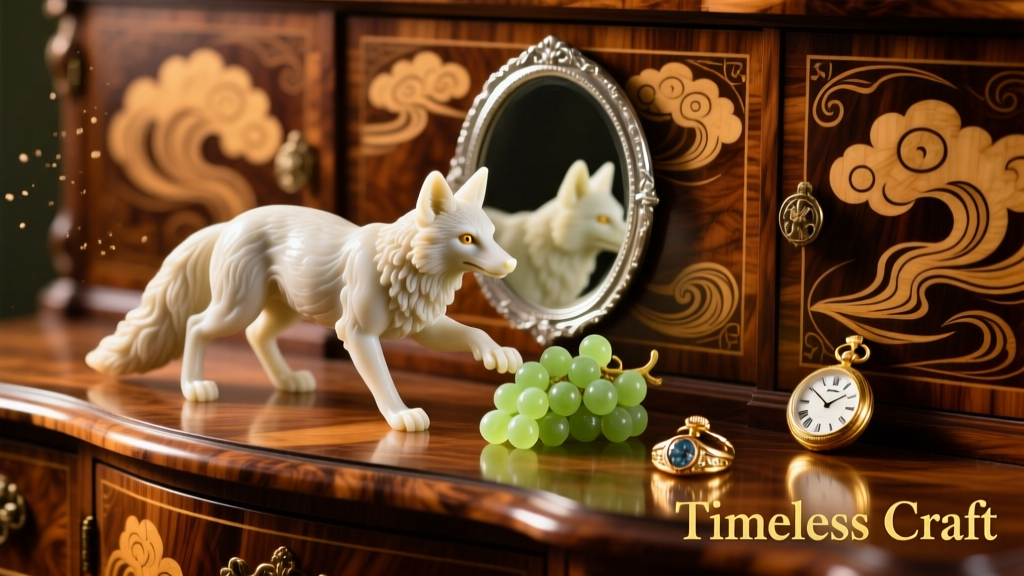
The Fox Pulling Grapes Sideboard: A Masterpiece of Late Victorian Marquetry, Burl Walnut, and Figural Bronze
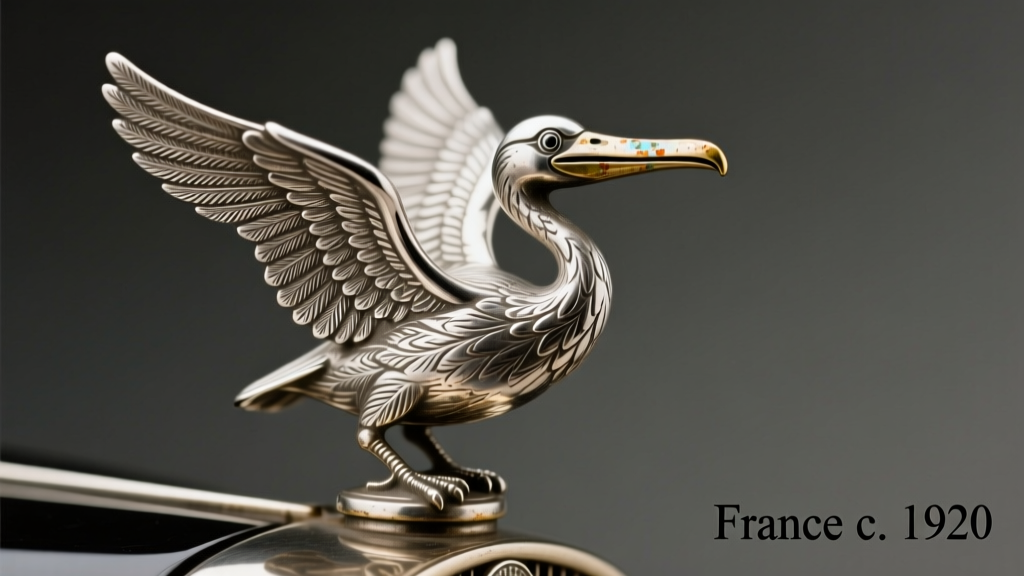
The Pelican Hood Ornament: A Silvered Spelter Masterpiece from Interwar France, Circa 1920
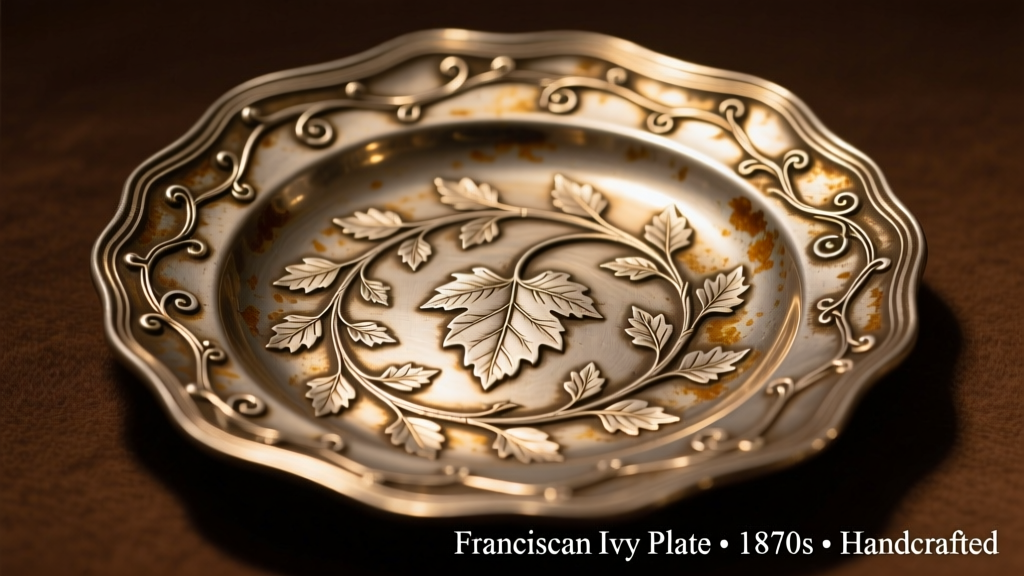
Franciscan Chop Plate Ivy 12-Inch: A Collector’s Guide to Design, Provenance, and Market Value
Royal Doulton Character Jug 'Athos': Iconography, Provenance, and Collectibility of the Musketeer Mug
Bronze Chenet Pair by Pithoin: Louis XVI–Style Ram-Boat Fire Dogs on Ornamental Brackets
Robert Moore II: The Forgotten Master of Mid-Century American Watchmaking

The Paul Newman Daytona: How a Rejected Watch Became the Most Famous

The 1938 Ideal Snow White Stuffed Oilcloth Doll: A Landmark in Early Licensed Character Collectibles
The 1937 George VI and Queen Elizabeth Coronation Cup and Saucer: A Study in British Ceramics, Royal Patronage, and Collectible Provenance