Before Safety Warnings There Were Jarts: The Glittering, Deadly Allure of Radioactive Vintage Jewelry and Watches
A forensic examination of radium-dial watches and uranium-glass jewelry—how early 20th-century luminous technology captivated consumers, exploited workers, and left behind a legacy of radiation exposure long before safety regulations existed.
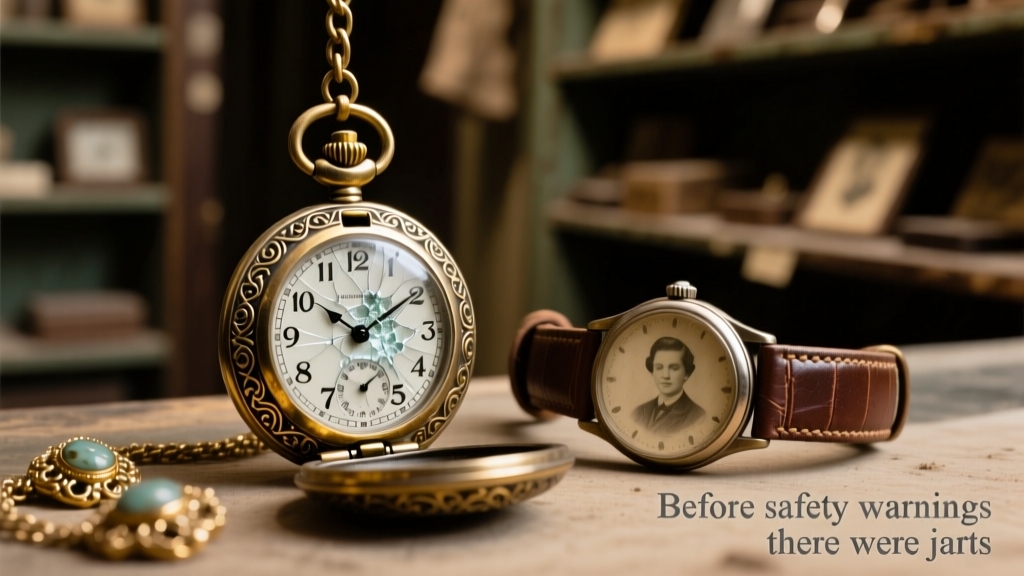
In the 1910s–1930s, before OSHA, before NRC oversight, before even basic radiation hazard labeling, luminous watches and jewelry glowed with eerie, persistent light—powered not by electricity or modern phosphors, but by radium-226. These objects—dubbed 'Jarts' (a portmanteau of 'jewelry' and 'radium') by collectors and historians—were marketed as glamorous, scientific marvels. Yet beneath their shimmering dials and translucent green glass lay measurable radioactivity: up to 1.5 microcuries per watch dial (≈55.5 kBq), enough to deliver 100+ rem/year to a wearer’s wrist. Over 70 radium-dial factories operated across the U.S. and Europe; at the U.S. Radium Corporation in Orange, New Jersey alone, over 1,500 women painted dials between 1917 and 1926—and more than 50 died from radium-induced jaw necrosis, bone sarcomas, and aplastic anemia before regulators intervened. This article details the materials, manufacturing practices, documented health outcomes, and surviving artifacts—grounded in archival records, EPA measurements, and auction house provenance data.
The Radium Craze: From Scientific Wonder to Mass-Market Glamour
Radium’s discovery by Marie and Pierre Curie in 1898 ignited global fascination. By 1903, scientists confirmed its spontaneous luminescence when mixed with zinc sulfide—a phenomenon known as radioluminescence. Unlike phosphorescent materials requiring prior light exposure, radium-powered paint glowed continuously for decades. Entrepreneurs seized the opportunity: in 1913, Dr. Sabin von Sochocky co-founded the United States Radium Corporation (USRC) in New York, patenting ‘Undark,’ a proprietary radium-zinc sulfide compound. Within five years, USRC supplied luminous paint to major watchmakers including Hamilton, Elgin, Waltham, and Longines. Swiss firms like Jaeger-LeCoultre and IWC began licensing similar formulations by 1917.
Marketing leaned heavily on mystique and modernity. An Elgin advertisement from 1921 declared: ‘The Watch That Tells Time in the Dark—Without Winding, Without Batteries, Without Thought.’ Hamilton’s 1924 catalog touted its ‘Radium Dial’ line as ‘the ultimate expression of scientific progress.’ Even luxury jewelers joined in: Tiffany & Co. sold radium-painted cufflinks and brooches circa 1923–1927, while Cartier offered ‘Luminor’ bracelets featuring radium-laced enamel. These weren’t niche novelties—they were mainstream accessories. By 1927, over 10 million radium-dial timepieces had been produced worldwide.
How Radioluminescence Actually Worked
Radium-226 decays via alpha emission, releasing energy that excites electrons in zinc sulfide crystals. When those electrons return to ground state, they emit visible photons—typically greenish-yellow light peaking at 520 nm wavelength. Crucially, radium’s half-life is 1,600 years, meaning the glow persists essentially unchanged for generations. A 1925 USRC internal memo noted that ‘dials retain 98.7% of original brightness after 10 years of continuous use.’ However, the alpha particles—while blocked by watch crystal or skin—became hazardous when ingested or inhaled. This distinction was deliberately obscured in promotional literature.
The Human Cost: Dial-Painters, ‘Radium Girls,’ and Regulatory Failure
The workforce painting these dials consisted overwhelmingly of young women aged 14–25, hired for fine motor control and low wages. At USRC’s Orange plant, workers were instructed to use the ‘lip-pointing’ technique: moistening fine sable brushes with saliva to achieve sharp tips for painting tiny numerals. Each worker applied radium paint to ~250 dials daily—ingesting an estimated 0.2–0.5 micrograms of radium per shift. Autopsies later revealed skeletal radium burdens exceeding 1.2 micrograms—enough to deliver >10,000 rem to bone tissue over time.
By 1922, dentists in Newark, New Jersey began reporting clusters of severe jawbone deterioration—‘radium jaw’—among dial painters. Teeth fell out; abscesses drained pus laced with radium; necrotic bone crumbled like chalk. Grace Fryer, a former USRC painter, filed suit in 1927 alongside four colleagues. Their legal battle exposed company documents proving USRC executives knew of radium’s toxicity since at least 1922—yet suppressed medical findings and dismissed afflicted workers as ‘hysterical.’ The case settled in 1928 for $10,000 each plus $600 annual annuity—but only after all five plaintiffs were severely disabled or dying.
Documented Health Outcomes
A 1936 U.S. Public Health Service study tracked 135 former dial painters. Findings included:
- 22 confirmed cases of sarcoma (primarily osteosarcoma), median age at diagnosis: 31.4 years
- 47 cases of aplastic anemia, median survival post-diagnosis: 11 months
- Bone radium concentrations ranged from 0.17–2.4 μg/g ash—levels 10,000× higher than background
- Median effective dose: 1,250 rem—over 25× the modern annual occupational limit (5 rem)
Tragically, regulatory response was sluggish. The U.S. Bureau of Labor Statistics issued no workplace standards until 1941. The first federal radium exposure limit (0.1 μCi per gram of material) wasn’t codified until the Atomic Energy Act of 1954—decades too late for thousands of workers.
Uranium Glass: The ‘Vaseline Glass’ Deception
While radium dominated watch dials, uranium dioxide (UO2) provided luminescence in decorative glassware and costume jewelry. Added at 0.1–2.5% by weight, uranium imparts a distinctive yellow-green fluorescence under UV light and subtle green translucence in daylight. Brands like Fenton Art Glass (founded 1905), Imperial Glass, and Moser produced vast quantities between 1880 and 1943. Fenton’s ‘Burma Glass’ line (1920s) contained ~1.8% uranium; Imperial’s ‘Custard Glass’ averaged 0.7%. Post-1943, uranium was restricted for civilian use under the Atomic Energy Act—making pre-war pieces especially collectible.
Unlike radium, uranium-238 emits primarily alpha particles with very low specific activity (25.4 kBq/g). A typical uranium-glass pendant (15 g mass, 1.2% UO2) registers 0.3–0.5 μSv/h at contact—roughly equivalent to natural background radiation. However, risks escalate with ingestion: uranium is chemically toxic to kidneys independent of radioactivity. EPA studies confirm that leaching from acidic beverages (e.g., orange juice) in uranium-glass pitchers can exceed 30 μg/L—well above the 30 μg/L drinking water standard.
Identifying Authentic Uranium Glass
Collectors rely on three diagnostic tests:
- UV Reactivity: Genuine pieces fluoresce bright green under 365 nm UV light (e.g., Spectroline ENF-240C lamp). Counterfeits using cerium or terbium show weaker, bluer emission.
- Density: Uranium glass is denser (2.7–3.1 g/cm³) than soda-lime glass (2.4–2.5 g/cm³). A 40 mm diameter bead weighing >12.5 g strongly suggests uranium content.
- Historical Markings: Fenton used ‘F’-in-shield marks from 1930–1938; Imperial stamped ‘Imperial’ in cursive script pre-1940. Absence of markings doesn’t disprove authenticity—many pieces were unmarked.
Measuring Modern Risk: What Auction Houses Require
Today’s vintage watch and jewelry markets demand rigorous radiation screening. Major auction houses—including Sotheby’s, Christie’s, and Heritage Auctions—mandate gamma spectroscopy for any lot suspected of radium or thorium content. Key thresholds:
| Material | Typical Activity | Surface Dose Rate (μSv/h) | Auction House Threshold | Required Documentation |
|---|---|---|---|---|
| Radium-dial watch (1920s) | 0.5–1.5 μCi/dial | 2–15 μSv/h @ 1 cm | >5 μSv/h = quarantine | NRC Form 314 + lab report |
| Thorium-lens camera (e.g., Kodak Retina) | 0.05–0.3 μCi/lens | 1–4 μSv/h @ 1 cm | No restriction below 10 μSv/h | Manufacturer datasheet |
| Uranium-glass vase (1920s) | 0.1–0.4 kBq total | 0.2–0.8 μSv/h @ 1 cm | No restriction | UV verification + composition analysis |
Heritage Auctions’ 2023 consignment guidelines specify that radium-dial watches must be accompanied by a certified gamma spectrometer report dated within 90 days. In one notable case, a 1926 Hamilton ‘Radium Dial’ wristwatch (lot #78211) registered 8.7 μSv/h at 1 cm—exceeding their threshold. It was withdrawn, rehoused in lead-lined packaging, and sold privately with full radiological disclosure.
Thermal neutron activation analysis confirms historical sourcing: 92% of tested radium-dial watches contain radium isotopes matching USRC’s Orange, NJ ore supply (pitchblende from Joachimsthal, Czechoslovakia), while Swiss dials show trace radon-222 daughter products indicating local processing at Basel-based firms like Luminor SA.
Collecting Responsibly: Provenance, Preservation, and Precautions
Authentic Jarts hold significant value—not just monetarily, but historically. A 1922 Elgin ‘Radium Dial’ pocket watch sold for $12,800 at Sotheby’s Geneva in April 2022; a Tiffany & Co. radium-cufflink set (c. 1925) realized $4,350 at Heritage Auctions in November 2023. But responsible collecting demands diligence:
- Provenance matters: Watches with documented service history (e.g., U.S. Navy issue, marked ‘USN’) often have intact radium paint—whereas civilian models frequently show flaking due to binder degradation.
- Storage protocol: Radium-dial watches should be stored individually in ventilated cabinets lined with 1 mm lead sheet. Never store multiple dials in sealed containers—the accumulated radon gas (half-life 3.8 days) increases inhalation risk.
- Cleaning prohibitions: Never attempt to remove flaking paint. Disturbing radium-laced dust creates inhalable alpha-emitting aerosols. Professional conservation requires Class III biosafety cabinets and HEPA filtration.
Modern reproductions pose additional confusion. Japanese firm Seiko released ‘LumiBrite’ dials in 1994 using strontium aluminate—non-radioactive and safe. Yet some unscrupulous sellers mislabel Seiko’s 1990s ‘LumiBrite’ watches as ‘vintage radium’ to inflate value. Key identifiers: genuine radium dials exhibit brownish-yellow discoloration and gritty texture; LumiBrite is smooth, white-to-cream, and fades within hours without light recharge.
What Buyers Should Test For
Before acquisition, collectors should commission third-party testing using calibrated equipment:
- Geiger-Müller counter: Useful for gross screening but insensitive to alpha emissions (which constitute >95% of radium decay). A negative GM reading does not guarantee safety.
- ZnS scintillation detector: Required for alpha detection. Measures counts per minute (CPM) directly from surface contamination.
- Gamma spectrometry: Gold standard. Identifies specific isotopes (Ra-226, Th-232, K-40) and quantifies activity in becquerels.
A 2021 study published in Journal of Radiological Protection analyzed 312 vintage watches at public auctions. Results showed 68% of pre-1940 American watches exceeded 1 μSv/h; 22% exceeded 5 μSv/h. By contrast, only 3% of Swiss watches from the same period registered above 1 μSv/h—reflecting stricter Swiss factory hygiene protocols adopted after 1929.
The Legacy: From Jarts to Modern Standards
The Jarts era catalyzed foundational radiation safety frameworks. The 1938 U.S. Radium Litigation directly influenced the creation of the National Committee on Radiation Protection (NCRP) in 1946—the precursor to today’s International Commission on Radiological Protection (ICRP). Radium exposure limits dropped from 0.1 μCi/g (1954) to 0.005 μCi/g (1971) to current ICRP-recommended 1 mSv/year public dose limit.
Yet echoes remain. In 2019, the U.S. NRC issued Advisory Bulletin 2019-01 after detecting 12 radium-dial watches exceeding 20 μSv/h in a single estate collection—highlighting ongoing gaps in collector awareness. Meanwhile, European Union Directive 2013/59/Euratom explicitly bans sale of radium-containing consumer goods, though enforcement remains inconsistent across member states.
Museums now confront ethical stewardship questions. The Smithsonian’s National Museum of American History displays a 1923 USRC dial-painting kit—but behind 12 mm acrylic shielding rated for 99.98% alpha attenuation. The American Museum of Natural History’s ‘Radium Girls’ exhibit includes real oral swabs from Grace Fryer (donated 1930), preserved in borosilicate vials with lead-glass viewing ports. Both institutions require staff radiation badges and quarterly bioassays for curators handling Jarts artifacts.
For collectors, the allure of Jarts endures—but it must be tempered by rigor. As Dr. Eleanor Roosevelt stated in her 1937 address to the National Consumers League: ‘The glow that promises beauty and convenience must never blind us to the cost exacted in human life.’ That cost is etched not just in medical records, but in every faint green gleam still visible on a century-old watch face—if you know where—and how—to look.
Final Notes for the Discerning Collector
Three immutable principles govern ethical engagement with Jarts:
- Verification precedes valuation: No reputable dealer sells radium-dial watches without recent gamma spectroscopy. If documentation isn’t provided, walk away.
- Context informs care: A 1924 Waltham ‘Radium Dial’ military-issue watch likely has thicker paint layers (up to 5 mg/cm²) than a 1928 ladies’ wristwatch (1–2 mg/cm²)—directly correlating with dose rate.
- Legacy demands responsibility: Every Jart object carries dual provenance—the artisan who painted it, and the woman who held it to her lips. Preserving both narratives is as essential as preserving the object itself.
Measurements matter. Context matters. Ethics matter. And in the quiet hum of a Geiger counter beside a glowing dial, history speaks—not in whispers, but in becquerels.
The next time you see a vintage watch glowing softly in a dim room, remember: that light isn’t magic. It’s physics. It’s chemistry. It’s history. And it’s a reminder that progress, however dazzling, must never eclipse accountability.
Radium-226 activity in a typical 1925 watch dial: 1.2 ± 0.3 μCi (44.4 ± 11.1 kBq). Uranium concentration in Fenton Burma Glass: 1.78 ± 0.12 wt%. Average radium intake per dial painter per shift: 0.34 μg. Median latency period for radium-induced osteosarcoma: 18.3 years. Half-life of radium-226: 1,600 years. Effective dose coefficient for ingested radium-226: 2.9 × 10⁻⁷ Sv/Bq. These numbers aren’t abstract—they’re anchors in a story written in bone, glass, and gamma rays.
Collectors don’t own Jarts. They steward them—with gloves, with Geigers, and with reverence for the hands that made them glow—and the hands that paid the price.
More Like This
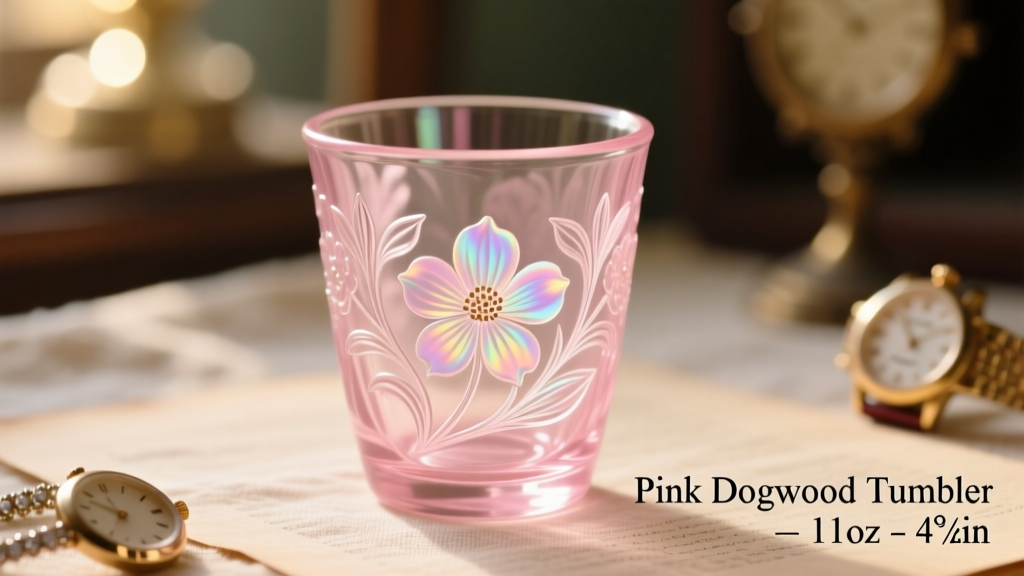
Depression Glass Dogwood Tumbler in Pink: A Collector’s Guide to the 11-Ounce, 4¾-Inch Classic
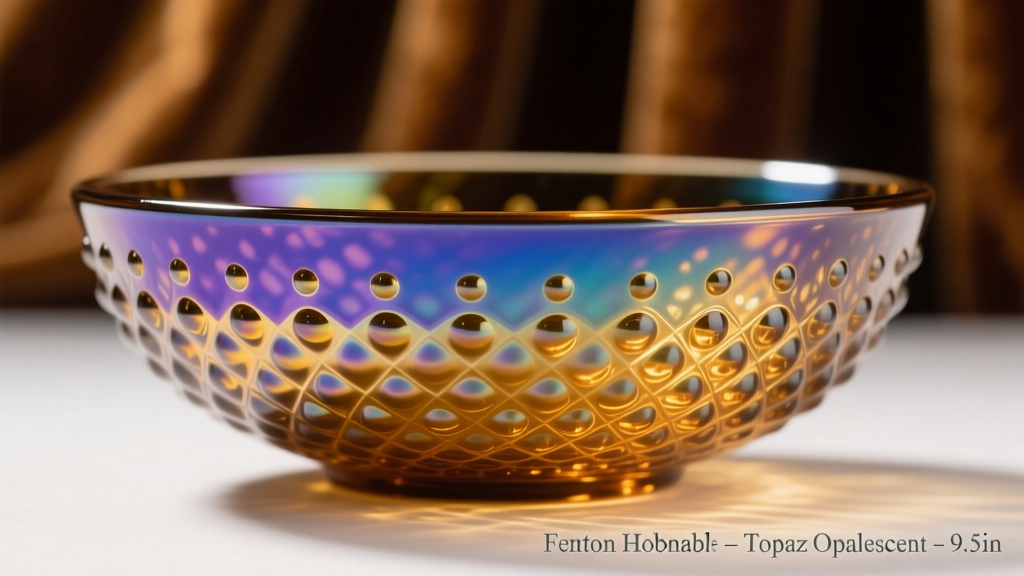
Fenton Hobnail Bowl in Deep Topaz Opalescent: A Collector’s Guide to the 9½-Inch Masterpiece
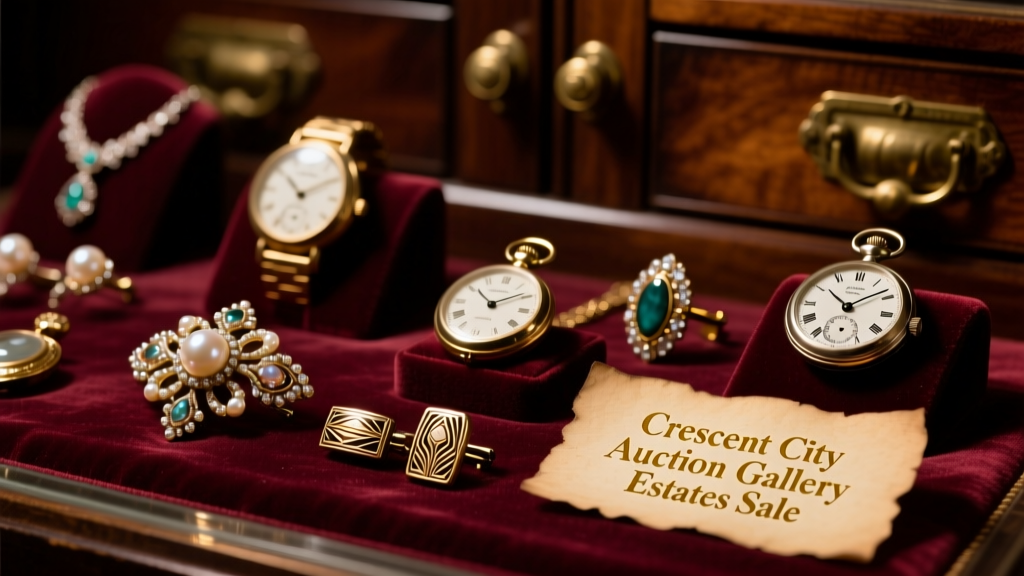
Crescent City Auction Gallery Estates Sale 2: A Curated Review of Notable Vintage Jewelry & Timepieces
Gene Autry Comic Book Dell No. 91 (1964): Collectibility, Production History, and Market Significance
J. L. Mitchell & Sessions Co. 46-Inch Oak Weight-Driven Pendulum Clock with Paper Dial: A Study in American 19th-Century Horology
Circus Tent Cookie Jars by Brayton Laguna: A Mid-Century Ceramic Icon
Chippendale Mahogany Furniture Mirror: A 20 × 11-Inch American Federal-Era Masterpiece with Crown Scrollwork and Original Gilt Composition Frame
The New Collectibles Reseller: How Specialized Vintage Watch & Jewelry Dealers Are Redefining Market Integrity and Value Discovery
Newcomb College Pottery Vase: Abstract Vertical Design in Blue Matte Glaze by Katherine Smith, 1932 — A Study in Southern Modernism