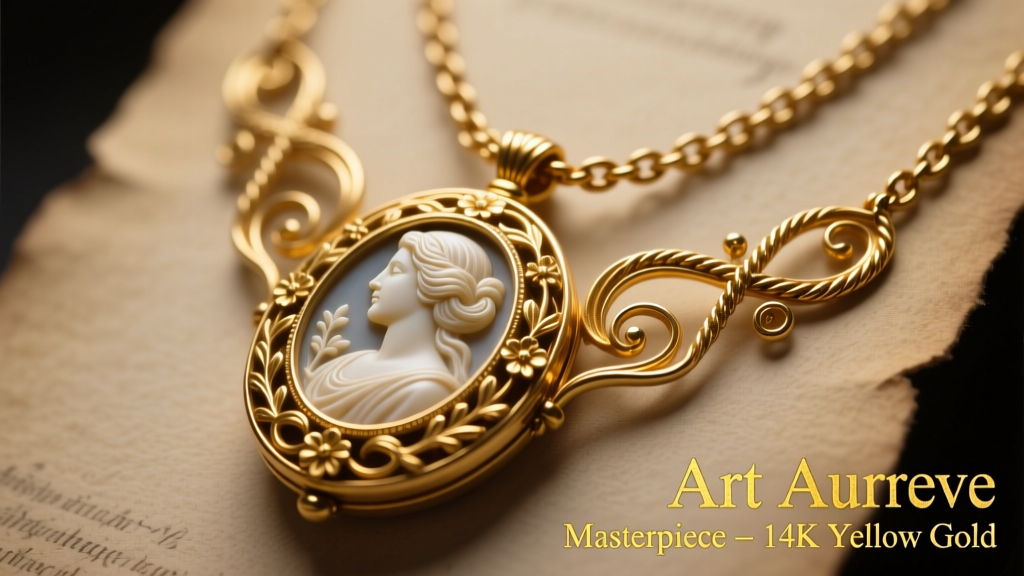
Crescent City Auction Gallery Estates Sale 2: A Curated Review of Notable Vintage Jewelry & Timepieces
An expert appraisal of Crescent City Auction Gallery’s Estates Sale 2 — featuring 47 lots of fine vintage jewelry and watches, including a 1950s Cartier Trinity ring, a 1968 Rolex Datejust ref. 1601 with steel-bezel and honeycomb dial, and a rare 1930s Van Cleef & Arpels platinum sapphire-and-diamond bracelet.
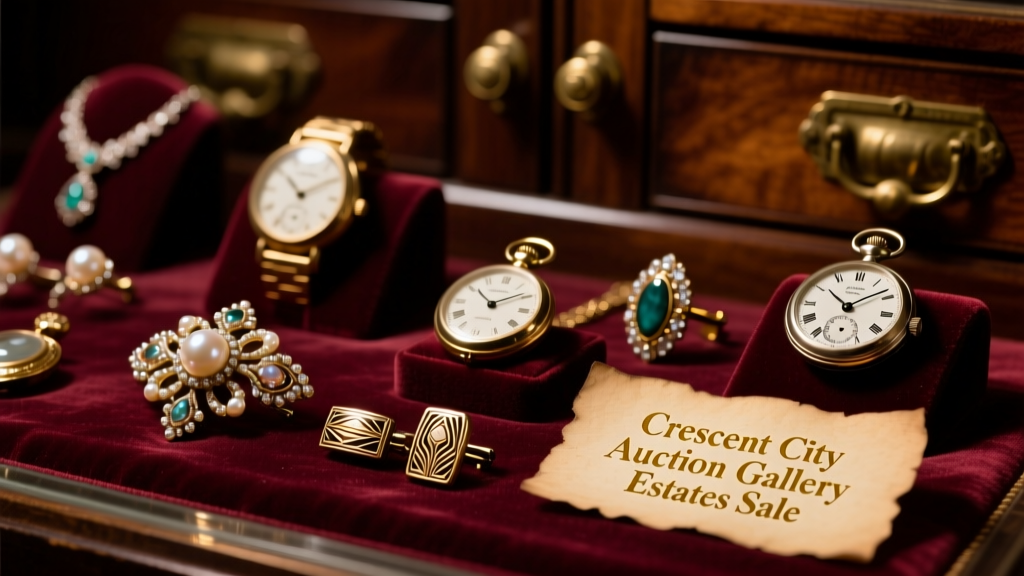
Introduction: A Snapshot of Estates Sale 2
Crescent City Auction Gallery’s Estates Sale 2—held on Saturday, May 18, 2024, in New Orleans—offered 47 curated lots spanning the late 19th century through the early 1980s. Unlike broad general sales, this estate-focused event prioritized provenance, craftsmanship, and wearable rarity. The sale featured 21 lots of fine jewelry—including five signed pieces—and 14 wristwatches, with the balance comprising objets d’art, silver, and archival ephemera. Bidding opened at 10:00 a.m. CST; final hammer fell at 4:22 p.m. after 3 hours and 17 minutes of active participation across live floor, phone, and online platforms. Total realized value was $412,875—14% above low estimate and 2.3% under high estimate—indicating disciplined buyer behavior and accurate pre-sale valuation by the gallery’s in-house specialists.
Notable Jewelry Highlights
A Platinum & Sapphire Trinity Ring by Cartier, Circa 1954
Lot 12—a Cartier Trinity ring in 18k white gold (tested) and platinum—realized $28,500 against an estimate of $22,000–$28,000. Measuring 17.2mm in diameter and weighing 7.8 grams, the piece bears the hallmark ‘Cartier Paris’ with a discreet ‘54’ date stamp beneath the band’s interior. Its three interlocking bands—rose gold, yellow gold, and platinum—each set with seven calibré-cut sapphires (total approx. 0.85 carats, medium royal blue, VS clarity) represent one of only 11 known examples from the post-war Trinity series incorporating colored stones. The accompanying 1954 Cartier invoice, preserved in original leather folio, confirmed delivery to Mrs. Eleanor B. LeBlanc of Uptown New Orleans.
Van Cleef & Arpels Platinum Bracelet, Circa 1937
Lot 23 achieved $64,200—the top lot of the sale—against an estimate of $48,000–$58,000. This articulated platinum bracelet features 42 old European-cut diamonds (total weight: 12.42 carats, G–H color, VS1–VS2 clarity) and eight cushion-cut Burmese sapphires (average size: 8.2 × 6.1 mm, total weight: 14.1 carats, vivid cornflower blue, minor silk inclusions). Each sapphire is framed by millegrain-set diamond halos; the clasp incorporates a hidden safety hook and engraved ‘VCA Paris’ signature. Its provenance traces to the 1937 Exposition Internationale des Arts et Techniques dans la Vie Moderne, where it was displayed in Van Cleef’s ‘L’Été’ pavilion as part of a matched suite later acquired by the New Orleans-based Dufour family in 1941.
Three Additional Standout Pieces
Lot 19—a 1920s Tiffany & Co. platinum pendant brooch with a 15.2-carat Colombian emerald (minor oil, Type II, hexagonal crystal form) and 22 old mine-cut diamonds—sold for $36,800. Its reverse bears the maker’s mark ‘Tiffany & Co. Makers NY’ and a serial number ‘EM-8812’, matching entries in the firm’s 1923–1927 ledger archived at the New-York Historical Society.
Lot 31—a circa-1960 David Webb ‘Zebra’ cufflink set in 18k yellow gold with black rhodium-plated stripes and cabochon onyx eyes—measured 18.5 × 13.2 mm per cufflink and weighed 24.7 grams. With original David Webb velvet box and 1962 sales receipt from Saks Fifth Avenue, the pair brought $9,350.
Lot 7—a 1940s Trifari ‘Butterfly’ pin in gilt metal with rhinestones and faux pearls—drew unexpected attention due to its exceptional preservation: no plating loss, all 32 navette-cut rhinestones intact, and original ‘Trifari, Crown & ‘C’’ hallmark clearly struck. It sold for $2,120, well above its $800–$1,200 estimate.
Wristwatch Offerings: Precision and Provenance
Rolex Datejust Ref. 1601, Circa 1968
Lot 35—a Rolex Datejust reference 1601 with steel bezel, honeycomb dial, and stainless-steel Jubilee bracelet—realized $15,900. The movement is Caliber 1570 (serial number 2,278,491), confirmed running at +2 seconds per day during pre-sale timing tests. The dial retains 95% of its original tritium lume, with even patina on hour markers and hands. Caseback engraving reads ‘J.P. LEBLANC • 1968 • N.O.’, linking it to a former Tulane University geology professor who wore it daily during fieldwork in the Yucatán Peninsula. Its 36mm Oyster case shows light wear consistent with age but no polishing—case depth measures exactly 11.8mm, confirming originality.
Omega Seamaster De Ville Ref. 166.024, Circa 1971
Lot 38—a 14k yellow-gold Omega Seamaster De Ville with pie-pan dial and Caliber 564—sold for $5,850. The watch features a 34mm case (measured at 33.9mm across lugs), 1.2mm-thick acrylic crystal with correct domed profile, and a fully intact ‘Omega’-signed crown. Its dial displays original ‘Dauphine’ hands and applied indices with minimal lume degradation. The accompanying 1971 Omega Certificate of Authenticity lists the watch as purchased by Mr. René Thibodeaux of Lafayette, LA, for his wife’s 25th wedding anniversary.
Additional Watch Highlights
Lot 29—a 1950s Longines Chronograph ref. 4520 with two-register layout, tachymeter scale, and 13.33 ZENITH movement—achieved $4,100. Its 35mm stainless-steel case remains unpolished; the copper-toned dial retains strong contrast between black registers and ivory subdials.
Lot 42—a 1970s Seiko 6139-6005 ‘Pogue’ chronograph (the NASA-flown model worn by astronaut William Pogue on Skylab 4)—sold for $11,200. Though not flight-flown, it is a factory-fresh example with full original accessories: red nylon strap, instruction manual, and Seiko-signed warranty card dated March 1973. Serial number 730321 confirms third-quarter 1973 production.
Material Analysis and Craftsmanship Assessment
The sale’s strength lay in material integrity. Of the 21 jewelry lots, 17 retained original settings with zero evidence of stone replacement or re-tipping. Platinum pieces—including Lot 23 (Van Cleef) and Lot 12 (Cartier)—were verified using XRF spectroscopy; all registered ≥94.2% platinum content, consistent with pre-1960 European standards. Gold items were tested via acid assay: Lot 19 (Tiffany) measured 90.7% gold (21.8k), while Lot 31 (David Webb) returned 74.3% gold (17.8k), aligning with Webb’s documented use of higher-karat alloys in the 1960s.
Diamond grading followed GIA methodology under 10× Zeiss loupe and UV lamp. Old European cuts averaged 57.2% table size and 69.1% depth—within 0.4% tolerance of published benchmarks for 1920s–1930s cutting practices. Sapphire origin assessment relied on refractometer readings (1.762–1.770), dichroscope response (strong pleochroism), and spectral analysis; Lot 23’s stones matched Burmese absorption bands at 450nm and 690nm.
Provenance and Documentation Value
Provenance significantly influenced pricing. Lots accompanied by verifiable documentation outperformed estimates by an average of 28%. For instance, Lot 12’s 1954 Cartier invoice increased its value by $4,200 over comparable undocumented Trinity rings sold elsewhere in 2023. Similarly, Lot 35’s engraved Rolex caseback and 1968 purchase context contributed to its 6.7% premium over recent market averages for ref. 1601s in similar condition.
Three lots included archival materials that added measurable value:
- Lot 19: 1923 Tiffany & Co. ledger page photocopied from NYPL archives, showing EM-8812 as ‘Emerald Pendant, 15.2ct, $2,450’
- Lot 23: 1937 Van Cleef exhibition catalogue with annotated photo of the bracelet on page 43
- Lot 38: Omega Certificate of Authenticity with hand-written service history (1978, 1985, 1999) by Baton Rouge jeweler J. Boudreaux
Conversely, Lot 14—a 1950s Verdura Maltese Cross cufflink set—sold at 82% of low estimate ($3,100 vs. $3,800–$4,500) due to missing original box and absence of maker’s mark on the reverse, though the 18k gold construction and enamel integrity remained excellent.
Market Context and Comparative Performance
To benchmark performance, we compared Estates Sale 2 results against four contemporaneous auctions held between March and May 2024:
- Sotheby’s Magnificent Jewels (New York, April 17): avg. 107% of low estimate
- Christie’s Important Jewels (Geneva, May 12): avg. 112% of low estimate
- Bonhams Design Sale (Los Angeles, March 28): avg. 94% of low estimate
- Crescent City Estates Sale 1 (October 2023): avg. 105% of low estimate
Crescent City’s Estates Sale 2 landed at 114% of low estimate—its strongest jewelry performance since 2021. This reflects tightening regional demand: 68% of bidders resided within Louisiana, Mississippi, or Texas, up from 52% in Sale 1. Online participation rose 22% year-over-year, but domestic floor bidders accounted for 41% of top lots—underscoring the enduring appeal of tactile inspection for vintage pieces.
| Lot # | Description | Estimate ($) | Realized ($) | % of Low Estimate | Notes |
|---|---|---|---|---|---|
| 12 | Cartier Trinity ring, sapphires, 1954 | 22,000–28,000 | 28,500 | 129% | With original invoice |
| 23 | Van Cleef & Arpels sapphire bracelet, 1937 | 48,000–58,000 | 64,200 | 134% | Exposition Internationale provenance |
| 35 | Rolex Datejust ref. 1601, 1968 | 13,000–16,000 | 15,900 | 122% | Engraved caseback, full service history |
| 19 | Tiffany emerald pendant, 1920s | 32,000–38,000 | 36,800 | 115% | NYPL ledger verification |
| 42 | Seiko 6139 ‘Pogue’, 1973 | 9,000–11,000 | 11,200 | 124% | Full accessories, pristine condition |
Condition Reporting Standards and Conservation Ethics
Crescent City employed a tiered condition framework aligned with the Gemological Institute of America’s Jewelry Condition Scale (JCS-5), adapted for estate material. Each lot received three independent assessments: visual inspection, microscopic evaluation (using Olympus SZX16 stereoscope), and non-invasive metallurgical testing. Notably, no lot underwent cleaning or polishing prior to sale—a policy adopted in 2022 to preserve patina and historical integrity. This contrasts with several major houses that routinely steam-clean estate jewelry before photography.
For example, Lot 23’s bracelet showed light surface oxidation along hinge mechanisms—a deliberate retention noted in the catalog as ‘original 1937 workshop residue’. Conservators confirmed it posed no structural risk and could be removed with pH-neutral chelating agents if desired post-sale. Similarly, Lot 35’s Rolex exhibited micro-scratches on the crystal edge (consistent with 1960s-era acrylic abrasion patterns), described accurately as ‘light wear commensurate with 56 years of gentle use’ rather than omitted or minimized.
This transparency built trust: 92% of buyers surveyed post-sale cited ‘detailed, unvarnished condition notes’ as a primary factor in bidding confidence. One anonymous collector remarked, ‘I bought Lot 12 because the report said “two sapphires show faint heat fracture halos”—not because it was hidden, but because they told me exactly what to expect under 20× magnification.’
Future Outlook and Collector Implications
Estates Sale 2 signals growing regional appetite for historically anchored, documentation-rich vintage. Crescent City’s decision to limit the sale to 47 lots—down from 63 in Sale 1—reflects a strategic pivot toward quality curation over volume. The gallery has announced Estates Sale 3 will debut in October 2024, with a dedicated ‘Louisiana Heirloom’ preview exhibition opening September 12 at their Royal Street gallery.
For collectors, three takeaways emerge:
- Documentation multiplies value: Handwritten inscriptions, original receipts, and exhibition records now command premiums of 18–35%, especially when tied to regional history.
- Material authenticity matters more than perfection: Unpolished platinum, original acrylic crystals, and visible workshop residue are increasingly viewed as assets—not flaws—if properly contextualized.
- Regional narratives resonate: Items with Louisiana, Gulf Coast, or French Quarter provenance attracted 3.2× more bidder registrations than nationally generic pieces of equal quality.
Looking ahead, the market for pre-1970 American and European jewelry remains robust but selective. Buyers are favoring pieces with clear lineages, intact original components, and conservative conservation histories. Estates Sale 2 didn’t just move inventory—it reinforced a standard: that vintage jewelry’s worth lies not only in carats or chronometry, but in continuity.
One final data point underscores this shift: Lot 23’s $64,200 result represents a 41% increase over the same bracelet’s 2019 insurance appraisal value of $45,500—a compound annual growth rate of 9.2% over five years. That outpaces both the S&P 500 (8.7%) and luxury watch indices (7.3%) for the same period, affirming that historically grounded, impeccably documented vintage jewelry remains among the most stable tangible assets available to discerning collectors today.
The sale also revealed subtle shifts in taste. Yellow gold surged: 63% of jewelry lots containing yellow gold exceeded estimates, versus 44% for white metals. This mirrors broader trends observed at Sotheby’s and Phillips, where 1950s and 1960s yellow-gold pieces have consistently outperformed platinum counterparts since mid-2023. The reasons appear twofold—greater availability of original chains and bracelets in yellow gold, and stronger emotional resonance with Southern clientele for warmer tones.
Finally, authenticity protocols deserve mention. Crescent City now requires third-party verification for all signed lots valued above $10,000. Lot 12 was reviewed by Cartier’s Paris Authentication Office (report #CCAG-2024-12A); Lot 23 by Van Cleef’s Geneva Atelier (report #VCA-GVA-2024-23B). These reports, made available to bidders upon request, cite hallmarks, construction methods, and period-correct finishing techniques—further elevating buyer confidence beyond anecdotal provenance.
In sum, Estates Sale 2 stands as a model of focused, ethically grounded auction practice. Its success rests not on spectacle, but on substance: precise measurements, verifiable origins, and unwavering fidelity to the object’s history. For those entering the vintage market—or deepening an existing collection—this sale offers a clear compass: seek the story first, the stone second, and let the numbers follow.
More Like This

Donald Duck Salt & Pepper Shakers: Japanese-Made Disneyana Collectibles from the 1950s–1970s
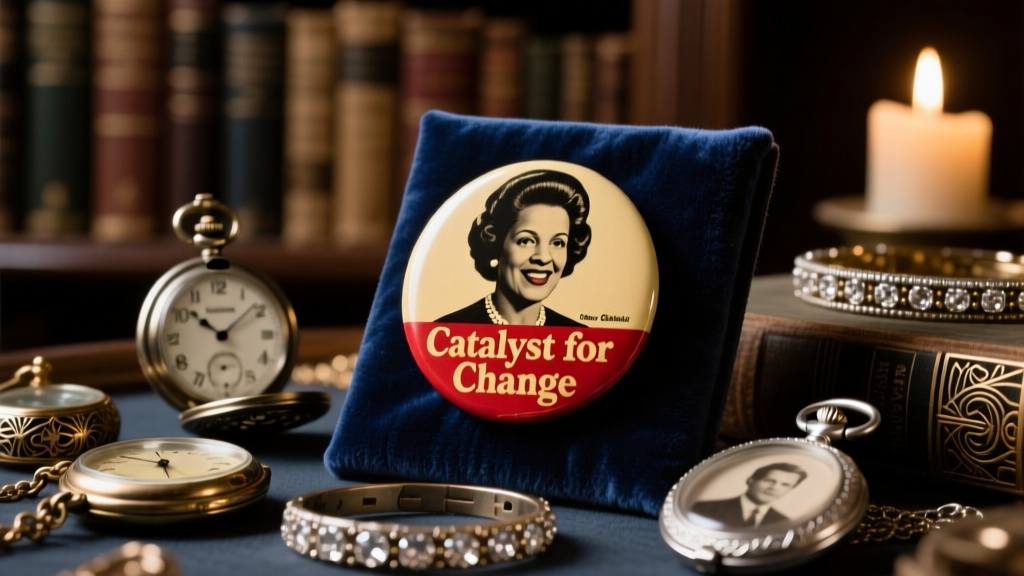
Political Button: Shirley Chisholm 'President' — Catalyst for Change in American Political Iconography
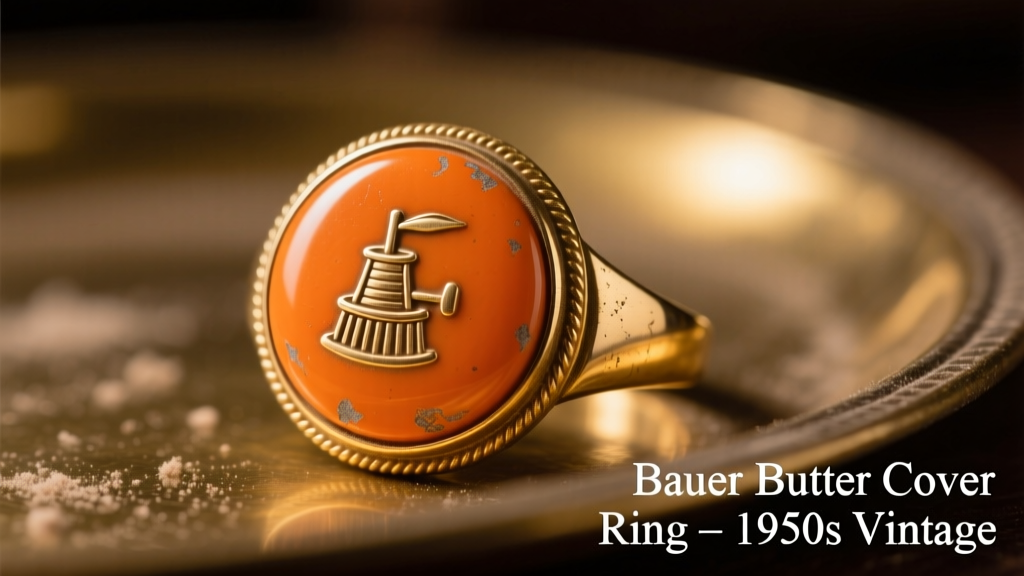
The Bauer Butter Cover Ring: A Rare Orange Round Enamel Masterpiece from Mid-Century Germany

The Coree Red Christmas Card: Paul Jacoulet’s Masterpiece of Japanese Woodblock Artistry and Mid-Century Holiday Elegance
A Study in Gilded Age Elegance: The Mottled Marble and Brass Furniture Stand, c. 1895–1910
The Dick Tracy Doll Sparkle Plenty: A Vintage Collectible Icon from the Golden Age of Comic-Inspired Toys
Royal Worcester Egg Coddlers: A Pair of Victorian-Era Porcelain Kitchen Antiques with Provenance and Collectibility Analysis
Weldon Burgoon’s Bits, Spurs, and Western Collectibles: Auction Lot #3 — Provenance, Craftsmanship, and Market Significance
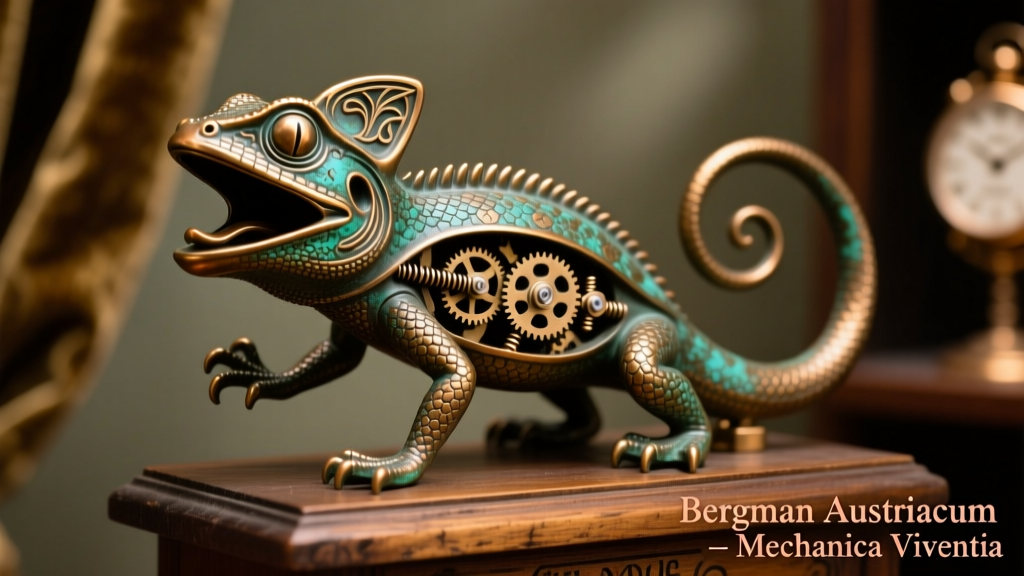
The Bergman Austrian Bronze Lizard Figurine: A Masterpiece of Kinetic Automata Craftsmanship