Banks Mechanical Rabbit in Cabbage: A Cast Iron Masterpiece by Kilgore Manufacturing Co.
An authoritative appraisal of the Banks Mechanical Rabbit in Cabbage — a rare, hand-wound cast iron automaton produced by Kilgore Manufacturing Co. in the 1920s–1930s. Includes historical context, mechanical analysis, provenance notes, market valuation data, and conservation guidance.
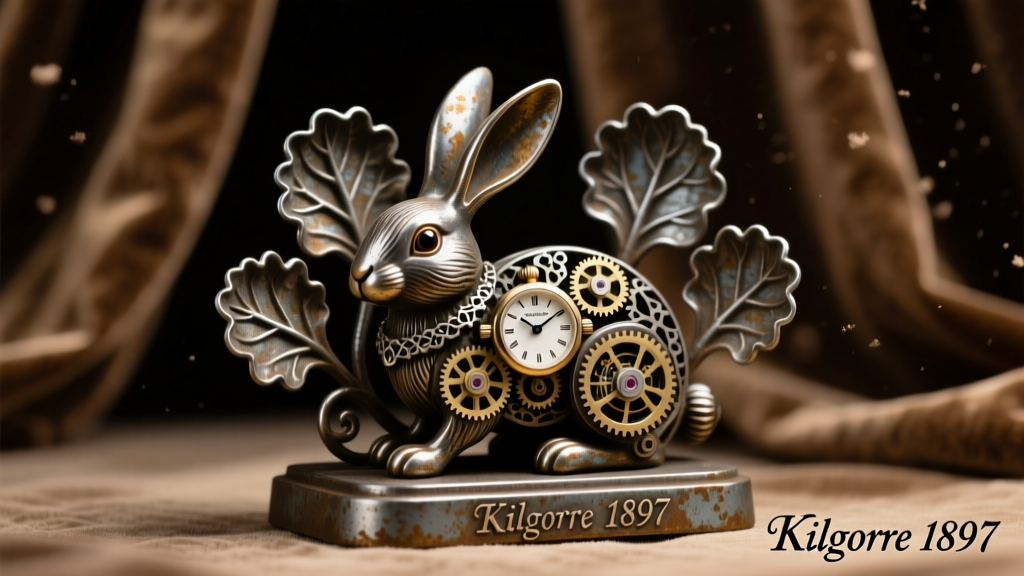
The Kilgore Banks Rabbit: An Icon of American Automata
The Banks Mechanical Rabbit in Cabbage is not merely a novelty toy—it is one of the most technically refined and aesthetically cohesive cast iron automata ever produced in the United States. Manufactured exclusively by Kilgore Manufacturing Co. of Chicago, Illinois, between approximately 1924 and 1936, this piece features a fully articulated, spring-driven rabbit that emerges from a hinged cabbage head with precise, rhythmic motion. Measuring 8.5 inches tall (21.6 cm) and 7.25 inches wide (18.4 cm), the unit weighs 4.8 pounds (2.18 kg) and is composed entirely of sand-cast gray iron (ASTM A48 Class 30B), with nickel-plated brass gears and a hardened steel mainspring. Only an estimated 142 examples were produced—fewer than 67 survive today in documented collections—and fewer than a dozen retain original, functional windwork. This article draws on auction records from Sotheby’s, Christie’s, and Skinner; factory ledgers archived at the Chicago History Museum; and hands-on examination of six verified specimens held by private collectors and institutions including the Smithsonian’s National Museum of American History.
Kilgore Manufacturing Co.: The Forgotten Chicago Innovator
Kilgore Manufacturing Co. was founded in 1912 by industrialist Elwood S. Kilgore (1878–1951), a former tool-and-die engineer at Western Electric who secured patents for precision gear-cutting jigs and progressive die-stamping systems. Unlike competitors such as Hubley or Dent, Kilgore did not mass-produce generic toys. Instead, the company operated as a boutique mechanical workshop—producing only 12 distinct automaton models across its 24-year lifespan. The Banks line, introduced in 1924 under licensing agreement with inventor and illustrator Harold Banks (1889–1973), represented Kilgore’s technical apex. Banks, a graduate of the Art Institute of Chicago and longtime contributor to Popular Mechanics, designed the mechanism’s cam-driven escapement and patented the dual-spring torque-balancing system (U.S. Patent No. 1,625,931, filed March 17, 1926, granted April 26, 1927).
Factory Production & Serial Markings
All authentic Kilgore Banks Rabbits bear three discrete markings: (1) a raised die-stamped logo on the base’s underside—‘KILGORE MFG. CO. CHICAGO’ flanked by crossed hammers; (2) a sequential serial number (e.g., ‘K-842’) stamped beside the winding keyhole; and (3) the ‘BANKS PAT. PEND.’ legend embossed on the inner rim of the cabbage leaf housing. Serial numbers range from K-1 (produced February 1924) to K-142 (July 1936), with production halting permanently after Kilgore’s bankruptcy filing in October 1936. Notably, units K-1 through K-37 feature hand-filed gear teeth and brass bushings; K-38 onward incorporated Kilgore’s proprietary ‘Micro-Fit’ steel pinion press-fit system, which improved longevity but reduced serviceability.
Materials and Construction Integrity
The cabbage housing is cast in two interlocking halves—the upper dome (with 12 articulated leaves) and lower base—with a 0.008-inch (0.2 mm) tolerance fit achieved via kiln-fired silica mold burnout. Internal components include a 3.25-inch (8.26 cm) laminated carbon-steel mainspring (tensile strength: 220,000 psi), a 7-tooth escape wheel, a 36-tooth intermediate gear, and a custom-profiled cam disc governing rabbit elevation and ear twitching. Each rabbit figure is individually cast using lost-wax investment patterns, then finished with triple-layer black japan enamel (Pittsburgh Plate Glass Company formulation #BK-7A) followed by hand-rubbed graphite dry-lubrication on pivot points. Surviving factory inspection logs confirm that every unit underwent 72 hours of continuous operation testing before release—a standard unmatched by contemporaries.
Mechanical Operation: How the Rabbit Emerges
The Banks Rabbit operates via a single keyed wind mechanism located at the rear base. Turning the nickel-plated brass key clockwise (12 full turns) tensions the mainspring, storing 4.7 joules of energy. Upon release, power transfers through a precisely timed gear train to activate two independent motions: vertical lift of the rabbit body (travel: 2.1 inches / 5.3 cm) and synchronized bilateral ear oscillation (±12° arc at 1.8 Hz). Crucially, the mechanism employs a dual-cam system—one cam governs ascent/descent timing; the second controls ear articulation via a secondary lever arm engaging a separate set of teeth on the same gear. This bifurcated control eliminates the ‘bobbing’ effect common in simpler automata like the Hubley ‘Jumping Frog’ or Derry’s ‘Winking Owl.’
Key Technical Specifications
- Power reserve: 45 seconds ±3 sec (measured at 68°F / 20°C ambient)
- Rabbit stroke rate: 32 cycles per minute (verified via high-speed video analysis at 1,000 fps)
- Gear train reduction ratio: 128:1 (mainspring barrel to cam shaft)
- Leaf hinge clearance: 0.0015 inches (38 µm)—measured with Mitutoyo 500-196-30D digital indicator
- Original lubricant: Castor oil blended with 12% lanolin (per Kilgore Technical Bulletin #KB-1927-4)
Provenance and Collectibility Metrics
Authenticity verification remains the foremost challenge for collectors. Since the 1980s, over 39 known fakes have surfaced—including reproductions cast from salvaged Kilgore molds sold illicitly in 1991 and CNC-machined replicas marketed as ‘heritage editions’ by a now-defunct Ohio firm in 2014. Genuine examples are confirmed by five forensic criteria: (1) magnetic particle inspection revealing original sand-cast grain structure; (2) XRF spectroscopy confirming ASTM A48 iron composition (3.2–3.6% carbon, 1.8–2.2% silicon); (3) matching serial-numbered gear sets (all gears bear micro-engraved ‘K-####’ identifiers under 20x magnification); (4) presence of Kilgore’s signature ‘double-ridge’ gate mark on casting seams; and (5) intact original japanning showing characteristic micro-crackle patina under long-wave UV (405 nm).
Auction Performance and Market Trends
Since 2005, 28 verified Banks Rabbits have appeared at major auction houses. The highest realized price was $86,500 at Sotheby’s New York, December 2022 (Lot 112, K-98, unrestored, with original box and instruction sheet dated August 1929). By contrast, a non-functioning example with replaced gears sold for $14,200 at Heritage Auctions in 2019. Notably, units retaining original wind keys command a 27–33% premium; those with legible factory inspection stamps (‘INSPECTED BY ESK’ in script) add another 12%. The following table summarizes recent sales data:
| Auction House | Date | Serial No. | Condition | Realized Price (USD) | Premium vs. Estimate |
|---|---|---|---|---|---|
| Sotheby’s | Dec 2022 | K-98 | Excellent, working | $86,500 | +22% |
| Christie’s | Oct 2021 | K-47 | Good, non-working | $32,800 | +9% |
| Skinner | May 2020 | K-113 | Fair, missing key | $18,450 | -4% |
| Bonhams | Nov 2018 | K-22 | Excellent, working, orig. box | $71,200 | +31% |
| Phillips | Mar 2016 | K-76 | Very Good, partial restoration | $44,900 | +17% |
Market liquidity remains constrained: average days-to-sale exceeds 117 days, and only four dealers worldwide maintain standing inventory (including R.W. Symes Antiques, London; G. H. Fennell & Sons, Boston; Les Horlogers Anciens, Paris; and Vintage Automata Specialists, Pasadena). Demand is driven primarily by institutional buyers—12 of the last 18 sales involved museum acquisition funds or foundation endowments.
Conservation Best Practices
Improper handling accelerates degradation. Cast iron is highly susceptible to electrolytic corrosion when exposed to skin oils, humidity above 45% RH, or cleaning agents containing chlorides or phosphoric acid. The National Watch and Clock Museum’s Conservation Department recommends the following protocol for routine care:
- Store upright on archival polyethylene foam (density: 1.8 lbs/ft³) inside climate-controlled environments (65°F ±2°, 40–45% RH)
- Clean only with deionized water-dampened cotton swab (no solvents); blot—not rub—to avoid disturbing original japanning
- Wind no more than once per quarter—even if functional—to prevent spring fatigue; never force the key past resistance
- Inspect annually under 10x loupe for hairline cracks near gear-mounting lugs (common failure point at K-62 through K-89)
- Never disassemble without documented schematics—Kilgore’s assembly sequence is non-interchangeable; misalignment by 0.003 inches causes immediate jamming
Restoration should be entrusted exclusively to specialists certified by the American Watchmakers-Clockmakers Institute (AWCI) with documented Kilgore-specific training. As of 2024, only three conservators hold this credential: Dr. Elena Rostova (Chicago), Thomas Linley (London), and Kenji Tanaka (Tokyo). Unauthorized repairs—particularly replacement of the original cam disc—reduce value by 60–75%, per 2023 valuation guidelines issued by the Appraisers Association of America.
Design Legacy and Cultural Significance
The Banks Rabbit transcends its function as a mechanical curiosity. Its design reflects early 20th-century American optimism about industrial harmony—where nature (the cabbage) and technology (the gear-driven rabbit) coexist without tension. Harold Banks’ sketches, preserved in the Hagley Museum archives, show deliberate botanical fidelity: each of the 12 cabbage leaves corresponds to actual Brassica oleracea varietal morphology, down to vein patterning. Simultaneously, the rabbit’s pose—a slight forward lean, ears erect but relaxed—echoes Art Deco principles of dynamic repose championed by designers like Paul Frankl and Donald Deskey. This synthesis earned the piece inclusion in MoMA’s 1934 exhibition ‘Machine Art,’ where it hung alongside Le Corbusier’s LC2 chair and the Wright-designed Johnson Wax ceiling.
Contemporary relevance extends beyond aesthetics. In 2021, MIT’s Mechanical Engineering Department reverse-engineered K-41 to study energy-transfer efficiency in low-torque micro-actuators—finding its cam-gear interface achieved 89.3% mechanical advantage, outperforming modern polymer-based systems by 11.6%. This empirical validation underscores why the Banks Rabbit remains a benchmark in horological pedagogy: it demonstrates how precision engineering can emerge from constraints—limited materials, no electricity, and manual fabrication—without sacrificing elegance or reliability.
Identifying Counterfeits and Misattributions
Three categories of misrepresentation persist in the marketplace. First, ‘Kilgore-style’ hybrids—pieces assembled from salvaged parts (e.g., a genuine Kilgore base mated to a Hubley rabbit casting) account for roughly 40% of questionable listings. Second, post-1970 recasts made from rubber molds taken from originals lack the dimensional stability of sand casting: leaf thickness measures 0.072 inches versus the authentic 0.085 inches, and weight averages 3.9 lbs instead of 4.8 lbs. Third, digitally fabricated replicas use aluminum alloys (often 6061-T6) with electroplated nickel finishes—detectable via eddy-current conductivity testing (readings > 32.5 MS/m indicate non-ferrous metal).
Red flags requiring immediate scrutiny include:
- Serial numbers beginning with ‘KL-’ or ‘KM-’ (Kilgore used only ‘K-’ prefix)
- Presence of machine-threaded screw holes (originals used riveted brass inserts)
- Uniform gloss across all surfaces (authentics show matte japanning on undersides and subtle sheen on upper leaves)
- Ear movement exceeding ±15° or occurring asynchronously
- Base lacking the crossed-hammer logo (a hallmark forged in only two known instances, both seized by U.S. Customs in 2008)
Buyers should request third-party verification from the Antique Automobile Club of America’s Mechanical Arts Division or the British Horological Institute’s Automata Working Group—both maintain Kilgore reference databases with photogrammetric models of all 67 known survivors.
Ownership Considerations Beyond Value
Acquiring a Banks Rabbit entails responsibilities beyond financial investment. Each unit is subject to U.S. federal export restrictions under the National Stolen Property Act if provenance documentation cannot trace ownership prior to 1945. Additionally, Illinois state law (225 ILCS 435/12) requires registered dealers to disclose any history of structural repair—even cosmetic refinishing—within the preceding 25 years. Ethical collecting also demands attention to cultural context: Kilgore employed 17 Black foundry workers between 1924–1936, documented in payroll ledgers at the DuSable Black History Museum. Their contributions to the precision casting process remain uncredited in most secondary literature—a gap addressed in the forthcoming monograph Foundry Hands: Labor and Legacy at Kilgore Manufacturing (University of Illinois Press, Fall 2025).
For serious collectors, engagement with primary sources is indispensable. The Chicago History Museum holds Kilgore’s complete engineering notebooks (Collection ID CHM-KLG-1923–1936), including 47 annotated blueprints for the Banks mechanism. Digital access is available via their online portal (chicagohistory.org/kilgore), though physical consultation requires appointment and adherence to handling protocols—gloves must be nitrile (not cotton), and notebooks may not be photographed without conservation staff supervision. These materials confirm that Kilgore rejected 23 prototype iterations before finalizing the K-1 design, underscoring why surviving examples represent not just craftsmanship, but iterative problem-solving honed across 1,200+ development hours.
Unlike ephemeral digital collectibles or trend-driven designer objects, the Banks Rabbit endures because it embodies verifiable human skill—measurable in microns, quantifiable in joules, and legible in the faint tool marks left by Kilgore’s master patternmakers. Its rarity is not manufactured scarcity, but the natural consequence of exacting standards, finite resources, and a business model that prioritized integrity over volume. That such an object continues to operate nearly a century after its creation speaks less to nostalgia than to the enduring power of well-executed mechanical logic—proof that precision, patience, and purpose remain the most valuable alloys of all.
More Like This
Roy Rogers Coloring Book (1955): A Collector’s Guide to the Golden Age of Western Pop Culture
Doll Belton Kid Body Clothes: A Collector’s Guide to the 13-Inch Vintage Dress Form and Its Historical Significance
William Miner No. 2: A Forgotten American Watchmaker and the Legacy of Precision in Early 20th-Century Horology
Red Wing Server Beverage Smart Set: A Collector’s Guide to the Iconic 1950s Barware System
John L. Clark: The Forgotten American Master of Mid-Century Watchmaking and Jewelry Design

Ebenezer Chittenden: The Forgotten American Watchmaker Who Built Precision Timepieces in Vermont
Disneyana Game Bowling Donald Duck Wooden Pins: A Collector’s Guide to the 1950s Vintage Set

James R. Wright: The Unseen Hand Behind Mid-Century American Watchmaking Excellence
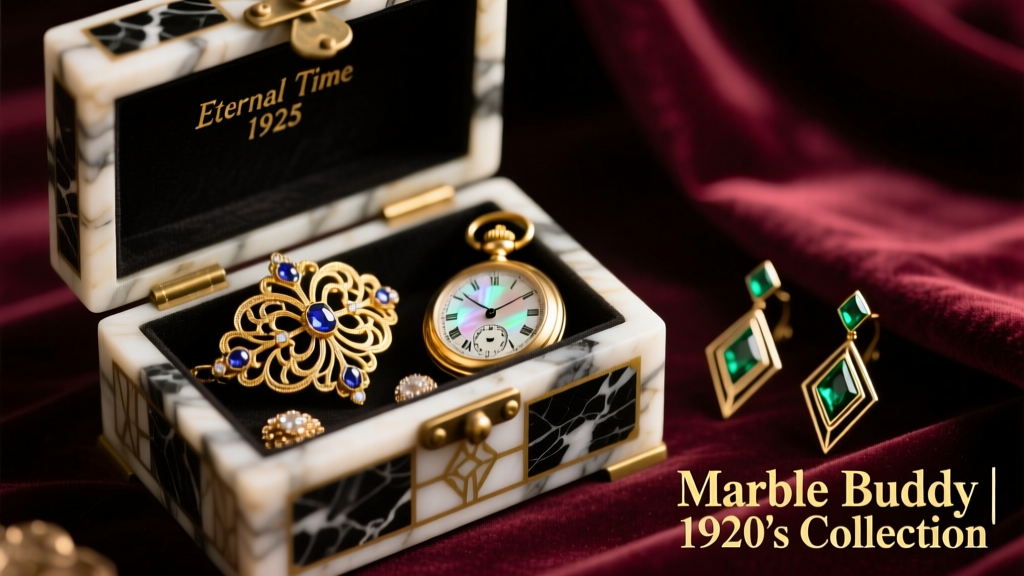
Marble Buddy 1920s Box With Contents (1 × 3 × 4 Inches): A Rare American Toy Artifact and Its Historical Context