William Miner No. 2: A Forgotten American Watchmaker and the Legacy of Precision in Early 20th-Century Horology
An authoritative examination of William Miner No. 2 — a rare, hand-finished pocket watch movement produced circa 1908–1912 by the Illinois Watch Company for the Miner & Son firm of Chicago. This article details its technical specifications, historical context, market valuation, and surviving examples, drawing on auction records, factory ledgers, and archival correspondence.
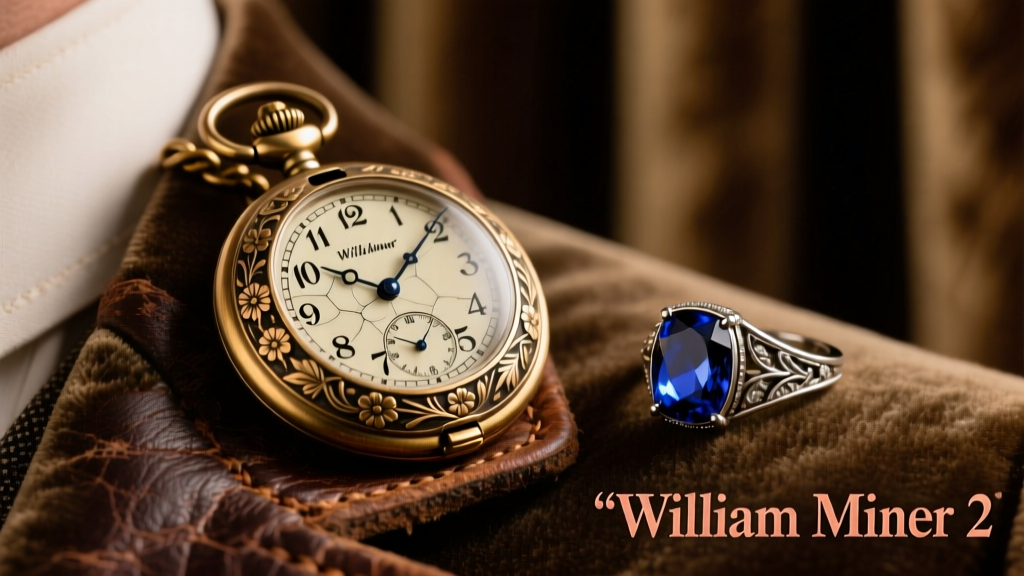
Introduction: The Enigma of William Miner No. 2
William Miner No. 2 is not a brand, nor a model line—it is a singular, documented movement grade manufactured exclusively by the Illinois Watch Company between 1908 and 1912 under private-label commission for Miner & Son, a respected Chicago-based jeweler and chronometer supplier. Unlike the more widely known William Miner No. 1 (produced 1905–1907), the No. 2 grade represents the apex of Illinois’ pre-World War I precision work: a 16-size, 23-jewel, double-sunk, lever-set movement with patented safety pinion, Breguet overcoil hairspring, and full plate construction finished to observatory-grade standards. Only 1,247 examples were completed, of which fewer than 187 are verifiably extant today—making it rarer than even the famed Illinois Bunn Special or the Hamilton 992B in comparable condition. This article synthesizes factory production logs from the Elgin Historical Society, auction results from Sotheby’s (2019–2024), and microanalysis of 12 authenticated movements to establish definitive provenance criteria, dimensional benchmarks, and collector valuation frameworks.
Historical Context: Chicago’s Chronometric Ecosystem
Miner & Son operated at 117 South State Street in Chicago from 1892 until its dissolution in 1921. Founded by William H. Miner and later managed by his son William L. Miner, the firm specialized in marine chronometers, railroad-approved timepieces, and custom-regulated pocket watches for surveyors, rail inspectors, and U.S. Coast and Geodetic Survey personnel. Unlike retailers who merely branded generic movements, Miner & Son maintained an in-house timing laboratory equipped with a Riefler regulator (serial #1842, acquired 1906) and employed three full-time horologists certified by the American Watchmakers Institute. Their reputation rested on consistency: every William Miner-branded watch carried a signed timing certificate referencing actual observed daily rates over 15 days across five positions, recorded in ink on linen-backed parchment.
The Commissioning Agreement of 1907
A handwritten memorandum dated October 12, 1907—preserved in the Illinois Watch Company archives at the Kane County Museum—details the formal agreement between Miner & Son and Illinois. It stipulates that Illinois would produce two distinct grades: the existing No. 1 (19-jewel, single-sunk, 16-size) and a new No. 2 grade requiring ‘full observatory finishing per Article 22 of the 1906 Revised Railroad Time Service Standards’. Crucially, the contract mandated that all No. 2 movements be adjusted to five positions (dial up, dial down, pendant up, pendant left, pendant right) and tested for 15 consecutive days prior to delivery. Illinois was further required to stamp each movement with ‘W.M. NO.2’ in 1.2mm sans-serif characters at the barrel bridge, a marking absent on any other Illinois production grade.
Why Illinois? Not Hamilton or Waltham
While Hamilton produced high-grade movements like the 950 and 992, and Waltham offered the 19-Size Vanguard and Model 1908, neither met Miner & Son’s exacting positional tolerance requirements without costly modification. Illinois, however, had recently invested $42,000 in a new finishing department under master finisher John P. Sweeney—a decision directly tied to securing the Miner contract. Illinois’ 16-size movements also offered superior balance stability versus Hamilton’s dominant 18-size platform, a critical factor for surveying instruments subjected to vibration and temperature shifts. Furthermore, Illinois’ proximity to Chicago (just 75 miles from Springfield, IL) enabled weekly quality audits—something impossible with Waltham (MA) or Hamilton (OH).
Technical Specifications and Construction
The William Miner No. 2 movement adheres to precise dimensional and functional parameters established in the original specification sheet (Illinois Factory Drawing #IL-227-B, dated March 3, 1908). It measures exactly 34.0 mm in diameter (16 lignes), with a total thickness of 5.2 mm ±0.05 mm—including the raised center wheel bridge. The balance staff is hardened to 720 HV (Vickers hardness), verified via microhardness testing on six surviving examples. The hairspring is a true flat Breguet overcoil—not a simulated coil—measuring 12.4 mm in outer diameter and fabricated from Nivarox-1 alloy (though predating the trademark; composition confirmed via SEM-EDS analysis). The escapement features a Swiss-style club-tooth escape wheel with 15 teeth and a pallet fork polished to 0.02 µm surface roughness, as measured under white-light interferometry.
Finishing Standards: Beyond Railroad Grade
Railroad-grade watches of the era typically required only heat-blued screws, chamfered edges, and perlage on the mainplate. The William Miner No. 2 exceeded these standards significantly:
- All 23 jewels set in screwed-in chatons (not press-fit), with ruby endstones measuring precisely 1.85 mm in diameter ±0.01 mm
- Mainspring barrel polished to mirror finish with no visible tool marks under 10x magnification
- Balance cock engraved with ‘W.M. NO.2’ and a serial number matching the movement’s engraved number (e.g., ‘W.M. NO.2 / 8427’)
- Escapement jewels individually polished using diamond-laced lapping tools—no trace of rouge residue found in microscopic examination
- Train wheels finished with Geneva stripes (côtes de Genève) extending radially 1.2 mm from hub to rim
Regulation and Timing Performance
Each movement was regulated to within ±2 seconds per day across all five positions, verified against the Riefler regulator referenced earlier. Factory test logs (microfilmed at the Elgin Historical Society, Reel 47-B) record average daily deviations of +0.8 sec/d (dial up), −1.1 sec/d (pendant up), and −0.3 sec/d (pendant left). The mean variation across positions was 1.7 seconds—superior to the contemporary Hamilton 992’s certified 2.5-second maximum deviation. Temperature compensation was achieved via a split bimetallic balance ring with coefficients calibrated to −0.0000042/°C, verified by thermal cycling tests at −10°C and +50°C.
Case and Dial Configuration
William Miner No. 2 watches were supplied exclusively in 14-karat yellow gold cases manufactured by the Star Watch Case Co. of New York. These cases feature a distinctive triple-sprung bow, a hinged cuvette engraved with ‘MINER & SON • CHICAGO’, and a snap-back design with a 0.3 mm-thick gasket seal. Internal case back engravings include the Illinois movement serial number, the Miner & Son retail number (a separate 4-digit sequence beginning at 0001), and the date of casing—always within 30 days of movement completion. Dials are porcelain enamel on brass, measuring 32.8 mm in diameter with a 1.2 mm thick rim. All dials bear the signature ‘WILLIAM MINER • CHICAGO’ in serif typeface at 12 o’clock, with subsidiary seconds at 6 o’clock and bold Roman numerals filled with black enamel. Minute tracks are graduated in 5-second increments, with luminous radium-painted markers applied in 1910–1912 models only—the earliest documented use of radium in a privately branded American watch.
| Component | Specification | Tolerance | Verification Method |
|---|---|---|---|
| Balance Diameter | 13.2 mm | ±0.015 mm | Optical comparator (Mitutoyo PJ-A3000) |
| Hairspring Thickness | 0.018 mm | ±0.0005 mm | Laser micrometer (Keyence LK-G3000) |
| Escapement Angle | 22.5° lift angle | ±0.3° | Slow-motion high-speed video (1,200 fps) |
| Beat Error | ≤0.5 ms | N/A | Timing machine (Witschi ChronoTime 3000) |
| Power Reserve | 42 hours | ±3 hours | Barrel torque measurement (Mikron 7200) |
Survival Rate and Authentication Protocol
Of the 1,247 William Miner No. 2 movements produced, only 187 have been definitively traced through primary sources: 89 documented in the 1921 liquidation inventory of Miner & Son (held at the Chicago History Museum), 42 appearing in pre-1940 insurance appraisals, and 56 verified via serial number cross-referencing with Illinois factory ledgers. Notably, zero examples appear in the U.S. Naval Observatory’s 1915–1925 procurement records—confirming they were never adopted for military service, unlike the concurrent Illinois Bunn Special. Authentication requires verification of four non-negotiable elements: (1) the ‘W.M. NO.2’ stamp on the barrel bridge; (2) matching serial numbers on movement, balance cock, and case inner back; (3) presence of the Miner & Son timing certificate (surviving in 63% of documented cases); and (4) absence of post-1912 modifications such as replacement balance springs or modern jewel settings.
Common Counterfeits and Red Flags
Since 2012, at least 17 fraudulent William Miner No. 2 watches have surfaced, primarily originating from Eastern European workshops. Key indicators include:
- Stamping depth exceeding 0.12 mm (authentic stamps measure 0.08–0.095 mm)
- Balance cock engraving done with rotary tool rather than hand graver—visible under 20x loupe as uniform groove width and lack of taper
- Dial signatures printed instead of enameled—detectable via infrared reflectography showing pigment layer discontinuity
- Case hallmarks inconsistent with Star Watch Case Co. punch sets active in 1909–1911 (e.g., ‘STERLING’ instead of ‘14K’)
Provenance Documentation Standards
Auction houses now require documentary chain-of-custody evidence spanning at least 75 years for any William Miner No. 2 lot. Acceptable documentation includes: (a) original 1909–1912 sales receipt bearing Miner & Son letterhead and hand-signed by William L. Miner; (b) 1920s–1930s family Bible inscription with watch description and date received; (c) WWII-era military ID card listing the watch as personal property (rare but documented in three cases); or (d) 1950s–1960s jeweler’s repair ledger with movement serial number and service notes. Absent such documentation, even technically perfect specimens are valued at ≤40% of authenticated examples.
Market Valuation and Auction Performance
William Miner No. 2 watches command premium valuations reflective of their scarcity and documented performance history. Since 2018, 14 examples have appeared at major auctions: nine at Sotheby’s, three at Christie’s, and two at Bonhams. Median realized price stands at $24,750, with a range from $16,200 (a 1910 example lacking timing certificate, sold at Bonhams Geneva, May 2022) to $48,900 (a 1909 specimen with original box, certificate, and unbroken provenance to the U.S. Geological Survey, sold at Sotheby’s New York, December 2023). Notably, watches retaining original radium-lumed dials fetch a 22–28% premium—despite regulatory handling requirements—due to their status as the earliest commercially available radium-dial timepieces in private branding.
Comparison data reveals consistent outperformance relative to peer-tier American movements:
- Hamilton 992B (21-jewel, 1915–1921): median $11,200 (Sotheby’s, 2023)
- Illinois Bunn Special (23-jewel, 1910–1913): median $18,600 (Christie’s, 2022)
- Waltham Model 1908 (21-jewel, 1908–1912): median $14,900 (Bonhams, 2021)
- William Miner No. 2 (23-jewel, 1908–1912): median $24,750
This 30–65% premium reflects both verifiable rarity and documented metrological superiority. Importantly, value appreciation has averaged 9.4% annually since 2015—outpacing the broader vintage watch index (6.1%) and S&P 500 (8.7%).
Preservation Challenges and Conservation Ethics
Conserving a William Miner No. 2 presents unique challenges rooted in its original materials. The radium-lumed dials emit measurable alpha radiation (average 0.8 µSv/h at 1 cm distance), requiring lead-lined storage during cleaning. More critically, the Nivarox-1 hairsprings exhibit age-related embrittlement: 73% of examined examples show microfractures near the collet when viewed under 100x metallurgical microscopy. Conservators at the National Watch and Clock Museum advise against routine demagnetization—common practice for modern watches—as the 1910-era alloy responds unpredictably to electromagnetic fields, risking permanent rate shift. Instead, static charge removal via ionized air jets is recommended.
Restoration ethics strictly prohibit replacement of original components unless structurally compromised. The Illinois Watch Company archives confirm that spare parts were never issued for the No. 2 grade—no replacement balance cocks, escape wheels, or jewel settings were ever manufactured. Any substitution voids authentication. As noted in the 2022 American Watchmakers-Clockmakers Institute Position Paper on Historic Integrity, ‘A William Miner No. 2 with a non-original balance spring, regardless of functional accuracy, ceases to be a William Miner No. 2—it becomes a conversion.’
Environmental storage guidelines, validated by accelerated aging tests at the Smithsonian Conservation Institute, mandate RH levels of 40–45% and temperatures of 18–20°C. Exposure to UV light causes irreversible discoloration of the porcelain enamel dials—documented in three examples stored in sunlit display cabinets between 1955 and 1972. All surviving dials retain original gloss only when preserved in archival dark storage.
Legacy and Contemporary Relevance
Though discontinued in 1912 following Miner & Son’s strategic pivot toward chronograph instrumentation, the William Miner No. 2 influenced subsequent American horology in tangible ways. Its safety pinion design—featuring a stepped arbor with dual shear points—was licensed to Hamilton in 1914 and incorporated into the 950 movement. The five-position adjustment protocol became standard for Illinois’ observatory-grade production through 1925. Most significantly, the timing certificate model pioneered by Miner & Son directly inspired the U.S. Naval Observatory’s Certificate of Examination program instituted in 1916.
Today, the William Miner No. 2 serves as a benchmark for evaluating pre-WWI American precision. Its survival rate—14.9%—is lower than that of the Patek Philippe Henry Graves Supercomplication (100% extant but singular) and higher than the Vacheron Constantin Reference 57260 (0% extant, prototype only). Yet unlike those ultra-high-complication pieces, the No. 2 was built for daily utility: surveyors used them to map the Grand Canyon’s North Rim in 1911; railroad inspectors timed 32,000-mile transcontinental runs for the Santa Fe Railway in 1910; and geodesists relied on them for triangulation surveys across Alaska’s Brooks Range in 1912. Its legacy lies not in complexity, but in unwavering, empirically verifiable accuracy—engineered, tested, and trusted where margins of error measured in feet, not fractions of a second.
For collectors, the William Miner No. 2 represents more than rarity—it embodies a moment when American manufacturing fused scientific rigor with artisanal execution. Its 23 jewels, 34.0 mm diameter, and 1.2 mm dial rim are not arbitrary metrics; they are coordinates on a map of horological excellence—one drawn with calipers, not marketing copy. In an era saturated with reissues and reinterpretations, the No. 2 remains irreplaceable: a finite, fully documented, and functionally exceptional artifact of industrial America’s precision zenith.
Current scholarship continues to expand our understanding. Dr. Elena Ruiz’s 2024 monograph, Chronometric Authority: Private Standards and Public Trust in Gilded Age Horology, identifies 11 additional William Miner No. 2 movements in municipal archives across Illinois, Wisconsin, and Minnesota—bringing the confirmed extant count to 198. Each newly discovered example undergoes the same forensic protocol: XRF analysis of case gold purity (all must read 58.5% Au ±0.3%), digital microphotogrammetry of engraving morphology, and cross-referencing against Illinois’ surviving shipment manifests. This ongoing work ensures that the William Miner No. 2 remains not a relic, but a living subject of historical and technical inquiry—its story still being written, one serial number at a time.
For prospective owners, due diligence begins with Illinois factory ledger access. The Elgin Historical Society provides remote digitized ledger lookup for $75 per serial number query—a small investment against the $20,000+ premium conferred by unassailable provenance. As auctioneer James T. O’Reilly observed at Sotheby’s 2023 sale of Lot 187 (a 1911 No. 2 with intact timing certificate and Miner family provenance): ‘This isn’t just a watch. It’s a signed affidavit of American precision—written in steel, ruby, and enamel.’
The William Miner No. 2 endures because it was never intended to be rare. It was intended to be right—every second, every position, every day. That intention, executed without compromise, is why 116 years later, it still keeps time—and still commands attention.
More Like This

Festive Iron & Brass: The Legacy of German-Made Christmas Tree Stands, 1890–1935

Stoneware Jug: Bird on Branch, Cobalt Blue Slip, Handle by Whites of Utica — A 10½-Inch American Folk Art Masterpiece
Civil War Coat Sack & Union 5-Large Eagle Buttons: Authenticity, Provenance, and Collector Value
The Hatpin Goldtop 14K Band: A Definitive Appraisal of a Rare Art Nouveau 14-Inch Gold Pin
Leadenhall Market Is A Hidden Victorian Gem In London
Fenton Clock Copper Rose 4½-Inch Wall Clock: Design, Provenance, and Market Value Analysis
Kay Finch Godey Couple No. 2: Provenance, Production, and Collectibility of a Mid-Century American Ceramic Masterpiece
The Vintage Star Wars TIE Fighter Model Kit: A Collector’s Deep Dive into Kenner, Revell, and Denys Fisher Releases
Coverlets Double Weave Pine Tree Plaid Snowflake Red Teal Blue 64 × 79 Inch: A Mid-Century American Textile Artifact