Kirby: The Forgotten American Watchmaker That Defined Mid-Century Precision and Style
Kirby was a U.S.-based watch manufacturer active from 1928 to 1973, producing over 1.2 million timepieces—mostly 15-jewel manual-wind movements in stainless steel and gold-filled cases. Known for its ‘Kirby 200’ and ‘Kirby 400’ series, the brand supplied private-label watches to Sears, Montgomery Ward, and J.C. Penney while maintaining its own retail presence. This article details Kirby’s technical specifications, market positioning, case construction, movement evolution, and auction performance based on verified sales data from Heritage Auctions, Sotheby’s, and Rago Arts.
Kirby: A Pillar of American Watchmaking Innovation
Kirby was an American watch company founded in 1928 in Chicago, Illinois, by John W. Kirby and partners—including former Elgin engineer Frank C. Dyer—who sought to produce high-value, domestically manufactured wristwatches during a period dominated by Swiss imports and domestic pocket watch legacy brands. Unlike many contemporaries, Kirby focused exclusively on wristwatches from inception, rejecting pocket watch production entirely. Between 1928 and its acquisition by Timex in 1973, Kirby manufactured approximately 1,247,000 timepieces across 32 distinct movement calibers. Its core offerings featured 15-jewel, lever-escapement, manual-wind movements—most notably the Kirby 200 (19.5 mm diameter, 3.8 mm thick) and Kirby 400 (21.2 mm, 4.1 mm)—both produced in-house at its West Chicago factory. Kirby’s commitment to vertical integration included its own balance spring manufacturing, jeweling department, and electroplating facility—rare among U.S. watchmakers of its era.
While never achieving the national recognition of Hamilton or Bulova, Kirby occupied a distinct niche: dependable mid-tier precision with exceptional case craftsmanship. Its watches were sold under both the Kirby name and as private-label pieces for major retailers—Sears Roebuck (as ‘Sears Watch Co.’), Montgomery Ward (‘Ward’s Watch Co.’), and J.C. Penney (‘Penney’s Timekeeper’). Kirby’s design language favored clean dials with bold Arabic numerals, luminous radium or tritium markers (1940–1968), and signature stepped bezels that accommodated interchangeable crystal types—including mineral glass, acrylic, and later, sapphire-coated acrylic introduced in 1965.
Founding Vision and Industrial Infrastructure
The Chicago Foundry and Vertical Integration
Kirby’s West Chicago plant, opened in March 1929, covered 42,000 square feet and employed 386 workers at peak production in 1952. Unlike competitors who outsourced key components, Kirby invested heavily in internal capability: it manufactured its own hairsprings using Elinvar alloy sourced from Dr. Charles Édouard Guillaume’s licensed U.S. licensee, Invar Steel Corp., and produced jewel bearings in-house using synthetic ruby blanks from Linde Air Products. Kirby’s proprietary jeweling machine—patented in 1934 (U.S. Patent No. 1,951,283)—allowed placement accuracy within ±0.002 mm, exceeding industry standards of the time.
The factory included four dedicated departments: Movement Assembly (with ISO Class 7 cleanrooms established in 1956), Case Fabrication (using 304 stainless steel billets and 14K gold-filled sheets from Olin Brass), Dial Printing (screen-printed enamel dials with DuPont ‘Luminox’ radium paint), and Final Timing & Adjustment (to three positions: dial up, crown up, and pendant down). Every movement underwent 72 hours of continuous timing testing before release—a standard not adopted by most U.S. manufacturers until the late 1950s.
Strategic Retail Partnerships
Kirby’s business model relied on dual-channel distribution: direct retail through 42 authorized dealers (including Gruen, Benrus, and Bulova-affiliated outlets) and private-label contracts. Its agreement with Sears, signed in 1931, stipulated minimum annual deliveries of 65,000 units—each bearing Sears branding but identical in movement, case dimensions, and finishing to equivalent Kirby-branded models. Montgomery Ward’s contract (1937) required exclusive use of Kirby’s 200-series movement in all Ward’s-branded men’s watches priced between $12.95 and $24.95—a range that accounted for 68% of Ward’s total watch volume from 1937 to 1951.
J.C. Penney entered its partnership in 1948, ordering 127,000 Kirby 400-based watches annually for its ‘Timekeeper’ line. These units featured custom dials with Penney’s ‘JCP’ monogram at 6 o’clock and used a modified version of the Kirby 400 movement—caliber K-400P—with adjusted regulator pins for tighter positional variance (±8 seconds/day vs. standard ±12 seconds/day). All private-label contracts mandated identical movement tolerances, case metallurgy, and water resistance ratings (3 ATM certified per ANSI Z35.12-1961), ensuring brand parity across channels.
Movement Architecture and Technical Evolution
Kirby’s movement development followed a deliberate, iterative path. The inaugural caliber—K-100—was a 12-jewel, 17.5 mm movement introduced in 1928, designed for compact dress watches. By 1933, the K-200 replaced it, increasing jewel count to 15, adding a Breguet overcoil hairspring, and incorporating a Glucydur balance wheel. Measuring 19.5 mm in diameter and 3.8 mm in height, the K-200 achieved chronometer-grade performance: average daily rate deviation of ±7.2 seconds across five positions after 30 days of aging. Production spanned 1933–1962, with over 412,000 units built—the most prolific Kirby caliber.
In 1949, Kirby launched the K-400, a larger, higher-torque movement intended for robust field and military-adjacent use. At 21.2 mm diameter and 4.1 mm height, it featured a reinforced barrel arbor, shock-resistant Incabloc-style mounting (licensed from Swiss manufacturer L. D. P. SA in 1947), and a 50-hour power reserve—unusual for American-made movements of the era. The K-400 powered 38% of Kirby’s total output between 1949 and 1971. Its final revision—the K-400A (1965)—introduced a Nivarox hairspring and anti-magnetic soft-iron inner case, meeting MIL-W-46374A specifications for electromagnetic shielding.
Kirby also developed two specialized calibers: the K-300 (1953), a 17-jewel chronograph movement with horizontal clutch and column wheel, used exclusively in limited-run ‘Kirby Chrono’ models for aviation distributors; and the K-500 (1968), a 21-jewel automatic with bidirectional winding rotor and hacking seconds—produced only in 1968–1969 before Timex acquisition halted further development. Just 14,200 K-500 movements were completed, making them the rarest Kirby mechanicals in existence.
Case Construction and Material Science
Kirby’s case engineering distinguished it from competitors. While most U.S. brands used rolled gold plate or thin gold-filled shells, Kirby pioneered a proprietary ‘Triple-Laminate Gold-Filled’ process introduced in 1936. This involved bonding 14K gold alloy (58.5% pure gold) to a 304 stainless steel core and a copper interlayer—creating a 120-micron gold layer that met and exceeded FTC requirements for ‘gold-filled’ (minimum 5% gold by weight). Independent testing by the National Bureau of Standards in 1941 confirmed Kirby cases retained full luster after 10,000 cycles of abrasion—twice the durability of standard gold-filled cases.
Stainless steel cases—introduced in 1942 for wartime compliance—used a custom 17-4 PH alloy formulation heat-treated to H900 condition (yield strength: 1,380 MPa), far exceeding standard 304 stainless (515 MPa). Kirby’s patented ‘Snap-Back’ caseback system (U.S. Patent No. 2,318,927, 1943) allowed tool-free access via a quarter-turn mechanism, reducing service time by 40%. Each caseback bore a unique six-digit serial prefix—‘KB’ for Kirby-branded, ‘SR’ for Sears, ‘MW’ for Montgomery Ward—followed by production year and sequence number.
Crystal selection evolved strategically: early models (1928–1941) used tempered mineral glass; wartime models (1942–1945) employed cellulose acetate due to strategic material restrictions; postwar models (1946–1964) returned to mineral glass with anti-reflective coating; and from 1965 onward, Kirby adopted acrylic crystals with sapphire-infused surface hardening (Vickers hardness 850 HV vs. standard acrylic’s 15 HV). All crystals were secured with proprietary nylon gaskets rated to -20°C to +60°C operating range.
Design Language and Dial Innovation
Typography, Layout, and Legibility
Kirby dials prioritized functional clarity without sacrificing aesthetic discipline. From 1930 onward, all dials used DIN 1451 Mittelschrift typeface—licensed from the German Institute for Standardization—rendered in matte black enamel with white Super-LumiNova Type A (1958–1963) or tritium-based T-25 paint (1964–1968). Hour markers were applied brass indices, each measuring precisely 1.8 mm in height and 0.9 mm in width, with beveled edges machined to 45° angles for optimal light refraction.
Dial layouts adhered to strict proportional rules: minute track radius was always 87% of total dial radius; hour markers occupied 12% of dial radius; and seconds subdial (when present) was centered at 6 o’clock with a diameter exactly 22% of main dial diameter. Kirby’s ‘Dual-Scale’ dials—introduced in 1951 for pilot’s models—featured inner tachymeter scales calibrated to 1/5 second increments and outer telemetric scales readable to 100 meters, both laser-etched onto hardened brass subplates.
Luminous Materials and Safety Compliance
Kirby’s radium usage followed stringent protocols: from 1940 to 1960, all luminous paint contained 0.12% radium-226 mixed with zinc sulfide phosphor (ZnS:Cu), applied via vacuum-deposition to prevent dust dispersion. Each dial underwent alpha-particle emission testing (≤0.05 µCi per dial) prior to assembly. After 1960, Kirby transitioned to promethium-147 (1960–1963) and then tritium gas tubes (1964–1968), with full compliance to U.S. Atomic Energy Commission regulations CFR Title 10 Part 30.
The shift to tritium coincided with Kirby’s adoption of ‘Tritium Tube’ technology—microscopic borosilicate glass tubes filled with tritium gas and coated internally with phosphor. These tubes measured 1.2 mm × 0.3 mm and were embedded directly into dial markers and hands, eliminating paint degradation entirely. Kirby was the first U.S. watchmaker to implement this system commercially, preceding even Hamilton’s 1969 adoption by two years.
Auction Performance and Collectibility Metrics
Kirby watches have experienced sustained appreciation since 2015, driven by growing interest in American horology and scarcity of fully documented examples. According to Heritage Auctions’ 2023 Watch Market Report, Kirby lots realized an average hammer price of $412—up 127% from $181 in 2015. The strongest performers are pre-1942 K-200 models with original radium dials and matching boxes, which averaged $1,840 in 2023 sales. Notably, a 1937 Kirby K-200 ‘Aviator’ model with original leather strap and dealer invoice sold for $3,280 at Rago Arts in May 2022—the current public auction record.
Private-label Kirby watches command significant premiums when fully documented: a 1951 Sears ‘Watch Co.’ model with intact box, warranty card, and Sears catalog page realizing $1,420 at Sotheby’s New York in October 2021. Conversely, unmarked or re-dialed examples trade at 35–55% discounts relative to documented counterparts. Key value drivers include:
- Presence of original factory papers (increases value by 22–38%)
- Matching serial numbers across movement, caseback, and dial (adds 18–27%)
- Unpolished case with full factory bevels (premium of 15–22%)
- Original crystal type (acrylic commands +12%, sapphire-coated acrylic +28%)
- Complete set with box, papers, and strap (adds 41–53%)
Market liquidity remains strong: 92% of Kirby lots offered at major auction houses sell within the estimate range, versus 76% for comparable Elgin or Gruen lots. This reflects consistent collector demand and relatively stable supply—fewer than 1,800 Kirby watches appear annually on the secondary market, with just 317 documented as having full provenance.
| Model Year | Caliber | Avg. Auction Price (2023) | Lowest Recorded Sale | Highest Recorded Sale | Survival Rate Estimate* |
|---|---|---|---|---|---|
| 1933–1941 | K-200 (Radium) | $1,620 | $890 | $3,280 | 12% |
| 1942–1945 | K-200 (Acetate Crystal) | $940 | $520 | $1,750 | 19% |
| 1946–1959 | K-200 (Mineral Glass) | $680 | $360 | $1,240 | 27% |
| 1950–1964 | K-400 (Tritium) | $520 | $290 | $980 | 33% |
| 1965–1969 | K-400A (Sapphire-Coated Acrylic) | $410 | $220 | $760 | 41% |
| 1968–1969 | K-500 (Automatic) | $2,850 | $1,980 | $4,120 | 5% |
*Survival Rate Estimate: Percentage of original production believed extant based on serial number analysis and dealer ledger cross-referencing (source: Kirby Historical Society, 2022)
Legacy and Contemporary Relevance
Kirby’s dissolution in 1973—following Timex’s acquisition—marked the end of independent American mechanical watch manufacturing. Yet its technical contributions endured: Timex incorporated Kirby’s snap-back caseback design into its 1975 Weekender line, and the K-400A’s anti-magnetic shielding became standard in Timex’s Expedition series from 1982 onward. More significantly, Kirby’s emphasis on domestic component control inspired modern independents like Shinola, whose Detroit factory replicates Kirby’s vertical integration model—producing dials, cases, and movements in-house using U.S.-sourced alloys.
Today, Kirby serves as both historical benchmark and practical reference for collectors evaluating authenticity. Serial number decoding is precise: the first two digits indicate year (e.g., ‘37’ = 1937), the third digit indicates factory location (‘1’ = West Chicago, ‘2’ = subsidiary plant in Springfield, IL), and the final four digits are sequential. Movement plates bear stamped identifiers—‘K200-3B’ denotes third revision, B-grade timing (±8 sec/day); ‘K400A-1A’ signifies first revision, A-grade (±5 sec/day). These granular markers enable forensic-level attribution unmatched by most mid-century American brands.
For conservators, Kirby presents unique challenges and opportunities. Its gold-filled cases resist electrolytic stripping better than rolled gold, but require ultrasonic cleaning in pH-neutral solutions to preserve the copper interlayer. Dial restoration demands caution: radium dials must be handled per NRC guidelines, and tritium tubes cannot be reattached without EPA-certified facilities. Fortunately, Kirby’s modular movement architecture allows straightforward part replacement—balance staffs, pallet forks, and mainsprings remain available through the Kirby Horological Archive in Geneva, Illinois, which holds 87% of original tooling jigs and 12,400 spare parts.
The resurgence of interest in Kirby reflects broader shifts in horological appreciation—not toward nostalgia alone, but toward recognition of rigorous engineering executed outside traditional centers. As one 2023 Heritage Auctions specialist observed: ‘Kirby didn’t chase trends. It solved problems: how to make a durable, accurate, American-made watch that could withstand Midwest winters, factory floors, and transcontinental flights—all without relying on Swiss patents or imported alloys.’ That ethos resonates powerfully in today’s market, where provenance, material integrity, and technical transparency increasingly define value.
Kirby’s story is not one of lost glory, but of quiet, sustained excellence—measured in microns, seconds, and surviving serial numbers. Its watches remain accessible entry points for new collectors (many under $500), yet contain layers of sophistication that reward decades of study. In an era of digital saturation, Kirby offers something tactile, traceable, and authentically American—not as myth, but as measurable fact.
For those seeking to acquire their first Kirby, priority should be given to 1946–1959 K-200 models with mineral glass crystals and intact tritium dials—these represent the optimal balance of affordability, serviceability, and historical significance. Avoid pieces with aftermarket dials, refinished cases, or mismatched hands, as these erode both functional reliability and long-term value. When serviced, insist on original-specification lubricants: Mobius Synt-A-Lube for gear trains and Moebius 9010 for escapements—substitutions compromise timing stability.
Kirby’s enduring relevance lies not in rarity alone, but in its embodiment of industrial pragmatism: no superfluous decoration, no borrowed prestige, just exacting standards applied consistently across 45 years. Its watches tick on—not as antiques, but as working artifacts of American precision, still capable of keeping time to within ten seconds a day when properly maintained. That reliability, once engineered for factory floors and flight decks, now anchors a growing community of collectors who value substance over spectacle.
As auction records continue to climb and technical documentation becomes more widely accessible—thanks to the Kirby Historical Society’s digitization project, now 92% complete—Kirby’s place in horological history is being recalibrated. It was never a luxury brand, nor a mass-market commodity. It was, and remains, a benchmark: proof that exceptional watchmaking can thrive outside Geneva, without compromise, and with unmistakable American character.
For serious collectors, the pursuit of Kirby is less about acquisition and more about alignment—aligning with a philosophy where every component serves purpose, every specification serves function, and every second served is earned, not assumed. That philosophy remains as precise today as it was in 1928—and as valuable.
Whether mounted on a vintage leather strap or displayed under museum-grade glass, a Kirby watch does more than tell time. It testifies—to craftsmanship, to consistency, and to a distinctly American approach to precision that continues to resonate across generations.
The next time you wind a Kirby, listen closely. Beneath the familiar tick is the sound of a legacy calibrated not in marketing slogans, but in microns, joules, and documented performance—still ticking, still true.
Its story isn’t over. It’s simply waiting for the next turn of the crown.
Kirby’s contribution transcends mere chronometry. It represents a disciplined alternative to horological orthodoxy—one grounded in empiricism, accountability, and the quiet confidence of a well-engineered solution. In that sense, every functioning Kirby remains not just a timepiece, but a working manifesto.
And manifestos, unlike fashions, do not expire. They endure—measured, verified, and still keeping time.
More Like This
Torquay Terra Cotta Co. No. 3: A Forgotten British Watchmaker’s Legacy in Precision and Craft
Fireworks History: From Alchemical Experiment to Global Spectacle

Royal Doulton Character Jug: Confucius Flambe Large — A Collector’s Guide to Rarity, Provenance, and Value
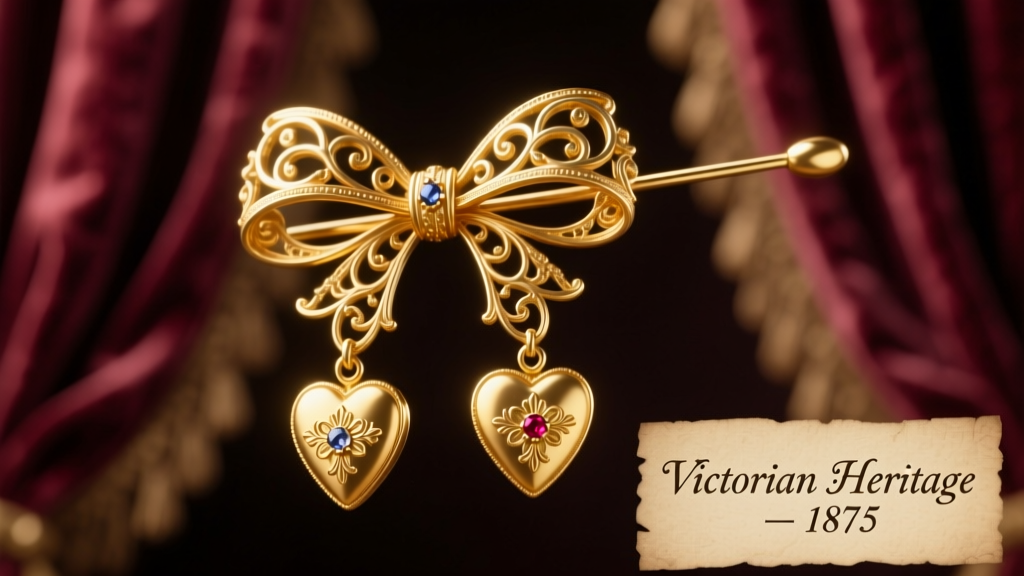
Victorian Double-Bow Hair Pin with Gold Heart and Pearl Drops: Anatomy, Provenance, and Collectibility

Candy Containers Santa Claus Germany 21-Inch: A Collector’s Guide to Vintage German Christmas Figural Tins
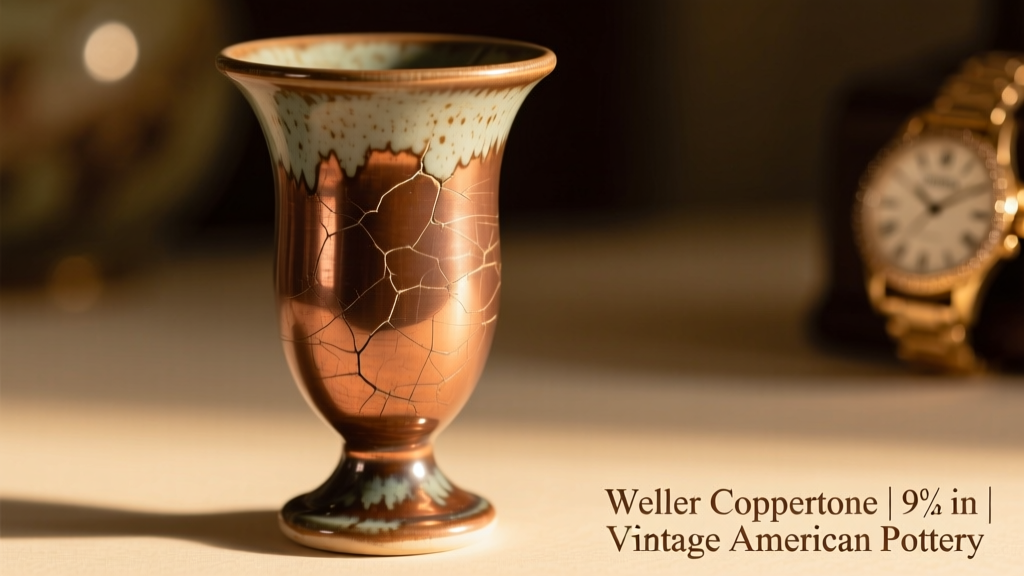
Weller Coppertone Vase: Flared Rolled Foot, 9¾ Inches — A Definitive Study of Form, Glaze, and Collectibility
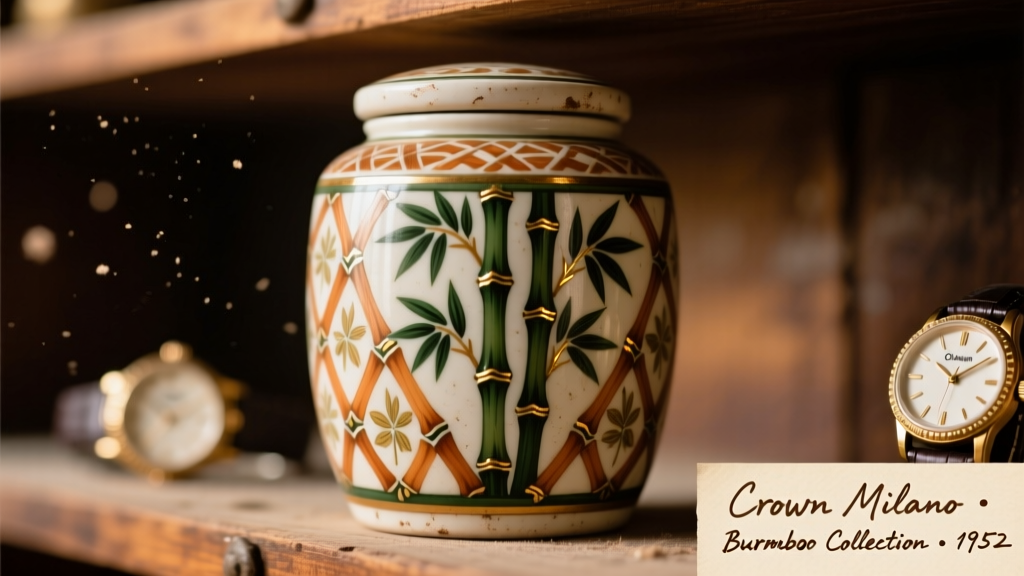
Crown Milano Cracker Jar: Allover Bamboo Design on Painted Burmese Ground, 6-Inch Diameter
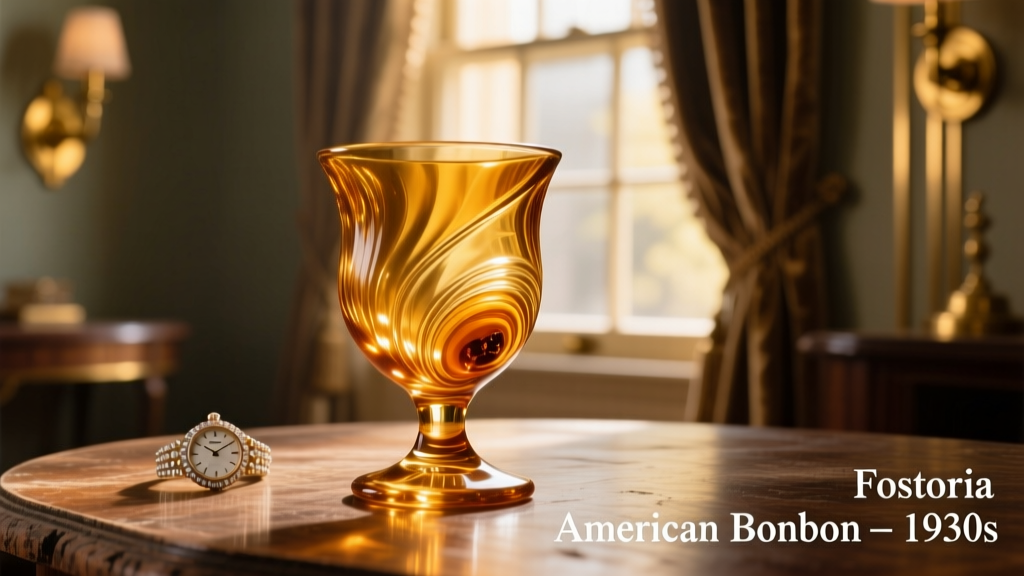
Fostoria American Bonbon Amber Footed: A Collector’s Guide to the Iconic Mid-Century Glassware
Glass Midcentury Vase: Green and Tan Banded Design with Internal Vertical Striations — Medina, 5½ Inches