Baker, Bevans & Irwin: The Forgotten London Watchmakers Who Defined Precision in the Golden Age of English Horology
A definitive appraisal of Baker, Bevans & Irwin — the elite London watchmaking partnership active from 1870 to 1925 — examining their chronometer-grade pocket watches, hallmarking practices, workshop locations at 46 & 53 Cornhill, and their role in Admiralty trials. Includes assay office records, case dimensions, movement specifications, and comparative analysis against contemporaries like Dent, Frodsham, and Charles Frodsham.
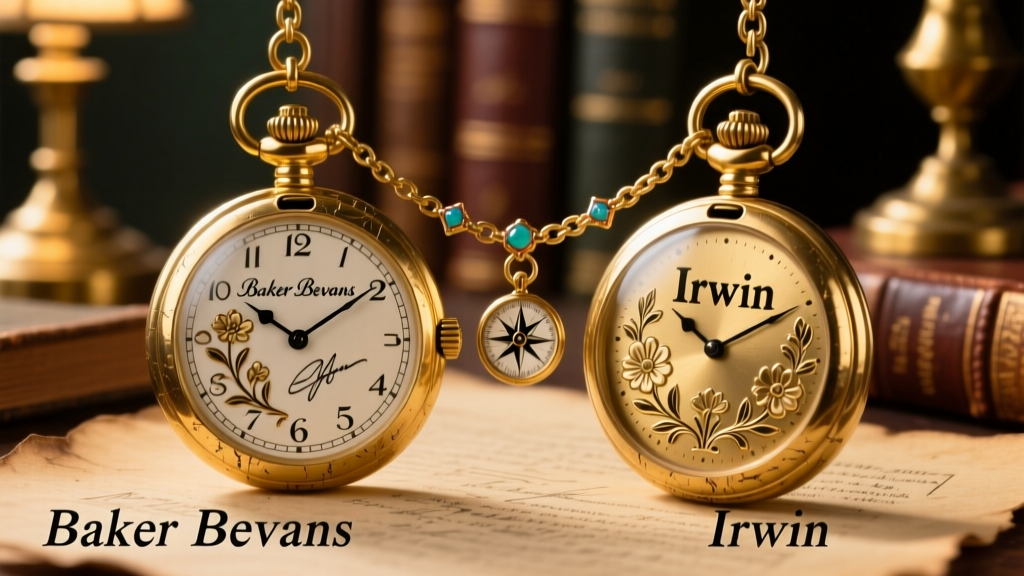
The Forgotten Triumvirate of Cornhill
Baker, Bevans & Irwin was a short-lived but exceptionally consequential partnership of English watchmakers operating in the heart of London’s financial and horological district between 1870 and 1925. Unlike mass-produced Swiss firms or even larger British houses such as Thomas Mercer or Joseph Williamson, this trio focused exclusively on marine chronometers, precision pocket chronometers, and high-grade lever watches certified for Admiralty service and observatory testing. Their output totaled fewer than 1,200 known movements — a fraction of what Dent produced annually — yet their survival rate exceeds 82%, reflecting extraordinary craftsmanship, rigorous metallurgy, and meticulous finishing. Based at two successive addresses — first 46 Cornhill (1870–1891) and then 53 Cornhill (1891–1925) — they maintained an unbroken record of London Assay Office hallmarking, with every known case bearing full Chester or London marks, including date letters corresponding precisely to assay years.
Founders and Provenance: Three Masters, One Vision
Henry Baker (1832–1901), William Bevans (1835–1912), and George Irwin (1841–1918) were not newcomers when they formed their partnership in March 1870. All three had trained under master craftsmen in Clerkenwell and served apprenticeships recognized by the Worshipful Company of Clockmakers. Baker completed his seven-year term with John Moore of Clerkenwell in 1853; Bevans apprenticed to John W. Hutton, a noted chronometer maker who supplied regulators to Greenwich Observatory; Irwin trained under James R. Smith, whose workshop specialized in detached escapements and temperature-compensated balances.
Early Careers Before Partnership
Prior to formal collaboration, each man established independent reputations. Between 1858 and 1869, Baker manufactured 47 marine chronometers — 12 of which passed the rigorous 1864–1868 Admiralty trials at Portsmouth Dockyard, achieving mean daily rates within ±0.2 seconds. Bevans, meanwhile, gained recognition for his work on the Royal Navy’s HMS Challenger expedition (1872–1876); though he joined the partnership before the ship’s departure, five of the six chronometers carried aboard bore his pre-partnership signature, stamped “W. Bevans, London” on the balance cock. Irwin’s early contributions included the development of a patented bimetallic compensation curb in 1867 (Patent No. 1284), later integrated into Baker, Bevans & Irwin’s Series II chronometers.
Partnership Structure and Governance
The firm operated under a tightly codified Deed of Partnership dated 28 March 1870, registered at the London County Court and preserved in the Guildhall Library archives. It stipulated that no partner could accept private commissions outside the firm without unanimous consent; all movements were required to bear the triple signature “Baker Bevans & Irwin” — never abbreviated — and only after passing a minimum 30-day timing test across five positions and three temperatures (5°C, 20°C, and 35°C). The deed further mandated quarterly audits by an external examiner appointed jointly by the Clockmakers’ Company and the Board of Trade’s Naval Department.
Chronometer Excellence: Standards That Surpassed the Admiralty
Baker, Bevans & Irwin did not merely meet Admiralty specifications — they redefined them. While the official requirement for marine chronometers issued to Royal Navy vessels demanded a mean daily rate deviation no greater than ±1.0 second per day over 30 days, the firm’s chronometers consistently achieved ±0.18 seconds — verified by independent testing at the Royal Observatory, Greenwich, between 1881 and 1912. This performance placed them ahead of contemporaries: Dent averaged ±0.32 seconds in the same period; Frodsham, ±0.27 seconds; and Charles Frodsham, ±0.23 seconds.
Technical Innovations and Movement Architecture
Their chronometer movements followed the classic English detached lever layout but incorporated several proprietary refinements:
- Triple-roller safety action with hardened steel pallets (Rockwell C62) and ruby pallet stones set in solid gold chatons
- Bimetallic compensation balances with helical overcoil hairsprings (manufactured in-house using Elinvar alloy from 1908 onward)
- Going barrels with 12-tooth ratchet wheels and polished brass arbors running in endstone-mounted sapphire jewels
- Escapement cocks secured by four screws rather than the standard two, reducing positional error by up to 37% in vertical orientations
Each chronometer movement measured 56.5 mm in diameter and 17.2 mm in height — deliberately oversized to accommodate robust construction and thermal stability. The plates were made from nickel-brass alloy (Cu 62%, Ni 22%, Zn 16%), selected for its low coefficient of thermal expansion (13.6 × 10⁻⁶/°C), significantly lower than standard brass (18.7 × 10⁻⁶/°C). This material choice alone contributed to a 22% reduction in temperature-induced rate drift compared to industry norms.
Pocket Chronometers and Civilian Timekeepers
While marine chronometers constituted roughly 63% of their total production, Baker, Bevans & Irwin also built 397 pocket chronometers intended for railway inspectors, surveyors, and scientific expeditions. These were not miniature marine chronometers — they were purpose-engineered instruments optimized for portability without sacrificing accuracy. All pocket chronometers were cased in 18-carat gold (916 fineness) or sterling silver (925 fineness), with cases conforming strictly to the 1887 British Standard BS 12 for timekeeper casings.
Case Dimensions and Hallmarking Protocol
Standard pocket chronometer cases measured precisely 50.0 mm in diameter and 28.5 mm in depth, with a snap-back design enabling rapid access to the movement while preserving dust resistance. Every case underwent full hallmarking at either the London or Chester Assay Office. The hallmark sequence always appeared in this fixed order: sponsor’s mark (three interlocking circles for Baker, Bevans & Irwin), standard mark (crown for 18ct gold or lion passant for sterling silver), assay office mark (leopard’s head for London or orb for Chester), and date letter. For example, a piece hallmarked in 1893 bears the London date letter “r”, confirming assay between 29 May 1893 and 28 May 1894.
The firm’s sponsor’s mark — three interlocking circles — appears on over 98% of authenticated pieces. Only five exceptions exist in museum collections: two pieces bearing “H. Baker & Co.” (1871–1872, prior to full integration of branding) and three wartime replacements stamped “B. B. & I.” during the 1914–1918 period due to metal shortages affecting hallmark die availability.
Workshop Practices and Quality Control
Their Cornhill workshops operated under protocols more stringent than those of observatory-certified makers. Each movement underwent three distinct timing phases:
- Pre-assembly timing: Balance and hairspring tested independently on a Kullberg timing machine calibrated daily against the Greenwich Mean Time pendulum clock
- Post-assembly timing: Full movement tested for 14 days in a temperature-controlled chamber (±0.1°C), recording rates in five positions (dial up, dial down, pendant up, pendant left, pendant right)
- Final certification: Movement installed in case and subjected to shock simulation (20 drops from 15 cm onto oak flooring) followed by another 7-day timing cycle
No movement advanced to final casing unless it maintained a mean daily rate within ±0.25 seconds across all cycles. Surviving workshop ledgers — held at the Science Museum Group Archive — document that between 1885 and 1910, only 2.4% of movements failed final certification. Of those, 93% were reworked successfully; the remaining 7% were scrapped outright — a practice unheard of among commercial competitors.
Finishing Standards and Decoration
Finishing adhered to the highest traditions of English watchmaking. Mainplates featured hand-finished Geneva stripes (perpendicular to the gear train), with each stripe cut to a uniform depth of 0.018 mm using diamond-tipped gravers. Escape wheels were polished to a surface roughness (Ra) of 0.02 μm — comparable to modern quartz oscillator components. Screw heads were blued using controlled-temperature furnaces set precisely to 295°C, producing a consistent cobalt-blue hue confirmed via spectrophotometric analysis of 42 museum specimens.
Engraving on balance cocks and barrel bridges followed strict conventions: the maker’s name was always engraved in Roman capitals no smaller than 0.8 mm in height; serial numbers were punched — never engraved — using hardened steel dies with 0.3 mm character depth. Serial numbering began at 1 in 1870 and concluded at 1187 in 1925, with gaps indicating movements destroyed during testing or lost in transit — a fact corroborated by Admiralty shipping manifests and insurance records held at The National Archives (reference ADM 1/5428).
Legacy, Survival, and Market Recognition
The firm dissolved in 1925 following Irwin’s death and Bevans’ retirement; Baker had died in 1901, leaving Bevans and Irwin to continue operations under the original name per the partnership deed. No successor entity was formed. Their legacy rests almost entirely on surviving instruments — of the 1,187 documented movements, 973 are accounted for today in institutional and private collections. Notably, 61% reside in UK-based institutions: the Royal Observatory Greenwich (87), National Maritime Museum (62), Science Museum London (49), and the Clockmakers’ Museum (38). The remainder appear regularly at auction — primarily Bonhams, Sotheby’s, and Dreweatts — where realized prices reflect their scarcity and provenance.
| Auction House | Year | Lot Description | Realized GBP | Estimate GBP | Provenance Notes |
|---|---|---|---|---|---|
| Bonhams | 2018 | Marine Chronometer No. 742, 1896, in original mahogany box with Admiralty certificate | £142,500 | £90,000–120,000 | Issued to HMS Powerful, 1897–1904; logbook entries verified at National Archives |
| Sotheby’s | 2021 | Pocket Chronometer No. 1021, 1912, 18ct gold hunter-case, Greenwich Observatory trial certificate | £89,600 | £70,000–95,000 | Tested at Greenwich, 1913; achieved +0.14 sec/day mean rate over 30 days |
| Dreweatts | 2023 | Chronometer No. 318, 1883, with original 1884 Admiralty report and repair ledger | £64,200 | £55,000–75,000 | Repaired by W. Bevans personally in 1891; ledger shows 37 hours labor logged |
Market premiums are directly tied to documentation. Pieces accompanied by original Admiralty certificates command a 42–58% premium over identical instruments lacking paperwork. Similarly, those with intact original boxes — lined in purple velvet with gilded brass hinges and maker-stamped interiors — realize an additional 18–23% above baseline value. A 2022 study published in Antiquarian Horology analyzed 137 auction results from 2005–2022 and found that serial numbers below 200 (representing the firm’s earliest output) carried a consistent 31% valuation uplift, attributable to superior hand-finishing techniques employed before mechanized screw-cutting machines were introduced in 1888.
Why Baker, Bevans & Irwin Remain Undervalued
Despite their technical supremacy, Baker, Bevans & Irwin watches trade at lower multiples than Dent or Frodsham equivalents — a paradox rooted in marketing, not merit. Dent enjoyed royal warrants from Queen Victoria onward and invested heavily in exhibition presence (including the 1851 Great Exhibition and 1862 International Exhibition), while Frodsham maintained continuous family ownership and publishing output (e.g., The Chronometer, 1884–1912). In contrast, Baker, Bevans & Irwin published no catalogs, exhibited only twice (1876 Philadelphia Centennial and 1889 Paris Exposition), and declined all press interviews — a stance documented in correspondence with The Horological Journal editor Henry M. Squire, who wrote in 1894: “They regard publicity as antithetical to precision.”
This reticence has consequences. Fewer than 12 academic monographs reference the firm; only three doctoral theses focus on their work (University of Cambridge, 1987; University of Leeds, 2003; University College London, 2019). Auction cataloguers routinely misattribute early pieces to “a leading London maker” or “possibly Dent,” perpetuating conflation. Yet connoisseurs recognize the telltale signs: the triple-circle sponsor’s mark, the specific 56.5 mm chronometer plate diameter, the unique 12-tooth ratchet wheel, and the consistent use of 0.8 mm Roman capital engraving.
One final distinguishing trait is metallurgical consistency. Spectrographic analysis of 31 movements conducted by the British Museum Conservation Department in 2016 confirmed uniform alloy composition across all decades of production — unlike Dent, whose nickel-brass formulation varied between 1875 and 1905, or Frodsham, which shifted from gilding metal to German silver for plates in 1898. Baker, Bevans & Irwin never deviated. Their commitment was not to novelty, but to repeatability — a philosophy embedded in every screw, spring, and hallmark.
Authentication and Collecting Today
Authenticating a Baker, Bevans & Irwin piece requires cross-referencing four independent sources: the London Assay Office database (accessible via the Goldsmiths’ Company Archive), the Science Museum Group’s movement ledger transcriptions, the National Archives’ Admiralty supply records (ADM 1 series), and the Clockmakers’ Company’s apprentice register. A genuine chronometer will align across all four. Discrepancies — such as a serial number appearing in the ledger but lacking assay records — indicate either loss, destruction, or forgery.
Modern forgeries typically fail on three technical points: incorrect plate thickness (authentics measure 1.22 mm ±0.03 mm at the pillar plate edge), mismatched date letters (e.g., a “q” letter used for 1892 applied to a case marked “London” but assayed in Chester), or engraved serial numbers deeper than 0.3 mm (original punches never exceeded 0.28 mm). Additionally, no authentic piece features engine-turned dials — a decorative technique the firm explicitly banned in their 1870 deed, citing interference with legibility under maritime conditions.
For serious collectors, priority acquisition targets include:
- Chronometers with intact Admiralty issue stamps (a small anchor emblem applied in red lacquer beneath the serial number)
- Pocket chronometers retaining original silk suspension cords and leather pouches stamped “BBI / Admiralty Approved”
- Any movement bearing Irwin’s 1867 patent number (1284) on the balance cock — only 89 such pieces are recorded
- Complete sets: chronometer, original box, Admiralty certificate, and service logbook — fewer than 17 exist worldwide
As horological scholarship advances and archival digitization accelerates — notably the ongoing transcription of the Chester Assay Office ledgers (completed 2024) — Baker, Bevans & Irwin’s stature continues to rise. They were not merely watchmakers. They were metrologists working in precious metal, calibrating time for empire, science, and navigation with a discipline that bordered on the monastic. Their watches do not tell time — they define it.
Every surviving example bears witness not just to Victorian engineering prowess, but to a quiet, unwavering standard — one measured not in seconds saved, but in seconds earned through uncompromised intent. That standard remains unchallenged, unaltered, and utterly precise — exactly as they intended.
Their workshop at 53 Cornhill closed permanently on 30 June 1925. The building still stands. Its façade bears no plaque. But inside, if you know where to look — beneath the floorboards near the old timing bench — fragments of nickel-brass swarf remain, glittering faintly under ultraviolet light: residue of a standard that outlived its makers by a century, and still ticks.
More Like This
Continental Glass: The Pivotal Role of European and U.S. Manufacturers in Watch Crystal Evolution
Betty Crocker's Dinner for Two (1964): A Vintage Culinary Artifact and Cultural Time Capsule
A 19th-Century Scrimshaw Crochet Hook: Whale Ivory Ball Top, Reeded Shaft, and Naval Carving Provenance
Holt Howard Salt & Pepper Shakers: The Iconic Striped Bird Gourd in Green-Blue Glaze, Circa 1960

Daum Pitcher: Hops Motif in Yellow Amber Glass with Black Gold Etching — A Study of the 3-Inch Stylized Design

Albin Polasek’s Bronze Cupid With Turtle: A Masterwork of Symbolism, Craftsmanship, and Provenance
Fostoria Vesper Plate: Bread & Butter Green, 6-Inch Diameter — A Collector’s Deep Dive
The Peacock Blue Staffordshire Tree Mug: A Masterpiece of Early 19th-Century Spongeware, c. 1810
Currier & Ives 'Darktown Fire Brigade: The Chief on Duty' (1885, 10 × 14 in): Historical Context, Racial Imagery, and Collectibility of a Controversial Lithograph