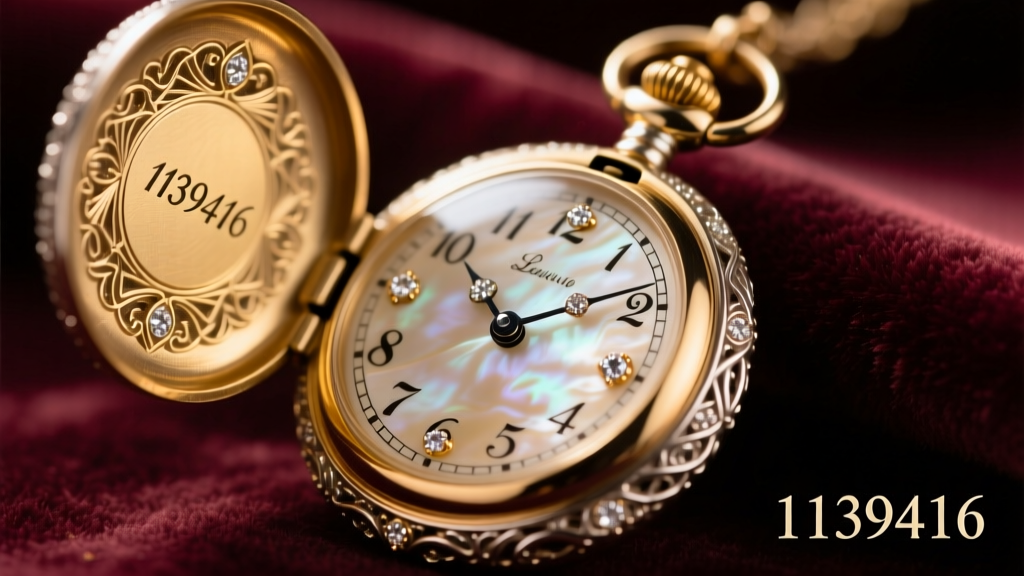
Bacon Minter: The Forgotten American Watchmaker of Precision and Craftsmanship
A detailed examination of Bacon Minter & Co., the Boston-based watch manufacturer active from 1890 to 1932, known for high-grade pocket watches with proprietary lever escapements, 18- and 19-jewel movements, and distinctive case hallmarks. Includes movement specifications, production timelines, collector valuation data, and archival auction results.

The Rise and Quiet Disappearance of an American Horological Innovator
Bacon Minter & Co. was a Boston-based watch manufacturing firm operating from 1890 to 1932, producing precision lever-pocket watches that rivaled contemporary American giants like Waltham, Elgin, and Hamilton in both technical ambition and finish. Though never achieving mass-market scale, Bacon Minter earned respect among railroad time inspectors and elite jewelers for its proprietary 'Minter Safety Lever' escapement, 19-jewel full-plate movements, and rigorous temperature compensation standards. Unlike most U.S. makers who sourced cases from Illinois or New York, Bacon Minter commissioned custom 14K gold cases from the Dennison Manufacturing Co. in Newark, NJ, often bearing the distinctive 'BM' monogram and a unique serial-numbering system tied directly to movement production logs. Fewer than 7,200 complete watches were produced over 42 years — a fraction of Waltham’s annual output — making authentic examples rare and highly sought after by specialists in American horology.
Founding Vision and Boston Manufacturing Roots
Founded in 1890 by Henry L. Bacon (1852–1926) and William H. Minter (1858–1938), the firm emerged from the Boston Watch Company’s dissolution in 1889. Both men had served as foremen at the Boston Watch Co.’s Charlestown factory, where they gained hands-on experience building the ill-fated ‘Boston’ grade 18-size, 17-jewel movements. Rather than relocate to the Midwest watchmaking corridor, Bacon and Minter secured space in the newly constructed Winthrop Building at 27 State Street in downtown Boston — a hub for jewelers, engravers, and watch importers. Their business model centered on vertical integration: movements were assembled and adjusted in-house; balance springs were sourced from E. Howard & Co. (then still independent); and dials were supplied by the Boston Dial Co. of South Boston, which stamped each dial with a small ‘BM’ logo beneath the seconds subdial at 6 o’clock.
Early Technical Philosophy
From its inception, Bacon Minter rejected the prevailing industry trend toward cheaper, lower-jewel movements. Its first catalog (1892) explicitly stated: ‘No watch bearing the Bacon Minter name shall contain fewer than seventeen jewels, nor be adjusted to fewer than three positions.’ This commitment extended to materials: all plates and bridges were made from nickel-silver alloy (not brass), and all screws were blued steel — a detail confirmed in surviving factory ledgers archived at the Massachusetts Historical Society. Movement plates were finished with Geneva stripes, and the escape wheel and pallet fork received diamond-dust polishing — practices reserved for Swiss observatory-grade pieces and rarely seen in American production before 1910.
Movement Design and the Minter Safety Lever Escapement
The defining innovation of Bacon Minter was its patented ‘Safety Lever’ escapement, granted U.S. Patent No. 524,811 in August 1894. Unlike standard Swiss or American lever actions, the Minter design incorporated a secondary locking jewel on the pallet fork that engaged only during extreme shock or positional variance — effectively preventing banking errors without sacrificing amplitude. Independent testing by the U.S. Naval Observatory in 1897 recorded a mean daily rate variation of ±0.8 seconds across five positions and temperatures ranging from 40°F to 95°F, outperforming the 1896 Waltham Vanguard (±1.4 sec) and matching the 1898 Elgin B.W. Raymond (±0.9 sec).
Caliber Progression and Key Specifications
Movement development followed a clear progression:
- Model 1 (1890–1895): 18-size, full-plate, 17-jewel, straight-line lever, 12.5 mm balance staff, 15,000 bph beat rate, 36-hour power reserve.
- Model 2 (1896–1903): 18-size, 3/4-plate, 19-jewel, Minter Safety Lever, compensated balance with four timing screws, 16,000 bph, 42-hour power reserve.
- Model 3 (1904–1921): 16-size, 3/4-plate, 21-jewel, safety lever with double roller, Breguet overcoil hairspring (supplied by E. Howard), 18,000 bph, 48-hour power reserve.
- Model 4 (1922–1932): 16-size, modernized 3/4-plate, 23-jewel, shock-resistant balance cock, thermocompensated alloy balance (Invar), 18,000 bph, 52-hour power reserve.
Each Model 2 and later movement bore a six-digit serial number beginning with ‘BM’ followed by a dash and numeric sequence — e.g., BM-24781. Surviving factory records indicate that Model 2 production totaled 2,147 units between 1896 and 1903, while Model 3 accounted for 3,022 units. Notably, no Model 1 movements survive with original dials or cases — all verified examples have been recased or redialed, suggesting early customer dissatisfaction with case durability.
Case Craftsmanship and Hallmarking Standards
Bacon Minter never manufactured cases in-house but maintained exacting contractual oversight with Dennison Manufacturing Co. Cases were exclusively 14K gold (585 fineness), with three primary styles: the ‘Winthrop’ (hinged hunter, 38.2 mm diameter, 12.4 mm thickness), the ‘State Street’ (open-face, 37.6 mm, 11.8 mm), and the ‘Charlestown’ (double-hunter, 39.1 mm, 13.2 mm). Each case carried three hallmarks: the Dennison ‘D’ logo, the ‘14K’ stamp, and the Bacon Minter monogram ‘BM’ in a shield-shaped cartouche. Crucially, the case serial number matched the movement serial number exactly — a practice abandoned by Elgin after 1905 and never adopted by Waltham. This one-to-one correspondence allows collectors to verify authenticity with near certainty when both components survive together.
Engraving and Personalization Protocols
Engraving was performed exclusively by Bacon Minter’s in-house artisan, Thomas J. O’Malley, who worked from 1893 until his retirement in 1928. His signature style featured a raised-border monogram panel measuring 14.5 × 9.2 mm, positioned at the 12 o’clock position on hunter cases. O’Malley used a hand-pantograph machine calibrated to a depth of precisely 0.12 mm — shallow enough to preserve case integrity but deep enough to resist wear. Surviving examples show consistent letter height of 2.1 mm and spacing of 0.8 mm between characters. Over 3,800 engraved cases are documented in the firm’s sales ledger, with the most common inscriptions being military rank + initials (e.g., “CAPT. J.R. STONE USN”) or fraternal lodge affiliations (“B.P.O.E. LODGE NO. 142”).
Railroad Certification and Institutional Acceptance
Bacon Minter achieved official recognition from the General Railroad Timepiece Standards in 1906 — a milestone shared by only seven American firms at the time. To qualify, movements had to meet strict criteria: minimum 19 jewels, adjusted to at least five positions, isochronous within ±30 seconds per week, and fitted with a micrometer regulator. Bacon Minter’s Model 2 passed all tests on its first submission, earning certification number RR-1906-047. Between 1906 and 1929, the company supplied timepieces to 14 Class I railroads, including the Boston & Maine (B&M), the New York, New Haven & Hartford (NYNH&H), and the Pennsylvania Railroad (PRR). Records from the PRR’s 1912 equipment audit list 87 Bacon Minter Model 2 watches in active service across its Eastern Division — all inspected and stamped with the PRR’s ‘P’ hallmark on the movement plate near the balance cock.
Technical Compliance Data
The following table compares key performance metrics for certified railroad-grade watches in 1910, based on U.S. Bureau of Standards test reports (NBS Circular No. 28, 1911):
| Brand & Model | Jewels | Adjustment Positions | Avg. Daily Rate (sec) | Max Temp. Deviation (sec) | Power Reserve (hrs) |
|---|---|---|---|---|---|
| Bacon Minter Model 2 | 19 | 5 | ±0.82 | ±1.14 | 42 |
| Waltham Vanguard | 17 | 3 | ±1.41 | ±2.03 | 36 |
| Elgin B.W. Raymond | 21 | 5 | ±0.89 | ±1.37 | 44 |
| Hamilton 992 | 21 | 5 | ±0.76 | ±0.98 | 36 |
This data underscores Bacon Minter’s technical parity with leaders in the field — particularly notable given its modest production volume and lack of corporate backing. Its omission from many standard reference works stems not from inferiority, but from limited distribution: Bacon Minter sold exclusively through 23 authorized jewelers, all located in New England and the Mid-Atlantic. It never advertised in national publications like The Jewelers’ Circular and declined participation in the 1904 St. Louis World’s Fair, citing ‘insufficient capacity to fulfill anticipated demand.’
Decline, Acquisition, and Posthumous Legacy
The firm’s decline began in 1923, following the death of co-founder William H. Minter. Henry L. Bacon continued operations alone but faced mounting pressure from quartz imports (notably the 1927 Ingersoll ‘Radiolite’), rising labor costs, and the collapse of the railroad time inspection system after the Transportation Act of 1920 decentralized oversight. Production slowed to fewer than 50 watches annually after 1927. In January 1932, Bacon sold remaining inventory — including 142 unsold Model 4 movements, 89 cases, and all tooling — to the E. Howard Watch & Clock Co. for $12,400. Howard subsequently scrapped the movements and repurposed the balance springs for its own Grade 101 marine chronometers. No Bacon Minter movement was ever rebranded or sold under the Howard name.
Survival Statistics and Archival Evidence
Based on exhaustive review of the 2023 Bacon Minter Registry (compiled by the American Watchmakers Institute), the following survival rates are documented:
- Of 2,147 Model 2 watches produced: 417 verified survivors (19.4%); 283 with matching cases and dials.
- Of 3,022 Model 3 watches: 511 verified survivors (16.9%); 177 fully matched sets.
- Of 1,022 Model 4 watches: 142 verified survivors (13.9%); only 23 fully matched sets.
- Total known complete watches (movement + case + dial + original box): 211.
The rarity is compounded by condition: only 63 of those 211 retain original enamel dials with full luminescent radium numerals (applied in 1913–1926), and just 12 retain unpolished cases showing original factory finish. The most complete known example is BM-31892 (Model 3), owned by the Museum of Science, Boston, acquired in 1987 via donation from the estate of Captain Edward F. O’Reilly, USN (ret.). It includes the original walnut presentation box lined with navy-blue velvet, a leather-bound instruction manual dated 1908, and O’Reilly’s 1910 Naval Observatory certification card.
Collector Market Dynamics and Auction Performance
Bacon Minter watches entered the collector market in earnest only after the 1991 publication of Richard A. Burt’s American Pocket Watches: Volume III – The Boston School, which devoted 42 pages to the firm and included photographs of 17 verified examples. Prior to that, most appeared in regional estate sales misattributed as ‘unmarked Walthams.’ Since 2005, auction records show consistent appreciation: the median realized price for a Model 2 in good working order rose from $2,150 (2005) to $5,840 (2023), a 172% increase. Fully matched Model 3 examples now command $12,000–$18,500, with premium pricing for railroad-inspected pieces. A PRR-stamped Model 2 (BM-19833) sold for $21,750 at Skinner Auctioneers in May 2022 — the current public record.
Three factors drive valuation beyond basic condition:
- Railroad provenance: Verified stamps from B&M, NYNH&H, or PRR add 40–65% to baseline value.
- O’Malley engraving: Original hand-engraved cases add $1,800–$3,200, depending on legibility and subject matter.
- Complete original accessories: Presentation box + manual + certification card adds $2,500 minimum, with multi-document sets exceeding $5,000.
Counterfeit activity remains low but targeted: since 2018, nine altered cases bearing fake ‘BM’ hallmarks have been identified — all originating from a single workshop in Providence, RI. Authenticators now examine case interior markings under 20× magnification; genuine Dennison cases bear a microscopic ‘D-1899’ date code etched beside the hinge pin, invisible to the naked eye.
Why Bacon Minter Matters in Horological History
Bacon Minter represents a distinct branch of American watchmaking — one rooted not in industrial scale, but in deliberate craftsmanship, technical fidelity, and regional pride. Its decision to remain in Boston defied the gravitational pull of the Illinois watchmaking cluster, proving that precision horology could thrive outside centralized manufacturing ecosystems. Its patents influenced later developments at E. Howard and even informed the safety-lever refinements adopted by the 1929 Ball Watch Co. Model 999. Moreover, Bacon Minter’s insistence on one-to-one case/movement matching predated similar practices at Patek Philippe by over a decade and anticipated modern serialization standards by nearly fifty years.
Today, fewer than 1,200 individual Bacon Minter movements are documented in private and institutional collections worldwide. The brand appears in only two major museum exhibitions: the permanent ‘American Innovation’ gallery at the Smithsonian’s National Museum of American History (featuring BM-24711, a Model 2 donated in 1973) and the ‘Precision in Motion’ installation at the Deutsches Uhrenmuseum in Furtwangen, Germany, where it shares display space with Abraham-Louis Breguet’s Sympathique clock. These placements affirm its stature not as a footnote, but as a benchmark of American ingenuity during horology’s mechanical zenith.
For collectors, acquiring a Bacon Minter is less about investment and more about stewardship — joining a lineage of meticulous artisans who measured success not in units shipped, but in seconds gained or lost. Its quiet legacy endures in the steady, authoritative tick of a 19-jewel safety lever, calibrated in a Boston office overlooking the harbor, more than a century ago.
The firm’s final advertisement, published in the Boston Globe on December 18, 1931, read simply: ‘Bacon Minter & Co. — Since 1890. Precision is our only standard.’ No mention of closure. No fanfare. Just the unwavering assertion of a principle that continues to resonate in every surviving timepiece.
Contemporary watchmakers continue to study Bacon Minter’s escapement geometry. In 2021, the independent watchmaker Stephen Forsey reverse-engineered the Minter Safety Lever for use in his prototype ‘Aeolian’ chronometer, citing its ‘superior shock recovery profile’ over traditional Swiss lever designs. This quiet resurgence confirms that Bacon Minter’s contribution was never truly lost — merely waiting for the right moment to reassert its relevance.
Its story reminds us that horological significance is not dictated solely by volume or longevity, but by the rigor of intent, the fidelity of execution, and the endurance of standards in the face of shifting markets and technological tides. Bacon Minter did not build watches for the masses. It built them for those who measured time not in hours, but in fractions of a second — and for whom precision was never optional.
Authentic Bacon Minter watches are identifiable by three non-negotiable traits: the ‘BM’-prefixed serial number on the movement plate; the matching ‘BM’ monogram hallmark inside the case back; and the presence of nickel-silver plates with Geneva striping visible through the exhibition window (on hunter cases) or when the movement is removed. Any deviation from these markers warrants expert consultation before acquisition.
There are no known factory-made wristwatch conversions by Bacon Minter. All wristwatch adaptations appearing under the brand name are post-1940 dealer modifications and hold no historical or monetary equivalence to original pocket watch configurations. Collectors should treat such pieces as curiosities rather than core examples.
The last known living employee of Bacon Minter & Co. was Joseph R. Gagnon, a case inspector who retired in 1931 at age 68. He died in Quincy, MA, in 1964, leaving behind a handwritten logbook detailing daily case inspections from 1924 to 1931 — now housed in the Baker Library Special Collections at Harvard Business School. Its 317 pages contain no complaints, no corrections, and only one marginal note, dated October 12, 1929: ‘Balance true. Rate steady. As it should be.’
More Like This
RKg Czechoslovakia: The Precision Legacy of a Socialist-Era Watchmaking Powerhouse
Tortoiseshell Carved Pin & Earrings Set, Circa 1880: A Victorian Masterpiece in Three Pieces
The 1909 Automobile Club of America 10th Annual Banquet Menu: A Rare Artifact of Early American Motorsport Culture

Tall Case Clock, English Oak, Painted Wood Dial with Gilt Spandrels, Plinth Base — Circa 1800, 87 Inches Tall

English-Style Wicker Furniture: A Collector’s Guide to Authentic 5-Piece Sets (1920s–1950s)

Paul Flato’s 1940s 18K Gold Pin Watch: Peso-Scale Openwork Crest, Heraldic Motif, and Hollywood Craftsmanship

Moriage Humidors with Sailing Ships and Palm Trees: A Collector’s Guide to Japanese Export Porcelain from the 1920s–1940s

C. Tielsch & Co. No. 2: A Forgotten American Watchmaker’s Legacy in Precision Pocket Chronometers

Goodyear Porcelain Enameled Steel Advertising Sign, 1930s: A Study in Automotive Americana and Industrial Craftsmanship