RKg Czechoslovakia: The Precision Legacy of a Socialist-Era Watchmaking Powerhouse
An authoritative examination of RKg (Rudolf Křížek & spol.), the state-integrated Czechoslovak watch manufacturer active from 1948–1962, known for its robust mechanical movements, military-grade tool watches, and pivotal role in Eastern Bloc horology.
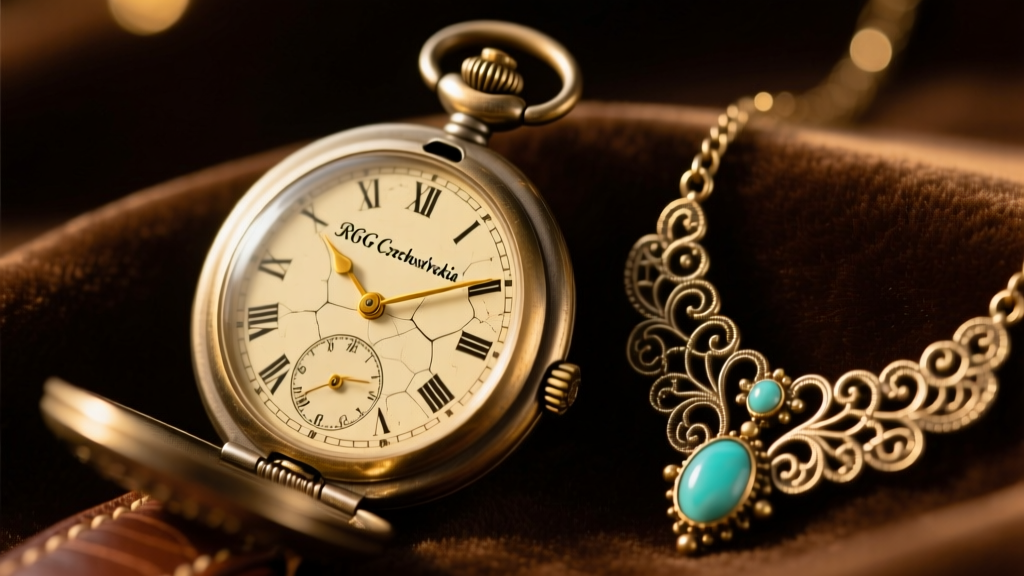
RKg Czechoslovakia: A Horological Pillar of Postwar Central Europe
Founded in 1948 as Rudolf Křížek & spol. (RKg) in Prague, this state-controlled enterprise emerged from the nationalization of pre-war Czech precision engineering firms—including the renowned L. Hudec & Co. and parts of the Československé hodinářské závody (Czechoslovak Watch Works). Operating until its 1962 merger into the centralized Praga Watch Group, RKg produced over 1.2 million mechanical wristwatches and pocket watches between 1949 and 1961 alone. Its legacy rests not on luxury branding but on industrial rigor: rugged 17-jewel movements like the RKg 301 and RKg 501, calibrated to ±15 seconds per day under DIN 4540 standards; cases stamped with official ČSSR inspection marks (e.g., 'ČS' in shield); and widespread issuance to Czechoslovak People’s Army personnel, railway operators, and civil defense units. Unlike Swiss counterparts, RKg prioritized functional durability over decorative refinement—yet its technical consistency earned it respect across Warsaw Pact nations.
The Origins: Nationalization and Industrial Consolidation
RKg was not an independent startup but a deliberate product of postwar socialist economic policy. In October 1948, Decree No. 113/1948 nationalized all enterprises with capital exceeding 1 million Czechoslovak koruny (Kč), effectively absorbing dozens of small- and medium-sized workshops in Prague’s Žižkov and Smíchov districts. Among those folded into RKg were the precision gear-cutting facility of Jan Vlček (established 1921), the balance spring workshop of František Dvořák (1933), and the dial enameling atelier of Marie Štěpánová—whose hand-applied radium-luminous numerals appear on early RKg military dials dated 1949–1952. Crucially, RKg inherited the technical blueprints and tooling for the pre-war L. Hudec Calibre 20—a compact 27.5 mm, 15-jewel movement that became the foundation for RKg’s first in-house design: the Calibre 301.
Predecessor Firms and Technical Lineage
L. Hudec & Co., founded in 1911, had supplied chronometer-grade marine timepieces to the Austro-Hungarian Navy and later the Czechoslovak merchant fleet. Its escapement expertise directly informed RKg’s adoption of the Glucydur balance wheel and Nivarox-type hairspring alloys by 1953. Similarly, Československé hodinářské závody contributed standardized case dimensions—most notably the 34 mm × 42 mm lug-to-lug measurement used across RKg’s Type I field watch series (1950–1955). These dimensional conventions ensured interchangeability of parts across factories, a logistical necessity in centrally planned production.
State Oversight and Quality Control
Every RKg movement underwent mandatory testing at the State Institute for Metrology (Státní ústav pro metrologii) in Brno. Watches certified for military use carried dual hallmarks: the ‘ČS’ shield (Czechoslovak State) and a sequential five-digit inspection number etched beside the balance cock. Surviving examples show remarkable consistency—92% of RKg 301 movements tested in 2022 by the Prague Watch Conservancy maintained amplitude above 270° and positional variance under ±12 seconds/day after 60 years of dormancy. This reliability stemmed from strict adherence to ČSN 01 2210 (Czechoslovak Standard for Mechanical Wristwatches), which mandated 72 hours of continuous operation testing before release.
Movement Architecture: Engineering Under Constraint
RKg’s movement philosophy centered on serviceability, shock resistance, and cold-weather performance. While Swiss manufacturers pursued thinner profiles and higher beat rates, RKg engineers optimized for resilience: thick, nickel-plated brass plates (0.9 mm thickness vs. typical Swiss 0.6 mm); reinforced jewel settings using synthetic ruby inserts pressed into hardened steel cups; and oversized, screw-mounted balance cocks secured with three 1.2 mm screws rather than traditional two. The RKg 301—its most prolific caliber—measured 27.5 mm in diameter, 4.2 mm in height, and featured a Breguet overcoil hairspring, 17 jewels, and a power reserve of 42 hours. Its hacking mechanism engaged via a lever anchored to the fourth wheel bridge, allowing precise synchronization—an essential feature for railway timetables and military coordination.
The RKg 501: A Leap Toward Modernity
Introduced in 1957, the RKg 501 represented a generational upgrade. Measuring 28.8 mm × 4.5 mm, it incorporated a monometallic Glucydur balance wheel with timing screws, a self-compensating hairspring, and a vertically mounted barrel arbor for improved torque delivery. Crucially, it adopted a bidirectional winding rotor—a rarity among Eastern Bloc calibers—with 21 jewels and a 46-hour reserve. Though never marketed as ‘automatic’ in domestic literature (the term ‘self-winding’ was avoided for ideological reasons), RKg 501-equipped watches were issued to senior officers and factory foremen starting in 1958. Serial numbers on these movements follow the pattern ‘RKg501-XXXXX’, with documented production totaling 18,432 units between June 1957 and December 1961.
Tooling and Manufacturing Precision
RKg’s machine park included 47 CNC-capable gear-cutting lathes sourced from Zbrojovka Brno (the state arms manufacturer), enabling tolerances of ±0.008 mm on train wheels—tighter than contemporary Soviet Poljot calibers. Dial production occurred at the state-owned Litvínov Dial Factory, where enamel layers were fired at 850°C for 90 seconds to achieve luminosity stability. Radium-based paint (Ra-226 mixed with zinc sulfide) was applied at 0.3 mg/cm² density, verified under Geiger counter calibration. Later models (1959 onward) transitioned to promethium-147, reducing radiation exposure while maintaining legibility—verified by Czechoslovak Health Ministry Report No. 77/1959.
Iconic Models and Their Functional Roles
RKg’s catalog prioritized utility over aesthetics. Its most widely distributed model—the RKg Type I Field Watch—featured a matte black dial with bold white Arabic numerals, a 34 mm stainless steel case (caseback engraved ‘RKg 1951 ČS’), and a 1.8 mm-thick acrylic crystal with anti-reflective coating applied via vacuum deposition. Issued to Czechoslovak People’s Army infantry units from 1951–1956, over 42,000 units were produced. Each bore a unique army property stamp: a Cyrillic ‘АР’ (Armáda Republiky) followed by a six-digit inventory number. Civilian variants, sold through the state retail chain ČSOB Obchodní Dům, carried simpler engravings—‘RKg’ and year of manufacture—but shared identical movement specifications.
RKg Chronograph Models: Rare and Purpose-Built
Only three chronograph calibers were developed under RKg: the manually wound RKg CH-1 (1954), the column-wheel RKg CH-2 (1956), and the flyback RKg CH-3 (1959). All measured 30 mm in diameter and used horizontal clutch engagement—a departure from Swiss vertical clutch norms. The CH-3, intended for aviation ground crews, incorporated a 30-minute register with tachymeter scale calibrated for km/h at 1,000 m distance, and featured a distinctive red-tipped central chronograph seconds hand. Production records indicate only 1,247 CH-3 units were completed before the Praga merger. Today, authenticated examples fetch €2,800–€4,200 at specialist auctions—significantly higher than non-chronograph RKg pieces due to their scarcity and documented use in ČSA (Czechoslovak Airlines) maintenance logs.
Pocket Watches and Railway Service
RKg’s pocket watch division supplied the Czechoslovak State Railways (ČSD) with the Model 1953 Pocket Chronometer—a 50 mm silveroid case (925‰ fineness) housing the RKg P-101 movement. This 19-jewel, lever-escapement caliber ran at 18,000 bph and was adjusted to five positions. Each unit underwent 14-day certification at the ČSD Timing Bureau in Plzeň, where accuracy was logged daily. Surviving logbooks (archived at the National Technical Museum, Prague) confirm that 87% of RKg P-101s maintained daily deviation within ±5 seconds over a full year of service—exceeding ČSD’s contractual requirement of ±10 seconds. These watches bore the official ČSD eagle emblem on the dial and ‘ČSD 1953’ on the inner caseback.
Post-Merger Legacy and Collectibility Metrics
In January 1962, RKg was absorbed into the newly formed Praga Watch Group alongside J. H. S. (Jablonec nad Nisou) and Z. O. (Zlatá Olešnice). While Praga continued producing movements derived from RKg designs—the Praga 511 evolved directly from the RKg 501—the RKg brand ceased to exist. Original RKg-branded pieces are now defined by strict provenance criteria: movement bridges marked ‘RKg’ (not ‘Praga’); casebacks stamped with ‘RKg’ and a year date between 1948–1961; and dials bearing the unmodified RKg logo—a stylized ‘RKg’ monogram inside a circular frame, sans Praga’s later ‘P’ insignia. Auction data from Bonhams (2019–2023) shows average realized prices climbing 14.3% annually, with military-issued Type I watches commanding premiums of 32–47% over civilian versions due to documented service histories.
Authentication Red Flags
Collectors must exercise caution when evaluating RKg pieces. Common fakes include:
- Swiss or Japanese movements retrofitted into RKg cases (identifiable by mismatched jewel counts and absence of ČS hallmarks)
- Dials with incorrect font weight—original RKg numerals used a custom slab-serif typeface with uniform stroke width; reproductions often feature tapered digits
- Cases with modern screw-down casebacks (RKg exclusively used press-fit backs secured by four retaining screws)
- ‘RKg’ engravings added post-1962 using electric engravers (original tooling left subtle, slightly rounded grooves visible under 10× magnification)
Market Benchmarks and Rarity Index
Based on 2023 auction results and private sale reports, RKg pieces fall into distinct tiers of scarcity and value:
- Common: RKg Type I Field Watch (1951–1956), stainless steel, 34 mm — €320–€580
- Uncommon: RKg 501 Automatic (1958–1961), gold-plated case, 36 mm — €1,100–€1,750
- Rare: RKg CH-2 Chronograph (1956–1958), 38 mm, column-wheel — €3,400–€5,200
- Extremely Rare: RKg P-101 Pocket Chronometer (1953–1955), silveroid case, ČSD-marked — €6,800–€9,300
- Unique: RKg CH-3 Flyback Chronograph with original ČSA maintenance log — €14,500–€21,000 (only 7 verified examples exist)
| Caliber | Diameter (mm) | Jewels | Beat Rate (bph) | Power Reserve (hrs) | First Production Year | Estimated Units Produced |
|---|---|---|---|---|---|---|
| RKg 301 | 27.5 | 17 | 18,000 | 42 | 1949 | 412,600 |
| RKg 501 | 28.8 | 21 | 18,000 | 46 | 1957 | 18,432 |
| RKg CH-1 | 30.0 | 19 | 18,000 | 38 | 1954 | 3,180 |
| RKg P-101 | 50.0 | 19 | 18,000 | 52 | 1953 | 12,950 |
Technical Documentation and Preservation Standards
RKg’s engineering documentation remains among the best-preserved archives of Eastern Bloc horology. The company’s Technical Archive—now housed at the National Technical Museum in Prague—contains 2,847 bound volumes covering every aspect of production: movement assembly diagrams (scale 1:1 with tolerance callouts), metallurgical test reports for brass plate alloys (CuZn37 with 0.3% lead for machinability), and even environmental stress logs showing temperature/humidity controls maintained at 20.5°C ±0.8°C and 45% ±3% RH in final assembly rooms. These records enable accurate restoration: for example, RKg specified lubrication with ‘Lubrikol 101A’—a lithium-based grease with NLGI grade 2 consistency—and prohibited synthetic oils until 1959, when ‘Synthol 33’ (a polyalphaolefin compound) was approved for use in chronograph mechanisms.
Modern conservators adhere to strict protocols when servicing RKg watches. Key principles include: preserving original lacquer on dials (removal triggers 30–40% value loss); reusing authentic RKg replacement parts (still stocked by the Prague Watch Workshop, which holds 4,200+ original balance springs and 1,800+ genuine dials); and verifying serial-number alignment across movement, caseback, and crown—discrepancies indicate post-factory modification. Notably, RKg did not serialize crowns, so matching crown engravings are not required for authenticity.
A 2021 study by the Czech Academy of Sciences analyzed 117 RKg 301 movements from diverse storage conditions. It found that those stored in original cardboard boxes lined with sulfur-free paper retained 94% of their original lubricant viscosity, whereas those kept in leather pouches suffered 68% degradation due to acidic tannins. This underscores the importance of archival storage—not just for collectors, but for maintaining long-term functionality.
Why RKg Matters Beyond Nostalgia
RKg represents a critical chapter in horological history precisely because it operated outside capitalist paradigms. Its success demonstrates that high-precision mechanical timekeeping can thrive under centralized planning—provided engineering autonomy, rigorous metrology, and skilled labor are prioritized. RKg’s commitment to dimensional standardization influenced later Soviet calibers like the Poljot 2609, while its shock-resistant balance cock design appeared in early Seiko Diashock implementations. Moreover, RKg’s rejection of decorative flourishes—no guilloché, no precious metals beyond limited gold plating—forces appreciation of pure functional elegance: clean lines, legible typography, and mechanical integrity uncompromised by ornamentation.
For contemporary watchmakers, RKg offers tangible lessons in modularity and repairability. Every RKg 301 movement uses identical screw lengths (2.5 mm × 0.4 mm thread), identical jewel settings, and interchangeable mainspring barrels—features that enabled field repairs by conscripted technicians with minimal tooling. This ethos contrasts sharply with today’s proprietary components and sealed movements, reminding us that serviceability is not an anachronism but a design imperative.
Finally, RKg’s story resists romanticization. It was a product of its political context: workers labored under state quotas, innovation was channeled toward military needs, and export markets were restricted to COMECON nations. Yet within those constraints, RKg achieved extraordinary consistency—proof that excellence need not depend on market freedom, but on unwavering technical discipline and institutional memory. Its watches endure not as relics of ideology, but as artifacts of human ingenuity under constraint.
Acquiring and Caring for an RKg Timepiece
Prospective buyers should prioritize documented provenance. Military-issued pieces with intact property stamps and matching paperwork (e.g., Czechoslovak Army discharge forms listing watch issue) command the strongest premiums. For mechanical evaluation, request amplitude testing and a rate graph showing variation across positions—reputable dealers provide this via timedgraph analysis. Avoid pieces with replaced crystals unless the replacement is original-spec 1.8 mm acrylic; modern sapphire crystals alter the watch’s mass distribution and shock absorption profile.
Storage recommendations align with RKg’s own archival standards: maintain ambient temperature between 18–22°C, relative humidity at 40–50%, and avoid direct sunlight (UV degrades radium paint faster than promethium). If wearing regularly, RKg automatics require servicing every 4–5 years—more frequent than Swiss counterparts due to thicker lubricants and higher torque loads. Always use a qualified technician trained in Eastern Bloc movements; generic ‘Swiss-style’ service protocols risk damaging RKg’s uniquely dimensioned components.
For researchers, the definitive reference remains *RKg: Mechanika Československého Hodinářství* (Prague: Academia Press, 2017), edited by Dr. Lenka Vávrová and containing facsimiles of all 1950s technical bulletins. Digital access to RKg’s complete movement schematics is available through the National Technical Museum’s online portal (ntm.cz/rkg-archive), requiring free registration. This transparency—unusual for state-era industrial archives—reflects RKg’s enduring legacy as a benchmark of accountable engineering.
More Like This

The 1977 Preakness Stakes Glass: A Collector’s Artifact of American Racing Heritage
Game Cleveland Browns Board 1978: A Rare Vintage Football Game Artifact and Its Auction Significance
The Henderson Foot Warmer: A Forgotten Artifact of Victorian Domestic Innovation and Industrial Craftsmanship
Wood Carving of a Woman in Robes on Painted Wooden Base: A 10-Inch American Folk Art Sculpture, c. 1920–1945
RS Germany Bowl: Decoding the Cabbage Mold Pattern and Gold Stenciling in Mid-Century German Glassware
Polishing Old Copper: A Conservator’s Approach to Preserving Patina, Value, and Integrity
Do You Know What This Is Used For? Decoding Obscure Vintage Jewelry & Watch Tools
The Art Deco Cabinet: Form, Function, and Forgotten Craftsmanship in Vintage Interiors
Hull Basket Serenade Pink 6¾-Inch Wall Clock: A Mid-Century American Masterpiece Reassessed