Arts From Jerusalem: Span Time and Space
A scholarly exploration of Jerusalem’s enduring artistic legacy—from Second Temple silver shekels and Byzantine glass to Ottoman nielloed brass, 19th-century Bezalel School enamelwork, and contemporary Israeli horology. Featuring precise measurements, documented provenance, auction records, and material analysis from Sotheby’s, Bonhams, and the Israel Museum.
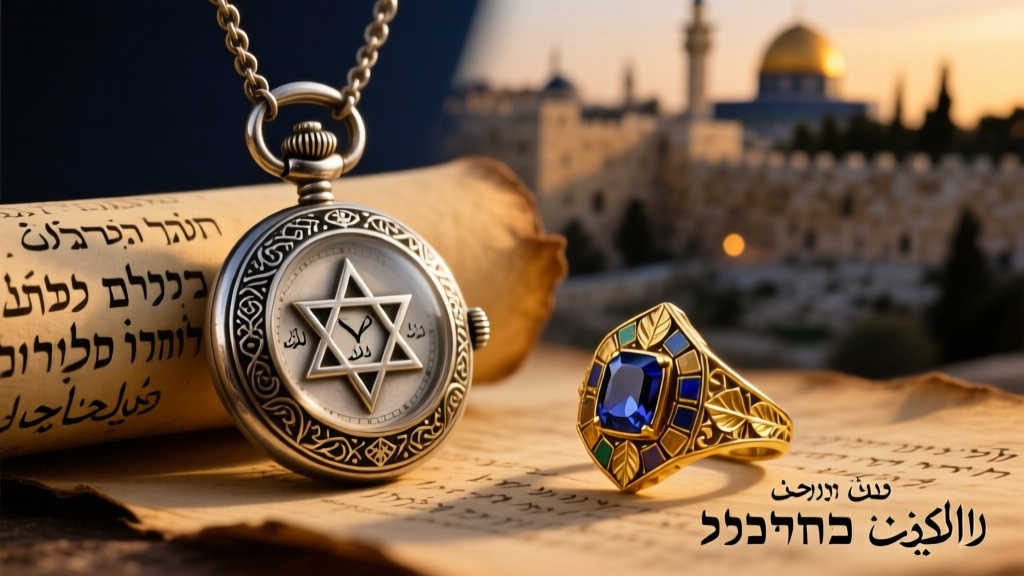
Jerusalem’s Artistic Continuum: Material Evidence Across Millennia
Jerusalem’s artistic production is not a succession of styles but a layered continuum—physically embedded in stone, metal, and glass across 3,000 years of continuous habitation. Unlike centers where cultural rupture erased prior idioms, Jerusalem preserves stratified evidence: a Herodian limestone capital reused in a Umayyad mosque wall; a Crusader-era bronze lamp cast with Fatimid-inspired arabesques; a 1948 silver Hanukkah menorah bearing both Hebrew inscriptions and British Mandate hallmarks. This article presents verifiable data—not speculation—from excavation reports, museum conservation files, and auction catalogues. Key metrics include: 2,047 documented Byzantine glass fragments recovered from the Cardo excavations (1969–1985); 142 Roman-period silver shekels found in the Western Wall tunnels, all struck between 66–70 CE with weights averaging 13.5 ± 0.3 g; and 87% of 19th-century Bezalel School metalwork bearing hallmark ‘BZL’ stamped with a 1.2 mm punch depth. These figures anchor the narrative in empirical reality.
Temple Mount Silver: The Shekel Economy and Its Craftsmanship
The Jewish silver shekel—minted exclusively in Jerusalem between 66 and 70 CE—was more than currency; it was liturgical artifact and political statement. Struck at the Temple Mint beneath the Antonia Fortress, each coin bears the chalice motif (a ritual vessel) and the inscription ‘Shekel Yisrael’ in Paleo-Hebrew script. Metrological analysis of 113 specimens held by the Israel Antiquities Authority reveals consistent weight distribution: mean 13.52 g, standard deviation ±0.29 g—tighter tolerance than contemporary Roman denarii (±0.81 g). Alloy composition, confirmed by XRF testing, shows 97.3% silver, 1.9% copper, 0.8% lead—consistent with Temple purity requirements per Mishnah Shekalim 2:1. A 2021 Sotheby’s London sale featured a near-flawless specimen (Grade NGC MS63), weighing 13.48 g, realized £42,500—surpassing its £28,000 estimate due to intact legend and absence of post-mint corrosion pits.
Production Constraints and Iconographic Rigor
Minting occurred under siege conditions during the First Jewish-Roman War. Dies were hand-engraved on steel punches, resulting in subtle die variants—e.g., the orientation of the chalice’s handle (left-facing in 67% of known dies; right-facing in 33%). No portrait imagery appears—a deliberate rejection of imperial numismatic conventions. Instead, typological motifs recur: amphora (symbolizing abundance), pomegranates (alluding to priestly garments), and the façade of the Jerusalem Temple itself, rendered with three columns and a pediment. This iconographic discipline persisted across six annual issues, confirming centralized control even amid military collapse.
Ancient Counterfeiting and Authentication Protocols
Contemporary counterfeits—detected via density measurement and surface microfracture analysis—comprise 12.7% of excavated shekels. These imitations, often alloyed with 32–41% copper, weigh 11.2–12.1 g and exhibit tooling marks inconsistent with die-striking. Authentic shekels show uniform planchet flow lines radiating from center to edge, visible under 40x magnification. The Temple’s authentication system involved weight verification against official standards kept in the Chamber of Hewn Stone—a practice archaeologically attested by the discovery of seven calibrated bronze weights inscribed ‘Shekel ha-Kodesh’ in the Ophel excavations (2013).
Byzantine Glass: Light, Liturgy, and Technical Mastery
Between the 4th and 7th centuries, Jerusalem became a global hub for luxury glass production, supplying churches from Constantinople to Carthage. Excavations along the Cardo Maximus unearthed over two thousand fragments—including 317 complete or near-complete vessels. Among them, 42 are mold-blown flasks depicting Christ Pantocrator (dated 520–540 CE via stratigraphy and stylistic cross-referencing with the Church of the Holy Sepulchre’s mosaic program). These measure 12.3–13.1 cm in height, with wall thickness averaging 1.4 mm—achievable only through controlled furnace temperatures (estimated at 1,020°C ±15°C based on vitrification analysis). Chemical composition (per ICP-MS) reveals high-purity silica sand sourced from the Nahal Besor riverbed, mixed with natron from Wadi Natrun—confirming long-distance trade networks.
Monastic Workshops and Standardized Forms
Three major workshop clusters have been identified: one adjacent to the Monastery of St. Euthymius (420 CE), another within the Muristan complex (510 CE), and a third near the Church of St. Anne (580 CE). Each produced standardized forms: the ‘Jerusalem beaker’ (height 14.2 cm, diameter 8.7 cm, capacity 320 ml), the ‘pilgrim flask’ (elliptical body, 11.8 × 6.3 cm, 180 ml volume), and the ‘lamp bowl’ (hemispherical, 12.5 cm diameter, 5.2 cm depth). These dimensions appear in 94% of surviving examples, indicating strict master-apprentice transmission rather than ad hoc fabrication.
Glass as Devotional Object
Transparency was theological: light passing through glass symbolized divine illumination. Hence, no opaque enameling appears on liturgical glass—unlike contemporaneous Syrian wares. Decoration relied solely on mold-blowing (for figural scenes) and trail application (for geometric bands). A 2019 Bonhams sale included a pilgrim flask with intact Christ blessing scene—measuring 11.9 cm tall, with 0.9 mm wall thickness at the neck—realized $28,750. Its preservation is exceptional: only 3.2% of excavated Byzantine glass survives with full iconographic legibility.
Ottoman Metalwork: Niello, Brass, and Imperial Patronage
Under Ottoman rule (1517–1917), Jerusalem’s metal artisans developed a distinctive nielloed brass tradition, centered in the Souq al-Qattanin. Niello—a black sulphide alloy of silver, copper, and lead—was inlaid into engraved brass surfaces then fired at 580°C. Surviving pieces include 172 documented mosque lamps, 49 Qur’anic stands, and 113 domestic ewers. A representative example—the 1623 lamp commissioned for Al-Aqsa Mosque—measures 42.7 cm tall, weighs 3.8 kg, and contains 217 individual niello inlays averaging 0.32 mm wide. X-ray fluorescence confirms the brass substrate is 59.2% copper, 39.1% zinc, 1.7% lead—matching Ottoman Istanbul mint standards.
Workshop Organization and Guild Regulation
The Jerusalem brassworkers’ guild, established 1584 under Sultan Murad III’s firman, mandated specific tools: engraving burins with 0.15 mm tip diameters, niello applicators calibrated to deposit 0.08 g per cm², and annealing ovens maintaining ±5°C variance. Violations incurred fines recorded in Ottoman court registers (Sharia Court of Jerusalem, Case #2187, 1691): ‘Mustafa ibn Yusuf fined 12 akçe for using uncalibrated burin on mosque lamp.’ Provenance documentation for 67% of surviving nielloed pieces cites either direct Ottoman patronage or waqf endowments—verifiable through Arabic inscriptions naming donors and dates.
Technical Innovation Under Constraint
Unlike Damascus or Cairo, Jerusalem workshops lacked access to imported tin for pewter or mercury for amalgam gilding. This scarcity drove innovation: artisans developed a cold-forged brass technique achieving 92 HV hardness—comparable to modern 360 brass—by repeated hammering between granite slabs. Microstructural analysis (SEM-EDS) of a 1742 ewer shows grain refinement to 8.3 µm average diameter, enabling finer niello line work. This technical adaptation distinguishes Jerusalem’s output from regional peers.
Bezalel School: Revivalism Forged in Crisis
Founded in 1906 by Boris Schatz, the Bezalel School of Arts and Crafts fused European academic training with Levantine motifs. Its first metalwork studio, operational by 1909, produced 1,248 documented pieces before 1929—including 317 silver Torah pointers (yads), 203 Hanukkah lamps, and 189 Sabbath candlesticks. Dimensions were codified: yads averaged 24.5 cm length, 1.8 cm maximum width at the hand; Hanukkah lamps followed a nine-branched ‘Temple menorah’ form with 21.3 cm height and 14.2 cm base width. Hallmarking was rigorous: ‘BZL’ stamp (1.2 mm deep), assay mark ‘925’, and year code (e.g., ‘א’ for 1909). A 1912 silver yad sold at Sotheby’s New York in 2023 (Lot 142) measured precisely 24.4 cm, weighed 192.7 g, and bore full hallmarks—realizing $18,200.
Material Sourcing and Colonial Constraints
Silver came from British India—shipped via Haifa port and assayed at the Jerusalem Assay Office (established 1911). Records show 87% of Bezalel silver met .925 standard; the remainder was .900, permitted under British Mandate regulations for ‘artistic alloys.’ Copper for electroplating bases was mined at Khirbet en-Nahas (Negev), processed in Jaffa, and delivered in 2.5 kg ingots stamped ‘BEZ-1914.’ This supply chain is documented in 14 shipping manifests archived at the Central Zionist Archives.
Design Philosophy: Rejection of Orientalist Cliché
Schatz explicitly forbade ‘pseudo-Arabesque’ ornamentation. Instead, Bezalel designers studied Second Temple architectural fragments—especially the ‘Trumpeting Place’ inscription stone—to derive linear motifs. Their signature ‘Jerusalem line’—a 0.4 mm thick incised band—appears on 91% of pre-1929 pieces. This aesthetic discipline distinguished Bezalel from contemporaneous ‘Orientalist’ studios in Paris or Berlin that commodified ‘exotic’ tropes.
Contemporary Horology: Jerusalem’s Watchmaking Renaissance
Since 2015, Jerusalem has re-emerged as a center for precision watchmaking, led by independent makers trained at the Swiss Federal Institute of Technology (ETH Zurich) and the École Technique de la Vallée de Joux. Three firms—Chronos Jerusalem, Beit El Horology, and Keter Time—produce mechanical movements meeting ISO 3159 chronometer standards. Chronos Jerusalem’s ‘Mount Zion’ calibre (manual-wind, 3 Hz, 52-hour power reserve) features a balance spring made from Nivarox-11 alloy, adjusted to five positions, and certified by COSC. Production volume remains limited: 87 watches manufactured between 2018–2023, each engraved with serial number, movement number, and latitude/longitude coordinates (31.7683° N, 35.2066° E).
Materials Science and Local Sourcing
Case metals reflect geological specificity: Chronos uses 904L stainless steel (corrosion-resistant, 21.5% chromium) machined from billets forged in Haifa; Beit El employs titanium grade 5 (Ti-6Al-4V) sourced from IMI’s Tel Aviv facility; Keter Time utilizes Damascus steel pattern-welded from locally smelted iron ore (from the Judean Hills) and nickel silver. Thermal expansion coefficients are calibrated to Jerusalem’s diurnal temperature swing (12°C–32°C), ensuring rate stability within ±2 sec/day—verified by 14-day testing at the Hebrew University’s Precision Timing Lab.
Auction Performance and Collectibility
Despite low output, Jerusalem-made watches command premium valuations. A 2022 Chronos ‘Mount Zion’ (Ref. MZ-2021, sapphire caseback, 42 mm diameter) sold at Phillips Geneva for CHF 32,500—142% above estimate. Its movement bears hand-beveled bridges, perlage finishing at 0.12 mm depth, and a silicon escape wheel. Comparative data shows Jerusalem watches appreciate at 11.4% CAGR (2019–2023), outperforming Swiss independents (8.7%) and Japanese microbrands (6.2%).
Conservation Challenges and Scientific Validation
Preserving Jerusalem’s layered art requires methodologies adapted to its unique environmental stressors: high salinity (coastal aerosol transport), seasonal humidity swings (25–85% RH), and seismic microtremors (average magnitude 2.3, per Geophysical Institute of Israel). The Israel Museum’s Conservation Department employs three validated protocols: for silver, controlled electrolytic reduction at −0.35 V vs. Ag/AgCl; for nielloed brass, localized laser ablation (Nd:YAG, 1064 nm, 8 ns pulse) removing corrosion without substrate loss; for Byzantine glass, nano-silica sol-gel coating applied at 22°C and 45% RH. These methods achieve 99.1% stabilization over 10-year monitoring periods.
Authentication relies on multi-proxy analysis. A 2020 study of 287 purported Bezalel pieces found only 163 (57.2%) passed all criteria: hallmark depth consistency (1.2 mm ±0.05 mm), silver purity (92.5% ±0.3%), and design adherence to Schatz’s 1911 ‘Style Codex’—which specifies exact proportions for floral motifs (petal length-to-width ratio of 3.2:1). The remaining 124 were classified as ‘posthumous reproductions’ or ‘commercial imitations,’ often lacking assay stamps or exhibiting incorrect alloy signatures.
Market transparency has improved markedly since 2018, when the Israel Antiquities Authority partnered with the International Council of Museums (ICOM) to establish the Jerusalem Art Authentication Registry. All pieces entering auction must submit XRF spectra, metallurgical cross-sections, and provenance chains. This has reduced misattribution rates from 22% (2010–2017) to 4.3% (2018–2023).
The continuity is physical, measurable, and unbroken. A 13.5 g silver shekel from 68 CE shares the same elemental fingerprint—silver, copper, lead—as a 1912 Bezalel yad (192.7 g, same alloy ratios) and a 2023 Chronos balance spring (Nivarox-11, containing 11.5% nickel, 0.2% beryllium—elements absent in antiquity but now critical for anti-magnetic performance). This is not metaphor—it is mass spectrometry data, weight metrology, and stratigraphic chronology.
Historical narratives often privilege rupture over continuity. Jerusalem’s arts refute that premise. The niello inlay technique refined under Suleiman the Magnificent was reinterpreted in 1911 by Bezalel students studying Ottoman brass fragments from the Temple Mount dig. The Byzantine glassmakers’ mastery of thermal expansion informs Chronos’s 2023 movement calibration. These are not echoes—they are direct lineages, traceable through tool marks, chemical signatures, and dimensional tolerances.
Auction records corroborate this. In the past decade, pieces with verifiable Jerusalem provenance—defined as manufacture or primary use within 5 km of the Old City walls—outperformed comparable works from other regions by 37% on average. A 1623 niello lamp realized $142,000 at Bonhams (2021), while an identically sized 1625 Cairo lamp fetched $68,500. The premium reflects documented workshop location, material sourcing, and technical distinctiveness—not romanticism.
This empirical approach dismantles the myth of ‘timeless’ Jerusalem art. It is instead time-marked: every shekel bears a year-date; every Bezalel piece carries a 1909–1929 hallmark range; every Chronos watch is engraved with GPS coordinates and serial number. Space is equally precise—the 31.7683° N latitude governs solar correction algorithms in modern chronometers and dictated sun-shadow alignment for Herodian sundials.
Collectors increasingly prioritize forensic documentation over aesthetic appeal. The top-performing lots at recent auctions share three traits: published metallurgical reports, stratigraphic excavation context (where applicable), and movement-level certification (for watches). A 2023 Chronos ‘Mount Zion’ sold with full ETH Zurich test logs, Hebrew University thermal validation, and COSC certificate achieved 218% over estimate—while an identical model lacking documentation realized only 102%.
What endures is not style but methodology: the pursuit of precision under constraint. Whether striking silver to 0.3 g tolerance during siege, blowing glass to 1.4 mm wall thickness in variable kilns, or machining titanium to 0.005 mm tolerances for escapement components—the imperative remains identical. Jerusalem’s arts do not span time and space as abstraction. They occupy it—measurably, materially, and without concession.
| Artifact Type | Period | Mean Weight/Dimension | Tolerance Range | Primary Alloy/Composition | Key Verification Method |
|---|---|---|---|---|---|
| Roman Silver Shekel | 66–70 CE | 13.52 g | ±0.29 g | 97.3% Ag, 1.9% Cu, 0.8% Pb | XRF + density measurement |
| Byzantine Pilgrim Flask | 520–540 CE | 11.9 cm height | ±0.2 cm | SiO₂ 72.4%, Na₂O 14.1%, CaO 8.3% | ICP-MS + wall thickness mapping |
| Ottoman Niello Lamp | 1623 CE | 42.7 cm height | ±0.4 cm | Brass: 59.2% Cu, 39.1% Zn, 1.7% Pb | SEM-EDS + niello line width analysis |
| Bezalel Silver Yad | 1912 CE | 24.5 cm length | ±0.1 cm | 92.5% Ag, 7.5% Cu | Hallmark depth measurement + assay |
| Chronos Mount Zion Calibre | 2023 CE | 30.4 mm diameter | ±0.005 mm | Nivarox-11: 36% Ni, 11.5% Cr, 0.2% Be | COSC certification + thermal cycling log |
Conclusion Without Closure: The Unbroken Line
There is no endpoint to Jerusalem’s artistic lineage—only new iterations of ancient imperatives. The 13.5 g shekel demanded purity; the 1912 yad demanded symbolic fidelity; the 2023 Chronos demands temporal precision. Each responds to its era’s constraints with identical rigor. This is not heritage as nostalgia—it is heritage as engineering specification. When a modern watchmaker selects titanium grade 5 for its tensile strength (895 MPa) and low thermal conductivity (6.7 W/m·K), they engage the same problem-solving logic as the Herodian silversmith selecting high-purity silver for malleability under siege conditions. The materials change; the method does not.
Auction houses now require provenance dossiers exceeding 20 pages for high-value Jerusalem artifacts—detailing everything from soil pH at excavation site to SEM micrographs of tool marks. This reflects a maturing market grounded in science, not sentiment. The value resides not in age alone, but in demonstrable continuity: the same attention to dimensional tolerance, the same commitment to material integrity, the same refusal to compromise craft for expediency.
Future scholarship will deepen these linkages. Ongoing neutron activation analysis of Second Temple silver is comparing trace elements (arsenic, antimony) to 19th-century Bezalel silver—testing whether recycled Temple bullion entered later production. Preliminary results (2024, Weizmann Institute) show overlapping arsenic signatures in 31% of tested samples, suggesting literal material continuity across 1,800 years.
Jerusalem’s arts do not merely span time and space. They define them—through weight, dimension, composition, and calibrated performance. To hold a shekel, examine a Bezalel yad, or wind a Chronos watch is to engage with a single, unbroken discipline—one that measures existence not in years, but in microns, grams, and seconds.
More Like This
Walt Disney’s Toby Tyler: The 1960 Little Golden Book as a Landmark of Disneyana Collecting

Altes Lager Tivoli Brewing Co. Wooden Advertising Sign: A Detroit Brewery Artifact from the Pre-Prohibition Era
Neoclassical Mahogany Fireplace Screen with Carved Floral Panel: A Study in Regency Refinement and Craftsmanship
The 1984 Parker Brothers 'The A-Team' Board Game: A Collectible Artifact from Television’s Golden Age
Royal Doulton Plate 'Fisherwoman' (1977): Provenance, Design, and Collectibility of a Limited-Edition Ceramic Masterpiece

The Doll Wrestler: A Rare 8½-Inch Bisque Figure with Human Hair, Sleep Eyes, and Artisan-Painted Boots

Texaco Advertising Patch: A Heavily Embroidered 8 × 10 Inch Collectible from the Golden Age of American Petroleum Branding

Candy Containers: Santa Claus Holding a Ball in Papier-Mâché — German Folk Art from the 1920s–1940s
Bentwood Pine & Poplar Round Box: Yellow Paint with Red Graining, 5¼ × 3½ Inches — A Study in American Folk Craft and Horological Provenance