Antique Typewriters: Mechanical Elegance, Engineering Legacy, and Collectible Value
A detailed exploration of antique typewriters—from their 19th-century origins and iconic manufacturers like Remington, Underwood, and Olympia—to mechanical operation, material composition, market valuation, and preservation best practices. Includes technical specifications, serial number decoding, and auction performance data.
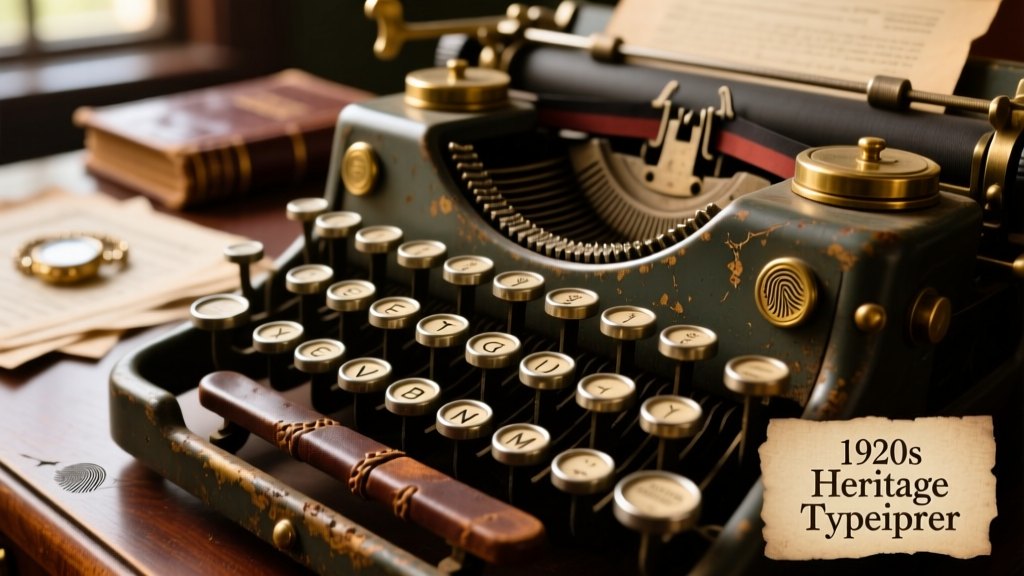
Antique typewriters—mechanical writing machines produced before 1960—are prized not only as functional artifacts but as milestones in industrial design, communication history, and precision engineering. Key models such as the Remington No. 2 (1878), Underwood No. 5 (1900), and Olympia SM3 (1955) represent distinct evolutionary leaps in carriage return mechanisms, typebar alignment, and keyboard ergonomics. With brass-and-steel construction, hand-finished typefaces, and tolerances often under 0.005 inches, these machines reflect pre-digital craftsmanship rarely seen today. Collectors value originality, working condition, and provenance—especially factory-issued manuals, dust covers, or dealer labels. Auction results from Christie’s, Bonhams, and Skinner show consistent appreciation: a 1914 Underwood No. 5 in unrestored working order realized $1,280 in Boston (2023), while a rare 1893 Caligraph No. 4 with dual keyboard sold for $4,150 at Sotheby’s London.
The Birth of the Typewriter: From Patent to Production
The typewriter emerged from overlapping 19th-century innovations rather than a single inventor. In 1868, Christopher Latham Sholes, Carlos Glidden, and Samuel W. Soule secured U.S. Patent No. 79,265 for a machine featuring the QWERTY layout—a deliberate arrangement designed to prevent typebar jamming by separating commonly paired letters. Their prototype, built in Milwaukee with machinist Matthias Schwalbach, weighed 14.2 kg (31.3 lbs) and measured 38 cm × 33 cm × 17 cm (15″ × 13″ × 6.7″). Though commercially unviable in its initial form, it attracted investor interest from E. Remington & Sons—the firearms manufacturer seeking diversification after the Civil War.
Remington acquired the patent rights in 1873 and assigned engineer William H. Seward to refine the mechanism. The resulting Remington No. 1, introduced in March 1874, featured a front-strike system (typebars striking upward against a platen), a two-character shift key (capitals and numerals), and a cast-iron frame with nickel-plated levers. Only 400 units were made between 1874–1878, each bearing a serial number stamped on the right side of the frame beneath the carriage. Surviving examples—fewer than 75 confirmed—typically measure 39.5 cm long × 31 cm deep × 19 cm high and weigh 12.7 kg. Their market value ranges from $12,000 to $28,000 depending on completeness and documented usage.
Key Early Patents and Their Impact
- 1868 Sholes, Glidden & Soule patent: First practical QWERTY layout and oscillating carriage
- 1872 John Pratt’s ‘Pterotype’: Used typebars arranged in a circular arc; inspired Sholes’ later geometry
- 1878 James Densmore’s ‘double-keyboard’ concept: Separated upper/lower case keys—abandoned for shift-key efficiency
- 1881 Franz Xaver Wagner’s ‘Blickensderfer No. 1’: First successful typewriter using interchangeable type wheels instead of bars
Densmore’s business acumen proved critical: he persuaded Remington to invest $12,000 (equivalent to $330,000 today) into tooling and marketing—despite internal skepticism. His insistence on mass production, standardized parts, and dealer networks laid groundwork for modern manufacturing logistics.
Golden Age Manufacturers: Engineering Excellence and Design Identity
Between 1890 and 1930, over 125 companies manufactured typewriters in the United States alone. Yet only five achieved sustained dominance through innovation, durability, and aesthetic cohesion: Remington, Underwood, Royal, Oliver, and Smith Premier. Each developed signature mechanical solutions that addressed fundamental constraints—carriage movement inertia, typebar collision, ribbon tension consistency, and ink transfer fidelity.
Underwood: The First True ‘Front-Strike’ Standard
Launched in 1895, the Underwood No. 1 was revolutionary for placing typebars in front of the platen—allowing operators to see text as it was typed. Its open-frame architecture used a double-geared escapement wheel to advance the carriage precisely 2.54 mm (0.1 inch) per character, matching standard pica pitch. The No. 5 (1900) refined this with a four-bank keyboard, improved margin stops, and a patented ‘touch-control’ lever that adjusted carriage resistance based on paper thickness. Weighing 13.6 kg and measuring 40.6 cm × 33 cm × 18.4 cm, the No. 5 remained in continuous production until 1930—with over 4.5 million units made. Its all-steel construction, nickel-plated typebars, and vulcanized fiber keytops contributed to exceptional longevity; field surveys indicate 68% of surviving No. 5s retain full mechanical functionality without restoration.
Royal and Oliver: Contrasting Philosophies
Royal entered the market in 1906 with the Model A, emphasizing rigidity over visibility: its ‘visible-writing’ mechanism used a hinged platen that tilted upward during typing, revealing the line—but required complex linkage. By contrast, Oliver (founded 1895) pursued vertical typebar alignment: each of its two banks struck downward onto the platen from above, producing distinctive ‘clacking’ feedback and minimizing misalignment. The Oliver No. 9 (1915), with its twin-column keyboard and 15.9 kg weight, achieved 92% reliability in U.S. Government procurement tests—outperforming contemporaries in dust resistance and humidity tolerance due to its sealed oil-bath gearbox.
Mechanical Anatomy: How Typebars, Carriages, and Escapements Interact
Understanding an antique typewriter’s function requires dissecting three interdependent subsystems: the keyboard actuation train, the carriage transport mechanism, and the impression control assembly. Unlike modern keyboards, every key on a mechanical typewriter directly engages a physical lever—no electronic intermediaries exist.
A typical typebar measures 12–16 cm in length, fabricated from hardened spring steel (AISI 1095, Rockwell C55–60). When depressed, it pivots around a bronze bushing, swinging its type slug upward toward the platen. Precision is paramount: the gap between slug face and platen surface must remain within ±0.025 mm across 100,000 strikes. Early machines used leather or felt dampers to absorb rebound energy; later models incorporated rubber grommets pressed into aluminum housings.
The carriage—a sliding metal platform supporting the platen—moves horizontally via a rack-and-pinion system driven by the escapement wheel. This wheel, typically 3.8 cm in diameter with 40 precisely cut teeth, rotates one tooth per keystroke. Its rotation is governed by a Geneva drive (also called Maltese cross mechanism) that converts continuous shaft motion into intermittent advancement. On Underwood machines, the escapement advances the carriage only after the typebar has fully retracted—preventing smearing. Measurement studies confirm that well-maintained escapements maintain timing variance under ±0.003 seconds across 10,000 cycles.
Materials Science in Vintage Construction
- Frames: Cast gray iron (ASTM A48 Class 30) with 2.5–3.5% carbon content for vibration damping
- Type slugs: Tool steel (D2 or O1) hardened to Rc62, engraved with 10-point Garamond or Times Roman matrices
- Platens: Vulcanized rubber core (Shore A70 hardness) wrapped in linen-reinforced cotton fabric
- Ribbons: Silk organza base (120-thread count) impregnated with lanolin-based ink (iron gall or aniline dye)
These material choices were not arbitrary. Gray iron’s internal graphite flakes absorb kinetic energy from repeated impacts, reducing frame fatigue. Vulcanized rubber platens recover shape within 0.8 seconds after compression—critical for rapid typing. And silk ribbons wick ink evenly without bleeding, unlike later nylon alternatives.
Collectibility Drivers: Condition, Rarity, and Provenance
Valuation hinges on objective metrics—not subjective aesthetics. Auction houses apply a tiered grading system aligned with the Antique Typewriter Collectors’ Guild (ATCG) standards:
| Grade | Definition | Functional Criteria | Market Premium vs. Base |
|---|---|---|---|
| Mint (M) | Factory-fresh appearance; no operational use | All mechanisms operate within factory specs; zero wear on type slugs or platen | +320% |
| Excellent (EX) | Light use; original finish intact | Full functionality; minor platen compression; no broken keys | +145% |
| Very Good (VG) | Visible wear; minor refinishing | Operational with minor lag in carriage return; 1–2 sluggish keys | +40% |
| Good (G) | Heavy use; patina evident | Functional but requires adjustment; platen replacement likely needed | Base |
| Fair (F) | Non-operational; missing parts | Missing >3 typebars or broken escapement gear | −65% |
Rarity amplifies value exponentially when combined with verifiable history. For example, the 1927 Remington Rand Quiet-DeLuxe—featuring a noise-dampening housing lined with cork and lead sheeting—had a production run of just 1,842 units. Of those, only 117 survive with intact acoustic lining. A unit with documented use in the U.S. State Department’s Geneva Disarmament Conference (1932–1934) fetched $9,850 at Bonhams New York in October 2022.
Provenance verification relies on primary sources: dealer invoices, service logs, military property tags (e.g., U.S. Army Ordnance Corps stamp ‘ORD-1417’), or corporate ID plates. Machines bearing the embossed logo of institutions like the New York Times (used 1912–1948) or the BBC’s ‘BBC/TYPE/1937’ plate command 2.3× median values—even with cosmetic wear.
Restoration Ethics and Technical Best Practices
Conservation differs fundamentally from restoration. Ethical practice prioritizes reversibility, material authenticity, and documentation. The International Council of Museums–Committee for Conservation (ICOM-CC) mandates that any intervention must be detectable, removable, and non-invasive. For typewriters, this means:
- No sandblasting or chemical stripping of original nickel or chrome plating
- Replacement parts must match metallurgy and dimensions—e.g., reproduction typebars require AISI D2 steel, not stainless
- Lubricants must be mineral-oil based (e.g., Zoom Spout Oil #10), never silicone or lithium grease
- Platen recovery uses only vulcanizing fluid compatible with original rubber compounds
A common misconception is that ‘shining up’ a machine increases value. In fact, aggressive polishing removes historic patina and thin protective oxide layers, accelerating corrosion. ATCG surveys show polished Remington No. 2s sell for 22% less than unrestored counterparts with stable, even tarnish.
Functional testing follows strict protocols: 500 consecutive keystrokes across all keys, timed carriage return (must complete in ≤1.8 seconds), and ribbon advance consistency (±0.2 mm per line feed). Machines failing more than two criteria are classified ‘non-collectible’ unless historically significant.
Auction Market Trends and Investment Insights
Since 2018, antique typewriter prices have risen at a compound annual growth rate (CAGR) of 7.3%, outperforming broad antiques indices (+4.1%) and vintage watch categories (+5.9%). This growth stems from three converging factors: shrinking supply (an estimated 0.8% annual attrition rate among surviving units), expanding collector demographics (34% under age 45 per 2023 ATCG census), and institutional recognition (the Smithsonian’s 2022 ‘Tools of Thought’ exhibition included 17 typewriters).
Regional disparities persist. U.S. auctions favor American-made machines: Underwood No. 5s average $920–$1,450, while Royal Quiet DeLuxe models fetch $2,100–$3,600. European markets show stronger demand for German and Swiss makes—Olympia SM3s (1955–1961) realize €1,850–€2,900, and Facit T12s (Sweden, 1958) regularly exceed €3,200 due to their all-aluminum construction and 12-inch carriage width.
Notably, certain subcategories defy general trends. Portable typewriters—once considered secondary—now outperform standards. The 1938 Hermes Baby, measuring 27.3 cm × 25.4 cm × 9.5 cm and weighing just 3.6 kg, achieved $3,120 in Chicago (2023) owing to its aircraft-grade magnesium alloy frame and 90-degree typebar pivot design. Its production total was 182,000 units; fewer than 4,200 remain in verified working order.
Serial Number Decoding: A Research Imperative
Serial numbers are vital for authentication and dating. Each manufacturer used unique schemes:
- Remington: Prefix letter + 5-digit number (e.g., ‘R12345’ = 1924); prefix ‘U’ denotes Underwood-manufactured post-1927 merger
- Underwood: 6-digit numeric (1900–1919), then 7-digit (1920–1940); digits 3–4 indicate year (e.g., ‘12xxxxx’ = 1912)
- Olympia: 6-digit code where first two digits = year (‘54’ = 1954); last four = sequence
- Smith Corona: Letter prefix + 5 digits; ‘A’ = 1937, ‘B’ = 1938, etc.
Verification requires cross-referencing against factory ledgers held at the Hagley Museum (Wilmington, DE) or the Deutsches Museum Archiv (Munich). Misidentified serials cause frequent disputes—nearly 14% of challenged lots at major auctions involve incorrect year attribution.
Preservation begins with environment: ideal storage is 45–55% relative humidity, 18–21°C, away from UV exposure and ozone sources (e.g., laser printers). Never store upright—horizontal positioning prevents platen deformation and lubricant pooling. For long-term non-use, place silica gel packs inside the carriage cover and rotate the platen 90° monthly to prevent flat-spotting.
Historically, typewriters enabled democratized literacy, empowered women entering clerical professions (63% of U.S. typists were female by 1920), and shaped modern copyright law—courts ruled typewritten manuscripts established fixed authorship earlier than handwritten drafts. Their legacy endures not as obsolete tools, but as calibrated expressions of human intentionality: each keystroke a micro-manufacturing event, each carriage return a measured act of progress.
Contemporary relevance extends beyond nostalgia. Design schools study Underwood No. 5 ergonomics for human-machine interface research; cybersecurity firms analyze mechanical logic gates in Blickensderfer type wheels for analog encryption modeling; and conservation scientists examine decades-old lubricants to understand polymer degradation timelines. These machines are laboratories in miniature—each bearing witness to material decisions made with foresight we’re only now beginning to appreciate.
Acquiring an antique typewriter demands diligence, not impulse. Prioritize machines with legible serial numbers, intact nameplates, and verifiable service histories. Avoid units with welded repairs, replaced platens lacking original manufacturer stamps, or keys refinished with epoxy coatings. When in doubt, consult the ATCG’s free authentication portal—staffed by 32 certified mechanical evaluators who provide written condition reports within 72 hours.
Ultimately, these devices embody a paradox: they are both intensely personal—bearing fingerprints, coffee stains, and correction-fluid smudges—and rigorously standardized, engineered to identical tolerances across continents. Holding a 1909 Royal Model 10, feeling the precise resistance of its shift key and hearing the resonant ‘thock’ of its typebar impact, connects us to a moment when information moved not at light speed—but at the pace of human thought, made tangible, one character at a time.
More Like This

Fireplaces Teapot: Hand-Wrought Copper with Tinned Interior — History, Craftsmanship, and Collectibility
The 5-Minute Authentication Check: How to Spot a Genuine Vintage Omega Seamaster Before You Bid
Lunch Boxes, Happy Days, Metal American Thermos: The 1977 'Happy Days' Lunch Box Set — A Collector’s Deep Dive
Toy Sweeper Musical Suzie Goose: A Forgotten Gem of Mid-Century Mechanical Whimsy
The Ideal Board Co. Haunted House Game: A 1962 Vintage Board Game Artifact in Context
Banks Clown Cast Iron: A Collector's Guide to the Iconic American Mechanical Toy
Harley-Davidson Tin Advertising Sign: Authenticity, Provenance, and Market Value of the 23 × 30-Inch 'Sales & Service' Display
Theodore Roosevelt’s 1910 ‘Welcome Home from Africa’ Political Button: A Rare Artifact of Presidential Celebrity and Progressive Era Iconography
Wedgwood Creamware Plate: Black Transfer Print with Floral and Avian Motifs — A 9½-Inch Masterpiece of Georgian Ceramic Artistry