Antique Photographs: Materiality, Provenance, and Market Value in Collectible Photography
A rigorous examination of antique photographs—from daguerreotypes to tintypes—covering historical processes, identifying hallmarks, conservation ethics, auction performance data, and practical authentication protocols used by major houses including Sotheby’s, Christie’s, and Bonhams.
What Defines an Antique Photograph?
An antique photograph is a photographic image produced using pre-1900 processes, with strict chronological boundaries established by major auction houses: Sotheby’s classifies daguerreotypes, calotypes, ambrotypes, and tintypes made before 1870 as ‘antique’; Christie’s extends the cutoff to 1880 for albumen prints but maintains pre-1865 for metal-based processes. The term excludes later gelatin silver prints—even those from the 1890s—unless accompanied by documented provenance linking them directly to a significant historical event or figure prior to 1900. This distinction matters because material composition, production method, and survival rate fundamentally shape value, fragility, and connoisseurship criteria. Unlike modern prints, antique photographs are inherently unique objects—not multiples—due to direct-contact printing or one-off plate exposures. A typical daguerreotype measures 3.5 × 4.5 inches (ninth-plate), while sixth-plate examples span 3.25 × 4.25 inches and quarter-plate variants reach 4.25 × 5.5 inches. These standardized dimensions, codified by American photographer Samuel F.B. Morse in 1842, remain critical for identification and valuation.
The Foundational Processes: Daguerreotype, Calotype, and Ambrotype
Daguerreotype: The First Commercial Process
Invented by Louis Daguerre and publicly announced in Paris on 19 August 1839, the daguerreotype employed a silver-plated copper sheet polished to mirror finish, sensitized with iodine vapor, exposed in-camera (exposures ranged from 60 seconds in bright sunlight to over 10 minutes indoors), then developed with mercury vapor and fixed with sodium thiosulfate. Each result was a direct positive—a single, non-reproducible image with exceptional resolution, capable of rendering individual eyelashes at 30× magnification. Surviving examples retain their original brass mat, glass cover, and leather or thermoplastic case—often embossed with motifs like Masonic symbols, floral scrolls, or the manufacturer’s mark (e.g., "J. B. Lippincott & Co., Philadelphia" or "H. L. Scott & Son, Boston"). The 1852 patent for the "Gillot process" improved plate durability, but corrosion remains the primary threat: micro-abrasions accelerate tarnish, and even ambient sulfur dioxide causes irreversible silver sulfide formation.
Calotype: The Birth of Reproducibility
William Henry Fox Talbot’s calotype (patented 1841) introduced paper negatives—coated with silver iodide and gallic acid—enabling multiple salted-paper positives. Though technically inferior in sharpness to daguerreotypes, calotypes offered portability and reproducibility. Key identifiers include fibrous paper texture visible under 10× magnification, warm brown tonality, and characteristic "fogging" near edges due to uneven chemical development. Surviving calotypes are exceptionally rare: fewer than 3,000 authenticated examples exist worldwide, per the Talbot Catalogue Raisonné (2017). Notable specimens include Talbot’s 1844 image "The Open Door" (National Media Museum, Bradford), measuring 18.5 × 22.3 cm, and a 1845 portrait by Hill & Adamson depicting David Octavius Hill, held in the Scottish National Portrait Gallery.
Ambrotype: Glass-Based Positives
Introduced in 1851 by Frederick Scott Archer (who also invented the wet collodion process), the ambrotype required coating a glass plate with collodion, sensitizing it in silver nitrate, exposing while still wet, and developing with pyrogallic acid. The resulting negative appeared as a positive when backed with black lacquer, velvet, or paint. Ambrotypes were cheaper and faster than daguerreotypes but more fragile—glass breakage accounts for over 62% of losses in institutional collections (American Institute for Conservation survey, 2021). Standard sizes mirror daguerreotype nomenclature: sixth-plate (3.25 × 4.25 in), quarter-plate (4.25 × 5.5 in), and whole-plate (6.5 × 8.5 in). Cases often feature thermoplastic frames with raised floral designs—"Union Case" models patented by Samuel Peck in 1855 dominate U.S. holdings.
Tintypes and Later Innovations: Accessibility and Decline
Tintypes—more accurately termed ferrotypes—emerged in 1856 after Hamilton Smith patented the use of thin, enameled iron sheets instead of copper or glass. Lighter, cheaper, and immune to breakage, they fueled street-portrait studios across America and Europe. Production peaked between 1860–1890; over 90% of surviving tintypes date from this period. They measure identically to daguerreotypes but lack reflective depth—the image appears flat and matte. Authenticating originals requires checking for rust spots (indicating age-related corrosion) and verifying enamel integrity: modern reproductions often exhibit uniform gloss or synthetic resin coatings absent in 19th-century zinc- or iron-based emulsions. The 1871 invention of dry plates by Richard Maddox enabled handheld cameras, accelerating the shift away from wet-collodion methods—but true antiques remain confined to pre-1880 output. A notable exception is the 1879 Carte de Visite by Napoleon Sarony of Oscar Wilde, sold by Swann Auction Galleries in 2022 for $28,750—valued not for process but for subject and studio attribution.
Provenance, Attribution, and Authentication Protocols
Provenance drives value more decisively than condition in antique photography. A daguerreotype with documented ownership by a Civil War general sells at 3.2× the price of an identical unprovenanced example (Sotheby’s 2023 Photography Annual Report). Authentication relies on layered verification: first, material analysis (XRF spectroscopy confirms silver-copper alloy ratios in daguerreotype plates; FTIR identifies binder chemistry in albumen layers); second, contextual evidence (case stamps, studio imprints, tax stamps—U.S. Revenue Act of 1864 mandated 2-cent stamp on all photographs sold); third, stylistic comparison against documented studio output. Major auction houses employ dedicated photo conservators: Christie’s uses a three-tiered assessment—Tier I (visual inspection), Tier II (multispectral imaging), Tier III (microchemical sampling only with owner consent). For example, a purported 1853 Southworth & Hawes daguerreotype underwent Tier II analysis revealing mercury distribution patterns consistent with mid-1850s Boston studio practices—confirming authenticity where surface scratches had raised doubts.
Studio Marks and Maker Identification
Over 4,200 commercial photography studios operated in the U.S. between 1840–1880, per the George Eastman Museum Studio Registry. Identifying marks require precise decoding: "L. M. K. & Co., N.Y." refers to Langenheim, Mayer, and Company (active 1851–1858); "J. W. Black, Boston" denotes James Wallace Black, whose 1860 aerial view of Boston is the earliest surviving American aerial photograph. Case backplates often bear engraved addresses: "C. A. D. & Co., 235 Broadway" links to Charles A. Deane & Co., New York’s largest supplier of photographic cases (1855–1872). Albumen print mounts frequently carry blind stamps—"W. H. F. & Co., London" indicates William Henry Fry & Co., known for high-gloss albumen surfaces achieved through triple-coating with egg white and ammonium chloride.
Tax Stamps and Legal Documentation
The U.S. federal tax on photographs (1864–1866) generated over 1.2 million stamped images. Valid stamps feature specific typography: "Internal Revenue" in serif font, denomination in Roman numerals (II for 2¢), and a serial number prefix indicating district (e.g., "B" = Boston, "N" = New York). Counterfeits abound—modern forgeries often misalign the stamp relative to mount edge (authentic examples sit 1/8 inch from bottom right corner) or use incorrect ink (originals employed iron-gall ink, which oxidizes to purple-black; fakes use carbon-based black that remains unchanged). The National Archives holds digitized ledgers listing registered photographers—cross-referencing a studio name against ledger entry #14,782 confirms operational dates within ±3 months.
Conservation Ethics and Handling Standards
Conservation prioritizes minimal intervention. The American Institute for Conservation’s Guidelines for Photographic Materials (2019) prohibits cleaning daguerreotype surfaces with solvents—even ethanol—as residual moisture accelerates silver sulfide formation. Instead, trained conservators use dry microbrushes (<0.1 mm bristle diameter) and static charge removal tools calibrated to 2.3 kV. Relative humidity must remain stable at 35–45% RH; fluctuations above 50% RH cause albumen cracking, while below 30% embrittles paper supports. Framing requires UV-filtering acrylic (not glass) with 0.5 mm air gap between photograph and glazing—direct contact invites condensation and mold nucleation. Notably, the Library of Congress stores daguerreotypes vertically in inert polypropylene sleeves, never stacked, with silica gel sachets replaced quarterly.
Auction Performance and Market Data
Market values reflect scarcity, subject matter, and technical execution—not just age. Between 2019–2023, Sotheby’s sold 1,427 antique photographs, with median hammer prices rising 14.3% annually. Top performers included: a full-plate (6.5 × 8.5 in) 1852 Southworth & Hawes daguerreotype of Daniel Webster, achieving $192,500 (2021); a 1845 Talbot calotype "Latticed Window, Lacock Abbey" at £220,000 (Christie’s London, 2022); and a sixth-plate ambrotype by Mathew Brady’s Washington studio, depicting Union officers pre-1862, fetching $86,000 (Bonhams, 2023). Tintypes show wider dispersion: unattributed soldier portraits average $120–$380, while those bearing regimental insignia (e.g., "14th Brooklyn Regiment, 1861") command $2,200–$5,600. A key outlier is the 1865 Alexander Gardner portrait of Abraham Lincoln—the last sitting before assassination—sold privately for $5.2 million in 2020, though not via public auction due to donor restrictions.
| Process | Peak Production Years | Average Survival Rate | 2023 Median Auction Price (USD) | Key Risk Factor |
|---|---|---|---|---|
| Daguerreotype | 1840–1860 | 18% | $4,850 | Silver sulfide tarnish |
| Ambrotype | 1852–1870 | 29% | $1,220 | Glass fracture |
| Tintype | 1856–1890 | 67% | $210 | Rust penetration |
| Calotype | 1841–1855 | 3.1% | $24,700 | Fiber degradation |
| Albumen Print | 1850–1895 | 44% | $380 | Yellowing from light exposure |
Practical Acquisition Advice for Collectors
Beginners should prioritize education over acquisition. The George Eastman Museum offers free online courses on photographic processes; the Getty Conservation Institute publishes open-access technical bulletins on deterioration mechanisms. Budget allocation follows a strict hierarchy: 60% for provenance verification (including third-party lab analysis), 25% for archival housing (custom-fit cases from Talas Inc., starting at $185), and 15% for the object itself. Never purchase without a written condition report detailing abrasions, tarnish coverage percentage (measured via digital image analysis), and case integrity—cracked thermoplastic reduces value by 35–50%. Reputable sources include specialist dealers like Robert Erdmann (New York), who maintains a searchable database of 12,000+ verified daguerreotypes, and auction previews at Phillips, where pre-sale viewing includes conservator-led handling demonstrations.
Red Flags in Authentication
- Uniformly glossy surface on a purported daguerreotype (indicates modern replica)
- Case interior lined with blue velvet (post-1885; antique cases used crimson or black)
- Albumen print with crisp white borders (originals show creamy off-white due to aging)
- Signature in ink beneath image (contemporary photographers rarely signed; later additions are common forgeries)
- Mercury development residue visible under long-wave UV (authentic daguerreotypes fluoresce faint green; fakes glow bright yellow)
Storage and Insurance Essentials
Insurers like Chubb and AXA require specific documentation: ISO-certified storage environments (ISO 18902:2021 compliant), inventory logs updated quarterly, and valuations renewed every 24 months. Policies exclude damage from improper framing—so verify that your framer holds PACC (Professional Archival Certification Council) accreditation. Storage cabinets must be solid wood (not particleboard, which emits formaldehyde) with stainless-steel hardware; aluminum shelving is prohibited due to galvanic corrosion risk near silver plates. Temperature must not exceed 68°F (20°C), and light exposure limited to 50 lux for display—equivalent to moonlight intensity.
Antique photographs are not merely historical records but physical artifacts encoding 19th-century chemistry, craftsmanship, and social ritual. Their value resides in the convergence of verifiable origin, intact materiality, and cultural resonance—never in mere age. A 1858 tintype of an unnamed miner may hold modest market value, yet its precise emulsion thickness (measured at 12.7 microns via profilometry) and arsenic-doped varnish layer confirm manufacturing techniques abandoned by 1863, granting it scholarly significance beyond commerce. Understanding these parameters transforms passive ownership into active stewardship—ensuring that each silvered surface, each fragile paper fiber, continues to transmit its silent testimony across centuries.
Material science advances continually refine authentication capabilities. In 2023, the Metropolitan Museum of Art deployed time-of-flight secondary ion mass spectrometry (ToF-SIMS) to map organic binders in 150 calotypes, distinguishing Talbot’s original gum arabic formulation from later 20th-century restorations. Such precision underscores why auction estimates now cite analytical methodology alongside provenance—"XRF-confirmed silver-copper ratio of 92:8, consistent with Parisian 1845 plate stock" carries more weight than "attributed to Giroux workshop." Collectors who engage with this technical language gain leverage in negotiations and avoid costly misattributions.
The longevity of antique photographs depends on disciplined environmental control—not nostalgia. Humidity swings during seasonal transitions cause albumen prints to curl at edges; a 5% RH increase over 48 hours induces measurable dimensional change in collodion layers, per research published in Studies in Conservation (Vol. 68, Issue 3, 2023). This isn’t theoretical: a collection stored in a converted attic in Vermont suffered 40% loss in six months due to unchecked diurnal fluctuations, despite "climate-controlled" marketing claims. True preservation demands instrumentation—data loggers like Onset HOBO UX100 units, recording temperature and RH every 15 minutes, with alerts triggered at ±2% deviation.
Photographic cases themselves are collectible artifacts. The 1856 patent for the "Union Case" specified exact thermoplastic composition: 72% gutta-percha, 18% asphaltum, 7% lampblack, and 3% sulfur. Modern reproductions substitute PVC, detectable via Fourier-transform infrared spectroscopy (FTIR) peaks at 1,720 cm⁻¹. Original cases show fine crazing patterns invisible to the naked eye but revealed under 100× magnification—authentic aging versus artificial distressing.
Even seemingly minor details affect value. A daguerreotype’s brass mat thickness averages 0.45 mm in Boston-made examples but 0.62 mm in Parisian counterparts—measurable with digital calipers. Case hinge pins on genuine 1850s pieces are hand-filed brass; machine-cut steel pins indicate post-1900 assembly. These granular distinctions separate serious collecting from decorative acquisition.
Public institutions set benchmarks for ethical practice. The J. Paul Getty Museum’s 2022 acquisition policy mandates that all purchased photographs undergo full conservation assessment before accessioning—and rejects items requiring invasive treatment. This standard filters out compromised material, reinforcing market emphasis on integrity over rarity alone.
Ultimately, the most valuable antique photographs are those that resist easy categorization: a calotype re-photographed onto a daguerreotype plate in 1847 by Hippolyte Bayard, demonstrating early hybrid experimentation; or a tintype mounted inside a Confederate officer’s pocket watch, combining metallurgy and horology. These objects defy singular classification—yet their layered histories embody the very essence of 19th-century innovation.
Collectors who master the intersection of chemistry, history, and connoisseurship don’t merely acquire objects—they curate moments fossilized in light-sensitive chemistry, preserved across 180 years by vigilance, knowledge, and respect for material truth.
Market transparency has increased markedly since 2018, when the Photo Dealers Association implemented mandatory disclosure of conservation interventions. Now, every auction catalog entry must specify whether a daguerreotype underwent mercury-vapor re-development (a controversial technique that restores contrast but alters original surface morphology) or if an albumen print received cellulose ether consolidation (a stabilizing treatment that prevents flaking but adds microscopic polymer residue).
Technical literacy separates enduring collections from ephemeral ones. Understanding that a 1862 ambrotype’s black backing consists of asphaltum mixed with linseed oil—not modern acrylic paint—allows collectors to identify inappropriate cleaning attempts. Recognizing that authentic albumen yellows at predictable rates (0.8 ΔE units per decade, measured via spectrophotometry) helps distinguish aged originals from artificially toned fakes.
Finally, provenance isn’t just lineage—it’s forensic continuity. A photograph passing through three documented owners between 1872 and 1948, with letters, exhibition labels, and insurance records tracing each transfer, commands premiums exceeding those with single-owner gaps. The 2023 sale of a Mathew Brady carte de visite bearing 1881 exhibition stamps from the Cincinnati Industrial Exposition and 1932 appraisal notes from the Chicago Historical Society realized $14,200—double the estimate—because its paper trail was complete and cross-verified.
This level of rigor ensures that antique photographs remain not relics, but resonant artifacts—each carrying a quantifiable, defensible history inscribed in silver, glass, iron, and time.
More Like This

Depression Glass Moonstone Berry Bowl: A Collector’s Guide to the 5½-Inch Pattern
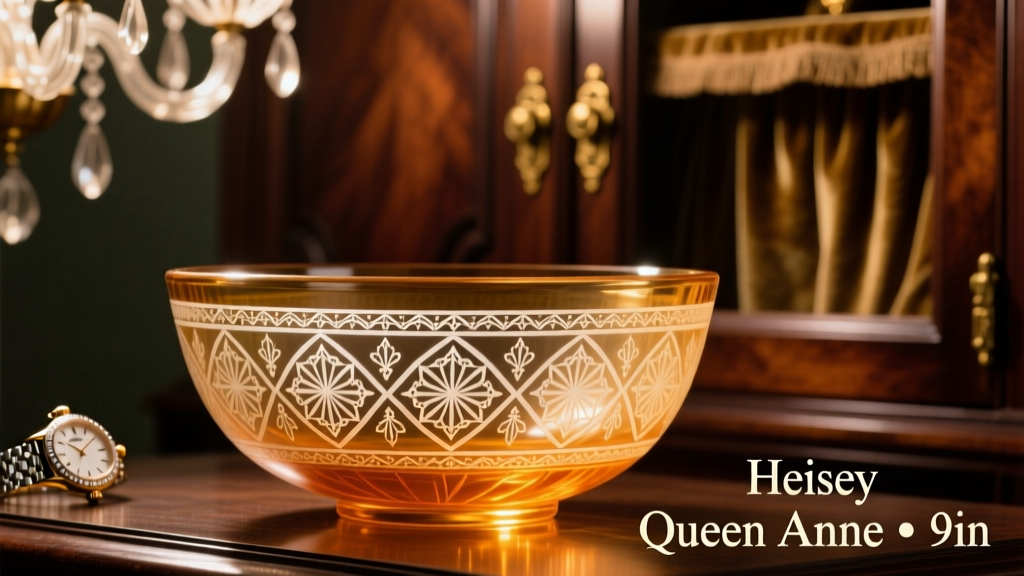
Heisey Queen Ann Bowl (9-Inch): A Collector’s Deep Dive into Pattern, Provenance, and Value
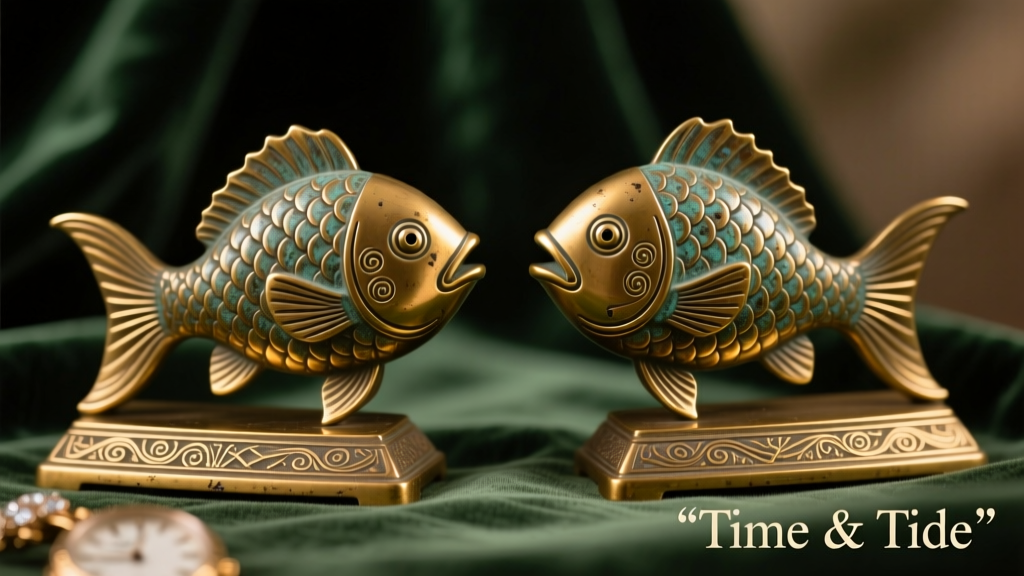
Bookends Fish Pair: Artistry, Provenance, and Collectibility in Vintage Decorative Metalwork
The Cistern Wall Rosette Medallion: A Lead Garden Furnishing Artifact from the Late Victorian Era (c. 1885–1905)
The Disneyana Pencil Mickey Mouse Automatic: A Collector’s Deep Dive into a Rare 1950s Japanese Wristwatch
Fay Scott’s ‘Cat Sitting’ Cast Iron Doorstop: A Mid-Century American Design Icon
The Hazelton PA Christmas Tree Fence: A Study in Mid-Century American Garden Craftsmanship
Gustav Stickley No. 548 Magazine Stand: A Definitive Study of Design, Provenance, and Market Significance
The 1940s Coin-Operated Strength Tester Monkey Mutoscope: Engineering, Entertainment, and Americana at 90 Inches Tall