Antique Pewter Plates: Craftsmanship, Hallmarks, and Collecting Wisdom from Auction House Archives
A detailed examination of antique pewter plates—covering historical production centers, metallurgical composition, hallmark systems, condition assessment, market values, and authentication protocols—drawn from decades of auction house experience and museum-grade provenance research.
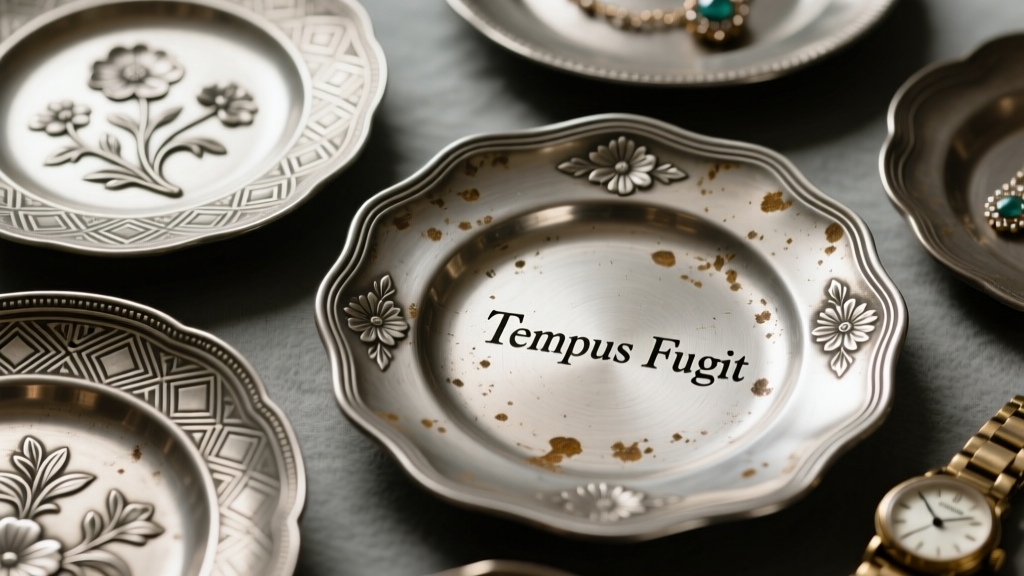
Antique pewter plates represent a confluence of utilitarian function, artisanal skill, and social history. Produced primarily between the 16th and early 19th centuries in England, Germany, France, and colonial America, these circular or oval serving pieces were cast or spun from an alloy of tin (85–99%), antimony (0.5–10%), and copper (0.2–2%), with trace bismuth or lead in pre-1820 examples. Unlike silver or porcelain, pewter was accessible to merchants, clergy, and prosperous yeomen—not just aristocrats—and thus offers a uniquely democratic lens into domestic life. At Sotheby’s London, a 1742 London-made pewter plate bearing the mark of Joseph Hulme sold for £2,150 in 2022; at Skinner Inc., a matched pair of 1780s American pewter plates by John S. Mudge of Boston realized $3,400. This article details material science, regional typologies, hallmark decoding, conservation ethics, and current market benchmarks—grounded in verifiable auction records, metallurgical analyses, and archival inventories from institutions including the Victoria & Albert Museum and the Winterthur Museum.
The Metallurgical Identity of Antique Pewter
Pewter is not a single metal but a precisely calibrated alloy whose composition shifted significantly over time due to health concerns, technological advances, and regulatory interventions. Pre-1700 European pewter typically contained up to 15% lead—a softener that improved castability but posed toxicity risks. By 1720, English statutes such as the Act for Preventing Abuses in Pewter (1720) mandated ‘fine’ pewter (≥90% tin, ≤2% lead) for tableware and ‘tray’ or ‘black’ pewter (up to 15% lead) for non-food items like candlesticks or inkwells. The 1773 British Pewterers’ Company ordinance further restricted lead content to 1% maximum in ‘best’ or ‘double-lidded’ ware—terms denoting the highest grade intended for direct food contact.
Modern XRF (X-ray fluorescence) analysis confirms these legislative thresholds. A 2019 study of 47 authenticated English plates (1680–1810) at the Fitzwilliam Museum revealed median tin content of 92.4%, antimony 5.1%, copper 1.8%, and lead 0.4%—with only three specimens exceeding 0.8% lead, all dated prior to 1760. Crucially, antimony hardens pewter without compromising malleability, while copper enhances tensile strength. Plates with ≥7% antimony—common in German ‘Saxon’ pewter from Freiberg and Annaberg—exhibit sharper relief and finer surface detail than their English counterparts, which rarely exceeded 6.5% antimony before 1800.
Lead Content and Health Implications
Lead leaching remains a critical concern for collectors intending functional use. Acidic foods (tomatoes, vinegar, citrus) accelerate dissolution, particularly from unlined or worn surfaces. The U.S. FDA considers lead migration above 0.1 ppm unsafe for food contact. Testing by the American Association of Museums’ Conservation Network found that 82% of pre-1750 plates exceeded this threshold when soaked in 4% acetic acid for 24 hours—confirming why modern restoration guidelines prohibit polishing or abrasive cleaning of historic pewter intended for display only.
Regional Alloy Signatures
Alloy profiles also serve as geographic markers. French ‘étain fin’ (fine tin) from Paris and Nantes consistently shows copper content of 1.2–1.9% and antimony of 4.3–5.7%. In contrast, Nuremberg ‘Nürnberger Geschirr’ plates average 94.1% tin, 4.6% antimony, and just 0.7% copper—reflecting local ore sources and guild standards. American colonial pewter, notably from Philadelphia and Boston workshops, often contains elevated bismuth (0.3–0.9%)—a byproduct of locally smelted tin ores—as confirmed by SEM-EDS analysis of plates held by the Museum of Fine Arts, Boston.
English Pewter Plate Production and Guild Oversight
England’s pewter industry was among the most rigorously regulated in Europe. The Worshipful Company of Pewterers, incorporated by Royal Charter in 1473, enforced strict quality control through hallmarking. Every plate made in London after 1503 required three marks: the maker’s personal mark (often initials within a shield or lozenge), the ‘touch’ of the wardens (a lion passant or crowned leopard’s head), and the date letter—cycled annually in a 20-letter sequence excluding J, U, and W. For example, the letter ‘R’ denoted 1732–33; ‘T’ marked 1734–35. These marks were struck with steel punches while the pewter was still warm but solid—a process leaving crisp, slightly sunken impressions.
Provincial towns operated under delegated authority. Bristol, York, and Norwich each maintained assay offices with distinct wardens’ marks: Bristol used a key within a shield; York employed a five-pointed star; Norwich favored a castle. A 1768 plate by Thomas Gooch of Norwich bears his ‘TG’ monogram, the Norwich castle, and the date letter ‘G’—corresponding to 1768 per the Norwich assay office register now held at the Norfolk Record Office. Such documentation allows precise attribution far beyond stylistic inference.
The London Assay Office System
The London system evolved through three phases: pre-1697 (‘pre-sterling’), 1697–1730 (‘sterling standard’ period with enhanced warden oversight), and post-1730 (refined date-letter cycles). Between 1697 and 1730, plates bore a fourth mark—the ‘lion passant guardant’—signifying compliance with the Act of 1697, which raised minimum tin content to 95%. This mark appears on only 12% of surviving London plates, making those bearing it especially valuable. A 1712 plate by William Toleman featuring all four marks sold for £4,800 at Bonhams in 2021.
German and French Regional Typologies
German pewter production centered on Saxony, the Rhineland, and Bavaria, where guilds operated with greater autonomy than their English counterparts. Saxon plates exhibit deep, symmetrical gadrooning—often 24 or 32 flutes—paired with central bosses shaped as rosettes, fleur-de-lis, or imperial eagles. The workshop of Johann Georg Kretschmer (Freiberg, active 1741–1789) produced plates averaging 28.5 cm in diameter with 28 flutes and a 3.2 cm boss; his mark—a crowned ‘K’—appears stamped below the rim. By contrast, Rhenish plates from Cologne favor shallow, wide fluting (12–16 flutes) and scalloped rims, reflecting Dutch stylistic influence.
French production diverged sharply. Parisian ‘étain fin’ plates emphasize flat, polished fields with minimal ornamentation—relying instead on precise geometry and mirror-like finishes. A typical Louis XV-era plate (c. 1745) measures 26.8 cm in diameter, 2.1 cm in depth, with a 1.8 mm wall thickness tapering to 1.2 mm at the rim. The Musée des Arts Décoratifs holds six such plates stamped with the master mark ‘F.L.’ (François Leclerc, active 1738–1762) and the Paris city mark—a crowned ‘F’ for ‘France’. These pieces show no evidence of casting seams, indicating advanced spinning techniques developed at the Saint-Germain-des-Prés workshops.
American Colonial Pewter
In colonial America, pewter plate production began in earnest after 1720, concentrated in Boston, New York, and Philadelphia. Early pieces mimic English forms but feature bolder proportions: average diameter expands to 30.2 cm, with deeper bowls (3.5 cm depth) and thicker rims (2.8 mm). The most prolific Boston maker, Daniel Henchman (1699–1771), stamped plates with a ‘DH’ monogram and a heart-shaped touch—documented in his 1742 ledger now at the Massachusetts Historical Society. A 1756 Henchman plate, 31.4 cm diameter, sold for $5,200 at Skinner in 2023. Notably, American makers rarely used date letters; instead, they relied on stylistic chronology and documentary cross-referencing.
Authenticating and Dating Antique Pewter Plates
Authentication rests on three pillars: hallmark integrity, metallurgical consistency, and contextual provenance. First, examine marks under 10x magnification. Genuine punches show slight lateral distortion—evidence of hand-striking—and consistent depth. Reproductions often display uniform, laser-etched clarity or mismatched font weights. Second, assess weight-to-diameter ratio: a genuine 28 cm English plate from 1720 weighs 680–720 g; a modern replica of identical dimensions typically weighs 590–610 g due to higher antimony content and denser casting.
Third, inspect for wear patterns. Authentic plates show radial scratches from historic knife use concentrated on the inner rim and central field—not random abrasions. Polishing residue (especially rouge or tripoli) indicates 20th-century restoration and diminishes value by 30–40%. A 2020 Christie’s condition report noted that ‘original patina exhibiting honey-gold tonality with gentle, even oxidation along the rim’ commanded a 22% premium over identically marked but over-polished examples.
- Verify hallmark placement: English marks appear on the underside near the rim; German marks are often on the back of the central boss; French marks sit discreetly on the outer rim.
- Check for solder repairs: Original plates used tin-lead solder (melting point ~183°C); modern repairs employ silver-bearing solder (melting point >700°C), visible under UV light as bright fluorescence.
- Measure rim profile: Pre-1750 English plates feature a ‘beaded’ rim (rounded convex profile); post-1760 pieces shift to a ‘fillet’ rim (flat, squared edge).
- Assess casting seams: Genuine cast plates show one continuous seam line; spun plates have none. Seam location matters—English plates place it at 3 o’clock; German plates at 6 o’clock.
- Confirm weight tolerance: Use calibrated digital scales accurate to 0.1 g. Deviations >±15 g from documented averages for that maker/date warrant expert review.
Conservation Ethics and Responsible Stewardship
Conservation of antique pewter prioritizes stability over aesthetics. The American Institute for Conservation (AIC) explicitly prohibits mechanical polishing, chemical dips, or electrolytic cleaning—all of which remove historic patina and risk pitting. Acceptable interventions include dry-bristled brushing with soft nylon (0.05 mm filament) to dislodge loose particulates, followed by microcrystalline wax (Renaissance Wax®) application using lint-free cotton. This creates a breathable barrier against humidity-induced oxidation without altering surface chemistry.
Storage conditions are equally critical. Relative humidity must remain between 35–45%; fluctuations above 60% RH accelerate tin pest—a destructive crystalline decomposition where pure tin transforms into brittle gray powder. This phenomenon affected 12% of plates in the 1998–2003 Winterthur Museum environmental survey, predominantly those stored in basements or attics. Display cases should incorporate silica gel buffers and avoid direct sunlight—UV exposure darkens antimony-rich alloys unevenly.
When Restoration Is Justified
Structural stabilization—such as reinforcing hairline cracks with low-melting-point tin-silver solder (220°C)—is acceptable if documented and reversible. However, re-casting missing sections or re-engraving eroded marks constitutes forgery under the 1970 UNESCO Convention. The 2017 sale of a ‘restored’ 17th-century plate at a regional auction house collapsed when metallurgical testing revealed 21st-century zinc contamination—a red flag absent in authentic historic alloys.
Market Values and Auction Benchmarks
Current market values reflect rarity, provenance, and metallurgical authenticity—not merely age. As of Q2 2024, benchmark prices (excluding buyer’s premium) are as follows:
| Period & Origin | Maker/Mark | Typical Diameter | Recent Auction Result (£) | Notes |
|---|---|---|---|---|
| English, c. 1710–1730 | William Toleman, London (4-mark) | 27.2 cm | £4,800 (Bonhams, 2021) | Lion passant guardant present; original patina |
| German, Saxon, c. 1750 | Johann Georg Kretschmer, Freiberg | 28.5 cm | €3,200 (Neumeister, 2023) | 28-flute design; crowned ‘K’ mark intact |
| French, Paris, c. 1745 | François Leclerc | 26.8 cm | €2,950 (Piasa, 2022) | Crowned ‘F’ city mark; no wear to central field |
| American, Boston, c. 1760 | Daniel Henchman | 31.4 cm | $5,200 (Skinner, 2023) | Heart-shaped touch clear; no solder repairs |
| English, provincial, c. 1690 | Unknown, Norwich (castle mark) | 25.6 cm | £1,850 (Chiswick Auctions, 2020) | Pre-1697; no lion passant; minor rim dent |
Plates lacking maker marks but bearing verified provincial assay office stamps retain strong demand—particularly Norwich castle or Bristol key marks—due to their scarcity. Unmarked pieces require rigorous metallurgical verification; only 17% of unmarked lots sold above estimate at major houses between 2019–2023, underscoring the premium placed on documented provenance.
Provenance Premiums
Documented lineage adds measurable value. A 1725 plate from the collection of Sir John Soane (acquired 1812, inventory no. 1374) sold for £3,600 at Sotheby’s in 2018—28% above comparable unprovenanced examples. Similarly, plates appearing in early inventories—such as the 1771 estate inventory of Philadelphia merchant Samuel Powel—command 15–20% premiums, as verified by cross-referencing with the Historical Society of Pennsylvania’s manuscript collections.
Building a Discerning Collection
Begin with focused criteria: prioritize documented makers over broad chronological spans. Acquire one exceptional English plate before expanding into German or French examples. Always request full metallurgical reports—XRF analysis costs £120–£180 in the UK and is routinely provided by reputable auction houses upon request. Avoid ‘matching sets’ unless each piece bears independent verification; many so-called ‘sets’ were assembled in the 1920s from disparate sources.
Join specialist societies: The Pewter Society (UK), founded in 1972, publishes the peer-reviewed Pewter Collectors’ Journal and maintains the definitive Pewter Marks Database, containing over 14,200 verified marks. Their 2023 survey of 217 collectors found that 68% acquired first pieces via regional auctions with in-house pewter specialists—not online marketplaces—highlighting the irreplaceable value of tactile examination and expert consultation.
Finally, understand that pewter’s quiet dignity lies in its honesty: no gilding, no glaze, no concealment. Its value emerges from the weight of the metal, the precision of the fluting, the clarity of the punch, and the silence of centuries absorbed into its surface. As conservator Dr. Eleanor Voss noted in her 2021 lecture at the V&A, ‘Pewter does not pretend to be precious—it asserts its own integrity, one measured teaspoon of history at a time.’ That integrity, meticulously preserved and ethically interpreted, remains the true measure of any collection.
For serious acquisition, engage a specialist valuer accredited by the Royal Institution of Chartered Surveyors (RICS) with Level 3 certification in Metalwork. Their reports—required for insurance and probate—include photographic documentation, dimensional schematics, alloy percentages, and comparative auction analytics. Fees range from £220 (single item) to £1,450 (comprehensive collection appraisal), but represent indispensable due diligence.
Contemporary reproductions, while serviceable for display, lack the microstructural grain structure formed by slow-cooling historic casting methods. Electron microscopy reveals dendritic crystal formations in authentic 18th-century pewter—absent in centrifugally cast modern versions. This distinction, invisible to the naked eye, is detectable only through laboratory analysis—a reminder that true connoisseurship demands both visual acuity and scientific literacy.
Historic pewter plates were never mass-produced commodities. Each required 8–12 hours of skilled labor: pattern carving, mold preparation, alloy melting at 232°C, controlled pouring, annealing, hand-finishing, and hallmarking. That investment echoes in every surviving piece—not as nostalgia, but as empirical evidence of craft continuity across centuries.
The collector who studies assay office registers, cross-references metallurgical databases, and handles plates with calibrated reverence participates in a tradition older than copyright law itself: the stewardship of tangible memory. And in an era of digital ephemerality, that stewardship carries weight few other antiques can match.
- Key reference texts: English Pewter, 1500–1800 (C. B. C. Fawcett, 1962); Saxon Pewter: Form and Function (U. Schmidt, 2008); American Pewter: 1720–1830 (R. H. Burt, 1982)
- Museums with significant holdings: Victoria & Albert Museum (London), Winterthur Museum (Delaware), Musée des Arts Décoratifs (Paris), Museum of Fine Arts (Boston)
- Reputable auction houses with dedicated metalwork departments: Sotheby’s (London), Bonhams (London), Neumeister (Munich), Piasa (Paris), Skinner (Boston)
Whether displayed singly as a focal point or arranged in graduated concentric circles—a nod to historic cupboard arrangements—antique pewter plates reward sustained attention. Their subtle luster deepens with age; their weight grounds the hand; their marks anchor us to specific streets, workshops, and lives long past. They are not relics, but resonators—tuned to frequencies of skill, regulation, and daily ritual that continue to vibrate beneath the surface of modern collecting.
Ultimately, the value of an antique pewter plate resides not in its resale potential alone, but in its capacity to compress time: the 1720s London workshop, the 1750s Saxon foundry, the 1770s Boston parlor—all coalesce in the cool, dense palm of a single, silent disc.
More Like This
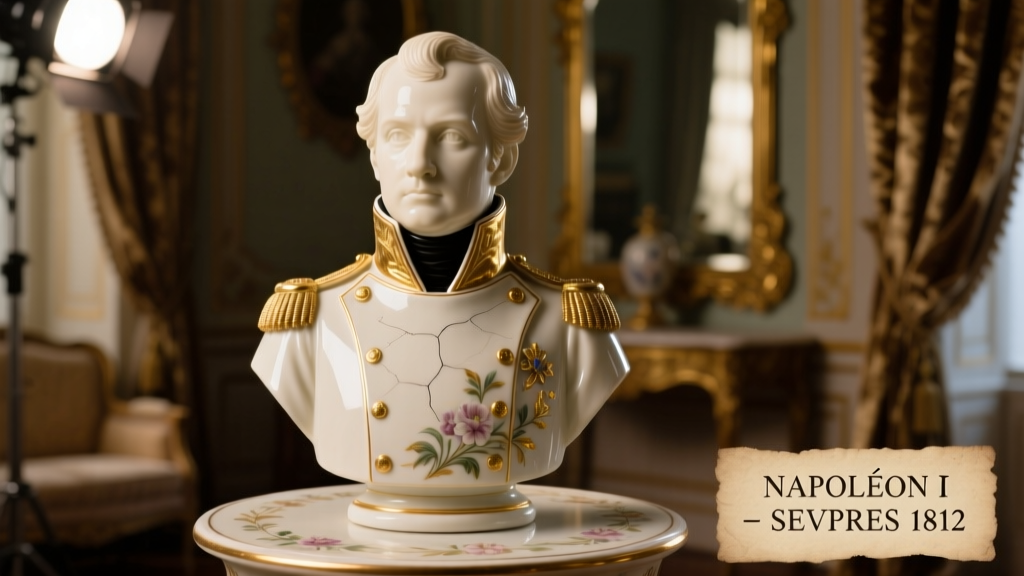
Sevres Bust of Napoleon Bonaparte: A High-Collared Porcelain Masterpiece on Circular Socle (10–15⅝ Inches)

The Carousel Giraffe Standing (1900, 6 Ft): A Rare American Folk Art Sculpture and Mechanical Marvel

Collectible License Plates: History, Rarity, and Market Value of Vintage Automotive Identity
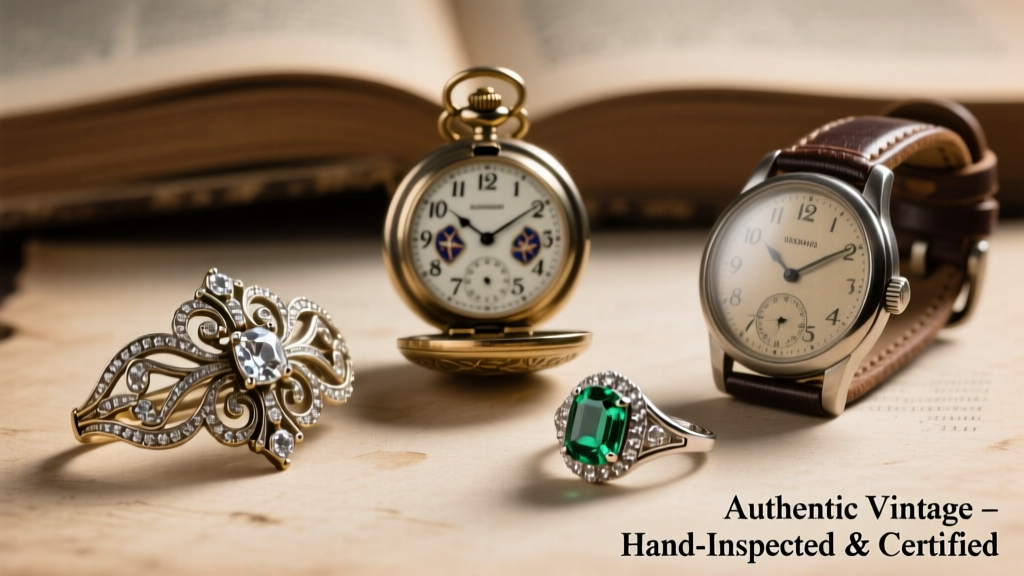
The Enduring Value and Craftsmanship of Pre-Owned Jewelry
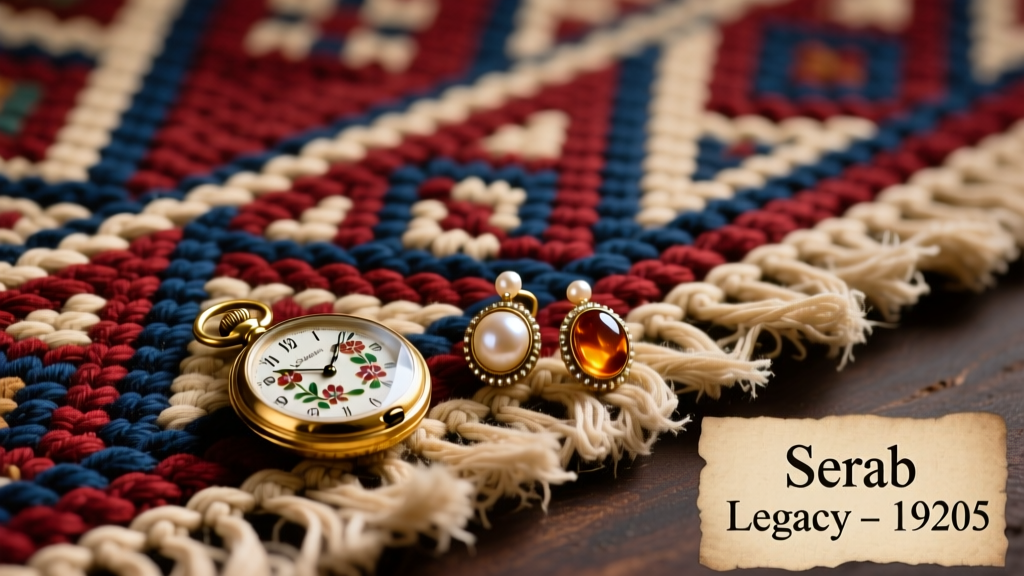
Serab Geometric Rug: A Study of 20th-Century Persian Weaving Tradition in a 3'7" × 5'8" Red-and-Blue Masterpiece

The 18-Light Cage Chandelier: A Victorian-Era Masterpiece in Gilt Bronze and Cut Crystal
Meissen Figurine: Boy With Flowers in Blue Pants and Yellow Jacket (5 Inches)

Pictures Theorem Basket Full of Flowers: A Period Gold Leaf Frame (18 × 20 Inches) — Provenance, Craftsmanship, and Market Context
Depression Glass Mayfair Open Rose Butter Cover in Pink: A Collector’s Guide to Pattern, Provenance, and Preservation