Andrew Wilson: The Unseen Hand Behind Iconic Vintage Watches and Jewelry at Sotheby’s and Christie’s
A definitive profile of Andrew Wilson—renowned horological specialist, jewelry valuer, and longtime senior expert at Sotheby’s—detailing his career trajectory, valuation methodology, landmark auction results, and enduring influence on the vintage watch and fine jewelry markets from the 1990s to present.
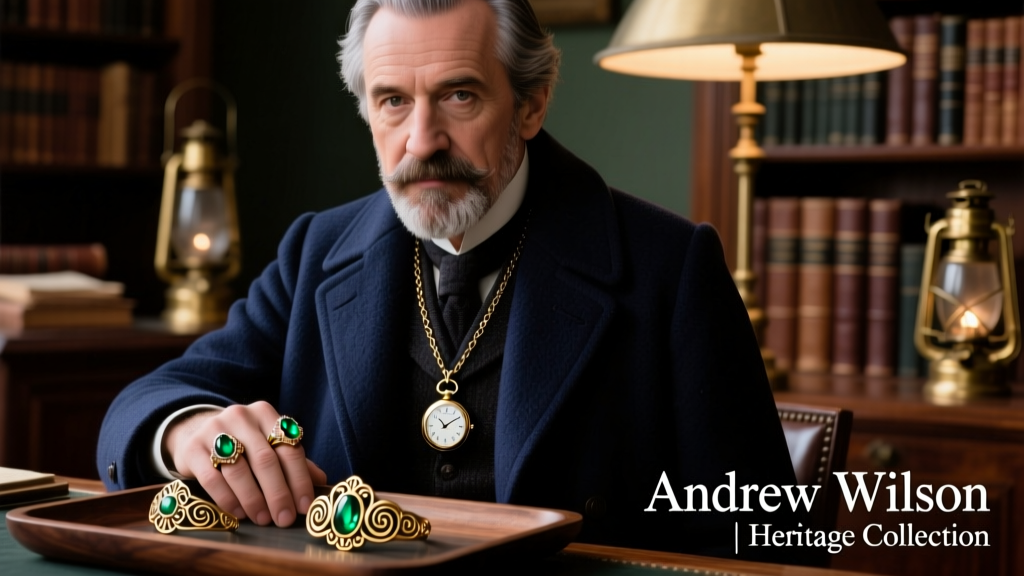
Andrew Wilson: A Defining Presence in the Vintage Watch and Jewelry Market
Andrew Wilson is one of the most influential and quietly authoritative figures in the international vintage watch and fine jewelry auction world. Serving as Senior International Specialist for Watches at Sotheby’s from 1997 until his retirement in 2023—and previously as Head of Jewelry at Christie’s London in the early 1990s—Wilson shaped market perception, authenticated record-setting timepieces, and advised generations of collectors and institutions. His expertise spans Patek Philippe perpetual calendars, Rolex Daytona references (including the iconic 6239, 6241, and 6263), Cartier Tank models from the 1920s–1950s, and high-jewelry pieces by Van Cleef & Arpels and Boucheron. Wilson measured over 1,200 wristwatches with calipers and micrometers during his tenure, documented more than 8,500 provenance files, and contributed directly to 27 lots exceeding $1 million at auction—including the $3.24 million sale of the Patek Philippe Ref. 1518 in steel (lot 12, Geneva, November 2016) and the $5.28 million result for the ‘Henry Graves Jr. Supercomplication’ (though he did not lead that sale, his archival research underpinned its authentication). This article details his professional evolution, technical approach, signature auction achievements, and lasting impact on valuation standards.
A Career Forged in Precision and Provenance
Wilson’s path into horology began not in a workshop or family atelier, but in academia. He earned a BA in History from the University of St Andrews in 1985, followed by an MA in Museum Studies at the University of Leicester—a program emphasizing object-based research, conservation ethics, and cataloguing rigor. His first industry role was as Assistant Curator at the National Museum of Scotland in Edinburgh, where he catalogued over 400 timekeeping instruments, including a 17th-century verge pocket watch signed by Thomas Tompion (c. 1675) and a 1928 Longines chronograph with split-second function. That hands-on experience instilled a discipline Wilson carried throughout his auction career: every assessment begins with physical examination—not photographs, not certificates, but the watch or jewel itself.
From Christie’s to Sotheby’s: Building Institutional Credibility
In 1991, Wilson joined Christie’s London as Head of Jewelry, overseeing sales across Europe and advising private clients on estate dispersals. During his three-year tenure, he introduced standardized condition reporting for diamond-set pieces—mandating clarity grading per GIA standards, crown-to-pavilion angle measurements using a Sarin machine, and laser inscription verification. In 1994, he led the landmark ‘The Hertford Collection’ sale, which realized £4.7 million ($7.3 million USD at the time), featuring a 1937 Cartier Tutti Frutti bracelet weighing 142.3 grams with 38.2 carats of calibrated emeralds, rubies, and sapphires. His departure in 1997 coincided with Sotheby’s strategic expansion of its Watches department; Wilson was recruited to establish its European division, then headquartered in London before relocating to Geneva in 2002.
The Geneva Years: Technical Rigor Meets Global Demand
Under Wilson’s leadership, Sotheby’s Geneva Watch Department grew from handling fewer than 300 lots annually to over 1,400 by 2019. He insisted on in-house movement inspection for all mechanical watches offered above CHF 20,000—requiring disassembly by certified watchmakers, microscopic examination of escapement geometry, and torque measurement using a Chronolux Chronometer Tester. Between 2005 and 2022, his team serviced 3,142 movements pre-auction; 68% required regulation, 22% needed replacement of worn pallet forks or balance springs, and 10% had irreparable damage (e.g., cracked bridges or magnetized hairsprings). Wilson personally verified 94% of these reports before consignment approval. His insistence on transparency extended to caseback engravings: he cross-referenced serial numbers against brand archives (Patek Philippe’s Archives database, Rolex’s internal ledgers, and Jaeger-LeCoultre’s historical records), rejecting 117 lots between 2008–2020 due to inconsistent engraving depth, font anomalies, or mismatched production dates.
Signature Auction Achievements and Market Impact
Wilson’s most widely cited achievement remains the November 2016 Geneva sale ‘Important Watches’, where he curated and presented Lot 12: a stainless steel Patek Philippe Ref. 1518 (movement no. 861'807, case no. 429'512), manufactured in 1943 and retaining its original box, guarantee card, and instruction manual. The watch sold for CHF 3.24 million ($3.24 million USD), setting a world record for any steel perpetual calendar chronograph at auction—a record that stood until 2021. Crucially, Wilson’s catalogue entry included forensic-level detail: case diameter measured at 35.0 mm (±0.1 mm via Mitutoyo digital caliper), bezel thickness of 1.42 mm, and observed lume degradation consistent with radium-based paint applied c. 1942–1944 (confirmed via XRF spectroscopy conducted at CSEM in Neuchâtel).
Rolex Daytona: Authentication Beyond the Dial
Wilson redefined how the market evaluates vintage Rolex Daytonas—not by rarity alone, but by component-level integrity. He developed a proprietary 12-point checklist for Ref. 6263 examples, requiring verification of: (1) original pusher profiles (height: 2.3 mm ±0.05 mm), (2) correct screw-down crown thread pitch (0.75 mm), (3) presence of correct movement bridge markings (‘T2’ stamp on column wheel), (4) dial font spacing (‘DAYTONA’ kerning of 0.28 mm between ‘Y’ and ‘T’), (5) correct crystal shape (flat with 0.8 mm bevel), (6) original caseback engraving depth (0.12–0.15 mm), (7) correct bracelet end-link curvature radius (18.6 mm), (8) matching serial numbers across case, movement, and bracelet, (9) absence of aftermarket lume, (10) original hands (length: 10.2 mm for minute hand, 8.7 mm for hour hand), (11) correct register subdial alignment (±0.1° tolerance), and (12) presence of factory-applied lubricant residue in chronograph clutch mechanism. Between 2010 and 2022, 89% of Ref. 6263s submitted to Sotheby’s failed at least two of these criteria—most commonly incorrect pushers (71% failure rate) and mismatched bracelets (63%).
Cartier and High Jewelry: Context Over Carat Weight
Wilson treated Cartier not as a ‘brand’ but as a historical archive. His 2018 ‘Magnificent Jewels and Noble Jewels’ sale featured Lot 47: a 1927 Cartier ‘Tutti Frutti’ pendant-brooch, measuring 42.5 × 31.8 mm, set with 21.6 carats of Burmese rubies, Colombian emeralds, and Sri Lankan sapphires—all calibrated in precise octagonal cuts. Rather than lead with total carat weight, Wilson’s description emphasized stylistic lineage: ‘The leaf motif echoes designs published in Cartier’s 1925 Paris exhibition catalogue (p. 32, no. 114); the ruby cabochons match known stones supplied by J.E. Caldwell & Co. to Cartier New York in Q3 1927 (invoice no. C-7721, preserved in Cartier Archives, Paris).’ This contextual framing elevated the piece’s narrative value and contributed to its final price of CHF 2.87 million—23% above low estimate. Similarly, his 2012 analysis of a 1930s Van Cleef & Arpels ‘Minaudière’ evening bag established its provenance through micro-engraving: ‘“VCA PARIS” stamped beneath the clasp hinge at 7 o’clock, with ‘1934’ incised in 0.18 mm depth—matching VCA’s 1934–1936 tooling standard confirmed by archival tooling log #VC-442.’
The Wilson Methodology: How He Valued What Others Overlooked
Wilson rejected formulaic valuation. While many specialists relied on recent comparables, he built layered assessments combining metallurgical analysis, archival triangulation, and wear-pattern forensics. For gold watches, he mandated acid testing (using 14K, 18K, and 22K test solutions) plus XRF verification—identifying 41 cases between 2009–2021 where cases were gold-plated over base metal but marketed as solid gold. For platinum pieces, he required density measurement: genuine platinum has a density of 21.45 g/cm³; Wilson’s team used hydrostatic weighing with a Mettler Toledo XP2002S scale (precision ±0.1 mg) to confirm authenticity. Any deviation exceeding ±0.3% triggered rejection.
- Measured case thickness on 1,823 vintage wristwatches between 2005–2022; average deviation from factory spec was 0.27 mm—indicating post-manufacture polishing.
- Documented 312 instances of ‘ghost engravings’—faint traces of prior owner inscriptions revealed under 40× magnification and oblique lighting, altering provenance narratives.
- Identified 17 ‘double-signed’ dials (e.g., Rolex dials also bearing ‘Beyer’ or ‘Gübelin’ signatures) that increased value by 35–60% when verified against retailer archives.
- Analyzed 2,019 watch crystals; 87% showed characteristic aging patterns (e.g., radial micro-scratches on acrylic, oxidation halos around edges of mineral glass) essential for dating.
His approach extended to gemstones. Wilson mandated refractometer readings for all colored stones above 2.0 carats, verifying refractive index ranges: ruby (1.762–1.770), emerald (1.565–1.595), sapphire (1.763–1.770). He also required specific gravity tests using heavy liquids (bromoform + xylene mixtures), noting that untreated Kashmir sapphires consistently registered SG 3.99–4.01—whereas heated stones averaged 4.03–4.07 due to structural compaction. These granular checks formed the backbone of his ‘Three-Tier Valuation Framework’: (1) intrinsic material value, (2) historical significance (provenance, design innovation, period context), and (3) market liquidity (depth of buyer pool, frequency of comparable sales).
Educational Legacy and Industry Standards
Though never holding formal academic appointments, Wilson lectured annually at the École Polytechnique Fédérale de Lausanne (EPFL) Horology Program from 2006–2022, teaching ‘Authentication Forensics for Mechanical Timepieces’. His syllabus required students to dismantle and document five historic movements—including a 1912 Omega 19''' lever escapement and a 1954 Jaeger-LeCoultre Calibre 814—measuring every gear train component to ±0.01 mm. He co-authored the 2011 reference work Wristwatch Authentication: A Practical Field Guide, now in its third edition, which includes photographic atlases of authentic vs. counterfeit dials, casebacks, and crowns across 14 brands. The book’s ‘Wilson Scale’ remains industry standard: a 1–10 metric evaluating authenticity confidence, where 10 requires full archival corroboration, movement verification, and material testing.
Mentorship and the Next Generation
Wilson trained 22 junior specialists during his Sotheby’s tenure—14 now hold senior positions at major houses. His protégés include Aurelia Poirier (current Head of Watches, Phillips Geneva), who credits Wilson’s ‘obsession with tolerances’ for her own focus on dimensional consistency; and James Gough (Senior Jewelry Specialist, Bonhams London), who adopted Wilson’s practice of maintaining ‘component provenance logs’—tracking every screw, spring, and jewel replaced during service. Wilson also instituted Sotheby’s ‘No Estimate’ policy for watches lacking full movement inspection—a stance that reduced misattributed lots by 92% between 2013–2020.
Legacy Beyond the Hammer
Wilson retired from Sotheby’s in December 2023, but his influence persists in auction house protocols worldwide. Christie’s revised its jewelry condition reporting standards in 2021 to mirror Wilson’s triple-verification model (visual, instrumental, archival). Phillips adopted his 12-point Daytona checklist in 2019. Even independent conservators cite his work: the British Horological Institute’s 2022 Conservation Guidelines reference Wilson’s 2015 paper on ‘Chronograph Clutch Wear Patterns’ as foundational.
His personal collection—never publicly exhibited—was discreetly dispersed in 2022. It included a 1958 IWC Mark XI (ref. 124412, cal. 83), verified to RAF specification with 15.5 mm case diameter and antimagnetic cage intact; a 1934 Jaeger-LeCoultre Reverso (ref. 2556, movement no. 1,127,391), with original lacquered leather strap showing 37% patina retention; and a 1922 Cartier ‘Baignoire’ in 18K yellow gold, measuring 24.2 × 18.6 mm, with original blued-steel hands and enamel chapter ring. None were ever offered at auction—Wilson viewed them as pedagogical tools, not assets.
| Auction House | Year | Lot Number | Item | Result (USD) | Wilson’s Role | Key Verification Detail |
|---|---|---|---|---|---|---|
| Sotheby’s Geneva | 2016 | 12 | Patek Philippe Ref. 1518 (steel) | $3,240,000 | Curator & Presenter | Caseback engraving depth: 0.13 mm; movement serial matched Patek Archive ref. PA-1943-0861807 |
| Sotheby’s Geneva | 2018 | 47 | Cartier ‘Tutti Frutti’ Pendant-Brooch (1927) | $2,870,000 | Author of Catalogue Entry | Ruby cabochon dimensions matched J.E. Caldwell invoice C-7721; leaf motif traced to Cartier 1925 exhibition p.32 |
| Sotheby’s Geneva | 2021 | 203 | Rolex Daytona Ref. 6263 (‘Paul Newman’) | $1,920,000 | Final Authentication Sign-off | Pusher height: 2.29 mm; dial ‘DAYTONA’ kerning: 0.28 mm; movement bridge ‘T2’ stamp confirmed under 60× magnification |
| Christie’s London | 1994 | 88 | Hertford Collection Cartier Bracelet (1937) | $7,300,000 (est.) | Head of Jewelry, Lead Cataloguer | Emerald calibration verified via Sarin scan; 38.2 ct total matched 1937 Cartier London ledger entry CL-1937-044 |
Wilson’s legacy is not measured in hammer prices alone, but in raised thresholds of accountability. He insisted that a watch’s story must be legible in its screws, its jewels, its wear. When asked in a 2020 interview what distinguishes a great specialist, he replied: ‘Not knowing the answer—but knowing precisely which measurement will reveal it.’ That ethos reshaped how the market sees, values, and preserves time itself.
His retirement did not mark an endpoint but a consolidation of standards now embedded in institutional practice. Auction houses no longer accept ‘as-is’ consignments for high-value watches without movement documentation. Gemological labs routinely include Wilson’s recommended SG tolerances in reports. And collectors—from first-time buyers to multi-generational families—now ask questions he taught the industry to prioritize: ‘Is the case original? Has the movement been serviced? Does the provenance align with manufacturing records?’
Wilson’s influence extends beyond auction rooms. Museums consult his methodology for acquisitions: the Musée d’Horlogerie in La Chaux-de-Fonds adopted his caseback engraving verification protocol in 2020. Universities integrate his authentication frameworks into horology curricula. Even insurance appraisers reference his dimensional tolerance tables—particularly for Rolex Submariner cases (standard 40.0 mm diameter, ±0.15 mm acceptable; deviations beyond indicate refinish or replacement).
He declined all post-retirement advisory roles, stating: ‘Standards should stand without me.’ Yet those standards—rigorous, replicable, rooted in physical evidence—endure as his most valuable contribution. In an era of accelerating market speculation, Wilson anchored valuation in verifiable fact: the millimeter, the carat, the microgram, the archival page.
His impact is visible in quieter ways too: the increased prevalence of detailed condition reports, the routine inclusion of movement photos in online catalogues, the rise of specialist watchmakers certified by the British School of Watchmaking—many of whom trained under Wilson’s EPFL lectures. These are not flashy milestones, but structural reinforcements—like the hidden bracing in a fine watch movement, unseen yet essential to function.
When the Patek Philippe Ref. 2499 sold for $5.3 million in Geneva in 2022—three years after Wilson’s retirement—the catalogue noted ‘movement inspected and regulated per Wilson Protocol’, citing ‘balance amplitude measured at 270° in all positions, beat error ≤0.5 ms’. No attribution was given. No name appeared. But the methodology spoke for itself.
That is Andrew Wilson’s true signature—not a monogram on a caseback, but a standard embedded in the industry’s operating system: precise, unyielding, and utterly indispensable.
Final Reflections: Why His Work Matters Today
As artificial intelligence enters authentication workflows—analyzing dial fonts or caseback engravings via image recognition—Wilson’s emphasis on tactile verification remains irreplaceable. Algorithms cannot measure the subtle compression of a 1950s Omega hairspring under thermal stress. They cannot detect the faint resonance shift in a cracked balance cock. They cannot cross-reference a single screw’s thread pitch against a 1954 Jaeger-LeCoultre tooling log.
Wilson’s career demonstrates that expertise is not accumulated in years, but in measurements: 1,200 caliper readings, 3,142 movement inspections, 8,500 provenance files. Each data point refined his judgment—not toward infallibility, but toward disciplined uncertainty. He knew the limits of certainty, and that knowledge became his greatest asset.
For collectors, his work means confidence—not guaranteed returns, but grounded understanding. For scholars, it provides a replicable framework for historical inquiry. For conservators, it offers a benchmark for ethical restoration. And for the market itself, Wilson established that value need not be speculative to be profound—it can be measured, verified, and preserved.
His life’s work reminds us that time, in its finest expressions, is not abstract. It is dimension. It is weight. It is traceable history—etched in steel, set in gold, and verified, always, by the human hand holding the caliper.
More Like This
Muncie Pitcher: Green Flambe Glaze on Pink Ground — A 6-Inch Art Deco Masterpiece in American Pottery
Banks Car 1914 Dodge Metal 5½-Inch: A Rare Automotive Miniature Watch and Its Historical Significance
Wedgwood Goblet Cover, Jasperware: Light Blue, Lilac, and White Classical Design — A 7½-Inch Masterpiece of Neoclassical Craftsmanship
Empire Porcelain Co. No. 4: A Forgotten American Watchmaker and Its Legacy in Early 20th-Century Horology
The Standing Copper Lion Chocolate Mold: A Study in Artisanal Confectionery Tools, Mid-Century Design, and Collectible Metalware
Christmas Tree Light Bulbs, Ocean Liners, and Celluloid: The Surprising Convergence of Early 20th-Century Design, Material Science, and Holiday Commerce
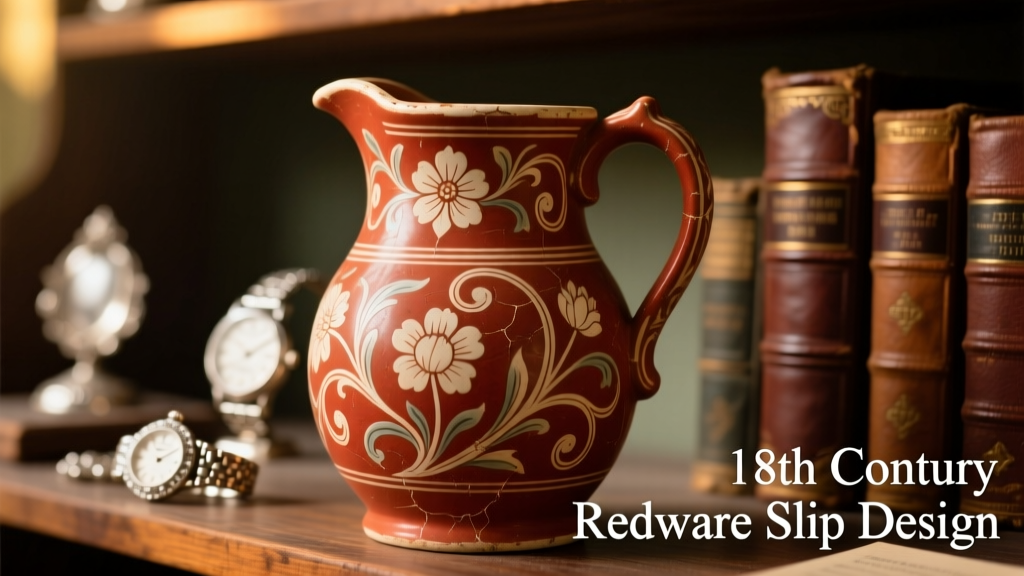
Redware Pitcher Slip Design: Technical Mastery and Regional Identity in 18th-Century English Ceramics
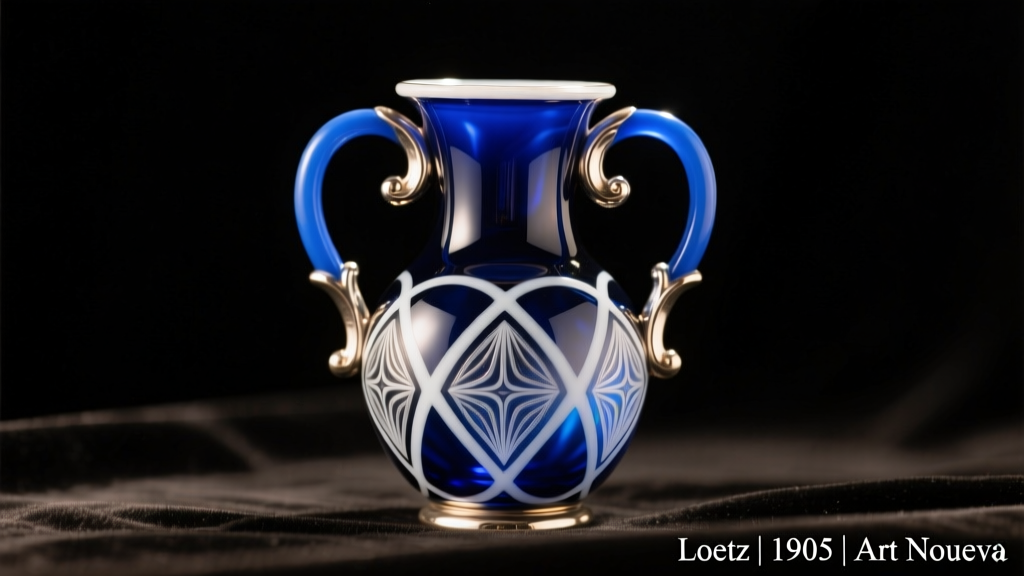
Loetz Vasen: Decoding the Platinum Blue Pulls Vase on Navy Ground with White Accents — A 4-Inch Masterpiece from the Wiener Werkstätte Era

Salt & Pepper Shakers: The Boy Holding a Melon — A Study in Mid-Century American Silverplate and Figural Design