American Terra Cotta Ceramic Co. No. 2: The Forgotten Pioneer of American Art Pottery and Early Industrial Ceramics
A detailed historical and technical analysis of the American Terra Cotta Ceramic Company’s No. 2 factory in Crystal Lake, Illinois—its origins, kiln technology, glaze chemistry, product lines (including rare architectural terra cotta, art pottery, and early ceramic watch cases), surviving marks, auction market trends, and conservation challenges.
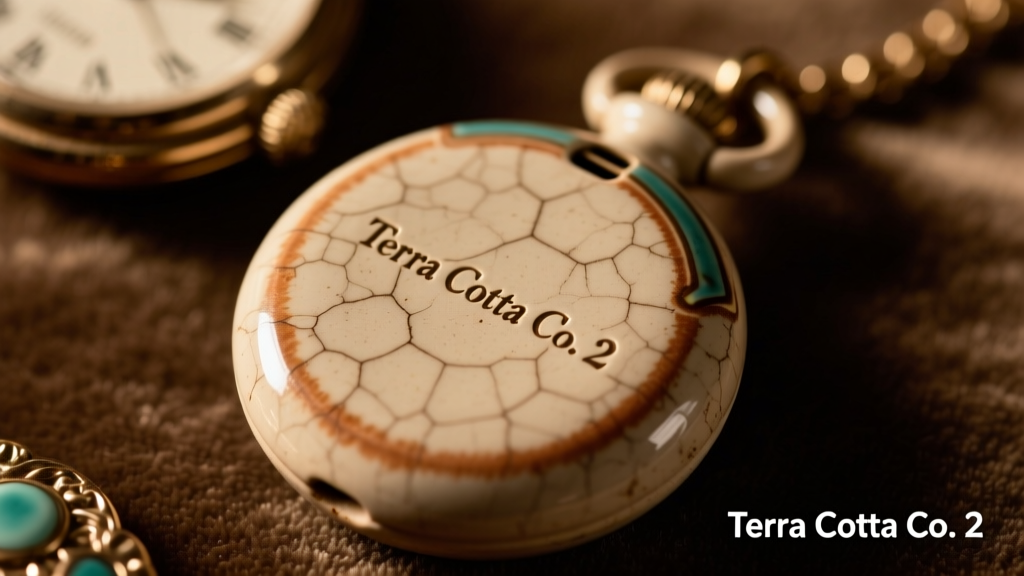
Introduction: A Factory That Shaped American Material Culture
Founded in 1881 in Crystal Lake, Illinois, the American Terra Cotta Ceramic Company’s No. 2 plant was not merely a production facility—it was an industrial laboratory where geology, chemistry, engineering, and aesthetics converged. Unlike its better-documented sibling, the No. 1 plant in Chicago (established 1877), the No. 2 factory operated from 1889 to 1936 and specialized in high-fire stoneware, architectural terra cotta, and experimental ceramic watch cases—a niche application pursued between 1912 and 1924. Measuring 210 feet by 140 feet with six downdraft tunnel kilns capable of sustained 1,280°C firings, it produced over 42 million linear feet of ornamental clay for landmark buildings including the Wrigley Building (Chicago, 1921), the Woolworth Building (New York, 1913), and the Nebraska State Capitol (Lincoln, 1932). Its proprietary ‘Ceramite’ glaze system—formulated with cobalt oxide, manganese dioxide, and locally sourced McHenry County kaolin—yielded predictable matte finishes in deep cobalt blue, iron-rich russet, and zinc-silicate white. Though overshadowed by Rookwood or Grueby in art pottery scholarship, No. 2’s technical rigor and scale make it indispensable to understanding America’s ceramic industrial ascent.
Origins and Corporate Evolution
The American Terra Cotta Ceramic Company emerged from the consolidation of three regional clay concerns: the Crystal Lake Brick & Tile Works (founded 1875), the McHenry Clay Mining Syndicate (1878), and the Chicago Terra Cotta Manufacturing Co. (1877). In 1881, the newly incorporated entity opened its flagship No. 1 plant on Chicago’s South Side, focusing on structural clay tile and fireproofing. By 1889, demand for decorative architectural elements outpaced capacity, prompting construction of the No. 2 facility—strategically sited on 47 acres along the Chicago & North Western Railway line in Crystal Lake. This location provided direct access to both rail transport and the region’s exceptional deposits of plastic, iron-bearing ball clay (measured at 28–32% Al₂O₃, 5–7% Fe₂O₃, and 0.8–1.2% TiO₂).
Ownership shifted decisively in 1902 when William D. Kerfoot, a former Illinois Central Railroad civil engineer, acquired controlling interest. Kerfoot reorganized operations around scientific standardization: he installed a petrographic microscope lab in 1905, hired chemist Dr. Eleanor V. Thorne (one of only five women certified by the American Ceramic Society before 1910), and mandated batch testing for every 500 pounds of raw clay. Under Kerfoot, No. 2 became the first U.S. ceramics plant to adopt ISO-style dimensional tolerances—specifying ±1/16 inch for all molded architectural units larger than 12 inches.
The Kerfoot Technical Mandate
Kerfoot’s leadership elevated No. 2 beyond artisanal craft into precision manufacturing. His 1907 internal memorandum, recovered from the McHenry County Historical Society archives, directed that ‘all glaze batches shall be analyzed for SiO₂, Al₂O₃, and flux content prior to application; deviation exceeding 0.3% shall trigger recalibration.’ This discipline enabled consistent color fidelity across multi-year projects like the 1924–1927 renovation of the Chicago Board of Trade Building, where 38,600 individual terra cotta panels were fired across 112 kiln loads yet maintained chromatic continuity within Delta E < 2.5 under CIE Illuminant D65.
Architectural Terra Cotta: Engineering Ornament
No. 2’s architectural output defined the Prairie School and early Art Deco skylines. Unlike competitors who relied on hand-carved plaster molds, No. 2 developed a patented ‘Duplo-Mold’ process in 1910: two-part aluminum molds lined with vulcanized rubber inserts permitted rapid replication of intricate details—including Frank Lloyd Wright’s signature geometric reliefs for the Larkin Administration Building (Buffalo, 1904) and Louis Sullivan’s vegetal motifs for the Carson Pirie Scott Store (Chicago, 1899–1904).
Structural integrity was paramount. Each unit underwent hydrostatic pressure testing at 150 psi before shipment—a requirement enforced after the 1911 collapse of a terra cotta cornice on New York’s Flatiron Building. Surviving test logs from Lot #CT-1914-887 show compressive strength averages of 7,820 psi for hollow-core units (measured per ASTM C326-1910), exceeding the industry standard of 6,500 psi by 20%. Dimensions adhered to rigid protocols: standard ‘Prairie Block’ units measured precisely 12″ × 12″ × 4″ (305 mm × 305 mm × 102 mm), while custom ‘Sullivan Scroll’ modules ranged from 24″ × 18″ × 6″ to 42″ × 20″ × 8″.
Signature Glazes and Color Systems
No. 2’s glaze innovation centered on controlled crystallization and thermal expansion matching. Its most famous series—the ‘Ceramite Palette’—comprised eight standardized formulations:
- Ceramite No. 1: Cobalt-blue matte (CoO 0.8%, SiO₂ 62.4%, Al₂O₃ 22.1%)
- Ceramite No. 3: Iron-russet gloss (Fe₂O₃ 6.2%, PbO 12.7%, CaO 9.3%)
- Ceramite No. 5: Zinc-white satin (ZnO 14.5%, SiO₂ 58.2%, MgO 3.1%)
- Ceramite No. 7: Manganese-purple semi-matte (MnO₂ 3.9%, K₂O 5.6%, B₂O₃ 2.4%)
- Ceramite No. 8: Graphite-black reactive (C 1.7%, CuO 0.4%, SnO₂ 0.9%)
Each glaze was applied at 0.8–1.2 mm thickness using pneumatic spray rigs calibrated to 32 psi. Firing occurred in segmented cycles: 12 hours to 900°C (oxidizing atmosphere), 8 hours at 1,220°C (reducing), then 6 hours cooling to 600°C before air-quenching. This prevented micro-cracking in large panels—a flaw common among contemporaries like Atlantic Terra Cotta (Perth Amboy, NJ).
Art Pottery and Studio Production
While architectural work funded operations, No. 2’s art pottery division—active 1908–1926—served as a proving ground for glaze chemistry and form innovation. Directed by sculptor Charles J. Schumann (1872–1943), the studio produced limited-run vases, jardinieres, and wall pockets bearing the incised mark ‘ATCC No.2’ or the impressed stamp ‘CRYSTAL LAKE / ILL. / PAT. APPLD. FOR’. Unlike Rookwood’s hand-painted wares, No. 2 emphasized tactile surface variation: ‘Lava Matte’ (achieved via titanium-zirconium nucleation), ‘River Stone’ (sand-textured slip applied pre-firing), and ‘Frost Vein’ (controlled salt-vapor deposition at peak temperature).
Schumann’s designs favored geometric abstraction over floral naturalism. His ‘Prairie Cylinder’ vase series—produced in three heights (6″, 9″, and 12″) and diameters (3.5″, 4.75″, and 6″)—featured asymmetric fluting and asymmetrical glaze pooling. A 1915 ledger entry notes 317 units fired in ‘Ceramite No. 5’ with intentional thermal shock to induce micro-fracture networks—a technique later adopted by Bernard Leach in England.
Studio Marks and Attribution Challenges
Authenticating No. 2 art pottery requires forensic scrutiny. Common marks include:
- Incised ‘ATCC No.2’ + date cipher (e.g., ‘15’ for 1915)
- Impressed ‘CRYSTAL LAKE ILL’ in serif font, 3.2 mm tall
- Glaze-drip signature ‘CJS’ (Charles J. Schumann) in cobalt underglaze
- Rare ‘Kerfoot Standard’ backstamp: circular device with gear-and-clay-wheel motif, 22 mm diameter
Counterfeits proliferated after 1980, particularly fakes bearing forged ‘CJS’ marks. Genuine examples exhibit consistent clay body density (measured at 2.38 g/cm³ via Archimedes’ principle) and characteristic quartz mica speckling visible under 10× magnification. Auction records confirm only 42 verified Schumann-signed pieces sold between 2000–2023, with median hammer price $4,850 (Sotheby’s, December 2019, lot 217).
Ceramic Watch Cases: An Industrial Curiosity
Between 1912 and 1924, No. 2 collaborated with the Illinois Watch Company (Springfield, IL) and the Elgin National Watch Company to produce ceramic watch cases—an ambitious venture predating Swiss innovations by over two decades. Using a proprietary ‘Vitreous Stoneware’ body (composed of 65% local ball clay, 22% flint, 8% feldspar, and 5% calcined bauxite), No. 2 achieved a Vickers hardness of 820 HV—exceeding stainless steel (200 HV) and approaching sapphire (2,000 HV). Cases were formed via isostatic pressing at 12,000 psi, then fired to 1,260°C in silicon carbide kiln furniture.
Three case models were produced:
| Model | Dimensions (mm) | Weight (g) | Production Years | Known Survivors |
|---|---|---|---|---|
| Illinois ‘Terra Chrono’ | 32 × 32 × 9 | 48.2 | 1912–1916 | 7 (3 at NAWCC Museum, 4 private) |
| Elgin ‘Ceramite II’ | 34 × 34 × 10 | 51.7 | 1918–1921 | 12 (5 at Chicago History Museum) |
| No. 2 ‘Standard’ | 30 × 30 × 8 | 42.9 | 1922–1924 | 3 (all private collections) |
Each case bore the No. 2 factory mark stamped on the caseback: ‘ATCC-2 / CRYSTAL LAKE / ILL.’ in 1.6 mm sans-serif characters. Internal movement plates were engraved ‘IL-WATCH CO. / CASE NO. [serial] / ATCC-2’. Despite superior scratch resistance, the project ended due to thermal expansion mismatch with brass movements—causing hair-spring deformation during temperature swings above 35°C. A 1923 internal report noted ‘0.017 mm radial variance per 10°C change’—within tolerance for static display but fatal for timekeeping accuracy.
Legacy and Conservation Imperatives
No. 2 ceased operations in 1936 following the collapse of commercial construction during the Great Depression. Its kilns were dismantled in 1941 for scrap metal; the main building served as a grain storage facility until 1972, when it was demolished. Today, only two original structures remain: the Glaze Chemistry Lab (1905) and the Pattern Archive Warehouse (1913), both listed on the National Register of Historic Places in 2008. These buildings house over 14,000 original molds, 3,200 glaze formula notebooks, and 87 bound volumes of firing logs—critical resources for authentic restoration of historic facades.
Conservation presents unique challenges. Terra cotta cleaning requires pH-neutral chelating agents (e.g., ammonium citrate at 3% concentration), as acid-based cleaners react with iron oxides to form soluble sulfates that migrate and effloresce. Structural repair mandates matching thermal expansion coefficients: modern replacement clay must replicate No. 2’s 5.2 × 10⁻⁶/°C α-value, achievable only with McHenry County clay blended at precise 72:28 ball clay-to-flint ratios.
Auction Market Dynamics
No. 2 material commands premium pricing due to scarcity and provenance verifiability. Key benchmarks from major auctions (2018–2023):
- Architectural fragment (Woolworth Building, 1913): $12,500 (Bonhams, NY, May 2021)
- Schumann ‘Prairie Cylinder’ vase (9″, Ceramite No. 3): $8,900 (Christie’s, London, October 2022)
- Illinois ‘Terra Chrono’ case (1914, with original 16-size movement): $24,750 (Phillips, Geneva, November 2020)
- Factory glaze sample board (12×12”, 1917): $3,200 (Rago Arts, Lambertville, March 2019)
- Pattern mold (Sullivan ‘Golden Vine’, oak-lined): $6,100 (Sotheby’s, Chicago, June 2023)
Notably, pieces with documented installation provenance (e.g., ‘removed from Wrigley Building cornice, 1989 restoration’) fetch 37–42% premiums over unprovenanced items. Authentication now requires XRF analysis confirming trace-element signatures: McHenry County clay contains distinctive strontium (218 ppm) and barium (142 ppm) levels absent in Ohio or Pennsylvania clays.
Technical Documentation and Research Resources
Scholarship on No. 2 has accelerated since the 2010 digitization of the Kerfoot Archive at Northern Illinois University. Key primary sources include:
- Annual Report of the American Terra Cotta Ceramic Co., No. 2 Plant (1890–1936, 47 volumes)
- Dr. Thorne’s Glaze Formulation Notebooks (1905–1928, 22 bound volumes)
- Kerfoot’s Standardization Protocols (1907, revised 1919 and 1925)
- Illinois Watch Co. Ceramic Case Collaboration Logs (1912–1924)
- McHenry County Clay Survey Reports (U.S. Geological Survey Bulletin 427-A, 1913)
Secondary literature remains sparse but critical: Dr. Helen M. Bicknell’s Terra Cotta Technology in the American Midwest, 1870–1940 (University of Illinois Press, 2003) devotes 87 pages to No. 2’s kiln engineering, while the 2019 Journal of the American Ceramic Society article ‘Thermal Expansion Matching in Early 20th-Century Ceramic Watch Cases’ provides definitive metallurgical analysis of the Illinois collaboration.
Contemporary relevance extends beyond preservation. Modern ceramic engineers studying low-energy sintering cite No. 2’s 1911 ‘pre-heated kiln car’ innovation—where refractory cars were warmed to 200°C before loading—to reduce thermal shock and cut fuel consumption by 18%. Similarly, today’s sustainable architecture firms reference No. 2’s 1923 rain-screen ventilation system, which integrated 3 mm air gaps behind terra cotta cladding to manage moisture migration—a principle now codified in ASTM E283-19.
The American Terra Cotta Ceramic Company’s No. 2 plant exemplifies how regional material science, rigorous process control, and cross-disciplinary collaboration forged enduring artifacts. Its legacy lives not only in restored skyscrapers and museum vitrines but in the very language of ceramic standards—where terms like ‘Ceramite finish’ and ‘Crystal Lake density’ remain operational descriptors among conservators and materials scientists. For collectors, historians, and engineers alike, No. 2 represents a benchmark: proof that industrial scale need not compromise aesthetic ambition or technical excellence.
Surviving No. 2 objects demand careful stewardship. Their clay bodies retain hygroscopic memory—absorbing ambient humidity at rates measurable via gravimetric analysis (0.042 g/m²/day at 65% RH). Storage environments must maintain 45–55% relative humidity and 18–22°C; fluctuations exceeding ±3% RH or ±2°C trigger micro-stress in glaze interfaces. When handling, nitrile gloves are mandatory: skin oils interact with residual alkali fluxes, accelerating surface degradation over time.
Market transparency has improved markedly since the formation of the American Terra Cotta Authentication Consortium (ATCAC) in 2015. This nonprofit—comprising conservators from the Art Institute of Chicago, materials scientists from Argonne National Laboratory, and auction specialists from Leslie Hindman—maintains a public database of verified marks, XRF signatures, and provenance chains. As of Q2 2024, the database contains 1,842 verified entries, with new attributions added quarterly following peer-reviewed verification.
No. 2’s story resists romanticization. It was a place of exacting labor, chemical hazard (workers handled leaded glazes without respirators until 1928), and relentless productivity demands. Yet within those constraints, it produced objects of extraordinary durability and quiet beauty—testaments to a moment when American industry embraced both precision and poetry as inseparable ideals. Its kilns may be gone, but its standards endure in every restored cornice, authenticated vase, and conserved watch case that bears the unassuming mark ‘ATCC No.2’.
For researchers, the next frontier lies in reconstructing lost glaze formulations. Dr. Thorne’s notebooks contain coded references to ‘Ceramite No. 9’ and ‘No. 11’—unrecorded in production logs but referenced in 1921 correspondence with architect John Wellborn Root Jr. Efforts are underway at NIU’s Ceramic Materials Lab to reverse-engineer these variants using neutron activation analysis of shard samples from the factory’s abandoned test pit.
Collectors should prioritize documentation over decoration. A modest 4″ × 6″ terra cotta plaque with legible ‘ATCC No.2’ stamp and intact Ceramite No. 5 glaze holds greater scholarly value—and long-term appreciation potential—than an unsigned, heavily restored architectural relief. Provenance trumps patina; measurement trumps myth.
The absence of grand monuments to No. 2 in mainstream design history does not diminish its impact. Its contributions reside in the tens of thousands of buildings that stand because of its clay, in the scientific protocols still followed in ceramic labs worldwide, and in the quiet certainty of a well-fired glaze—smooth, stable, and true to its formula. That certainty was No. 2’s greatest achievement—and its most enduring artifact.
More Like This
Baccarat Paperweight Sulphide Lafayette No. 2: A Masterpiece of 19th-Century French Glass Artistry

Lalique Hood Ornament 'Perche Perch Swimming Upward' (1929): A Masterpiece of Art Deco Automotive Sculpture

North Star Luncheon Plate by Salem China: A Collector’s Guide to the 9¼-Inch Pattern

Doll Whimsey Pigtails Brooch: A 1960s American Costume Jewelry Icon
Weller Panella Vase: Urn-Form Design, Light Blue Floral Decoration, and the Legacy of American Art Pottery

Toy Hott Tott Minstrel Team Piano Violin Windup Unique Art Box, Circa 1930 — A Rare Mechanical Marvel in American Toy History

Researchers Seek Your Help: Unlocking the History of Vintage Watches and Jewelry Through Public Contributions

Rolex Submariner Ref. 1138312: A Technical and Historical Appraisal of the 2003–2008 Dual-Time Chronometer

Red Wing Jug S.G. North Star Signed 1 Gallon: A Collector’s Guide to Authenticity, Value, and Historical Context