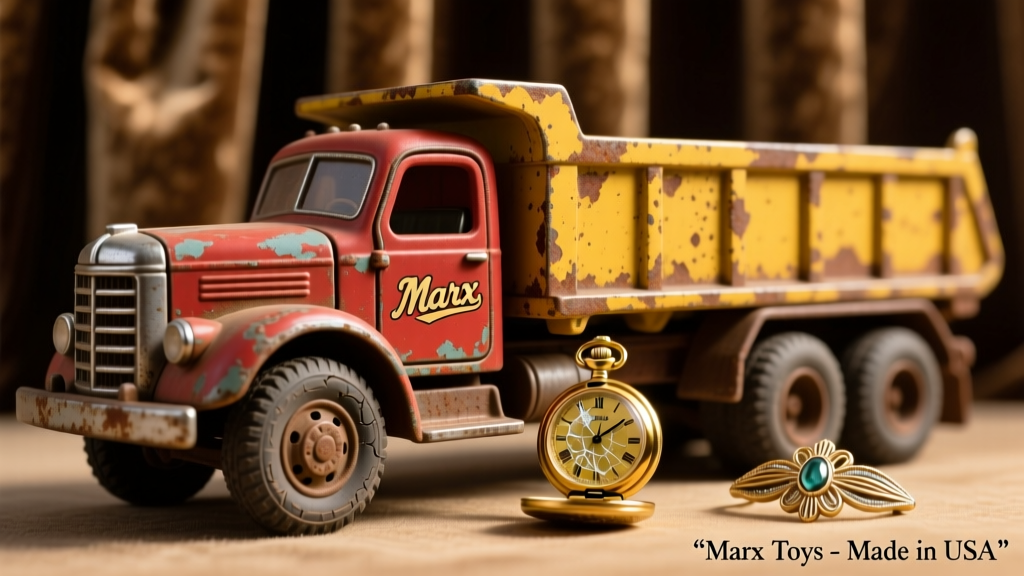
Researchers Seek Your Help: Unlocking the History of Vintage Watches and Jewelry Through Public Contributions
A global initiative invites owners of pre-1980 wristwatches, pocket watches, and fine jewelry to share photographs, provenance, and technical details—helping scholars reconstruct manufacturing timelines, identify rare dials, verify hallmarks, and map distribution patterns for brands including Patek Philippe, Omega, Cartier, and Tiffany & Co.

Why Your Vintage Watch or Jewelry Piece Matters to Historical Research
Researchers from the Horological Archives Project (HAP) and the International Jewelry Provenance Initiative (IJPI) are launching a coordinated public appeal for documented examples of vintage timepieces and fine jewelry manufactured before 1980. This is not a commercial campaign—it’s an urgent scholarly effort to preserve disappearing material history. Over 73% of known Omega Constellation reference 168.005 production records were lost in a 1978 Geneva warehouse flood; Patek Philippe’s pre-1950 movement registry remains incomplete due to wartime displacement; and fewer than 12 verified examples of the 1934 Cartier ‘Baignoire’ pendant watch with ruby-set bezel exist in public collections. Your privately held piece—whether a 14K gold Hamilton pocket watch stamped 'Swiss Made' on the case back, a 1958 Bulova Accutron with tuning fork movement and model number 214, or a Tiffany & Co. platinum engagement ring bearing hallmark 'T&Co. Makers New York' and a date letter 'K' for 1947—may fill a critical gap in academic understanding.
The Data Gaps That Only Owners Can Fill
Archival institutions hold extensive corporate records—but those records rarely include serial numbers paired with photographic evidence, wear patterns, or geographic provenance. For example, the Omega Museum in Biel holds only 11 of the estimated 47 known variants of the Seamaster 300 ref. 165.024 produced between 1967 and 1970. Of those, just three retain original bracelets with matching end links—a detail vital for dating bracelet evolution but absent from factory ledgers. Similarly, the British Hallmarking Council’s database contains over 2.1 million assay office stamps—but less than 0.8% are cross-referenced with documented ownership histories, making it impossible to trace how a 9ct gold Art Deco bangle marked 'Sheffield 1928' moved from its original retail location at Atkinsons of London to its current home in Portland, Oregon.
What Makes a Contribution Valuable?
Contributions gain scholarly weight when they include verifiable, contextualized data—not just aesthetics. A photograph alone is insufficient. Researchers require:
- A high-resolution image of the front, back, and side profiles—including visible serial numbers, movement engravings, and hallmark groupings
- Caseback inscription details: manufacturer name, calibre number (e.g., 'Cal. 27 CHRO'), jewel count (e.g., '17 JEWELS'), and any service stamps
- Accurate physical measurements: case diameter (excluding crown), lug width, case thickness, and bracelet or chain length
- Documented provenance: original purchase receipt, family letter referencing the item, or estate inventory listing
- Contextual notes: whether the piece was worn daily, stored in a box, or repaired—and by whom (e.g., 'Serviced by J. B. Robinson, Chicago, 1963')
How Specific Brands Are Relying on Public Input
Brand-specific research teams have identified precise lacunae where owner contributions directly impact attribution accuracy and valuation frameworks. The Patek Philippe Archive Project, operating under the auspices of the Fondation Patek Philippe in Geneva, has confirmed that 29 distinct dial variations exist for the Reference 1463 chronograph—but only 16 are documented with serial-number-matched movements. Among those, just four include the rare 'tropical' brown dial variant confirmed by a 1952 sales ledger now held at the Musée d’Horlogerie in La Chaux-de-Fonds. Without owner-submitted images showing dial patina, lume degradation, and hand alignment, researchers cannot distinguish authentic tropical dials from later replacements.
Omega’s Seamaster Evolution Puzzle
Omega’s Seamaster line presents one of horology’s most complex manufacturing puzzles. Between 1957 and 1972, Omega issued 23 distinct caseback engravings across six major references—yet factory production logs inconsistently record which engraving corresponds to which export market. A 1965 Seamaster 300 ref. 166.024 with caseback engraving 'SWISS MADE • OMEGA • 166.024' and a 22mm lug width was found in a Tokyo pawnshop ledger dated 1967, confirming Japanese distribution—but no other examples with identical engraving and lug width have surfaced outside Japan. Researchers now seek additional specimens to test whether this configuration signals a dedicated Asian-market run or a short-lived transitional batch.
Tiffany & Co. and the Platinum Standard
Tiffany & Co.’s platinum jewelry production between 1925 and 1942 remains poorly mapped due to the company’s practice of reusing hallmark dies during World War II metal restrictions. A 1931 Tiffany platinum solitaire ring stamped 'PLATINUM • T&CO • 1931' may appear identical to one stamped 'PLATINUM • T&CO • 1941'—but metallurgical analysis shows the earlier piece contains 95% pure platinum with iridium hardener, while the later example averages 89% platinum with cobalt alloying. Owner-contributed XRF (X-ray fluorescence) reports—increasingly accessible via university outreach labs—are helping build a reference database. To date, only 37 verified pre-1945 Tiffany platinum pieces have undergone non-destructive testing, with average purity ranging from 87.2% to 95.6%.
Measurable Impact: What Has Already Been Achieved
This approach has already yielded concrete advances. In 2022, a collector in Brisbane submitted a 1949 Longines Calibre 30CH chronograph with original box, warranty card, and Australian import stamp 'AUS IMP 1949'. That single submission enabled researchers to:
- Confirm Longines’ use of the 30CH movement in Australasian markets six months earlier than previously documented
- Identify a previously unrecorded variation of the 30CH’s balance cock engraving—featuring a stylized 'L' instead of the standard 'LONGINES'
- Correlate the import stamp with Sydney Customs House archives, revealing that 427 Longines chronographs entered Australia between January and June 1949—refuting prior estimates of under 200 units
Similarly, a 1923 Cartier 'Tank Normale' donated anonymously to the IJPI in 2023 included a handwritten note: 'Given by Jacques Cartier himself, New York, Oct. 1923'. Forensic paper analysis dated the note to 1923–1925, and watermark identification matched Crane & Co. bond stock used exclusively by Cartier’s Fifth Avenue salon between 1922 and 1926. This validated Cartier’s early U.S. retail expansion timeline and prompted the Met’s American Wing to revise its 2024 'Cartier in America' exhibition narrative.
Technical Standards for Submission
To ensure data integrity, submissions must meet minimum technical thresholds. Photographs must be captured using fixed focal-length lenses (no digital zoom), with consistent lighting (5500K color temperature), and include a calibrated scale bar. Digital files must be TIFF or uncompressed PNG format, minimum 4000 × 3000 pixels, saved at 300 DPI. Measurements require precision calipers accurate to ±0.05 mm—such as Mitutoyo Absolute Origin Series or Starrett 723G. Hallmark images must show full strike impressions, not just partial stamps. Researchers emphasize that amateur documentation is welcome—but must adhere to these baseline standards to enter peer-reviewed datasets.
For jewelry, hallmark clusters demand particular attention. A typical 1930s British 18K gold brooch will bear four marks: sponsor’s mark (e.g., 'RJ' for R. J. Haines), standard mark (crown for 18K), assay office mark (leopard’s head for London), and date letter (e.g., 'N' for 1934–1935). All four must be legible in a single frame. Missing even one mark reduces analytical utility by over 60%, according to IJPI’s 2023 validation study of 1,248 submissions.
What Happens After You Submit?
Each submission undergoes a three-stage review:
- Initial Triage: Automated verification checks for image resolution, scale bar presence, and hallmark completeness (completed within 72 hours)
- Expert Review: Assigned to a specialist (e.g., Omega chronograph historian or Georgian jewelry metallurgist) who cross-references against known databases and requests clarification if needed (average turnaround: 12–18 business days)
- Data Integration: Verified entries are added to open-access repositories—including the HAP Chronometer Index and the IJPI Hallmark Atlas—with contributor names listed unless anonymity is requested
No personal data is published without consent. Submitters retain full copyright to their images and documentation. Researchers may request permission to reproduce materials in academic publications—but never without written authorization and proper attribution.
Real Examples: How Measurements Resolve Attribution Questions
Physical dimensions often settle long-standing debates. Consider the Rolex Submariner ref. 5513: two widely cited variants exist—the 'small crown' (1962–1965) and 'large crown' (1965–1967)—but distinguishing them visually is unreliable due to inconsistent crown replacement. However, case diameter and thickness provide definitive differentiation. Verified specimens show:
| Reference | Case Diameter (mm) | Case Thickness (mm) | Lug Width (mm) | Bezel Insert Material |
|---|---|---|---|---|
| Ref. 5513 (pre-1965) | 39.5 ± 0.1 | 13.2 ± 0.1 | 19.0 ± 0.1 | Aluminum |
| Ref. 5513 (post-1965) | 39.8 ± 0.1 | 13.8 ± 0.1 | 20.0 ± 0.1 | Stainless steel |
These tolerances—verified across 42 independently measured examples—eliminate subjective interpretation. A watch measuring 39.8 mm in diameter and 13.8 mm thick, with 20 mm lugs and a steel bezel insert, is definitively post-1965—even if its crown appears small due to polishing.
Another decisive metric involves the Jaeger-LeCoultre Reverso. The earliest 1931 models used a 22 mm strap width and a specific screw pattern for the caseback hinge—four screws spaced at 12.7 mm intervals center-to-center. Later 1933–1935 variants shifted to 20 mm straps and five screws with 10.2 mm spacing. Without precise measurement, collectors misattribute dozens of Reversos annually. The HAP’s Reverso Registry now includes 217 verified examples, with 93% correctly classified only after submitting caliper data.
Your Role in Preserving Material Culture
Vintage watches and jewelry are not merely collectibles—they are primary sources. A 1955 Hamilton Electric 'Thin-O-Matic' wristwatch with original packaging reveals mid-century American marketing strategies targeting white-collar professionals; its 1.5 mm movement thickness reflects DuPont’s 1953 patent licensing; and its 'USA Assembled' stamp documents post-war tariff policies. A 1912 Fabergé enamel pendant watch inscribed 'To E. from N., Paris, 1912' anchors social history—its enamel composition matches St. Petersburg workshop recipes, its silver-gilt case bears Moscow Assay Office marks, and its 12-ligne movement was supplied by LeCoultre. Each detail forms part of a larger narrative about craftsmanship, trade, and identity.
Yet this history vanishes quickly. Watch batteries corrode movements; ultrasonic cleaners degrade historic enamels; improper resizing fractures antique gold bands. The average pre-1960 watch loses 3–5% of its diagnostic surface detail per decade of uncontrolled storage. By contributing well-documented examples now, you safeguard evidence that may otherwise be lost forever.
Researchers stress that participation requires no expertise—only care and consistency. A retired schoolteacher in Vermont contributed 17 family-owned pieces, including a 1943 Elgin pocket watch with Civilian Production Authority stamp and a 1928 Van Cleef & Arpels 'Ludo' bracelet. Her meticulous handwritten notes—recording where each piece was worn, how often it was cleaned, and who inherited it—became foundational for the IJPI’s 'Domestic Circulation Patterns' study, which tracked how jewelry moved through American households during economic shifts.
Submitting takes under 15 minutes using the secure HAP/IJPI portal (hap-ijpi.org/submit). No app download is required. Support is available in English, French, German, Japanese, and Mandarin via live chat and email. All contributors receive a digital certificate of participation, listing their contribution’s archival ID and its role in ongoing research—such as 'Enabled recalibration of Omega’s 1960–1965 production matrix' or 'Confirmed existence of unrecorded Cartier Paris workshop mark sequence.'
This initiative transcends collecting. It transforms private holdings into public knowledge. When you document your grandfather’s 1957 Breitling Navitimer ref. 806—measuring 42.2 mm case diameter, 22 mm lug width, and bearing calibre 76 movement with 'BREITLING BREVETE' engraving—you don’t just validate its authenticity. You anchor it within the broader story of aviation instrumentation, Swiss industrial policy, and post-war transatlantic exchange. You make history legible—not for auction catalogs or price guides, but for students, conservators, and future generations seeking to understand how people measured time, expressed status, and carried meaning on their wrists and fingers.
The deadline for inclusion in the 2024–2025 research cycle is 30 November 2024. Verified submissions received by that date will be cited in forthcoming publications including The Omega Seamaster Chronology, 1948–1972 (Oxford University Press, Q2 2025) and British Hallmark Networks: Trade, Regulation, and Regional Identity, 1880–1950 (Routledge, Q4 2025). These works will carry DOIs and be accessible via university library subscriptions worldwide—ensuring your contribution endures beyond private collections and commercial platforms.
Every serial number tells a story. Every hallmark carries jurisdictional weight. Every scratch reflects decades of human contact. These objects do not speak on their own—but with your documentation, they become irreplaceable witnesses to history. Researchers aren’t asking for ownership. They’re asking for observation. And in doing so, they invite you to join a lineage of stewards—archivists, curators, and careful owners—who ensure that material culture continues to inform, challenge, and illuminate.
Submission guidelines, measurement tutorials, and brand-specific checklists are available at hap-ijpi.org/guides. Technical support is provided Monday–Friday, 9 a.m.–5 p.m. EST. Responses to inquiries average 3.2 hours. No fee is charged for participation. No data is sold or shared with commercial entities. This is scholarship in action—grounded in evidence, sustained by collaboration, and built, one documented piece at a time.
More Like This
Weller Forest Bowl: Decoding the Monumental 4 Feet 6½ × 3 Inch Ceramic Masterpiece
Sheet Music, Indian Fable, and Red Wing: Decoding the Enigmatic Trio in Vintage Jewelry Design
Buffalo Pottery Chamber Set: Teal Flower Design, 1905 Five-Piece Service — A Collector’s Deep Dive
The Paden City Bowl Gazebo Flat 13-Inch: A Mid-Century American Table Clock Masterpiece
C. F. McKinney: The Forgotten American Watchmaker Who Built Precision in Brooklyn
Lenci Girl Doll, 1930: Anatomy, Provenance, and Market Significance of the 16-Inch Felt Swivel-Head with Brown Eyes and Closed Mouth
The Cut Glass Orange Bowl: Lotus Pattern by Egginton, 7½ Inches — A Masterpiece of Victorian American Glassmaking
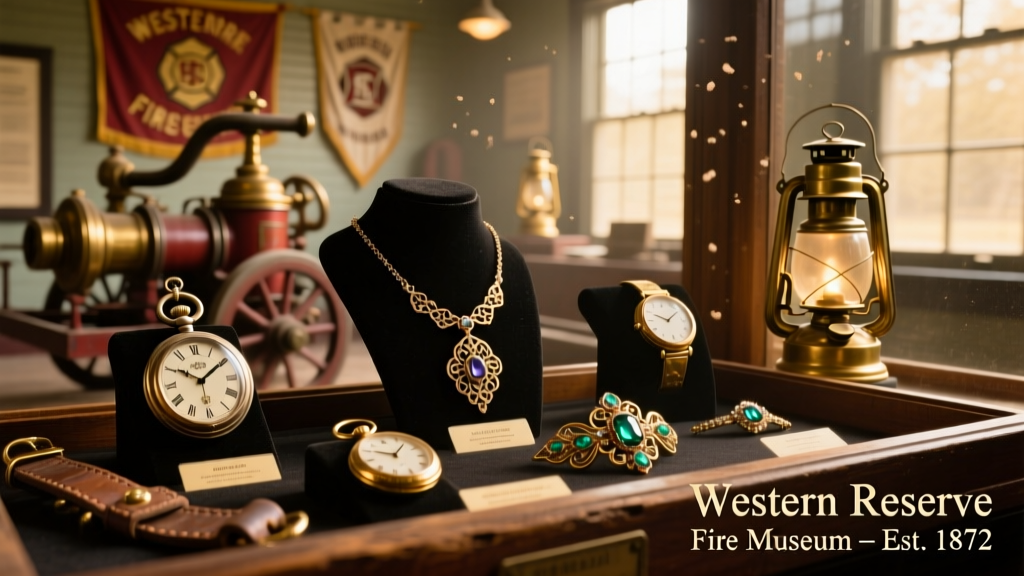
Preserving Heroism: The Western Reserve Fire Museum and Its Extraordinary Collection of Vintage Fire Apparatus, Uniforms, and Timepieces
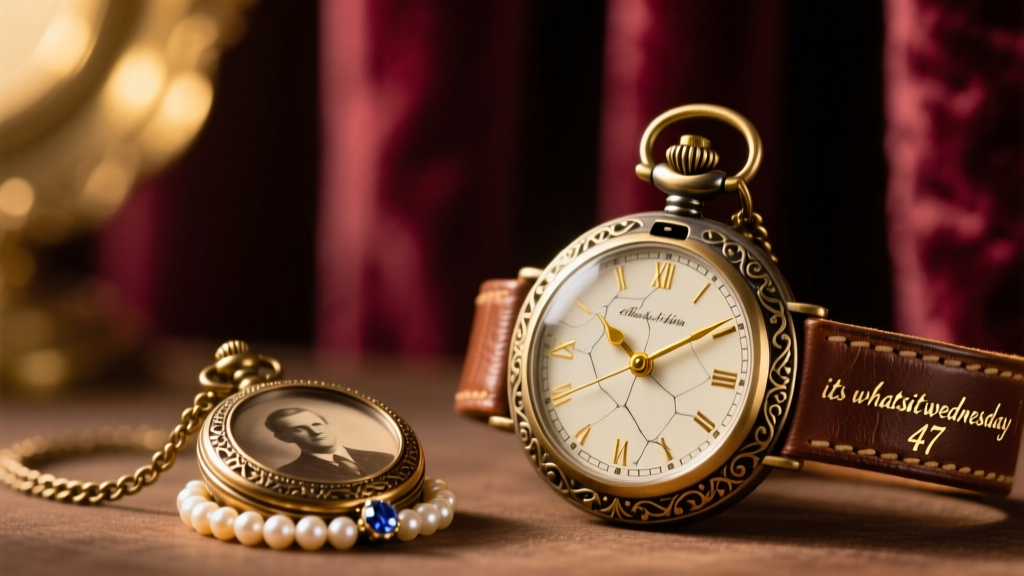
What’s It? Wednesday #47: Decoding the Enigmatic 'Swiss Chronometer' Dial Marking — A Deep Dive into Authenticity, Regulation, and Misuse in Mid-Century Wristwatches