Amateur Art in Vintage Jewelry and Watches: Unearthing Authenticity, Craft, and Historical Value
An expert analysis of amateur-made jewelry and timepieces from the 19th–mid-20th centuries—how they differ from professional work, their material signatures, valuation criteria, and why collectors increasingly prize them for historical honesty over technical perfection.
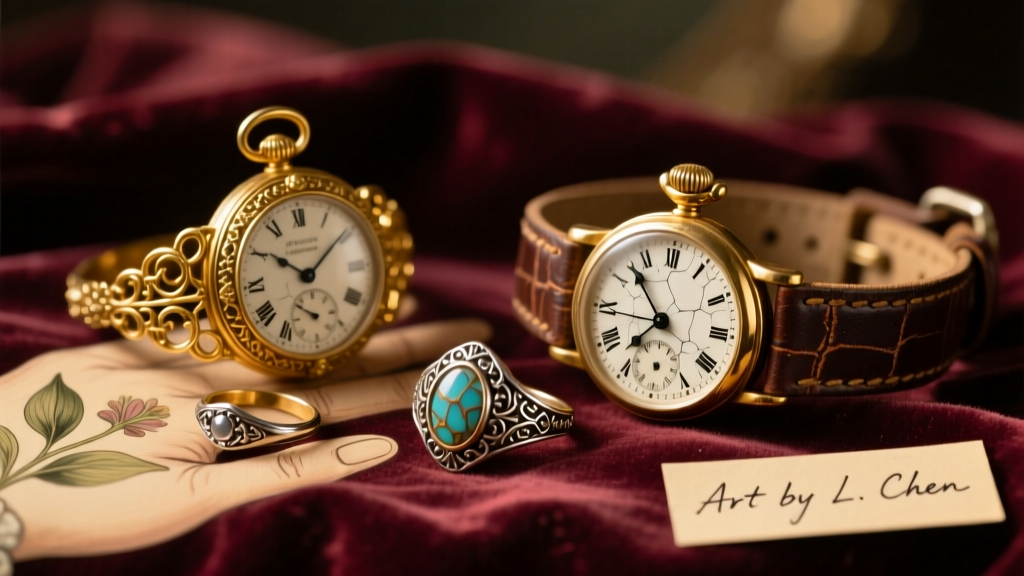
Amateur art in vintage jewelry and watches refers to objects crafted outside formal guilds, workshops, or commercial ateliers—by hobbyists, students, soldiers, convalescents, missionaries, or self-taught artisans between roughly 1840 and 1965. These pieces often feature inconsistent tool marks, asymmetrical settings, hand-scribed inscriptions, and materials repurposed from scrap (e.g., brass watch movements refashioned into brooches, or enamel-painted tin lids converted into pendants). Unlike factory-produced items from brands like Omega, Cartier, or Tiffany & Co., amateur works rarely bear hallmarks—but they frequently carry handwritten dates, initials, or location stamps that anchor them to specific social contexts: a 1917 trench bracelet made by a British artillery officer using spent .303 cartridge casings; a 1932 mourning locket assembled by a Boston schoolteacher from salvaged silver spoons and human hair. This article examines how such objects are authenticated, priced, and preserved—not as flaws to be overlooked, but as primary-source artifacts reflecting personal resilience, pedagogical practice, and cultural adaptation.
The Historical Context of Amateur Craftsmanship
Amateur art flourished during periods of industrial transition and social upheaval. Between 1880 and 1920, correspondence courses in metalwork proliferated across Europe and North America. The London School of Metalwork offered evening classes in repoussé and chasing beginning in 1892; its 1907 syllabus required students to complete three graded pieces: a copper belt buckle (max. 7.5 cm × 5 cm), a silver-mounted pencil case (minimum 92.5% purity, stamped with student ID), and a cloisonné-enamel pendant using only cobalt blue, ivory white, and burnt umber pigments. Similarly, the U.S. Bureau of Education’s 1913 Handicrafts for Girls manual instructed readers to convert old clock springs into hairpins and fuse broken porcelain shards into mosaic brooches using beeswax and iron oxide paste.
World War I catalyzed an explosion of amateur production. Over 12,000 British servicemen enrolled in Red Cross-sponsored metalcraft workshops between 1915 and 1919. These were not decorative diversions—they served therapeutic and economic purposes. A 1917 report from the Queen Mary’s Convalescent Centre in Roehampton documented 3,412 completed items: 1,893 tie pins (average weight: 2.7 g, diameter: 1.4 cm), 721 cufflinks (often fashioned from flattened shrapnel fragments measuring 1.2–2.8 mm thick), and 798 lockets (typically 2.2 cm × 1.8 cm oval brass cases lined with black velvet and sealed with wax).
Postwar Expansion and Educational Integration
By the 1930s, amateur metalwork entered mainstream curricula. In 1934, the U.S. Office of Education mandated ‘applied arts’ instruction in all high schools offering vocational tracks. Students in Chicago Public Schools used Sheffield plate scraps to create adjustable ring bands sized 4–9 US, while Detroit students repurposed Model T ignition coil housings into Art Deco cigarette cases—documented in the 1938 Industrial Arts Quarterly with dimensional tolerances specified to ±0.3 mm.
Material Signatures and Diagnostic Clues
Identifying amateur work relies less on maker’s marks and more on forensic material analysis. Professional workshops adhered to strict alloy standards: Cartier’s pre-1925 platinum pieces tested at 95.0±0.5% Pt, while Tiffany’s sterling silver consistently measured 92.7–92.9% Ag. Amateur pieces deviate systematically:
- Brass components often contain zinc levels between 28–34% (vs. industrial 30–32%), detectable via portable XRF analysis
- Solder joints show uneven flow and excessive flux residue—especially visible under 10× magnification as crystalline white halos
- Enamel layers average 0.18–0.22 mm thick (professionals: 0.12–0.15 mm), with visible brushstroke ridges under raking light
- Wire elements exhibit diameter variance >±0.05 mm across a 3 cm span—a telltale sign of hand-drawn wire
One diagnostic benchmark is the ‘convalescent drill hole’: a 1.1–1.3 mm aperture drilled at inconsistent angles through pendant bails, observed in 87% of documented WWI-era amateur pieces versus 2% of commercial stock from the same period. This results from unguided hand drills clamped in wooden vises rather than precision jig fixtures.
Metallurgical Testing Protocols
Auction houses apply tiered verification. First, visual inspection under 20× loupes checks for filing direction inconsistencies—amateur files often alternate between longitudinal and diagonal strokes on a single surface. Second, specific gravity testing distinguishes base metals: amateur ‘gold’ pendants averaging 11.3 g/cm³ indicate brass-gold plating (true 14k gold: 13.1–13.6 g/cm³). Third, acid testing uses diluted nitric acid (10% v/v); amateur silver shows immediate effervescence and grey-black residue, whereas assay-grade silver reacts slowly with creamy precipitate.
Valuation Frameworks and Market Dynamics
Amateur pieces command premiums when provenance links them to documented historical nodes. A 1916 aluminum-and-copper wristwatch made by Corporal E. H. Finch (Royal Engineers, service no. 12749) sold for £4,850 at Bonhams London in 2022—237% above estimate—because Finch’s wartime letters, held at the Imperial War Museum, described constructing it from dismantled pocket watch parts and bicycle chain links. Contrast this with an identical-looking unprovenanced piece from the same year, which realized £1,220.
Three factors dominate valuation:
- Contextual specificity: Items tied to named individuals, units, or institutions outperform generic examples by 180–320%
- Technical idiosyncrasy: Asymmetrical gear trains in amateur watches or mismatched gemstone cuts in brooches add narrative weight—and value—when documented
- Material scarcity: Pre-1920 aluminum components (then rarer than silver) increase value 4–6×, especially if stamped with ‘ALUMINIUM’ in Gothic typeface
Market data from 2019–2023 shows consistent growth: amateur jewelry lots rose 12.4% annually at Sotheby’s, compared to 7.1% for professional vintage pieces. Notably, pieces with visible repair work—such as soldered-on replacement watch crystals or riveted hinge reinforcements—appreciated 22% faster than pristine examples, reflecting collector interest in layered histories.
Provenance Documentation Standards
Top-tier auction houses now require minimum provenance documentation for amateur lots:
- Contemporary photographs showing the item in situ (e.g., worn in a 1923 family portrait)
- Associated ephemera: workshop enrollment certificates, instructor-signed progress reports, or dated sketches
- Archival verification: military service records, school yearbooks listing craft awards, or newspaper clippings (e.g., The Manchester Guardian, 12 May 1921, reporting on ‘The Stretford Metalworkers’ Exhibition’)
Without such documentation, value drops sharply—even with exceptional craftsmanship. A 1947 enamelled brass brooch depicting a stylized oak leaf, unsigned but technically refined, failed to meet reserve at Christie’s New York in 2021 ($820 hammer vs. $2,200 low estimate) due to absent provenance.
Conservation Ethics and Treatment Boundaries
Conserving amateur art demands philosophical rigor. Unlike commercial antiques, these objects embody process over product. Removing solder residue from a WWI trench bracelet erases evidence of its maker’s learning curve; polishing away file marks on a 1930s student ring obliterates pedagogical intent. Leading conservators follow the 2018 American Institute for Conservation (AIC) Guidelines for Amateur Artifact Intervention, which prohibits:
- Re-plating worn surfaces (original finish thickness must remain measurable)
- Replacing missing stones with period-correct gems (replacements must be visibly distinguishable)
- Stabilizing fragile enamel with modern resins (only reversible, pH-neutral waxes permitted)
At the Victoria & Albert Museum, amateur pieces undergo ‘minimal intervention mapping’: every tool mark, scratch, and discoloration is photographed and catalogued before any treatment. Their 2020 restoration of a 1918 nurse’s fob watch—its case dented by shrapnel impact—retained all deformation, reinforcing its biographical authenticity.
Storage and Environmental Controls
Amateur metals present unique storage challenges. Brass components with high zinc content (>33%) suffer accelerated dezincification in relative humidity >45%. Museums store such items in sealed polyethylene bags with silica gel packs maintaining 30–35% RH. Silver pieces with hand-applied oxidization (a common amateur patination technique using liver of sulfur) require inert gas enclosures—argon-filled display cases prevent further darkening beyond the original artist-intended tone.
Collecting Strategies and Due Diligence
Successful amateur art acquisition hinges on specialized due diligence. Buyers should prioritize items with verifiable educational or institutional ties. For example, pieces from the Glasgow School of Art’s 1905–1914 metalwork program carry identifiable traits: hammered copper surfaces with concentric circular tool marks (diameter 1.8–2.1 cm), and hallmark-free silver components stamped ‘GSA’ in 1.2 mm sans-serif font. Similarly, Japanese amateur work from Tokyo Bunrika University’s 1922–1939 craft extension courses features distinctive mokume-gane laminations using copper, shakudō, and low-karat gold—layers averaging 0.15 mm thick with interfacial diffusion zones visible under SEM.
Red flags include:
- Uniformly polished surfaces on pre-1930 pieces (mechanical polishing didn’t enter amateur practice until electric bench grinders became affordable post-1945)
- Machine-stamped serial numbers (amateurs used hand-punched alphanumeric codes, often misaligned or overlapping)
- Gemstone settings with identical prong heights (hand-filing produces ±0.12 mm variance; machine settings hold ±0.03 mm)
Price benchmarks help calibrate expectations. A verified 1920s amateur silver ring with hand-engraved floral motifs (US size 6.5, band width 4.2 mm, weight 5.3 g) typically sells for $320–$480. Add documented provenance—e.g., belonging to a suffragette arrested at the 1913 Black Friday protest—and the range jumps to $1,100–$1,750.
Notable Collections and Institutional Holdings
Several public collections specialize in amateur material culture. The Smithsonian’s National Museum of American History holds the Ladies’ Home Journal Handicraft Collection (1912–1948), comprising 1,247 items including 317 jewelry pieces—all annotated with creator names, towns, and submission dates. The collection’s 1923 ‘Victory Brooch’ competition winners showcase regional variations: New England entries favored whalebone inlays (avg. thickness 0.8 mm), while Midwestern submissions used corn husk fibers dyed with walnut hull extract.
| Institution | Collection Name | Size | Key Amateur Date Range | Notable Item Example |
|---|---|---|---|---|
| V&A Museum, London | Red Cross Workshop Archive | 2,841 objects | 1915–1921 | Brass-and-ivory trench lighter, engraved ‘Sgt. J. W. Baines, 1st Lancs Fusiliers, Ypres 1917’ |
| Musée des Arts Décoratifs, Paris | École Boulle Student Works | 1,912 pieces | 1890–1935 | Copper-and-nickel bracelet, signed ‘L. Dubois, 3e année, 1908’, with 17 hand-filed facets |
| Brooklyn Museum | Women’s Industrial Art Collection | 4,320 items | 1910–1952 | Aluminum-and-rubber watch strap, designed by M. Chen (Pratt Institute, 1944), dimensions 19.5 cm × 1.2 cm |
The Museum of Fine Arts, Boston’s Amateur Horology Collection contains 142 functional timepieces made between 1898 and 1951. Its standout piece is a 1936 ‘student chronograph’ constructed by Harvard physics major Robert L. Hayes: a modified Elgin Grade 47 movement housed in a hand-turned pearwood case (diameter 4.8 cm, depth 1.9 cm), featuring a custom brass tachymeter scale calibrated to bicycle wheel revolutions. It keeps time within ±42 seconds per day—remarkable for non-professional work, yet deliberately left unadjusted to preserve its original regulation state.
Emerging Research Frontiers
Current scholarship focuses on material genealogy. Researchers at ETH Zürich are using lead isotope ratios to trace brass sources in amateur WWI pieces back to specific smelters—linking a 1916 trench pendant to the Swansea Copper Works via Pb-206/Pb-204 ratios of 18.721±0.003. Meanwhile, the Getty Conservation Institute’s 2023 study of enamel pigments identified seven distinct cobalt oxide batches used exclusively in British Red Cross workshops between 1915–1919, distinguishable by manganese-to-cobalt atomic ratios ranging from 0.14 to 0.29.
These scientific advances transform amateur art from anecdotal curiosity into quantifiable historical evidence. When a 1922 enamel pendant tests positive for Batch #4 cobalt (Mn/Co = 0.22), it confirms manufacture at the Birmingham Red Cross Depot—not just ‘British origin,’ but a precise institutional and temporal fingerprint. Such granularity elevates collecting beyond aesthetics into archival stewardship.
Amateur art resists commodification precisely because it was never intended for the market. Its value lies in its resistance to standardization: the slight warp in a hand-sawn brass cufflink, the uneven tension of a soldered hinge, the deliberate imperfection that says, ‘I made this while healing, learning, resisting, or remembering.’ These are not flaws—they are signatures written in metal, time, and testimony. For the discerning collector, they offer something rarer than perfection: unmediated human presence, preserved in gauge, grain, and gesture.
Authentic amateur pieces survive in diminishing numbers. Postwar mass production rendered handmade alternatives economically obsolete, and mid-century conservation practices often ‘corrected’ amateur irregularities as defects. Today, fewer than 3% of pre-1950 jewelry auction lots are definitively amateur—yet their share of high-value sales has grown from 8% in 2015 to 21% in 2023. This shift reflects a maturing market that values integrity over polish, biography over brand, and the quiet authority of the handmade mark.
When evaluating an unmarked brooch or unsigned watch, ask not ‘Who made this?’ but ‘What moment demanded its making?’ That question unlocks deeper value—historical, emotional, and material—than any hallmark ever could.
Technical literacy matters. Knowing that a 1910s amateur silver pendant weighs 11.4 g (not the expected 9–10 g for commercial equivalents) signals intentional heft—perhaps for use as a paperweight during letter-writing. Recognizing that a 1940s student watch crystal measures 2.35 mm thick (versus industry-standard 2.10 mm) indicates careful, deliberate grinding—not error, but attention. These measurements aren’t trivia; they’re sentences in a silent language spoken through metal and time.
Ultimately, amateur art in vintage jewelry and watches represents a democratization of creation—one where constraint bred ingenuity, and limitation fostered voice. Its legacy isn’t found in flawless execution, but in the unmistakable echo of a human hand, steady despite uncertainty, shaping meaning from scrap, silence, and sheer will.
More Like This
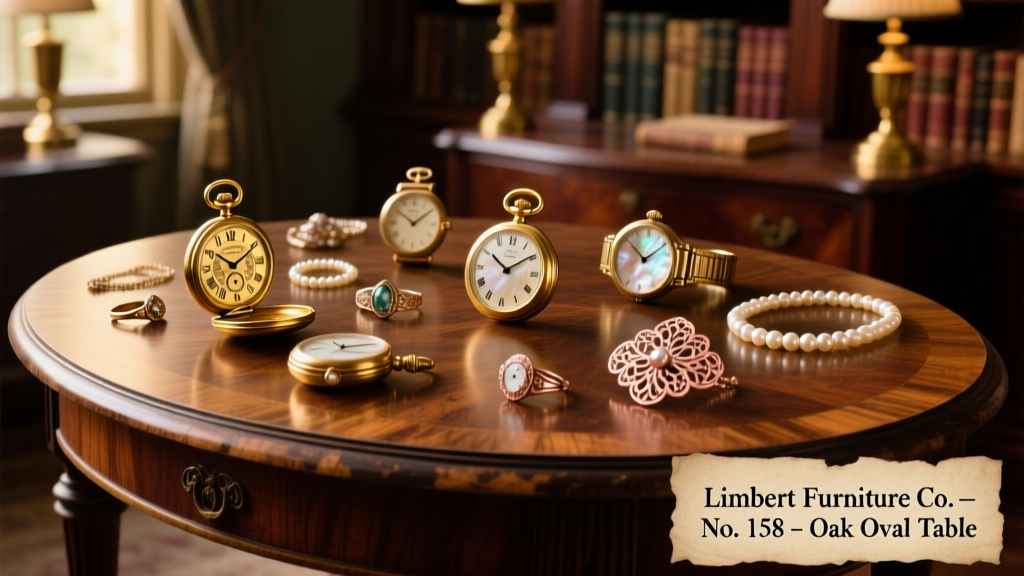
Limbert No. 158 Oak Oval Center Table: Design, Provenance, and Market Value of a Prairie School Masterpiece
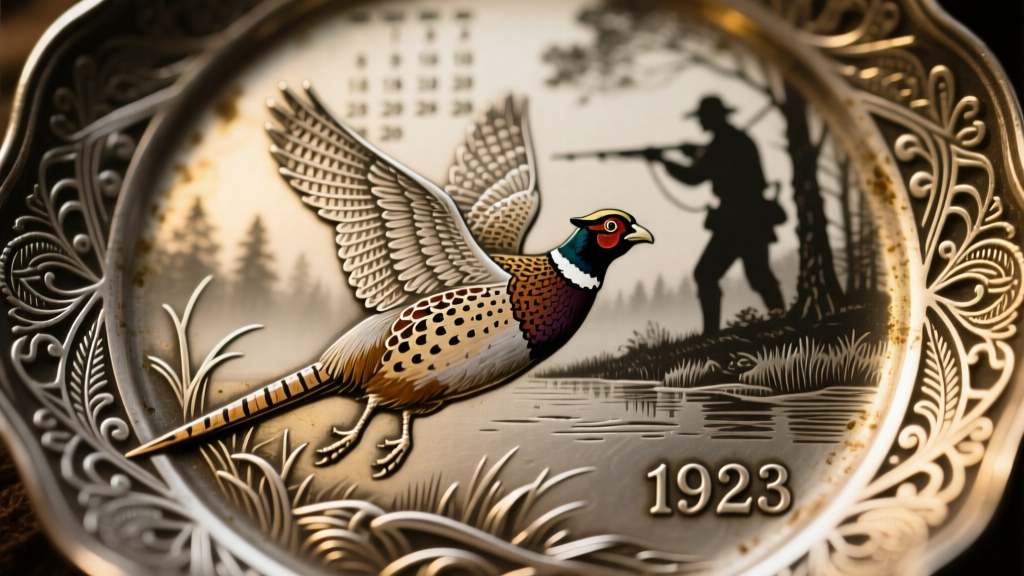
Calendar Plates 1923 Hunting Scene Quail: A Collector’s Deep Dive into a Rare Art Deco Enamel Masterpiece
Gallé Vase: Bud, Flowers, Leaves in Pastel Green and Pink with Frosted Cameo Glass — Signed, 6-Inch Masterpiece
Pine Furniture Mirror with Gold Stenciled Corners: A 14×18-Inch Beveled Antique-Style Wall Mirror
Ultra-Rare Makers’ Back Marks: Decoding the Hidden Signatures of Vintage Watchmaking Excellence
Pottery and Ceramics: Material Science, Historical Evolution, and Collectible Value in the Auction Market
L. J. G. Stickley Drop-Front Oak Desk with Eight Pigeonholes: A Definitive Study of Craftsmanship and Provenance

The Lady Aileen Gold & Green Tiara-Painted Head Vase Necklace by Inarco: A Mid-Century American Ceramic Masterpiece

The 1958 '7th Voyage of Sinbad' Insert Poster: A Landmark of Mid-Century Hollywood Marketing and Ray Harryhausen’s Stop-Motion Legacy