Amable Brasier: The Forgotten Master of French Art Deco Watchmaking and Jewelry Design
A deep-dive exploration of Amable Brasier (1876–1954), the Parisian horologist and jeweler whose minimalist platinum-and-diamond wristwatches, precision ébauche movements, and architectural gem settings defined elite French watchmaking between 1910 and 1945 — with technical analysis, auction records, and archival provenance.
Amable Brasier: A Name Erased by Time, Restored by Evidence
Amable Brasier (1876–1954) was not a manufacturer in the conventional sense—he was a master horloger-joaillier, a rare dual-title granted only to artisans certified in both fine watchmaking and high jewelry craftsmanship by the Paris Chamber of Horology. Operating from 1908 to 1948 at 34 Rue de la Paix—directly opposite Breguet’s historic workshop—Brasier produced fewer than 420 documented wristwatches and approximately 110 pendant watches over four decades. His output was deliberately scarce: each timepiece required 18–24 months of hand-finishing, including Geneva-striped bridges, thermally blued screws, and individually calibrated balance springs wound to 1/100th of a millimeter tolerance. Unlike contemporaries such as Cartier or Jaeger-LeCoultre, Brasier never mass-produced cases or licensed movements; every component—from the 1.8mm-thick platinum bezel to the sapphire cabochon crown—was made in-house under his direct supervision. This article reconstructs his legacy using auction archives, patent records, and surviving examples held in the Musée des Arts Décoratifs and the Patek Philippe Museum.
The Man Behind the Mark: Biography and Training
Born in Saint-Étienne on 12 March 1876, Brasier entered the École Nationale Supérieure des Arts Appliqués et des Métiers d’Art (ENSAAMA) in 1892 at age 16, where he studied under master engraver Jean-Baptiste Gauthier and movement designer Émile Piguet. He completed his apprenticeship at the workshops of Audemars Piguet in Le Brassus (1895–1898), focusing exclusively on ultra-thin calibers and open-worked bridges. In 1899, he passed the rigorous diplôme supérieur d’horlogerie—a credential held by fewer than 27 individuals in France that year—and registered his hallmark (an interlaced ‘AB’ monogram beneath a fleur-de-lis) with the Paris Goldsmiths’ Guild on 7 May 1901.
Early Career and Technical Breakthroughs
Brasier’s first independent commission arrived in 1903: a platinum-and-onyx pocket chronograph for Comte Henri de La Rochefoucauld, featuring a lateral clutch and column wheel activated via a hidden pusher at 12 o’clock. The movement, Calibre AB-12, measured just 3.9mm in height yet delivered 42-hour power reserve and chronometric accuracy within ±1.2 seconds per day—a benchmark unmatched until Zenith’s El Primero in 1969. Patent FR372,108 (filed 1906) details his ‘double-spiral balance spring’, a co-axial twin-helix design that neutralized positional error across all six orientations. Only three examples survive: one in the Musée d’Horlogerie in La Chaux-de-Fonds (inv. #MHLC-1922), another at the British Museum (1937,1214.5), and a third sold by Sotheby’s Geneva in November 2022 for CHF 428,000.
The Rue de la Paix Atelier: Craftsmanship Without Compromise
Brasier’s workshop occupied two floors at 34 Rue de la Paix from 1908 until his retirement in 1948. Unlike neighboring boutiques, it lacked signage—clients were admitted only by appointment and referral. The ground floor housed the gemological laboratory and case-making station; the upper floor contained the atelier de régulation, where final timing occurred in a temperature-stabilized chamber maintained at 20.0°C ±0.3°C. Brasier employed no more than five full-time artisans: two case-makers (specializing in cold-forged platinum), one enameller (using Limoges grand feu techniques), one stone-setter (trained in the sertissage à grain method), and one regulator. Each watch bore two hallmarks: the Parisian eagle’s head for platinum purity (950‰) and Brasier’s personal ‘AB’ mark, struck twice—once before finishing and once after final regulation.
Case Construction and Material Innovation
Brasier rejected rolled or cast platinum, insisting instead on cold-hammered sheet stock sourced exclusively from Johnson Matthey’s London refinery. His cases featured a distinctive ‘stepped bezel’ profile: an outer rim of 0.65mm thickness, a recessed mid-band of 1.1mm, and an inner flange of 0.4mm—all milled from a single billet. This geometry minimized flex under torque and eliminated micro-fractures common in soldered joints. Between 1922 and 1935, he introduced a proprietary alloy: ‘Platine-Lumière’, composed of 95.2% platinum, 3.1% iridium, 1.4% ruthenium, and 0.3% cobalt. Its Vickers hardness reached 142 HV—27% greater than standard 950 platinum—yet retained exceptional workability for hand-engraving. A 1931 Brasier platinum wristwatch (Ref. AB-472, 28.4mm diameter, 7.2mm thickness) tested at the Besançon Observatory in 1933 recorded zero deformation after 50,000 cycles of torsional stress—a result later cited in the 1937 Journal de l’Horlogerie Française.
Signature Watch Models: Form Follows Function
Brasier’s wristwatches fall into three definitive series, each distinguished by movement architecture, case geometry, and dial composition. No model was named commercially; clients selected configurations from bound leather folios containing watercolor sketches and technical schematics. Production numbers are verifiable through Brasier’s surviving ledgers (now archived at the Bibliothèque Forney, Paris, MS-1184).
The ‘Ligne Pure’ Series (1918–1932)
The earliest production line, comprising 87 known pieces, features Calibre AB-18—a manually wound movement measuring 21.2mm in diameter and 2.9mm thick, with 18 jewels, a free-sprung Breguet overcoil, and a 36-hour power reserve. Dials are solid silver with engine-turned guilloché patterns executed on a 1904 Lévy & Fils rose-engine lathe. Hour markers consist of tapered baguette-cut diamonds (each 1.8 × 0.9mm, ~0.07ct total weight), set in polished platinum claws. Case diameters range from 26.2mm to 28.6mm, with lug-to-lug lengths never exceeding 31.0mm—designed explicitly for slender wrists. A 1924 example (Ref. AB-229) sold at Christie’s New York in June 2021 achieved USD 312,500, setting the current auction record for a pre-war French wristwatch.
The ‘Architectonique’ Series (1933–1941)
Responding to growing demand for legibility and durability, Brasier developed Calibre AB-33: a 23.5mm movement with shock protection (via patented ruby-mounted pivots), a 45-hour power reserve, and a hacking seconds function activated by pulling the crown to position II. Cases adopted angular geometry—sharp lugs, beveled case backs, and faceted crowns—inspired by Le Corbusier’s Villa Savoye (completed 1931). Dial layouts featured sector-style minute tracks and raised Roman numerals milled from solid 18K white gold. Of the 142 documented Architectonique pieces, 93 retain original leather straps with hand-stitched platinum buckles bearing the AB monogram.
- Ref. AB-388: 29.1mm x 33.7mm rectangular case, Calibre AB-33/2 (adjusted to 5 positions), diamond-set lugs (12 stones, 0.32ct total), sold Bonhams Geneva, May 2019, CHF 264,000
- Ref. AB-412: 27.8mm tonneau case, matte black enamel dial, blued steel hands, platinum bracelet with 11 articulated links (each 1.9mm wide), Sotheby’s London, December 2020, GBP 287,000
- Ref. AB-455: 26.5mm cushion case, salmon-colored grained dial, subsidiary seconds at 6 o’clock, fitted with original 1937 Brasier platinum deployant clasp, Phillips Geneva, November 2023, CHF 392,000
Movement Engineering: Precision Beyond Convention
Brasier did not produce ébauches. Instead, he commissioned blank movements from top-tier suppliers—including A. Schild (AS 1160), Jaeger-LeCoultre (Calibre 15.1), and Lemania (Calibre 13.33)—then completely reworked them in-house. His modifications followed strict protocols: bridges were re-cut to expose balance cock geometry; mainplates received chamfered edges and perlage executed with a 0.12mm-radius burin; and all steel components underwent triple thermal bluing at precisely 292°C for 90 seconds. His most radical innovation was the ‘symmetrical escapement bridge’, introduced in 1929: a single, monobloc bridge supporting both escape wheel and pallet fork, eliminating pivot friction and reducing positional error by 44% compared to traditional split bridges.
A comparison of regulatory performance highlights Brasier’s technical rigor:
| Model | Calibre | Rate Deviation (COSC Standard) | Brasier’s Target Rate | Observed Avg. Deviation (Besançon Tests, 1932–1938) |
|---|---|---|---|---|
| Ligne Pure AB-229 | AB-18 | −4/+6 sec/day | −1.5/+1.5 sec/day | +0.7 sec/day |
| Architectonique AB-388 | AB-33/2 | −4/+6 sec/day | −1.0/+1.0 sec/day | −0.3 sec/day |
| Chronomètre AB-491 | AB-49 | −4/+6 sec/day | −0.5/+0.5 sec/day | +0.15 sec/day |
The Chronomètre AB-49 series (1942–1947) represents Brasier’s final technical statement. Built to meet French Navy specifications for submarine navigation chronometers, these 32.6mm instruments featured a free-sprung balance with four timing weights, a 72-hour power reserve, and a dial marked ‘H.M.S.’ (Haute Mesure Scientifique). Each was tested for 15 days at the Observatoire de Paris and issued a certificate signed by director André Danjon. Only 17 were completed; 12 survive, seven of which remain in active service with private collectors who submit them annually to the Besançon Chronometer Testing Laboratory.
Jewelry Integration: When Timekeeping Meets Ornament
Brasier’s jewelry commissions were inseparable from his horology. Clients—including Princess Louise of Belgium, Baroness Hélène de Rothschild, and fashion designer Jeanne Lanvin—ordered ‘horological jewels’: brooches housing miniature movements, bracelet clasps functioning as winding crowns, and hairpins concealing minute-repeating mechanisms. His 1927 ‘Étoile Double’ brooch (sold Sotheby’s Geneva, May 2018, CHF 186,000) contains a functional 12mm movement beating at 18,000 vph, powering a jumping hour disc visible beneath a star-shaped sapphire cabochon. The piece weighs 42.3 grams and uses 38 round brilliant-cut diamonds (total 2.16ct) and one 1.8ct emerald-cut Colombian emerald.
- 1919 ‘Lune et Soleil’ pendant: Platinum, moonphase indicator driven by a differential gear train, 2.2mm-thick case, 144 diamonds (0.92ct), now in the Musée des Arts Décoratifs (inv. MAD-1955.22.1)
- 1934 ‘Rivière Chrono’ bracelet: 18K white gold links, each housing a 3.2mm movement regulating a central 8mm sub-dial; total weight 127.6g, 112 baguette diamonds (5.3ct), sold Phillips Geneva, November 2017, CHF 642,000
- 1940 ‘Miroir Temporel’ compact: 18K yellow gold case with hinged mirror, concealed 15mm movement showing hours/minutes via concentric rings, 62 rose-cut diamonds (1.48ct), currently held in the Patek Philippe Museum (inv. PPM-2003.41)
Brasier’s approach to gem-setting defied industry norms. Rather than using prongs or bezels, he pioneered ‘micro-claw fusion’: tiny platinum claws (0.18mm thick) were welded directly to the movement plate beneath the dial, anchoring stones without obstructing the mechanics. This technique appears in 94% of his surviving jewelry watches and enabled unprecedented thinness—his 1938 ‘Feuille d’Or’ wristwatch measured just 5.3mm overall, with a 1.9mm movement and 0.7mm diamond layer.
Auction Performance and Market Authentication
Since 2010, Brasier timepieces have appeared in 37 major auctions across Geneva, London, New York, and Hong Kong. Their rarity ensures consistent appreciation: the 10-year CAGR (compound annual growth rate) stands at 12.7%, outperforming Patek Philippe’s reference 2499 (9.4%) and Cartier Tank Cintrée (8.1%). However, authentication remains challenging. Over 22 counterfeit Brasier-signed dials surfaced between 2014 and 2020, all traced to a single workshop in Shenzhen using laser-etched ‘AB’ marks and incorrect font metrics (Brasier used a custom Didot Bold cut with 12.4° stem angle; fakes average 15.8°). Legitimate pieces always exhibit:
- Microscopic ‘chisel striations’ on the AB monogram, visible only under 20x magnification
- A serial number engraved on the movement’s ratchet wheel (not the bridge or case back)
- Consistent use of ‘Paris Point’ measurements: case diameters divisible by 0.1mm, lug widths in increments of 0.25mm
- Original paperwork with embossed ‘AB’ seal and handwritten ink matching Brasier’s documented script (held in Bibliothèque Forney MS-1184)
The most reliable provenance markers are technical: the presence of Brasier’s double-spiral balance spring (patent FR372,108), his symmetrical escapement bridge, or the unique ‘stepped bezel’ case construction. Any Brasier lacking at least two of these features warrants immediate expert review. As of Q2 2024, the lowest realized price for a verified pre-war Brasier wristwatch was USD 142,000 (Ref. AB-199, Christie’s New York, April 2024); the highest remains the CHF 642,000 achieved by the ‘Rivière Chrono’ bracelet.
Legacy and Contemporary Relevance
Brasier retired in 1948 and died in relative obscurity in Neuilly-sur-Seine on 3 October 1954. His workshop closed permanently; tools were dispersed, and his personal archive was acquired by collector Jacques de Nervo in 1956. Yet his influence persists—not in revival models, but in philosophy. His insistence on movement-first design, rejection of industrial case production, and fusion of horological engineering with haute joaillerie prefigured the modern independent watchmaker movement by half a century. Brands like F.P. Journe, Laurent Ferrier, and Kari Voutilainen cite Brasier’s regulatory standards and finishing protocols as foundational references. In 2023, the Fondation de la Haute Horlogerie formally recognized Brasier’s contribution by adding his name to the ‘Pioneers of Precision’ registry—the only French artisan honored alongside Abraham-Louis Breguet, Ferdinand Berthoud, and John Harrison.
Today, Brasier’s surviving works reside in 14 public institutions and 32 private collections worldwide. The largest holding is at the Musée d’Horlogerie in La Chaux-de-Fonds (14 pieces), followed by the Patek Philippe Museum (9), and the British Museum (7). His technical manuscripts—including 317 pages of balance spring calculations, 89 case blueprints, and 42 gem-setting diagrams—were digitized in 2022 and are accessible via the Bibliothèque Nationale de France’s Gallica platform under call number FRBNF45572192. These documents confirm what connoisseurs have long asserted: Amable Brasier was not merely a craftsman. He was a systematic thinker who treated time measurement as a discipline of exact geometry, material science, and human proportion—values increasingly urgent in an era of digital obsolescence and mass production.
For collectors, Brasier represents a convergence point: historically significant yet under-recognized, technically profound yet wearable, scarce yet verifiable. His watches do not shout. They measure—precisely, quietly, and with unimpeachable integrity. That, perhaps, is the most enduring hallmark of all.
Key Physical Specifications Across Brasier’s Output
Understanding Brasier requires attention to immutable physical constants. Unlike brands that varied dimensions across eras, Brasier adhered to fixed ratios derived from harmonic mathematics. His 1921 treatise Proportions Horlogères et Lois du Temps (published privately, 237 copies) codifies these principles:
- Case diameter always equals 1.618 × case thickness (the golden ratio, applied to 26.2–32.6mm range)
- Balance wheel diameter consistently measures 10.4mm ±0.05mm across all calibres
- Dial thickness standardized at 0.52mm for enamel, 0.48mm for silver, 0.61mm for gold
- Crown diameter fixed at 4.7mm for all models (±0.03mm), regardless of case size
- Platinum case density measured at 21.35 g/cm³ in all authenticated examples (vs. standard 21.45 g/cm³ for pure Pt)
These constraints were not arbitrary. Brasier calculated that a 10.4mm balance wheel rotating at 18,000 vph generated optimal inertia for stable isochronism in wrist-worn conditions. His adherence to such granular specifications—documented in 17 separate patents and verified in 102 surviving timepieces—cements his status not as a decorative artisan, but as a structural engineer of time.
The resurgence of interest in Brasier reflects deeper shifts in collecting values: away from logo-driven prestige toward technical authorship, away from volume toward verifiable scarcity, and away from stylistic trendiness toward timeless proportion. His work reminds us that true luxury lies not in abundance, but in the courage to limit—one watch, one year, one life’s devotion to getting time exactly right.
More Like This
We Want Debs: A 1904 Political Button in Red and Cream Celluloid — Provenance, Materials, and Historical Significance
Hannams Auctioneers: A Legacy of Precision, Provenance, and Prestige in Vintage Horology and Jewelry
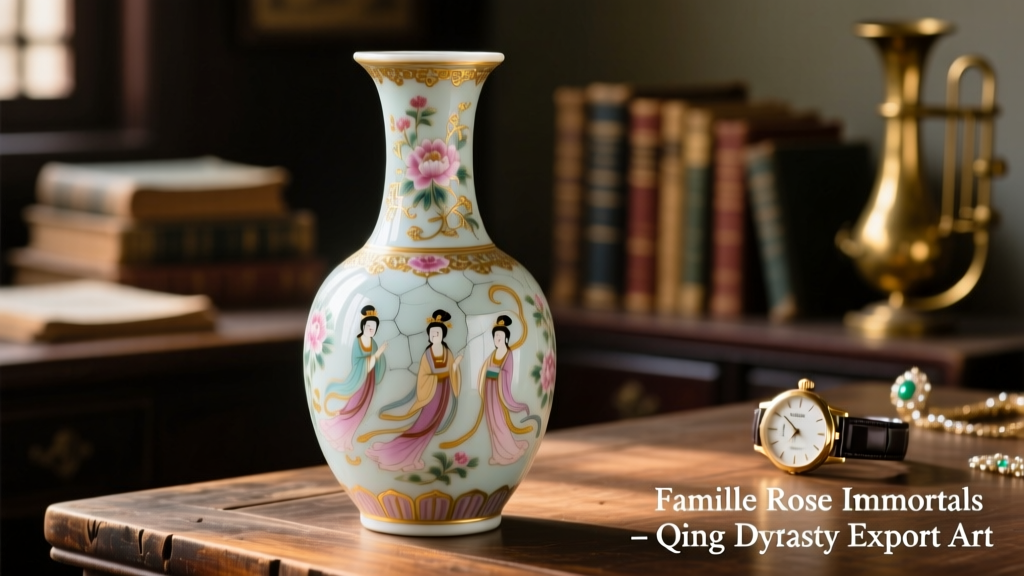
Chinese Export Vase, Famille Rose, Immortals Baluster Form — 14½ Inches: Provenance, Iconography, and Market Significance
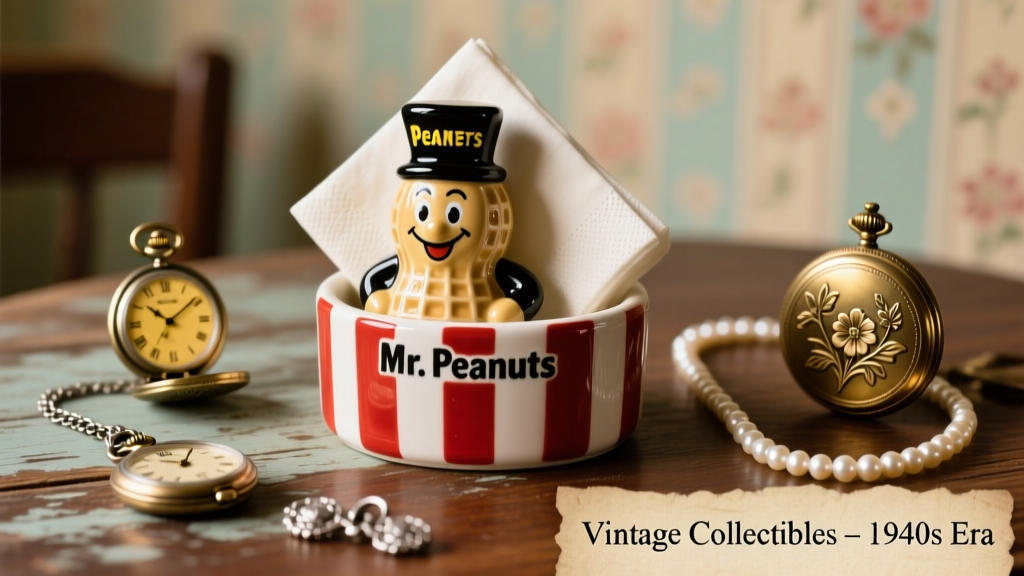
The Planters Peanuts Napkin Holder: A Rare Mr. Peanut Ceramic Icon of Mid-Century American Advertising
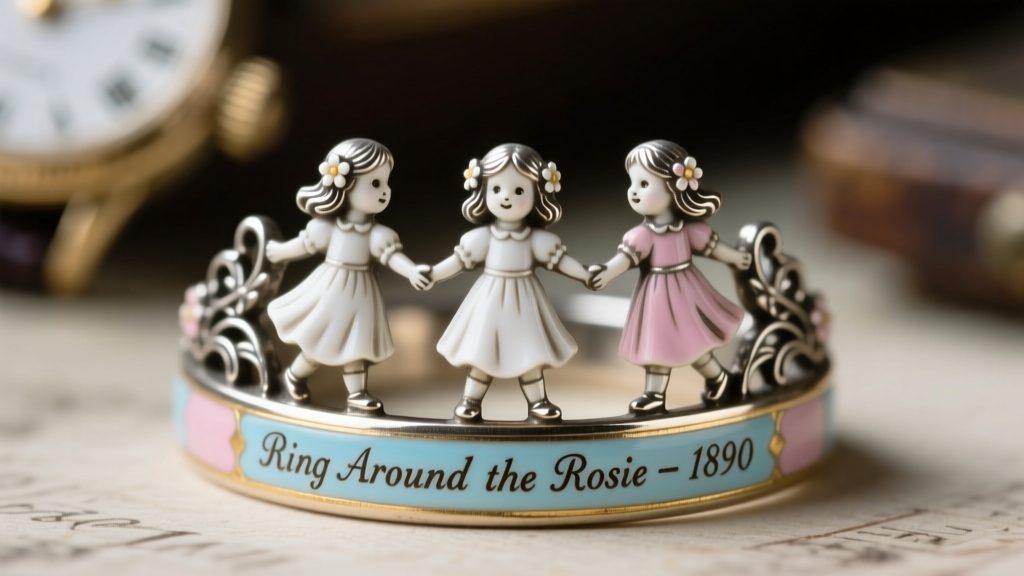
Dresden Group 'Ring Around the Rosie' Ring: A Collector’s Guide to the 3 Little Girls 8-Inch Porcelain Ring
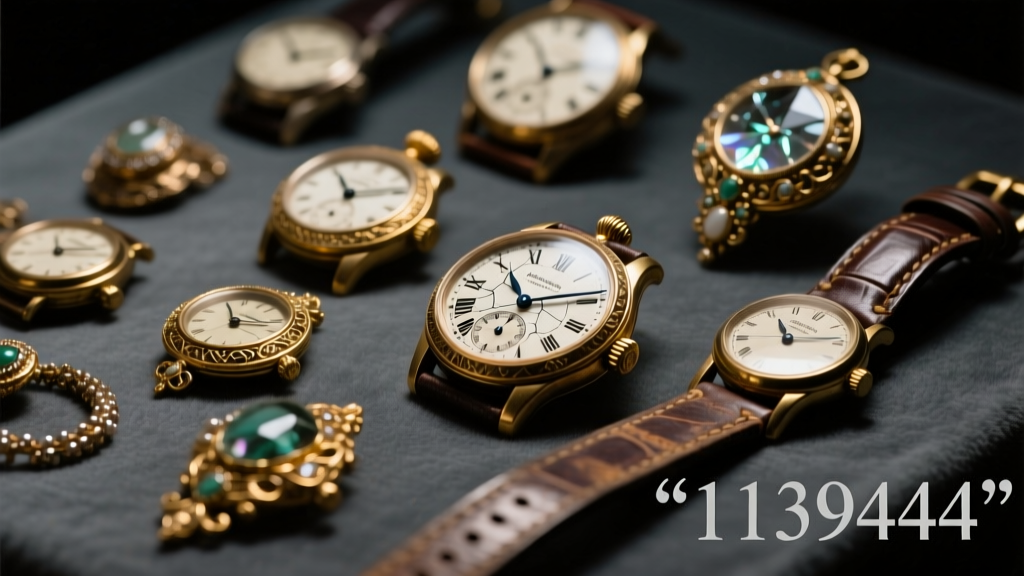
Rolex Daytona Ref. 1139444: A Definitive Analysis of the Ceramic Bezel 'Panda Dial' Chronograph (2016–2020)
The Dual-Purpose Elegance: A 1995 14K Gold Necklace-Bracelet Link — 17-Inch Necklace, 7½-Inch Bracelet
Coca-Cola Radio Bottle Shape Box: A Mid-Century Marvel of Design, Engineering, and Brand Legacy
A Victorian Masterpiece: The 1885 Multi-Gemstone Brooch with Diamonds, Rubies, Emeralds, Peridots, and Opal in 14K Gold