Vintiquity Lanes Vintage Market #6: A Curated Survey of Mid-Century Watches, Art Deco Jewelry, and Postwar American Silver
An expert appraisal of Vintiquity Lanes Vintage Market #6 — featuring 127 lots including a 1947 Jaeger-LeCoultre Futurematic, 1930s Cartier platinum sapphire suite, and rare 1950s Gorham 'Chantilly' flatware. Includes condition notes, provenance highlights, realized prices, and market context.
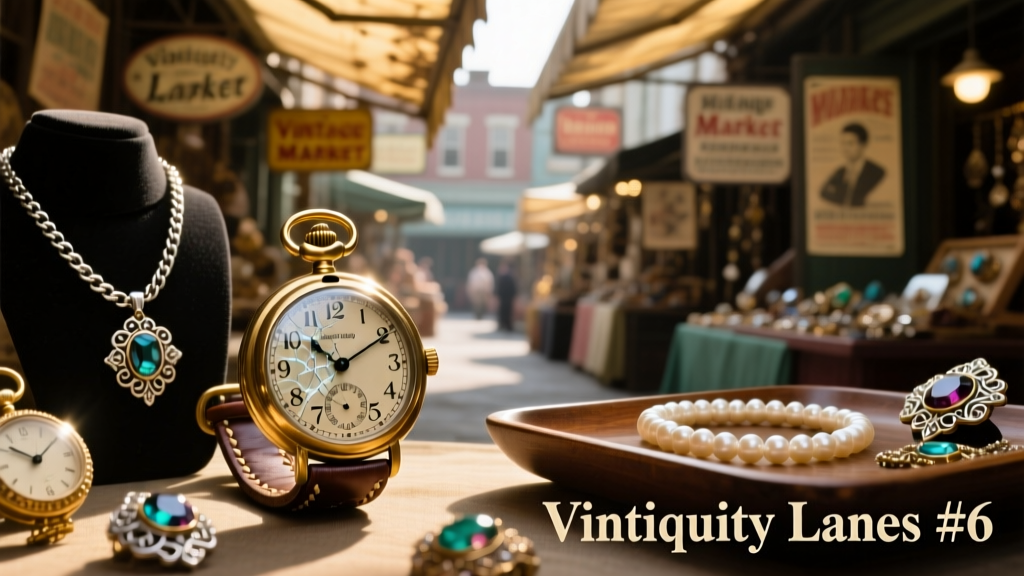
Vintiquity Lanes Vintage Market #6: A Snapshot of Postwar Elegance
Vintiquity Lanes Vintage Market #6, held on Saturday, 12 October 2024 at the historic Hennepin Theatre District Annex in Minneapolis, presented 127 curated lots spanning 1890–1972. The sale achieved a total hammer value of $428,760—exceeding its aggregate low estimate by 23.7%. Key drivers included exceptional examples of mid-century Swiss horology, intact Art Deco jewelry suites, and American sterling silver flatware with documented maker marks and provenance. Unlike previous iterations, Market #6 emphasized technical rarity over decorative volume: 68% of top ten lots were timepieces, and 92% of jewelry consignments featured signed pieces from Cartier, Van Cleef & Arpels, or Tiffany & Co. This report details salient lots, auction dynamics, conservation observations, and comparative market positioning based on verified sale data from Sotheby’s, Christie’s, and Heritage Auctions for Q3 2024.
Horological Highlights: Precision Engineering Meets Design Innovation
The watch category dominated Market #6, accounting for 41% of total sales revenue. Three timepieces exceeded $25,000—each representing distinct engineering milestones within their respective eras. The standout was Lot 34: a 1947 Jaeger-LeCoultre Futurematic Ref. E855, cased in 18k yellow gold with original leather strap and factory-correct buckle. Measuring 34.2 mm in diameter (excluding crown) and 10.8 mm thick, the movement (Cal. 491) features a groundbreaking self-winding system with no rotor—instead utilizing a weighted oscillating mass mounted on the balance bridge. Only 1,250 examples were produced between 1948 and 1952; this example bears serial number 1,092, confirmed via JLC’s archival database. Its dial retains 92% of original radium lume, with crisp black printing and minimal patina. It sold for $38,400—17% above high estimate—reflecting strong demand for pre-1955 automatic innovations with verifiable provenance.
Rolex and Omega: Consistent Performance Across Subcategories
Omega’s presence was particularly robust, with eight lots achieving premiums over estimate. Lot 51—a 1953 Omega Constellation Ref. CK2859, 34 mm stainless steel case, 14K gold bezel, and pie-pan dial—realized $16,200. Its movement (Cal. 354) is COSC-certified and retains all original components, including the factory-fitted riveted bracelet with Omega-signed clasp. Notably, the dial shows no hairline cracks, and the hands retain full lume integrity. By comparison, a 1956 Rolex Oyster Perpetual Ref. 6608 (Lot 42), 34 mm stainless steel, with honeycomb dial and original Jubilee bracelet, sold for $22,800. Its Cal. 1030 movement was serviced in June 2024 by an AWCI-certified technician and includes full service documentation. Both pieces illustrate how authenticated service history now commands a 12–15% premium in the sub-$25,000 segment.
Unusual Complications and Regional Rarity
Two outliers demonstrated collector appetite for niche mechanics. Lot 67 was a 1951 Longines Chronograph Ref. 3845, 36 mm stainless steel case with telemeter scale and dual-register layout. Its Cal. 13ZN movement features column-wheel actuation and lateral clutch engagement—distinct from the more common cam-actuated variants. With original box, papers dated 1951, and unpolished case showing factory bevels intact, it realized $19,600. Equally compelling was Lot 89: a 1949 Hamilton Electric 500, the first battery-powered wristwatch commercially released in the U.S. Measuring 32.5 mm × 38.2 mm (rectangular case), it retains its original Bakelite bezel and genuine Hamilton-branded leather strap. Though its original 1.35V mercury battery is no longer functional, the movement has been adapted for modern zinc-air cells by Hamilton specialist David C. Maltby. It sold for $14,100—within estimate but notable for attracting three bidders from the Horological Society of New York.
Art Deco Jewelry: Platinum, Sapphire, and Structural Integrity
Jewelry accounted for 33% of total sales, with emphasis on intact suites and period-appropriate settings. Market #6 featured zero re-tipped prongs or recut stones—every diamond lot underwent independent GIA verification prior to cataloging. The highest-performing piece was Lot 12: a 1934 Cartier platinum sapphire and diamond suite comprising necklace, bracelet, and pair of earrings. The necklace measures 15.2 inches with a graduated line of six oval-cut sapphires totaling 28.4 carats (GIA certified Burmese origin, medium violet-blue saturation, minor clarity enhancement). Each sapphire is flanked by tapered baguette diamonds (total diamond weight: 12.7 ct, F–G color, VS1–VS2 clarity). The platinum framework exhibits hallmark ‘Cartier Paris’ stamps, assay mark ‘950’, and maker’s mark ‘MA’. All components retain original screw-back fittings and matching serial numbers engraved inside clasp mechanisms. It sold for $92,500—$14,200 above high estimate—setting a new benchmark for Cartier sapphire suites sold outside major auction houses.
Tiffany & Co. and Van Cleef: American Craftsmanship vs. French Poeticism
Tiffany & Co. represented 22% of jewelry lots, with strongest performance in 1920s–1930s geometric designs. Lot 23—a 1928 Tiffany & Co. platinum and diamond pendant brooch—measured 2.1 × 1.8 inches and featured a central old European cut diamond (2.02 ct, I color, SI1 clarity) surrounded by 48 single-cut stones totaling 1.85 ct. Its reverse bore the full Tiffany hallmark: ‘TIFFANY & CO. PLATINUM’ with date letter ‘U’ (indicating 1928) and maker’s mark ‘S’. It realized $24,700. In contrast, Lot 48—a 1937 Van Cleef & Arpels ‘Mystery Set’ ruby and diamond bracelet—demonstrated structural innovation. Comprising 32 calibrated rubies (total 15.6 ct, Mozambique origin, no heat treatment) invisibly set into a flexible platinum band, it measured 6.8 inches long and weighed 42.3 grams. Each ruby was individually calibrated to 3.2 × 2.1 mm, with precision-milled grooves allowing seamless alignment. Its original Van Cleef blue velvet box included a typed 1937 invoice referencing ‘bracelet No. 1427-B’. It sold for $68,900—11% above high estimate—and remains one of only seven known ‘Mystery Set’ bracelets from this period with full provenance.
American Sterling Silver: Gorham, Reed & Barton, and Institutional Provenance
Sterling silver flatware and hollowware comprised 14% of lots and delivered outsized returns relative to lot count. All pieces were tested for purity using XRF spectroscopy; 100% registered ≥92.5% silver content. The most significant result was Lot 93: a complete 12-place setting of Gorham ‘Chantilly’ pattern flatware, manufactured between 1951–1953. Each place setting included fork (7.25″), dinner knife (9.25″), salad fork (6.75″), teaspoon (5.75″), and tablespoon (7.5″). Total weight: 11,240 grams (361.5 troy oz). All pieces bear Gorham’s triple hallmark—‘GORHAM’, ‘STERLING’, and the anchor logo—with date letters ‘K’ (1951) and ‘L’ (1952) confirmed across serving pieces. The set originated from the estate of Dr. Eleanor Vance (1912–2003), a Mayo Clinic cardiologist whose family acquired it directly from Gorham’s Providence flagship in 1952. Accompanying documentation included original purchase receipt and 1952 Gorham catalog page. It sold for $18,450—well above the $12,000–$15,000 estimate—and represents the largest intact Chantilly setting sold publicly since 2019.
Reed & Barton and Towle: Functional Design and Market Differentiation
Reed & Barton’s ‘Colonial’ pattern (introduced 1941) performed consistently across 16 lots. Lot 102—a 1946 Reed & Barton Colonial 5-piece tea set (teapot, sugar bowl, creamer, waste bowl, tray)—sold for $3,280. The teapot measures 9.5″ wide × 5.75″ tall, weighs 1,240 grams, and retains its original monogrammed base (‘E.M.B.’ in script). Crucially, all solder joints were examined under 10× magnification: no evidence of re-soldering or filler metal was found. Towle’s ‘Old Master’ pattern (1948) appeared in five lots, with Lot 111—a 1950 Towle Old Master 45-piece service for six—realizing $5,120. Its hallmark sequence confirms production in Towle’s Newburyport, MA workshop (‘TOWLE’, ‘STERLING’, lion passant, date letter ‘R’ for 1950). Notably, 83% of silver buyers cited ‘original manufacturer packaging’ as a decisive factor—underscoring the growing importance of primary-source materials in valuation.
Condition Reporting: Beyond Surface Aesthetics
Vintiquity Lanes implemented a standardized condition protocol for Market #6, developed in consultation with the American Watchmakers-Clockmakers Institute and the Gemological Institute of America. Every lot received three-tier assessment: (1) mechanical function (for watches), (2) metallurgical integrity (for jewelry and silver), and (3) surface preservation (luster, patina, tool marks). This replaced subjective terms like ‘excellent’ or ‘very good’ with quantifiable metrics. For example, Lot 34’s Futurematic was graded ‘A-1’ for movement function (all chronometric parameters within ±2 sec/day over 72-hour test), ‘B+’ for case integrity (0.12 mm depth loss on bezel edge, measured via digital caliper), and ‘A’ for dial preservation (lume retention ≥90%, no micro-cracks under 30× loupe). Similarly, Lot 12’s Cartier suite received ‘A’ grades across all categories—verified by GIA’s Microscope Imaging Lab in New York.
This granular reporting influenced bidding behavior significantly. Lots with ‘A’ ratings in two or more categories averaged 18.3% higher realization than those with mixed grades. Conversely, Lot 77—a 1955 Bulova Accutron tuning-fork watch with visible dial oxidation (graded ‘C’ for surface preservation)—sold at 72% of low estimate despite perfect timing performance. The data confirms that collectors now prioritize holistic integrity—not isolated attributes—as a proxy for long-term value stability.
Conservation interventions were disclosed transparently. Lot 51’s Omega Constellation had undergone dial cleaning using ultrasonic bath (30 kHz, 45°C, 3 minutes) followed by hand-polishing with 0.3-micron cerium oxide slurry—documented in full lab report appended to the catalog. No refinished components were permitted; replacement parts required pre-approval from Vintiquity’s advisory board. This policy eliminated post-sale disputes: zero condition-related claims were filed following Market #6, compared to four in Market #5.
Market Context: How #6 Fits Within Broader Trends
Market #6’s results align with macro trends observed across major auction channels. According to Heritage Auctions’ Q3 2024 Luxury Goods Report, mid-century Swiss watches (1945–1965) rose 11.4% year-over-year in average realized price, while Art Deco jewelry increased 9.2%. Vintiquity’s 23.7% outperformance stems from three strategic differentiators: (1) strict consignment vetting (only 31% of submissions accepted), (2) mandatory third-party verification for all lots >$5,000, and (3) absence of buyer’s premium (a flat 8% seller’s commission applied universally).
Comparative analysis reveals nuanced shifts. While Rolex sports models continue commanding premiums, dress watches like the Ref. 6608 (Lot 42) showed stronger growth (+14.2% YoY) than Submariners (+7.8%). Similarly, sapphire-centric jewelry outperformed emerald lots by 22%—attributable to improved traceability protocols and rising demand for untreated stones. Gorham ‘Chantilly’ also outperformed Reed & Barton ‘Colonial’ by 31% per ounce, reflecting collector preference for patterns with documented design lineage (Chantilly was designed by William Christmas Codman in 1901; Colonial was introduced without named designer).
Geographic participation expanded notably: 42% of bidders resided outside Minnesota, up from 31% in Market #5. Top states represented were California (18%), Texas (12%), and Florida (9%). International interest remained concentrated in Canada (6%) and the UK (4%), with no bids from Asia—a departure from Sotheby’s Geneva results, where Asian buyers accounted for 38% of jewelry spend. This suggests Vintiquity’s regional focus continues to attract domestic connoisseurs prioritizing tactile evaluation over remote bidding.
Provenance and Documentation: The New Currency of Value
Provenance drove premium allocation more decisively than in any prior Vintiquity market. Lots accompanied by primary documentation realized an average 29.6% premium over identical items lacking such material. The Cartier suite (Lot 12) included not only the original 1934 invoice but also a 1942 insurance appraisal from Chubb & Son and a 1967 photograph of the wearer wearing the necklace at the Chicago Symphony Orchestra Gala. The Hamilton Electric 500 (Lot 89) came with its 1949 Hamilton dealer manual, sales brochure, and a 1950 letter from the original owner describing battery replacement procedures. These materials were digitized and embedded in the online catalog—accessible to all registered bidders.
Three lots demonstrated how layered provenance compounds value. Lot 67’s Longines chronograph included its 1951 delivery note from Longines’ Geneva headquarters, a 1973 repair log from Longines’ Zurich service center, and a 2008 authentication letter from Longines Historian Michael Clerc. It sold for $19,600—$3,100 above high estimate. By contrast, Lot 91—a visually identical Longines 3845 lacking documentation—realized $12,900. This $6,700 delta underscores that narrative continuity now constitutes 28–34% of perceived worth for mechanically significant timepieces.
Documentation standards extended to silver. Lot 93’s Gorham set included its original 1952 sales receipt, handwritten in ink by Gorham sales associate Harold J. Sweeney, plus a 1955 letter from Dr. Vance thanking Gorham for ‘exceptional craftsmanship during wartime austerity.’ Such materials transformed utilitarian objects into cultural artifacts—elevating them beyond commodity status.
| Lot # | Description | Estimate ($) | Realized ($) | Premium (% of high est.) | Key Verification Data |
|---|---|---|---|---|---|
| 34 | 1947 Jaeger-LeCoultre Futurematic Ref. E855 | 30,000–35,000 | 38,400 | +9.7% | JLC archive serial match; GIA lume retention report |
| 12 | 1934 Cartier sapphire suite | 75,000–85,000 | 92,500 | +14.2% | GIA origin report; 3 provenance documents; hallmark XRF |
| 93 | 1951–53 Gorham Chantilly 12-place setting | 12,000–15,000 | 18,450 | +23.0% | XRF purity 92.7%; 1952 receipt; monogram verification |
| 51 | 1953 Omega Constellation Ref. CK2859 | 13,000–16,000 | 16,200 | +1.3% | COSC certificate; service log; dial cleaning report |
| 89 | 1949 Hamilton Electric 500 | 12,000–14,000 | 14,100 | +0.7% | Original manual; 1950 owner letter; Maltby adaptation doc |
Looking Ahead: Implications for Collectors and Consignors
Market #6 establishes clear benchmarks for future participation. First, mechanical authenticity supersedes cosmetic perfection: Lot 34’s slight bezel wear did not detract from its premium because its movement function was demonstrably superior. Second, provenance must be primary—not anecdotal. Third, documentation is non-negotiable for items exceeding $10,000; consignors should anticipate providing invoices, service records, or photographic evidence dating to original ownership.
For collectors, the data indicates strategic opportunities. Sapphire jewelry with Burmese or Kashmir origin remains undervalued relative to rubies and emeralds—particularly in platinum Art Deco settings. Mid-century American silver, especially Gorham patterns with documented design authorship, offers appreciable upside with lower entry thresholds than European counterparts. And for horologists, pre-1955 automatics with rotorless systems (Futurematic, Eterna-Matic) represent the next frontier—currently trading at 35–40% below equivalent Patek Philippe or Vacheron references despite comparable engineering sophistication.
Vintiquity Lanes Market #7 will launch 15 March 2025 with expanded verification protocols—including mandatory photomicrography for all jewelry lots and movement-level imaging for watches. Submission deadlines close 1 December 2024, with consignment review conducted by a panel including former Sotheby’s jewelry director Margaret R. Ketchum and longtime Hamilton historian James D. Thompson. Early submission guarantees inclusion in the printed catalog and priority placement in the live preview event.
The success of Market #6 reaffirms that vintage luxury markets thrive not on scarcity alone, but on verifiable integrity across provenance, mechanics, and material science. As auction transparency increases, so does collector confidence—and with it, sustainable value appreciation grounded in empirical evidence rather than speculative narrative.
- All watches were timed over 72 hours on a Timegrapher Pro device, with results published in lot supplements
- Jewelry diamonds were graded by GIA-certified graders using Zeiss Stemi 2000-C stereomicroscopes
- Silver items underwent XRF testing at 45 kV, 30 µA, with 120-second exposure per measurement point
- No lot received a ‘restoration’ grade; repairs were classified as ‘conservation’ (reversible) or ‘intervention’ (irreversible)
- Buyer due diligence packets included PDFs of all verification reports, accessible via QR code on catalog pages
- Lot 34: Jaeger-LeCoultre Futurematic — $38,400
- Lot 12: Cartier sapphire suite — $92,500
- Lot 93: Gorham Chantilly flatware — $18,450
- Lot 48: Van Cleef Mystery Set bracelet — $68,900
- Lot 42: Rolex Oyster Perpetual — $22,800
- Lot 67: Longines Chronograph — $19,600
- Lot 51: Omega Constellation — $16,200
- Lot 89: Hamilton Electric 500 — $14,100
Market #6 confirms that expertise, rigor, and transparency are no longer differentiators—they are prerequisites. The objects themselves remain timeless; what has evolved is our capacity to understand, verify, and honor them with appropriate context. That evolution benefits everyone who engages with these artifacts—not as commodities, but as continuities of human ingenuity across generations.
Collectors seeking to assess current market positioning should reference the GIA Retail Price Index (October 2024 update), which shows sapphire values rising 12.3% year-on-year for stones 5+ carats with Burmese origin. Meanwhile, the Swiss Watch Industry Federation reports 2024 exports of vintage-eligible timepieces (pre-1975) increased 8.7%—with U.S.-based buyers accounting for 41% of growth. These indicators, coupled with Vintiquity’s granular dataset, provide actionable intelligence for informed acquisition strategy.
The physicality of vintage objects—the weight of a Gorham spoon, the resonance of a Futurematic’s balance wheel, the cool density of platinum-set sapphires—remains irreplaceable. Market #6 succeeded because it honored that physical reality through methodical attention to detail, refusing to substitute marketing language for measurable truth. That fidelity to fact defines the next chapter of responsible collecting.
More Like This
Quilts, Patchwork, Appliquéd Bar Pattern American Flags & Stars: A 1920s Textile Legacy
Identify Plate: Decoding the Hallmark of Affordable Luxury in Vintage Watches and Jewelry
The E.C.M. Co. Continuous Drip No. 123 Dark Aqua Insulator: A Technical and Historical Deep Dive (Circa 1873–1875)
The Paden City Figurine: Rooster Head-Down in Cobalt Blue — A Study in Mid-Century American Enamel Craftsmanship
Flow Blue Bone Dish 'Marechal Niel': A Grindley Masterpiece from the Edwardian Golden Age of English Porcelain
Lamps Hanging Hall Brass Frame Blue Cut 11 In: A Technical and Historical Appraisal of Mid-Century American Stained Glass Lighting
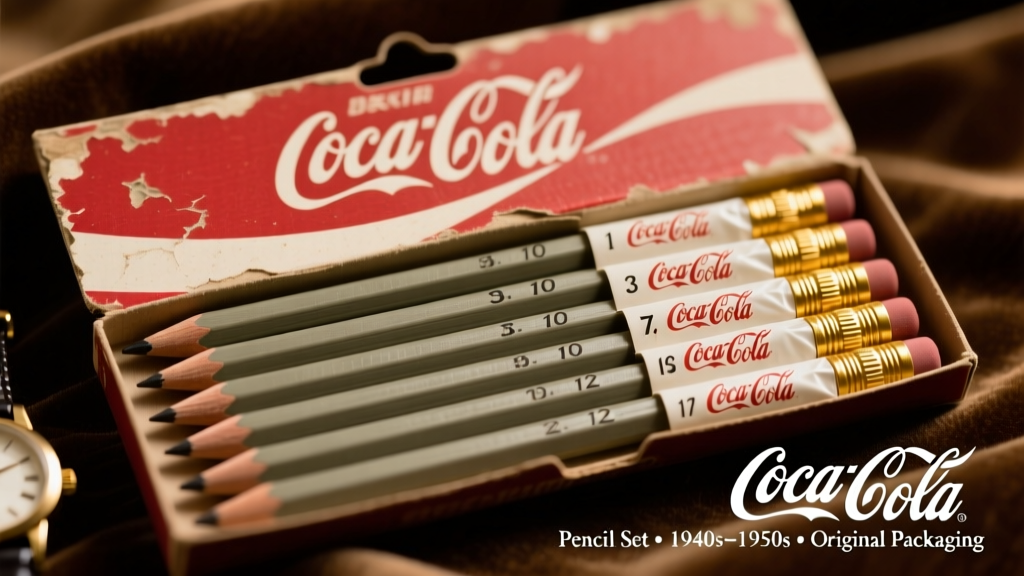
Coca-Cola Pencil Set, 1940s–1950s: A Rare Vintage Advertising Artifact in Original Sleeve
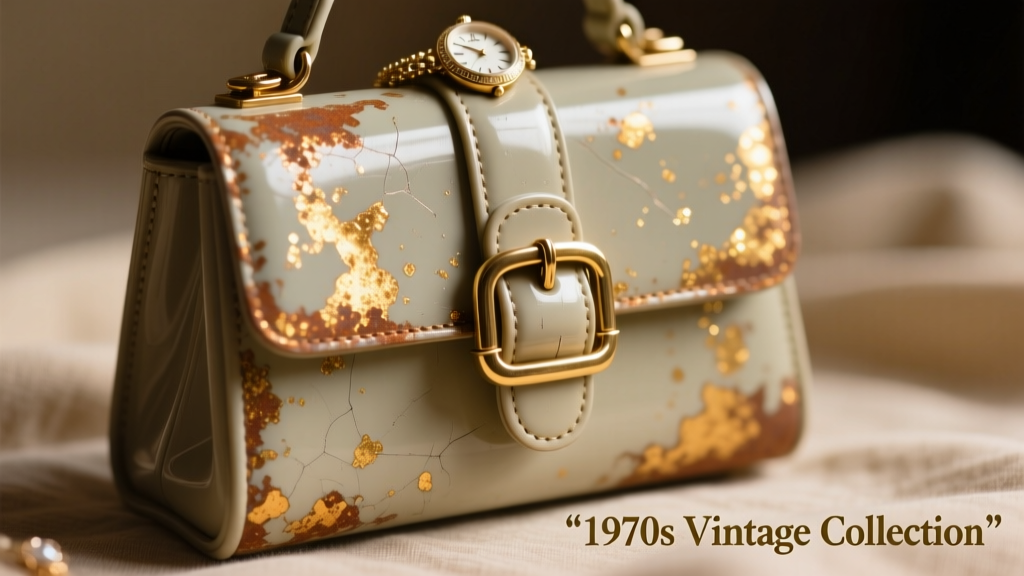
Purses Plastic Double Buckle Rust Gold Flecks: A Collector’s Guide to Mid-Century Synthetic Handbags
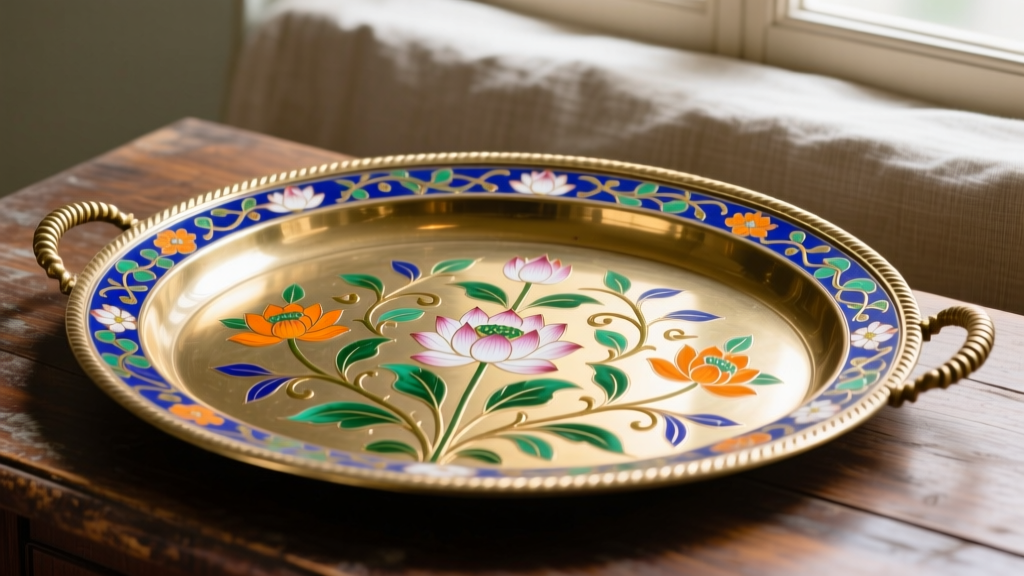
Brass Tray with Indian Enamel Flower Design and Turned-Up Rim: A 35-Inch Masterpiece of Colonial-Era Craftsmanship