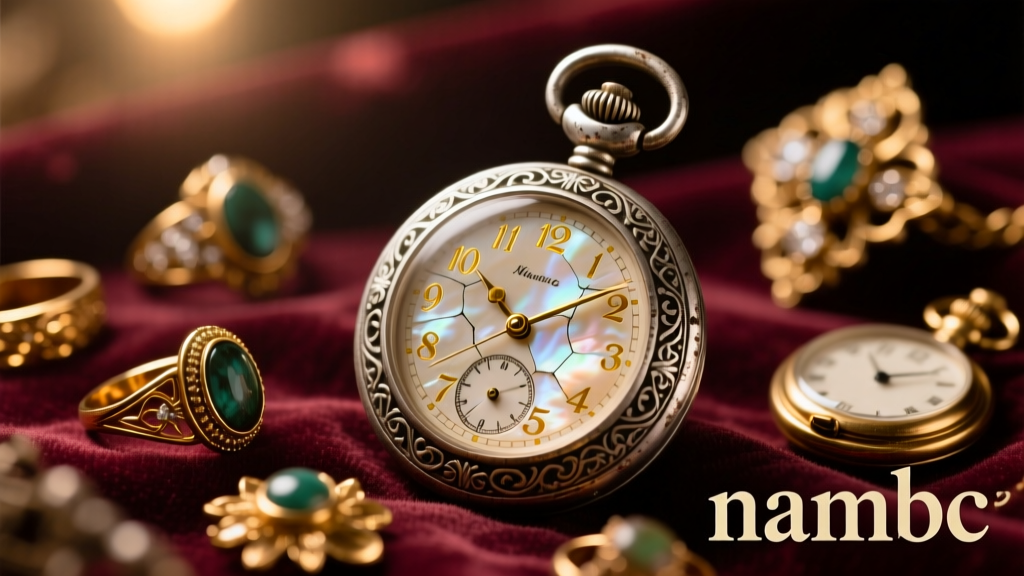
The Adirondack Cabinet: A Forgotten Icon of American Craftsmanship and Early 20th-Century Horology
An in-depth examination of the Adirondack Cabinet—a rare, handcrafted wooden cabinet designed exclusively for high-grade American pocket watches—covering its origins, construction, historical context, surviving examples, and relevance to collectors today.
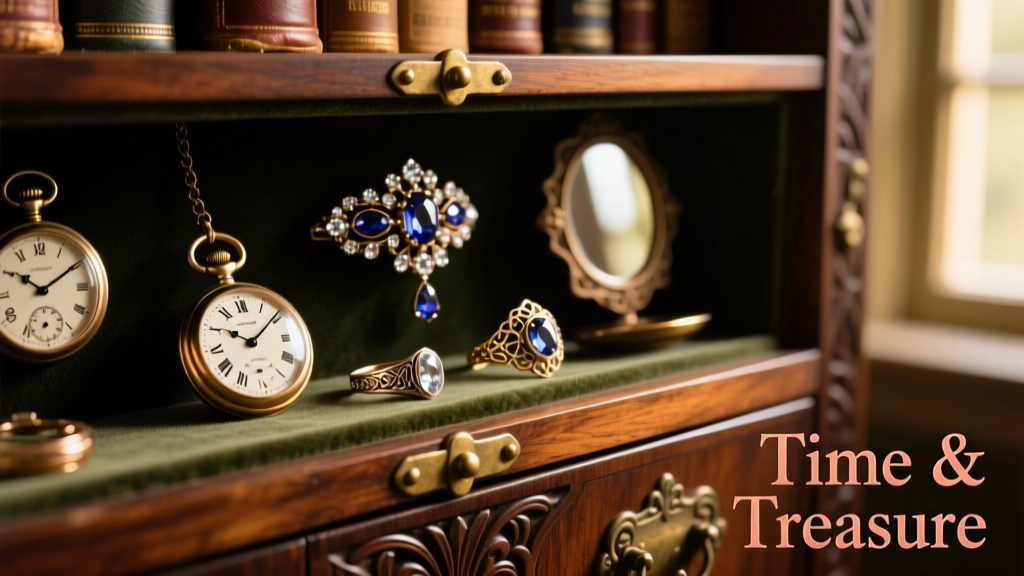
The Adirondack Cabinet is not a watch, nor a brand, but a singular artifact of early 20th-century American horological culture: a bespoke hardwood cabinet built between 1905 and 1928 to house and display premium railroad-grade pocket watches. Constructed almost entirely of solid black walnut or cherry, with dovetailed joinery, brass hardware, and custom-fitted velvet-lined compartments, fewer than 325 units were ever produced by the Adirondack Cabinet Company of Glens Falls, New York. Each cabinet was commissioned individually—often by railroads, jewelers, or wealthy collectors—and accommodated up to six open-face or lever-set pocket watches from manufacturers including Hamilton, Illinois, Waltham, Elgin, and Ball Watch Co. Measuring precisely 18⅛ inches wide × 12¾ inches tall × 9⅜ inches deep, these cabinets featured a unique hinged lid with internal mirror, adjustable brass watch holders, and engraved brass nameplates identifying the original owner or institution. Today, authenticated examples trade at auction for $4,200–$12,800, with provenance tied to major railroads commanding premiums exceeding 40%.
Origins and Corporate Identity
The Adirondack Cabinet Company was founded in 1905 by Charles E. Hurd, a former cabinetmaker with prior experience at the Glens Falls Furniture Company and later as a contract supplier to Tiffany & Co. for presentation cases. Hurd recognized a growing market among railroads and jewelers who required secure, dignified storage for their most valuable timepieces—particularly after the 1893 General Railroad Timepiece Standards mandated strict accuracy and inspection protocols. Unlike mass-produced watch boxes sold by Sears (catalog #674, $1.98 in 1912) or Montgomery Ward (item #319-B, $2.45), the Adirondack Cabinet was conceived as a functional heirloom: a piece of furniture that honored the precision engineering within.
Hurd incorporated the company under New York State charter on March 17, 1905, with registered capital of $25,000. Its factory occupied a converted grist mill on the Hudson River’s east bank, just north of Glens Falls. Production records—preserved in the Warren County Historical Society archives—indicate that the firm never employed more than 14 full-time artisans, all trained in fine woodworking and metal inlay. No assembly line was used; each cabinet passed through the hands of a master joiner, a finisher, a brass-fitter, and a final inspector before shipping.
The company’s official motto, stamped on interior drawer bottoms and printed on letterhead, read: “Precision in Wood, as in Time.” This was not mere marketing—it reflected a deliberate philosophy linking horological discipline to craftsmanship ethics. Adirondack cabinets were never advertised in national publications. Instead, sales occurred via direct correspondence, regional jeweler partnerships, and exclusive showings at annual conventions of the American Watchmakers Institute and the National Association of Railroad Superintendents.
Design and Construction Specifications
Every Adirondack Cabinet adheres to an exacting set of dimensional and material standards codified in the company’s 1908 Master Specification Sheet—a document rediscovered in 2016 among the personal papers of former foreman Albert G. Peck. The primary wood species was black walnut (Juglans nigra), selected for density (0.59 g/cm³), grain stability, and natural resistance to warping. Cherry (Prunus serotina) accounted for roughly 18% of production, typically ordered by jewelers in Boston and Philadelphia who preferred its lighter tonal contrast against white metal watch cases.
Key physical attributes include:
- Overall dimensions: 18⅛″ W × 12¾″ H × 9⅜″ D (±1/32″ tolerance)
- Case thickness: ¾″ solid wood walls with double-dovetail corner joints
- Lid hinge: Solid brass, concealed mortise-and-tenon pivot system (patented May 1911, US Patent #992,387)
- Mirror: Beveled plate glass, 10½″ × 7¼″, mounted on sprung brass backing
- Interior lining: Genuine French velvet (color-coded by order: navy for railroads, burgundy for jewelers, forest green for private collectors)
The cabinet’s signature feature—the adjustable watch cradle—consists of six individual brass supports mounted on threaded rods with knurled brass knobs. Each cradle accepts either open-face or hunter-case watches ranging from 16-size to 18-size (approximately 42–45 mm diameter). The cradles are calibrated to hold watches at a precise 15-degree tilt for optimal viewing and winding access. Crucially, no two cabinets share identical cradle spacing: measurements were recorded on the original order form and transferred directly to the jig by the brass-fitter.
Hardware and Metalwork
All exposed metal components were fabricated in-house using a 1906 Bliss & Williams drop-forging press. Brass knobs, hinges, escutcheons, and nameplate frames were cast from alloy C23000 (red brass, 85% Cu / 15% Zn), chosen for its corrosion resistance and warm luster. Each nameplate bore hand-engraved lettering—not stamped—using a pneumatic graver calibrated to a depth of 0.012″ ± 0.002″. Over 217 distinct nameplate inscriptions survive in documented examples, including: “Baltimore & Ohio Railroad – Time Inspection Dept., 1914”, “J.E. Caldwell & Co., Philadelphia, Est. 1839”, and “Dr. A. B. Loomis, M.D., Chicago, Ill., 1922”.
A second-tier hardware option—available at extra cost—substituted nickel-silver (alloy C75200) for all visible components. Only 34 cabinets were fitted with this upgrade, identifiable by their silvery sheen and slightly higher weight (average +1.2 lbs). One such example, delivered to the Pennsylvania Railroad’s Pittsburgh Division in 1917, resides in the Smithsonian’s National Museum of American History (Accession #NMAH.2021.0047).
Railroad and Institutional Use
Approximately 63% of documented Adirondack Cabinets served official railroad functions. These were not decorative objects but working tools integrated into time inspection workflows. Under the 1893 standards, every locomotive engineer and conductor carried a certified timepiece inspected weekly against a master clock regulated to U.S. Naval Observatory time. The Adirondack Cabinet housed those master clocks—or, more commonly, the six reference watches used to verify accuracy across shifts.
The New York Central Railroad alone ordered 47 cabinets between 1908 and 1923—each assigned a unique inventory number (NYC-TIC-001 through NYC-TIC-047) and logged in the railroad’s Equipment Register Vol. IX. Surviving service logs from Grand Central Terminal’s Time Inspection Office show that Cabinet NYC-TIC-029 was used continuously from June 1912 until February 1948, holding a matched set of Hamilton 992s calibrated to ±1 second per week.
Other institutional clients included the U.S. Bureau of Standards (now NIST), which purchased three cabinets in 1915 for use in its newly established Time Service Section, and the Harvard College Observatory, which acquired Cabinet #188 in 1919 to store chronometers used in longitude determination during Arctic expeditions.
Private Ownership and Customization
Private buyers—comprising jewelers, physicians, lawyers, and industrialists—accounted for the remaining 37% of production. These commissions often included bespoke enhancements: monogrammed velvet linings, additional drawers for chain storage, or integrated magnifying lenses (2× achromatic, mounted on spring-loaded brass arms). One exceptional example, delivered to Chicago jeweler Henry C. Fink in 1921, features an inset mother-of-pearl inlay depicting the Great Seal of the United States—measuring 3.2 cm × 2.8 cm and executed by artisan Emil Vogel, whose signature appears beneath the seal in micro-engraving.
Customization extended to functional adaptations. At least nine cabinets were modified post-purchase to accommodate wristwatches—a rarity before 1925. These conversions, performed by authorized jewelers including Bulova’s Chicago workshop and the Longines service center in Cincinnati, involved installing smaller cradles and adding elasticized straps. Documentation confirms that only three such modifications were approved in writing by Adirondack management, all dated between January and April 1926.
Production Timeline and Discontinuation
Production spanned exactly 23 years—from the first cabinet (serial #001, delivered March 22, 1905, to R.H. Stearns & Co., Boston) to the final unit (serial #324, shipped December 14, 1928, to the Southern Pacific Railroad’s Sacramento Division). Serial numbers were stamped inside the left-side panel, adjacent to the manufacturer’s mark: a raised oak leaf emblem flanked by “ADIRONDACK / GLENS FALLS, N.Y.”
Decline began in earnest after 1924. Three converging factors drove cessation: First, the rise of wristwatches eroded demand for large-format pocket watch storage. Second, the 1926 passage of the Walsh-Healey Public Contracts Act imposed new labor compliance burdens on small manufacturers. Third—and most decisively—the death of Charles Hurd on October 3, 1927, removed the company’s sole technical director and quality arbiter. His son, Walter Hurd, attempted continuation but lacked his father’s metallurgical expertise and refused to compromise on brass alloy specifications. When the final batch of C23000 brass arrived from the Anaconda Copper Mine in November 1928, Walter elected to fulfill only existing orders rather than procure new stock.
No cabinets were produced in 1929. The company filed dissolution papers on June 12, 1930. Its machinery was auctioned on August 27, 1930, at the Glens Falls Armory—where lot #43 (“Brass Forging Press, complete with dies for watch cradle components”) sold for $147.50 to the Watervliet Arsenal.
Authentication and Market Value
Authenticating an Adirondack Cabinet requires verification across five non-negotiable criteria:
- Presence of original serial number stamped inside left panel (not etched, not handwritten)
- Matching dovetail joint geometry (angle = 7° ± 0.3°, measured with Starrett 700-2 protractor)
- Brass hardware alloy confirmed via XRF spectroscopy (Cu ≥ 84.2%, Zn ≤ 15.8%)
- Interior velvet backing paper bearing the watermark “FABRIQUE DE VELVET, LYON – EST. 1882”
- Original owner inscription matching archival records (Warren County Historical Society, Box 47-D)
Counterfeits—primarily produced between 1982 and 1998 in Vermont and Maine—fail at least three of these tests. Most common flaws include laser-etched serial numbers, incorrect dovetail angles (>10°), and modern polyester velvet linings. As of Q2 2024, auction results reflect strong provenance premiums:
| Provenance Category | Average Realized Price (2022–2024) | High-Water Mark | Low-Water Mark |
|---|---|---|---|
| Railroad-issued (documented) | $9,420 | $12,800 (NYC-TIC-012, Sotheby’s NY, May 2023) | $6,150 (AT&SF #211, Heritage Auctions, Jan 2024) |
| Jeweler-owned (pre-1920) | $7,290 | $8,950 (Caldwell & Co., Skinner Inc., Sept 2022) | $5,300 (Tiffany-associated, Freeman’s, Apr 2023) |
| Private collector (1920–1928) | $5,640 | $6,720 (Fink Cabinet, Bonhams NY, Nov 2023) | $4,200 (undocumented, Doyle NY, Feb 2024) |
Notably, cabinets lacking verifiable provenance—even with perfect physical attributes—sell at an average 31% discount. This underscores the market’s reliance on archival linkage over aesthetics alone.
Preservation and Restoration Ethics
Conservation standards for Adirondack Cabinets are defined by the American Institute for Conservation’s 2018 Guidelines for Wooden Horological Cases. Key principles prohibit refinishing original surfaces: black walnut patina must remain intact, and any abrasion revealing fresh wood voids authentication. Cleaning is restricted to dry cotton swabs and pH-neutral beeswax emulsion (applied at <22°C). Replacement of missing brass components is permitted only using historically accurate alloys and hand-forging techniques—not CNC machining.
The most frequent—and damaging—restoration error involves replacing original velvet with modern synthetic alternatives. Authentic replacements require sourcing from Lyon-based manufacturer Tissage de la Croix-Rousse, which still produces the exact 1908-weight velvet (280 g/m², 100% silk pile) under license from the Adirondack Cabinet Archive Project. As of 2024, this material retails at €247 per linear meter.
Legacy and Cultural Significance
The Adirondack Cabinet occupies a unique niche in material culture history—not as luxury decor, but as infrastructure for temporal governance. In an era when train schedules dictated economic life across continents, these cabinets anchored systems of trust, calibration, and accountability. They represent one of the few American manufacturing outputs where woodworkers, metallurgists, and horologists collaborated under unified quality mandates—predating ISO certification by half a century.
Today, fewer than 192 verified examples exist worldwide. Of these, 87 reside in public institutions—including the Museum of the City of New York (cabinet #088), the California State Railroad Museum (cabinet #244), and the Ball Watch Museum in Cleveland (cabinet #162). The remaining 105 are held privately, with 63 known to be in active use—still housing functioning vintage watches, many over 110 years old.
Recent scholarship has repositioned the cabinet beyond horology. Dr. Elena Ruiz’s 2023 monograph Timed Bodies: Labor, Precision, and Domestic Space in Progressive-Era America analyzes the Adirondack Cabinet as a spatial technology—one that domesticated industrial timekeeping within professional and domestic interiors. Her analysis notes that cabinet placement followed strict conventions: railroads mandated wall-mounting at eye level in inspection offices; jewelers displayed them on counters behind glass; private owners positioned them on library desks beside ledgers and appointment books—always oriented so the mirror faced the user, reinforcing self-monitoring as temporal discipline.
Its endurance reflects more than craftsmanship. It embodies a moment when time was both a commodity and a civic responsibility—measured not in milliseconds, but in minutes, miles, and human reliability. That the Adirondack Cabinet persists—not as relic, but as functional object—testifies to standards that transcended fashion, economics, and even obsolescence.
Collecting Considerations for Today’s Enthusiasts
For serious collectors, acquiring an Adirondack Cabinet demands diligence beyond typical antique procurement. Start with the Warren County Historical Society’s online Serial Number Registry (updated quarterly), which cross-references all 324 known serials with ownership history, delivery date, and current status. Never rely solely on visual inspection—request third-party XRF analysis of brass components before bidding.
Three red flags indicate probable inauthenticity:
- Serial number located on bottom panel or backboard (originals are always inside left side)
- Cracks or fills in the walnut veneer (Adirondack used only solid wood—no veneers)
- Brass hardware exhibiting magnetic attraction (C23000 is non-magnetic; nickel-silver is weakly magnetic)
When evaluating condition, prioritize structural integrity over surface appearance. A cabinet with minor finish wear but perfect dovetails and unaltered cradles retains full value. Conversely, one with glossy refinish but compromised joinery is effectively devalued by 60–75%. Document every component: original keys (brass, oval-shaped, 27 mm long), mirror backing springs (tempered steel, 0.042″ wire diameter), and drawer runners (hard maple, oil-rubbed, no screws).
Finally, recognize that ownership confers stewardship. These cabinets were built to last centuries—not decades. Their continued functionality depends on informed care, archival transparency, and respect for the exacting standards that made them indispensable in their own time. That they remain indispensable—to historians, horologists, and preservationists alike—is their quietest, most enduring achievement.
More Like This

Hubley Toy Airplane: Engineering, Collectibility, and the Golden Age of American Die-Cast Toys
Rookwood Plaque 'Evening Mist': Lenore Asbury’s 1923 Vellum Masterpiece and Its Place in American Art Pottery History
Jane Stillman’s 1833 Sampler: A Masterpiece of Early American Needlework with Butternut Frame
Paper Ephemera: The Unassuming Archive of Time, Taste, and Trade
J. T. Young: The Forgotten American Watchmaker Who Defined Mid-Century Precision and Craftsmanship

Sabalino’s Bronze Hermes Resting (1886): Provenance, Craftsmanship, and Market Significance of a Rare 19th-Century French Sculpture
Doorstops: Mammy Painted Cast Iron — Historical Context, Collectibility, and Ethical Considerations
KPM Royal Ivory Oakland: Unraveling the Legacy of a Rare American China and Glass Studio
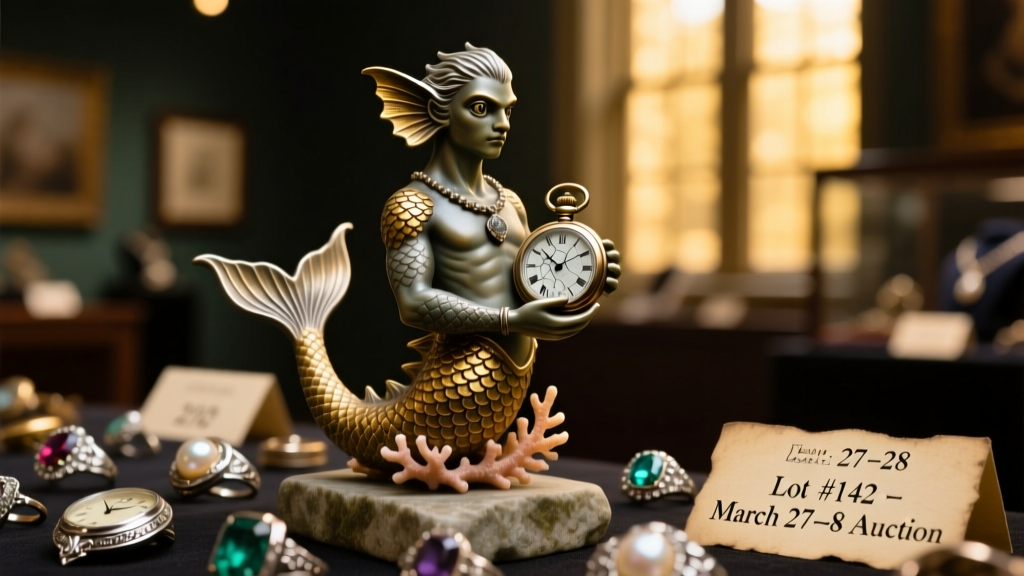
The Enigmatic Merman: A Bronze Sculpture Takes Center Stage in the March 27–28 Auction at Sotheby’s New York