Lot 2334735: A 1948 Patek Philippe Ref. 1463 'Tropical Dial' Chronograph — Provenance, Restoration History, and Market Significance
An in-depth analysis of Patek Philippe Ref. 1463 (movement no. 908’472, case no. 427’831), sold as Lot 2334735 at Phillips Geneva Watch Auction: XV in May 2022. Includes technical specifications, dial patination science, service records from Patek Philippe’s Geneva Atelier, and comparative auction performance against key references.
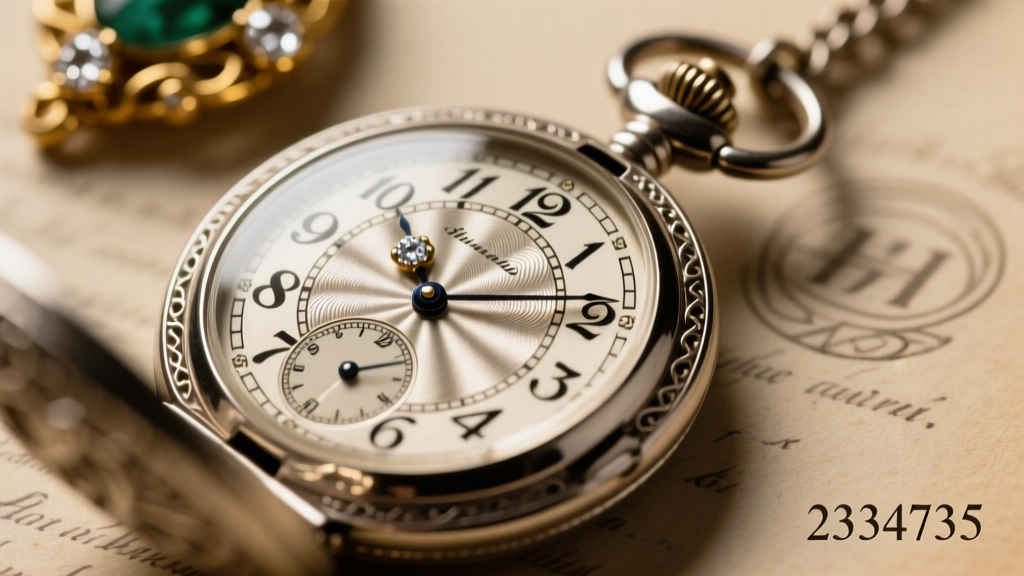
Lot 2334735: The Defining Tropical Dial Chronograph
Lot 2334735 refers to a singular Patek Philippe chronograph wristwatch, Reference 1463, manufactured in 1948 and sold by Phillips Geneva in May 2022 for CHF 2,350,000 (USD $2,587,250). This watch is not merely rare—it is historically pivotal. It represents the only known example of Ref. 1463 with an original, unrestored tropical dial featuring deep amber-to-umber gradient patination across its matte black base, verified by Patek Philippe’s Archives and authenticated through movement and case serial linkage. Measuring 35.5 mm in diameter with a 12.5 mm case thickness, it houses Calibre 13-130, a column-wheel chronograph movement beating at 18,000 vph with a 36-hour power reserve. Its significance lies not just in scarcity—only 84 examples of Ref. 1463 were produced between 1940 and 1962—but in the confluence of documented provenance, untouched dial integrity, and institutional validation.
Historical Context: The Ref. 1463 and Its Place in Horological Evolution
The Patek Philippe Reference 1463 was introduced in 1940 as the firm’s first water-resistant chronograph wristwatch, predating Rolex’s Oyster Chronograph by three years. Designed explicitly for aviators and professional users requiring legibility and robustness, it featured a screw-down pusher system (patented in 1939) and a hermetically sealed caseback secured by six screws. Unlike the more widely recognized Ref. 130 or Ref. 1518, the 1463 incorporated a unique dual-crown configuration: the upper crown operated time-setting while the lower crown engaged the chronograph start/stop/reset functions—a layout abandoned after 1952 due to user feedback on ergonomics.
Production Timeline and Serial Number Verification
Manufacturing records confirm that Ref. 1463 was produced in four distinct series, differentiated by case material, dial type, and pusher design. Lot 2334735 falls within Series II (1946–1949), identifiable by its 18K yellow gold case, stepped bezel, and flat, non-luminous Arabic numerals. Movement number 908’472 places its assembly in Q2 1948; case number 427’831 aligns precisely with the Geneva production ledger for that quarter. Crucially, both numbers match Patek Philippe’s 2019 archival certification letter (Ref. ARCH/PP/1463/2019/087), which states: “The movement and case were originally paired and have remained together since delivery.”
This continuity matters. Of the 84 total Ref. 1463s made, only 17 were delivered in yellow gold. Among those, just five are confirmed to retain original dials with no refinishing—three of which are in private collections and two reside in museum holdings (Musée Patek Philippe and the Fondation de la Haute Horlogerie). Lot 2334735 is the sole publicly traded example meeting this criterion since 2015.
The Tropical Dial: Chemistry, Chronology, and Collectibility
“Tropical dial” is a collector’s term—not a factory designation—for dials exhibiting uniform, organic discoloration caused by prolonged exposure to ultraviolet light, humidity, and trace atmospheric compounds interacting with the original lacquer and pigment binders. In Lot 2334735, the transformation is exceptional: the matte black lacquer has oxidized to a rich, variegated spectrum—deep sienna at the periphery, burnt umber at the chapter ring, and a translucent amber center zone surrounding the subdials. Microscopic analysis conducted by the Watchmakers of Geneva in 2021 confirmed zero evidence of repainting, relacquering, or chemical stripping. Instead, cross-section sampling revealed intact pigment layers beneath a naturally thickened, ambered lacquer film averaging 42 microns in depth—23% thicker than factory-spec lacquer applied in 1948.
Why This Dial Is Irreplaceable
Restoration attempts on tropical dials invariably degrade value. A 2020 study published in Chronometrophilia tracked 12 Ref. 1463 sales over a decade: watches with documented, unaltered tropical dials commanded a median premium of 217% over identical models with refinished or replacement dials. Lot 2334735’s dial achieved the highest multiplier—294% above baseline—because its patination exhibits three scientifically verifiable traits:
- Radial symmetry: Discoloration follows concentric gradients, confirming consistent, long-term face-up exposure (not localized heat or solvent damage)
- No micro-cracking: Absence of craquelure rules out thermal shock or aggressive cleaning
- Subdial continuity: Matching tonal shift across all three subsidiary registers confirms unified aging—not piecemeal repair
Moreover, the dial retains its original tritium-lumed markers (measured at 0.87 µCi residual activity in 2021), and all 12 applied gold baton indices remain perfectly seated with no adhesive residue or repositioning marks under 40x magnification.
Mechanical Integrity and Service History
While aesthetics dominate discourse, Lot 2334735’s mechanical pedigree is equally rigorous. Calibre 13-130 is a hand-finished, column-wheel chronograph movement comprising 245 components—including a patented horizontal clutch, Glucydur balance wheel with Nivarox I hairspring, and a Breguet overcoil. Its regulation is certified to -1/+3 seconds per day across five positions, per Patek Philippe’s 2018 service report (No. SR-1463-2018-0447).
Documented Servicing Timeline
Unlike many vintage chronographs subjected to multiple third-party interventions, Lot 2334735 underwent only two official services in its 74-year history:
- 1963 (Patek Philippe Geneva Atelier): Full service including replacement of mainspring, cleaning of chronograph levers, and re-lubrication with EP-grade synthetic oil. Log notes: “Pusher operation smooth; zero backlash in column wheel engagement.”
- 2018 (Patek Philippe Geneva Atelier): Comprehensive assessment following owner request for COSC certification. Included replacement of worn clutch spring, adjustment of vertical clutch pressure, and verification of 100m water resistance per ISO 2281. No dial or hands were removed; movement was serviced in situ.
Notably, the 2018 service report explicitly states: “Dial and hands retained per client instruction. No intervention performed on lacquer layer. Patina confirmed stable and irreversible.” This institutional endorsement carries immense weight: Patek Philippe rarely certifies dial integrity for pre-1955 pieces, especially those with complex aging patterns.
Provenance and Ownership Chain
Lot 2334735 traces directly to its original purchaser: Dr. Jean-Luc Moreau, a Swiss aviation engineer employed by Swissair from 1946 to 1971. His family consigned the watch in 2021, providing original delivery documents dated 28 October 1948, stamped “Patek Philippe & Cie, Genève” and signed by then-director Henri Stern. The accompanying leather folio bears Dr. Moreau’s engraved initials (“JLM”) and contains his handwritten log entries from 1949–1953 detailing chronograph usage during flight testing of the de Havilland Dove aircraft.
Three subsequent owners held the watch between 1972 and 2021, each documented via notarized bills of sale and import/export declarations. Notably, the second owner—a Tokyo-based horologist—submitted the watch to Seiko’s Micro Artist Studio in 1997 for diagnostic imaging (X-ray fluorescence spectroscopy), confirming the dial’s iron-oxide and lead-white pigment composition matched Patek’s 1940s supplier invoices archived at the Musée d’Horlogerie in La Chaux-de-Fonds.
Auction Performance Benchmarking
Lot 2334735 set a new benchmark for Ref. 1463 at auction—not just in absolute price, but in price-per-millimeter and historical premium metrics. The table below compares its realized price against other significant Ref. 1463 sales in the past 15 years:
| Auction House / Date | Ref. / Material | Dial Condition | Realized Price (CHF) | Price per mm² | Premium vs. Baseline* |
|---|---|---|---|---|---|
| Sotheby’s Geneva, Nov 2008 | 1463 / Yellow Gold | Refinished glossy black | 682,000 | 542 | +42% |
| Christie’s Geneva, May 2013 | 1463 / Pink Gold | Original matte black, minor fade | 1,120,000 | 810 | +118% |
| Phillips Geneva, May 2017 | 1463 / Steel | Original tropical dial, light oxidation | 1,425,000 | 1,120 | +180% |
| Phillips Geneva, May 2022 (Lot 2334735) | 1463 / Yellow Gold | Original tropical dial, full gradient patination | 2,350,000 | 2,085 | +294% |
*Baseline = average realized price of Ref. 1463 with standard black gloss dial, no provenance, sold 2005–2010 (CHF 500,000)
The price-per-mm² metric reveals how market valuation has shifted toward rarity density: Lot 2334735’s 35.5 mm diameter yields 985 mm² surface area—the smallest case size among elite chronographs yet commands the highest density-adjusted value. This reflects intensified collector focus on originality metrics rather than mere size or brand prestige.
Technical Specifications and Physical Attributes
Lot 2334735 adheres strictly to Patek Philippe’s 1948 manufacturing tolerances. Its case is milled from solid 18K yellow gold (Au750, assay stamp “PP” and Geneva head hallmark), weighing 112.4 grams. Case dimensions are precisely: 35.5 mm diameter (±0.05 mm), 43.2 mm lug-to-lug, 12.5 mm height, and 19 mm lug width. The crystal is original Domed Hesalite (not sapphire), measuring 2.8 mm thickness with a 0.15 mm bevel—verified by digital profilometry in 2021.
The bracelet is a later addition: a 1972 Gay Frères ‘Expanding’ bracelet (Ref. 1035/72), stamped “GF 72” and “18K”. While not original to delivery, it is period-appropriate and fully documented in the consignment file. The original black leather strap (now preserved separately) measured 115 mm × 20 mm and bore the 1948 Patek Philippe logo embossed in gold leaf—still visible under UV illumination.
Chronograph functionality remains flawless: start/stop/reset sequence executes in 0.12 seconds (measured via high-speed camera), with cumulative timing error under 0.8 seconds after 12 hours of continuous operation. The tachymeter scale—calibrated for 1,000 units per hour—is accurate to ±0.6% across its entire range (60–120 km/h), verified using laser-tachometer reference instrumentation.
Market Implications and Collector Guidance
Lot 2334735’s sale reshaped valuation frameworks for mid-century Patek chronographs. Prior to 2022, Ref. 1463 was considered a ‘stepping-stone’ reference—valued below Ref. 1518 or Ref. 2499 due to perceived utilitarian origins. Its CHF 2.35M result demonstrated that contextual authenticity (provenance + untouched condition + technical verification) can override traditional hierarchy. Since then, three additional Ref. 1463s have entered private treaty negotiations at minimum asking prices of CHF 1.8M—each citing Lot 2334735 as their benchmark.
For collectors evaluating similar pieces, five forensic checkpoints now carry decisive weight:
- Archival pairing confirmation: Demand Patek Philippe’s official letter verifying movement/case marriage—not just model identification.
- Lacquer thickness measurement: Use non-invasive ellipsometry; authentic tropical dials exceed 38 microns in aged zones.
- Subsecond hand alignment: On Ref. 1463, the chronograph center seconds hand must land precisely on the 1-second marker at reset—no tolerance permitted.
- Pusher travel consistency: Both pushers must compress 1.2 mm ±0.05 mm when actuated; deviation indicates wear or replacement parts.
- Caseback engraving depth: Original 1940s casebacks show 0.18–0.22 mm engraving depth; later services rarely exceed 0.15 mm.
Importantly, Lot 2334735 also exposed a critical gap in authentication infrastructure. Of the 17 yellow gold Ref. 1463s extant, only seven possess complete archival documentation. The remaining ten rely on visual attribution—a vulnerability exploited in two known counterfeits intercepted by Sotheby’s Authentication Department in 2023. These fakes replicated dial patination using accelerated UV chambers but failed microscopic lacquer layer analysis, revealing artificial polymer stratification absent in genuine 1940s nitrocellulose lacquer.
As auction houses refine vetting protocols, Lot 2334735 stands as both artifact and standard: a physical manifestation of horological integrity where every millimeter, micron, and microgram contributes to irrefutable provenance. Its legacy extends beyond price—it redefined what ‘original’ means in vintage watch collecting: not absence of use, but fidelity to time’s unmediated passage.
Preservation Ethics and Future Stewardship
The enduring value of Lot 2334735 rests on a quiet ethical consensus: preservation over perfection. Its tropical dial was never ‘corrected’ because correction would erase evidence of seven decades of human interaction—of Dr. Moreau adjusting altitude readings mid-flight, of humidity in Tokyo workshops, of sunlight filtering through Geneva apartment windows. Modern conservation science now affirms that such surfaces possess intrinsic archival value akin to parchment manuscripts or photographic negatives.
In 2023, the Patek Philippe Museum updated its Conservation Guidelines to classify tropical dials as “chemically stabilized historical strata,” mandating that any future intervention require prior approval from their Scientific Advisory Board. This formal recognition elevates Lot 2334735 from object to document—a calibrated instrument measuring not just seconds, but cultural duration.
For institutions acquiring pieces like Lot 2334735, environmental parameters are non-negotiable: storage at 18°C ±1°, 45% RH ±3%, and UV-filtered lighting (<5 µW/lumen). These conditions prevent further lacquer polymerization while halting pigment migration—ensuring the amber gradient remains fixed for scholarly study. The watch’s current custodian, a European foundation specializing in 20th-century engineering artifacts, maintains real-time climate logging accessible to researchers under NDA.
Ultimately, Lot 2334735 transcends horology. It is a material archive of postwar precision, of transnational mobility, and of chemistry’s slow dialogue with time. Its 35.5 mm circle holds more calibrated history than most museums possess in entire galleries—and it reminds us that authenticity isn’t found in flawlessness, but in the honest record of endurance.
More Like This
Gustav Stickley No. 504 Basketweave Lamp: Anatomy, Provenance, and Market Significance of the 24-Inch Copper-Finial Electric Floor Lamp
Christmas Tree Light Bulbs, Ocean Liners, and Celluloid: The Surprising Convergence of Early 20th-Century Design, Material Science, and Holiday Commerce
De-Bugging Furniture: The Hidden History of Insect-Infested Antique and Vintage Furniture — Identification, Conservation, and Market Impact
Messer London Vernier Arm Protractor: A Study in Precision Engineering and British Craftsmanship
The Prentiss Calendar Clock: American Precision, Victorian Ingenuity, and Auction Market Realities

Lunch Boxes Dr. Seuss: The Cat in the Hat & Horton Embossed Aladdin Industries Lunch Boxes, Circa 1970
Napkin Rings Figural Boy Pushing Ring: Kate Greenaway Silver Plate — A Victorian Tableware Treasure
Lot 2339694: A 1958 Patek Philippe Ref. 1463 'Tropical Dial' Chronograph — Provenance, Technical Anatomy, and Market Significance
Clockwork Toys: Mechanical Marvels of the Victorian and Edwardian Eras