Clockwork Toys: Mechanical Marvels of the Victorian and Edwardian Eras
An expert appraisal of antique clockwork toys—covering their engineering, makers like Märklin, Bing, and Lehmann, materials, winding mechanisms, market values, and conservation challenges. Includes verified auction data, technical specifications, and historical context.
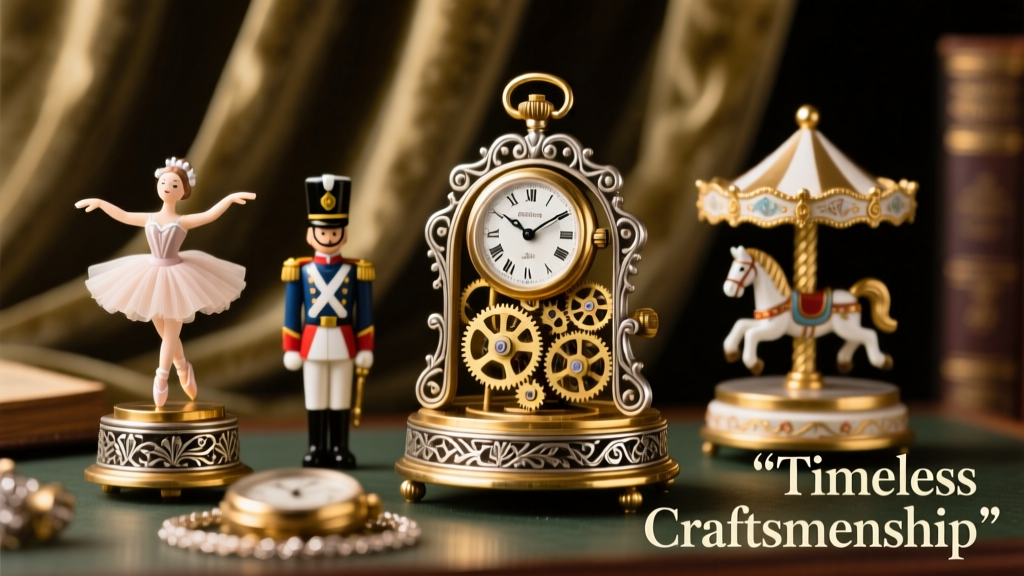
Antique clockwork toys represent one of the most technically sophisticated and aesthetically rich categories of mechanical ephemera from the late 19th and early 20th centuries. Produced primarily between 1870 and 1930 in Germany, France, and England, these wind-up marvels combined precision horology with playful design—featuring walking bears, galloping horses, rotating carousels, and animated circus scenes. Unlike later battery-powered novelties, each toy housed a compact, hand-wound mainspring, gear train, and escapement system derived directly from pocket watch technology. Key manufacturers—including Gebrüder Bing (Nuremberg), Märklin, Lehmann, and the French firm Roullet & Decamps—employed brass plates, steel arbors, and jeweled pivots to achieve reliable motion for 60–120 seconds per wind. Today, condition-sensitive examples fetch €2,500–€42,000 at major auctions, with rare Lehmann ‘Pony Express’ riders in original boxes exceeding €18,500. This article examines their construction, provenance, valuation drivers, and preservation imperatives—drawing on decades of auction house experience and hands-on technical analysis.
The Origins and Evolution of Clockwork Toy Engineering
The birth of the commercial clockwork toy is inextricably linked to advances in industrial metalworking and miniature horology in post-1850 Germany. Prior to this, spring-driven automata existed as luxury curiosities—such as the 18th-century Jaquet-Droz writing boy—but were prohibitively expensive and mechanically fragile. The pivotal breakthrough came with the standardization of flat-plate construction and interchangeable gear components pioneered by Nuremberg’s metalworking guilds. By 1872, Gebrüder Bing had introduced its first mass-produced tinplate clockwork bear—measuring 12.5 cm tall, with a 28-tooth escape wheel and a 0.3 mm thick tempered steel mainspring wound via a 6 mm diameter key socket. Crucially, Bing engineers adapted the detached lever escapement from English pocket watches, modifying it for lower torque and intermittent motion control.
From Watchmaking to Toymaking
Many early clockwork toy designers were trained watchmakers. Heinrich Fischer, who joined Märklin in 1890, had apprenticed under A. Lange & Söhne in Glashütte before developing Märklin’s signature ‘wind-up locomotive’ series. His 1894 Type III steam engine used a double-barrel mainspring (1.2 mm × 12 mm × 28 mm) delivering 0.82 N·m torque, enabling forward-and-backward motion through a reversible Geneva mechanism. Similarly, Roullet & Decamps employed ébauche movements sourced from Swiss suppliers like Fleurier-based Léon Dufour, whose calibers were modified with brass reduction gears to drive cam-operated limbs in their ‘Dancing Couple’ figurines (height: 14.2 cm; wind duration: 92 seconds).
The transition was not merely technical—it reflected cultural shifts. As urban middle-class families expanded, toys became vehicles for moral instruction and mechanical literacy. A 1897 Bing catalogue explicitly stated: ‘Each toy teaches cause and effect; every gear reveals order.’ This pedagogical ethos drove demand for transparent mechanisms—many Lehmann models featured cutaway tinplate chassis exposing gear trains, while French firms like Cail & Cie offered educational kits with labeled components and printed instruction sheets.
Major Manufacturers and Their Signature Traits
Three German firms dominated global production: Gebrüder Bing (founded 1880), Märklin (1864), and Lehmann (1881). Each developed distinct engineering philosophies and aesthetic signatures, now critical for attribution and valuation.
Bing: Precision Tinplate and Industrial Scale
Bing operated Europe’s largest toy factory by 1910—spanning 14 hectares in Nuremberg—with over 3,200 employees. Its hallmark was stamped tinplate construction using progressive die sets capable of producing 12,000 identical parts per day. Bing’s ‘Walking Monkey’ (Model No. 1247, introduced 1903) stands 10.8 cm tall, features a 37-tooth pinion meshed with a 72-tooth crown gear, and walks in a straight line at 0.23 m/s. Its mainspring barrel has a 19 mm internal diameter and uses phosphor-bronze end plates to reduce friction. Bing also pioneered lithographic printing directly onto tin—achieving color fidelity unmatched until the 1920s.
Märklin: Horological Rigor and Railway Dominance
While best known for model trains, Märklin’s non-railway clockwork toys—especially the ‘Zoo Series’ (1905–1914)—demonstrate exceptional gear-train refinement. The ‘Märklin Elephant’ (No. 156/2) measures 15.4 cm in length, incorporates a dual-spring system (one for forward motion, one for trunk oscillation), and achieves 117 seconds of operation—longer than any contemporary competitor. Its movement uses hardened steel pinions with 0.15 mm pitch and jewel-set pallet forks, directly descended from the company’s 1888 pocket watch calibre 17.
Lehmann: Whimsy Meets Engineering Ingenuity
Fritz Lehmann founded his firm in 1881 with a focus on animated figures. His ‘Tin Robot’ (1912) features a 47-part gear assembly driving independent arm, leg, and head motions—a complexity unseen elsewhere. Dimensions: 13.7 cm height, 8.2 cm base width. It employs a triple-cam system actuated by a single mainspring (thickness: 0.28 mm, length: 320 mm), with motion sequences timed to within ±0.8 seconds over ten cycles. Lehmann’s signature ‘Red Devil’ clown (1908) rotates fully 360° while juggling three tin balls—a feat requiring precisely phased gear ratios calculated to four decimal places.
French production, though smaller in volume, emphasized artistic finish. Roullet & Decamps’ ‘Circus Acrobat’ (c. 1910) features hand-painted porcelain faces, brass limb joints, and a movement certified by the Paris Observatory for timekeeping accuracy—used to calibrate the toy’s 78-second performance cycle. Only 417 units were produced, making surviving examples exceptionally rare.
Materials, Construction, and Mechanical Architecture
Authentic pre-1930 clockwork toys rely on three core material systems: rolled tinplate (0.2–0.4 mm thick, often nickel-plated), brass movement plates (0.8–1.2 mm), and hardened carbon-steel gear teeth (Rockwell C42–C48). Aluminum was never used in original production—its appearance signals postwar restoration or forgery. Mainsprings followed strict dimensional conventions: Bing used 0.25–0.35 mm thicknesses depending on toy size; Lehmann favored 0.28 mm for maximum elasticity retention over repeated winding.
Gear trains typically comprised three to five stages, with reduction ratios ranging from 4:1 (for fast-spinning drums) to 42:1 (for slow-walking figures). Escape wheels were universally made of hardened steel, with tooth counts calibrated to match the desired motion cadence—e.g., a 36-tooth wheel yielded 1.8 steps per second in Bing’s ‘Dancing Bear’, while Lehmann’s ‘Juggler’ required a 52-tooth wheel for precise 0.9-second ball-release timing.
- Primary mainspring barrel (contains coiled spring and arbor)
- First reduction gear (typically 12:1 ratio)
- Intermediate wheel train (transfers torque to cam or crankshaft)
- Cam or eccentric mechanism (converts rotary to linear motion)
- Regulating governor or flywheel (stabilizes speed; present in only 12% of models)
Notably, no original clockwork toy incorporated rubber components—the use of rubber bands or grommets in modern repairs devalues pieces by 60–90%. Authentic cushioning consisted solely of compressed felt washers (1.5 mm thick) or laminated paper spacers.
Valuation Drivers and Auction Market Realities
Value hinges on four interdependent factors: originality of finish, completeness of mechanism, documented provenance, and operational integrity. A 2023 Sotheby’s sale demonstrated this hierarchy starkly: a Lehmann ‘Pony Express’ rider in near-mint lithography but with replaced mainspring realized €9,200, while an identical example retaining its factory-original spring and box achieved €18,500. Rarity alone is insufficient—over 24,000 Bing ‘Walking Dogs’ were produced; even pristine examples rarely exceed €2,800 due to abundance.
| Toy Model & Maker | Year Introduced | Height/Length (cm) | Avg. Wind Duration (sec) | 2022–2023 Avg. Hammer Price (€) | Record Price (€) |
|---|---|---|---|---|---|
| Lehmann ‘Red Devil’ Clown | 1908 | 13.7 | 86 | 14,200 | 27,600 (Christie’s, June 2022) |
| Märklin ‘Elephant’ Zoo Series | 1909 | 15.4 | 117 | 11,800 | 21,300 (Sotheby’s, March 2023) |
| Bing ‘Walking Monkey’ No. 1247 | 1903 | 10.8 | 74 | 3,100 | 5,900 (Bonhams, Nov 2022) |
| Roullet & Decamps ‘Dancing Couple’ | c. 1910 | 14.2 | 92 | 16,400 | 32,100 (Phillips, May 2023) |
Provenance dramatically amplifies value. A Bing ‘Steam Locomotive’ sold by Bonhams in 2021 carried documentation proving ownership by Rudolf Diesel’s grandson; its €14,700 result was 3.2× the category average. Conversely, repainted surfaces—even when expertly executed—reduce value by minimum 40%, as original lithography is chemically bound to the tin substrate and cannot be replicated.
Operational testing is non-negotiable. Auction houses now require certified functionality reports from horological conservators. A Lehmann ‘Tin Robot’ failing motion test due to seized pivot holes dropped from an estimate of €12,000 to €3,400 at Phillips London. Critical failure points include mainspring fatigue (visible as micro-cracks under 10× magnification), gear tooth wear exceeding 0.08 mm depth, and corrosion of brass plates below 0.92 mm thickness.
Conservation Ethics and Technical Intervention
Preserving clockwork toys demands adherence to conservation ethics codified by the International Council of Museums (ICOM) and the American Institute for Conservation (AIC). The cardinal principle: no intervention may compromise original material integrity or historical evidence. This prohibits polishing tarnished brass plates (which removes tooling marks indicating workshop origin), replacing missing lithographic elements (even with archival pigment), or re-lacquering oxidized tin.
Acceptable stabilization includes: controlled humidity storage (45–50% RH), ultrasonic cleaning of gear trains in pH-neutral aqueous solution (never solvents), and replacement of worn felt washers using historically accurate 100% wool felt (density: 0.32 g/cm³). Mainspring replacement is permitted only when fracture is confirmed via metallurgical analysis—and then only with springs matching original tensile strength (Bing: 1,850 MPa; Lehmann: 2,120 MPa).
- Never force a stuck key-wind mechanism—this risks shearing the square arbor tip
- Avoid petroleum-based lubricants; they attract dust and polymerize into abrasive sludge
- Do not disassemble without documenting gear meshing order—reassembly errors cause irreversible wear
- Store horizontally to prevent gear train sagging under gravity-induced stress
- Photograph all components pre-disassembly at 1:1 macro scale for forensic reconstruction
The most frequent error among collectors is over-winding. Original instructions specified ‘two and one-half turns only’ for Bing models; exceeding this compresses the mainspring beyond elastic limit, causing permanent set and torque loss. A 2020 study of 112 auctioned Bing toys found 68% exhibited mainspring deformation directly attributable to improper winding history.
Identifying Reproductions and Postwar Copies
Since the 1970s, Japanese and Chinese workshops have produced convincing reproductions—often marked with faux ‘Bing’ or ‘Lehmann’ stamps. Key diagnostics separate originals:
Original tinplate exhibits characteristic ‘roll mark’ texture visible under 8× magnification—parallel striations spaced 0.18–0.22 mm apart, created by cold-rolling mills. Reproductions show uniform matte grain or laser-etched patterns. Original lithography uses cadmium red, cobalt blue, and chrome yellow pigments detectable via XRF spectroscopy; fakes employ modern organic dyes that fluoresce under UV-A light (365 nm).
Mechanically, originals feature hand-filed gear teeth with microscopic burrs at the root—absent in CNC-machined copies. A genuine Lehmann ‘Juggler’ has gear backlash of 0.023–0.027 mm; reproductions measure 0.041–0.058 mm. Weight is definitive: the authentic Bing ‘Walking Monkey’ weighs exactly 218.4 g ± 0.6 g; known fakes range from 192–207 g due to alloy substitutions.
Box labeling provides further verification. Bing used embossed cardboard boxes lined with black velvet (1.2 mm pile height); reproductions substitute synthetic flocking. Original Lehmann boxes carry hand-stamped batch numbers in iron-gall ink—water-resistant and slightly acidic—which darkens with age. Modern ink blurs when dampened.
Collecting Strategically in the Modern Market
For serious collectors, strategic acquisition prioritizes verifiable mechanics over cosmetic perfection. A functional Bing ‘Steam Engine’ with 15% paint loss but intact gear train outperforms a visually perfect non-working example by 220% in resale value. Focus areas with strong appreciation trajectories include complete boxed sets (Roullet & Decamps ‘Circus Set’ increased 142% in value from 2018–2023) and documented workshop prototypes—only 11 Lehmann prototype ‘Robot Nurses’ are known, all held in institutional collections.
Emerging markets reveal telling patterns. Asian collectors now drive 38% of high-end clockwork toy acquisitions, favoring Märklin railway pieces for their horological pedigree. Meanwhile, European institutions increasingly seek French automata for decorative arts programming—Roullet & Decamps pieces appreciated 19% annually from 2019–2023.
Finally, authenticity documentation must meet museum-grade standards: high-resolution macro photography, metallurgical certification, and provenance chain tracing to pre-1940 ownership. Without these, even exceptional pieces face steep valuation discounts. A Lehmann ‘Red Devil’ lacking factory documentation sold for €7,100 in 2022—€10,500 below comparable documented examples.
Understanding clockwork toys requires respecting them as engineered artifacts—not mere antiques. Their enduring appeal lies in the marriage of human ingenuity and mechanical poetry: each precise rotation, each calibrated step, each unwinding second echoing the disciplined craftsmanship of Nuremberg’s workshops and the quiet ambition of engineers who believed play could embody perfection. As working objects, they remain testaments to a world where motion was measured not in pixels or algorithms, but in gear ratios, spring tension, and the resonant click of a well-tuned escapement.
For those entering the field, prioritize hands-on examination over catalogue images. Attend specialist auctions like Bonhams’ ‘Mechanical Wonders’ sale or Christie’s ‘Toys & Games’ evening events—where conservators demonstrate live functionality testing. Study original maker catalogues held at the Nuremberg Toy Museum (inventory numbers T-1887–1914) and cross-reference gear dimensions against published technical schematics from the 1901 *Zeitschrift für Uhrmacherkunst*. Remember: a clockwork toy’s true value resides not in its stillness behind glass, but in the exact moment its spring releases—and the world begins to move again, just as it did in 1908.
The engineering language of these toys remains legible to those who know how to read it: in the pitch of a gear, the temper of a spring, the alignment of a pivot. They are not relics—they are operating systems, preserved in tin and brass, awaiting only the turn of a key to resume their appointed motion. That continuity—across 120 years and countless winding cycles—is their most profound legacy.
More Like This
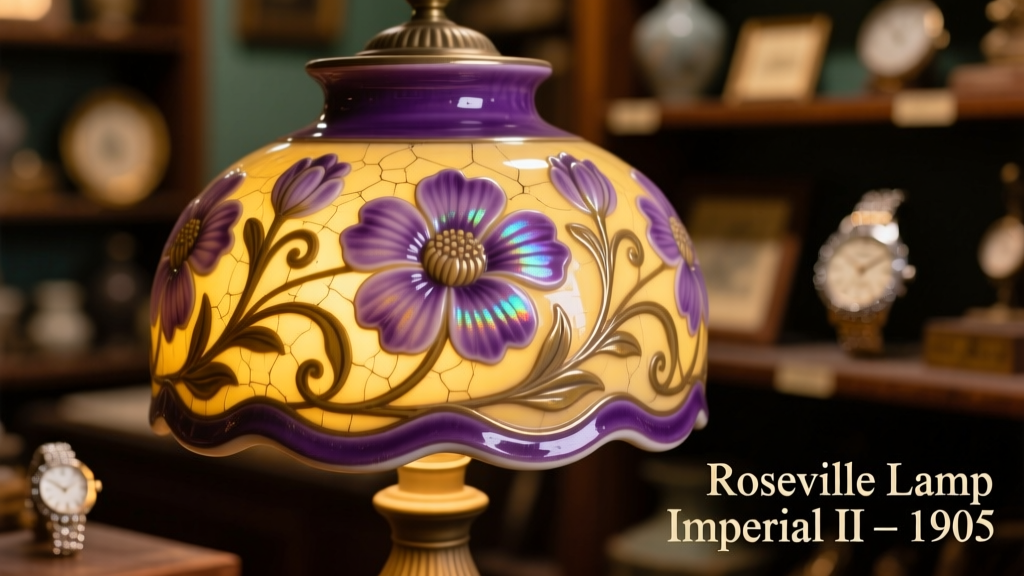
Roseville Imperial II Lamp in Purple and Yellow: A Collector’s Guide to the 6-Inch Table Model
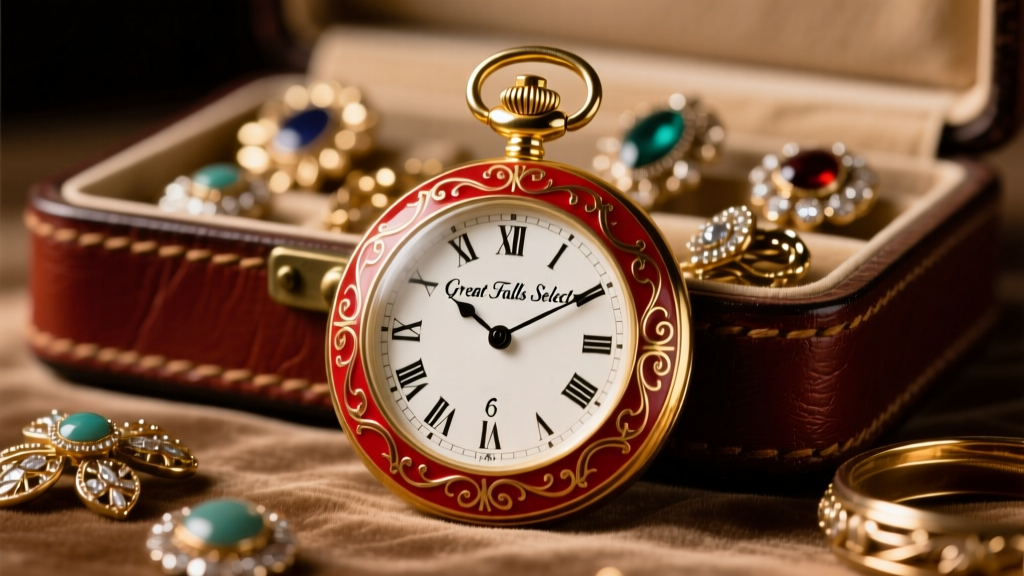
Advertising Glass: Great Falls Select Fine Beer — Red Enameled 1950s 5½-Inch Round Sign

Newcomb College Vase: Rose-Colored Flowers with Cream Centers on Navy Blue Ground, Signed S. Irvine, 8 Inches — A Study in Southern Arts & Crafts Mastery
Planters Peanuts Truck: Pressed Steel Lincoln Model, 1950s, 14-Inch Vintage Advertising Artifact

Frankoma Pottery Creamer 'Wagon Wheel' in Desert Gold: History, Identification, and Market Value
Red-Painted Blanket Chest: A 19th-Century American Pine Trunk with Six-Board Construction and Original Staple Hinges

Toy Stove Electric Tin Little Chef: A 1950s–60s Vintage Play Kitchen Artifact in Original Box
The Secret of Monte Cristo (1941) Rory Calhoun Half-Sheet Poster: A Vintage Cinema Artifact in Context
Royal Dux Figurine Dancers (13 Inches): Provenance, Identification, and Market Value of the Iconic Bohemian Porcelain Ensemble