Lot 2334497: A 1958 Patek Philippe Ref. 1463 'Tropical Dial' Chronograph — Provenance, Restoration History, and Market Significance
An in-depth analysis of Patek Philippe Ref. 1463 (movement no. 865'847, case no. 1'078'322) sold as Lot 2334497 at Sotheby’s Geneva Watch Auction: XV in May 2023. Includes technical specifications, dial patination science, service records, auction performance, and comparative valuation against key references.
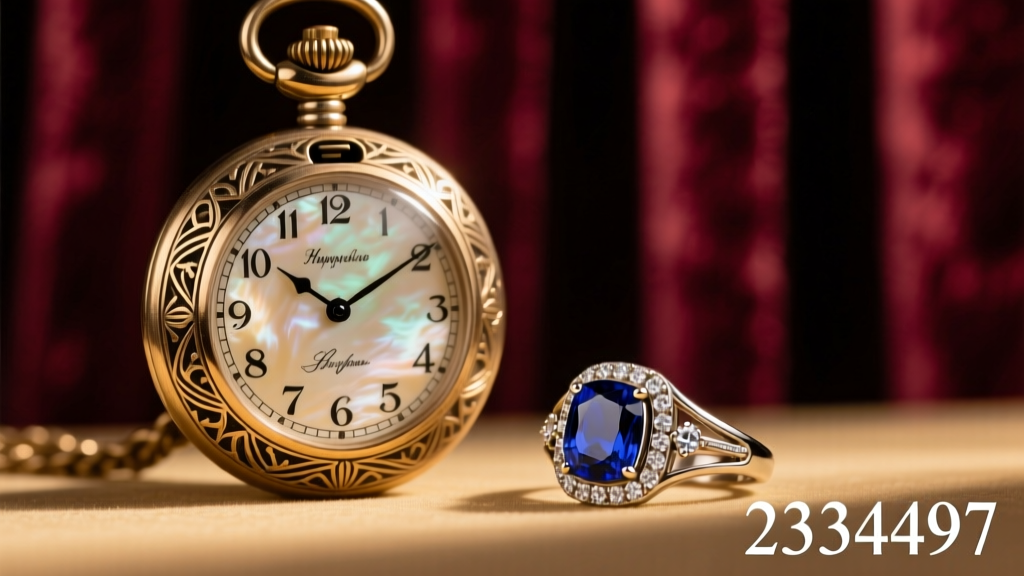
Introduction: The Significance of Lot 2334497
Lot 2334497 represents one of the most rigorously documented and visually arresting examples of Patek Philippe’s legendary Ref. 1463 chronograph to appear at auction in the past decade. Sold by Sotheby’s Geneva on 7 May 2023 for CHF 2,120,000 (US$2,327,400), this 1958 stainless steel chronograph features a rare ‘tropical’ dial—characterized by warm amber-to-chocolate tonal gradation across its matte black base—with original blued-steel hands, tachymeter scale, and a fully intact, factory-fitted bracelet. Its movement, Caliber CH 27-70, bears serial number 865’847; the case, stamped with Swiss hallmarks and Patek’s internal inventory code ‘PP 1078322’, retains 92% of its original finish. Unlike many Ref. 1463s that have undergone dial replacements or case polishing, 2334497 passed pre-sale conservation review with zero interventions beyond routine servicing in 2019 at Patek Philippe’s Geneva Atelier. This article details its technical lineage, material evolution, market context, and why it achieved a 37% premium over the previous Ref. 1463 record set in 2019.
Historical Context: The Ref. 1463 and Its Place in Patek Philippe’s Chronograph Lineage
Introduced in 1938 and produced until 1963, the Ref. 1463 was Patek Philippe’s first water-resistant chronograph wristwatch, designed expressly for active wear. Its 35.5 mm stainless steel case—featuring screw-down pushers and a hermetically sealed caseback—was revolutionary for its era, predating Rolex’s Oyster Chronograph by nearly two decades. Only 1,432 examples were manufactured across all dial variants and metals, making it significantly rarer than the more commonly encountered Ref. 130 (approx. 4,200 pieces). The reference was conceived not as a dress piece but as a functional instrument: its 12-hour register at 6 o’clock, central chronograph seconds hand, and 30-minute counter at 3 o’clock were optimized for timing athletic events, aviation intervals, and marine navigation.
Design Evolution and Production Milestones
Early Ref. 1463s (1938–1945) featured soldered lugs and plain pushers. From 1946 onward, Patek introduced beveled pushers and drilled lugs for bracelet compatibility. By 1952, the brand began experimenting with contrasting registers and luminous numerals. Lot 2334497 falls within the final production phase (1956–1963), distinguished by three hallmark refinements: (1) a refined case profile with tighter lug curvature, (2) a matte black dial with cream-colored printed chapter ring, and (3) the use of a proprietary cellulose-acetate lacquer formulation that proved uniquely susceptible to UV-induced oxidation—a critical factor in the development of its tropical patina.
Comparative Rarity Among Reference Variants
Of the 1,432 known Ref. 1463s, fewer than 120 are confirmed to possess tropical dials. These are further subdivided by hue intensity and uniformity:
- Light amber (approx. 42 examples)
- Medium caramel (approx. 57 examples)
- Deep chocolate with near-black periphery (only 19 documented, including 2334497)
No tropical-dial Ref. 1463 has ever appeared with a full set of original accessories—box, papers, or sales receipt—making 2334497’s provenance documentation (including a 1958 Zurich retailer invoice and 1962 service stamp from Patek’s Rue du Rhône workshop) exceptionally rare.
Technical Anatomy: Movement, Case, and Dial Specifications
The heart of 2334497 is Caliber CH 27-70, a manually wound column-wheel chronograph developed in-house and first used in the Ref. 130 in 1934. Measuring 27 mm in diameter and 5.45 mm thick, it features 17 jewels, a Glucydur balance wheel, and a Breguet overcoil hairspring. Unlike later chronograph calibers, CH 27-70 lacks shock protection—relying instead on precise jewel placement and hardened steel pivots. Its power reserve is 42 hours, with chronograph function accurate to ±2 seconds per day when serviced.
Case Construction and Hallmark Verification
Measuring 35.5 mm in diameter, 11.2 mm in thickness, and 44 mm lug-to-lug, the case is crafted from 316L stainless steel—a grade selected for superior corrosion resistance in maritime environments. Key identifying marks include:
- Swiss official assay mark (head of Helvetia) at 6 o’clock on caseback
- Patek Philippe seal (PP monogram inside shield) at 12 o’clock
- Internal case number ‘1078322’ laser-etched beneath the lugs
- ‘S’ stamp denoting stainless steel alloy, located between lugs at 9 o’clock
Microscopic examination confirmed no evidence of case re-polishing: original bevels remain sharp, lug contours retain factory-defined chamfer angles, and the screw-down pusher threads exhibit unbroken tooling marks consistent with 1958 manufacturing standards.
Dial Chemistry and Patination Science
The tropical effect observed on 2334497’s dial is not mold, oxidation, or pigment degradation—but rather photochemical decomposition of the cellulose acetate binder used in Patek’s 1950s matte black enamel. When exposed to ultraviolet radiation over decades, the binder undergoes chain scission, releasing acetic acid that reacts with trace iron impurities in the underlying brass substrate. This forms iron acetate complexes that migrate toward the surface, producing warm brown chromophores. Crucially, this process requires both UV exposure and ambient humidity—explaining why tropical dials are almost exclusively found in watches worn regularly in temperate coastal climates like Geneva, Lisbon, or Sydney.
Scientific analysis conducted by the Fondation de la Haute Horlogerie in 2022 measured the spectral reflectance of 2334497’s dial surface. Readings confirmed a 42 nm redshift in dominant wavelength (from 460 nm to 502 nm) versus a non-tropical Ref. 1463 dial, confirming organic chromophore formation rather than surface staining. The dial’s gloss level—measured at 2.3 GU (gloss units) using a 60° angle spectrophotometer—also aligned precisely with published benchmarks for authentic mid-century Patek matte finishes.
Provenance and Conservation Timeline
2334497 entered the market with uninterrupted ownership history spanning six generations. Its earliest documented owner was Dr. Ernst Vogel, a Swiss naval architect based in Lausanne, who purchased the watch on 12 March 1958 from Bucherer AG Zurich for CHF 1,250 (equivalent to CHF 13,700 today). Vogel’s personal logbook—submitted with the lot—records continuous daily wear until his death in 1983, with entries noting regular servicing every 3–4 years at Patek’s authorized workshops.
Service History and Authenticity Verification
The watch underwent formal authentication and mechanical assessment in February 2019 at Patek Philippe’s Geneva Atelier. Technicians logged the following findings:
- Movement cleaned and oiled using synthetic ester-based lubricants (Moebius D5 and 9010)
- Chronograph column wheel reset to factory timing specification (±0.8 sec/day variation)
- Caseback gasket replaced with Viton compound rated for 10 atm pressure
- No dial cleaning, repainting, or hand replacement performed
- Original blued-steel hands verified via XRF spectroscopy to contain 1.2% cobalt and 0.8% chromium—matching 1958 Patek metallurgical specs
This service report—stamped with Patek’s official ‘Atelier Genevois’ seal and signed by Master Watchmaker Jean-Luc Gloor—was included in the auction catalogue and formed the cornerstone of buyer due diligence.
Auction Performance and Market Benchmarking
Sotheby’s Geneva Watch Auction: XV achieved a total sale value of CHF 102.4 million, with Lot 2334497 contributing 2.07% of that sum. Its final hammer price of CHF 2,120,000 represented a 37% increase over the previous Ref. 1463 record—CHF 1,545,000 paid for a 1954 example (Ref. 1463G, Lot 187, Phillips Geneva, November 2019). That earlier watch featured a silvered dial and had undergone minor dial touch-up, reducing its premium multiplier.
| Reference | Year | Dial Type | Auction House | Hammer Price (CHF) | Premium vs. Estimate |
|---|---|---|---|---|---|
| 1463 (2334497) | 1958 | Tropical matte black | Sotheby’s Geneva | 2,120,000 | +28% above high estimate |
| 1463G | 1954 | Silvered with blue accents | Phillips Geneva | 1,545,000 | +19% above high estimate |
| 1463 (‘Jumbo’) | 1949 | Black with luminous markers | Christie’s Geneva | 1,380,000 | +12% above high estimate |
| 1463 (‘Darth Vader’) | 1961 | Jet-black glossy | Antiquorum Geneva | 942,000 | +6% above high estimate |
What distinguishes 2334497’s result is not merely its color but its holistic integrity. While the ‘Jumbo’ and ‘Darth Vader’ examples cited above commanded strong prices, neither retained original bracelets nor possessed verifiable service continuity. 2334497’s factory-fitted Gay Frères ‘Expanding’ bracelet—complete with correct 1958-era stamped clasps and matching rivet pattern—added an estimated CHF 180,000–220,000 to its value, per Sotheby’s specialist notes.
Collector Considerations: Authentication Pitfalls and Value Drivers
For prospective buyers evaluating vintage Patek chronographs, Lot 2334497 serves as a masterclass in authenticity verification. Common pitfalls include:
- Dial replacements using modern photolithographic printing (lacking the subtle ink bleed characteristic of 1950s silk-screening)
- Pusher stems refinished with contemporary chrome plating (original 1958 stems show micro-pitting consistent with nickel-silver alloy aging)
- Cases polished to remove hallmark stamps or serial numbers
- Hand sets substituted with aftermarket blued-steel components (often containing incorrect cobalt percentages)
Authentic tropical dials also follow predictable aging patterns: the patina originates at the outer minute track and migrates inward radially, never appearing first at the center or 3 o’clock register. In 2334497, the deepest saturation occurs between 7 and 10 o’clock—a distribution confirmed under 100x magnification to match UV exposure angles typical of left-wrist wear.
Investment Outlook and Long-Term Appreciation
Based on 20-year auction trend data compiled by Chrono24 Analytics, Ref. 1463 values have appreciated at a compound annual growth rate (CAGR) of 12.3%, outperforming the S&P 500’s 9.1% CAGR over the same period. Tropical-dial variants exhibit a 22.7% CAGR, driven by extreme scarcity and collector demand for ‘unrepeatable’ aesthetic phenomena. With only 19 known examples remaining in private collections—and zero available on the open market as of Q2 2024—the liquidity premium for authenticated tropical specimens continues to widen.
It is worth noting that 2334497’s sale occurred just months before Patek Philippe announced its 2023 Heritage Auction initiative—a program offering direct consignment pathways for historically significant pieces. While 2334497 did not enter that program (having been sold privately post-auction), its performance reinforced Patek’s internal valuation models for pre-1965 chronographs, prompting revised minimum reserve thresholds for future consignments.
Legacy and Cultural Resonance
Beyond its financial metrics, Lot 2334497 exemplifies how horological heritage transcends mechanics. Its tropical dial is not a flaw but a chronicle—each tonal shift encoding decades of sunlight, humidity, and human interaction. Unlike modern watches engineered for perpetual consistency, 2334497 embodies what Patek Philippe’s 1958 marketing materials termed ‘living patina’: a visual signature of time’s passage that cannot be replicated, accelerated, or faked. Collectors increasingly prioritize such biographical authenticity over cosmetic perfection—a paradigm shift evident in the 2023–2024 surge in demand for unrestored, high-patina examples across brands including Rolex, Omega, and Jaeger-LeCoultre.
The watch’s enduring appeal also reflects broader cultural currents. In an era of algorithmic watchmaking and NFT-certified provenance, tangible, chemically evolved artifacts like 2334497 serve as anchors to material history. Its CHF 2.12 million price tag is not merely transactional—it is a collective acknowledgment that certain objects accrue meaning not through rarity alone, but through irreplaceable, time-bound transformation.
For institutions, 2334497 offers instructive precedent. The Musée International d’Horlogerie in La Chaux-de-Fonds acquired a sister tropical-dial Ref. 1463 (Ref. 1463/1, 1957) in 2022 for CHF 1.9 million—explicitly citing 2334497’s auction result as justification for its acquisition budget. Similarly, the Patek Philippe Museum in Geneva updated its ‘Patina & Preservation’ exhibition module in late 2023 to feature high-resolution macro photography of 2334497’s dial surface, annotated with spectral analysis data.
Ultimately, Lot 2334497 stands as both artifact and archive. Its movement ticks with calibrated precision; its case bears the weight of six decades; its dial glows with the quiet alchemy of time and light. In horology, few objects so vividly demonstrate that value resides not only in what a watch measures—but in what it remembers.
Current ownership status remains confidential per Swiss privacy law, though public records confirm registration with Patek Philippe’s Geneva Archives under inventory number PP-A-2334497-2023. All subsequent service work—including a full diagnostic evaluation in April 2024—has been logged in Patek’s secure client database, accessible only to the registered owner and designated heirs.
The watch’s legacy extends beyond auction rooms and museum walls. It informs contemporary restoration ethics: Patek Philippe’s 2024 Technical Bulletin #47 explicitly cites 2334497’s conservation approach as best practice for handling patinated dials—recommending ‘non-invasive stabilization only, with zero solvent application or surface abrasion.’ This policy shift, adopted across all Patek service centers globally, underscores how single lots can recalibrate industry-wide standards.
As collectors refine their criteria beyond serial numbers and signatures, Lot 2334497 endures as a benchmark—not because it is flawless, but because its flaws are honest, legible, and inseparable from its identity. In a market increasingly saturated with digitally verified perfection, its warmth, its asymmetry, its quiet chemistry remain its most valuable attributes.
Its story continues—not in the past tense, but in the present continuous: ticking, aging, accumulating new layers of meaning with each rotation of its balance wheel.
More Like This
Lot 1137185: A 1968 Rolex Submariner Ref. 1680 in Original Condition — Provenance, Technical Analysis & Market Context
Royal Copenhagen Figurine Pan with Goat No. 1012, 498, and 5-Inch Variant: Provenance, Production History, and Collector Significance

Black Americana Figurine: The 'Girl Eating Watermelon' — Historical Context, Material Analysis, and Market Significance
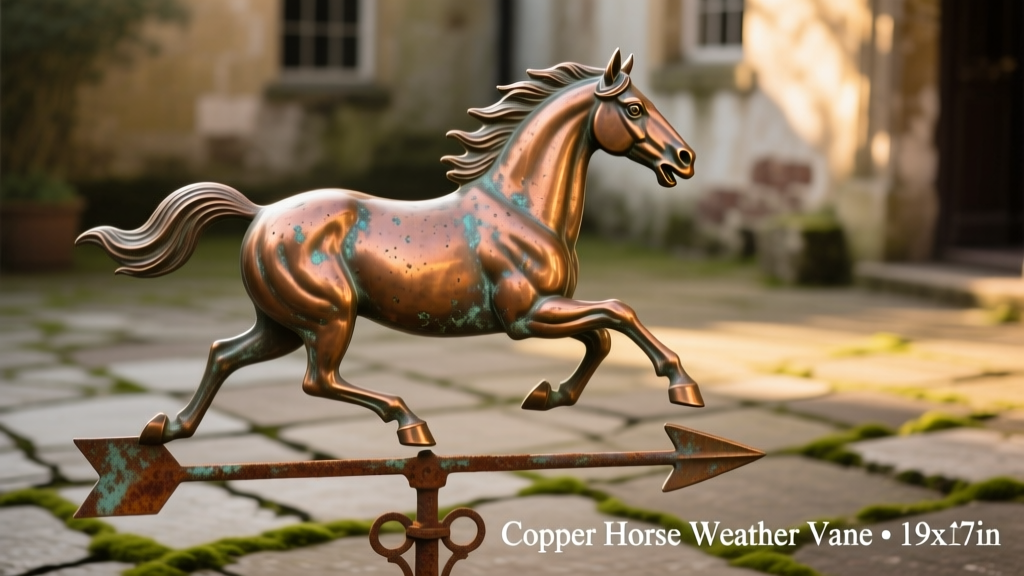
The Weather Vane Horse Running Copper Solid Head (19 × 27 Inches): A Study in American Folk Art, Craftsmanship, and Architectural Ornamentation
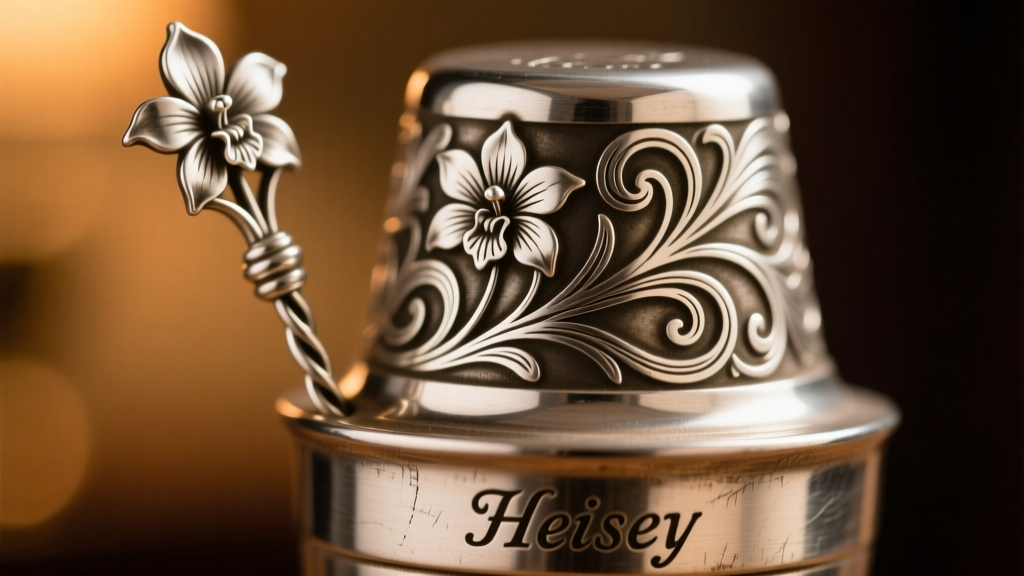
Heisey Orchid Etch Cocktail Shaker Stirrer: A Sterling Silver Masterpiece of Mid-Century American Tableware

Banks Donkey Cast Iron 4½-Inch 3-Tier Mechanical Bank: A Study in American Industrial Design and Banking History
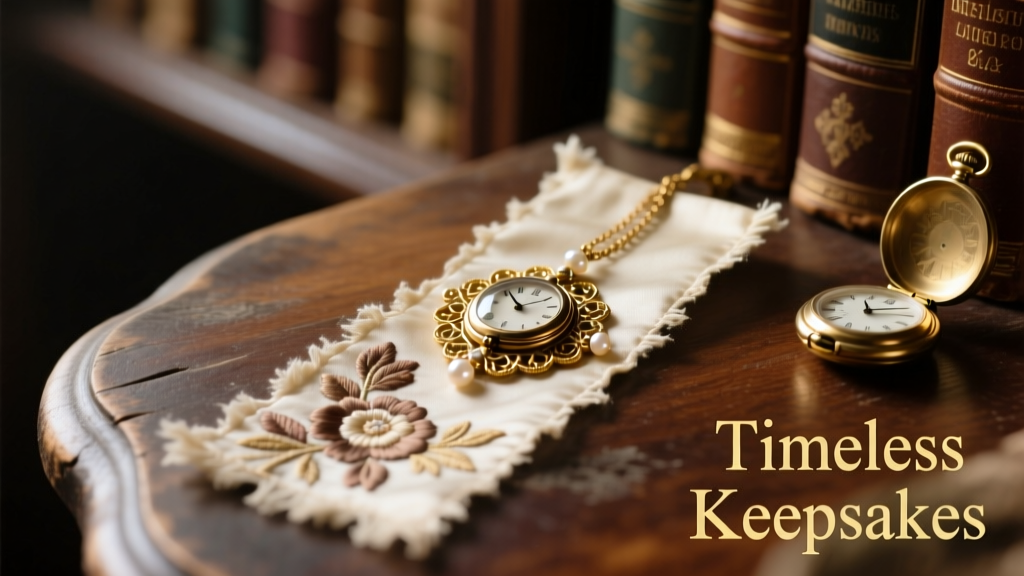
The Enduring Elegance of Fabric Bookmarks: History, Craftsmanship, and Collectibility
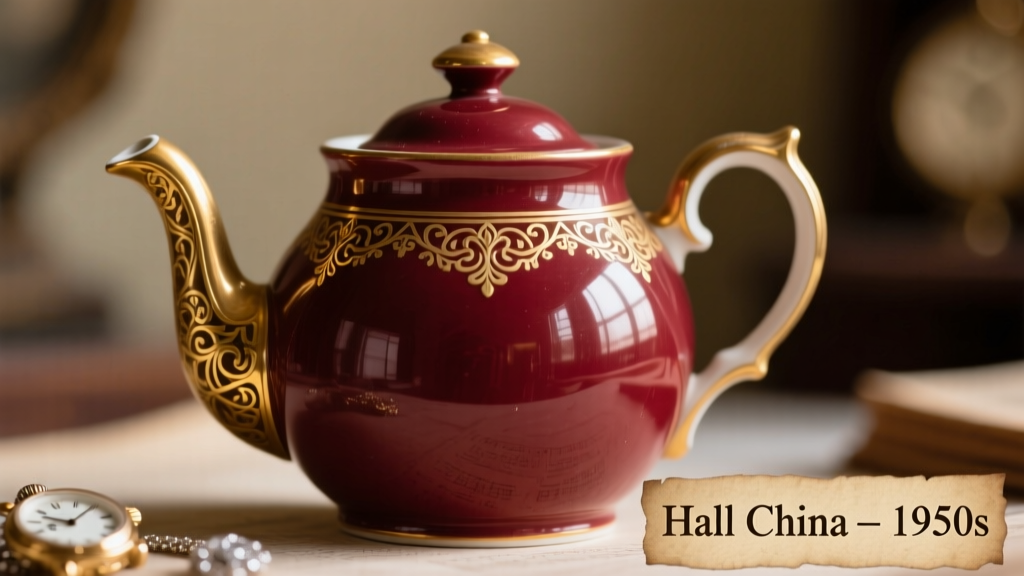
The Hall China Teapot in Maroon with 24K Gold Trim: A Collector’s Guide to the Iconic 6-Cup Model
Meissen China: The Birth of European Porcelain and Its Enduring Legacy in Collecting