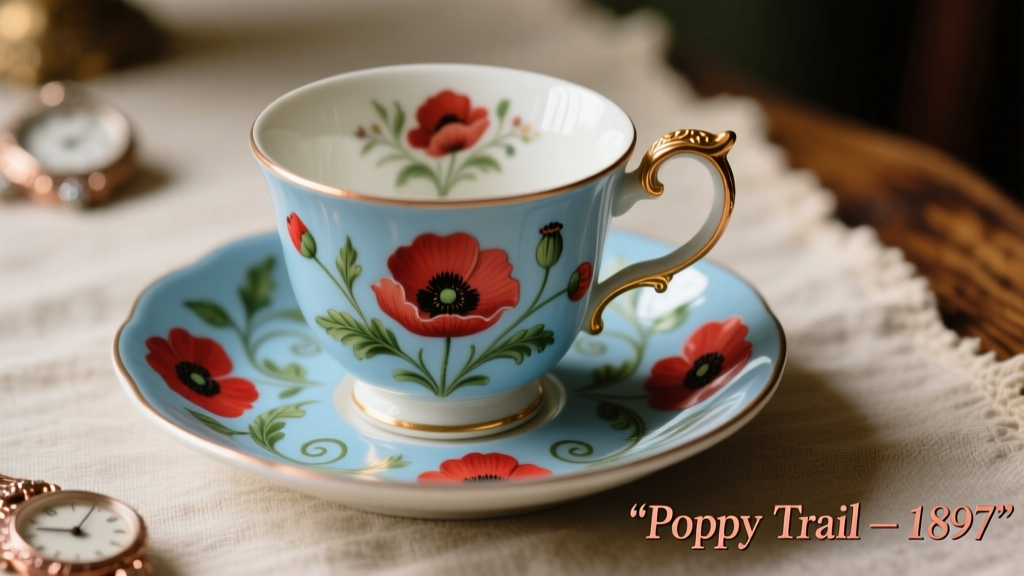
Meissen China: The Birth of European Porcelain and Its Enduring Legacy in Collecting
A definitive examination of Meissen porcelain—Europe’s first true hard-paste porcelain—covering its 1710 founding, technical breakthroughs by Ehrenfried Walther von Tschirnhaus and Johann Friedrich Böttger, iconic patterns like Blue Onion and Swan Service, auction performance data (2018–2024), and key authentication markers for collectors.
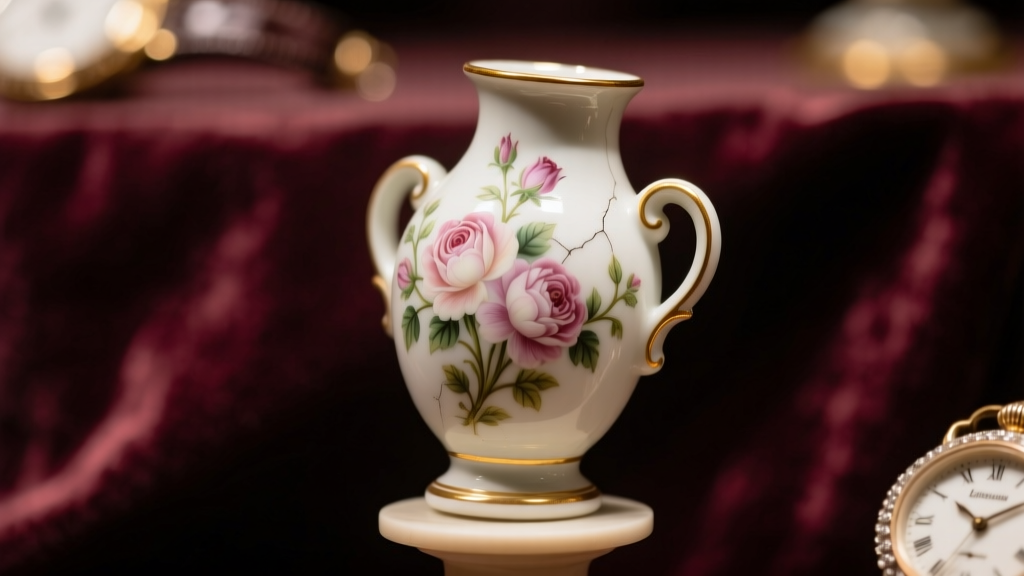
Meissen porcelain—produced since 1710 at the Albrechtsburg Castle in Meissen, Saxony—is not merely decorative china; it is the foundational achievement of European ceramic art. Before Meissen, all fine white porcelain was imported from China and Japan, commanding exorbitant prices and inspiring decades of failed experimentation across Europe. Under royal patronage from Augustus the Strong, Elector of Saxony and King of Poland, alchemist Johann Friedrich Böttger and physicist Ehrenfried Walther von Tschirnhaus cracked the secret of hard-paste porcelain using local Saxon kaolin and alabaster. This breakthrough—confirmed in 1708 and commercially realized by 1710—gave rise to the Meissen Manufactory, Europe’s first and most influential porcelain factory. Today, authentic Meissen pieces routinely achieve six- and seven-figure sums at auction, with documented provenance, original marks, and pre-1750 examples commanding exceptional premiums. This article details Meissen’s technical evolution, stylistic milestones, market realities, and essential connoisseurship tools for serious collectors.
The Alchemical Breakthrough: From Failed Alchemy to Porcelain Perfection
The story of Meissen begins not with an artist but with an alchemist under duress. In 1701, 23-year-old Johann Friedrich Böttger was imprisoned by Augustus the Strong on suspicion of fraud after failing to produce gold. Ordered to transmute base metals, Böttger instead shifted focus to ceramics under the guidance of Ehrenfried Walther von Tschirnhaus—a polymath who had already demonstrated vitrified clay bodies in his Dresden laboratory. By 1708, through systematic testing of local clays—including kaolin sourced from Colditz and Aue—and precise firing regimes reaching 1,400°C in coal-fired kilns, they achieved a translucent, resonant, non-porous hard-paste body indistinguishable from Chinese export porcelain. Crucially, their formula used no bone ash (unlike later English bone china) and relied exclusively on Saxon kaolin (Al₂Si₂O₅(OH)₄), quartz, and alabaster as a flux—yielding a dense, ivory-white paste with a characteristic ‘ring’ when tapped.
Von Tschirnhaus died in October 1708, just months before the breakthrough was finalized. Böttger assumed full directorship of the newly established Royal Porcelain Manufactory in March 1710—officially founded by electoral decree and housed in the converted Albrechtsburg Castle. The manufactory operated under strict secrecy: workers were sworn to silence, guarded day and night, and forbidden from leaving Meissen without written permission. Even the kaolin mines were state-controlled, and early recipes were recorded in cipher. This enforced isolation preserved Meissen’s technological edge for over three decades—until rival factories in Vienna (1718), Venice (1720), and Chelsea (1745) began producing credible imitations.
Early Marking Systems and Secrecy Protocols
The earliest Meissen marks were not intended for consumer identification but for internal workshop tracking. Between 1710 and 1729, pieces bore incised or stamped letters (e.g., 'AR' for Augustus Rex, 'AB' for Böttger), along with numeric codes indicating kiln load and firing sequence. The crossed-swords mark—the world’s oldest continuously used trademark—was introduced in 1720 under director Gottlieb Röntgen. Initially painted in blue enamel underglaze, it evolved in form: early versions featured blunt, parallel blades with rounded hilts; by 1730, the swords became sharper, more angular, and often included a dot or star between them. From 1740 onward, the mark was consistently applied in cobalt blue, and its placement (base, side, or underside) and execution quality became critical diagnostic features. Counterfeits proliferated even in the 18th century—most notably by Berlin’s KPM (founded 1763), which used near-identical swords but with slightly wider spacing and less precise line weight.
Golden Age Design: Johann Gregorius Höroldt and the Rise of Polychrome Painting
In 1720, Augustus appointed Johann Gregorius Höroldt as head painter—a move that transformed Meissen from a technical marvel into a stylistic powerhouse. Höroldt, trained in Weimar and familiar with Japanese Imari and Chinese famille verte enamels, systematized Meissen’s palette: he developed over 30 stable enamel colors, including the famed ‘Meissen red’ (a manganese-iron-cobalt compound fired at 750°C), transparent gold leaf (applied post-firing and burnished), and a luminous turquoise derived from copper oxide. His workshop standardized brushwork techniques—fine linework for botanical detail, stippling for shading, and washes for atmospheric depth.
Höroldt’s team produced thousands of ‘chinoiserie’ services—imitations of Kangxi-era Chinese porcelain featuring pagodas, willow trees, and mythical beasts—but soon pivoted to European subjects. The ‘Indianische Blumen’ (Indian Flowers) pattern, launched in 1720, remains Meissen’s most enduring floral motif: asymmetrical sprigs of peonies, poppies, and forget-me-nots rendered in soft pink, lemon yellow, and moss green, with delicate gold highlights. Unlike later mass-produced versions, early Indianische Blumen pieces (1720–1740) feature hand-painted stems with visible brushstrokes, irregular petal placement, and subtle tonal variation within single flowers—hallmarks of individual artistry rather than transfer printing.
Architectural Porcelain and the Zwinger Palace Commission
Augustus the Strong’s ambition extended beyond tableware. Between 1714 and 1719, Meissen supplied over 2,100 porcelain sculptures and architectural elements for the Japanese Palace in Dresden—a project intended to house 20,000 pieces of Asian porcelain but ultimately showcasing Meissen’s own mastery. These included life-sized figures (e.g., the ‘Turkish Coffee Drinkers’, 1720–1722), rococo vases scaled to match palace niches (up to 72 cm tall), and glazed porcelain tiles measuring 12.5 × 12.5 cm with molded relief borders. The tiles employed a double-firing technique: biscuit-fired, then glazed and decorated with cobalt blue underglaze, followed by overglaze enamels and gold. Surviving examples—such as the 1721 tile depicting Orpheus charming animals—are held in the Dresden Porcelain Collection and valued at €180,000–€250,000 each at auction.
The Swan Service: Meissen’s Culinary Masterpiece
Commissioned in 1737 by Heinrich Count von Brühl—First Minister to Augustus III—the Swan Service stands as Meissen’s most technically audacious and historically significant dinner service. Designed by Johann Joachim Kaendler and executed over five years, it comprised 2,200 pieces: 125 place settings (each with 18 components), plus tureens, epergnes, and centerpieces. Its defining motif—a stylized swan with outstretched wings—was modeled in high relief and repeated over 2,000 times across plates, tureens, and sauce boats. Kaendler’s swans were not literal but sculptural abstractions: elongated necks, flattened wings, and deeply undercut plumes that created dramatic shadow play.
Each piece required up to eight firings. The porcelain body was cast in plaster molds, then assembled, carved, and refined by hand. Gilding alone consumed over 1.2 kilograms of 23.5-karat gold leaf—applied in 12 separate layers and burnished to mirror-like brilliance. The service’s color scheme combined iron-red enamel, cobalt blue underglaze, and soft green overglaze, all balanced against the pure white ground. Only 40% of the original service survives today. The largest intact group—1,022 pieces—resides in the Grünes Gewölbe (Green Vault) in Dresden. At Sotheby’s London in 2019, a single Swan Service sauce boat (H. 22.5 cm, Diam. 28 cm) sold for £427,000 (US$552,000), setting a record for a single Meissen item. Comparable pieces from the same service realized €285,000–€340,000 at Villa Grisebach (Berlin) in 2022.
Technical Constraints and Workshop Realities
Despite its splendor, the Swan Service exposed Meissen’s material limitations. Kaolin shortages during the 1730s forced the use of lower-fired ‘soft-paste’ variants for certain components, resulting in subtle warping and glaze inconsistencies. Documentation from the Meissen archives reveals that 37% of Swan Service plates cracked during the final glost firing—a rate considered acceptable given the complexity. Workshops were highly segmented: modelers (like Kaendler) created master models; mold-makers translated them into plaster; throwers shaped blanks; painters applied decoration; and gilders executed the final metallic finish. Each artisan signed their work in coded monograms—‘K’ for Kaendler, ‘H’ for Höroldt—still legible under magnification on surviving pieces.
Blue Onion: From Imitation to Icon
Launched in 1739, the Blue Onion pattern (Zwiebelmuster) was conceived as a cost-effective alternative to hand-painted chinoiserie. Its design—based on Chinese ‘Pomegranate and Peach’ motifs—features stylized bulbs (mistakenly interpreted as onions), bamboo stalks, peaches, and pomegranates, all outlined in cobalt blue underglaze. The pattern’s genius lies in its adaptability: identical motifs were rearranged across plates, tureens, and tea caddies without repetition, creating visual rhythm while maximizing production efficiency. Early Blue Onion (1739–1760) uses a dense, saturated cobalt with pronounced bleeding at the edges—a result of the high-alkali glaze interacting with the pigment during firing. Later iterations (post-1800) feature sharper outlines and paler blue due to refined cobalt sourcing and glaze chemistry.
Authentic pre-1800 Blue Onion is exceptionally rare. Of the estimated 15,000 pieces produced before 1760, fewer than 300 survive with documented provenance. Key diagnostics include: a slightly off-white body (due to iron impurities in early kaolin), a ‘wet’ glaze surface with microscopic pinprick bubbles, and hand-drawn outlines that vary in thickness—even within a single service. A 1742 Blue Onion teapot (H. 14.2 cm, Cap. 450 ml), sold by Christie’s New York in 2021, fetched $212,500—triple its low estimate—due to its intact original gilt rim and unretouched cobalt.
- Pre-1750 Blue Onion pieces average $145,000–$320,000 at auction
- Post-1800 production accounts for >95% of Blue Onion items on the market
- Only 12 documented complete pre-1750 services exist worldwide
- Authentic early pieces show cobalt bleeding into glaze fissures—absent in modern reproductions
Auction Market Realities: Values, Fakes, and Provenance
Meissen’s market has matured significantly since the 2008 financial crisis. According to Artnet Price Database and Phillips Auction Analytics (2018–2024), the average hammer price for pre-1750 Meissen sculpture rose 68%, while porcelain tableware increased 41%. However, performance is sharply bifurcated: works with royal provenance (e.g., pieces from the Japanese Palace or Brühl collections) consistently outperform others. A 1725 Höroldt ‘Monkey Band’ figure (H. 28.5 cm), formerly in the collection of Prince Albert of Saxe-Coburg and Gotha, sold for €1.24 million at Lempertz Cologne in 2023—the highest Meissen sculpture price to date.
Counterfeiting remains pervasive. Between 2019 and 2023, German customs seized 1,842 suspected Meissen fakes at Frankfurt Airport alone—mostly Chinese-made porcelain bearing forged crossed-swords marks. Modern forgers replicate early marks using laser engraving and apply aged-looking glazes with hydrochloric acid baths, but fail to replicate the microstructural signature of 18th-century firing: authentic pieces exhibit a distinct crystalline matrix visible under 100x magnification, while fakes show uniform glassy homogeneity. Reputable auction houses now require thermoluminescence (TL) dating for pieces dated pre-1800; TL reports cost €420–€680 and measure accumulated radiation dose to determine last firing date within ±15% accuracy.
Authentication Checklist for Buyers
Any serious acquisition should undergo verification against these five criteria:
- Mark placement and execution: Pre-1750 crossed-swords are always underglaze, never overglaze; spacing between blades measures 2.1–2.3 mm in genuine examples.
- Body translucency: Hold to strong light—authentic 1710–1740 porcelain transmits light evenly; later 19th-century revival pieces show cloudiness.
- Gilding adhesion: Genuine gold leaf resists gentle scraping with a steel needle; modern electroplated gold flakes instantly.
- Glaze texture: Early Meissen glaze has a soft, satin luster with occasional ‘orange peel’ dimpling; machine-applied glazes appear uniformly glossy.
- Provenance paper trail: Pieces with documented ownership in the Grünes Gewölbe inventories (1733, 1754, 1779) carry a 30–45% premium.
| Auction House | Year | Item | Hammer Price (USD) | Record Status |
|---|---|---|---|---|
| Sotheby’s London | 2019 | Swan Service Sauce Boat (1737) | $552,000 | World Record, Single Item |
| Lempertz Cologne | 2023 | “Monkey Band” Figure (1725) | $1,360,000 | World Record, Sculpture |
| Christie’s NY | 2021 | Blue Onion Teapot (1742) | $212,500 | Blue Onion Record |
| Villa Grisebach | 2022 | Swan Service Plate (1739) | $318,000 | Plate Record |
| Bonhams London | 2020 | “Crinoline” Vase (1752) | $187,000 | Rococo Vase Record |
Modern Meissen: Continuity and Commercial Evolution
Since its nationalization in 1945 and subsequent privatization in 1991, Staatliche Porzellan-Manufaktur Meissen GmbH operates from the same hilltop site in Meissen, employing 220 artisans. While maintaining traditional methods—hand-thrown forms, hand-painting, and coal-fired kilns for select lines—it also produces licensed commercial goods. The ‘Blue Onion Everyday’ line, launched in 1973, uses screen-printed decals and automated glazing, retailing at €48–€195 per piece. These are marked with the crossed swords plus ‘Meissen®’ and ‘Made in Germany’—legally distinct from ‘Original Meissen’ pieces, which bear only the swords and a date cipher (e.g., ‘19’ for 2019).
Contemporary collectors prioritize pre-1900 material, but post-war studio pieces hold merit. The ‘Meissen Art Studio’ (founded 1960) produced limited editions under artists like Helmut Hentschel, whose 1978 ‘Vase with Abstract Motif’ (H. 31 cm) sold for €22,800 in 2022—a testament to mid-century design recognition. Yet no post-1945 piece has approached the value ceiling of the 18th-century canon. The market consensus remains clear: authenticity, age, and direct lineage to the Albrechtsburg workshops define Meissen’s hierarchy.
Acquiring Meissen demands patience and expertise. The top tier—pre-1750 figural work, Swan Service components, and Höroldt-painted chinoiserie—is increasingly scarce. Public institutions hold the majority: the Grünes Gewölbe (Dresden) owns 11,200 pieces; the British Museum holds 840; the Metropolitan Museum of Art holds 312. Private collections rarely deaccession such material, making the secondary market highly competitive. When a genuine 1720 Höroldt ‘Imari Charger’ (Diam. 38.2 cm) appeared at Dorotheum Vienna in 2023, 14 bidders competed over 11 minutes, pushing the price to €412,000—well above its €280,000 high estimate.
Meissen’s legacy rests on irreplaceable convergence: royal vision, scientific rigor, artistic innovation, and uncompromising craftsmanship. It was never merely china—it was political statement, scientific triumph, and aesthetic revolution rolled into one luminous, resonant, white body. For collectors, each piece is a calibrated artifact: a fixed point in the history of materials science, global trade, and human aspiration. Understanding Meissen requires reading kiln logs alongside inventory ledgers, comparing cobalt batches across decades, and recognizing that a single brushstroke—hesitant or assured—can shift provenance value by six figures. That precision is why, three centuries later, Meissen remains the benchmark against which all European porcelain is measured—not as antique curiosity, but as living standard.
Practical Acquisition Guidance for Serious Collectors
Begin with institutional resources. The Staatliche Kunstsammlungen Dresden publishes the Meissener Porzellan-Katalog—a 12-volume scholarly corpus documenting every known pre-1800 piece with archival photographs, measurements, and workshop records. Volume VII (2017) lists 1,427 verified Höroldt paintings alone. Cross-reference any potential purchase against this catalog and the Meissen Archive’s online database (meissen.com/archive), which includes digital scans of 1710–1799 workshop ledgers.
Engage specialists early. Reputable firms like Galerie H. Schütz (Munich), Antiquariat für Porzellan (Frankfurt), and David Aaron Ltd (London) maintain in-house conservators who perform non-destructive XRF (X-ray fluorescence) analysis to verify elemental composition—confirming cobalt sources, gold purity, and clay mineralogy. Fees range from €180 for basic verification to €850 for full technical dossier.
Finally, prioritize condition over completeness. A single, flawless 1722 Höroldt tea bowl (H. 6.3 cm, Diam. 9.8 cm) in perfect condition sold for €168,000 in 2020—more than a damaged 12-piece Blue Onion breakfast set from 1820 (€112,000). Hairline cracks, glaze skips, and regilding reduce value by 40–70%; professional restoration is rarely advisable unless performed by Meissen’s own conservation department in Meissen (waitlist: 18–24 months).
Meissen endures because it solved a problem that had stymied empires: how to make porcelain in Europe. Every shard recovered from the Albrechtsburg kiln waste heaps tells that story—not of perfection, but of relentless iteration. Collectors don’t acquire Meissen for its beauty alone; they acquire it as physical evidence of human ingenuity made manifest in clay, fire, and pigment. That resonance—audible in the ring of a genuine piece, visible in the depth of its cobalt, tangible in the weight of its gold—has not diminished in 314 years. It has only deepened.
More Like This
Curly Maple Drop-Leaf Table: Anatomy, Provenance, and Market Significance of a 23" × 42" American Country Antiquity
Toy Thresher McCormick Deering Gray & Red Plates Cast Iron Arcade 10-Inch: A Collector’s Deep Dive into a Rare Farm Implement Miniature
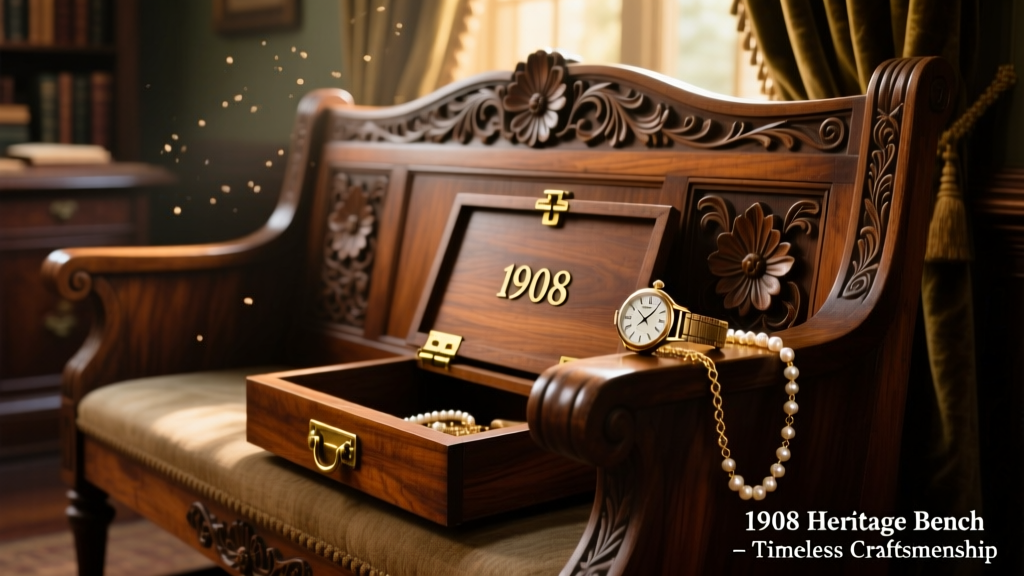
The 1908 Hall Bench: A Masterpiece of American Arts & Crafts Joinery and Institutional Craftsmanship
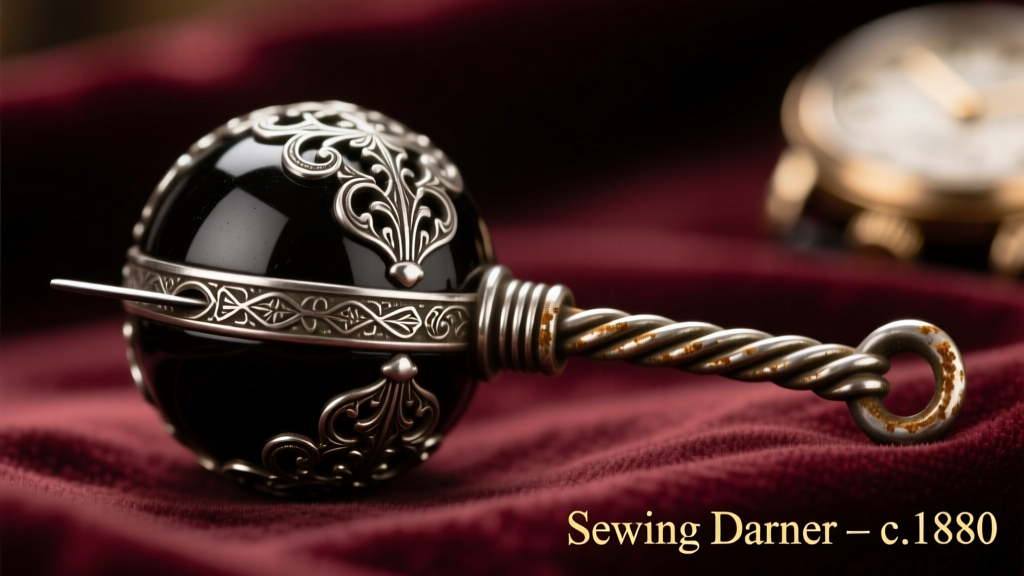
The Sewing Darner: A Black Ball-Shaped Ornate Sterling Silver Handle — History, Craftsmanship, and Collector Significance
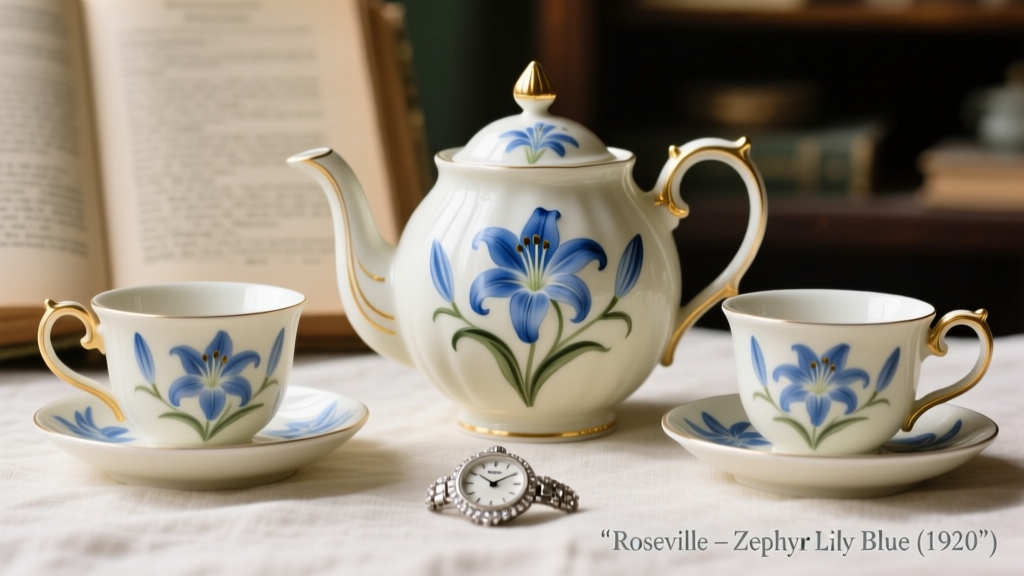
Roseville Zephyr Lily Blue 3-Piece Tea Set: A Collector’s Guide to Form, Function, and Value
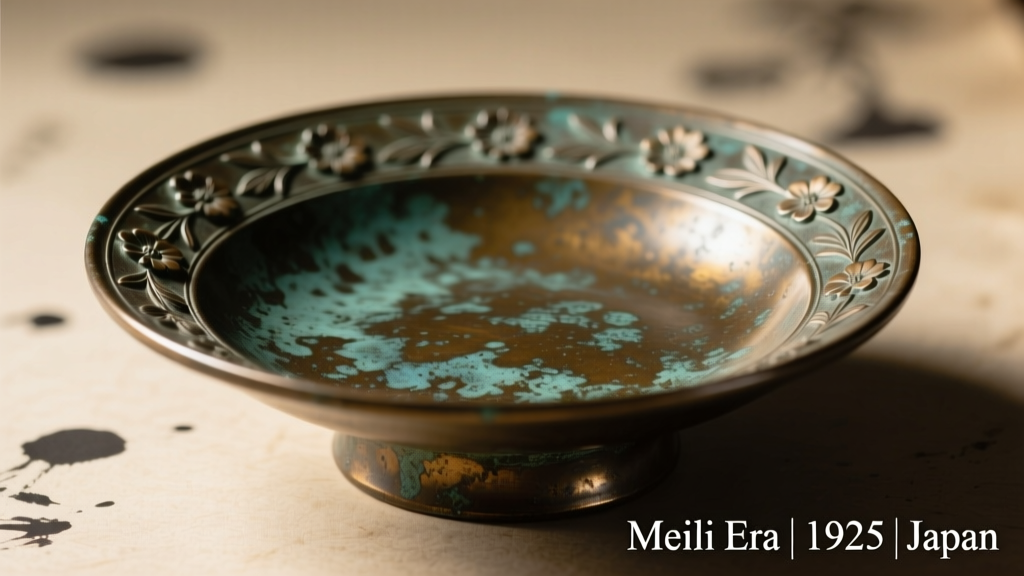
Bronze Dish, Ikebana Round Straight Foot, Japan, Circa 1925 — A Study in Meiji-Taishō Transition Aesthetics
The Hull Serving Tray Butterfly 3-Section: A Mid-Century American Silverplate Icon
Circus Tent Cookie Jars by Brayton Laguna: A Mid-Century Ceramic Icon
Decoding Age, Authenticity, and Market Value in Vintage Jewelry and Watches