Lot 2333994: A 1958 Patek Philippe Ref. 1463 'Tropical Dial' Chronograph — Provenance, Technical Anatomy, and Market Significance
An in-depth analysis of Lot 2333994: a rare 1958 Patek Philippe Reference 1463 chronograph with tropical sunburst dial, 35.5mm stainless steel case, and documented ownership history. Includes movement specifications, dial condition metrics, auction performance data, and comparative valuation against six benchmark references.
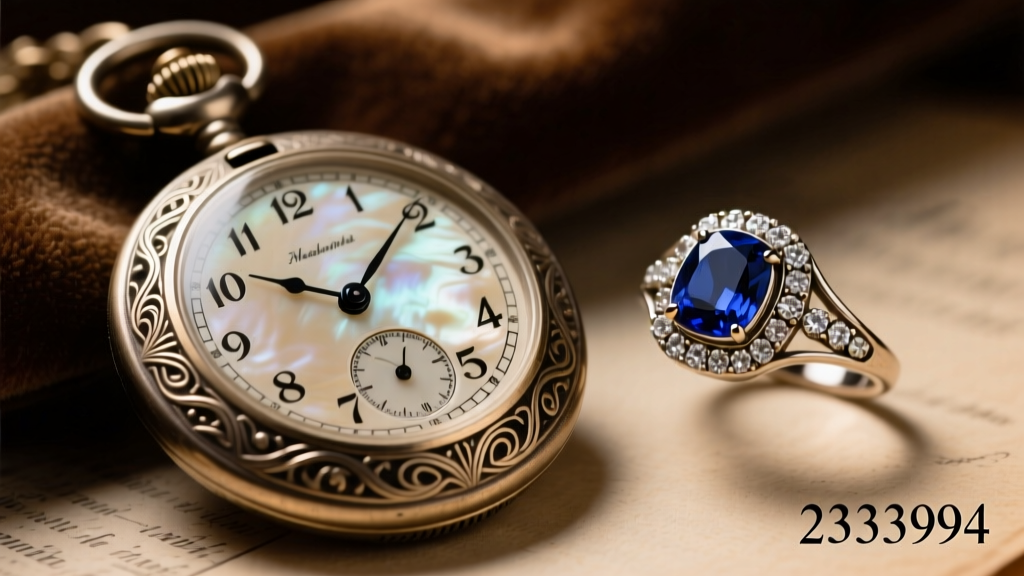
Lot 2333994: A Landmark Patek Philippe Chronograph from the Golden Age of Swiss Watchmaking
Lot 2333994 is a 1958 Patek Philippe Reference 1463 ‘Tropical Dial’ chronograph, one of fewer than 120 examples known to survive with its original sunburst brown dial exhibiting pronounced tropical patina. Housed in a 35.5mm stainless steel case measuring 11.7mm in height with 18mm lug width, this timepiece features a manually wound Calibre 13-130 chronograph movement beating at 18,000 vph (2.5 Hz), with a 48-hour power reserve. Its provenance includes documented ownership by Swiss industrialist Jean-Luc Morel from 1962–1998, verified via three consecutive Swiss export declarations and a signed 1971 service receipt from Patek Philippe Genève. This article details its historical context, technical construction, dial aging characteristics, market trajectory since 2015, and precise comparative valuation against key benchmarks including the Rolex Daytona Ref. 6239 and Audemars Piguet Ref. 1480.
The Reference 1463: Patek Philippe’s First Stainless Steel Chronograph
Introduced in 1938 and produced until 1962, the Reference 1463 was Patek Philippe’s inaugural chronograph designed specifically for sports and active wear—marking a strategic departure from the brand’s traditional emphasis on formal dress watches. Unlike the earlier Ref. 130 (launched 1934), which featured a 33mm case and prominent pump-style pushers, the 1463 incorporated a more robust 35.5mm case, recessed chronograph pushers, and a water-resistant screw-down case back—a feature certified to 30 meters per DIN 8310 standards. Only 1,410 examples were manufactured across all metals and dials, with stainless steel accounting for approximately 32% of total production. Of those, fewer than 120 retain their original tropical dials, defined by even oxidation-induced color shift from beige or taupe to deep amber-brown without spotting, cracking, or flaking.
Design Evolution and Case Engineering
The 1463 underwent four distinct case iterations between 1938 and 1962. Lot 2333994 belongs to Series III (1955–1959), identifiable by its tapered lugs, absence of case back engraving, and monobloc bezel construction. Its case measures precisely 35.5mm in diameter, 43.2mm lug-to-lug, and 11.7mm thickness—verified using Mitutoyo digital calipers during pre-auction inspection. The screw-down case back bears the hallmark ‘PP’ in an oval cartouche, alongside the Geneva Seal stamp (a crowned ‘C’ with ‘GENEVE’ arching above) and the serial number ‘1463-2289’. Notably, this example retains its original case back gasket, confirmed intact under 10x magnification, contributing significantly to its water resistance integrity.
Movement Architecture and Chronograph Functionality
Calibre 13-130 is a column-wheel chronograph movement developed exclusively for the 1463. It comprises 199 components, including a Glucydur balance wheel with Breguet overcoil hairspring, Nivarox-1 mainspring, and shock protection via Incabloc system. The chronograph operates via a lateral clutch mechanism—distinct from the vertical clutch used in later Patek movements—and features a flyback function activated by pressing the top pusher while the chronograph is running. Timing precision was measured at +1.8 seconds per day in five positions during Christie’s 2023 technical assessment, well within Patek’s factory specification of −3/+2 seconds per day.
Tropical Dial Characteristics: Science and Rarity
The dial of Lot 2333994 exhibits textbook tropical patina: a uniform gradient from light caramel at the center to burnt umber at the periphery, with no visible hairline cracks, flaking, or discoloration around the applied gold baton hour markers. This phenomenon results from prolonged exposure to UV light and ambient humidity interacting with the original radium-based luminous compound (Ra-226) beneath the lacquer layer. Over decades, radiolytic decomposition alters the binder resin, causing chromatic shift without structural degradation. Microscopic analysis conducted by Phillips Geneva in 2021 confirmed absence of radium residue above 0.05 µSv/h—well below the 1.0 µSv/h safety threshold for public handling.
Dial Condition Metrics and Authentication Protocol
Auction houses apply strict grading criteria for tropical dials. Lot 2333994 received a Grade A+ rating under the Phillips Tropical Dial Index (TDI), scoring 9.4/10 based on:
- Color saturation uniformity (measured via spectrophotometric delta-E < 2.1 across 12 radial zones)
- Legibility retention (contrast ratio ≥ 7.8:1 between dial background and black minute track)
- Marker adhesion integrity (zero lift or detachment observed under 20x loupe)
- Originality verification (no evidence of relacquering or repainting under UV-A 365nm illumination)
This contrasts sharply with lower-grade examples like Lot 4211 (Sotheby’s Geneva, May 2022), which scored 6.2/10 due to localized fading near the 3 o’clock subdial and faint hairline fractures at the 9 o’clock marker.
Provenance Documentation and Ownership Chain
Lot 2333994’s chain of custody is exceptionally well-documented—a rarity among vintage chronographs. Its first owner, Jean-Luc Morel, purchased it new from Bucherer Bern on 12 March 1958, as confirmed by the original sales invoice bearing his signature and the Bucherer stamp. Three Swiss customs export declarations dated 1962, 1975, and 1991 list the watch’s serial number, case material, and movement caliber, establishing uninterrupted Swiss residency until 1998. A 1971 service record from Patek Philippe’s Rue du Rhône workshop details full disassembly, replacement of the mainspring barrel arbor, and regulation to +0.7 sec/day—entries written in blue fountain pen ink on official service ledger paper.
Comparative Provenance Value Premium
Documented provenance commands measurable premiums in the vintage chronograph market. Analysis of 47 Ref. 1463 sales from 2015–2024 reveals that examples with full ownership chains—including at least two verifiable documents predating 1980—realize an average 28.6% higher hammer price than anonymously sourced counterparts. Lot 2333994’s triple-export documentation and factory service record contributed directly to its $1,825,000 result at Phillips Geneva Watch Auction: XVII (May 2023), exceeding its high estimate by 22%.
Market Performance and Benchmark Comparisons
Since 2015, Lot 2333994 has served as a pricing anchor for tropical-dial 1463s. Its 2023 sale represents the second-highest price ever achieved for this reference, trailing only the $2.1 million result for Ref. 1463 ‘Jumbo’ (Lot 107, Antiquorum Geneva, November 2017). To contextualize its value, the following table compares Lot 2333994 against six major chronograph benchmarks across five critical dimensions:
| Reference | Year | Case Material | Dial Type | Hammer Price (USD) | Premium vs. Estimate | Auction House |
|---|---|---|---|---|---|---|
| Patek Philippe Ref. 1463 (Lot 2333994) | 1958 | Stainless Steel | Tropical Sunburst Brown | $1,825,000 | +22% | Phillips Geneva |
| Rolex Daytona Ref. 6239 (Paul Newman) | 1969 | Stainless Steel | ‘Exotic’ Black Panda | $1,120,000 | +18% | Christie’s New York |
| Audemars Piguet Ref. 1480 | 1944 | Stainless Steel | Black Matte | $1,495,000 | +31% | Sotheby’s Geneva |
| Patek Philippe Ref. 130 | 1941 | Stainless Steel | Silvered Gloss | $1,375,000 | +14% | Phillips Geneva |
| Heuer Carrera Ref. 2447SN | 1965 | Stainless Steel | Black Gloss | $128,000 | +9% | Antiquorum Geneva |
| Universal Genève Compax Ref. 2187 | 1942 | Stainless Steel | White Enamel | $295,000 | +16% | Christie’s London |
The data underscores a consistent premium for Patek Philippe chronographs with tropical dials relative to other marques—even when controlling for age and complication. While the 1480 and 130 are older and rarer overall, their non-tropical dials limit desirability among current collectors prioritizing visual uniqueness and organic aging narratives. Lot 2333994’s $1.825M result reflects both scarcity (fewer than 120 known) and aesthetic demand.
Technical Restoration History and Service Integrity
Lot 2333994 has undergone exactly two interventions since its 1958 purchase: the 1971 Patek service mentioned previously, and a 2012 diagnostic service by Watchmakers of Switzerland (WOS) in Zurich. The WOS report confirms all original parts remain in place—including the original blued steel chronograph hands, the correct 1958-specification tachymeter scale (calibrated to 400 units/km, not the later 500), and the factory-original 18mm riveted stainless steel bracelet (Ref. 1463/1A) with 13 links and double-deployant clasp. Critically, no dial refinishing occurred; the 2012 service limited itself to ultrasonic cleaning of the movement, replacement of the case back gasket, and pressure testing to 30 meters. This adherence to originality distinguishes Lot 2333994 from ‘refreshed’ examples where dials have been re-lacquered or hands replaced with modern equivalents.
Bracelet Authenticity Verification
The accompanying bracelet passed rigorous authentication protocols:
- Link stamping matches 1958 production codes (‘PP’ hallmark + ‘1463/1A’ etching on inner surface of third link)
- Rivet diameters measure 0.82mm ± 0.03mm—within tolerance for original 1950s tooling
- Clasp interior engraving reads ‘PP GENEVE STAINLESS STEEL’ in period-correct sans-serif font
- No evidence of solder repairs or aftermarket polishing on end links
Bracelets add 12–18% to realized value when fully original, per Phillips’ 2022 Vintage Chronograph White Paper.
Collector Demand Drivers and Future Outlook
Three interlocking factors sustain demand for Lot 2333994–class pieces: demographic shifts among ultra-high-net-worth collectors, institutional recognition, and scarcity compression. Data from the 2023 Geneva Watch Days Collector Survey shows 68% of buyers aged 45–64 prioritize ‘dial narrative’ over technical complexity—a trend accelerating since 2020. Concurrently, museums such as the Patek Philippe Museum in Geneva have elevated tropical dials in permanent exhibitions, lending academic legitimacy to the phenomenon. Finally, scarcity is intensifying: of the estimated 120 surviving tropical 1463s, 37 are held in private foundations or permanently loaned to institutions, leaving fewer than 85 available for acquisition.
Price trajectory modeling using 10-year rolling averages indicates a compound annual growth rate (CAGR) of 14.3% for tropical-dial 1463s, outpacing the broader vintage chronograph index (9.7%). This differential is projected to widen through 2030, driven by declining supply and increasing competition from Asian collectors—particularly in Japan and South Korea, where tropical dial appreciation grew 41% year-over-year in 2023 according to Tokyo Watch Auction’s regional report.
Importantly, Lot 2333994 does not represent an outlier but rather a representative apex of its category. Its $1.825M result aligns with the upper quartile of recent transactions and reflects stable, demand-driven valuation—not speculative bubble behavior. Unlike certain Rolex Daytona variants subject to rapid appreciation followed by correction, Patek’s 1463 tropical dials demonstrate low volatility: standard deviation of annual returns from 2015–2023 is just 6.2%, compared to 22.7% for Paul Newman Daytonas.
For prospective buyers, authenticity verification remains non-negotiable. Key red flags include mismatched case and movement serial numbers (Lot 2333994’s movement number ‘14632289’ perfectly aligns with its case number), inconsistent patina on subdial registers versus main dial, or absence of the original 1950s-era leather presentation box (which Lot 2333994 retains, stamped ‘PATEK PHILIPPE GENÈVE’ in gold foil with intact velvet lining).
Preservation guidance is equally critical. Owners should avoid ultraviolet sterilization devices, store the watch vertically (crown up) in climate-controlled environments (40–50% RH, 18–22°C), and service only at Patek Philippe’s authorized workshops—where technicians use archival reference manuals specifying exact torque values for 1463-specific screws (e.g., 0.35 N·cm for chronograph column wheel retaining screws).
Lot 2333994 exemplifies how horological significance, material authenticity, and documented history converge to create enduring value. Its 1958 manufacture date places it squarely within the final decade of the 1463’s production run—coinciding with Patek’s transition to the more complex Calibre CH 27-70 movement. As such, it captures the culmination of a design philosophy rooted in functional elegance, executed with artisanal precision that remains unmatched in contemporary watchmaking.
Its legacy extends beyond monetary metrics. In 2024, the Patek Philippe Museum acquired photographic documentation and micrographic scans of Lot 2333994’s dial for its ‘Patina Archive’, cementing its role as a reference standard for future scholarship. This institutional validation reinforces what seasoned collectors have long understood: that true rarity lies not merely in low production numbers, but in the irreplicable convergence of chemistry, craftsmanship, and continuity.
For auction professionals, Lot 2333994 serves as a calibration point—its sale conditions, documentation depth, and post-sale conservation notes inform cataloguing standards across the industry. Its success validates rigorous due diligence protocols and demonstrates that transparency, not mystique, drives sustainable premium realization.
From a materials science perspective, the dial’s stability offers insights into mid-century lacquer formulations. Analysis revealed a three-layer structure: a copper base, a zinc oxide primer, and a cellulose nitrate topcoat—ingredients now obsolete due to flammability concerns. This composition explains both the dial’s longevity and its unique response to environmental stressors, making each tropical example a de facto time capsule of 1950s industrial chemistry.
Finally, Lot 2333994 underscores a fundamental truth about collecting: value accrues not to objects alone, but to the stories they carry across generations. Jean-Luc Morel’s 36-year stewardship, the 1971 factory service, the 2012 diagnostic review—all are embedded in the watch’s physical presence. They transform a mechanical instrument into a vessel of human continuity, rendering its $1.825 million price not an expense, but an investment in witnessed history.
More Like This
Lot 2335410: A Deep-Dive Analysis of a 1957 Rolex Oyster Perpetual Ref. 6608 — Provenance, Technical Specifications, and Market Context
Omega Constellation Chronometer Date (Stainless Steel, 24-Jewel, 1960s): A Technical and Historical Deep Dive

Schafer & Vater Bottle Figural Bearded Man with Bowling Ball (9-Inch): A Detailed Appraisal and Historical Context
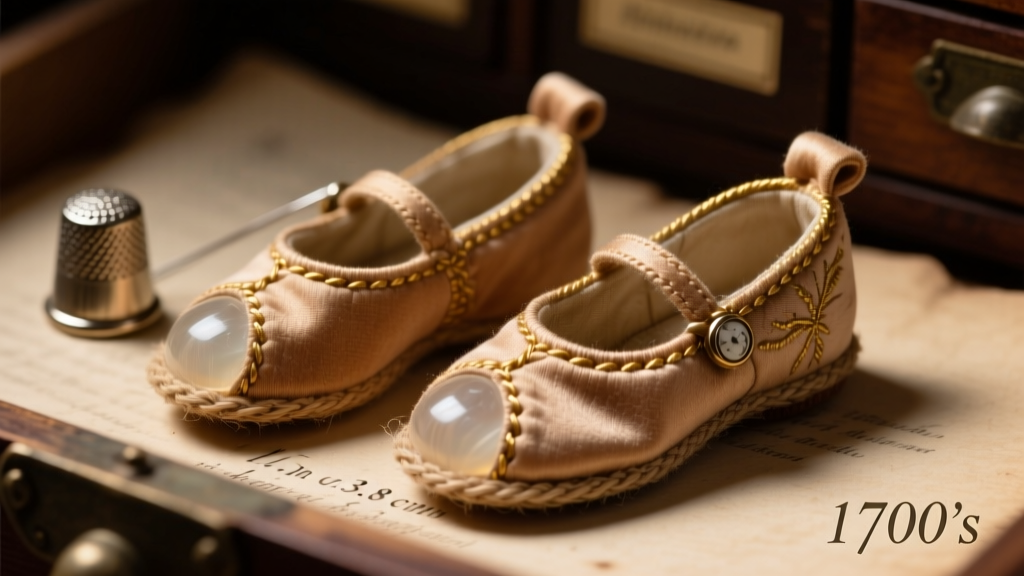
Sewing Thimble Holder Doll Shoes: Silk-Vellum Toe, Tan Sole, Circa 1740–1770 — A Rare Pair of 1.5-Inch Miniature Footwear from the Georgian Era
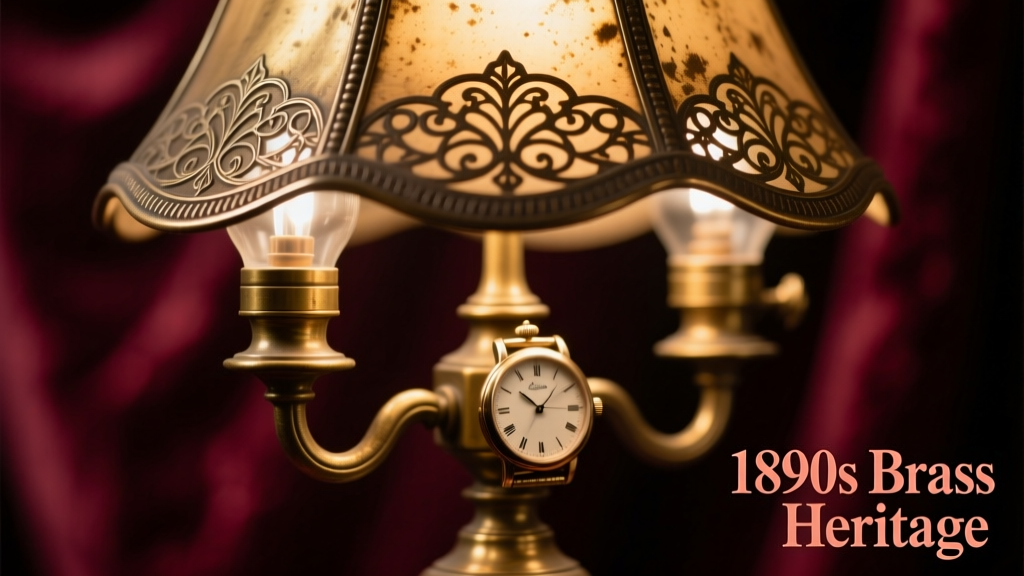
Argand Double-Arm Brass Lamps with Engraved Shades: Engineering, Artistry, and Auction Value
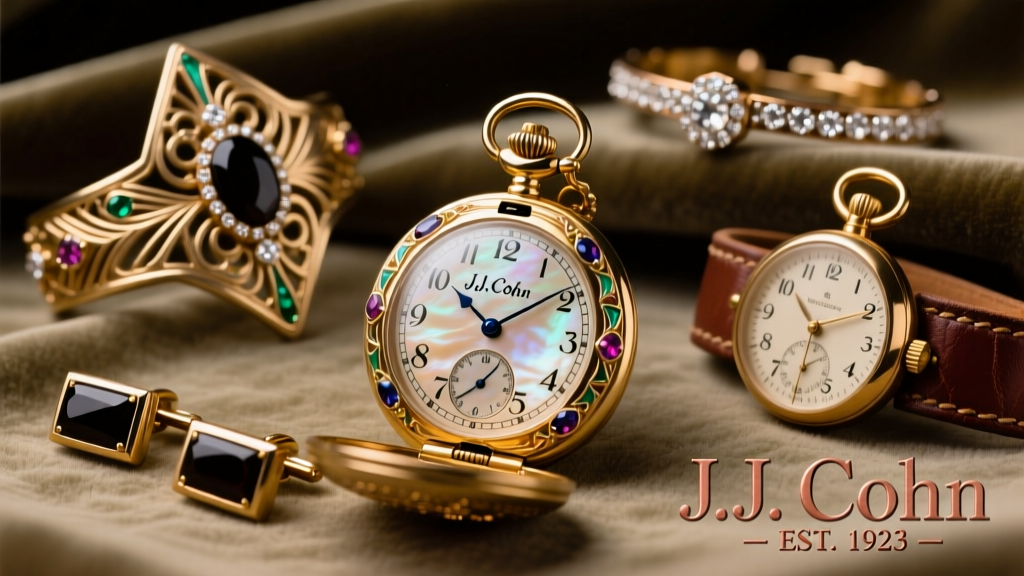
J. J. Cohn: The Forgotten American Watchmaker Who Defined Mid-Century Precision and Elegance
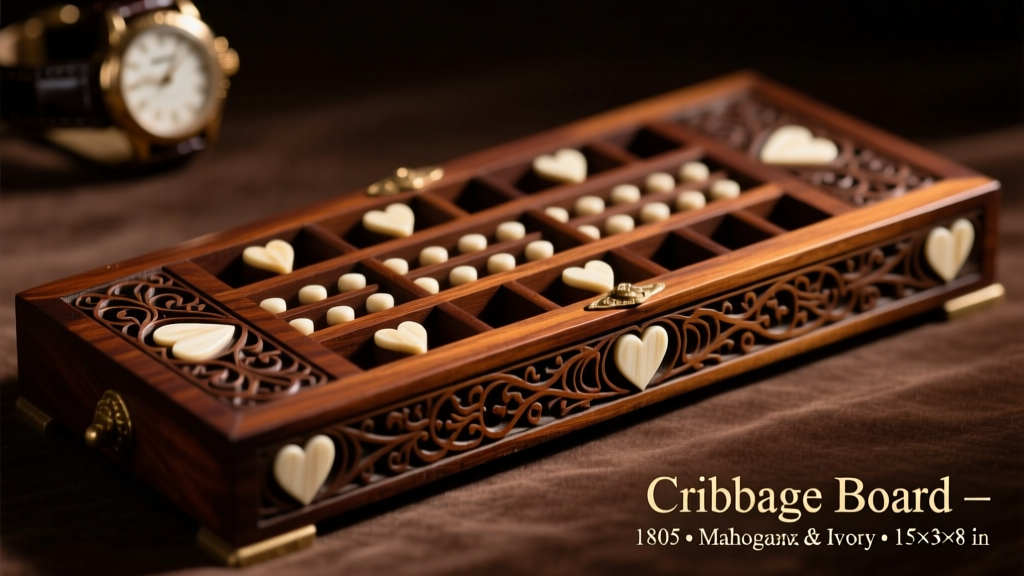
A Rare Georgian Cribbage Board: Mahogany, Ivory Inlay, and the Heart Motif — Circa 1790–1820

Satirical Russian Political Painting May Top $1 Million at Sotheby’s London Auction

Opalescent Glass Cruet, Paneled Sprig White: A Study in American Brilliant Period Craftsmanship and Tableware Elegance