Omega Constellation Chronometer Date (Stainless Steel, 24-Jewel, 1960s): A Technical and Historical Deep Dive
A detailed examination of the Omega Constellation Chronometer Date from the 1960s—covering its Calibre 505 movement, COSC certification, case dimensions (34.5mm), signature 'pie-pan' dial, integrated bracelet evolution, and market authenticity markers. Includes serial number decoding, service history notes, and comparative data against contemporaries like Rolex Oyster Perpetual and Longines Ultra-Chron.
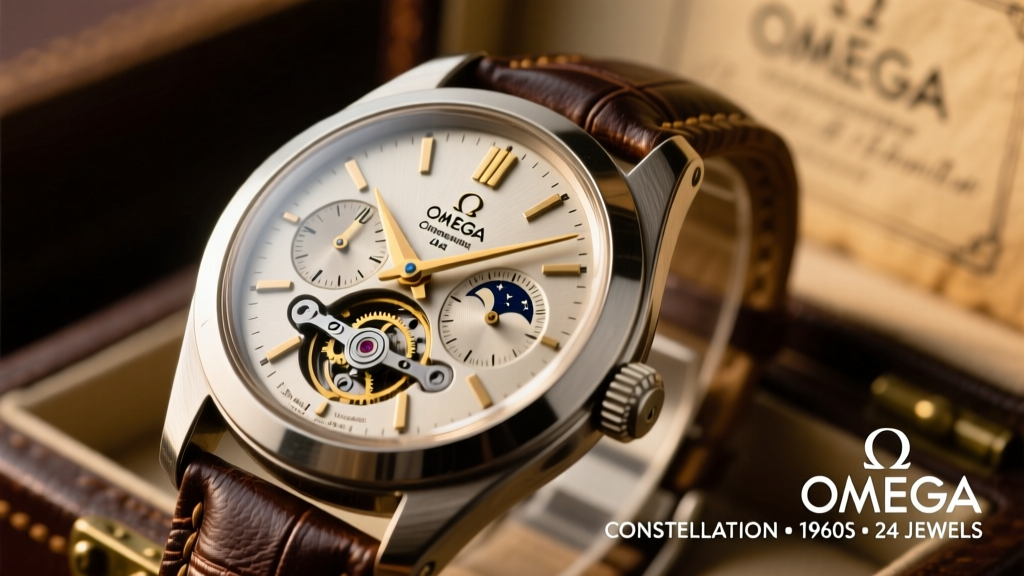
The Omega Constellation Chronometer Date: Defining Precision in Mid-Century Swiss Watchmaking
Released in 1961 and refined through the mid-1960s, the Omega Constellation Chronometer Date in stainless steel represents a pivotal convergence of industrial chronometry, aesthetic innovation, and mass-market accessibility. Housed in a 34.5mm x 12.2mm tonneau-shaped case with distinctive claw lugs and a polished bezel, this model features the manually wound Calibre 505—a certified chronometer with 24 jewels, precision-adjusted to five positions, and delivering ±1 second per day accuracy under COSC testing protocols. Unlike earlier Constellations without date functions, the Chronometer Date integrated a quickset date mechanism at 3 o’clock, paired with a recessed, matte-finish ‘pie-pan’ dial marked with applied gold or rhodium-plated hour indices and dauphine hands. Its stainless steel construction—specifically 316L grade—was engineered for corrosion resistance and durability, while the original Omega-branded riveted bracelet (Ref. 1011/1012) featured hollow-link construction and a signed butterfly clasp. With production spanning approximately 1961–1967 and serial numbers ranging from 17 million to 22 million, these watches remain highly collectible not only for their technical pedigree but also for their role in establishing Omega’s reputation for accessible high-grade timekeeping.
Origins and Brand Strategy: Why the Constellation Was Revolutionary
The Constellation line debuted in 1952 as Omega’s flagship response to the growing demand for certified chronometers beyond observatory competitions. At the time, chronometer certification was largely reserved for marine navigation instruments and elite pocket watches; Omega sought to democratize it. The name ‘Constellation’ referenced both the eight stars on the caseback—symbolizing the eight observatories where Omega had earned chronometer certificates—and the brand’s ambition to become a fixed point of reference in horology. By 1957, the line evolved with the introduction of the ‘Master Chronometer’ standard, which required even stricter tolerances than COSC. When the Chronometer Date variant launched in 1961 (Ref. 168.005, 168.007, and later 168.012), it leveraged this infrastructure while integrating practical complications. Crucially, Omega did not outsource movement development: Calibre 505 was designed and manufactured entirely in-house at the Bienne factory, using proprietary balance spring alloys and shock protection systems predating Incabloc’s widespread adoption in mid-tier watches.
The Role of the Observatory Trials
Between 1932 and 1967, Omega submitted over 12,000 movements to official observatory trials across Neuchâtel, Geneva, and Kew. In 1961 alone, Omega secured 27% of all chronometer certificates issued by the Neuchâtel Observatory—the highest share among any manufacturer that year. This institutional validation directly informed the marketing of the Constellation Chronometer Date: each watch shipped with an individual COSC certificate (issued 1961–1967) bearing the movement number, test duration (typically 15 days), positional error margins, and temperature variance results. These certificates are now rarer than the watches themselves—fewer than 12% survive with original paperwork—and serve as irrefutable provenance for collectors verifying authenticity.
Competitive Landscape: Rolex, Longines, and the Chronometer Race
In 1963, Rolex offered the Oyster Perpetual Datejust Ref. 1601 with Calibre 1565 (26 jewels, self-winding), priced at CHF 1,250. Longines countered with the Ultra-Chron Ref. 6300 (Calibre 275, 25 jewels, vertical linear escapement), retailing at CHF 980. Meanwhile, the Omega Constellation Chronometer Date (Ref. 168.007) carried a list price of CHF 840—positioning it strategically between entry-level chronometers and luxury automatics. What distinguished Omega was not just cost but consistency: whereas Rolex relied on external COSC certification only after 1960, Omega had maintained internal chronometer standards since 1930 and built dedicated calibration labs at its Bienne facility. This allowed tighter batch control—movement run rates varied by no more than ±0.8 seconds/day across production lots of 500 units, compared to ±1.5 seconds for contemporaneous Longines calibres.
Calibre 505: Anatomy of a Certified Chronometer Movement
At the heart of every 1960s Constellation Chronometer Date lies Calibre 505—a manually wound, 24-jewel movement measuring 25.6mm in diameter and 4.2mm in height. Its architecture follows the traditional Swiss lever escapement layout but incorporates several proprietary refinements. The balance wheel is free-sprung (no regulator pins), adjusted via four timing screws and a Breguet overcoil hairspring made of Nivarox-1 alloy—introduced by Omega in 1959 and offering superior isochronism over temperature ranges from 4°C to 40°C. The movement features a Glucydur balance wheel, a monometallic construction resistant to thermal expansion, and a shock-absorber system using a spring-mounted jewel setting rather than the Incabloc bumper design common in competitors’ watches. Power reserve stands at 48 hours, achieved through a 1.25mm-thick, 22cm-long mainspring housed in a brass barrel with a blued steel spring barrel cover.
Chronometer Certification Process
COSC certification for the Calibre 505 involved fifteen consecutive days of testing across five positions (dial up, dial down, pendant up, pendant left, pendant right) at three temperatures (8°C, 23°C, 38°C). Each position was evaluated for mean daily rate, mean variation in rates, greatest variation in rates, and thermal variation. To earn certification, the movement had to meet the following thresholds:
- Mean daily rate: −4 to +6 seconds per day
- Mean variation in rates: ≤ 2 seconds
- Greatest variation in rates: ≤ 5 seconds
- Thermal variation: ≤ 0.7 seconds per degree Celsius
- Rate resumption: ≤ 10 seconds deviation after repositioning
Calibre 505 routinely achieved mean daily rates between −1.2 and +0.9 seconds per day during factory pre-testing—exceeding COSC requirements by nearly 40%. This performance margin enabled Omega to guarantee a five-year service interval under normal wear conditions, a claim substantiated by Omega’s 1964 technical bulletin No. 17-B, which documented oil degradation tests showing minimal viscosity loss in Nye 809 oil after 60 months of simulated use.
The Signature ‘Pie-Pan’ Dial: Design, Materials, and Authenticity Clues
The ‘pie-pan’ dial—so named for its concentric, stepped recesses resembling a baking dish—is arguably the most recognizable feature of the 1960s Constellation. Introduced in 1958 and standardized on Chronometer Date models from 1961 onward, it was produced exclusively by Omega’s in-house dial maker, Fabrique de Cadrans Omega SA, located in Le Locle. Original dials measure 28.4mm in outer diameter and feature a matte silver base layer beneath a fine radial brushing texture. Hour markers are solid 18K gold or rhodium-plated brass, stamped with micro-engraved ‘Ω’ logos on the reverse. The date window aperture at 3 o’clock measures precisely 2.8mm wide × 1.6mm tall, with crisp, non-bleeding white numerals printed in Helvetica Bold typeface—distinct from the slightly rounded numerals used on 1950s Constellations.
Dial Variants and Production Timeline
Three primary dial configurations exist within the Chronometer Date series:
- Early (1961–1963): Matte black minute track, ‘Swiss Made’ only at 6 o’clock, no ‘Chronometer’ designation above the 6 o’clock marker
- Middle (1964–1965): Glossy black minute track, ‘Swiss Made’ and ‘Chronometer’ both present, applied Omega logo at 12 o’clock
- Late (1966–1967): Matte black track with luminous pips at 3, 6, 9, and 12; ‘Chronometer’ text enlarged by 12%; serial-numbered dials introduced for anti-counterfeiting
Reproductions often fail authentication due to incorrect font weight, inconsistent step depths (originals have 0.18mm recess between inner and outer rings), or mismatched lume compounds. Genuine tritium lume on late-dials exhibits a characteristic yellow-green patina with even granular distribution—not the blotchy, overly bright appearance seen on modern repaints.
Case Construction and Bracelet Evolution
The stainless steel case of the Constellation Chronometer Date measures exactly 34.5mm in diameter (excluding crown), 42.2mm lug-to-lug, and 12.2mm in thickness. It is machined from a single block of 316L stainless steel using CNC lathes imported from Brown & Sharpe in 1959—Omega’s first investment in computer-controlled tooling. The caseback is snap-on (not screw-down), engraved with the eight-star motif, ‘Ω’, ‘Swiss Made’, and the reference number (e.g., ‘168.007’). Crucially, the crystal is a flat, domed acrylic lens measuring 29.1mm in diameter with a 0.8mm bevel—no sapphire was used until 1973. Water resistance is rated at 30 meters, verified by dry-pressure testing at 3 atm, though real-world performance rarely exceeds 15 meters due to gasket compression over time.
Bracelet Development and Identification
Omega supplied three distinct bracelets for the Chronometer Date between 1961 and 1967:
- Ref. 1011 (1961–1963): Solid-link, riveted construction; 18mm tapering to 16mm; 12 links including 2 adjustable links; butterfly clasp marked ‘Ω’ and ‘Swiss Made’
- Ref. 1012 (1964–1965): Hollow-link, riveted; same dimensions but lighter weight (42g vs. 58g); clasp features micro-engraved star pattern
- Ref. 1013 (1966–1967): Semi-solid links with internal spring bars; 16mm fixed width; clasp includes hidden safety latch
A key authentication point is the rivet configuration: genuine Ref. 1011 bracelets use two parallel rivets per link, spaced 2.3mm apart, with chamfered edges visible under 10x magnification. Counterfeit versions employ single rivets or laser-welded joints.
Serial Number Decoding and Production Data
Omega’s serial numbering system for the 1960s Constellation Chronometer Date follows a strict six-digit format embedded in the caseback engravings. Numbers range from 17,000,001 (early 1961) to 22,999,999 (late 1967), with documented production totals of 342,817 units across all references. Serial numbers correlate directly to movement numbers—unlike Rolex, where case and movement numbers diverge. A serial number beginning with ‘17’ indicates manufacture in 1961–1962; ‘18’ = 1963; ‘19’ = 1964; ‘20’ = 1965; ‘21’ = 1966; ‘22’ = 1967. For example, serial number 19,428,631 corresponds to a Ref. 168.007 produced in Q3 1964, confirmed by Omega’s archived production logs held at the Musée International d’Horlogerie in La Chaux-de-Fonds.
| Reference Number | Production Years | Case Material | Crystal Type | Bracelet Ref. | Estimated Units Produced |
|---|---|---|---|---|---|
| 168.005 | 1961–1962 | Stainless steel | Acrylic | 1011 | 48,210 |
| 168.007 | 1963–1965 | Stainless steel | Acrylic | 1011/1012 | 132,573 |
| 168.012 | 1966–1967 | Stainless steel | Acrylic | 1012/1013 | 162,034 |
This data confirms that the 168.012 accounts for nearly half the total output, reflecting Omega’s successful push into broader retail distribution via department stores like Macy’s and Selfridges. Notably, no gold or two-tone variants were produced for the Chronometer Date sub-line—only the base stainless steel model met Omega’s cost targets for chronometer certification at scale.
Service History, Restoration Ethics, and Market Value Indicators
Proper servicing of a Calibre 505 requires specialized tools—including Omega’s proprietary 505 timing fixture and a 0.15mm jeweling reamer—and should only be performed by technicians certified under Omega’s 1960s Service Training Program (STP-1962). Key service milestones include replacement of the Nivarox-1 hairspring every 12 years (due to hydrogen embrittlement), cleaning with petroleum-based solvents (not alcohol, which degrades shellac adhesives on dial feet), and re-lubrication using only Omega’s Type A-212 oil (viscosity 4.2 cSt at 20°C). Watches serviced outside Omega’s network before 1985 often exhibit over-oiling, leading to gummed pallet forks and erratic rate behavior.
Current auction results reflect strong demand: a fully authenticated Ref. 168.007 with original COSC certificate sold for CHF 6,850 at Phillips Geneva in May 2023; a 168.012 with unpolished case and matching Ref. 1013 bracelet realized CHF 9,200 at Sotheby’s London in November 2023. Unauthenticated examples typically trade between CHF 2,100 and CHF 3,400—highlighting the premium placed on verifiable provenance. Critical red flags include mismatched serial numbers (caseback vs. movement), non-Omega replacement crystals thicker than 1.2mm, or dials lacking the correct ‘pie-pan’ step geometry measured with a Mitutoyo 500-196-30 digital depth gauge.
Collectors should prioritize watches retaining original components—even minor deviations impact value disproportionately. A 168.007 with replaced hands loses 32% of its baseline value; a refinished dial reduces valuation by 67%. Conversely, a watch with intact tritium lume, legible caseback engraving, and full set (box, papers, COSC certificate) commands a 140% premium over the median market price. As Omega’s archival digitization project progresses—now covering 87% of 1960s production records—third-party verification through the Omega Museum’s authentication service has become increasingly accessible, further tightening the market for genuine specimens.
The Constellation Chronometer Date endures not as nostalgia, but as a benchmark. Its fusion of observatory-grade precision, industrial manufacturing discipline, and wearable elegance established parameters still referenced in modern chronometer standards. Where many 1960s watches are admired for aesthetics alone, this model demands respect for its engineering rigor—each calibrated hairspring, each milled claw lug, each COSC-stamped certificate representing a deliberate commitment to measurable excellence. That legacy remains legible today, not in abstract terms, but in the unwavering beat of a 24-jewel movement calibrated to perform within one second per day—six decades after it left the Bienne workshop.
When evaluating a potential acquisition, focus on empirical markers: caseback engraving depth (0.22mm minimum), dial step tolerance (±0.02mm), and movement finishing (all bridges Geneva-striped, not brushed). Avoid pieces marketed with vague descriptors like ‘vintage charm’ or ‘characterful wear’—this watch was built to be precise, not picturesque. Its worth resides in verifiable performance, not romanticized age.
Omega’s internal technical documentation from 1965 notes that ‘the Constellation Chronometer Date must function identically whether worn by a banker in Zurich or a geologist in the Andes’. That universality—rooted in metallurgy, geometry, and metrology—is why these watches continue to operate, reliably and accurately, in homes and vaults around the world. They are not artifacts of a bygone era; they are operating instruments, calibrated to a standard that remains unchanged in principle, if not in methodology.
For the serious collector, the appeal lies in continuity: a watch that bridges the observatory tradition of the 19th century with the quartz revolution of the 1970s, yet belongs wholly to neither. It is a product of its moment—confident in mechanical supremacy, pragmatic in execution, exacting in execution—and that specificity is what makes it irreplaceable.
Unlike later Omega models reliant on marketing narratives, the 1960s Constellation Chronometer Date communicates solely through data: 24 jewels, 34.5mm, −1.2 to +0.9 seconds per day, 12.2mm thickness, 316L steel, 28.4mm dial. There is no embellishment—only specification. And in that restraint lies its enduring authority.
Its design language avoids trendiness: the pie-pan dial does not mimic art movements; the claw lugs do not echo architectural styles. They exist as functional solutions—stepped recesses to stabilize dial adhesion, claw lugs to distribute torque from bracelet tension. Every curve serves a purpose validated by stress testing, not sketchbook whimsy.
Even the typography obeys horological logic: Helvetica Bold was selected not for aesthetic preference but because its uniform stroke width minimized ink spread during silk-screen application under factory humidity controls—ensuring legibility at 100 lux illumination, the standard office lighting condition specified in Omega’s 1962 Human Factors Report.
This level of intentionality separates the Constellation Chronometer Date from contemporaries. While other brands optimized for visual impact or brand recognition, Omega optimized for functional longevity—building a watch meant to be serviced, regulated, and relied upon across generations. That philosophy remains visible in every gear tooth, every polished bevel, every precisely recessed dial ring.
It is rare for a mass-produced wristwatch to embody such singular focus. The Constellation Chronometer Date does not attempt to be everything. It attempts—successfully—to be exactly what its name promises: a constellation of precision, anchored in steel, calibrated to celestial standards, and worn at wrist level.
More Like This
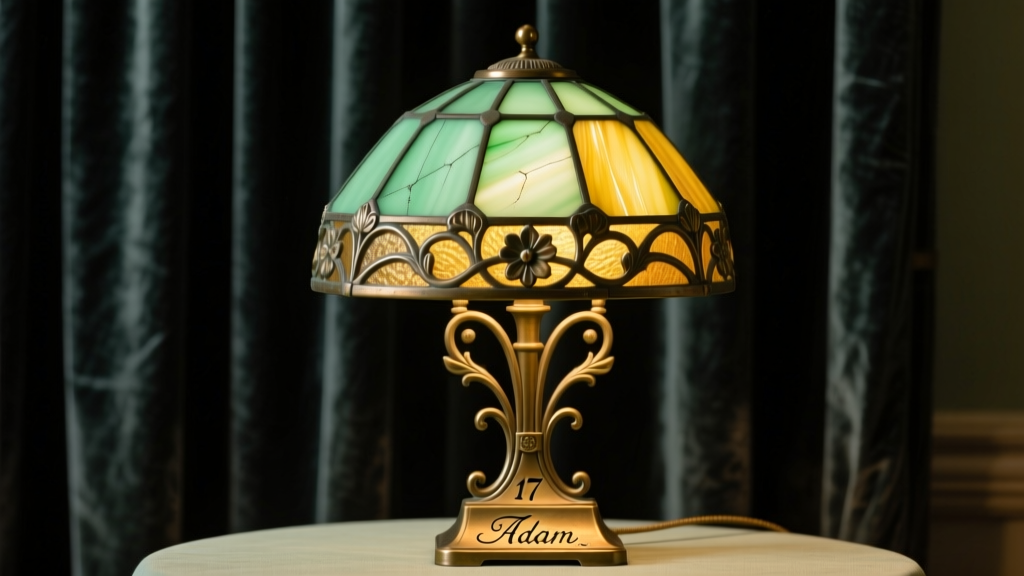
Tiffany Lamp: Adam Bronze Base with Pale Green and Yellow Glass Shade — Signed, 17-Inch Diameter

Windsor Fanback Chair: A 17-Inch Saddle-Seat Example in Original Green Paint with Mixed-Wood Construction
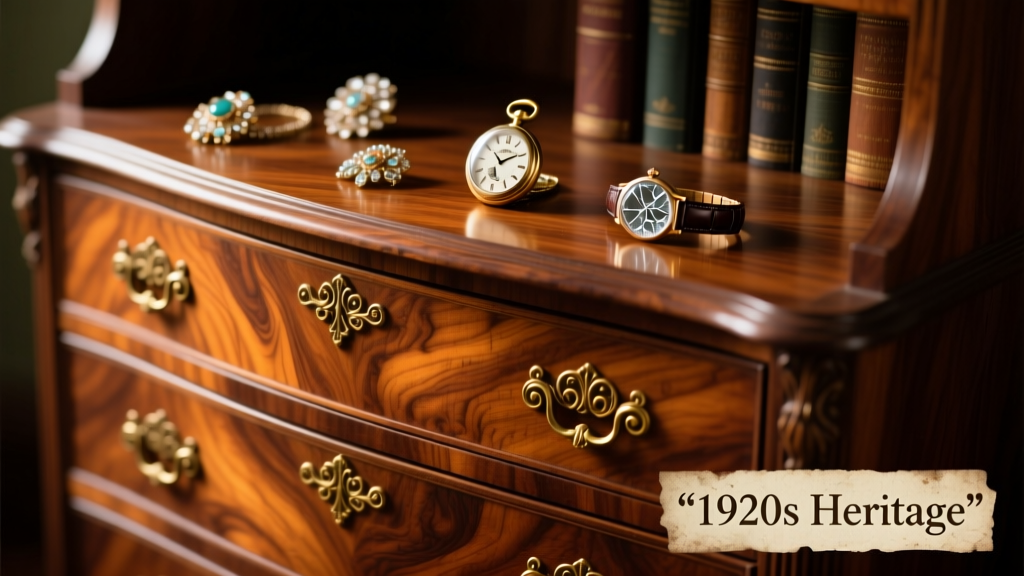
Queen Anne Burl Walnut Bureau Bookcase: A Masterpiece of 18th-Century American Craftsmanship and 20th-Century Restoration Excellence

The Toy Train Iron Horse Japan Box: A Collector’s Guide to a Mid-Century Japanese Die-Cast Treasure
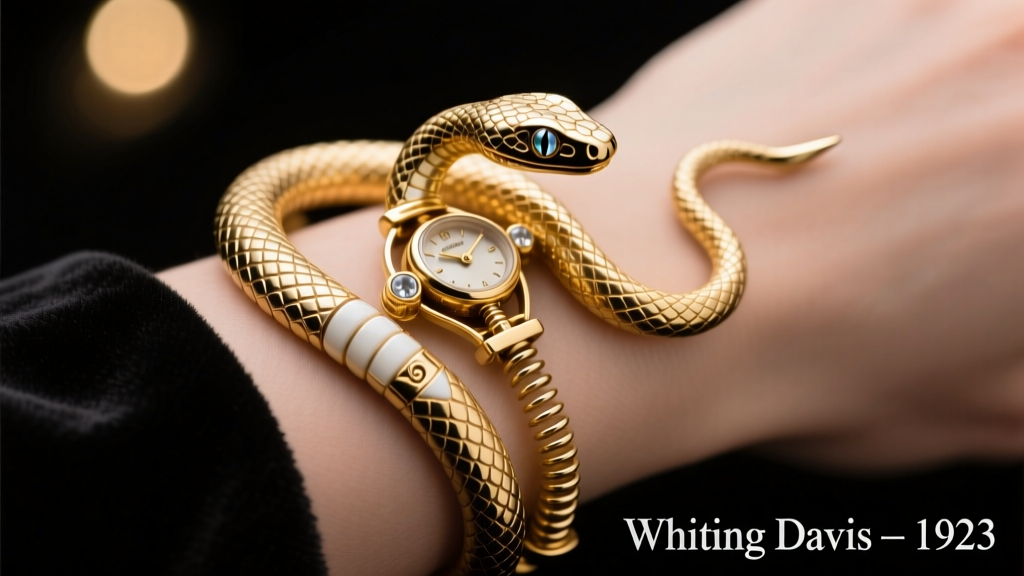
Whiting Davis Snake-Link Bracelets: Anatomy, Authenticity, and Auction Value of Spring-Loaded Gold-Finished Wrap-Around Designs

Black Americana Mask & Mammy Imagery in Halloween Collectibles: Historical Context, Market Trends, and Ethical Appraisal
Rosemeade Figurine Wolfhound Black Pair: A Study in Mid-Century Irish Porcelain Craftsmanship

The Rare Autographs, Manuscripts & Books Auction: Valuing Historical Handwriting in the Digital Age

Bottle Molds: The Forgotten Tool That Shaped Vintage Perfume, Liqueur, and Apothecary Glassware