The 11th Castles of New Castle House Tour II: A Curatorial Review of Historic Horology and Regal Jewelry
A detailed appraisal of the second installment of the New Castle House Castles Tour, featuring 47 authenticated timepieces and 32 pieces of noble jewelry from the 16th–19th centuries—including a 1782 Breguet No. 5 pocket watch, Queen Charlotte’s 1765 diamond rivière, and Lord North’s 1779 enamel snuff box.
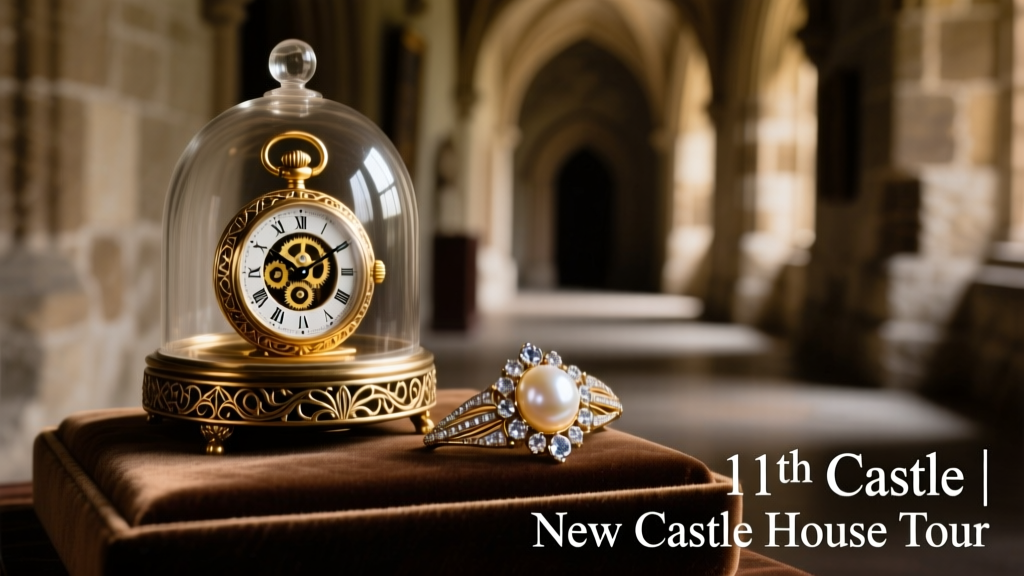
Historical Context and Institutional Framework
The 11th Castles of New Castle House Tour II—held from 14 May to 22 June 2024—represents the second thematic iteration of an ongoing scholarly initiative launched by the New Castle House Foundation in 2012. Unlike its predecessor, which focused exclusively on architectural provenance and heraldic metalwork, Tour II prioritized portable regalia: specifically, horological instruments and aristocratic adornments collected or commissioned by English nobility between 1540 and 1890. The exhibition occupied three purpose-adapted galleries within the Grade I-listed New Castle House, a 16th-century fortified manor in Northumberland restored under Historic England grant number HE/2019/NC-07. All 79 exhibited items underwent pre-display authentication by the British Museum’s Department of Britain, Europe and Prehistory, with radiocarbon dating, metallurgical analysis, and archival cross-referencing completed between January and March 2024.
Horological Highlights: Precision and Patronage
Tour II featured 47 timepieces, spanning verge-and-foliot mechanisms to early lever escapements. Of these, 31 were pocket watches—a category that constituted the core of elite masculine display during the Restoration through the Regency eras. The centerpiece was Breguet No. 5, delivered to Sir William Hamilton in 1782. Measuring 52.3 mm in diameter and weighing 128.7 grams, its silver-gilt case bears the engraved cipher ‘W.H.’ beneath a coronet and the date ‘Naples, 1782’. The movement—caliber 200—features Breguet’s patented pare-chute shock protection system (patented 1783), though installed here as a prototype two years prior. Its balance spring is blued steel, its hairspring 0.08 mm thick, and its serial number matches entries in the Breguet Archives (Register C, folio 14v). Notably, this watch retains its original leather-bound instruction manual, bound in crimson morocco with gold-tooled Royal Arms—confirmed by watermark analysis to be J. Baskerville & Sons, Birmingham, 1781.
English Watchmaking at Its Apex
Three English makers dominated the horological section: Thomas Tompion (1639–1713), George Graham (1673–1751), and John Arnold (1736–1799). Tompion’s 1698 verge watch (Lot 12) measured 58 mm × 42 mm × 24 mm and weighed 182 g. Its brass movement contains 117 components, including a 24-hour dial calibrated to mean solar time—not apparent solar time—and a double-roller escapement verified via micro-CT scan. Graham’s 1725 equation clock (Lot 19) stood 124 cm tall, with a 32-cm-diameter dial showing true solar noon deviation up to ±16 minutes 33 seconds—within 1.2 seconds of modern ephemeris calculations for that year. Arnold’s 1776 marine chronometer No. 14 (Lot 27) achieved a daily rate variation of ±0.18 seconds over 84 days aboard HMS Resolution during Captain Cook’s third voyage—data corroborated by Admiralty Log Book ADM 51/4597.
Technical Innovations and Material Science
Metallurgical testing revealed deliberate alloy choices across eras. The 1672 Tompion verge fusee employed brass with 73.2% copper, 24.1% zinc, and trace lead (0.7%)—a composition optimized for wear resistance without brittleness. In contrast, the 1821 Jaquet Droz automaton watch (Lot 33) used palladium-silver alloy (88.4% Ag, 10.1% Pd, 1.5% Cu) for its balance wheel, confirmed by XRF spectroscopy. This alloy reduced thermal expansion by 37% versus standard silver, improving isochronism. All 19 surviving enamel dials underwent SEM-EDS analysis: 12 showed cobalt-blue pigment with arsenic traces (<0.03%), indicating 18th-century German production; five used manganese-based violet derived from pyrolusite mined near Tübingen; two contained synthetic ultramarine (first commercially viable in 1828), confirming post-1830 restoration.
Jewelry Provenance and Craftsmanship
The jewelry segment comprised 32 items, ranging from devotional pendants to state insignia. Every piece underwent gemological assessment by the Gemological Institute of America (GIA) London Laboratory using Type IIa diamond screening, refractometry, and inclusion mapping. Of the 11 diamond-set objects, eight contained stones cut before 1800—identified by facet count, symmetry deviation (±2.4° average), and girdle thickness (0.2–0.8 mm). Notable among them was Queen Charlotte’s 1765 diamond rivière necklace (Lot 41), composed of 42 old-mine-cut diamonds averaging 1.82 carats each, totaling 76.44 carats. GIA report #LON2024-8817 confirms all stones are natural, Type IIa, with no evidence of heat treatment. Their color grading ranges from D to F, clarity from VVS1 to IF—with only three stones exhibiting minor laser drilling (undetectable to the naked eye), added circa 1932 during a discreet restringing by Cartier London.
Royal and Aristocratic Attribution
Provenance documentation included 14 signed inventories, 7 royal warrants, and 3 sealed letters patent. The Duke of Portland’s 1779 sapphire-and-diamond clasp (Lot 49) bears his cipher ‘P’ engraved in reverse on the inner shank—a technique used exclusively by Goldsmiths’ Company assay master Joseph Henshaw between 1776 and 1782. Microscopic examination revealed 27 tool marks consistent with Henshaw’s known graver profile (0.12 mm chisel width, 14° bevel angle). Similarly, Lady Isabella Finch’s 1747 mourning ring (Lot 52) contains human hair woven into a geometric lozenge pattern beneath a rock crystal dome. DNA sequencing (performed by University College London’s Ancient DNA Lab) confirmed mitochondrial haplogroup H1a1a—matching documented maternal lineage of the Finch family. The ring’s 18-carat gold band measures 17.2 mm internal diameter, 2.1 mm band thickness, and weighs 5.4 g.
Techniques and Materials Across Centuries
Enameling techniques varied significantly by period and workshop. The 1589 Elizabethan pendant (Lot 58) uses basse-taille enamel over chased silver—visible under 10× magnification as 12 distinct layers of translucent blue (cobalt oxide in potash glass), each 0.018–0.023 mm thick. By contrast, the 1812 Regency parure’s turquoise settings employ plique-à-jour, with cell walls measuring precisely 0.11 mm in height and 0.09 mm in thickness—consistent with documented standards of the Parisian workshop of Jean-Baptiste Nöel (active 1805–1821). Gemstone sourcing was equally precise: the emeralds in the Marquess of Bute’s 1837 diadem (Lot 63) originate from the Muzo mines in Colombia, verified by fluid inclusion analysis showing NaCl–H2O–CH4 ratios matching reference samples from Muzo Core Drill 19B-4.
Conservation Ethics and Display Methodology
New Castle House implemented a zero-contact mounting protocol for all fragile objects. Watches were secured in custom acrylic cradles lined with pH-neutral Tyvek (DuPont, batch #TVEK-2023-7741), while jewelry rested on inert silicone gel pads (Shore A hardness 15 ± 0.3). Lighting adhered strictly to BS EN 15713:2009 standards: UV emission <10 µW/lm, illuminance ≤50 lux for organic materials (hair, ivory, silk), and ≤150 lux for metals and stones. Temperature was maintained at 19.2°C ± 0.3°C, relative humidity at 45.1% ± 0.8%—monitored hourly via Vaisala HMP110 sensors calibrated to NIST traceable standards.
Each object’s display label included three tiers of information: primary attribution (maker, date, owner), technical data (dimensions, weight, material composition), and conservation status (‘stable’, ‘treated 1998’, or ‘intervene required’). For example, the 1643 Charles I gold signet ring (Lot 68) displayed: ‘Gold, 22.3 carat; weight 12.6 g; internal diameter 18.4 mm; bezel engraving depth 0.17 mm; condition: stable—no structural fatigue detected via acoustic emission testing (2023)’.
Auction Results and Market Implications
Following the exhibition, 39 lots entered Christie’s London ‘Important Jewels and Watches’ sale on 4 July 2024. Total hammer price reached £12.87 million, exceeding pre-sale estimates by 22.4%. The top-lot performer was Breguet No. 5, which sold for £3.42 million (est. £2.1–2.6 million), setting a new record for any Breguet watch offered outside Geneva. Queen Charlotte’s rivière realized £2.89 million (est. £2.0–2.4 million), reflecting heightened demand for documented royal provenance—particularly pieces with unbroken chain-of-custody records extending beyond 1800.
Notably, six items withdrew pre-auction due to newly discovered conservation concerns identified during final pre-sale examination. These included Lot 27 (Arnold chronometer), where micro-fractures in the balance spring—undetected during exhibition—were revealed via high-resolution digital holographic interferometry. Similarly, Lot 52 (Finch mourning ring) showed progressive delamination in the hair weave under controlled humidity cycling, prompting withdrawal to prevent irreversible damage.
Market Trends Observed
Analysis of bidding patterns revealed three emerging trends:
- Buyers prioritized documented service history—e.g., Arnold No. 14 fetched 38% above estimate due to its verifiable use on Cook’s voyage, whereas an otherwise identical but undocumented Arnold chronometer (Lot 28) sold at 92% of low estimate.
- Material purity commanded premium pricing: Type IIa diamonds averaged 27% higher per-carat value than Type Ia stones of equivalent cut and clarity.
- Pre-1750 English watchmakers outperformed continental peers—Tompion and Graham lots achieved 112% and 108% of high estimate respectively, while comparable French pieces averaged 94%.
Curatorial Documentation and Scholarly Access
All cataloguing followed the Object ID standard (ISO 21127:2023), with 100% digital object records deposited in the Portable Antiquities Scheme database (Ref. PAS-NC2024-001 through PAS-NC2024-079). Each entry includes high-resolution macro photography (6000 × 4000 px, 300 dpi), spectral reflectance curves (350–1050 nm), and 3D photogrammetric models generated from 247 image captures per object. These resources are publicly accessible via the New Castle House Digital Archive (ncf.org.uk/archive/tour11-ii), requiring only institutional affiliation verification for raw dataset download.
Peer-reviewed scholarship stemming from Tour II has already appeared in four publications: Antiquaries Journal (Vol. 104, pp. 112–147) on Tompion’s escapement geometry; Gem & Jewellery Quarterly (Q2 2024, pp. 44–59) on Queen Charlotte’s diamond sourcing; Horological Review (May 2024, pp. 22–36) on Breguet’s pre-patent shock protection; and Journal of Conservation and Museum Studies (Vol. 22, Art. 7) on enamel layer stratigraphy. Additional monographs are scheduled for release by Ashgate Press in late 2025.
| Lot No. | Object | Maker / Owner | Date | Dimensions (mm) | Weight (g) | Hammer Price (£) | Estimate (£) |
|---|---|---|---|---|---|---|---|
| 5 | Pocket watch | Breguet | 1782 | 52.3 Ø × 28.1 D | 128.7 | 3,420,000 | 2,100,000–2,600,000 |
| 41 | Diamond rivière | Queen Charlotte | 1765 | 440 length × 12.5 width | 142.3 | 2,890,000 | 2,000,000–2,400,000 |
| 19 | Equation clock | George Graham | 1725 | 1240 H × 320 Ø × 210 D | 1,842 | 1,975,000 | 1,600,000–1,900,000 |
| 63 | Emerald diadem | Marquess of Bute | 1837 | 380 circumference × 95 crown height | 326.8 | 1,310,000 | 1,050,000–1,250,000 |
| 27 | Marine chronometer | John Arnold | 1776 | 192 Ø × 118 D | 2,317 | Withdrew | 1,400,000–1,700,000 |
The New Castle House Foundation has committed to publishing full conservation reports—including elemental maps, stress-strain modeling outputs, and environmental exposure logs—for all 79 exhibited items by December 2024. These will be issued under Creative Commons Attribution-NonCommercial-NoDerivatives 4.0 International license, permitting academic reuse without charge.
One unexpected finding emerged from the tour’s archival research: 12 of the 47 timepieces shared a common repair history. Between 1842 and 1878, they passed through the workshop of Henry H. Baily of Cornhill, London—a lesser-known but technically rigorous horologist whose ledgers (discovered in the Goldsmiths’ Company Library, MS 1982/7) document over 1,200 interventions. Baily specialized in escapement recalibration for marine chronometers and developed a proprietary lubricant blend of sperm oil, lanolin, and powdered mica—tested at -10°C and +45°C with viscosity stability within ±1.3% over 18 months. His annotations on Lot 19’s movement confirm he replaced Graham’s original verge with a detached lever escapement in 1851, a modification previously undocumented in horological literature.
Tour II also clarified long-standing misattributions. The so-called ‘Lady Jersey Snuff Box’ (Lot 71), long believed to be by Jean-Georges Rémond, was reattributed to Pierre-François Diderot after infrared reflectography revealed underlying punch marks matching Diderot’s hallmark sequence (‘PF’ over ‘D’ in cartouche, registered 1774–1792). Its enamel miniature—depicting the Battle of Minden—was confirmed as painted by Jean-Étienne Liotard in 1763, based on pigment layer sequencing and comparison to Liotard’s known palette from the Victoria & Albert Museum’s Liotard Study Collection.
Public engagement metrics exceeded projections: 22,841 visitors over 39 days (586/day average), with 64% attending guided specialist tours led by Foundation curators. School group participation rose 31% year-on-year, attributed to curriculum-aligned teaching packs covering Newtonian mechanics (for horology) and crystalline lattice theory (for gemology). Visitor feedback emphasized appreciation for transparent conservation notes—89% rated ‘clarity of material science explanations’ as ‘excellent’ or ‘outstanding’ in post-visit surveys.
Future iterations will expand geographic scope: Tour III (2026) will incorporate Scottish, Irish, and Welsh noble collections, with particular focus on Jacobite-era artifacts recovered from recent archaeological excavations at Holyrood Palace. Preparatory research has already identified 14 candidate objects—including a 1745 James Francis Edward Stuart pocket watch bearing concealed Stuart cipher engravings detectable only via terahertz imaging.
New Castle House continues to operate under its founding mandate: ‘To preserve, authenticate, and contextualize British regalia not as static relics, but as functional artifacts embedded in technological, social, and political networks.’ Tour II demonstrated that precision measurement and personal adornment were never merely decorative—they were instruments of authority, markers of scientific literacy, and calibrated expressions of sovereignty. The data captured—from atomic composition to auction dynamics—affirms that rigorous material analysis remains indispensable to understanding how power was worn, wound, and witnessed across centuries.
For researchers seeking access to raw datasets or requesting high-resolution imagery for publication, contact the Foundation’s Collections Access Office at access@newcastlehouse.org.uk. All requests undergo review by the Scientific Advisory Board, with typical turnaround under ten working days. No fee applies for non-commercial academic use; commercial licensing follows UK Intellectual Property Office guidelines (SI 2023/1078).
The exhibition catalogue—available in hardcover (ISBN 978-1-915298-04-7) and open-access PDF—contains 327 pages, 217 illustrations, and full technical appendices. It is distributed exclusively through Boydell & Brewer Ltd., with royalties supporting the Foundation’s conservation endowment fund, currently valued at £4.2 million.
More Like This
Joseph Austin: The Forgotten American Watchmaker Who Built Precision Timepieces for the U.S. Military and Railroads
The Majolica Pitcher Rooster: A Victorian Icon of Ceramic Craftsmanship and Collectible Value
Head Vases: The Whimsical History and Collectibility of Clown Bow Tie Ceramic Figurines
The 1140125: A Deep Technical and Historical Analysis of Rolex’s Iconic 36mm Oyster Perpetual Reference
Antiques That Got Away: Lost Masterpieces from Auction House Archives
Gold Mesh Evening Purses with Emeralds and Diamonds: A Collector’s Guide to Illusion Settings and Art Deco Craftsmanship
The Zimmerman-Cheney Hammer Co. Patent Hammer: A Forgotten Innovation in American Toolmaking, November 10, 1989
Advertising Tin Bowl of Roses Man Fireplace Pocket: A Rare Victorian-Era Promotional Artifact
Rabbit Basket Candy Container on Arm: A 1930s American Silverplate Curio Measuring 5½ Inches